

Custom Pool Installation Toronto: Luxury Designs, Features and Costs
Custom pool projects in Toronto start at around $120,000 and run to $400,000+ for full backyard builds with premium finishes, integrated outdoor living, and signature features. The pool itself is often 50–60% of the total project cost — landscaping, decking, outdoor kitchen, lighting, fencing, and automation make up the rest.
A custom pool is not a specific pool type. It’s a project approach. Any pool material can be built to a custom specification, but the majority of custom and luxury pool projects in Toronto use concrete or ICF construction — because those are the only materials that let every dimension, depth, shape, and integrated feature be determined by the design rather than a manufacturer’s catalogue.
This page covers what custom pool projects involve, what they cost, what features are available, and how the design-build process works. If you know what you want — or if you’re still figuring it out — this is where to start.
Easy Pools designs and builds custom pools across Toronto and the GTA, managing the full project from concept to completion.

Easy Pools
What Makes a Pool “Custom”
A standard pool project starts with a pool type and a size. A custom pool project starts with a vision for the backyard and works backward to the pool.
The distinctions in practice:
A standard pool project selects a fibreglass shell from available sizes, or builds a vinyl liner or concrete pool in a standard rectangular configuration with a basic equipment package and poured concrete decking. The result is functional and well-built, but the pool is the primary object in the yard.
A custom pool project designs the yard first — how it’s used, who uses it, what it looks and feels like, how it connects to the house — and the pool is one element of a cohesive outdoor living space. Shape, depth, and materials are determined by the design, not by what’s convenient to build. Features like vanishing edges, integrated spas, water features, fire elements, outdoor kitchens, and premium lighting are planned from the start rather than added later.
The pool type on most custom Toronto builds is concrete or ICF. Those materials are chosen because:
- Any shape, depth, and dimension is achievable
- Integrated features (spillover spas, raised bond beams, vanishing edges, beach entries) are built directly into the structure
- Interior finish options — tile, pebble, quartz — match the design intent rather than being limited to available shell colours or liner patterns
- The finished result is architecturally intentional rather than a product dropped into a yard
Design Options
Custom Pool Costs in Toronto
Custom pool projects vary more in cost than any other pool type — because the scope varies more. The figures below are working ranges based on project scope.
Project Scope | Typical All-In Cost |
Custom concrete pool — pool only, quality finishes | $120,000 – $175,000 |
Custom pool + spa + quality deck and coping | $150,000 – $250,000 |
Full backyard build — pool, spa, outdoor living, landscaping | $250,000 – $400,000+ |
Signature builds — vanishing edge, rooftop, premium feature integration | $300,000 – $600,000+ |
These figures reflect the full installed cost — not just the pool, but everything that makes the project complete.
Why the pool is often less than half the budget
On a $250,000 custom backyard project, the pool itself might cost $100,000–$130,000. The remaining $120,000–$150,000 is typically:
- Decking and coping: Natural stone (travertine, limestone, bluestone) or large-format porcelain over a full deck surround — $25,000–$60,000
- Integrated spa: Attached spillover spa — $15,000–$45,000
- Landscaping: Planting, grading, retaining walls, screening, and garden design — $20,000–$60,000
- Outdoor kitchen: Built-in BBQ, refrigerator, counter surface, and utility rough-ins — $15,000–$40,000
- Lighting: Underwater LEDs, landscape lighting, deck lighting, feature lighting — $8,000–$20,000
- Water features: Waterfalls, deck jets, spillovers, bubblers — $8,000–$30,000
- Automation: Full system control for pool, spa, lighting, and heating — $5,000–$15,000
- Fencing and gates: Premium glass, aluminium, or stone pillar fencing — $8,000–$25,000
- Fire features: Fire bowls, fire pits, fire walls — $5,000–$20,000
- Pergola or shade structure: $10,000–$40,000+
Not every project includes every element. A focused $150,000 project might be a premium pool and spa with quality decking, lighting, and automation — no outdoor kitchen, minimal landscaping. A $350,000 project might be a full backyard transformation with every element above integrated.
Design Options
Luxury Features and Design Options
Vanishing Edge (Infinity Edge)
A vanishing edge pool has one or more sides where the water surface meets the pool rim and appears to disappear — water flows over a weir into a catch basin, is pumped back into the pool, and the visual effect from the right vantage point is a pool that blends into the landscape or skyline beyond.
What’s required in Toronto:
- A meaningful grade change or elevated pool position — the effect requires a view below the pool edge
- A catch basin excavated below the overflow edge
- A dedicated return pump for the catch basin
- Careful sightline planning — the infinity effect is specific to one viewpoint and must be engineered, not assumed
Design directions:
- Single vanishing edge on the view side, standard wall on the house side
- Two-sided vanishing edge — more dramatic, requires larger catch basin and more pump capacity
- Infinity edge integrated into a spa — the spa overflows into the pool, which overflows into the catch basin
Cost addition: $20,000–$60,000 over a standard concrete pool of the same size, depending on edge length, catch basin size, and pump configuration.
Integrated Spa
A spa built directly into the pool structure — sharing equipment where planned, or running on dedicated equipment for independent temperature control.
Attached spillover spa: The spa sits adjacent to the pool at a raised elevation. Water spills from the spa into the pool. The spill is both a water feature and a functional flow. The spa can run hotter than the pool independently if equipped with its own heater.
Inset spa: Built into one corner or end of the pool at the same elevation. More integrated visually, water mixes freely. Simpler equipment arrangement.
Raised spa with waterfall: The spa sits on a raised concrete platform above pool level, with one or more waterfall faces delivering water from the spa into the pool below. Architecturally significant and visually dominant — works best in a design where the spa is a featured element, not incidental.
Cost range: $15,000–$45,000 addition to the concrete pool project, depending on size, elevation, and equipment configuration.
Beach Entry (Zero Entry)
A gradual slope from deck level to full swim depth — no steps, no ledge, just a continuous slope from dry to deep. Evokes a natural shoreline. Practical for families with young children and for wheelchair accessibility.
Design considerations:
- Requires a larger pool footprint to maintain usable depth — a 10 m pool with a beach entry loses 2–3 m of that length to the slope before reaching a practical swim depth
- Requires a dedicated drainage channel at the pool perimeter where deck meets the entry slope
- The beach entry floor is a significant surface area to finish — tile on a beach entry is labour-intensive and adds meaningfully to the interior finish cost
- Works best in concrete construction where the slope gradient can be precisely formed
Cost addition: $10,000–$25,000 over a standard step entry, depending on slope length and interior finish choice.
Tanning Ledge (Baja Shelf)
A very shallow platform — typically 20–30 cm of water depth — set into the entry end of the pool. Sized for one or two chaise lounges. Extremely popular on Toronto custom builds in recent years. Works as a paddling area for young children and a lounging area for adults.
More practical and usable than a beach entry for most families, at lower cost and without sacrificing swim length. Can be built in concrete, ICF, or fibreglass.
Cost addition: $3,000–$8,000 in concrete construction.
Water Features
Water features are planned at the design stage — the plumbing is embedded in the pool structure, and retrofitting after construction is expensive and disruptive.
Waterfalls: A concrete or stone face behind or beside the pool that delivers water in a sheet, curtain, or stream. From a simple weir wall to a full multi-level rock waterfall with plantings. Cost range: $8,000–$40,000+.
Deck jets: Stainless steel fittings set into the pool deck that arc water in a precise parabolic stream. Clean, contemporary, very popular on rectangular modern designs. Multiple jets firing simultaneously create a strong visual effect. Cost: $500–$1,500 per jet installed.
Bubblers: Fittings in the tanning ledge or shallow section that push a column of water upward. Low pressure, gentle effect — popular where young children use the shallow section. Cost: $300–$800 per bubbler.
Spillover from spa: The spa overflows into the pool through a notch or weir in the shared wall. The sound of moving water is constant when the spa is running. A functional water feature with no added equipment beyond the spa’s return pump.
Grottos and cave features: An overhang built over part of the pool — typically at the deep end — that creates a sheltered alcove inside the water. Architecturally complex, requires structural engineering, and significantly adds to the concrete scope. On the right property, one of the most distinctive custom pool features available.
Interior Finishes
Custom pools are where the premium interior finish options actually make sense — because the client is already investing at a level where the quality of the visible surfaces matters to the overall result.
Glass tile: Available in hundreds of colours and patterns, individually set by hand, essentially permanent with proper water chemistry. The highest-cost interior finish — full tile interiors add $30,000–$80,000 over plaster. Partial tile (waterline accent band, tanning ledge, feature wall inside the pool) is more common and far more accessible, adding $5,000–$20,000.
Pebble finish: Durable, textured, and available in natural colour blends that give the water a distinctive depth and richness. Darker pebble tones read as deep green or blue-grey in the water — a contemporary look that suits naturalistic and modern pool designs equally. Lifespan of 20+ years.
Quartz aggregate: Smoother than pebble, more colour options than plaster, very durable. The most common premium finish on mid-range custom projects.
Full mosaic: A hand-laid mosaic interior — typically glass or ceramic — either patterned or in a solid field colour. More expensive than standard glass tile because the mosaic setting is more labour-intensive. Used on smaller pools and spas where the cost per square metre is manageable.
Coping and Decking
The coping and deck materials are what visitors notice first. On a custom build, these surfaces should be selected alongside the pool interior finish — the three visible materials (interior, coping, deck) are the colour palette of the finished space.
Premium coping options:
- Limestone: Cream and warm grey tones, naturally cool underfoot, classic appearance that ages beautifully. Very popular on Toronto custom builds. Cost: $60–$120/linear metre installed.
- Travertine: Warm ivory and gold tones, naturally porous (requires sealing annually in Toronto’s climate), popular for Mediterranean-influenced designs. Cost: $50–$100/linear metre.
- Bluestone: Dark blue-grey, very durable, contemporary. Works particularly well with dark pebble or grey quartz interiors. Cost: $80–$150/linear metre.
- Porcelain: Large-format tiles (600 mm x 600 mm or larger), consistent colour and texture, extremely durable and low maintenance, increasingly popular on modern builds. Cost: $70–$130/linear metre.
- Granite: Dense, available in many colours, very durable. Cost: $90–$160/linear metre.
Decking: Matching the coping material to the deck surface gives the most cohesive result. Natural stone decks run $80–$200/m² installed. Large-format porcelain runs $70–$150/m². Stamped concrete is an economical option that can approximate stone at $40–$80/m². Plain brushed concrete is the baseline at $20–$40/m².
Outdoor Kitchen and Entertainment
A permanent outdoor kitchen integrated into the pool deck design substantially increases how the pool space is used. Elements:
- Built-in BBQ: $3,000–$8,000 for a quality gas grill in a concrete or stone surround
- Counter surface: Concrete, granite, or porcelain — extends working and serving space
- Refrigerator and storage: Under-counter refrigerator, storage drawers, stainless steel cabinetry
- Bar seating: Counter-height seating at the kitchen surround, integrated into the deck design
- Gas rough-in: Natural gas line extended to the kitchen location — required for BBQ and any gas fire features
- Sink and water rough-in: Requires plumbing extension and a drain to the sanitary system
A full built-in outdoor kitchen adds $20,000–$50,000 to a project. A simpler built-in BBQ and counter surround adds $8,000–$20,000.
Fire Features
Fire elements extend the usability of the pool area into the evening and into shoulder seasons, and they’re increasingly standard on Toronto custom projects.
Fire bowls: Free-standing or built-in concrete or stone bowls on the pool coping or surrounding deck. Gas-fuelled, remote or automated. $2,500–$6,000 each.
Linear fire pits: A long, low fire trough integrated into a sitting wall or deck feature. Gas-fuelled. $5,000–$15,000 depending on length and integration.
Fire and water walls: A vertical wall feature with water cascading on one face and a linear gas flame at the base or top. Visually dramatic, particularly at night. $10,000–$30,000.
Fire pillars: Architectural columns with gas flame tops, placed symmetrically at pool corners or entry points. $3,000–$8,000 per pillar.
Automation and Technology
A custom pool at this investment level should be fully automated. Manual operation of a multi-feature pool — pump speed, heater, spa, lighting, water features, chemical dosing — is impractical and prone to error.
What automation covers:
- Variable-speed pump scheduling and speed control
- Pool and spa heating temperature control and scheduling
- LED lighting zones, colours, and scenes
- Water feature on/off and flow control
- Saltwater chlorinator output adjustment
- Chemical monitoring and auto-dosing (premium systems)
How it’s operated: Most systems run on a dedicated panel at the equipment pad and a smartphone app. Scenes can be preset — “evening” might dim the pool lights, activate the water features, heat the spa, and turn on the fire bowls with one tap.
Cost: $5,000–$15,000 depending on system scope and the number of circuits controlled.
LED Lighting Design
Lighting is where a pool transitions from a daytime amenity to an evening centrepiece. A full custom lighting design includes:
- Underwater LED pool lights: Multiple colours and dynamic scenes. 2–4 fixtures in a standard pool; more in larger pools. $1,000–$2,500 per fixture installed.
- Spa lighting: Separate LED fixtures in the spa — often set to a different colour than the pool for visual differentiation.
- Landscape and path lighting: Low-voltage LED fixtures integrated into planting beds, along steps, and at deck edges. $3,000–$10,000 for a full landscape lighting scheme.
- Feature lighting: Uplighting for trees, accent lighting for water features, illumination for architectural elements.
- Deck and step lighting: Recessed LED strips in stair risers and deck edges — safety and aesthetics combined.
A full custom lighting package adds $10,000–$25,000 to the project budget.
Saltwater System
Standard on most custom builds. A saltwater chlorinator generates chlorine from dissolved salt — no storing or handling liquid or tablet chlorine, consistently balanced water, gentler on skin and eyes. Cost: $2,500–$5,000 to add at installation. Essentially zero incremental cost on a custom project at this budget level.
Heating
A custom pool without heating is underused. Options:
Heat pump: Efficient for maintaining temperature. Slow to heat a cold pool; excellent once target temperature is reached. Appropriate for pools that run all season.
Gas heater: Fast. Heats a cold pool in hours rather than days. Higher operating cost per hour than a heat pump.
Combination system (recommended): Heat pump for daily temperature maintenance, gas heater for fast heat-up after the pool has sat cold, and for spa use where rapid heating to 38–40°C is required. This is the standard equipment configuration on Toronto custom pool projects.
In-floor heating (radiant): An in-floor heating system under the pool deck and coping extends comfortable outdoor use into shoulder seasons. Adds $15,000–$35,000 to the project — significant but meaningful on a full backyard integration project where the goal is year-round outdoor living.
work process
The Custom Pool Design-Build Process
Custom pool projects require a different process than a standard installation. The design phase is not a pre-requisite to signing — it’s where the project is actually defined.
1. Initial consultation
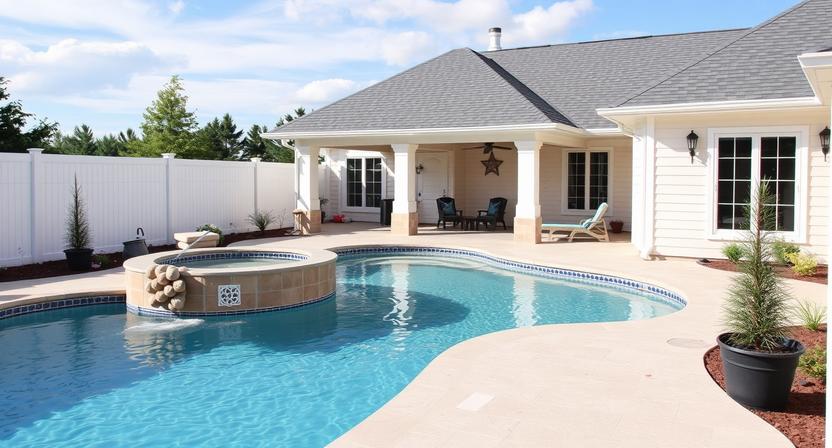
A conversation about the yard, the household, how the space will be used, what the budget is, and what the design intent is. We visit the property, assess what’s feasible, and identify any site-specific constraints early.
2. Concept design
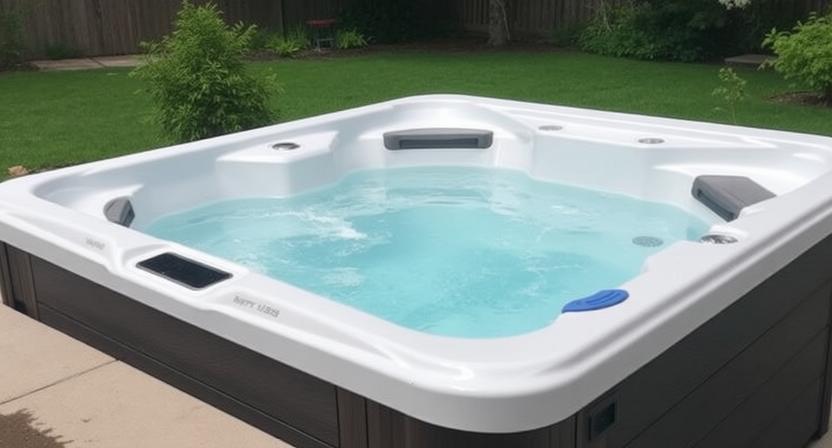
A preliminary design showing the pool shape, placement, depth profile, feature locations, and deck and coping layout. This is the stage where ideas are tested against the site. 3D renderings help visualise the finished result before any commitment is made.
3. Design development and specification
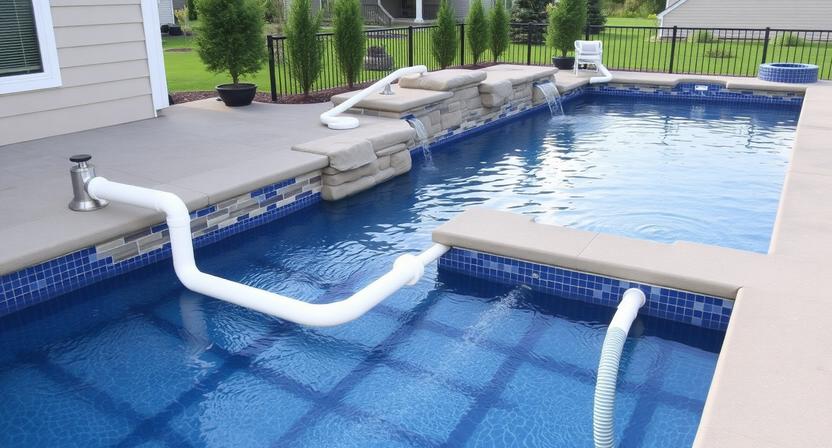
The concept design is developed into a full specification — interior finish, coping and deck material, equipment list, lighting plan, feature details, and landscaping intent. This document is what the quote is based on and what the permit drawings are developed from.
4. Quote and contract
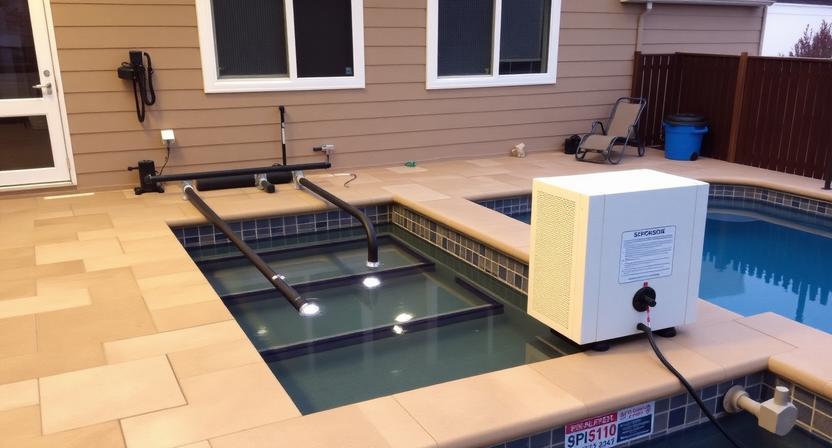
A full, itemised quote covering every phase of the project — pool construction, equipment, all trades, decking, landscaping, fencing, and permit handling. Nothing is bundled or vague. The contract specifies what’s included, what’s excluded, the payment schedule, and the timeline.
5. Permit applications
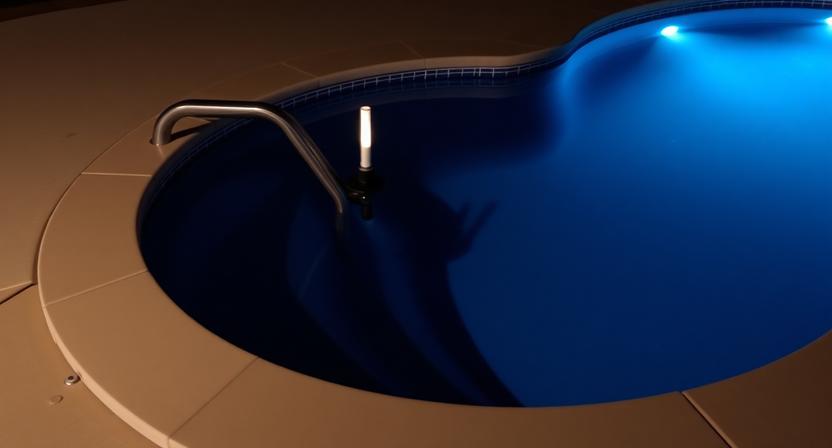
Zoning Certificate and Pool Fence Enclosure Permit submitted to the City of Toronto. On complex projects involving significant grading, retaining walls, or structures, a lot grading permit may also be required. We prepare all drawings and manage all applications.
6. Construction
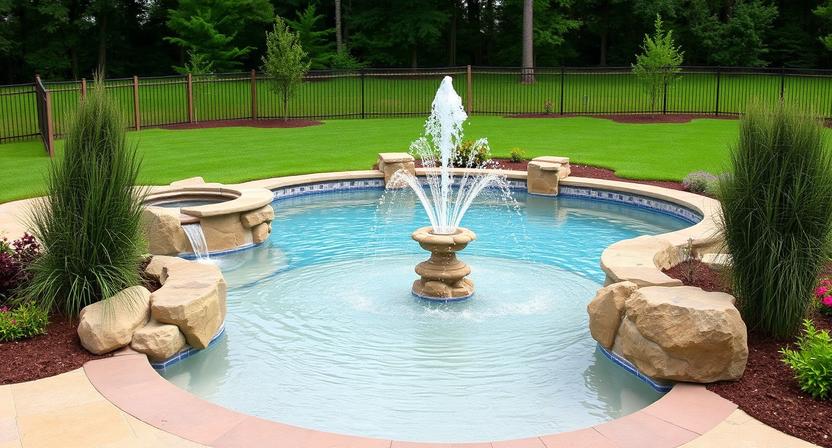
Construction on a full custom pool project typically runs 3–6 months for the pool structure plus decking and landscaping. Phasing is managed to minimise disruption and to sequence trades efficiently — excavation, pool structure, plumbing, electrical, interior finish, coping, deck, landscaping, fencing.
7. Commissioning and handover
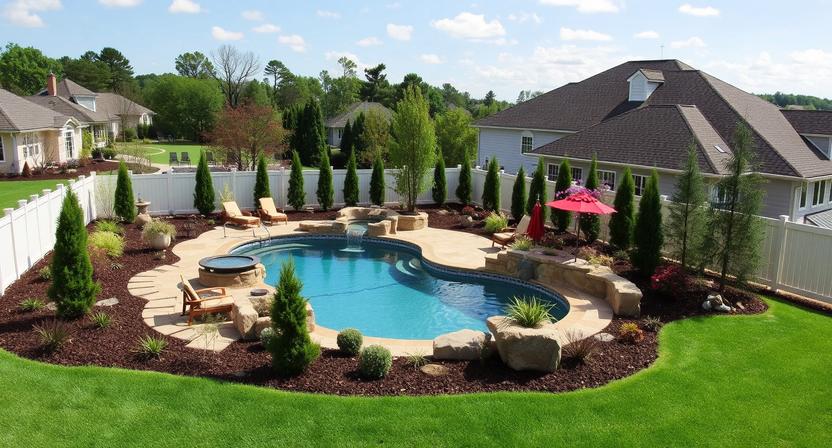
All equipment tested and commissioned. Water chemistry established. Automation programmed. Lighting scenes set. Full owner walkthrough covering every system — operation, maintenance, seasonal care, and warranty documentation.
Permits
Permits for Custom Pool Projects in Toronto
Custom pools follow the same base permit process as all inground pools, with potential additions depending on project scope.
Standard requirements:
- Zoning Certificate — setback compliance and lot coverage confirmation
- Pool Fence Enclosure Permit — under Municipal Code Chapter 447, before the pool can be filled
- ESA permit — for all electrical work
Additional permits that may apply on custom projects:
- Lot grading permit — where the project involves significant grade changes, retaining walls, or drainage modifications that alter how stormwater moves across the site
- Tree permit — where excavation or construction falls within the protection zone of a regulated tree (the protection zone is calculated at 12 cm of radius per 1 cm of trunk diameter)
- Road occupancy permit — where construction equipment, crane operations, or material delivery requires temporary use of the road or boulevard
- Conservation authority approval — on lots near ravines, watercourses, or within a regulated area under the Toronto and Region Conservation Authority (TRCA)
Easy Pools identifies all required permits at the design stage and manages every application. On custom projects, permit co-ordination is part of the design-build scope — not an afterthought.
Toronto’s fence minimum for pool enclosures is 1.5 m — higher than the provincial minimum of 1.2 m. On custom builds where the fence is a visible design element, glass panel or premium aluminium enclosures that meet the bylaw requirements are commonly integrated into the backyard design.
Comparing Custom Builds to Standard Pool Projects
Custom Pool Build | Standard Pool Project | |
Starting point | Backyard vision and lifestyle | Pool type and size |
Pool material | Typically concrete or ICF | Any type |
Shape and depth | Fully determined by design | Fixed (fibreglass) or flexible (vinyl/concrete) |
Features | Integrated from the start | Added or not |
Interior finish | Full range including tile | Material-dependent |
Decking | Part of design scope | Often separate or basic |
Landscaping | Part of design scope | Usually separate |
Automation | Standard at this level | Optional |
Budget | $120,000–$400,000+ | $50,000–$150,000 |
Timeline | 5–10 months concept to swim | 3–6 months |
Project management | Single point of contact | Often multiple contractors |
The distinction that matters most: a custom build treats the pool as part of the outdoor space. A standard project treats the pool as the outdoor space. If the goal is a backyard that functions as a genuine extension of the home — used from May to October, used for entertaining, used by the family in multiple ways at the same time — the custom approach produces a result that a pool-only project cannot.
Easy Pools
Who Custom Builds Are Right For
Custom pool projects make the most sense when:
- The budget allows for a full project scope without cutting corners on finishes or features to hit a lower number
- The yard is large enough — or interesting enough in its slope and layout — to benefit from a design-led approach
- The household has specific requirements that don’t fit a standard installation: a particular spa configuration, a feature that needs to be engineered in, a connection between pool and house that requires architectural intent
- The homeowner plans to stay in the property for many years and wants the pool to be a genuine long-term asset
- Resale value matters — a well-designed custom pool and backyard in the right GTA neighbourhood adds meaningfully more value than a standard above-ground or entry-level inground pool
FAQ
Custom Pool Installation FAQs
How much does custom pool installation cost?
Custom pool installation cost depends on pool type, size, shape, depth, access, excavation, features, finishes, permits, equipment, decking, landscaping, and drainage.
A simple custom pool will usually cost less than a luxury pool with an attached spa, raised walls, premium tile, lighting, water features, and full backyard design. The best way to get an accurate price is to request a site-based quote.
How long does custom pool installation take?
Custom pool installation time depends on the design, pool type, permits, weather, access, excavation, construction method, features, finishes, equipment, decking, and landscaping.
Custom pools often take longer than standard pool projects because they need more planning and more detailed construction.
What features can you add to a custom pool?
You can add many features to a custom pool.
Options may include built-in steps, benches, tanning ledges, attached spas, raised walls, waterfalls, deck jets, bubblers, LED lighting, automation, heating, premium coping, and custom finishes.
Do custom pools need permits?
Yes. Custom pool projects in Toronto need permit and enclosure planning.
Zoning, fence rules, gate details, setbacks, site layout, equipment location, decking, and drainage can all affect approval. Current local requirements should be checked before installation starts.
Are custom pools good for small backyards?
Yes. Custom pools can work well in small backyards.
A compact custom pool, plunge pool, narrow pool, or courtyard-style pool can make good use of limited space. The design must still leave room for access, equipment, fencing, drainage, and seating.
What pool type works best for custom designs?
Concrete and ICF pools often offer strong custom design control. Vinyl liner pools can also offer good shape flexibility. Fibreglass pools can work well when a pre-made shell suits the yard.
The best pool type depends on your design goals, budget, access, and site conditions.
Service Area
Service Areas
Easy Pools designs and installs custom pools across Toronto and the GTA:
Request a Custom Pool Consultation
Custom pool projects start with a conversation — about the yard, the household, the vision, and the budget. There are no off-the-shelf answers. We visit the property, assess what’s possible, and work through the design with you before any commitment is made.
Easy Pools · Vaughan, ON · Serving Toronto and the GTA