

Above-Ground Pool Installation Toronto: Costs, Sizes and Installation Services
Above-ground pool installation in Toronto costs between $3,000 and $15,000 for a quality permanent pool, fully set up with pump, filter, and basic site preparation. Entry-level round pools at the lower end; large oval or premium resin pools with decking at the upper end.
Above-ground pools are the fastest and least expensive way to get a pool in the backyard. No excavation, no structural engineering, no months-long build timeline. Most installs are complete in one to three days. They’re a practical choice for homeowners working with a tighter budget, a yard that doesn’t suit inground construction, or a timeline that doesn’t allow for a full inground build.
Easy Pools installs above-ground pools across Toronto and the GTA and handles the permit applications that most homeowners don’t realise are required.

Costs
Above-Ground Pool Costs in Toronto
Cost Component | Typical Range |
Pool kit (frame, liner, basic equipment) | $1,500 – $8,000 |
Professional installation labour | $1,500 – $5,000 |
Site preparation (levelling, base) | $500 – $3,000 |
Electrical hookup (if required) | $500 – $2,000 |
Deck or surround (optional) | $3,000 – $12,000+ |
Permit fees | $200 – $800 |
Total installed (typical range) | $3,000 – $15,000 |
These ranges cover a quality permanent above-ground pool professionally installed. They don’t include heating, safety covers, or extensive landscaping.
Pool kit cost by type
Pool Type | Kit Cost Range | Notes |
Entry-level round steel wall | $800 – $2,500 | Basic frame, standard liner, simple filter |
Mid-range round or oval steel | $2,000 – $5,000 | Thicker walls, better liner, improved filter |
Premium resin or hybrid | $4,000 – $9,000 | Corrosion-resistant, longer lifespan, better aesthetics |
Large oval (7 m x 4 m+) | $3,500 – $8,000 | Requires more site prep, more installation time |
What pushes costs up
Pool size. A 3.6 m round pool and a 7.3 m x 3.7 m oval pool are meaningfully different in kit cost, installation time, and site preparation scope.
Pool quality. Resin pools resist salt and soil corrosion significantly better than steel-wall pools, particularly on Toronto’s clay-heavy lots where ground moisture is persistent. The upfront premium is real; so is the extended lifespan.
Site conditions. A perfectly level, clear yard on firm ground costs less to prepare than a sloped lawn with roots, existing landscaping to work around, or soft soil that needs a compacted base. An unlevel site is the most common cause of above-ground pool installation problems — cutting corners here leads to pool failure within a season or two.
Deck and surround. A freestanding deck around an above-ground pool dramatically improves usability and aesthetics. A basic pressure-treated timber deck costs $3,000–$6,000. A composite decking system with integrated gating and steps runs $8,000–$15,000+. Decking is optional but changes the feel of the pool entirely.
Electrical. Most above-ground pool pumps run on standard 15-amp household current (some larger filters require 20-amp). If no outdoor outlet is accessible near the equipment pad, a licensed electrician needs to run a new circuit — typically $500–$2,000.
What keeps costs lower
- Round pools over oval — simpler to level, fewer components, faster to install
- Steel-wall pool on a budget-conscious build where longevity is less critical
- Existing level yard area that needs minimal preparation
- Nearby outdoor electrical outlet that can serve the filter pump
- DIY deck rather than a contractor-built surround
Pool Types
Above-Ground Pool Types and Sizes
Round pools
Round pools are the most popular above-ground option — they’re easier to install, simpler to balance structurally, and the most economical. Common diameters:
Diameter | Approximate Volume | Best For |
3.0 m (10 ft) | 13,000 L | Young children, very small yards |
3.7 m (12 ft) | 20,000 L | Small family, compact lot |
4.6 m (15 ft) | 31,000 L | Family use, popular mid-size |
5.5 m (18 ft) | 44,000 L | Comfortable family pool |
6.1 m (20 ft) | 54,000 L | Larger family or entertaining |
7.3 m (24 ft) | 78,000 L | Large lot, maximum above-ground round |
A 4.6 m (15 ft) round pool is the most common choice for Toronto residential lots — large enough for practical family use, compact enough to leave usable yard space around it.
Oval pools
Oval pools use more space efficiently on long, narrow lots and feel more like an inground pool in use. They require buttress supports on the long sides — straight external braces that extend outward from the pool wall. This is important for permit and fence reasons covered below.
Common oval sizes:
Size | Approximate Volume | Notes |
4.9 m x 3.0 m (16 ft x 10 ft) | 27,000 L | Compact oval, suits narrow lots |
6.1 m x 3.7 m (20 ft x 12 ft) | 42,000 L | Popular mid-size |
7.3 m x 3.7 m (24 ft x 12 ft) | 55,000 L | Full-size oval, more deck space needed |
7.3 m x 4.6 m (24 ft x 15 ft) | 68,000 L | Large oval, requires significant lot space |
Wall materials
Steel wall The most common above-ground pool wall material. Galvanised steel panels bolt together to form the pool wall. Cost-effective and structurally sound when properly installed. Susceptible to corrosion over time, particularly at the base where it contacts soil and moisture. Lifespan typically 10–20 years depending on site conditions and maintenance.
Resin (polymer) High-density plastic components that don’t corrode. Particularly well-suited to Toronto’s wet spring conditions and clay soils where ground moisture is persistent. More expensive upfront, but doesn’t rust at the base, doesn’t pit or flake, and looks better over a longer period. Resin pools are increasingly popular in the GTA for homeowners who plan to keep the pool for 15+ years.
Hybrid (steel wall, resin uprights and top rails) The most common mid-range option. Steel walls for structural strength at lower cost, resin uprights and top rails for corrosion resistance at the visible joints and connection points. Good balance of cost and longevity.
Wall height
Standard above-ground pool wall height is 1.07 m (42 inches) or 1.32 m (52 inches). The taller wall option is worth specifying — it provides a deeper water depth, which significantly improves the swimming experience for adults and reduces the proportion of the pool that’s unusable shallow water.
Liner options
Above-ground pool liners are available in flat bottom or unibead (beaded) configuration and come in a wide range of patterns — solid blue, tile designs, stone effects, and pebble textures. Liner gauge for above-ground pools typically runs 20–30 mil. The same rule applies as inground vinyl: heavier gauge costs more, resists punctures better, and holds colour longer. Liners typically need replacing every 5–10 years in an above-ground pool — shorter than inground vinyl because above-ground pools experience more UV exposure and temperature fluctuation.
Permits
Permits for Above-Ground Pools in Toronto
This is the section most above-ground pool buyers don’t read — and the one that causes the most problems after installation.
Above-ground pools require a pool fence enclosure permit in Toronto. Full stop.
The City of Toronto defines a swimming pool as any outdoor structure on private property capable of being used for swimming, wading, or bathing where the water depth is 60 cm (600 mm) or more at any point. That definition captures most above-ground pools entirely. If your pool holds more than 60 cm of water — and virtually every above-ground pool sold in Canada does — the City treats it the same way it treats an inground pool for permit and fencing purposes.
What’s required:
Step 1 — Zoning Certificate Confirms the pool placement meets setback requirements from property lines and complies with lot coverage rules. Toronto also requires that soft landscaping (grass, garden beds, the pool water surface) makes up more than 50% of the rear yard. Apply to Toronto Building before anything is installed.
Step 2 — Pool Fence Enclosure Permit Required under Municipal Code Chapter 447. The pool cannot be filled with water until a compliant fence is installed and the City has inspected it.
Toronto fence requirements (above-ground pools):
- Minimum fence height: 1.5 m — Toronto’s bylaw sets a higher standard than the Ontario provincial minimum of 1.2 m
- Fence must completely enclose the pool area — no gaps except a compliant gate
- Gap between ground and bottom of fence: maximum 100 mm
- Gates must be self-closing, self-latching, opening outward, with the latch above 1.5 m or on the inside of the gate
- Fence must be designed so it cannot be easily climbed — horizontal rails on the interior face are generally not permitted
The above-ground pool wall question: Some homeowners assume the above-ground pool wall itself can serve as the enclosure — the logic being that the wall is 1.07 m–1.32 m tall and non-climbable. This only works if the wall meets the full fence bylaw requirements with no access points except a compliant gated ladder. The critical issue: if your pool has external buttress supports on the long sides (as oval pools do), the City considers those supports climbable ladder-like structures. A pool with external buttresses requires a separate four-sided fence around the entire pool, not just a gated ladder.
Round pools without external supports have a more defensible case for using the pool wall as part of the enclosure — but this depends on the specific design, wall height, and how the ladder is secured. Confirm your specific configuration with the permit application before assuming the wall substitutes for a fence.
What happens without a permit: The City of Toronto can issue an Order to Comply, which gives homeowners a short window to either obtain the permit retroactively (which can take weeks) or drain and remove the pool. Filling a pool before the enclosure inspection is a bylaw violation regardless of pool type.
Easy Pools manages the permit application process as part of our installation service.
work process
Above-Ground Pool Installation Process
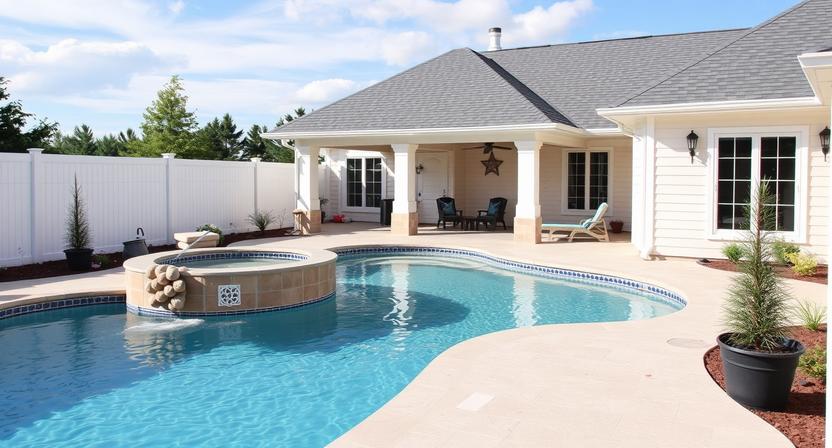
1. Site selection and assessment
The pool must go on level ground. A slope of more than 5 cm across the pool diameter is too much — the pool wall will be under unequal pressure, the liner will pull, and the pool will fail structurally within a season or two. We assess the yard during the quote visit and identify the best placement for levelling, access, sun exposure, and fence planning.
2. Permit applications
We submit the Zoning Certificate and Pool Fence Enclosure Permit applications. Above-ground pool permit processing in Toronto is generally faster than inground permits — typically 10–20 business days once a complete application is received, per the City’s own service standard.
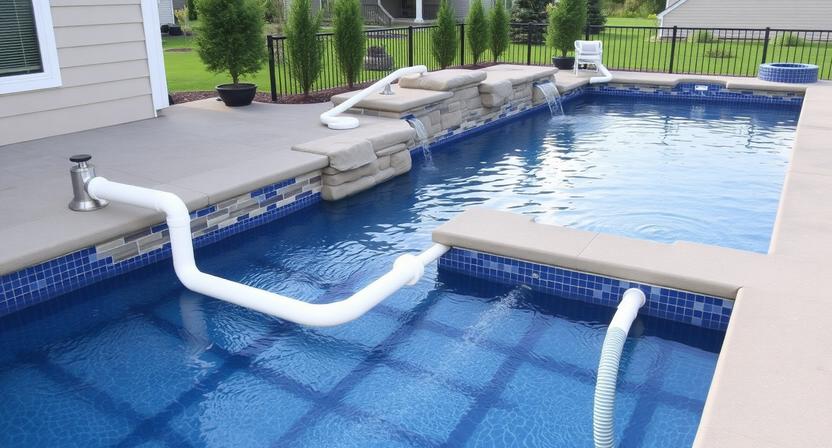
3. Site preparation
The pool footprint is levelled and prepared. Options:
- Existing grass: Sod is removed and the area is levelled with a compactor. A layer of sand (25–50 mm) is spread and smoothed as the pool base.
- Patio stones or pavers: An existing paved surface can work as a base if it’s level — confirm this during the site assessment.
- Compacted gravel pad: On softer ground or sloped sites, a compacted gravel base provides a stable, well-draining foundation. More expensive but significantly more reliable long-term.
What not to use as a base: Grass left in place, loose fill, wood chips, or uncompacted soil. These compress unevenly under the pool’s weight and water pressure, causing the pool to shift, tilt, or fail structurally.
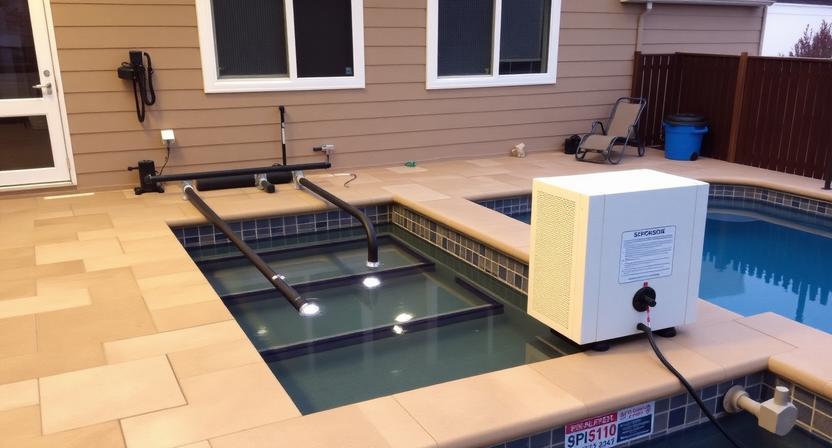
4. Pool assembly
The pool kit is assembled on the prepared base:
- Bottom track or sill plates are laid in a circle or oval following the manufacturer’s template
- Wall panels or a single rolled steel/resin wall is placed in the track
- Uprights, top rails, and any buttress bracing are assembled
- Plumbing fittings (skimmer, return inlet) are cut through the wall and fitted
- Liner is hung from the top rail or beaded receiver and draped into the pool
5. Fill and liner seating
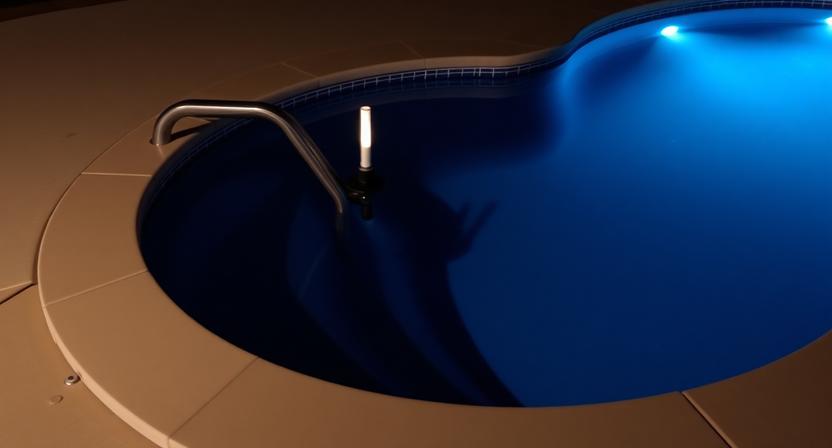
The pool is partially filled while the liner is smoothed and seated. Wrinkles at the base of the liner are worked out while there’s still time to adjust — once the pool is full, liner position is fixed. This step requires patience; rushing it produces a pool with permanent floor wrinkles.
6. Equipment connection
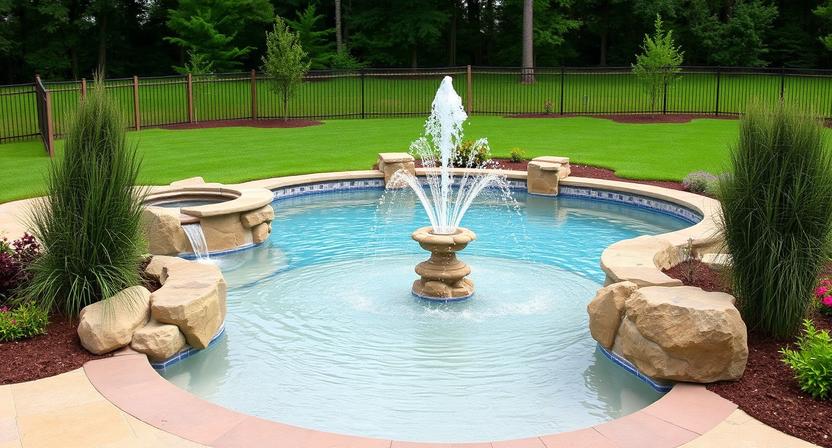
Filter pump, return hose, and skimmer are connected. Most above-ground filters use flexible hose connections rather than rigid plumbing — simpler to install but requires checking hose clamps and fittings seasonally for leaks.
7. Electrical
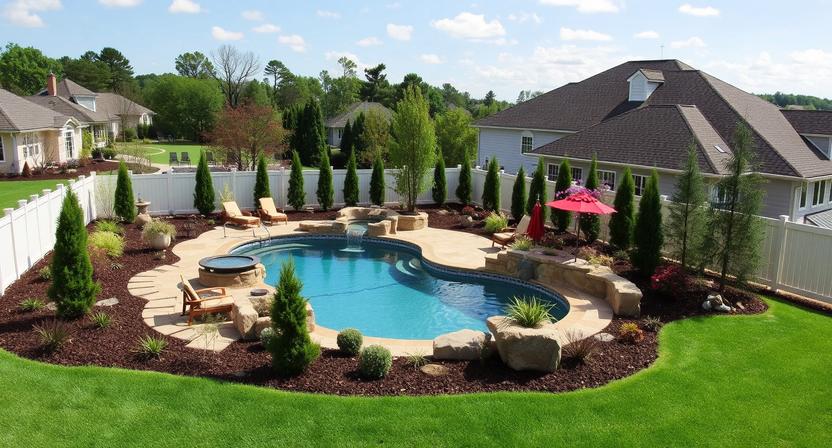
If a new outdoor circuit is required, a licensed electrician installs it before the pump is connected. All pool electrical work in Ontario requires an ESA permit.
8. Fence installation
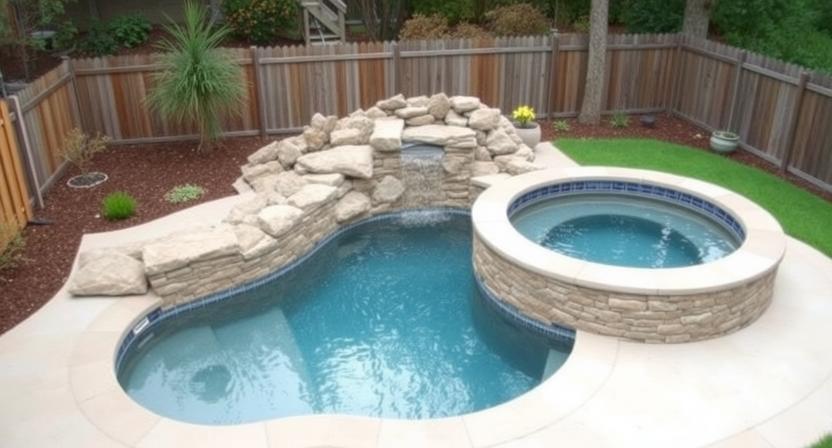
Pool enclosure fence installed and gate hardware fitted per City of Toronto requirements. Pool cannot be filled for use until the enclosure is inspected.
9. City inspection
Bylaw enforcement officer inspects the enclosure. Once cleared, the pool can be used.
10. Water chemistry start-up
Water chemistry is balanced — pH, chlorine, total alkalinity, and stabiliser (cyanuric acid) established before swimming begins.
Total installation timeline: 1–3 days on site. Plus permit waiting time — typically 10–20 business days for above-ground pool fence permits in Toronto.
Easy Pools
Adding a Deck to an Above-Ground Pool
An above-ground pool without any decking has one entry and exit point — the pool ladder. A deck changes how the pool functions entirely: easier entry and exit, space for furniture, a more integrated look in the yard, and the ability to include a gate as the pool enclosure rather than relying on a ladder lock.
Basic freestanding deck Pressure-treated timber frame with composite or wood decking, built to pool height on one side. Includes steps down to the yard and an integrated gate meeting bylaw requirements. Cost: $3,000–$6,000.
Wrap-around deck Deck extends along two or more sides of the pool. More seating and lounging space, more visual integration with the yard. Adds to the project cost proportionally — $6,000–$15,000+ depending on size and material.
Full surround deck Decking on all four sides, essentially framing the pool at pool-wall height. The pool becomes semi-integrated into the backyard design. Gate required on at least one side; some designs use the perimeter railing as the enclosure fence. Full surround decks at ground level require landscape integration (grading, screening) to look intentional rather than improvised.
Deck materials:
- Pressure-treated lumber: Most economical, widely used, requires staining every 2–3 years to prevent greying and checking
- Cedar: Natural resistance to rot and insects, better aesthetics than treated lumber, similar maintenance requirements
- Composite decking (e.g. Trex): Higher upfront cost, no staining or sealing required, consistent appearance over many years — the long-term lowest-maintenance option
Pool Types
Above-Ground vs Inground: Honest Comparison
Above-Ground | Inground | |
Upfront cost | $3,000 – $15,000 | $50,000 – $150,000+ |
Installation time | 1–3 days | 3 weeks – 6 months |
Permits required | Yes (fence permit) | Yes (zoning + fence permit) |
Lifespan | 10–20 years | 25–50+ years |
Resale value added | Minimal to none | $30,000–$50,000 (varies) |
Design flexibility | Fixed shapes and sizes | Fully custom (concrete/vinyl) |
Depth | 1.07 m–1.32 m | 0.9 m–2.4 m+ |
Can be removed | Yes | No |
Winter | Must be partially drained and winterised | Full winterisation |
Choose above-ground if:
- Budget is the primary constraint
- You want to swim this season without a 6-month build window
- You rent the property or expect to move in 5–10 years
- The yard has access or soil conditions that make inground installation impractical
- You want a pool that can be removed or relocated
Choose inground if:
- You’re planning to stay in the property long-term
- Resale value and property integration matter
- You want a deeper pool, a larger pool, or design features not available above ground
- Budget allows for the significantly higher upfront cost
Pool Maintenance
Above-Ground Pool Maintenance
Above-ground pools are simpler to maintain than inground pools — smaller water volume, accessible equipment, and no underground plumbing to deal with.
Weekly during the swim season:
- Test and adjust pH and sanitiser (chlorine or bromine)
- Skim the surface and empty the skimmer basket
- Vacuum the floor if sediment has settled
- Check filter pressure and backwash as needed
Liner care:
- Don’t allow sharp objects in the pool — above-ground liners are thinner than inground liners and puncture more readily
- Small punctures can be patched with a vinyl repair kit
- UV exposure degrades above-ground liners faster than inground — keep the water chemistry correct, particularly cyanuric acid (stabiliser) levels, to protect against UV degradation
Seasonal winterisation in Toronto: Above-ground pools cannot be left full through a Toronto winter — the water will freeze solid, expand, and destroy the liner, plumbing fittings, and potentially the pool wall. Winterisation involves partially draining the water below the return fittings, blowing out the hoses, adding winter chemicals, removing and storing the pump and filter (or using a freeze-resistant storage setup), and fitting a winter cover.
Pools are typically winterised in October and reopened in May.
FAQ
Above-Ground Pool Installation FAQs
How much does above-ground pool installation cost?
Above-ground pool installation cost depends on pool size, shape, wall system, liner, base preparation, equipment, access, decking, fencing, and accessories.
A simple round pool with a prepared base will usually cost less than a large oval pool with deck work, upgraded equipment, and more site preparation. The best way to get an accurate price is to request a site-based quote.
How long does above-ground pool installation take?
Above-ground pool installation is often faster than inground pool installation.
The timeline depends on yard levelling, base preparation, pool size, wall system, liner fitting, equipment setup, weather, decking, fencing, and water filling.
Do above-ground pools need permits?
Above-ground pools may need permit and enclosure planning in Toronto.
Fence rules, zoning rules, gate access, pool placement, deck access, and site layout can affect approval. Current local rules should be checked before the pool is installed or filled
Do above-ground pools need a level base?
Yes. An above-ground pool needs a level base.
Uneven ground can create uneven water pressure and stress on the pool walls. A stable, smooth, and level base helps protect the liner and pool structure.
Can an above-ground pool have a deck?
Yes. An above-ground pool can have a deck.
A deck can improve access, comfort, and the overall look of the pool area. It must be planned with safety, fencing, drainage, and local rules in mind.
How do you maintain an above-ground pool?
Above-ground pool maintenance includes skimming, vacuuming, brushing, water testing, filter care, pump checks, liner care, and seasonal opening and closing.
Good maintenance helps protect the liner, wall system, water quality, and equipment.
Service Area
Service Areas
Easy Pools installs above-ground pools across Toronto and the GTA:
Request an Above-Ground Pool Quote
We’ll assess the yard, confirm what’s feasible on the lot, walk through pool size and type options, and give you a clear, itemised quote — pool kit, site prep, installation, and permit handling all covered.
Easy Pools · Vaughan, ON · Serving Toronto and the GTA