

Vinyl Pool Installation Toronto: Costs, Liner Options and Installation Services
Vinyl liner pool installation in Toronto typically costs between $45,000 and $85,000 installed. That range covers excavation, wall panel structure, liner, plumbing, equipment, and basic coping. Larger pools, difficult site conditions, or premium finishes push the total higher.
Vinyl is the most shape-flexible inground pool option at a lower entry cost than concrete. The structure is built to suit the yard — not selected from a manufacturer’s catalogue of fixed shells. The trade-off is a liner that needs replacing every 10–15 years.
Easy Pools installs vinyl liner pools across Toronto and the GTA, handling permits, excavation, construction, and liner fitting through to handover.

Pool Installation
What Is a Vinyl Liner Pool?
A vinyl liner pool is built on site using a structural wall system — typically steel, aluminium, or polymer panels — assembled to the pool’s dimensions in the excavated hole. A sand or vermiculite base is prepared on the pool floor. A custom-fitted vinyl liner is then stretched over the walls and floor, forming the waterproof membrane and the visible surface of the pool.
The liner itself is manufactured to the pool’s exact measurements — floor contours, steps, corners, and any recessed features are all part of the liner pattern. Once the liner is in place, the pool is filled with water while the liner is smoothed and seated correctly.
The wall panel structure remains in place permanently. When the liner reaches the end of its life, it’s replaced — the underlying structure stays.
Costs
Vinyl Pool Costs in Toronto
Cost Component | Typical Range |
Excavation | $5,000 – $12,000 |
Wall panel structure | $6,000 – $14,000 |
Floor preparation (sand/vermiculite) | $1,500 – $4,000 |
Vinyl liner (supply and fit) | $4,000 – $10,000 |
Plumbing and equipment | $8,000 – $18,000 |
Electrical | $2,500 – $5,000 |
Coping and basic decking | $6,000 – $18,000 |
Permit fees | $500 – $2,000 |
Total installed (typical range) | $45,000 – $85,000 |
These figures reflect a standard residential install with a quality liner and mid-range equipment. They don’t include heating, lighting upgrades, water features, or landscaping beyond immediate site restoration.
What pushes costs up
Pool size. More excavation, more wall panels, a larger liner, and more equipment capacity. A 4 m x 8 m pool and a 5 m x 11 m pool are a meaningfully different scope.
Pool shape. Rectangular pools are the most economical to build in any material. L-shapes, kidney shapes, and freeform designs require more complex panel assembly and a more expensive custom liner.
Wall panel material. Polymer panels resist corrosion completely and cost more than steel. Steel panels are durable with proper installation and backfill drainage, but cost less upfront.
Liner gauge and pattern. Heavier gauge liners (28 mil and above) cost more but resist punctures and fading better than standard 20 mil liners. Imported or custom-coloured patterns can also add cost.
Depth. Standard vinyl pools are 1.2 m–1.5 m in the shallow end and 1.6 m–2.1 m at the deep end. Deeper pools require more excavation, more wall panel height, and a larger liner — each adds cost.
Site conditions. Clay-heavy soil, high water tables, sloped lots, and tight equipment access all increase excavation and construction cost.
Coping and decking. Concrete coping and a brushed concrete deck is the baseline. Natural stone coping, porcelain pavers, or stamped concrete push the finishing cost significantly higher.
What keeps costs lower
- Rectangular shape — simplest panel assembly, most economical liner pattern
- Standard pool dimensions (4 m x 8 m to 4 m x 9 m suits most Toronto lots)
- Steel panels with proper drainage rather than premium polymer
- Standard 28 mil liner rather than a heavy-gauge or fully custom pattern
- Basic concrete coping and deck
- Deferring heating and automation to a second season
Pool Options
Vinyl Liner Options
The liner is the most visible element of a vinyl pool and the one homeowners spend the most time looking at. It’s also the component that gets replaced — so understanding liner quality, patterns, and gauge matters both at purchase and at replacement time.
Liner gauge (thickness)
Liner thickness is measured in mils (thousandths of an inch). Common gauges:
Gauge | Characteristics |
20 mil | Entry-level; thinner, less puncture-resistant, shorter lifespan |
27–28 mil | Standard quality; good balance of durability and cost — most common choice |
30 mil | Heavy-duty; better puncture resistance, more durable under heavy use |
40 mil+ | Premium; longest lifespan, best resistance to UV fading and tearing |
For a Toronto inground pool that will see regular family use, 27–28 mil is the minimum worth specifying. Heavier gauge liners cost more upfront but last longer and are less susceptible to damage from pool toys, steps, and winter ice movement.
Liner patterns and colours
Vinyl liners are available in a wide range of colours, patterns, and textures. Broad categories:
Solid colours Blue is the classic — it produces clear, familiar-looking water. Lighter blues and whites make the pool appear brighter. Darker blues and grey tones give a more contemporary, dramatic look but can make the water appear darker. Solid colours tend to show scale and dirt more visibly than patterned liners.
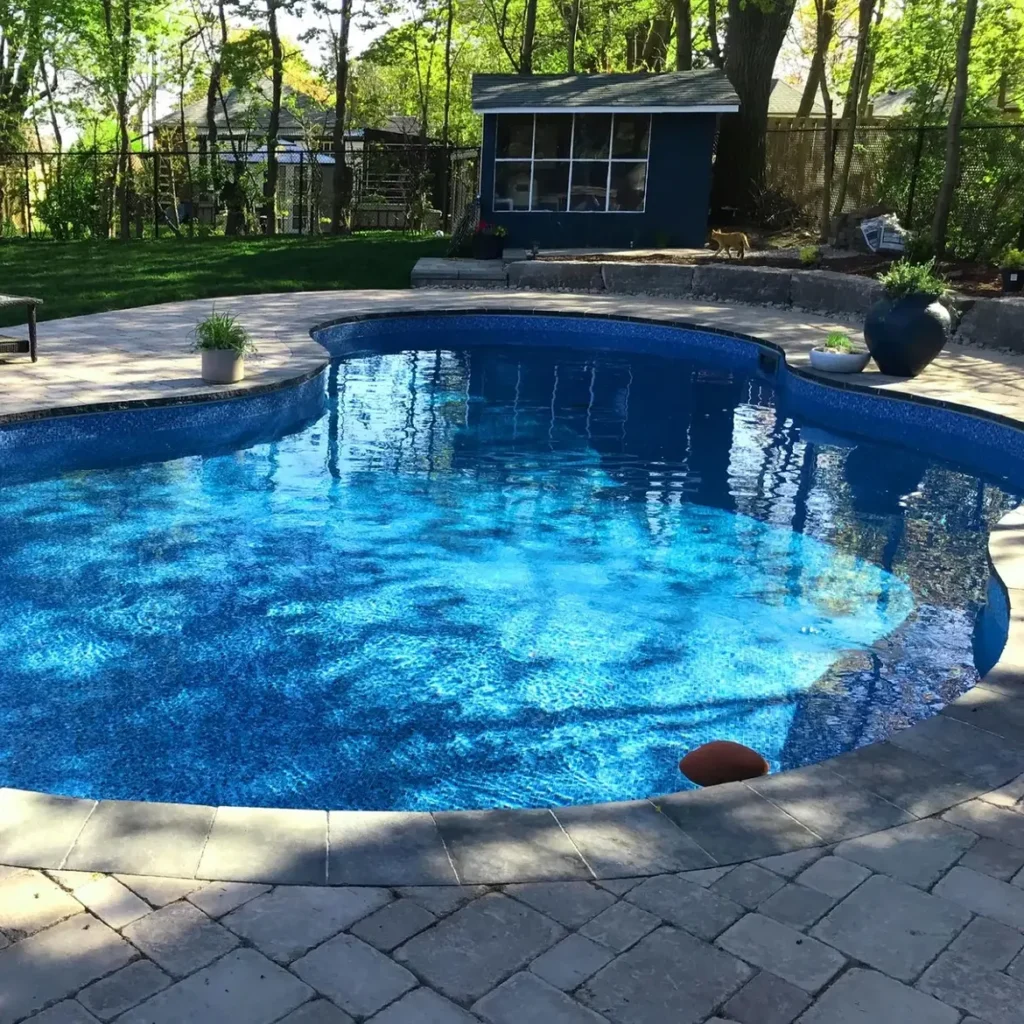
Tile patterns Simulated tile designs along the waterline or across the full liner face are among the most popular choices in Toronto. They give a clean, traditional look without the cost of real tile. Border tile patterns are particularly common — a tile-look band at the waterline with a solid or patterned floor below.
Stone and mosaic patterns Textured stone, slate, and mosaic designs suit more contemporary or natural backyard aesthetics. These tend to photograph well and hide surface deposits better than solid colours.
Pebble and geometric patterns Speckled or pebble-look liners are durable-looking and practical — minor discolouration is much less visible than on solid colours. Geometric patterns can complement modern deck and coping materials.
Liner construction types
Overlap liners The liner drapes over the pool walls and is held in place with coping strips at the top. Less expensive, simpler to install, but the excess material at the top edge must be managed.
Beaded liners The liner has a bead along the top edge that snaps into a bead receiver track built into the wall panels. Cleaner finish, easier to replace, slightly higher cost. Standard on most quality inground vinyl builds.
Unibead liners A hybrid that can function as either overlap or beaded — useful during liner replacement if the bead receiver is damaged or if the homeowner is switching from one system to the other.
Liner lifespan and replacement
With proper water chemistry maintenance, a quality vinyl liner typically lasts 10–15 years in Toronto conditions. Factors that shorten liner life:
- Poorly balanced water chemistry — particularly low pH, which degrades vinyl over time
- Prolonged exposure to high chlorine levels
- Physical damage — punctures, tears, or abrasion from pool toys and equipment
- Freeze damage from inadequate winterisation
Liner replacement cost in Toronto typically runs $5,000–$10,000, including draining the pool, removing the old liner, inspecting and repairing the floor base if needed, fitting the new liner, and refilling. The underlying wall structure is not replaced unless damaged.
Where Fits
Vinyl vs Fibreglass vs Concrete: Where Vinyl Fits
Vinyl Liner | Fibreglass | Concrete | |
Upfront cost | $$ | $$ | $$$$ |
Shape options | Flexible (custom built) | Fixed shells | Fully custom |
Surface feel | Smooth, comfortable | Smooth, non-porous | Varies by finish |
Algae resistance | Good | Excellent | Moderate |
Liner/resurfacing | Liner every 10–15 yrs | None | Resurface every 10–20 yrs |
Depth flexibility | Good (up to ~2.1 m) | Limited by shell | Unlimited |
Build time | 3–6 weeks | 1–3 weeks | 3–6 months |
Best fit | Flexible shape, budget-conscious | Speed + low upkeep | Full custom |
Choose vinyl if: You want more shape flexibility than fibreglass offers, at a lower upfront cost than concrete, and you’re comfortable budgeting for liner replacement in 10–15 years.
Choose fibreglass instead if: Installation speed and minimal long-term surface maintenance are the priorities, and an available shell size fits your yard.
Choose concrete instead if: You need a specific shape or size that neither fibreglass shells nor vinyl panel systems can achieve, or you want integrated features — infinity edges, raised spa walls, beach entries — built directly into the pool structure.
Design Options
Vinyl Pool Design Options
Shape and size
Vinyl liner pools can be built to almost any rectangular or geometric shape. Common options:
- Rectangle: Most efficient use of space, simplest liner pattern, best for lap swimming
- L-shape: Deeper swimming section with a shallower attached area for children or lounging
- Kidney and freeform: Organic curves that suit informal landscaped settings
- Roman end: A rectangular pool with a semicircular shallow end — traditional appearance, works well with formal garden settings
Very complex freeform shapes are possible in vinyl but increase liner cost and complexity. Where a highly irregular shape is needed, concrete may be a more practical solution.
Depth configurations
Standard vinyl pool depth profiles:
- Uniform depth: Consistent depth across the pool (typically 1.4 m–1.5 m) — suits family use, maximises water volume in a given size
- Shallow-to-deep: Gradual slope from 0.9 m–1.2 m at the shallow end to 1.8 m–2.1 m at the deep end — the most common residential configuration
- Hopper bottom: A flat shallow area, a steep drop to a flat deep section — once standard, now less common due to safety considerations
Steps and entry
Vinyl pools typically use prefabricated polymer or fibreglass step units set into the shallow end corner. These are integrated into the liner — the liner wraps around the step unit. Step configurations range from simple corner stairs to wider entry steps that span the full shallow end width.
Benches and ledges
Bench seating can be built into a vinyl pool using prefabricated polymer bench forms. A shallow tanning ledge (baja shelf) is also achievable, though it’s more straightforward in fibreglass or concrete — discuss this at the design stage.
Coping and decking
Coping options for vinyl pools:
- Cantilever concrete coping: Poured concrete overhang — the most common and cost-effective option
- Brick or block coping: Traditional appearance, commonly seen on older Toronto pools
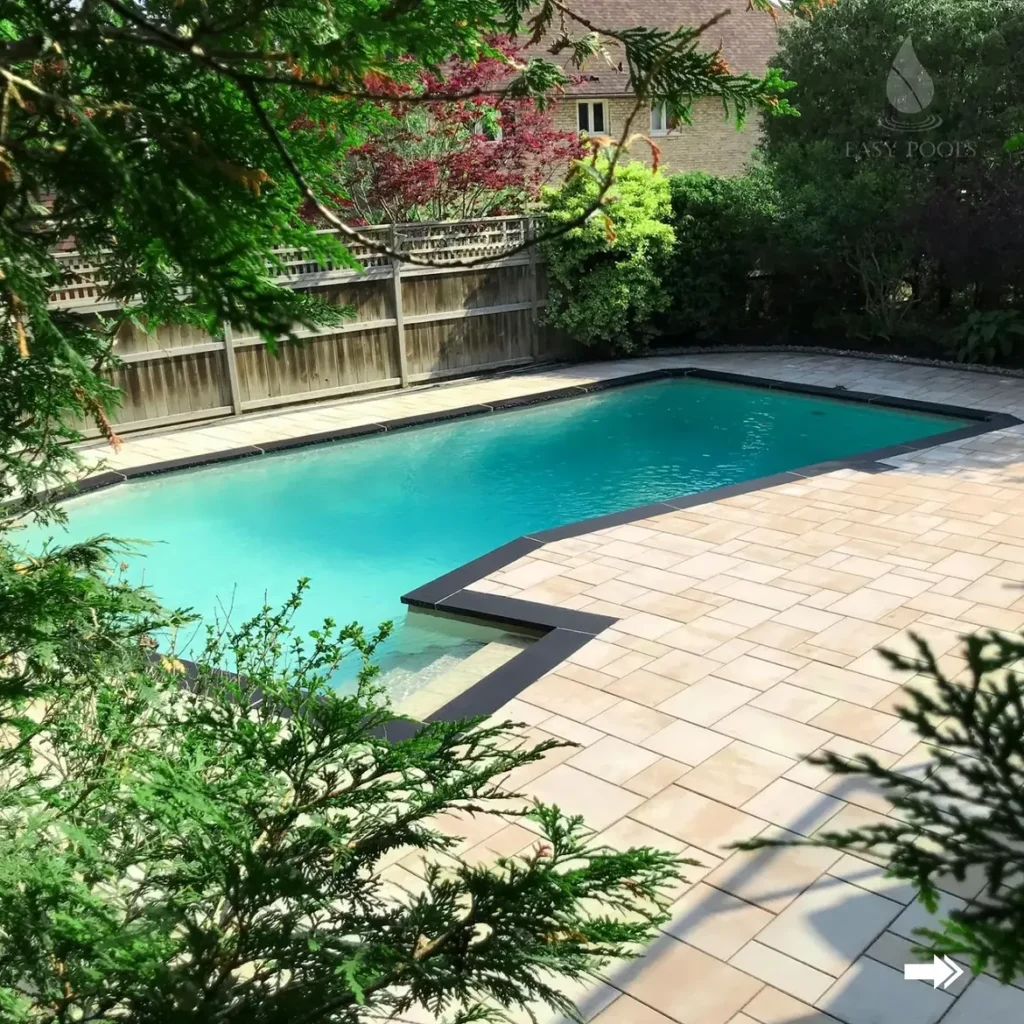
- Natural stone coping: Limestone, travertine, or granite — premium look, higher cost
- Porcelain coping: Very durable, contemporary appearance, lower heat absorption than dark stone
The coping and deck material is one of the biggest visible levers on the finished look of the pool. The liner pattern should be selected alongside the coping material — a tile-look liner typically pairs better with a clean concrete or stone coping than with a busy stamped concrete deck.
work process
Vinyl Pool Installation Process
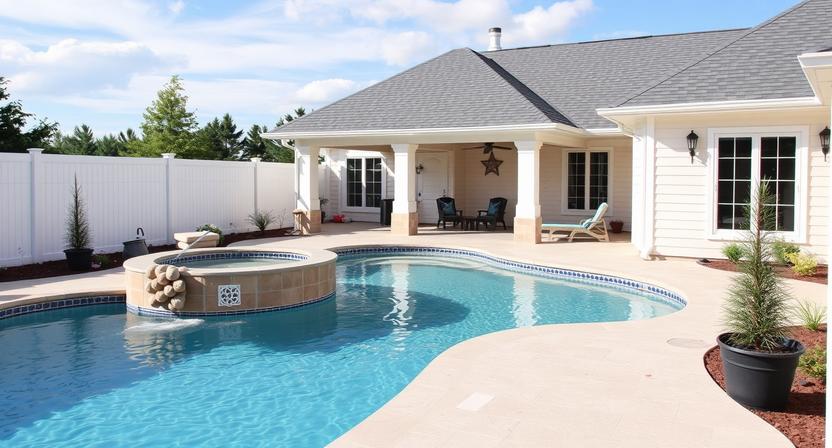
1. Site review and quote
We visit the property, confirm yard dimensions against setback requirements, assess soil conditions and equipment access, and discuss shape, depth, and liner preferences. A detailed, itemised quote follows.
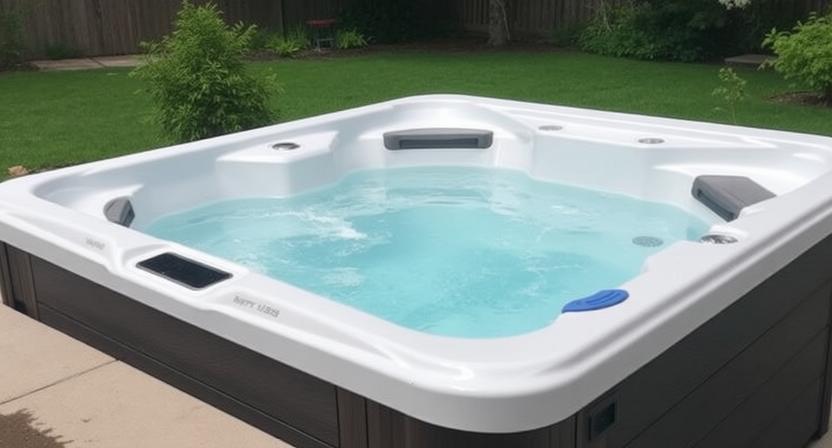
2. Permit applications
We prepare drawings and submit the Zoning Certificate and Pool Fence Enclosure Permit applications to the City of Toronto. Allow 4–10 weeks for approval. No construction begins without permits in hand.
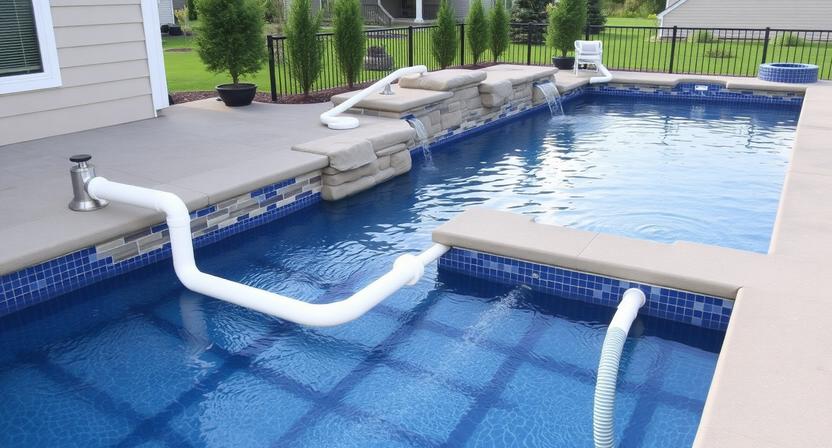
3. Utility locates
Ontario One Call locates all buried utilities before excavation. Mandatory by law.
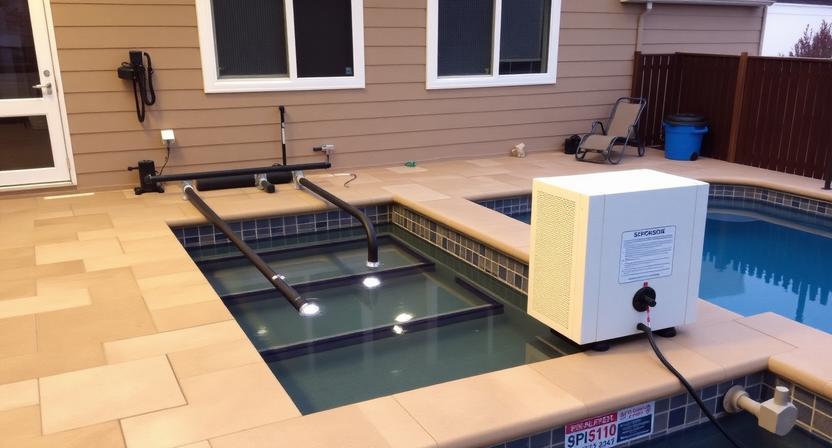
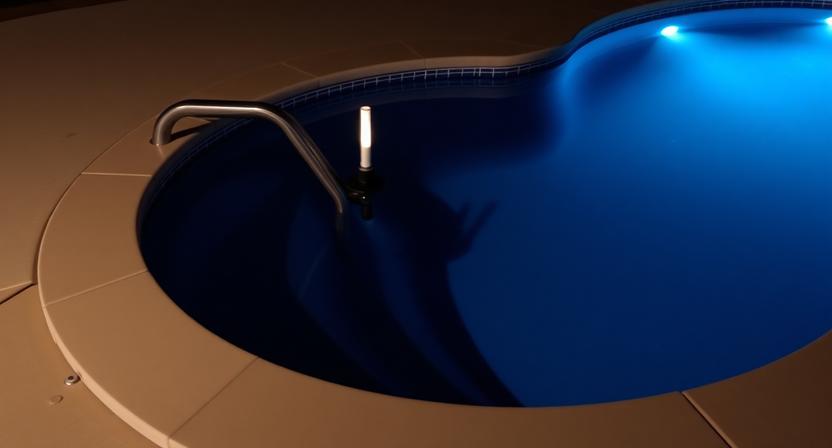
4. Excavation
The pool footprint is excavated approximately 300 mm larger than the pool perimeter on all sides, to allow for wall panel assembly and backfill clearance. Most residential vinyl pools take 1–2 days to excavate.
5. Wall panel assembly
Steel, aluminium, or polymer wall panels are assembled in the excavation to the pool’s dimensions and shape. Panels are secured with braces, and corners are formed. The structural integrity of the wall panel system is critical — panels must be level, plumb, and properly braced before any other work proceeds.
6. Plumbing roughed in
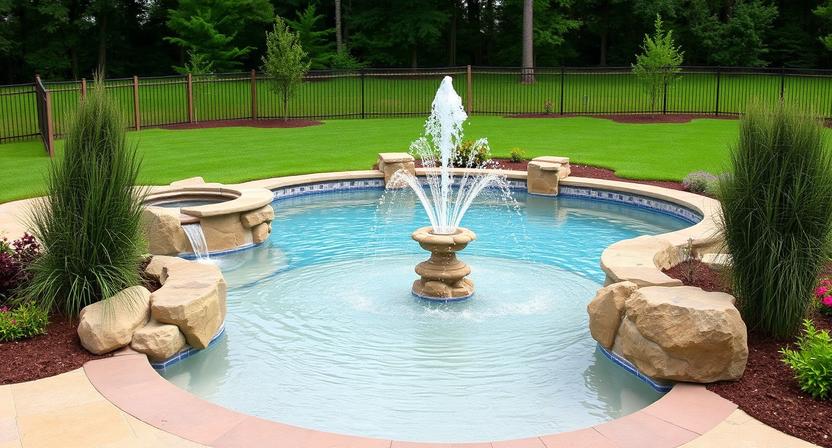
Return lines, main drain, suction lines, and any feature plumbing are run through and around the wall panels before the floor base is prepared.
7. Floor base preparation
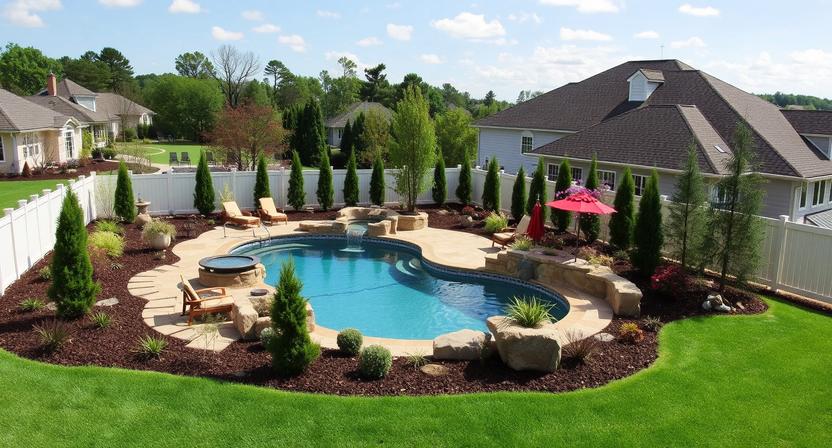
The pool floor is prepared with a sand, cement, or vermiculite base — trowelled smooth to remove any irregularities that could telegraph through the liner. A perfectly smooth base is essential: any lumps, stones, or depressions under the liner will be visible and can cause premature wear.
8. Liner installation
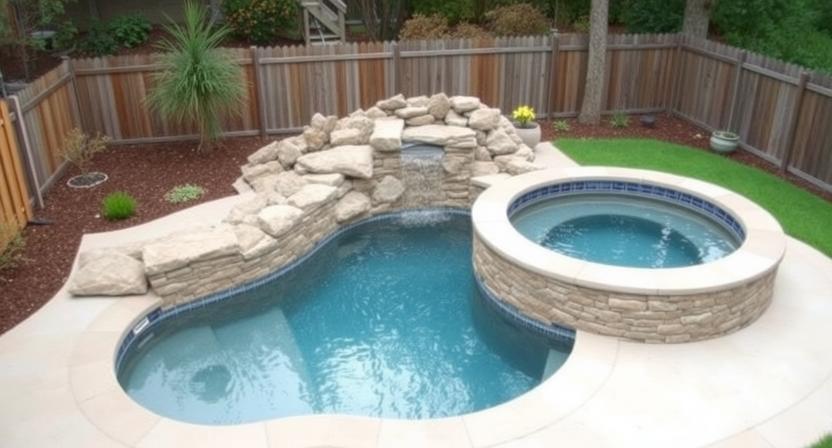
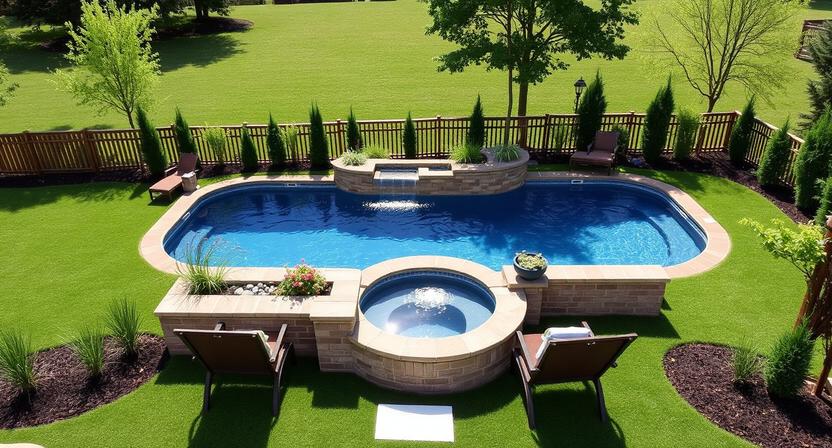
The custom-fitted liner is unfolded into the pool, positioned carefully, and attached at the wall tops using the bead receiver system. A vacuum is applied behind the liner to draw it tight against the floor and walls, eliminating wrinkles before the pool begins filling. Water is introduced slowly while the liner is smoothed and seated — this is time-sensitive work that requires attention throughout the fill.
9. Equipment installation
Pump, filter, heater (if included), and any automation are installed on an equipment pad and connected to the plumbing runs.
10. Electrical
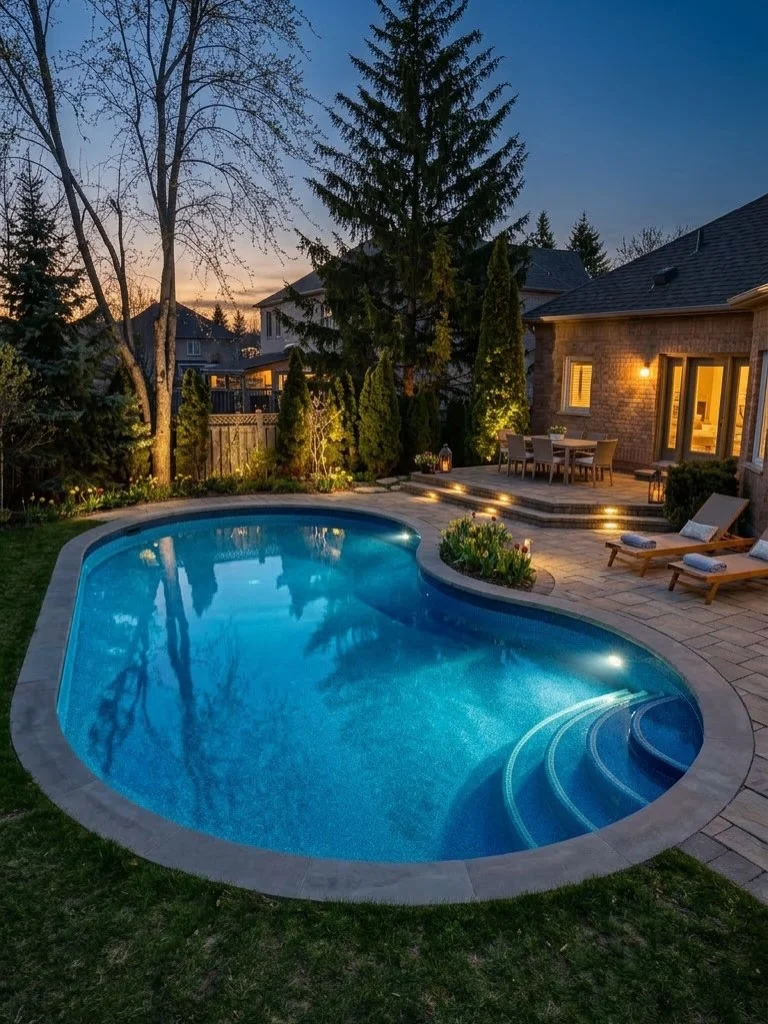
A licensed electrician connects all pool equipment and lighting to the panel under an ESA permit.
11. Coping and decking
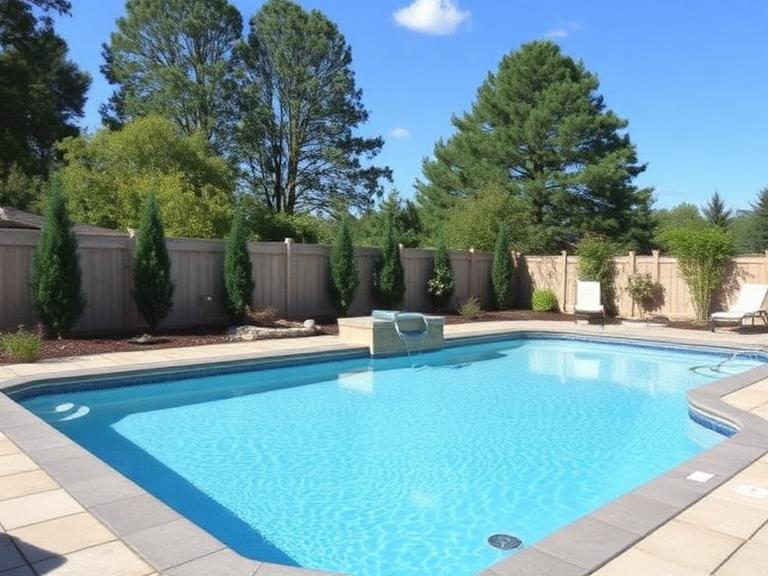
Coping is installed at the pool edge, and the surrounding deck is poured or laid. The liner is trimmed and finished at the coping line.
12. Fence installation
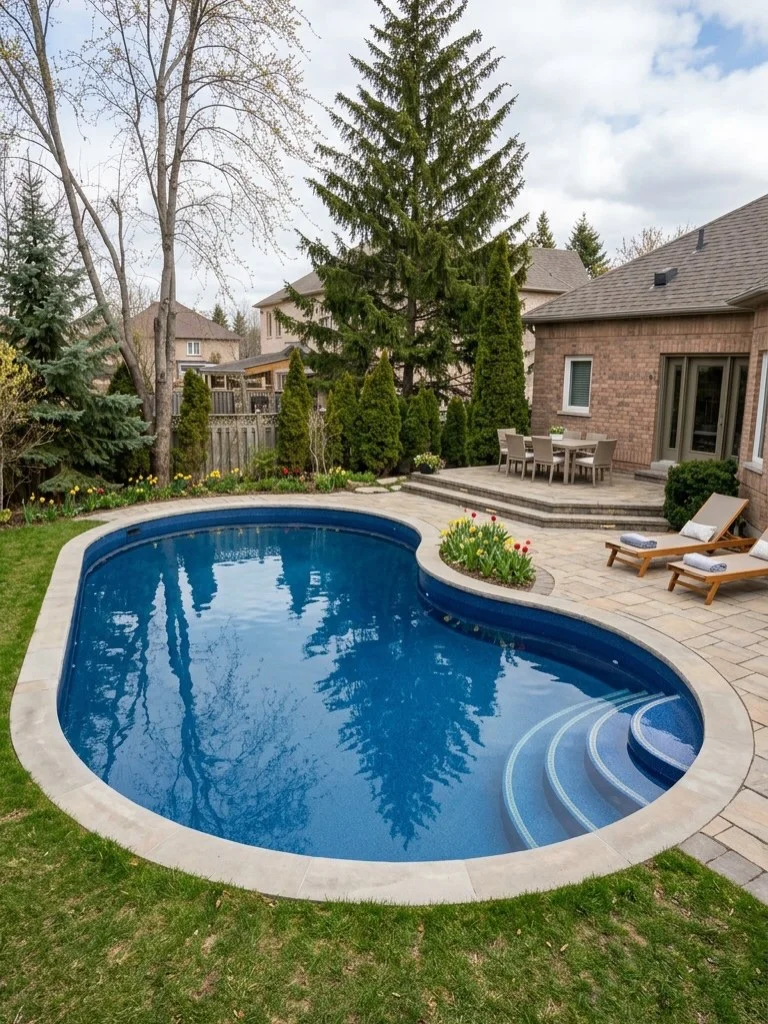
A compliant pool enclosure fence is installed per City of Toronto Municipal Code Chapter 447 before the pool can be filled for use.
13. City inspection and fill
City inspects the fence. Once approved, the pool is filled and water chemistry is balanced.
14. Owner walkthrough
We cover equipment operation, water chemistry basics, liner care, winterisation requirements, and warranty documentation.
Total on-site build time: 3–6 weeks from excavation to water, depending on pool size, shape complexity, and weather.
Pool Permits
Permits for Vinyl Pools in Toronto
Vinyl liner inground pools require the same permit process as any other inground pool. The City of Toronto does not require a building permit for the pool structure itself, but two approvals are required before the pool can be built or filled:
Zoning Certificate — confirms setback compliance from property lines, the house, and easements. Must be obtained first.
Pool Fence Enclosure Permit — required under Municipal Code Chapter 447. The pool cannot be filled with water until a compliant fence is installed and the City has inspected it.
Key requirements:
- Minimum 1.2 m pool enclosure fence
- Self-closing, self-latching gates opening outward, latch out of reach of young children
- Typical setback from property lines: 1.2 m–1.8 m
Easy Pools prepares drawings and manages both permit applications as part of the installation service.
Pool Maintenance
Vinyl Pool Maintenance
Water chemistry
Vinyl liner pools require the same core water chemistry management as any pool — pH, sanitiser, total alkalinity, calcium hardness, and cyanuric acid all need to be kept in range. The critical one for vinyl is pH: consistently low pH (below 7.0) degrades vinyl over time, causing the liner to wrinkle and become brittle. Test and adjust weekly during the swim season.
Cleaning
Vinyl surfaces should be cleaned with a soft brush or pool vacuum rather than abrasive tools. Algae can take hold on a vinyl surface — though less readily than on concrete — and should be treated promptly rather than scrubbed aggressively.
Liner care
Avoid dragging sharp objects across the liner floor. Pool toys with hard or sharp edges (particularly metal frames) are a common cause of punctures. Small punctures can be repaired with a vinyl patch kit, even underwater. Larger tears, delamination, or extensive fading typically mean the liner needs replacement.
Winterisation
Toronto’s winters require proper winterisation to prevent freeze damage. The pool water level is lowered, plumbing lines are blown out and plugged, winter chemicals are added, and the pool is covered. Improper winterisation — particularly leaving water in the lines or allowing ice to form on the liner under tension — is one of the most common causes of premature liner failure.
FAQ
Vinyl Liner Pool Installation FAQs
How much does vinyl liner pool installation cost?
Vinyl liner pool installation cost depends on pool size, shape, wall system, liner option, access, excavation, equipment, permits, coping, decking, and added features.
A simple vinyl liner pool with easy access will usually cost less than a large custom pool with complex site work, premium features, and full backyard finishing. The best way to get an accurate price is to request a site-based quote.
How long does vinyl liner pool installation take?
The timeline depends on pool size, shape, permits, weather, yard access, excavation, wall panels, floor base, liner fitting, equipment setup, and finishing work.
A simple pool can move faster than a custom shape with major decking, landscaping, or drainage needs.
Are vinyl liner pools good for small backyards?
Yes, vinyl liner pools can work well in small backyards.
They can be built in compact shapes that make good use of limited space. The design should still leave room for fencing, equipment, drainage, seating, and safe movement.
Do vinyl liner pools need permits?
Yes. Vinyl liner pool projects in Toronto need permit and enclosure planning.
Zoning, fence rules, gate details, setbacks, and site layout can all affect approval. Current local requirements should be checked before installation starts.
How long does a vinyl pool liner last?
A vinyl pool liner can last for many years, but its lifespan depends on water balance, sun exposure, pool use, cleaning habits, and maintenance.
Good water care and seasonal service can help protect the liner. When the liner becomes worn, faded, brittle, or damaged, replacement may be needed.
Can a vinyl pool liner be replaced?
Yes. A vinyl pool liner can be replaced.
Liner replacement can refresh the look of the pool and help restore the inner surface. It is also a chance to choose a new colour or pattern.
Easy Pools can help with liner replacement and long-term liner care.
Service Area
Service Areas
Easy Pools installs vinyl liner pools across Toronto and the GTA:
Request a Vinyl Pool Quote
We’ll visit the property, confirm what’s feasible on the lot, walk through shape and liner options, and give you a clear, itemised quote — wall system, liner, equipment, coping, and permit handling all specified before anything is signed.
Easy Pools · Vaughan, ON · Serving Toronto and the GTA