

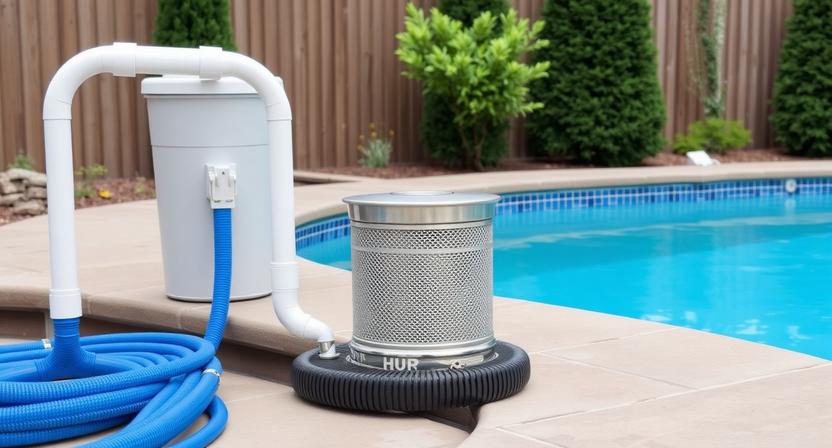
Pool equipment replacement is one of the most common service needs for established pools in Toronto — equipment wears out on its own timeline regardless of how well a pool is maintained. This guide covers selection, installation requirements, and costs for the four main equipment categories, plus the ESA permit requirement that applies to all pool electrical work in Ontario.
When Equipment Needs Replacing
Equipment lifespans provide a general planning timeline:
- Pumps: 8–12 years; longer with a VSP at lower operating speeds
- Filters: 10–15 years (tank); filter media needs replacement every 3–7 years
- Gas heaters: 7–12 years
- Heat pumps: 10–15 years
- Salt cells: 3–7 years
- Automation systems: 10–15 years before meaningful upgrades are available
For the repair vs. replacement decision framework, see Pool Repair Toronto. This page focuses on the installation side once the replacement decision has been made.
Pumps
Selecting a Replacement Pump
The critical sizing consideration is matching the pump to the pool’s plumbing, not just replacing it with the same horsepower:
- Flow rate: must be adequate to turn over the pool volume through the filter at least once per day, but not so high that flow velocity through small pipes causes damage or cavitation
- Port size: the inlet and outlet connections must match (or be adapted to) the existing plumbing’s pipe diameter
- Head pressure: the pump’s performance curve must match the resistance of your specific plumbing configuration (length of runs, number of fittings, filter type)
Single-speed vs. variable-speed (VSP): VSPs use 50–80% less electricity for the same filtration, with a typical payback of 1–3 years. If you’re replacing an aging single-speed pump, a VSP is almost always the better long-term choice. See Energy-Efficient Pool Systems for the full efficiency analysis.
Automation compatibility: if you have or plan to add an automation system, confirm the pump model is compatible with your specific automation platform before purchasing — some VSPs use proprietary communication protocols that only work with certain control systems.
Installation
Pump replacement is typically a half-day job — shut off power, disconnect unions at the pump inlet and outlet, remove the old pump, connect the new pump, restore power. The plumbing union connections make this process straightforward if unions were installed at the original build. Pools without unions require cutting and re-joining plumbing, which adds labour.
ESA permit: required if the pump circuit is being modified or if a new circuit is being added. A straight like-for-like replacement on an existing circuit may not require a permit in all cases — confirm with a licensed electrician.
Typical cost: $450–$1,100 (single-speed); $850–$1,900 (variable-speed), including equipment and installation.
Filters
Selecting a Replacement Filter
Filter type: the three main types — sand, cartridge, and diatomaceous earth (DE) — each have different maintenance requirements and filtration levels. See Pool Maintenance Toronto for the maintenance side. Most homeowners replace like-for-like unless they have a specific reason to switch types.
Sizing: a replacement filter should be sized to exceed the pump’s maximum flow rate — an undersized filter creates excessive pressure drop and requires more frequent cleaning. Sizing up slightly from the minimum is generally worthwhile.
Port size and configuration: confirm the inlet/outlet configuration matches your existing plumbing to avoid adapter fittings that restrict flow.
Installation
Filter replacement involves disconnecting the inlet and outlet plumbing, removing the old tank, positioning the new tank, and reconnecting. For DE and sand filters, the filter must be charged with media after installation.
Typical cost: $550–$1,300 (sand); $450–$1,100 (cartridge); $700–$1,600 (DE), including equipment and installation.
Heaters
Heater installation has the most distinct requirements of any equipment category because gas heaters require a licensed gas technician and a gas permit in addition to the ESA electrical permit.
Gas Heaters
Selection: sized by BTU output to the pool volume, target temperature, heat loss rate, and how quickly you want to heat the pool. Gas heaters have largely standardized connections in common residential sizes; confirming the gas supply line size (often 3/4″ for standard residential pool heaters) and the existing venting configuration is the most important compatibility check.
Installation requirements:
- Licensed gas technician required for gas connections (Ontario Technical Standards and Safety Authority regulation)
- Gas permit required
- Proper venting: most residential gas pool heaters are direct-vent or natural-draft; the venting configuration must match the heater model
- Minimum clearances: the heater requires clear space for air intake and exhaust
Typical cost: $2,300–$5,500 including equipment and installation.
Heat Pumps
Selection and compatibility: sized by BTU output; titanium heat exchangers are recommended for saltwater pools. Heat pumps require a dedicated electrical circuit.
Installation requirements:
- Clearance for airflow: heat pumps draw ambient air through the unit and exhaust cooler air; they need open space around them (typically 1.5m on the exhaust side minimum)
- ESA permit required for the dedicated circuit
- Plumbing connections similar to gas heater: inlet and outlet to the pool’s circulation loop
- Best positioned where exhaust air isn’t directed at the house or patio
Typical cost: $2,500–$6,000 including equipment and installation.
For the full heating-type comparison (gas vs. heat pump vs. solar), see Pool Heating Systems.
Automation Systems
What Automation Covers
A pool automation system centralizes control of the pump, heater, lighting, water features, and chemistry dosing into a single interface — typically a keypad at the equipment pad, plus a smartphone app. Features include scheduled run times, remote monitoring, and integration with smart-home systems.
Selection: Compatibility First
This is the most important automation selection principle: confirm equipment compatibility before purchasing a control system. Major platforms (Pentair IntelliCenter, Hayward OmniLogic, Jandy iAquaLink) communicate with specific pump models using digital protocols — an automation system and a pump that don’t share a compatible protocol can’t integrate fully, even if both are functional products.
Typical compatibility chain to confirm: automation system → pump → (optional) lighting, water features, heater.
If you’re upgrading both a pump and adding automation simultaneously, select the automation system first, then confirm the pump is on that system’s compatible equipment list.
Installation Requirements
- Automation systems require a wiring run from the control centre to each piece of equipment being integrated
- Transformer or power supply for the control system
- ESA permit for all new wiring
- Programming and commissioning after installation
Typical cost: $2,000–$6,500 including equipment and installation, depending on scope of integration.
Salt Chlorinators
Converting an existing pool to a saltwater system — or replacing an aging salt cell — is a straightforward equipment installation:
- Install the salt cell in the plumbing return line (after the heater)
- Mount the control unit at the equipment pad
- Electrical connection (ESA permit required)
- Add salt to the pool to reach target concentration
Cell sizing: sized by pool volume. An undersized cell will struggle to maintain chlorine levels in a larger pool.
Typical cost: $800–$1,800 for salt chlorinator installation including equipment. Replacement cells (without the control unit): $400–$1,100.
ESA Permit Requirement: The Toronto-Specific Reality
All new pool electrical connections in Ontario — including new pump circuits, heater circuits, automation wiring, and lighting upgrades — require an ESA (Electrical Safety Authority) permit and inspection. This is not optional.
What the ESA inspection confirms:
- Correct circuit rating for the equipment
- GFCI protection on applicable circuits
- Proper grounding and bonding connections (the equipotential bonding grid that prevents shock risk around the pool)
Who obtains the permit: your licensed electrician. A pool equipment installer who also handles electrical connections should be or work with an ESA-licensed electrician. Confirm this is included in scope before work begins — discovering that electrical work was done without an ESA permit creates problems at property sale or insurance claim time.
Cost Summary
| Equipment | Typical Installed Cost |
| Single-speed pump | $450 – $1,100 |
| Variable-speed pump (VSP) | $850 – $1,900 |
| Sand filter | $550 – $1,300 |
| Cartridge filter | $450 – $1,100 |
| DE filter | $700 – $1,600 |
| Gas heater | $2,300 – $5,500 |
| Heat pump | $2,500 – $6,000 |
| Automation system | $2,000 – $6,500 |
| Salt chlorinator | $800 – $1,800 |
| LED lighting upgrade (per light) | $400 – $900 |
Frequently Asked Questions
Does pool equipment replacement require a permit in Toronto? Any new electrical connection or circuit modification requires an ESA permit. A straight like-for-like pump swap on an existing circuit may not always require one — confirm with a licensed electrician. Gas heater installation requires both a gas permit and ESA permit.
Can I install pool equipment myself? Mechanical connections (plumbing unions, filter connections) are often within DIY capability. Electrical connections require a licensed electrician and ESA permit. Gas connections require a licensed gas technician and gas permit. Getting either wrong creates safety risks and insurance/resale complications.
What’s the most cost-effective equipment upgrade for an older pool? A variable-speed pump — it typically pays back in 1–3 years through electricity savings and has a significant impact on day-to-day operating cost. See Energy-Efficient Pool Systems for the full analysis.
How do I know which automation system is compatible with my equipment? Check your existing pump’s model and manufacturer against the compatibility lists for the automation systems you’re considering. Major manufacturers publish equipment compatibility lists; your pool service technician can also advise based on what’s installed.
Get an Equipment Assessment and Installation Quote
Equipment selection is easier with someone who knows your specific pool’s configuration.
Contact Easy Pools at (647) 449-9512 for a free, no-obligation equipment assessment and installation quote.