

ICF Pool Installation Toronto: Costs, Energy Efficiency and Construction Services
ICF pool installation in Toronto typically costs between $80,000 and $160,000+ depending on pool size, design complexity, finishes, and features. ICF pools cost more to build than standard concrete pools in most cases — but they cost significantly less to run, and they’re built to last considerably longer.
ICF stands for Insulated Concrete Form. It’s a construction method where hollow expanded polystyrene (EPS) foam blocks are stacked into the pool’s shape, reinforced with steel rebar, and filled with concrete. The foam stays in place permanently after the pour, acting as continuous insulation on both sides of the concrete wall for the life of the pool.
The result is a pool that holds heat dramatically better than standard concrete — which matters in Toronto’s climate, where the swim season is short and heating costs are real.
Easy Pools installs ICF pools across Toronto and the GTA, managing design, permits, excavation, construction, and finishing as a complete project.

Pool Construction Work
How ICF Pool Construction Works
Understanding ICF construction is worth doing before comparing it to other pool types, because the technology is what drives most of the benefits.
What ICF blocks are
An ICF block is a hollow panel of expanded polystyrene (EPS) foam — the same dense, closed-cell foam used in high-performance building insulation. The blocks are precision-manufactured with a hollow core and plastic web ties that hold the two foam faces apart at a fixed distance, typically 150–200 mm. That cavity is where the reinforced concrete goes.
Blocks are designed to interlock when stacked — no mortar, no formwork, no heavy equipment needed to place them. They’re lightweight and can be cut with a handsaw to accommodate curves, angles, steps, benches, or any other pool feature.
The construction sequence
- EPS foam blocks are stacked and interlocked to form the pool walls, following the pool’s design dimensions exactly
- Rebar is threaded through the block cavities for structural reinforcement
- Plumbing penetrations — returns, skimmers, main drains, light niches — are cut through the foam before the pour
- Concrete is pumped into the foam cavity, filling all the voids and encasing the rebar
- The concrete cures inside the foam — the foam stays in place permanently on both sides
- The interior foam face is waterproofed and finished with pool plaster, quartz aggregate, or tile — the same interior finish options available in standard concrete pools
What’s left is a concrete wall with a continuous layer of EPS insulation bonded to both its interior and exterior faces. The concrete never makes direct contact with the pool water — the interior foam face, once waterproofed and plastered, forms the actual pool surface.
Why ICF
Why ICF Suits Toronto’s Climate
Most pool types in this city are designed for a swim season that runs roughly late May to early September — about 14 weeks if you’re lucky. Extending that window even two or three weeks on either end represents a meaningful improvement in how much value the pool actually delivers.
ICF’s insulation is what makes that extension realistic.
Heat retention
A standard concrete pool has walls that conduct heat. Water temperature rises when the heater runs and drops when it doesn’t — through the ground, through the concrete, and through the surface. On a cool Toronto evening in May or September, a concrete pool loses heat faster than a heater can efficiently replace it.
An ICF pool’s foam walls act as a continuous thermal barrier. Heat loss through the walls and floor is dramatically reduced — independent sources cite heat loss reduction of 40–60% compared to standard concrete construction. In practice, this means:
- The pool reaches target temperature faster with less heating run time
- Temperature holds overnight and through cool weather without the same rate of drop
- The heater runs less frequently for the same water temperature
- Spring and autumn swimming is more practical because the pool is easier and cheaper to keep warm
For a heated Toronto pool running a heat pump or gas heater, that efficiency difference adds up over a 5–10 year period into real money.
Freeze-thaw durability
Toronto’s winters expose pool structures to repeated freeze-thaw cycling. Standard concrete pools manage this adequately when properly winterised, but the concrete is exposed to ground movement and temperature stress.
ICF pools handle freeze-thaw conditions well — the EPS foam insulates the concrete core from thermal shock, and the reinforced concrete structure is not in direct contact with pool water. Combined, these properties make ICF a structurally sound choice for Ontario’s climate specifically.
Costs
Fibreglass Pool Costs in Toronto
Cost Component | Typical Range |
Excavation | $6,000 – $15,000 |
ICF block materials | $10,000 – $22,000 |
Rebar and concrete pour | $8,000 – $18,000 |
Waterproofing and interior finish | $8,000 – $25,000+ |
Plumbing and equipment | $10,000 – $22,000 |
Electrical | $3,000 – $6,000 |
Coping and decking | $8,000 – $30,000+ |
Permit fees | $500 – $2,000 |
Total installed (typical range) | $80,000 – $160,000+ |
Upfront cost vs long-term cost
ICF pools cost more to build than standard concrete pools of the same size. The ICF block materials add cost over a standard rebar-and-gunite build, and waterproofing the interior foam surface requires careful specification.
The offset comes over time:
- Lower heating bills — reduced heat loss through insulated walls means less heater run time per degree maintained, every season for the life of the pool
- Longer structural lifespan — ICF pool structures are exceptionally durable; the foam protects the concrete core from water contact and thermal stress, reducing the likelihood of long-term structural repair
- Less resurfacing frequency — the plastered interior surface over ICF foam tends to perform well because it’s not subject to the same osmotic pressure and ground movement stress as plaster applied directly to standard concrete
The payback period on the energy efficiency difference depends on pool size, heater type, and how hard the heater works — but for homeowners who heat their pool regularly and plan to own it for 10+ years, ICF makes a credible long-term financial case.
What pushes the cost up
Pool size. More blocks, more rebar, more concrete, larger interior surface to waterproof and finish. A larger pool is a proportionally larger project in every phase.
Shape complexity. Curves and freeform designs are more achievable in ICF than in standard concrete (the foam cuts easily), but complex shapes still require more block-cutting, more careful alignment, and more time.
Interior finish. Plaster is the baseline. Quartz aggregate, pebble finish, and full tile all cost more — the same finish cost differential that applies to standard concrete pools.
Integrated features. Spas, water features, and raised bond beams are all achievable in ICF and add to the project cost.
Waterproofing specification. The interior foam face of an ICF pool must be waterproofed before the finish is applied. The quality of the waterproofing system matters — cutting corners here affects long-term performance. Proper specification adds cost that shouldn’t be eliminated.
Key Differences
ICF vs Standard Concrete: The Key Differences
Both ICF and standard concrete pools produce a reinforced concrete structure. The differences are in how that structure is built and what surrounds it.
ICF Pool | Standard Concrete (Gunite/Shotcrete) | |
Wall construction | Foam blocks filled with concrete | Concrete sprayed over rebar frame |
Insulation | Continuous EPS foam on both sides | None — bare concrete |
Heat retention | High — 40–60% less heat loss | Standard |
Build time | Faster — no shotcrete crew required | 3–6 months |
Shape flexibility | High — foam cuts easily to any shape | High — full custom |
Interior finish options | Plaster, quartz, pebble, tile | Plaster, quartz, pebble, tile |
Structural lifespan | Exceptionally long | Very long (50+ years) |
Resurfacing | Same schedule as concrete | Every 10–20 yrs depending on finish |
Upfront cost | Higher than standard concrete | Lower than ICF |
Operating cost | Lower — less heating required | Higher — more heat loss through walls |
The honest summary: ICF and standard concrete pools are closely related products. ICF wins on energy efficiency and long-term operating cost. Standard concrete wins on upfront cost and is more widely understood by contractors. For a homeowner who heats the pool and plans to own it long-term, ICF’s operating cost advantage is real and compounding. For a homeowner focused primarily on upfront cost, standard concrete is the lower-entry-price option.
work process
ICF Pool Design Options
ICF’s design flexibility is comparable to standard concrete — and in some respects easier, because the foam blocks can be cut with a handsaw to accommodate almost any shape without the precision formwork that complex concrete pours require.
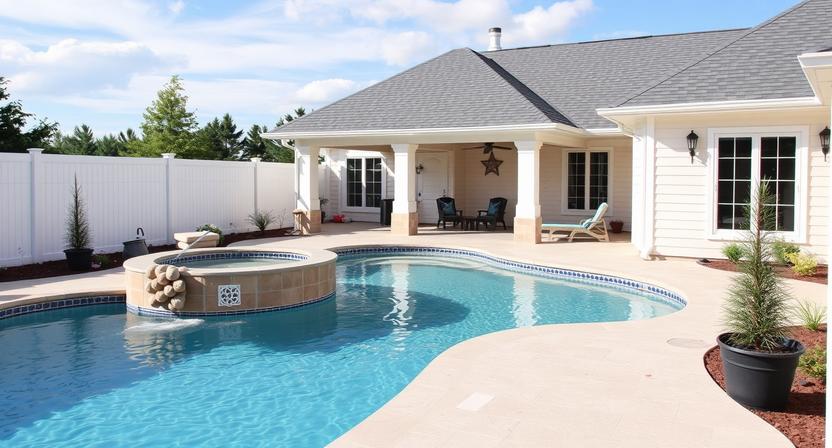
Shape
Any shape is achievable: rectangle, L-shape, kidney, freeform, geometric custom. Curved walls are particularly well-suited to ICF — the foam cuts and bends more readily than the formwork required for curved shotcrete walls.
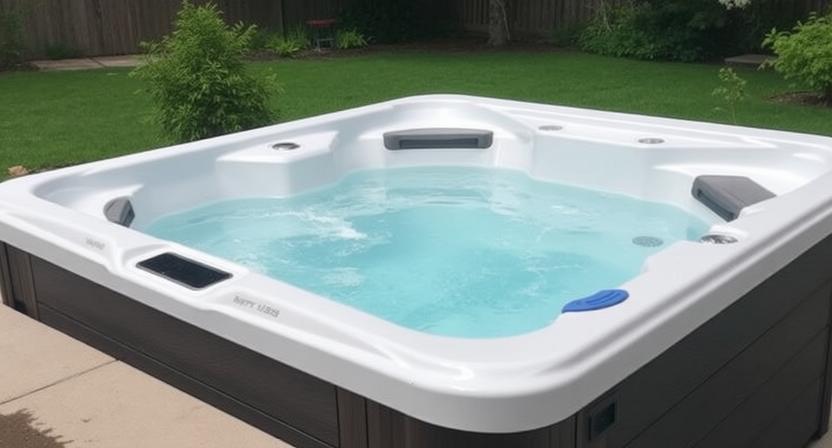
Size
No fixed dimensions. Pool size in ICF is constrained only by lot setbacks, excavation scope, and budget — the same practical limits as standard concrete.
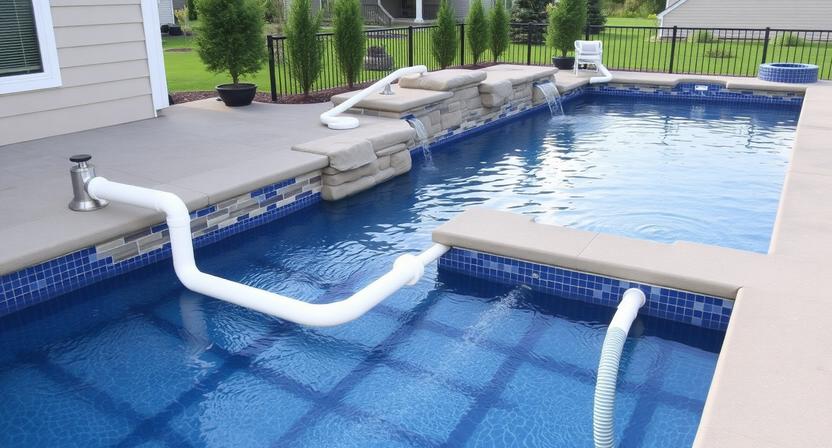
Depth
Standard residential depth profiles — shallow-to-deep from 0.9 m to 2.0 m — are all achievable. Deeper configurations are possible with appropriate structural design.
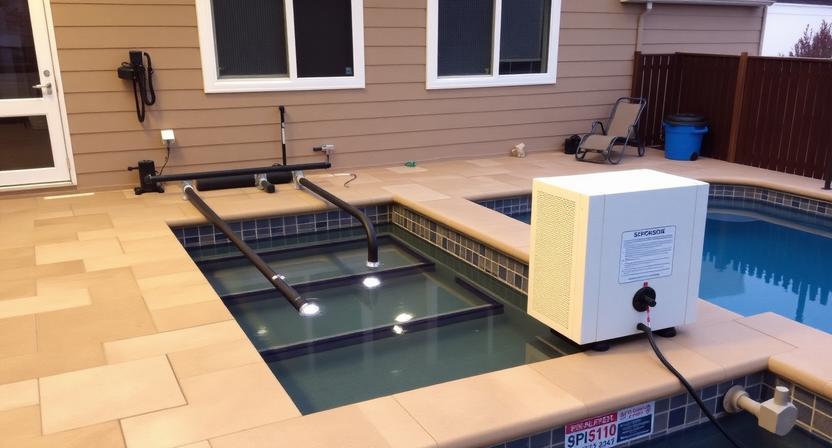
Entry options
Steps, full-width entries, beach entries (zero entry), and tanning ledges are all achievable in ICF. Step units are typically set in place during the block-stacking phase and integrated into the concrete pour.
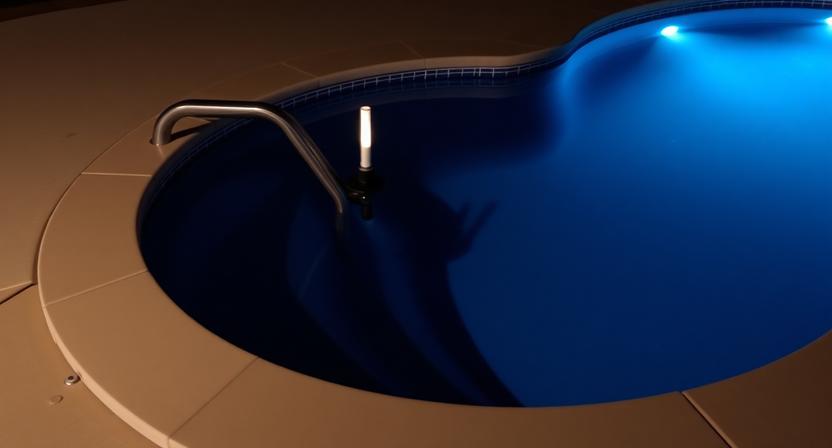
Integrated spa
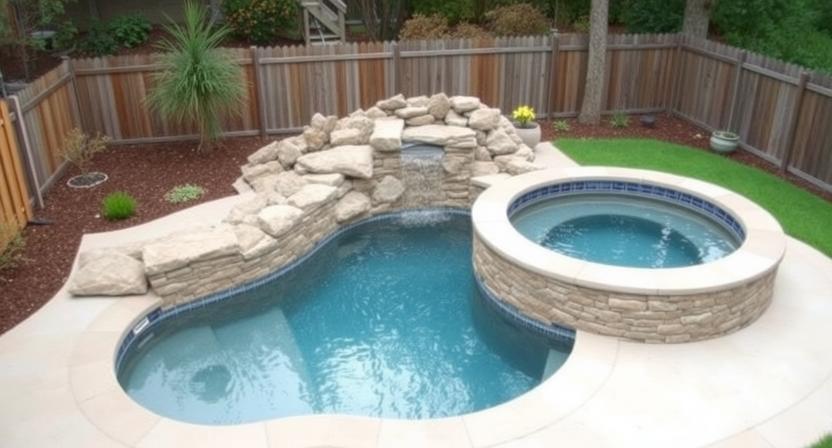
Attached or inset spa configurations are achievable in ICF using the same block system as the main pool structure. The spa walls are stacked alongside the pool walls and poured in the same concrete operation. Add $15,000–$40,000 depending on size and configuration.
Interior finishes
Same options as standard concrete:
- Plaster (Marbelite): Baseline finish, 7–12 year lifespan before resurfacing
- Quartz aggregate: More durable, better stain resistance, wider colour range, 12–18 years
- Pebble finish: Highly durable, textured surface, 15–25 years
- Glass or ceramic tile: Premium finish, longest lifespan, highest cost
Note: The interior waterproofing layer between the foam and the finish is an ICF-specific requirement that doesn’t apply to standard concrete pools. This layer must be properly specified and applied — it’s part of what makes ICF pool performance reliable long-term.
Coping and decking
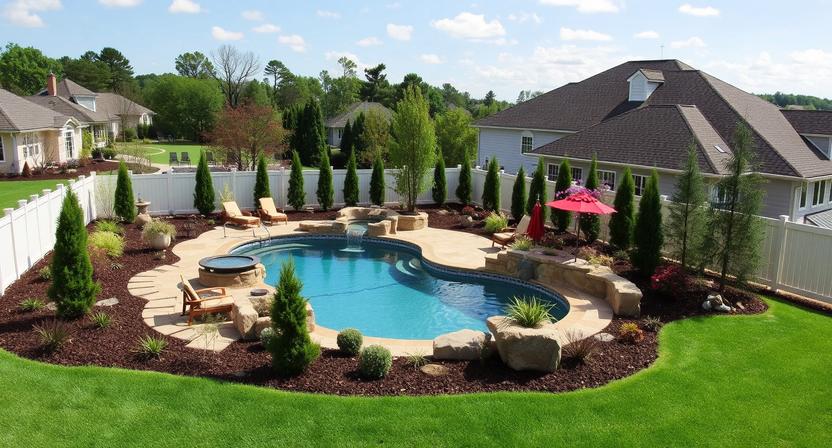
Identical options to any concrete pool — poured concrete, natural stone (limestone, travertine, bluestone), porcelain pavers, or brick. Coping choice is driven by aesthetic preference and budget, not by the ICF construction method.
Water features
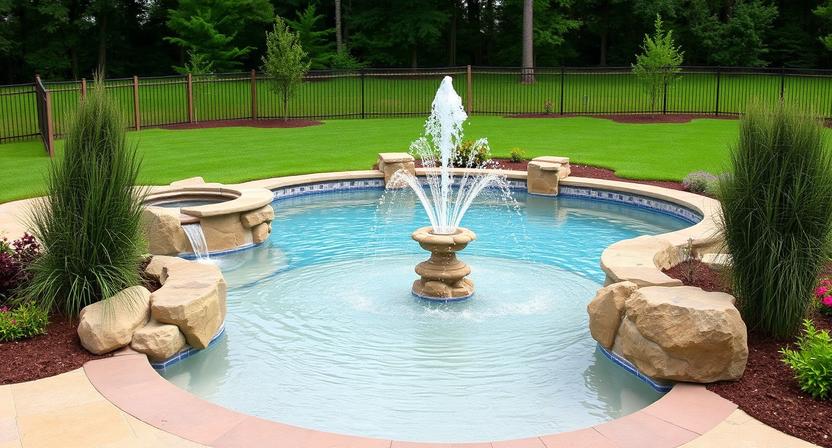
Deck jets, bubblers, spillover spas, and waterfall features are all achievable. Plumbing for water features is cut through the foam blocks and installed before the concrete pour — the same logic as all pool types: plan features in at the design stage rather than retrofitting them later.
work process
ICF Pool Installation Process
1. Design and quote
Site visit, lot assessment, setback confirmation, and design conversation — shape, depth, features, and finishes. A detailed, itemised quote covering every phase of the build.
2. Permit applications
Zoning Certificate and Pool Fence Enclosure Permit submitted to the City of Toronto. Allow 4–10 weeks for approval. Construction cannot begin without permits in hand.
3. Utility locates
Ontario One Call locates all buried utilities before excavation. Mandatory by law.
4. Excavation
ICF pool excavation is slightly more forgiving than standard concrete — if the hole is over-dug by a small margin, the gap is simply backfilled around the block exterior. Most residential ICF pool excavations take 2–3 days.
5. Block stacking
EPS foam blocks are stacked and interlocked to form the pool walls, following the pool design exactly. Corners, curves, steps, and benches are formed by cutting blocks as needed. No mortar — the blocks lock together mechanically. No heavy lifting equipment required for the blocks themselves.
Rebar is threaded through the block cavities as stacking proceeds, and temporary bracing is set to hold the walls plumb during the pour.
6. Plumbing roughed in
All plumbing penetrations — skimmers, returns, main drains, light niches, water feature fittings — are cut through the foam blocks and fitted with sleeves before the concrete pour. This is the last opportunity to change plumbing placement.
7. Concrete pour
Concrete is pumped into the foam cavity in a controlled pour, filling all cavities and fully encasing the rebar. The foam walls require careful pour management — overfilling too fast can blow out the forms. Experienced ICF pool installers pour in lifts, allowing each section to begin setting before continuing.
8. Curing
Concrete cures inside the foam — typically 7–14 days before the next phase can proceed. The foam on both sides insulates the curing concrete from rapid moisture and temperature change, which is actually beneficial for the curing process.
9. Waterproofing
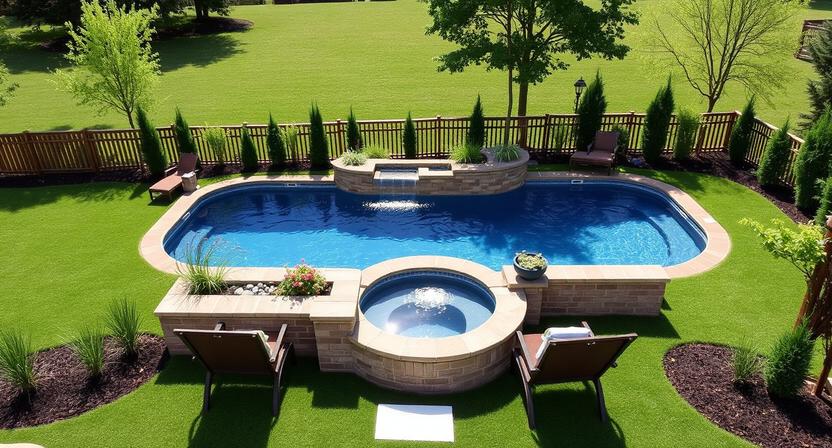
The interior foam face is waterproofed with a specialist system — typically a cementitious or polymer waterproofing coat — before the interior finish is applied. This is a critical step unique to ICF pools and should not be economised on.
10. Equipment installation
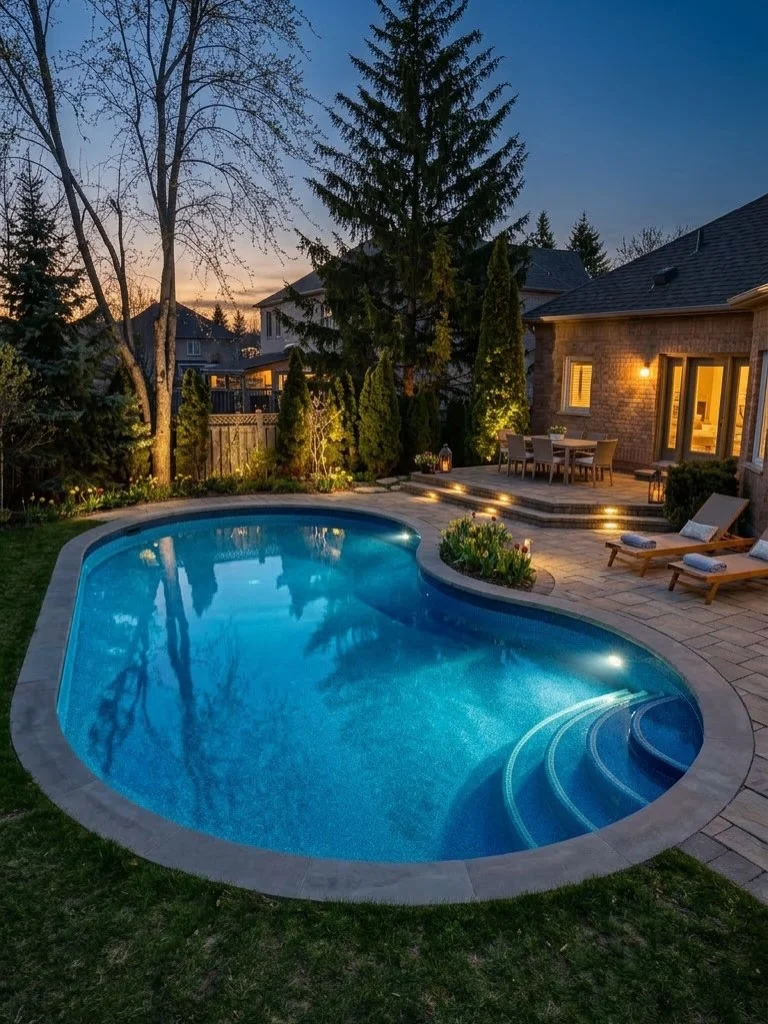
Pump, filter, heater, and automation installed on an equipment pad and connected to the plumbing roughed in during block stacking.
11. Electrical
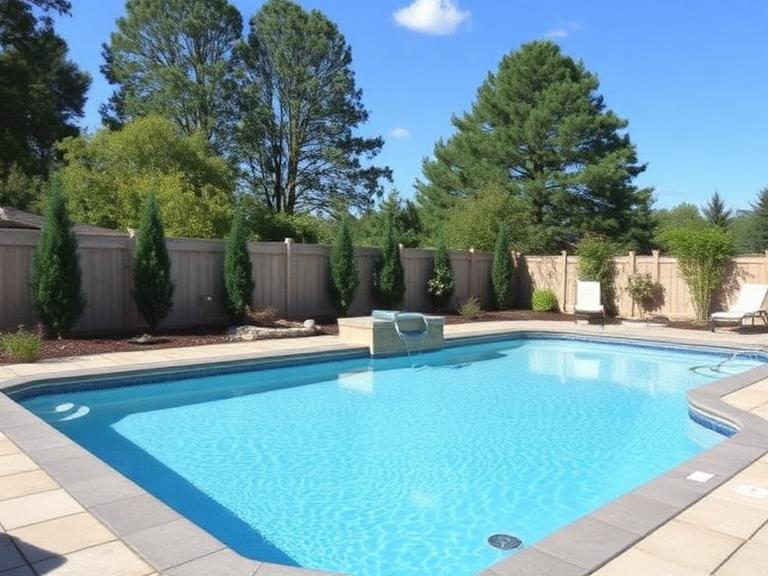
Licensed electrician connects all pool equipment and lighting under an ESA permit. All pool electrical in Ontario is inspected.
12. Interior finish
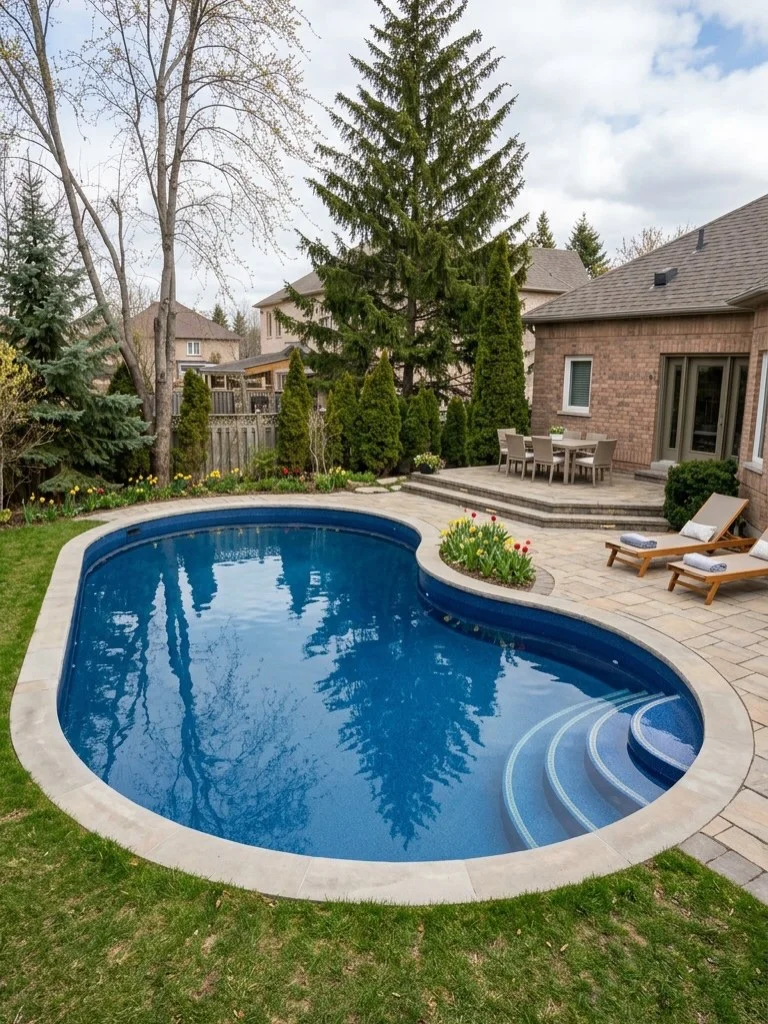
Plaster, quartz aggregate, pebble, or tile applied over the waterproofed interior foam surface.
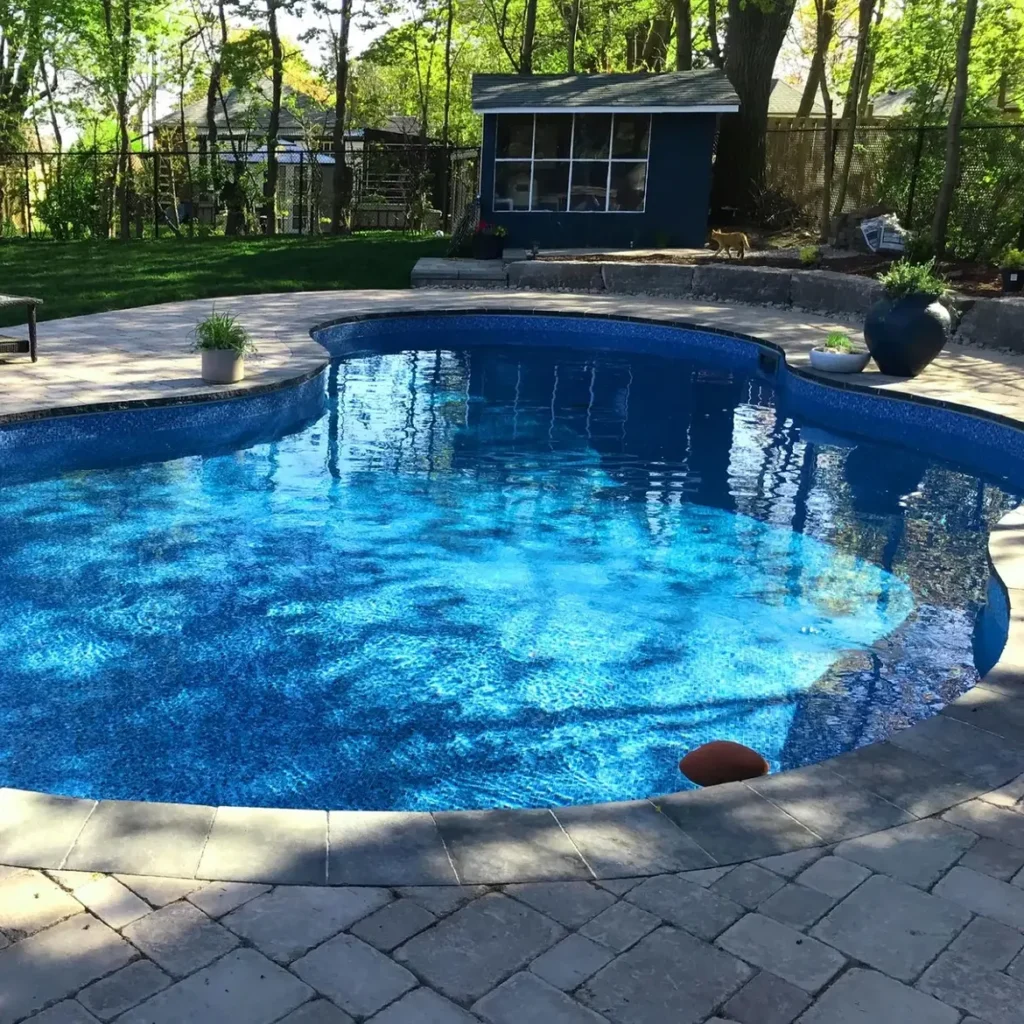
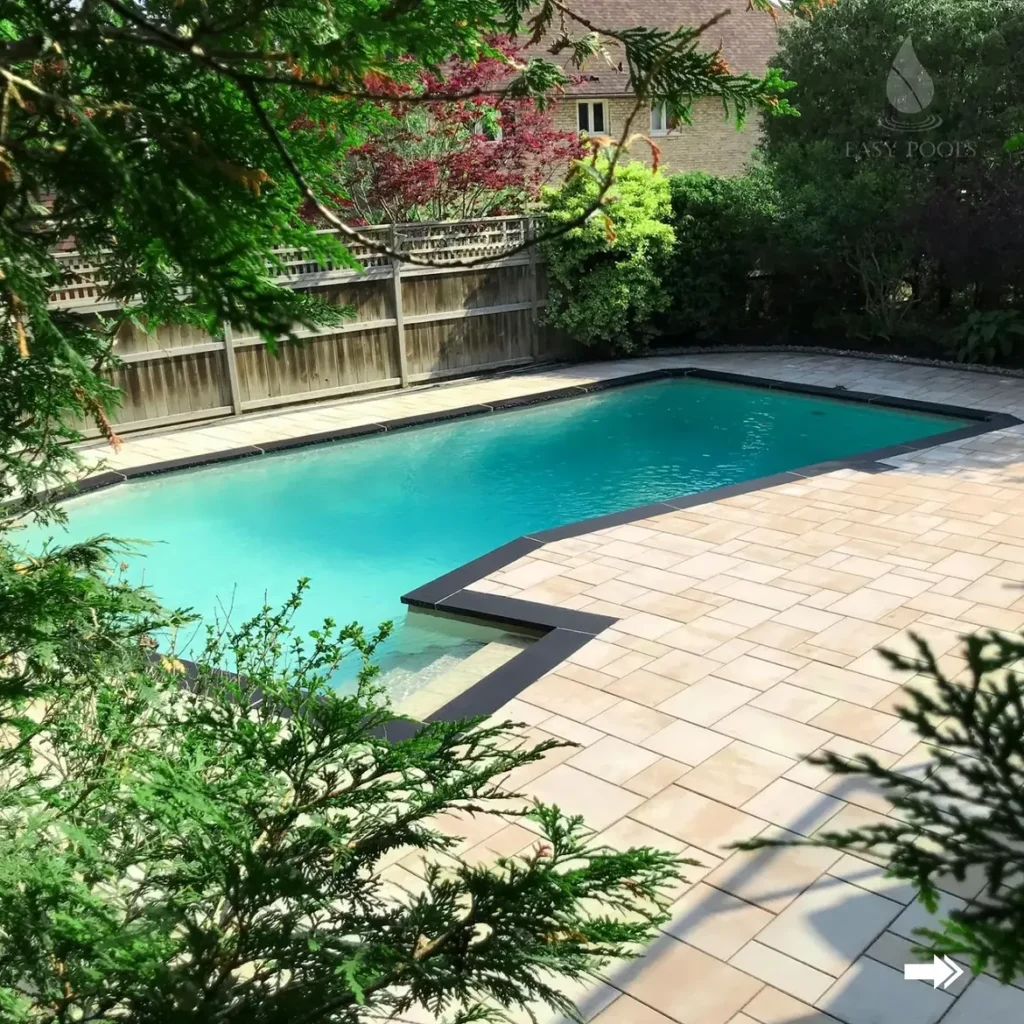
13. Coping and decking
Coping set at the pool edge, decking poured or laid around the perimeter.
14. Fence installation
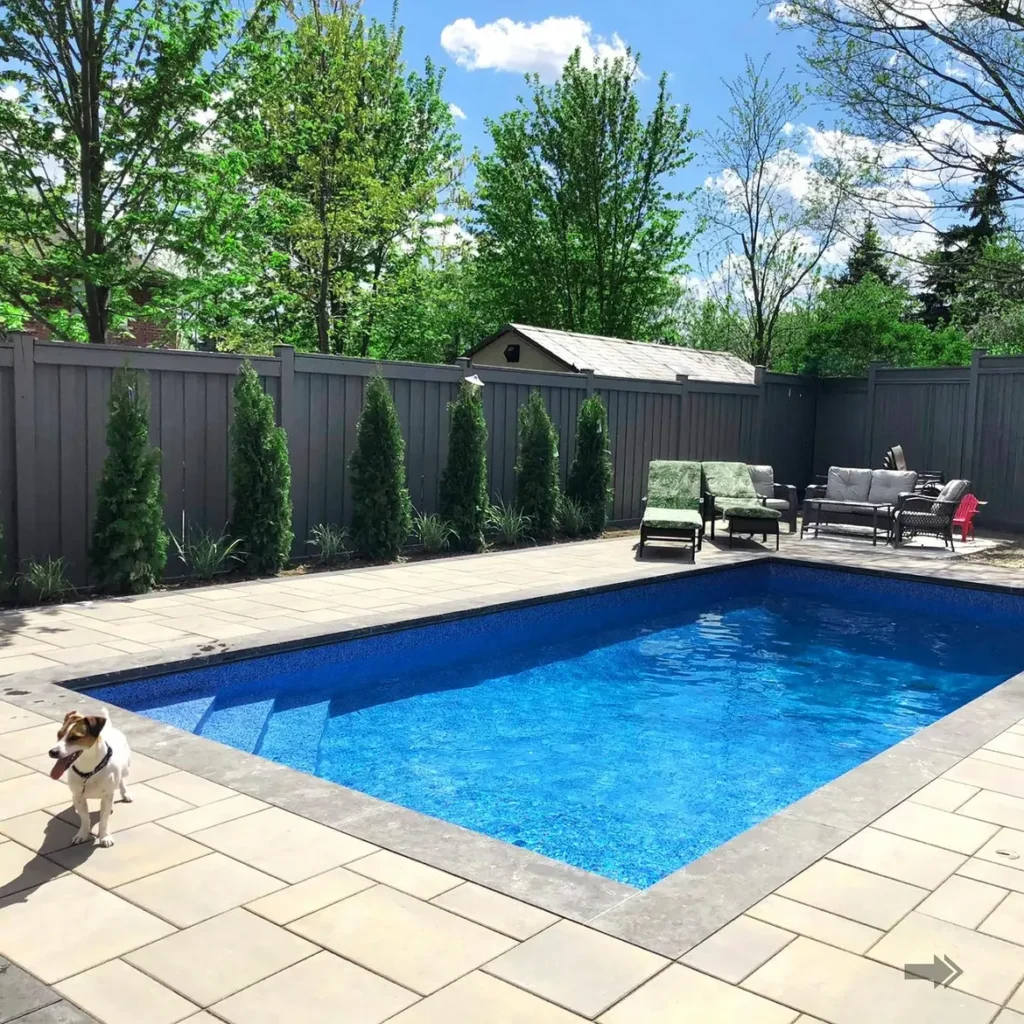
Compliant pool enclosure fence installed per City of Toronto Municipal Code Chapter 447 before the pool can be filled for use.
15. City inspection and fill
City inspects the fence enclosure. Once cleared, pool is filled, equipment commissioned, and water chemistry balanced.
16. Owner walkthrough
Equipment operation, maintenance schedule, waterproofing warranty, interior finish care, and seasonal requirements covered before handover.
Total on-site build time: approximately 6–10 weeks for most residential ICF pools — faster than standard concrete (3–6 months) because ICF construction doesn’t require a specialist shotcrete or gunite crew, and the block-stacking phase moves faster than building and bracing traditional formwork.
Permits
Permits for ICF Pools in Toronto
ICF pools follow the same permit process as all other inground pools in Toronto.
The City of Toronto does not require a building permit for the pool structure itself, but two applications are required before the pool can be built or filled:
Zoning Certificate — confirms setback compliance from property lines, the house, and any easements. Required before the fence permit.
Pool Fence Enclosure Permit — required under Municipal Code Chapter 447. The pool cannot be filled with water until a compliant fence is installed and inspected.
Key requirements:
- Minimum 1.2 m pool enclosure fence on all sides
- Self-closing, self-latching gates opening outward, latch height out of reach of young children
- Typical setback from property lines: 1.2 m–1.8 m depending on zoning
Easy Pools prepares drawings and manages both permit applications as part of the installation service.
Pool Maintenance
ICF Pool Maintenance
ICF pools require broadly similar maintenance to standard concrete pools, with a few differences.
Weekly during the swim season:
- Test and adjust pH, chlorine, and total alkalinity
- Brush interior walls and floor — the plaster or aggregate surface over ICF still supports algae if left unbrushed
- Check skimmer and pump baskets
- Backwash filter as needed
Where ICF differs from standard concrete: The interior plaster or aggregate surface in an ICF pool is applied over a waterproofed foam face rather than directly onto bare concrete. This means the surface is not subject to the same osmotic pressure from groundwater that can affect standard concrete pool plaster. In practice, this tends to mean the interior finish is more stable over time — though the same resurfacing schedule still applies.
Water chemistry: Same requirements as any concrete pool. Maintain calcium hardness at 200–400 ppm to protect the plaster surface. Low pH is damaging to plaster — test and adjust weekly.
Winterisation: ICF pools in Toronto must be properly winterised before freeze temperatures arrive. The foam walls provide excellent insulation against thermal shock during winter, but water must still be lowered, lines blown out, and equipment winterised in the same way as any inground pool.
Easy Pools
Is an ICF Pool Right for You?
ICF is the right choice if:
- You plan to heat the pool and want to minimise long-term heating costs
- You’re building for the long term and want the most durable inground pool structure available
- You want the design flexibility of concrete with a shorter on-site build time
- Energy efficiency and reduced environmental impact matter to you
- You’re on a site where a shotcrete crew and equipment would be difficult to access
Standard concrete may suit you better if:
- Upfront cost is the primary constraint and you’re comfortable with higher heating costs over time
- You want integrated features — vanishing edges, raised bond beams — from a contractor with deep concrete experience
- You’re comparing bids and the ICF premium isn’t justified by your planned length of ownership
Fibreglass or vinyl may suit you better if:
- Installation speed is the main priority
- Budget is tighter and the concrete/ICF cost tier is out of range
- A fibreglass shell size matches your yard and design needs
FAQ
ICF Pool Installation FAQs
How much does ICF pool installation cost?
ICF pool installation cost depends on pool size, shape, wall design, insulated forms, concrete work, waterproofing, finishes, access, excavation, permits, equipment, coping, decking, and features.
A simple ICF pool will usually cost less than a large custom design with complex slope work, premium finishes, raised walls, lighting, heating, and full backyard finishing. The best way to get an accurate price is to request a site-based quote.
How long does ICF pool installation take?
ICF pool installation time depends on the design, permits, weather, access, excavation, form work, concrete placement, waterproofing, finishes, equipment setup, decking, and landscaping.
Because ICF pools are built on site, they often need more planning time than simple pre-made shell pools.
Are ICF pools energy efficient?
ICF pools can support energy-efficient planning because the wall system includes insulation.
Energy use also depends on the heater, pump, cover, water temperature, pool size, and how often the pool is used. A pool cover and efficient equipment can help improve energy performance.
Do ICF pools need permits?
Yes. ICF pool projects in Toronto need permit and enclosure planning.
Zoning, fence rules, gate details, setbacks, site layout, and equipment location can all affect approval. Current local requirements should be checked before installation starts.
What finishes work with ICF pools?
ICF pools may use liners, membranes, coatings, or other finish systems based on the pool design and waterproofing method.
The best finish depends on the wall system, budget, look, and long-term care plan. Easy Pools can help you compare suitable options.
Are ICF pools good for custom backyards?
Yes. ICF pools can be a strong choice for custom backyards.
They can support different shapes, wall layouts, depths, and energy-focused designs. They can also work well when strength, insulation, and long-term planning are important.
Service Area
Service Areas
Easy Pools installs ICF pools across Toronto and the GTA:
Request an ICF Pool Quote
ICF pool projects start with a site visit and a design conversation. We’ll assess the lot, walk through design options, explain what the ICF construction process looks like on your specific site, and prepare a clear, itemised quote covering every phase.
Easy Pools · Vaughan, ON · Serving Toronto and the GTA