

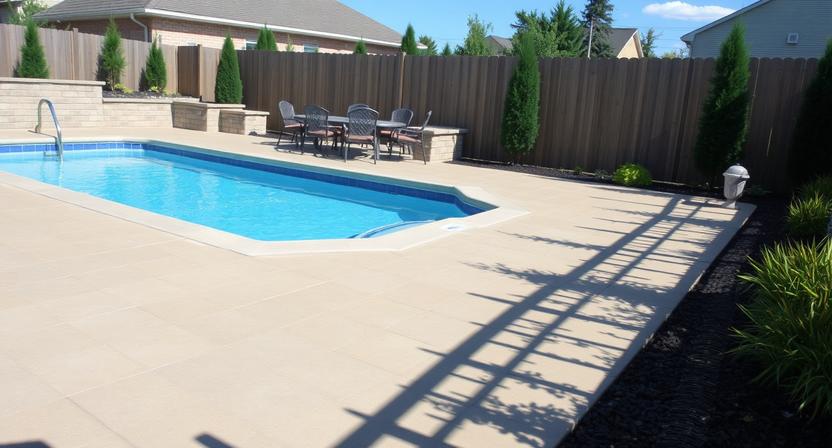
Pool water isn’t just water — it contains chlorine, pH adjusters, algaecides, and in saltwater pools, chloride levels well above what the City’s storm sewer system can accept. Toronto’s Sewers By-law (Municipal Code Chapter 681) sets specific chemical limits for pool water discharged to any sewer connection, and it distinguishes clearly between what can go to a storm sewer, what must go to the sanitary sewer, and what needs to go elsewhere entirely. Here’s what the rules actually say.
Why Pool Water Needs to Be Managed Differently
Storm sewers carry water directly to lakes and rivers untreated — which is exactly why the chemical limits for storm sewer discharge are much stricter than for sanitary sewer discharge. Pool water with active chlorine, algaecides, or elevated copper from ionizers doesn’t become safe to discharge just by moving a hose to a storm drain. The By-law sets specific limits for each parameter, and pool water that hasn’t been properly prepared will typically fail them.
The Three Permitted Drainage Routes
Pool water may be discharged to the storm sewer (if it meets chemical limits), onto a permeable surface on your property (where it must be fully absorbed without flowing onto neighbouring properties), or — in some situations — to your sanitary sewer connection on your own property.
Storm sewer: permitted only when pool water meets all chemical limits below. Your own property (permeable surface): permitted, but water must be fully absorbed on your lot — not allowed to flow to the street, neighbouring properties, or a natural watercourse. Sanitary sewer connection: an option for some situations where storm sewer limits can’t be met, but requires the water to be discharged through the connection on your own property — not a public cleanout.
Storm Sewer Limits: What the City of Toronto Requires
If you’re draining pool water to a storm sewer, the water must meet all of the following:
| Parameter | Maximum Permitted Level |
| Chlorine | 0.01 mg/L or less |
| Bromine | 0.01 mg/L or less |
| Copper | 0.04 mg/L or less |
| pH | 6.0 to 9.5 |
0.01 mg/L essentially means zero — no active chlorine or bromine is permitted in the storm sewer. In order to pump pool water into the storm sewer, the discharged wastewater must be tested to ensure the chlorine level is below 0.01 mg/L.
A typical pool running at 1–3 ppm of free chlorine needs to be dechlorinated well below that before it can legally discharge to a storm sewer. Simply stopping chlorination for a few days is usually not enough — pools left for more than a week can still have a chlorine reading above the city’s storm sewer limit, and may even become cloudy or green with only the slightest trace of chlorine remaining.
How to Dechlorinate Before Draining
The most reliable method is adding a granular chlorine neutralizer (sodium thiosulfate) directly to the pool water to bring chlorine down to zero, then testing to confirm before discharge. Sodium thiosulfate is inexpensive and widely available at pool supply stores. Test with a standard pool test kit before draining — most kits that read “0” are indicating below 0.01 ppm, which satisfies the City’s limit.
Discharge should not be done on a rainy day, as it will overwhelm the storm sewer system. Plan draining for dry weather.
Saltwater Pools: Stricter Rules Apply
The water from saltwater pools has such high levels of chlorides that it cannot be discharged to the storm sewer system. For saltwater pools specifically, the permitted options are:
- Discharge carefully to the sanitary connection on your own property
- Discharge onto a permeable surface on your property, where water must fully absorb without flowing off the lot
- Arrange for hauling by a Ministry of Environment, Conservation and Parks approved hauler
This is a meaningful constraint for saltwater pool owners at closing time — the standard “dechlorinate and drain to storm sewer” approach that works for conventional chlorine pools isn’t available. Draining onto your lawn (where it can fully absorb) is the most practical option for most residential properties, subject to your lot’s actual absorption capacity.
Filter Backwash
Backwash water from the filter must be filtered and dechlorinated if going to storm sewers; otherwise it must be discharged to the sanitary sewer or onto your surrounding property if it can be properly absorbed into the ground. Backwash water from a cartridge filter is generally cleaner than pool water, but sand filter backwash carries significantly more particulates and should be handled carefully.
Pool Cover Runoff
Rainwater or melted snow collected on your pool cover can be discharged to the storm sewer system, as long as you remove leaves and other debris first. This is the one pool-related drainage scenario that requires no preparation beyond debris removal.
Algae Treatment: A High-Risk Scenario
The treatment of algae in swimming pools may pose a greater risk to the aquatic environment than regular winterizing, due to the extremely high chlorine and algaecide levels in the water. Granular chlorine neutralizer should be directly added to the water to reduce the chlorine level to zero, and wastewater discharge should be tested to ensure it meets all storm sewer limits.
Draining a pool immediately after shocking or algae treatment — without dechlorinating — is one of the most common storm sewer violations pool owners commit without realizing it. A pool shocked to 20+ ppm to clear an algae bloom needs active dechlorination and testing before any drainage.
Lot Grading and Surface Drainage
Separately from the sewer by-law, your pool and its surrounding hardscape must manage surface water properly. In Toronto, lot grading is assessed as part of the Zoning Applicable Law Certificate process, and on properties where significant grade changes are involved, a grading plan may be required. Key principles:
- Surface drainage must flow away from the pool structure and from the dwelling foundation, not toward either
- Drainage cannot flow onto neighbouring properties — any water that leaves your lot without going to a storm sewer or sanitary connection is a potential bylaw issue
- Pool excavations can significantly alter natural drainage patterns; your contractor should account for post-construction drainage in the site design
Construction Dewatering
Excavating a pool can encounter groundwater, particularly on properties near the water table or in Toronto’s clay soil areas. Dewatering during construction — pumping groundwater out of the excavation — is subject to its own requirements under the Sewers By-law. A Sewer Discharge Permit or Agreement is required when private water is discharged into the City’s sewer system, including storm sewers. Applications must be submitted at least eight to twelve weeks prior to the proposed discharge start date.
For pool construction projects where groundwater is expected, your contractor should address dewatering planning before excavation begins, not after water starts flowing into the hole.
Commercial Pools: Different Standard
Any pool, hot tub, or spa that serves more than five units or suites — for example, a pool at an apartment building or community centre — must discharge into a sanitary connection on the same property, under the Sewers By-law. The residential drainage options described above (storm sewer after dechlorination, discharge to permeable surface) don’t apply to pools in commercial or multi-residential settings.
Frequently Asked Questions
Can I drain my pool to the storm sewer in Toronto?
Yes, but only after dechlorinating to below 0.01 mg/L chlorine and meeting all other Sewers By-law limits, on a dry day. Undechlorinated pool water cannot go to the storm sewer.
Can I drain a saltwater pool to the storm sewer?
No. Saltwater pools contain chloride levels too high for the storm sewer system. Permitted options are: sanitary connection on your own property, discharge onto a permeable surface on your property, or an approved hauler.
How do I dechlorinate pool water before draining?
Add granular chlorine neutralizer (sodium thiosulfate) to bring free chlorine to zero, then test before draining. Don’t rely on simply stopping chlorination — chlorine may still be present above the bylaw limit even after several days.
Can I drain pool water onto my lawn?
Yes — discharging onto a permeable surface on your property is a permitted route, for both conventional and saltwater pools, as long as the water is fully absorbed on your lot and does not flow onto neighbouring properties.
What are the rules for backwash water from my filter?
Filter backwash can go to the storm sewer only if it’s been filtered and dechlorinated to meet storm sewer limits. Otherwise, it should go to your sanitary connection or be absorbed on your property.
Confirm Current Requirements Before Draining
The Sewers By-law can be updated, and requirements for commercial pools or properties in special areas may differ.
Contact Toronto Water at 311 for current limits, or contact Easy Pools at (647) 449-9512 for guidance on compliant drainage during pool installation, closing, or maintenance.