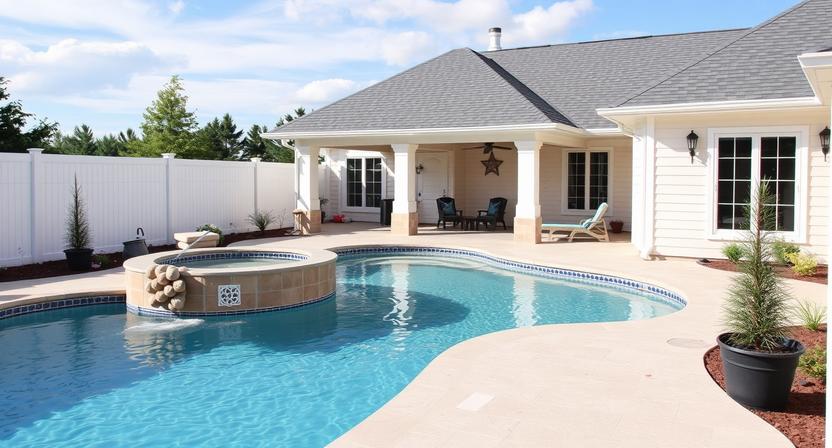
Pool Design and Build in Toronto
A good pool should look right, feel right, and work well with the rest of your backyard. Pool design and build services help you plan the full project before construction starts.
Easy Pools provides pool design and build services in Toronto and nearby GTA areas. We help homeowners plan pool type, layout, features, materials, access, permits, construction, finishing, and long-term pool care.
A design-build pool project is more than basic installation. It looks at the whole space. This includes the pool, deck, coping, lighting, water features, equipment, drainage, fencing, landscaping, and how your family will use the yard.
Pool Installation
What Is Pool Design and Build in Toronto?
Pool design and build in Toronto is the full process of planning, designing, and installing a pool as one joined project.
Instead of choosing a pool first and thinking about the rest of the yard later, design-build planning looks at the whole backyard from the start. It helps the pool fit the space, budget, site conditions, and final outdoor layout.
This approach is useful for Toronto homes because many yards have tight access, mature trees, fences, slopes, drainage issues, and permit needs.
What does pool design and build include?
Pool design and build can include every stage of the pool project.
The work may include:
- Backyard review
- Pool type selection
- Pool shape planning
- Pool depth planning
- Feature selection
- Material selection
- Budget planning
- Permit planning
- Excavation
- Pool installation
- Plumbing
- Equipment setup
- Heating and lighting
- Decking and coping
- Water features
- Spa planning
- Drainage planning
- Landscaping coordination
- Filling and start-up
- Long-term pool care
The exact scope depends on your yard, pool type, design goals, and budget.
How is design-build different from pool installation?
Pool installation focuses on building and setting up the pool. Pool design and build focuses on the whole project, from the first design idea to the finished backyard.
A basic installation may only include the pool structure, plumbing, equipment, and start-up. A design-build project can also include the layout, materials, features, coping, deck areas, lighting, landscape flow, and outdoor living plan.
Design-build is useful when you want the pool to feel like part of the full backyard, not a separate item placed in the yard.
Who should choose a design-build pool service?
A design-build pool service is a good choice if you want a planned backyard project with fewer gaps between design and construction.
You should consider design-build if you want:
- A new pool and backyard layout
- A custom pool design
- A pool with landscaping
- A pool with decking and coping
- A pool with lighting or water features
- A pool that works with a sloped yard
- A pool for a small or tight backyard
- A pool and spa layout
- One clear project scope
- Better planning before construction
Design-build is best for homeowners who want the pool, features, and outdoor space planned together.
Pool Installation start
How Does Pool Design Start?
Pool design starts with a review of your backyard, goals, site limits, budget, and preferred pool style.
A strong design is not only about looks. It should also work with access, drainage, fencing, permits, equipment, safety, and long-term care.
How is the backyard reviewed?
The backyard is reviewed to understand what is possible before design work starts.
The review may look at:
- Yard size
- Yard shape
- Access route
- Sun and shade
- Slope
- Soil signs
- Drainage
- Existing patios
- Fences and gates
- Trees and roots
- Equipment location
- Seating areas
- Privacy needs
- Future landscaping
This step helps avoid a design that looks good on paper but does not work on site.
How are homeowner goals defined?
Homeowner goals are defined by looking at how you want to use the pool and backyard.
Some families want a pool for children and summer fun. Some want a calm space for relaxing. Some want a lap pool for fitness. Others want a premium outdoor space with a spa, lights, water features, and seating.
Clear goals help shape the pool size, depth, features, and budget.
How is the pool location selected?
The pool location is selected based on space, access, sunlight, safety, drainage, privacy, and how the yard will be used.
The pool should not block important walkways or make the yard feel cramped. It should leave enough room for decking, equipment, fencing, seating, and maintenance access.
A good location makes the pool easier to use and easier to care for.
How are access and site limits reviewed?
Access and site limits are reviewed before the design is finalised.
Toronto yards can have narrow side access, tight gates, shared driveways, garages, fences, trees, and overhead wires. These details can affect excavation, delivery, equipment, and construction.
Site limits can also include slopes, poor drainage, soil issues, existing patios, and nearby structures.
How are budget and scope planned?
Budget and scope are planned by matching your goals with practical project choices.
The scope should make clear what is included. This may include the pool, excavation, equipment, heating, lighting, coping, decking, fencing, drainage, landscaping, and start-up.
A clear scope helps control costs and makes the quote easier to compare.
What Options Available
What Pool Design Options Are Available?
Pool design options can shape how the pool looks, feels, and works.
You can choose the pool shape, depth, swim zones, steps, benches, ledges, spas, water features, lighting, automation, decking, coping, and landscape areas.
Pool shapes and layouts
Pool shapes and layouts should match your yard and lifestyle.
Common options include:
- Rectangle pools
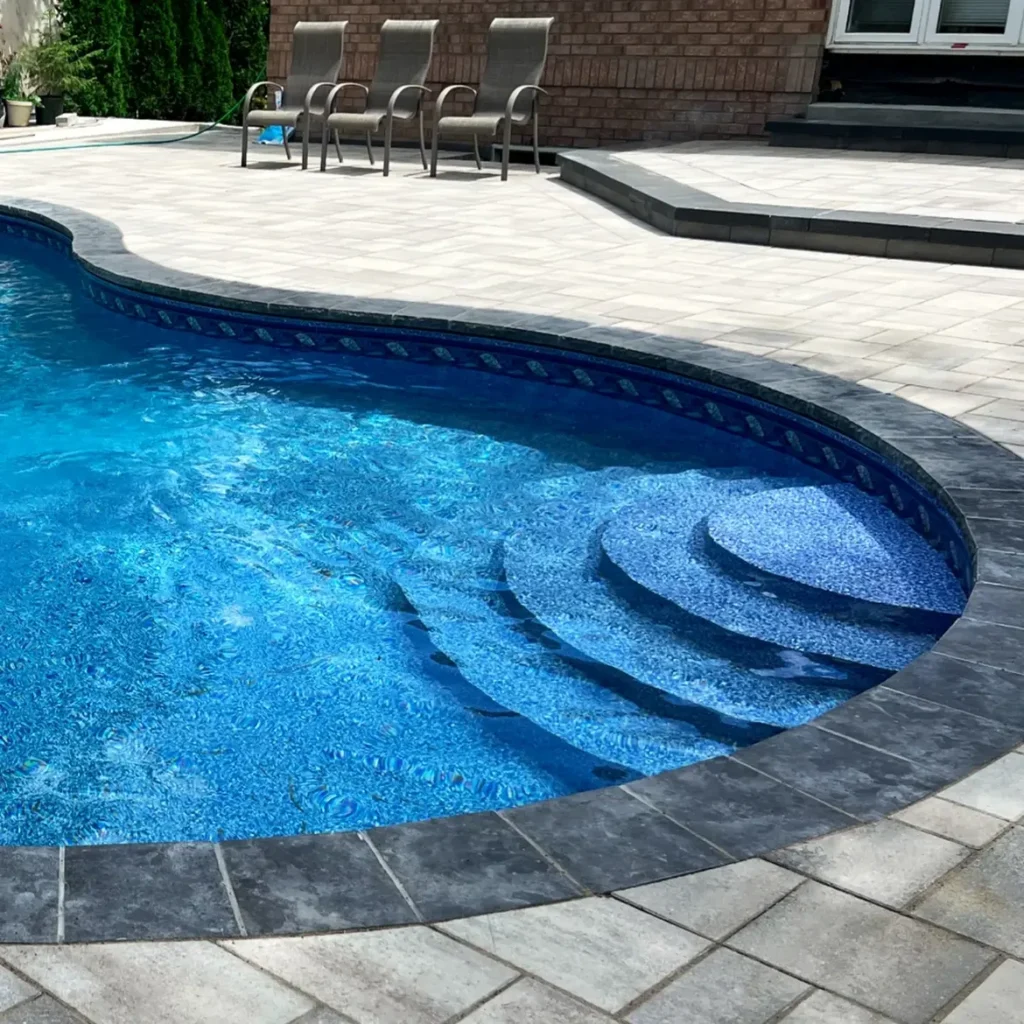
- Freeform pools
- Plunge pools
- Lap pools
- L-shaped pools
- Geometric pools
- Small-yard pools
- Custom pool shapes
A rectangle pool gives a clean modern look. A freeform pool feels softer and more natural. A lap pool supports fitness. A plunge pool can work well in smaller yards.
Pool depths and swim zones
Pool depth should be planned around use.
A shallow area can suit children, lounging, and casual use. A deeper area can suit swimming and a more traditional pool feel. A sport pool can have a more even depth for games and exercise.
Swim zones can help divide the pool into areas for relaxing, playing, and swimming.
Steps, benches and tanning ledges
Steps, benches, and tanning ledges make the pool more comfortable.
Steps help people enter and exit the pool safely. Benches give users a place to sit. Tanning ledges create shallow lounge areas for relaxing.
These features should be planned early because they affect the pool structure, shape, and finish.
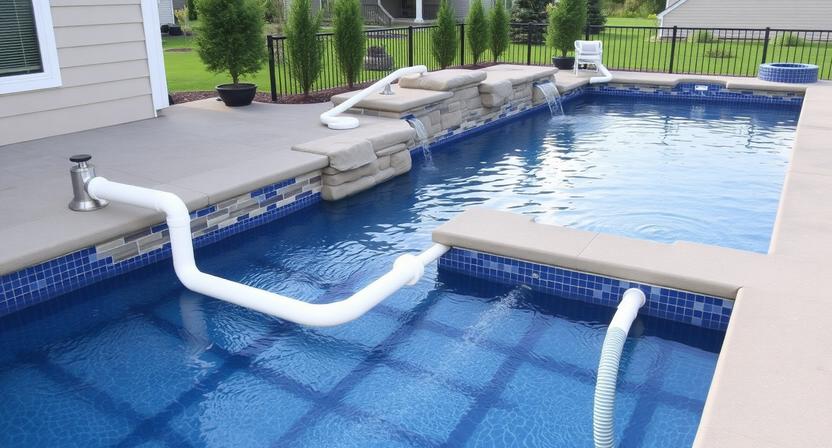
Water features and spas
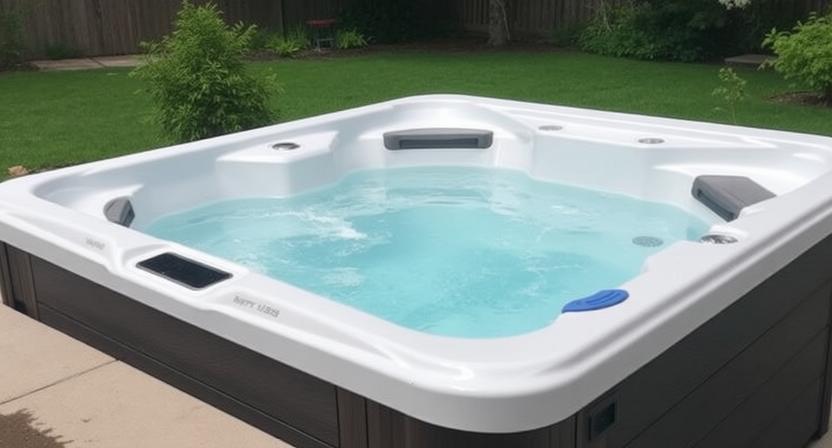
Water features and spas can add comfort, sound, and style.
Options may include:
- Attached spas
- Spillover spas
- Waterfalls
- Bubblers
- Deck jets
- Sheer descents
- Raised feature walls
- Water bowls
These features can improve the pool area, but they also affect cost, plumbing, equipment, and maintenance.
Lighting and automation
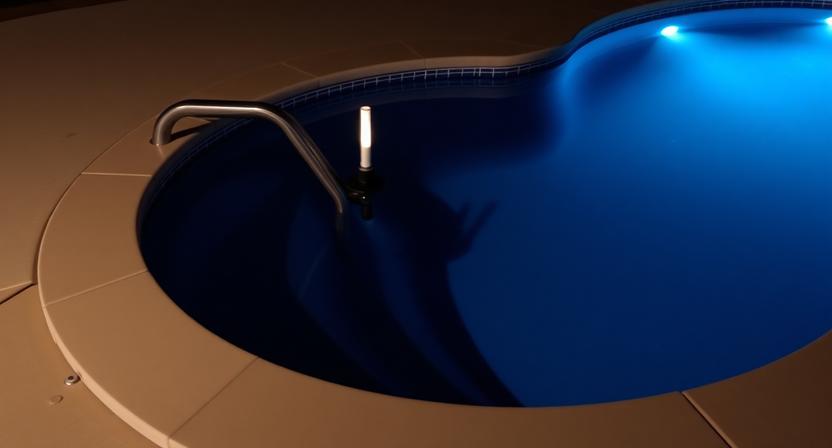
Lighting can make the pool safer and more useful at night.
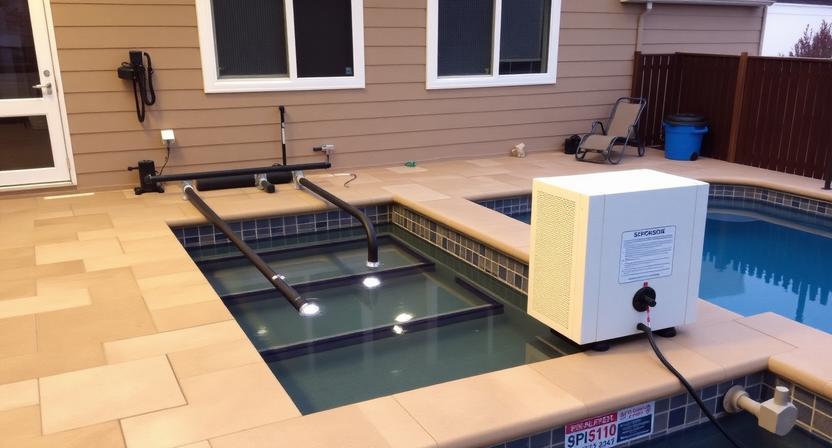
LED pool lights, deck lights, path lights, and feature lighting can all improve the space. Automation can help control pumps, lights, heaters, and water features.
Lighting and automation should be planned before construction so wiring, controls, and equipment fit the design.
Decking, coping and landscape areas
Decking and coping frame the pool and connect it to the rest of the yard.
Coping is the edge around the pool. Decking is the surface around the pool area. Landscape areas can include planting, seating, grass, privacy screens, paths, and outdoor living spaces.
These areas should be planned with safety, drainage, comfort, and style in mind.
What Pool Types
What Pool Types Work With Design-Build Projects?
Several pool types can work well with design-build projects.
The right pool type depends on your yard, budget, timeline, design goals, access, and long-term care plan.
Concrete pools
Concrete pools are strong choices for custom design-build projects.
They allow more control over shape, depth, steps, benches, tanning ledges, raised walls, spas, and premium finishes. They are often chosen for luxury backyards and unique layouts.
Concrete pools usually take longer to build, but they offer strong design freedom.
Fibreglass pools
Fibreglass pools can work well when a pre-made shell fits the design.
They are often faster to install than fully custom concrete pools. Many shells include built-in steps, benches, and lounge areas.
The main limit is that the shape and size must come from available shell models. Access must also allow shell delivery.
Vinyl liner pools
Vinyl liner pools can offer good design flexibility at a controlled starting cost.
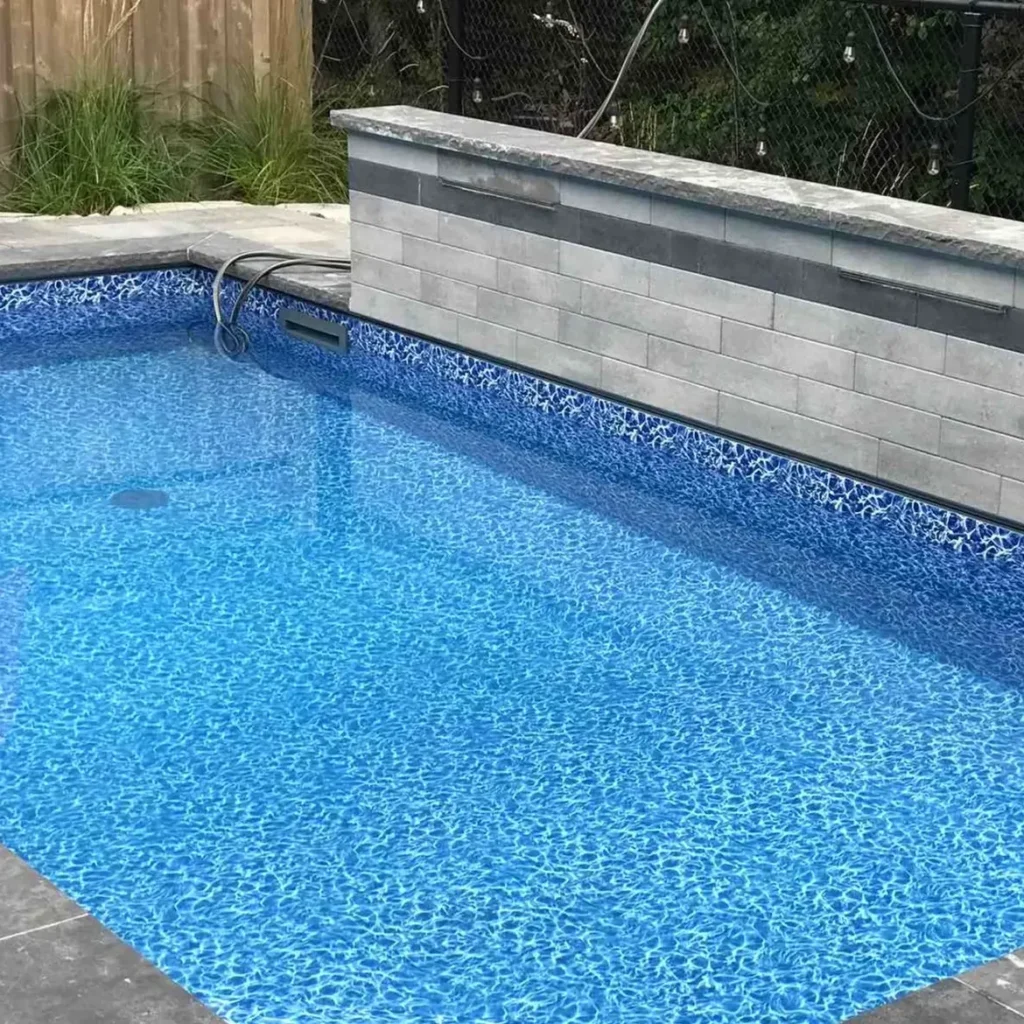
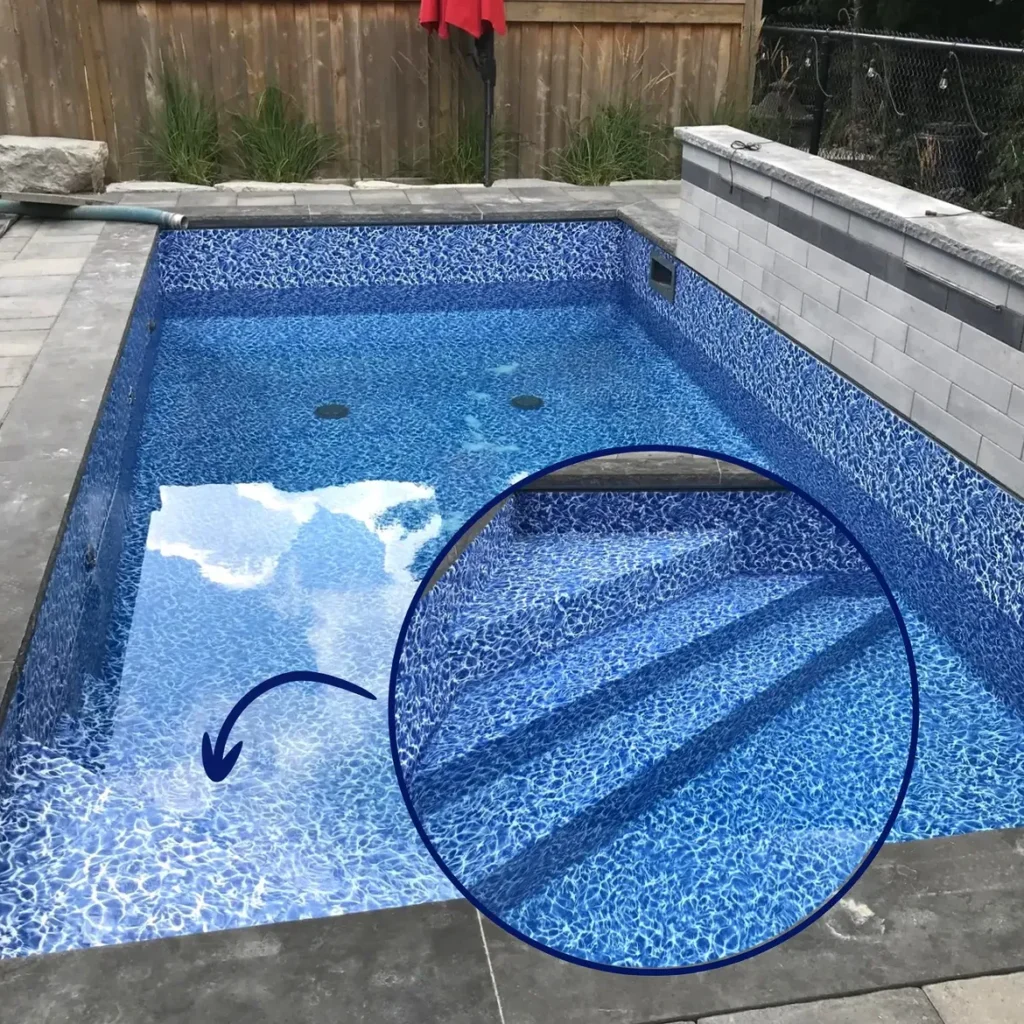
They can be built in different shapes and sizes. The liner controls the pool’s inner colour and pattern.
A vinyl liner pool can work well for family backyards and design-build projects where flexible shape and budget control matter.
ICF pools
ICF pools use insulated concrete forms and reinforced concrete walls.
They can support custom layouts, strong wall systems, and energy-focused planning. They may suit homeowners who want insulation support and a solid structure.
ICF pools need good waterproofing, drainage, and skilled installation.
Plunge pools
Plunge pools are smaller pools made for relaxing, cooling off, and compact spaces.
They can work well in Toronto yards with limited space. They can also be part of a modern courtyard or spa-style backyard.
A plunge pool can still include heating, lighting, steps, and premium finishes.
Lap pools
Lap pools are long and narrow pools made for swimming and fitness.
They can suit homeowners who want exercise at home. They may also work in narrow yards where a wider pool would not fit.
A lap pool needs careful planning for length, depth, access, and equipment.
Pool Installation Cost
How Much Does Pool Design and Build Cost?
Pool design and build cost in Toronto depends on the pool type, size, shape, features, materials, site conditions, permits, equipment, decking, coping, drainage, and landscaping.
A simple design-build project will usually cost less than a full custom backyard with a concrete pool, spa, water features, lighting, premium stone, and full landscaping.
The best way to understand your cost is to request a site-based quote.
What affects pool design and build cost?
The main cost factors include:
- Pool type
- Pool size
- Pool shape
- Pool depth
- Design complexity
- Yard access
- Excavation
- Soil condition
- Slope
- Drainage
- Equipment
- Heating
- Lighting
- Water features
- Spa features
- Decking
- Coping
- Landscaping
- Fencing
- Permit support
- Start-up work
A clear design-build quote should show what is included in the full project scope.
How do custom features affect cost?
Custom features can increase cost because they add labour, materials, plumbing, equipment, and design time.
Features that may affect cost include attached spas, raised walls, tanning ledges, waterfalls, lighting, automation, benches, and premium coping.
Each feature should be reviewed for cost, value, and long-term care needs.
How do materials affect cost?
Materials affect both upfront cost and long-term use.
Decking, coping, pool finishes, tile, stone, concrete, pavers, lighting, and equipment choices can all change the price. Premium materials can improve the look of the pool but may also need more budget.
The best material choice should balance style, safety, durability, and maintenance.
How do site conditions affect cost?
Site conditions can change the cost of the project.
Tight access, poor soil, steep slope, drainage issues, tree roots, existing structures, and utility conflicts can all add work.
A site review helps identify these issues before the final quote.
What should a design-build quote include?
A design-build quote should be clear and detailed.
It should include:
- Pool type
- Pool size and shape
- Pool depth
- Design scope
- Excavation work
- Pool construction method
- Plumbing
- Equipment
- Heating, if included
- Lighting, if included
- Water features, if included
- Spa features, if included
- Coping
- Decking, if included
- Landscaping, if included
- Drainage work, if included
- Permit support, if included
- Start-up process
- Items not included
- Payment stages
- Estimated timeline
A clear quote helps you understand the full project before work begins.
Site Conditions Affect
What Site Conditions Affect Pool Design?
Site conditions shape the pool design and construction plan.
A good design should work with your yard size, slope, drainage, access, fencing, equipment, and outdoor layout.
How does yard size affect design?
Yard size affects the pool shape, pool size, deck area, seating, equipment, fencing, and landscaping.
A small yard may need a plunge pool, compact rectangle pool, or custom layout. A larger yard may allow a bigger pool, spa, patio, and landscape zones.
The best design makes good use of the space without making the yard feel crowded.
How does slope affect design?
Slope can affect pool placement, wall height, decking, drainage, and cost.
A sloped yard may need retaining walls, raised edges, tiered decks, or extra grading. It can also create design opportunities, such as a raised pool edge or feature wall.
Slope should be reviewed early so the pool design works with the yard.
How does drainage affect design?
Drainage affects how water moves around the pool, deck, home, and landscaping.
Poor drainage can cause standing water, soil movement, deck damage, and long-term pool issues. The pool design should direct water away from the pool and nearby structures.
Drainage should be part of the design, not an afterthought.
How does access affect construction?
Access affects how workers, machines, materials, pool shells, concrete equipment, and landscaping materials reach the backyard.
Wide access can make construction easier. Tight access may need smaller machines, more labour, or special delivery planning.
Access should be checked before the pool type and design are finalised.
How does fencing affect layout?
Fencing affects pool placement, access points, gates, and deck design.
The pool layout must leave room for a safe and compliant enclosure. Fence planning can also affect the look and flow of the backyard.
It is best to review fencing before the design is approved.
Pool Installation Process
How Does the Pool Design-Build Process Work?
Pool design and build projects in Toronto need permit and enclosure planning.
The pool shape, fence, gates, setbacks, property lines, equipment, deck areas, drainage, and site layout can all affect approval.
Does pool design need permit planning?
Yes. Pool design needs permit planning before construction begins.
A pool project may need zoning review and a pool enclosure permit. Site drawings may be needed to show the pool, fence, gates, structures, equipment, and property lines.
Permit planning should happen before excavation or construction starts.
What zoning rules affect the design?
Zoning rules can affect where the pool can sit on your property.
They may relate to setbacks, structures, decks, lot layout, and other site details. These rules can affect pool size, shape, and placement.
The design should be checked against zoning needs early.
What fence rules affect the layout?
Fence rules affect the pool enclosure, gate position, access route, and deck layout.
A pool enclosure helps restrict unsafe access to the water. The design should leave space for a proper fence and safe entry points.
Fence planning can also affect landscaping and backyard flow.
What site details affect approval?
Several site details can affect approval.
These may include:
- Property lines
- Existing house location
- Garage, shed, or cabana location
- Fence and gate location
- Pool shape and placement
- Decking and coping
- Equipment location
- Drainage direction
- Trees and roots
- Easements
- Slopes
- Access points
- Landscaping features
Accurate site details help make permit planning clearer.
What Permits Needs
What Permits Affect Pool Design and Build?
Indoor pool installation in Toronto may need building permit planning, mechanical review, plumbing review, and pool enclosure or safety planning.
The exact permit needs depend on the building, pool type, structure, HVAC system, plumbing, drainage, and project scope.
Permit requirements can vary, so current local rules should always be reviewed before construction starts.
Does an indoor pool need permit planning?
Yes. An indoor pool needs permit planning.
An indoor pool can affect building structure, plumbing, HVAC, drainage, ventilation, and safety. These details may need drawings, reviews, and approval before work begins.
A permit plan helps reduce delays and protects the project from costly changes.
What building rules affect indoor pools?
Building rules can affect structural support, excavation, room layout, materials, plumbing, electrical work, ventilation, drainage, and safety.
An indoor pool is part of the building environment. It must be planned as a pool and as a building project.
This is why indoor pools often need more coordination than outdoor pools.
What mechanical systems affect approval?
Mechanical systems can affect indoor pool approval and long-term performance.
These may include ventilation, humidity control, heating, air handling, drainage, and related controls. The room must be able to manage moisture and comfort.
Mechanical planning should happen before construction starts.
What site details affect permit planning?
Several site and building details can affect permit planning.
These may include:
- Pool location
- Room size
- Building structure
- Foundation
- Ceiling height
- Access route
- Plumbing routes
- Drainage plan
- Ventilation plan
- Humidity control system
- Heating system
- Equipment location
- Electrical needs
- Interior finishes
- Nearby rooms
Accurate project details help make the planning process clearer.
Easy Pool Benefits
What Are the Benefits of Pool Design and Build?
Pool design and build gives homeowners a more complete project plan.
It helps connect design, construction, features, materials, and long-term use in one process.
One planned project scope
Design-build gives you one planned scope for the pool and related backyard work.
This can make the project easier to understand. It also helps reduce gaps between the design idea and the work needed to build it.
Better design and construction alignment
Design and construction work better when they are planned together.
The design can account for access, drainage, equipment, fencing, and construction needs from the start. This helps avoid ideas that are hard or costly to build later.
Clearer cost planning
Design-build can support clearer cost planning.
A full scope makes it easier to see what is included, what is optional, and what may affect cost. This helps homeowners make better choices before construction begins.
Better feature coordination
Pool features work best when they are planned early.
Lighting, spas, water features, tanning ledges, heating, automation, and decking all need proper coordination. Design-build helps these features fit into the full plan.
Stronger backyard flow
A design-build project can create better flow between the pool, patio, lawn, garden, seating, and access paths.
This helps the pool feel like part of the home and yard. It also makes the space easier to use every day.
Pool Limits
What Are the Limits of Pool Design and Build?
Pool design and build has many benefits, but it also needs more planning than a basic pool installation.
The main limits include more planning time, more design choices, higher feature costs, more site coordination, and permit or inspection needs.
More planning time
A design-build pool project can take more planning time because the full backyard is reviewed.
This includes pool type, layout, materials, features, permits, drainage, access, and landscaping. More planning can lead to a better result, but it should be expected from the start.
More design decisions
Design-build involves more choices.
You may need to decide on pool shape, depth, coping, decking, lighting, heating, water features, landscaping, and equipment. These choices can affect cost and maintenance.
Easy Pools can help you compare options and choose what fits your goals.
Higher feature costs
Features can improve the pool, but they can also raise the cost.
Spas, waterfalls, premium tile, lighting, automation, and custom decking should be planned within your budget.
A clear quote helps separate must-have items from optional upgrades.
More site coordination
Design-build projects may need more site coordination.
The pool, deck, drainage, landscaping, equipment, fencing, and utilities must work together. This can add planning steps, but it also helps the final space work better.
Permit and inspection needs
Pool projects may need permit planning and inspections.
These steps can affect the timeline. They should be included in the project plan early so they do not cause surprise delays.
Why Choose
Why Choose Easy Pools?
Easy Pools helps homeowners plan and build pools in Toronto and the GTA.
We focus on clear design, practical planning, pool type selection, cost clarity, and long-term care. Our team can help you move from idea to finished pool with a clear project path.
How does Easy Pools plan design-build projects?
Easy Pools starts by reviewing your yard, goals, budget, and site conditions.
We look at pool placement, type, shape, depth, features, materials, equipment, fencing, drainage, and long-term care. This helps create a full design-build plan before construction begins.
How does Easy Pools support pool type selection?
Easy Pools helps you compare pool types based on your yard, budget, timeline, and design goals.
We can help you review concrete pools, fibreglass pools, vinyl liner pools, ICF pools, plunge pools, and lap pools. The best choice depends on your space and how you want to use the pool.
How does Easy Pools support clear quoting?
Easy Pools supports clear quoting by explaining the main cost factors before work begins.
Your quote should show the pool design, construction scope, equipment, materials, features, and optional upgrades. It should also explain what is included and what is not included.
This helps you compare your options with confidence.
How does Easy Pools support long-term pool care?
Easy Pools can support your pool after construction with maintenance, repairs, renovation, equipment care, pool opening, pool closing, and winterization.
Long-term care helps protect your pool, water quality, equipment, and backyard investment.
Where Do We Install
Where Do We Provide Pool Design and Build?
Easy Pools provides pool design and build services in Toronto and nearby GTA areas.
We work with small yards, custom backyards, family pool projects, luxury pool designs, and full outdoor living plans.
Pool design and build in Toronto
We provide pool design and build in Toronto, including central Toronto, North York, Etobicoke, Scarborough, East York, and nearby neighbourhoods.
Toronto properties often need careful planning because of access, fencing, setbacks, drainage, slopes, and permit needs. Easy Pools can help you plan these details before construction begins.
Pool design and build in nearby GTA areas
We also serve nearby GTA areas, including Vaughan, Markham, Richmond Hill, Mississauga, Oakville, Burlington, Pickering, Ajax, and Whitby.
If you are near Toronto and want a design-build pool project, contact Easy Pools to check service availability for your location.
FAQ
Pool Design and Build FAQs
How much does pool design and build cost?
Pool design and build cost depends on pool type, size, shape, depth, features, materials, access, excavation, permits, equipment, decking, coping, drainage, and landscaping.
A simple design-build project will usually cost less than a full custom backyard with a spa, lighting, water features, premium finishes, and full landscaping. The best way to get an accurate price is to request a site-based quote.
How long does a design-build pool project take?
A design-build pool project timeline depends on design detail, permits, pool type, site access, excavation, weather, materials, features, decking, landscaping, and finishing work.
Design-build projects may take longer than basic pool installation because more of the backyard is planned together.
What pool type works best for design-build projects?
The best pool type depends on the yard and project goals.
Concrete and ICF pools offer strong custom design control. Fibreglass pools can work well when a shell fits the design. Vinyl liner pools can offer flexible shapes and controlled upfront cost. Plunge and lap pools can suit special uses.
Do design-build pool projects need permits?
Yes. Design-build pool projects in Toronto need permit and enclosure planning.
Zoning, fence rules, gate details, setbacks, site layout, drainage, deck areas, and equipment location can all affect approval. Current local requirements should be checked before construction starts.
Can design-build include landscaping?
Yes. Design-build can include landscaping or coordinate with landscape planning.
This may include patios, planting, lighting, paths, privacy screens, outdoor seating, lawns, and garden areas. Landscaping helps the pool feel connected to the full backyard.
Can design-build include pool features?
Yes. Design-build can include pool features.
Options may include spas, waterfalls, deck jets, bubblers, tanning ledges, benches, LED lighting, automation, heating, covers, premium coping, and custom finishes.
Start Your Pool Design-Build Project
A design-build pool project helps you plan the pool and backyard together from the start.
If you want pool design and build in Toronto or the GTA, Easy Pools can help you review your yard, compare pool types, plan the layout, choose features, understand your quote, and prepare for construction.
How do you request a pool design and build quote?
To request a pool design and build quote, contact Easy Pools and share a few details about your project.
Helpful details include:
- Your location
- Backyard size
- Preferred pool type
- Preferred pool shape
- Design goals
- Feature ideas
- Decking or landscaping ideas
- Access details
- Fence and gate details
- Drainage concerns
- Budget range
- Preferred timeline
- Photos of your yard, if available
Our team can review your needs and guide you through the next step.
Contact Easy Pools today to start planning your pool design and build project in Toronto.