

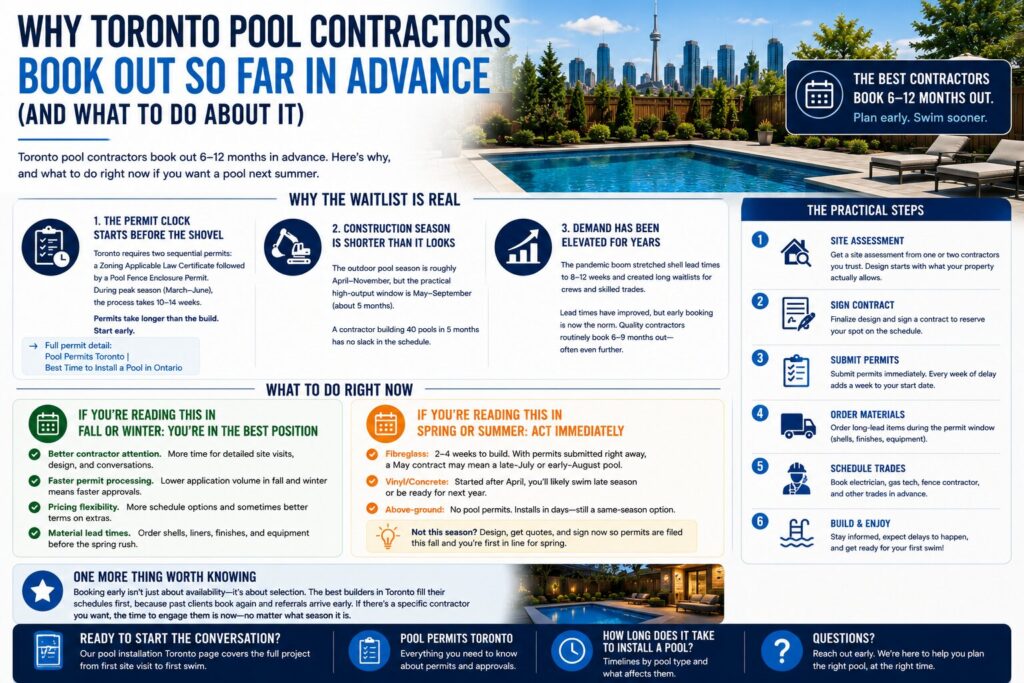
Every September, the same conversation happens in backyards across the GTA. A homeowner had a great summer, looked longingly at a neighbour’s pool, and decided: next year, we’re doing this. They call a contractor in October. The contractor tells them they’re already booking into the following spring — or, for the most in-demand builders, into summer.
This isn’t a sales tactic. It’s the reality of how Toronto’s pool construction market works, and understanding why it happens is the first step to not being stuck on the wrong side of it.
Why the Waitlist Is Real
The Permit Clock Starts Before the Shovel
Toronto’s pool permit process involves two sequential approvals — a Zoning Applicable Law Certificate from Toronto Building, followed by a Pool Fence Enclosure Permit from Municipal Licensing and Standards. During peak application season (March through June), this process routinely takes 10–14 weeks. It can’t be shortened by asking nicely, and it can’t be started until the design is finalised.
This means a homeowner who signs a contract in March can’t realistically begin excavation until June or July — after 14 weeks of permit processing. Add 2–4 weeks for a fibreglass build, or 8–12 weeks for concrete, and the swim date starts slipping toward August, then September.
Contractors who manage their schedules intelligently know this, and they book accordingly. They’re not holding a May construction slot for you in March — they’re holding a January or February contract signing slot, because that’s what enables a May excavation start after permits clear.
→ Full permit detail: Pool Permits Toronto | Best Time to Install a Pool in Ontario
Construction Season Is Shorter Than It Looks
Ontario’s outdoor construction season for inground pools runs roughly April through November — about eight months. But it’s not eight uniform months. The earliest spring weeks are often too wet for excavation. The last fall weeks run against frost deadlines for concrete work and plaster curing. The practical high-output window for most contractors is May through September — five months.
A contractor building 40 pools per season across five months is running close to eight active projects per month. Their scheduling has no slack built in. When a homeowner calls in April hoping to get on the schedule, every good slot is already committed to clients who booked in fall or winter.
Demand Has Been Elevated for Years
The pandemic-era pool boom created a surge in demand that the industry didn’t have the capacity to absorb. Lead times on fibreglass shells stretched to 8–12 weeks; experienced pool crews had long waitlists; skilled trades — concrete finishers, pool plumbers, electricians — were in short supply.
That surge has moderated somewhat, but it permanently changed booking patterns. Homeowners who lived through a 14-month wait now book early. Contractors who managed through the backlog now protect their schedules more carefully. The result is a market where quality contractors routinely fill their seasons 6–9 months in advance, with the most sought-after builders booked even further out.
What to Do Right Now
If You’re Reading This in Fall or Winter: You’re in the Best Position
Fall and winter are genuinely the best time to engage a pool contractor — not just because availability is better, but because the off-season dynamic works in your favour across multiple dimensions.
Better contractor attention. In peak season, contractors are managing active builds, fielding inbound calls, and coordinating trades across multiple projects simultaneously. In September through February, they have time for unhurried site visits, detailed design consultations, and thorough conversations about what your project actually requires.
Faster permit processing. Toronto’s permit application volume drops significantly in fall and winter. Applications submitted in November or December typically move through both the Zoning Certificate and Pool Fence Enclosure Permit stages faster than the same application submitted in March or April. This can shave weeks off your permit timeline and pull your excavation start date earlier.
Pricing flexibility. A contractor filling their off-season schedule may have more flexibility on timing, scope additions, or in some cases pricing than the same contractor managing a full summer pipeline. This doesn’t mean deep discounts — but it does mean fewer scheduling compromises and occasionally better terms on extras.
Material lead times. Fibreglass shell orders placed in fall deliver before the spring rush. Liner fabrication orders, specialty coping or tile, and pool equipment with longer lead times all benefit from off-season ordering.
If You’re Reading This in Spring or Summer: Act Immediately
If it’s already March through July and you haven’t engaged a contractor, your realistic window for this swimming season depends heavily on pool type:
Fibreglass is the most time-sensitive option in your favour — 2–4 weeks of active construction versus 6–12 for concrete. But you still need permits, which take weeks even in off-peak periods. If you can find a contractor with an available slot and permits are submitted immediately, a May contract could produce a late-July or early-August pool. That window narrows quickly.
Vinyl and concrete builds started after April typically result in a late-season swim at best, or a pool that’s ready in time for next year. The concrete cure cycle alone runs 3–4 weeks before interior finishing can begin.
Above-ground pools have no permits for the pool structure itself and install in days — genuinely a viable same-season option even if you’re starting in June or July.
If this season isn’t achievable, pivot: use the remaining months to design, get quotes, and sign a contract now so that permits are filed this fall and you’re first in the queue for a spring excavation start.
The Practical Steps
Whether you’re planning for next year or hoping for this one, the sequence is the same — just compressed if you’re late:
- Get a site assessment from one or two contractors whose work you respect. This is where design decisions get grounded in what your property actually allows.
- Finalise design and sign a contract. This reserves your spot on the contractor’s schedule and starts the clock on permit applications.
- Submit permits immediately after signing. Every week of delay on permit submission is a week added to your excavation start date.
- Order long-lead materials during the permit window — fibreglass shell if applicable, specialty finishes, any equipment with extended lead times.
- Schedule trades during the permit wait — electrician, gas tech, fence contractor — so they’re available when construction is ready for them.
The homeowners who swim in June did all of this in September or October of the previous year. The homeowners who swim in September signed in April and got lucky with permits. The homeowners who don’t swim that year called a contractor in June.
One More Thing Worth Knowing
Booking early isn’t just about availability — it’s about selection. The contractors who remain available in April and May are, on average, less sought-after than the ones who were booked in the fall. The best builders in Toronto — the ones with the most experience, the strongest permit knowledge, and the most accountability — fill their schedules first, because their past clients book them again and send referrals that arrive early.
If there’s a specific contractor you want for your project, the time to engage them is now, regardless of what season it is when you’re reading this.
Ready to start the conversation? Our pool installation Toronto page covers the full project from first site visit to first swim. For what to expect from the permit process and timeline, see Pool Permits Toronto and How Long Does It Take to Install a Pool?