

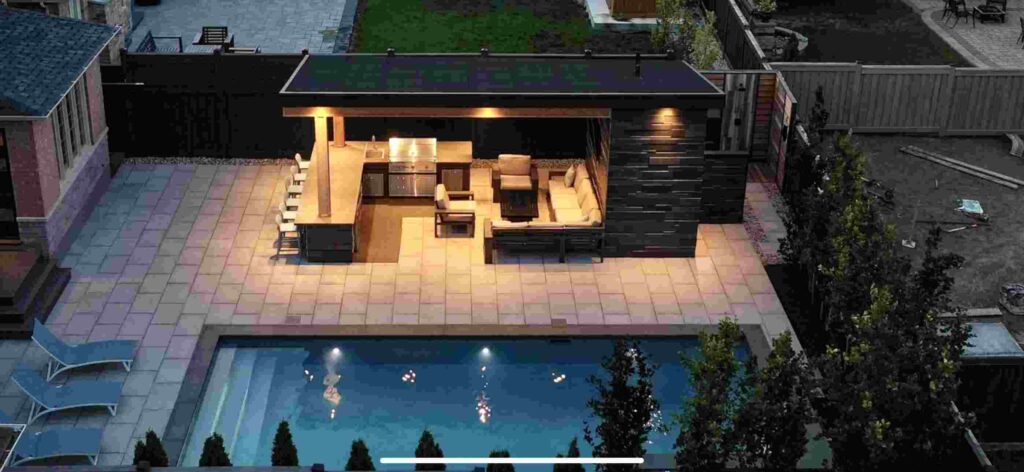
Most of what surprises homeowners during a pool project isn’t construction-related — it’s things they could have known before signing. This guide covers the costs, permit realities, and planning decisions that matter most before you commit, organized around the three areas where misunderstanding is most common.
Costs: What’s Really in the Quote
The Quote Usually Doesn’t Include Everything
A standard pool contractor quote typically covers: the pool structure, excavation, basic equipment (pump, filter), and plumbing and electrical rough-in. It often does not include:
- The safety fence/enclosure (typically $3,000–$10,000+ depending on material and perimeter)
- Finished decking or patio (typically $3,000–$20,000+)
- A heater (typically $1,500–$7,000 depending on type)
- Premium lighting beyond one basic light
- Water features (deck jets, bubblers, waterfalls)
- Landscaping
- Permit fees ($413 for the two core permits in Toronto, potentially more with engineering or TRCA review)
The pool shell itself typically represents 60–70% of your total project cost once fencing, decking, and finishing are added. Budgeting to the quoted pool price and then discovering the remaining items during construction is one of the most common sources of financial stress on pool projects. Get an all-in itemized quote — or at minimum, separate quotes for every element — before signing.
Ongoing Costs Are Real
Annual ownership costs add up:
- Spring opening: $150–$350
- Fall closing and winterisation: $200–$450
- Chemicals and water care: $500–$1,200/year
- Electricity and gas (pump and heater): $1,200–$2,800/year
- Insurance increase: roughly $30–$75/month
Plan for $1,500–$4,000 per year in routine upkeep, on top of periodic larger costs: liner replacement every 7–12 years for vinyl ($4,000–$7,000), resurfacing every 10–20 years for concrete ($6,000–$18,000), or gelcoat refinishing every 15–20 years for fibreglass ($3,000–$8,000). For the full cost picture by pool type, see Pool Installation Cost Toronto.
Small Pools Aren’t Proportionally Cheap
If you’re considering a smaller pool to reduce cost, know that going smaller saves less than most people expect. Permits, mobilization, and equipment minimums don’t scale with pool size — a 12’x24′ pool carries most of the same fixed costs as a 16’x32′ pool, just applied to a smaller structure. The real savings from choosing a smaller pool come from choosing a different type, not just shrinking an inground footprint. See Cost to Install a Small Pool.
Permits: What the Process Actually Requires
There’s No Building Permit for a Pool in Toronto
This surprises most homeowners: Toronto does not require a building permit for the pool structure itself. What’s actually required is a sequential two-step process:
- Zoning Applicable Law Certificate (Toronto Building, $198.59) — confirms zoning compliance before anything else proceeds
- Pool Fence Enclosure Permit (Municipal Licensing and Standards, $214.79) — applied for only after the Zoning Certificate is approved
These can’t be submitted simultaneously. Trying to submit both at once is the most common permit mistake and adds weeks to the timeline.
Permits Take Longer Than You Think
In Toronto during peak spring application season, the full sequential permit process can take 10–14 weeks before excavation can legally begin. A pool project that starts in April is unlikely to have a July swim date if permits haven’t been started. The most reliable approach is to initiate the permit process in January or February for a summer swim target.
Your Existing Fence Probably Isn’t Enough
Toronto’s pool enclosure bylaw requires the pool area to be isolated — including from your own house. A standard perimeter fence around your yard doesn’t satisfy this requirement if a door from your home opens directly onto the pool area. Many homeowners discover they need a separate isolation fence between the house and the pool, in addition to an exterior perimeter fence, after the pool is already installed. Confirm your enclosure design with your contractor before finalizing it. See Toronto Pool Fence Bylaws.
Soft Landscaping and Lot Coverage Can Be a Trap
Toronto’s zoning by-law requires a minimum percentage of your lot to remain as permeable surface. Your pool’s water surface counts toward that requirement (as a permeable surface), but surrounding decking and hardscape doesn’t. On a smaller lot with existing coverage, adding a pool and extensive decking can push your total hard-surface coverage over the limit — triggering a Minor Variance process that adds months and thousands of dollars. Raise lot coverage with your contractor before finalizing the deck size. See Pool Zoning Rules Toronto.
Planning: Decisions That Must Be Made Upfront
Design Decisions Lock In Before Construction
Several design choices can’t be changed after construction begins:
For fibreglass pools: features like tanning ledges, built-in benches, and integrated spas are molded into the shell at the factory. They must be in the order before the shell is manufactured — they can’t be added during or after installation.
For concrete pools: structural features like infinity edges, beach entries, and integrated spas require engineering and plumbing decisions made before excavation. Adding them afterward means breaking out and rebuilding sections of a concrete shell.
For all types: the equipment pad location determines plumbing run lengths permanently. Getting this placed correctly relative to the pool — for both performance and noise — matters before the first pipe is laid.
Know Your Property’s Constraints Before You Design
Before finalizing any design, confirm:
- Your property’s zoning category and the setback distances that apply to your specific address (zone-specific, not a single universal number) — see Toronto Pool Setback Requirements
- Whether your property is in a TRCA regulated area (near a ravine, watercourse, or the lake) — adds an approval step
- Whether any trees on or near your property have a trunk diameter of 30cm or more (Toronto’s Private Tree Bylaw protects these and their root zones)
- Your side-yard access width — narrow access limits equipment and can significantly raise excavation cost
- Your soil type — clay or rocky soil adds excavation time and cost
Timeline: Build Backward From When You Want to Swim
| Pool Type | Start Permits By | Target Excavation | Buffer to Swim |
| Fibreglass | Mid-February | Late April | 3 weeks |
| Vinyl | February | Mid-April | 3 weeks |
| Concrete | January | Early April | 4 weeks |
Missing these windows doesn’t mean no pool — it means a later swim date, or a pool that’s ready for the following season. Fall and winter installations avoid peak scheduling pressure and often come with more contractor availability and flexibility. See Best Time to Install a Pool in Ontario.
What to Ask a Contractor Before Signing
- Is the permit process included, or handled separately — and who submits?
- What’s the backfill material for fibreglass (should be pea gravel or crushed stone, not soil)?
- Is a plumbing pressure test included before backfill?
- Who coordinates the ESA electrical inspection?
- Are decking, fencing, and heating quoted separately — and what are those numbers?
- What are the payment milestones, and how do they align with construction phases?
- What does the warranty cover, and for how long?
Update Your Insurance Before the Pool Is Filled
Inform your home insurer before the pool is operational — not after. A new pool changes your liability exposure and may change your premium. More importantly, a pool-related claim investigated after the fact by an insurer who didn’t know about the pool can result in a denied claim. Get the endorsement or rider confirmed in writing while the pool is under construction. See Does a Pool Increase Home Value in Toronto? for more on the financial picture.
Planning Checklist
Before you sign:
- Full itemized quote including fencing, decking, heating, and permits
- Annual ownership costs estimated and budgeted
- Lot coverage and soft landscaping assessed for your specific address
- Setbacks confirmed for your specific zoning category
- TRCA regulated area status confirmed
- Protected trees near the excavation area identified
- Side-yard access width measured
- Permit timeline mapped against your target swim date
- All design features for your pool type (fibreglass: factory features; concrete: structural features) finalised
Before excavation begins:
- Ontario One Call utility locate completed
- Zoning Certificate approved
- Equipment pad location confirmed
- Soil type assessed (clay or rock adds cost)
Before filling:
- Pool Fence Enclosure Permit obtained
- Compliant enclosure built
- MLS inspection booked (peak season: book early)
- ESA electrical inspection passed
- Home insurance updated
Frequently Asked Questions
What’s the most common thing people don’t budget for?
Fencing and decking — which together can easily add $10,000–$30,000 to a project that was quoted as the pool only.
Do I need to tell my insurer about a new pool?
Yes, before it’s operational — not after. A claim investigated on an undisclosed pool can be denied.
What design decisions can’t be changed after construction starts?
For fibreglass: any factory-integrated feature (tanning ledge, bench, integrated spa). For concrete: structural features like infinity edges, beach entries, and spa integration. For all types: equipment pad location.
How early should I start the permit process?
In Toronto, by January or February at the latest for a summer swim — the sequential two-permit process can take 10–14 weeks during peak season.
What’s the most important question to ask a contractor?
What’s included in the quote — specifically whether fencing, decking, heating, and permits are in or out.
Ready to Plan Your Build?
A site visit and detailed quote is the most useful next step — it confirms what your specific property allows and what the full project will actually cost.
Contact Easy Pools at (647) 449-9512 for a free, no-obligation site assessment and detailed quote.