

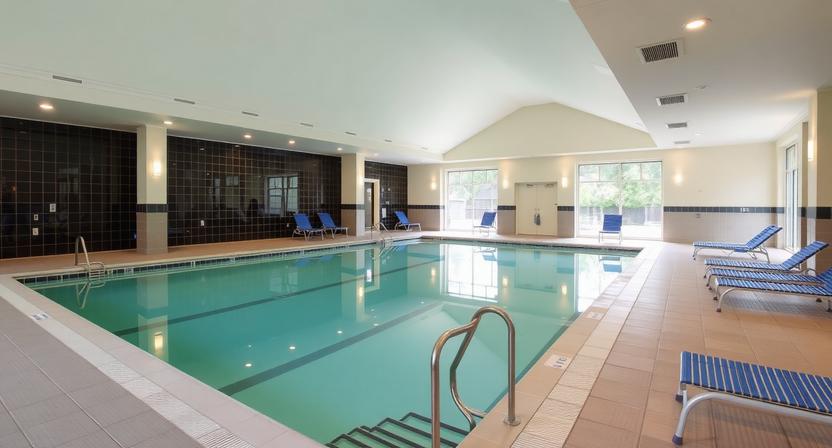
“Indoor pool” describes the room, not the pool itself — the shell can still be vinyl, fibreglass, or concrete, the same as any outdoor build. What actually defines an indoor pool project is everything built around that shell: the enclosure, the climate control, and a set of architectural decisions that don’t come up with an outdoor pool at all. This guide covers the real benefits of going indoors, then walks through the design considerations — glazing, acoustics, ceiling height, finishes — that separate a genuinely well-designed indoor pool room from an expensive, humid box.
Costs at a Glance
Indoor pools typically cost $120,000–$400,000+ to build, with the biggest factor being whether you’re converting existing space (lower end) or building a brand-new standalone enclosure (higher end). For the full construction cost breakdown by component, plus the operating costs of running one year-round, see Cost to Install an Indoor Pool.
Benefits of an Indoor Pool
- Genuinely year-round swimming. This is the defining benefit — independent of Ontario’s short outdoor swim season, an indoor pool is usable in January as readily as July.
- No seasonal opening or closing cycle. Outdoor pools require a spring start-up and fall winterization each year; a pool that runs continuously indoors skips that cycle, along with its associated cost and labour, entirely.
- Protection from leaves, debris, and weather. Less surface debris means less day-to-day skimming — though it’s worth being clear-eyed that this isn’t the same as “less maintenance overall,” since humidity and air quality management replace it as the dominant ongoing task.
- More privacy. An indoor pool isn’t visible to neighbours the way a backyard pool often is, though enclosure and safety requirements can still apply — confirm current rules with your municipality.
- Consistent conditions for therapeutic or rehabilitation use. Stable water and air temperature, year-round, makes an indoor pool well suited to low-impact exercise routines for people managing mobility limitations or recovering from injury, without the seasonal interruption an outdoor pool imposes.
- Reduced UV exposure on pool surfaces and equipment. Less direct sun exposure can help extend the life of certain finishes and components, though the trade-off is a consistently humid environment that brings its own wear considerations.
- A genuine extension of your living space, rather than a separate backyard feature — particularly when designed to integrate with the rest of the home, covered more below.
Design Considerations
Architectural Integration
Decide early whether the pool room functions as an attached wing of the home or a more separate structure. Large sliding glass wall or door systems are an increasingly popular choice, allowing the room to open fully to a patio or yard in good weather — blurring the line between indoor and outdoor rather than committing fully to one or the other. How the room connects to the rest of the house — which hallway or living space it’s accessed from — matters as much to daily usability as the pool itself.
Glazing and Natural Light
Windows and skylights bring in natural light and a connection to the yard, but every additional run of glass increases the humidity and condensation load your HVAC system has to manage — covered in more depth on our cost guide. Two design responses help: choosing high-performance double or triple-glazed windows, which resist condensation better than standard glazing, and directing a portion of conditioned air specifically along glazed surfaces, since that targeted airflow is often what actually prevents fogging and water streaking on cold glass rather than dehumidification capacity alone.
Ceiling Height and Room Volume
A taller, more dramatic ceiling reads as a genuine architectural statement, but it also increases the total air volume your dehumidification system has to condition — a real design-versus-operating-cost trade-off, not just an aesthetic choice. See our cost guide for how room size affects HVAC system sizing and cost specifically.
Acoustic Design
This is one of the most overlooked design considerations in indoor pool rooms. Hard surfaces, a large body of water, and tall ceilings combine to create an echo-prone environment that can feel genuinely unpleasant to spend time in if it isn’t addressed. Sound-dampening ceiling materials, textured wall finishes, and avoiding large areas of fully parallel hard surfaces all meaningfully reduce the harsh acoustics common in poorly designed pool rooms.
Flooring and Deck Comfort
Slip-resistant tile or stone is standard around any pool deck, but radiant in-floor heating is a particularly worthwhile upgrade for an indoor pool specifically — you’re walking on this surface barefoot year-round, not just during a few summer months, which makes the comfort upgrade more valuable here than it would be outdoors.
Material Selection for a Humid Environment
Sustained humidity is a constant in an indoor pool room in a way it never is outdoors. Mold- and mildew-resistant finishes, properly sealed materials, and corrosion-resistant fixtures and hardware all matter more here than in any outdoor pool decision — this is worth discussing explicitly with your contractor for every surface in the room, not just the pool shell itself.
Pairing with Wellness Spaces
A common current design approach treats the indoor pool as the anchor of a broader wellness space, rather than a standalone room — paired with a sauna, steam room, or home gym accessible from the same area. This is worth planning at the design stage, since retrofitting adjacent spaces later is considerably more disruptive than including them in the original layout.
Pool Shell Material Still Applies
Going indoors doesn’t change the underlying shell decision — vinyl, fibreglass, and concrete are all viable indoor pool materials, with the same trade-offs that apply outdoors. See Vinyl Liner Pools, Fibreglass Pools, and Concrete Pools for material-specific guidance, or Fibreglass vs Vinyl vs Concrete Pools for the full comparison.
Is an Indoor Pool Right for You?
An indoor pool is worth serious consideration if genuinely year-round use matters more to you than upfront cost, or if therapeutic, low-impact exercise is a consistent part of your routine that you don’t want interrupted by Ontario’s outdoor swim season. The trade-off is a meaningfully higher construction cost and ongoing operating cost than an outdoor pool of the same size — see our cost guide for the full picture before deciding.
Frequently Asked Questions
How much does an indoor pool cost?
Typically $120,000–$400,000+, with the biggest factor being whether you’re converting existing space or building a new standalone enclosure. See our full cost breakdown for details.
What are the main benefits of an indoor pool over an outdoor one?
Genuinely year-round use, no seasonal opening or closing cycle, more privacy, protection from weather and debris, and consistent conditions well suited to therapeutic or low-impact exercise routines.
What design considerations are unique to indoor pools?
Acoustic treatment, condensation management around glazing, ceiling height versus HVAC load, and humidity-resistant material selection are all considerations that simply don’t apply to an outdoor pool.
Can I use the same pool material indoors as outdoors?
Yes — vinyl, fibreglass, and concrete are all viable indoor pool shell materials, with the same general cost and maintenance trade-offs that apply to outdoor builds.
How do you prevent condensation on windows in an indoor pool room?
High-performance double or triple glazing helps, but directing conditioned air specifically along glazed surfaces is often the more decisive factor in preventing fogging and water streaking on the glass.
Get a Design Consultation
The right architectural approach depends on how you want the room to connect to your home and how you’ll actually use it.
Contact Easy Pools at (647) 449-9512 for a free, no-obligation consultation on your indoor pool project.