

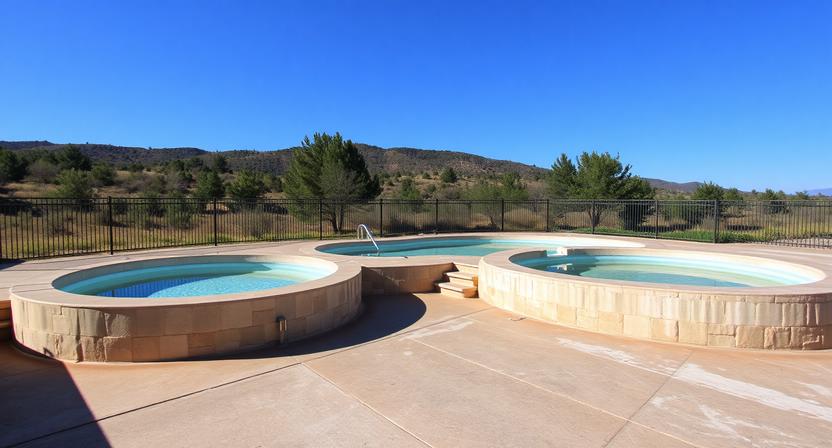
Concrete is the only pool material with no real limit on shape, depth, or built-in features — which is exactly why it’s the default choice for architectural, resort-style, or highly custom backyards. This guide covers what makes concrete genuinely different from fibreglass or vinyl, the practical benefits behind that flexibility, and the design styles and features actually possible when nothing is constrained by a manufacturer’s mold or a liner’s limits.
What Is a Concrete Pool?
A concrete pool is built entirely on site: excavated, reinforced with steel rebar, then shaped using gunite or shotcrete (pressure-applied concrete) before being finished with plaster, pebble, quartz, or tile. Because nothing about the structure is pre-manufactured, the shape, depth, and every built-in feature are design decisions rather than choices from a catalogue.
Costs at a Glance
Concrete pools typically run $100,000–$220,000+ installed, the widest range of any pool material — because design and finish choices drive cost more than size alone. For the full breakdown by size, finish, and feature, see Cost to Install a Concrete Pool.
Benefits of Concrete Pools
Unlimited Design Freedom
There’s no shell catalogue and no liner-shape constraint — if you can draw it (and engineer it), it can be built. This is the single biggest reason homeowners choose concrete over fibreglass or vinyl.
Engineered for Your Specific Site
Because the structure is reinforced and poured on site, it can be engineered around your lot’s specific conditions — slope, soil type, unusual dimensions — in a way a pre-formed fibreglass shell or standard vinyl wall system can’t always accommodate.
The Longest Potential Lifespan
A well-maintained concrete structure can last 50+ years, the longest of any pool material, provided the surface finish is resurfaced on schedule. The structural shell itself is rarely the limiting factor.
Renovate and Add Features Later
Concrete is the one pool material that can realistically be modified after the fact — a section can be broken out and rebuilt to add a feature years down the line. This isn’t true of fibreglass, where features have to be molded in at the factory, and it’s far more limited with vinyl.
The Most Integrated, Architectural Look
Poured-in-place steps, coping, and decking can all be designed to flow into one another as a single continuous surface — a level of visual integration that’s difficult to achieve with a pre-formed shell or a liner-and-panel system.
Supports the Widest Range of Premium Features
Infinity edges, swim-up bars, multi-level designs, and integrated spas are all easiest — and in some cases only realistically possible — with concrete construction, since each requires structural and plumbing decisions built into the shell itself.
Custom Design Options
Architectural Styles
- Modern/geometric: clean lines, sharp angles, minimalist coping — often paired with a dark plaster or pebble finish for a sleek, reflective water surface.
- Resort/lagoon: freeform curves, a beach entry, and lush surrounding landscaping designed to feel like a private getaway rather than a backyard fixture.
- Mediterranean/classic: Roman or Grecian curves, classic tile accents, and fountain or spillway features for a more traditional, ornamental look.
- Infinity/vanishing edge: one edge appears to disappear into the horizon, using an engineered catch basin and return system — a striking visual effect best suited to elevated or view-oriented lots.
Multi-Level Designs
Concrete makes it possible to build a sun shelf, a main swimming area, and a raised spa at different elevations, connected by spillways or a small waterfall between levels — a layered look that’s essentially exclusive to poured concrete construction.
Finish Palette
Finish choice affects both look and feel: plaster gives a smooth, classic appearance at the most accessible price point; pebble and quartz add texture and a more natural, varied colour depth; tile (full or as a waterline accent) offers the widest colour and pattern range, along with the longest finish lifespan. See our concrete cost guide for the full cost-per-finish comparison.
Premium Integrations
- Swim-up bars with built-in seating, for pools designed around entertaining
- Fire features (fire bowls or a fire-and-water combination) along the pool’s edge
- Built-in bench seating and underwater ledges
- Lighting design, including colour-changing LED or fiber-optic accents integrated directly into the shell
Shapes That Respond to the Lot Itself
Because concrete isn’t limited to a standard rectangle or a catalogue shape, it can be designed to wrap around an existing patio, follow an L-shaped yard, or incorporate a separate lap lane alongside a more freeform main pool — solutions that simply aren’t available with a pre-formed shell.
Is Concrete Right for You?
Concrete is the right choice if design freedom — shape, features, and a fully custom architectural look — matters more to you than upfront cost or installation speed. If you’re weighing it against fibreglass or vinyl directly, see Fibreglass vs Vinyl vs Concrete Pools. For a broader decision framework across every pool type, see Best Pool Type to Install.
Frequently Asked Questions
What are the main benefits of a concrete pool?
Unlimited design freedom, the ability to engineer the structure around your specific site conditions, the longest potential structural lifespan of any pool material, and the option to add features later through renovation.
What design styles are possible with concrete?
Nearly any style — modern geometric, resort/lagoon, Mediterranean/classic, and infinity/vanishing edge designs are all achievable, along with multi-level layouts connecting a main pool, sun shelf, and spa.
Can I add features to a concrete pool after it’s built?
Often, yes — concrete is the one pool material that can realistically be modified later, since a section can be broken out and rebuilt. It’s still significantly cheaper to build major features in from the start.
How long does a concrete pool last?
The structural shell can last 50+ years with proper care, though the surface finish needs resurfacing periodically — every 7–10 years for plaster, longer for pebble, quartz, or tile.
Is concrete more expensive than fibreglass or vinyl?
Generally yes, both upfront and over time, due to more frequent surface maintenance. The trade-off is design freedom no other material offers — see our full material comparison for the complete picture.
Get a Design-Specific Quote
The right design depends on your lot, your architectural style, and which features matter most to you.
Contact Easy Pools at (647) 449-9512 for a free, no-obligation quote on your custom concrete pool project.