

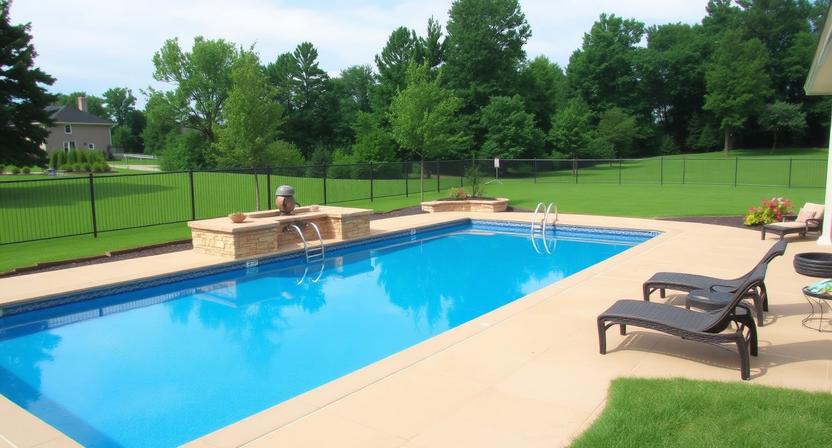
A vinyl liner pool is the most accessible way into true inground pool ownership — and how long it serves you well has as much to do with how it’s cared for as how it’s built. This guide covers the genuine benefits of vinyl, the design choices available to you, and the liner care habits that make the difference between replacing your liner at year 7 or year 15.
What Is a Vinyl Liner Pool?
A vinyl liner pool is built from a steel or polymer wall panel system custom-fit to your yard, then lined with a vinyl sheet that’s heat-welded to fit the pool’s exact shape, including steps, benches, and any built-in features. The liner is what holds the water; the wall system provides the structure behind it.
Benefits of Vinyl Liner Pools
- The most accessible entry point into inground ownership. Vinyl delivers a genuine inground pool experience — permanence, customization, integration with your backyard — at a meaningfully lower cost than fibreglass or concrete.
- Considerable shape and feature flexibility for the price. Curves, corner steps, full-width entry steps, benches, and tanning ledges are all achievable with vinyl-over construction, at a fraction of what the same features would cost in poured concrete.
- A smooth, comfortable surface. Vinyl has none of the abrasive texture some concrete finishes have — gentle on bare feet and swimsuits.
- A look you can fully change over time. Unlike fibreglass (fixed gelcoat colour for the life of the shell) or concrete (changing the finish means a full resurfacing job), a vinyl liner replacement is also an opportunity to completely refresh your pool’s colour and pattern — a genuine long-term advantage hiding inside what’s usually framed as just a maintenance cost.
Design Options
Shapes
A straight rectangle or simple geometric shape is the most economical to build and re-liner over time. Freeform curves and kidney shapes are also achievable with vinyl, at a higher cost than a standard rectangle but well below what the same curve would cost in concrete.
Liner Patterns and Colour
Liners range from solid colours to patterned designs with mosaic borders or tile-look prints. Colour choice has a practical dimension beyond aesthetics: lighter colours show debris more readily but reflect less heat, while darker liners hide debris better and absorb more heat from sunlight — a small but real factor in how warm your pool runs through the season.
Built-In Features
Steps, benches, swim-outs, and tanning ledges can all be built into the wall panel system and lined as part of the custom fit. Each added feature increases both the initial liner cost and the cost of every future replacement, since the liner has to be custom-fabricated to match.
Coping
Standard aluminum coping is the most affordable edge finish. Concrete or paver coping costs more but gives the pool a more integrated, finished look against surrounding decking.
Liner Care: Protecting Your Investment
The single biggest factor in how long a vinyl liner actually lasts isn’t the liner’s mil thickness — it’s how it’s treated day to day. A few habits make a real difference:
- Keep water chemistry balanced. pH and sanitizer levels outside the recommended range accelerate vinyl breakdown more than almost any other factor. This matters more for vinyl than for fibreglass or concrete, since the liner itself — not just the water — is directly exposed to chemical imbalance.
- Use vinyl-safe cleaning tools. Nylon-bristle brushes are appropriate for vinyl; stainless steel brushes, which are fine on plaster or pebble concrete finishes, can scratch or tear a vinyl liner.
- Patch small damage immediately. A small puncture or tear left alone tends to grow, especially under water pressure. Vinyl patch kits (including underwater patches) are inexpensive and straightforward — addressing damage early is far cheaper than an early full replacement.
- Watch the waterline specifically. This is where the liner takes the most UV exposure and the most contact with sunscreen and body oils, both of which accelerate wear at that band specifically. Rinsing off before swimming and choosing pool-safe sunscreens helps.
- Winterize properly every year. Improper winterization — water left in lines, inadequate antifreeze, or letting ice put direct pressure on the liner — is one of the most common causes of off-season liner damage in Ontario’s freeze-thaw climate.
- Never fully drain the pool, except when a professional is actively replacing the liner. A vinyl liner relies on the water behind it (and the ground pressure that water creates against the liner from outside) to stay properly seated; fully draining it can cause shrinking, stretching, or the liner pulling away from its track.
- Smooth out minor wrinkles early. Small wrinkles that go unaddressed tend to deepen over time, trap dirt and algae, and create stress points that can eventually lead to tears — especially in high-traffic areas like the bottom of stairs.
Long-Term Use: What to Expect Over the Years
- Years 1–5: minimal issues with a properly installed liner — this is typically the lowest-maintenance stretch of ownership.
- Years 5–10: some fading at the waterline and minor wrinkling are normal and expected, even with good care.
- Years 7–12: most liners reach the end of their practical life and need replacement — sooner with lighter care, later with consistent attention to the habits above and a thicker liner chosen at installation. See Cost to Install a Vinyl Pool for the full breakdown of mil thickness, replacement cost, and the value case for a thicker liner.
Signs it’s time to replace, rather than patch:
- Brittleness or visible cracking beyond a single repairable spot
- Persistent leaks despite patching
- Significant, widespread fading or discoloration
- Wrinkles that won’t smooth out even after adjustment
- The liner visibly pulling away from its track
Costs at a Glance
Vinyl liner pools typically cost $50,000–$90,000 installed in the GTA, with liner replacement running $4,000–$10,000 depending on size, thickness, and shape complexity. For the full pricing breakdown, including mil thickness and the long-term cost trade-offs, see Cost to Install a Vinyl Pool.
Frequently Asked Questions
What are the benefits of a vinyl liner pool?
Lower upfront cost than fibreglass or concrete, considerable shape and feature flexibility for the price, a smooth comfortable surface, and the ability to fully refresh your pool’s look at each liner replacement.
How do I take care of a vinyl pool liner?
Keep water chemistry balanced, use nylon-bristle (not steel) brushes, patch small damage right away, manage sun and sunscreen exposure at the waterline, winterize properly each year, and never fully drain the pool except during a professional liner replacement.
Can I drain my vinyl pool completely?
No, not under normal circumstances. Doing so can cause the liner to shrink, stretch, or pull away from its track. Full draining should only happen under professional supervision during an actual liner replacement.
What shapes and patterns are available?
Rectangular and geometric shapes are the most economical; freeform curves and kidney shapes are also achievable at a higher cost. Liner patterns range from solid colours to mosaic borders and tile-look prints.
How long will my vinyl liner last with good care?
Most liners last 7–12 years, with consistent water chemistry, gentle cleaning tools, and proper winterization pushing toward the higher end of that range — sometimes longer with a premium 27–30 mil liner.
Get a Design-Specific Quote
The right shape, pattern, and feature mix depends on your yard and your budget.
Contact Easy Pools at (647) 449-9512 for a free, no-obligation quote on your vinyl liner pool project.