

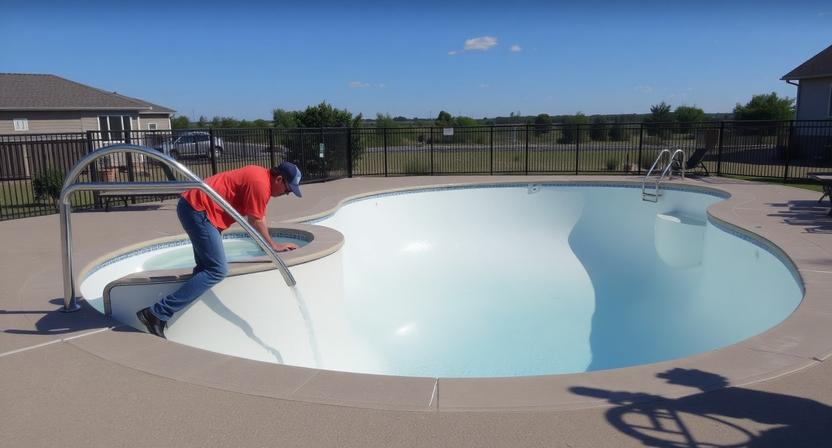
Pool inspections in Toronto happen for two main reasons: someone is buying a home with a pool and wants to know what they’re actually getting, or a pool owner wants a professional assessment of what needs attention before the season starts. This guide covers what a thorough pool inspection actually examines, how it differs from a standard home inspection, and what buyers specifically should know.
Why a Standard Home Inspection Isn’t Enough for a Pool
When purchasing a home with a pool, the standard home inspection typically covers the pool at a surface level: noting that it exists, checking for obvious visible damage, confirming that a fence is present. Most home inspectors are not trained pool technicians and don’t carry the equipment needed to test plumbing, check electrical bonding, or assess equipment operation under load.
What a general home inspector typically does with a pool:
- Notes visible cracks in deck or coping
- Confirms a fence is present (not necessarily whether it’s bylaw-compliant)
- May run the pump briefly
- Notes approximate age if equipment is labelled
What a general home inspector typically does not do:
- Pressure-test the plumbing lines for leaks
- Inspect the liner condition in detail
- Assess plaster or gelcoat condition
- Check electrical bonding continuity
- Verify anti-entrapment drain cover compliance
- Assess equipment condition and remaining service life
A dedicated pool inspection by a qualified pool service technician covers all of these. For buyers, the gap between what a home inspector does and what a pool inspection reveals is often where the most significant unexpected costs hide.
Equipment Inspection
Pool equipment has finite service lives, and aging equipment that needs near-term replacement is a real cost that should factor into a purchase price or a renovation budget.
What the equipment inspection covers:
Pump: check for seals, bearings, and impeller condition; note the age and model; test under load for unusual noise or vibration; check for signs of previous leaking at the shaft seal.
Filter: check pressure at operating conditions; inspect the tank, multiport valve, and gauge; for cartridge filters, inspect the element; for DE filters, inspect the grids; note condition and approximate remaining service life.
Heater: check the heat exchanger for corrosion and scale; test ignition; check flue and venting; note age — gas heaters typically last 7–12 years, and an old heater should be factored into expected costs.
Automation and controls: test that all automated functions respond correctly; check for error codes; assess integration with equipment.
Lighting: test all underwater and deck lights; check for cracked lenses or water infiltration; note whether the system is LED or older halogen.
Salt chlorinator (if present): check cell condition and output; note cell age (cells typically last 3–7 years).
Structural Inspection
Vinyl liner pools:
- Liner age, condition, and approximate remaining life
- Visible tears, brittleness, or discoloration — particularly at the waterline band and floor-wall junction
- Whether the liner is seated properly in the bead track throughout
- Steel wall panel condition as visible through the liner (rust shadows can sometimes be seen)
Concrete pools:
- Plaster or pebble finish condition: etching, staining, rough texture, crazing
- Whether resurfacing is needed now or approaching in the near term
- Through-cracks vs. surface crazing (the distinction matters significantly for repair scope)
- Tile condition: loose tiles, deteriorated grout, calcium scale
Fibreglass pools:
- Gelcoat condition: spider cracking, osmotic blistering, fading
- Shell shape: any sections that have deformed or bulged (indicates backfill problems)
- Surface condition at waterline and steps
All pools:
- Coping condition: cracks, heaved sections, loose pieces (frost heave is common in Toronto)
- Decking condition: cracking, drainage, trip hazards
- Skimmer body and main drain condition
- Return jet fitting condition
Safety and Compliance Inspection
Anti-entrapment drain covers: Ontario pool code requires anti-entrapment drain covers and dual main drains separated by a minimum distance. Pools built before current code may have single drains or covers that pre-date the current standard. A safety inspection identifies whether the drain configuration meets current requirements.
Electrical bonding: the equipotential bonding grid — a network of bare copper conductors connecting all metal pool components — must be present and continuous. A broken bonding connection creates shock risk in and around the pool. Bonding can be checked with a continuity tester. This is one of the checks that general home inspectors almost never perform.
GFCI protection: all outlets and circuits within the specified distance of the pool must be GFCI-protected. A compliance check confirms this is in place.
Pool enclosure: a full safety inspection assesses whether the fence and gate configuration meets Toronto’s bylaw requirements — not just whether a fence exists, but whether it meets height requirements, has a self-closing, self-latching gate, and achieves four-sided isolation of the pool area. See Toronto Pool Fence Bylaws for the full standard. Non-compliant enclosures are a regulatory exposure for any property owner.
Permit history: confirming whether a pool has permits on file with the City is not strictly part of a pool inspection, but it’s a critical buyer question. Outstanding permit issues or an unpermitted pool can affect insurance, resale, and financing. See What Happens if You Install a Pool Without a Permit?
For Buyers: What to Ask and What to Negotiate
Before closing on a property with a pool:
- Request permit documentation: ask the seller for the building permit or Zoning Certificate and Pool Fence Enclosure Permit. If they can’t produce them, check with the City directly.
- Ask about liner/plaster history: when was the liner or plaster last replaced? This sets expectations for how soon you’ll face that cost. A vinyl liner replaced 10+ years ago should be factored into your offer.
- Ask for equipment service records: service history shows whether equipment has been maintained and can reveal problems that have been repeatedly patched rather than resolved.
- Ask if the pool has ever had a significant leak: prior leaks should have been repaired, but recurring leaks may indicate a structural issue.
- Use inspection findings to negotiate: a pool inspection that reveals a heater at end of life, a liner that needs replacement in 1–2 seasons, or a coping that needs repair creates a basis for renegotiation or a price adjustment — these are quantifiable costs.
Pool Inspection Costs in Toronto
| Inspection Type | Typical Cost |
| Basic equipment startup and visual assessment | $150 – $300 |
| Full inspection including pressure test and electrical check | $250 – $500 |
| Pre-purchase full inspection with written report | $300 – $600 |
A written report documenting all findings — with photographs where relevant — is worth requesting specifically for pre-purchase inspections, since it creates a record that can be used in negotiations and establishes a baseline for future maintenance planning.
Frequently Asked Questions
Does a home inspector check the pool when buying a house in Toronto?
Typically at a surface level only — visible damage, noting whether a fence exists. A home inspector rarely pressure-tests plumbing, checks electrical bonding, or assesses equipment condition in depth. A dedicated pool inspection by a qualified technician covers what a home inspector doesn’t.
What’s the most important thing to check when buying a home with a pool?
Liner or plaster condition (determines near-term renovation costs), equipment age and condition (determines replacement timeline), plumbing integrity (whether the pool leaks underground), and whether the pool has permits on file.
Can a pool inspection reveal hidden leaks?
Yes — a pressure test of the plumbing lines during inspection can confirm whether underground pipes are sound, which a visual inspection alone cannot. If the inspection doesn’t include pressure testing, ask specifically whether it can be added.
Does the pool fence need to be inspected separately?
A qualified pool inspector should include a bylaw compliance check as part of a full inspection — assessing whether the fence meets current Toronto requirements, not just whether a fence exists.
How much does a pool inspection cost in Toronto?
A full pre-purchase inspection with a written report typically runs $300–$600.
Book a Pool Inspection
Whether you’re buying a home with a pool or want a current-condition assessment of your own, a professional inspection identifies what needs attention before it becomes an emergency.
Contact Easy Pools at (647) 449-9512 for a pool inspection or pre-purchase assessment.