

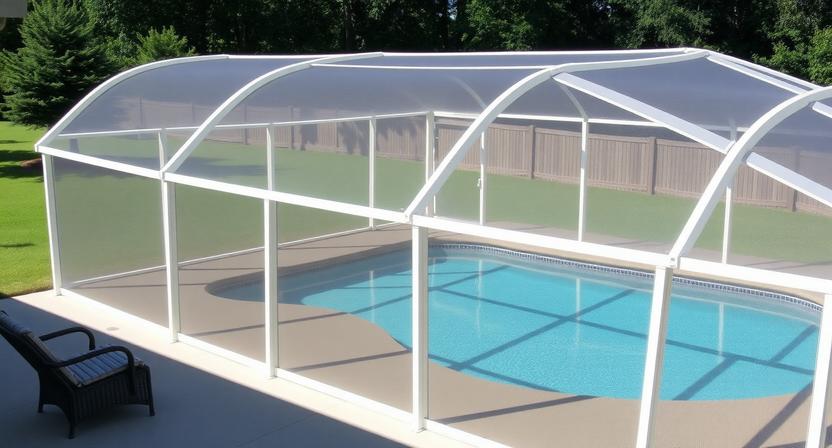
The Pool Fence Enclosure Permit is the second of two approvals every Toronto pool project needs, and it’s the one most directly tied to your fence design — covering the safety barrier that must be in place before your pool can be legally filled. This page covers the application process, what a complete submission looks like, the sequencing rule that trips up most first-time applicants, and what happens at the final inspection.
The Two-Permit Sequence: Why Order Matters
Toronto’s pool approval process has a mandatory order:
Step 1 → Zoning Applicable Law Certificate (from Toronto Building)
Step 2 → Pool Fence Enclosure Permit (from Municipal Licensing and Standards)
You cannot apply for the Pool Fence Enclosure Permit until your Zoning Applicable Law Certificate is approved. This is the sequencing rule that most commonly causes delays — homeowners submit fence permit drawings before their zoning is cleared, and the application is returned, adding weeks to the timeline.
The practical implication: start the Zoning Certificate application first, use its review window (which can itself take several weeks during busy periods) to finalize your fence design drawings, and then submit the Pool Fence Enclosure Permit application once zoning approval is confirmed. For the Zoning Certificate process and what it reviews, see Pool Permits Toronto and Pool Zoning Rules Toronto.
Who Issues It and Where to Apply
The Pool Fence Enclosure Permit is issued by Municipal Licensing and Standards (MLS), not Toronto Building — a distinct department from the one that handles the Zoning Certificate. Applications go to MLS directly, either online through the City’s portal or in person at a Toronto Building counter (staff can route to MLS). Your contractor will typically submit on your behalf as part of the project.
What a Complete Application Includes
A complete Pool Fence Enclosure Permit application typically requires:
- Proof of Zoning Applicable Law Certificate approval — MLS will not process a fence permit application without confirmed zoning clearance.
- Scaled site plan showing: property boundaries, all existing structures, the proposed pool’s location and dimensions, setbacks to property lines and structures, the proposed enclosure’s location and configuration, gate locations and swing directions, and the location of pool equipment.
- Fence specification detail showing: fence material, height, post spacing, gate mechanism (confirming self-closing and self-latching), latch placement, and — critically — how the enclosure achieves four-sided isolation of the pool area, including how any dwelling door that might access the pool area is addressed.
- Applicable fee — currently $214.79, confirmed against the City’s 2026 fee schedule, though fees are reviewed annually.
Missing or incomplete elements are the most common reason applications are returned without review, adding to your timeline rather than starting the clock on the review period. The fence drawing in particular needs to clearly show the isolation configuration — reviewers need to see that every path into the pool area passes through a compliant gate or barrier, not just that a fence exists.
Review Timeline
Site plan reviews for the Pool Fence Enclosure Permit are typically completed within 10–20 business days of a complete submission, though this varies with application volume and complexity. June and July are consistently the busiest months for permit applications, and review times can extend significantly during peak season. Submitting in late fall or early spring — once your Zoning Certificate is in hand — is the most reliable way to stay ahead of the construction season timeline.
The Fence Standard, Briefly
Since the full fence specification is covered in detail elsewhere, a brief summary of the headline requirements:
- Minimum 1.2 metres high for single residential properties, 1.8 metres for multi-residential
- Self-closing, self-latching gate with the latch on the pool side
- Enclosure must achieve four-sided isolation of the pool area — including from the dwelling
- Fence must maintain a minimum 1.2 metres clearance from the pool’s edge
- No barbed wire, chicken wire, or material not normally used for fencing
For the complete fence specification — approved materials, gate details, the isolation configurations that do and don’t comply, and the ongoing maintenance obligation — see Toronto Pool Fence Bylaws.
One Exemption Worth Knowing
A hot tub, whirlpool, or spa does not require a Pool Fence Enclosure Permit if it has a cover permanently attached that locks to prevent access when the tub is not in use. This exemption applies only to the permit requirement — local property standards and general safety expectations still apply.
The Final Inspection
Once your enclosure is physically built, you need a City inspection confirming it complies with the bylaw before you can legally fill the pool with water, or allow water to collect or remain in it. Using the pool before this inspection — even for a day — can result in fines. Book the inspection through 311 after construction is complete. Allow adequate lead time: inspectors are busiest during June and July, and scheduling can take longer than expected during peak season.
At inspection, the officer will check:
- Fence height around the full perimeter
- Gate operation — self-closing and self-latching under its own power, no propping required
- Latch placement and height on the pool side of the gate
- That no section of the enclosure can be climbed using adjacent objects (A/C units, BBQs, furniture)
- That the isolation configuration is complete — no unbarriered access from the dwelling to the pool area
A failed inspection requires corrections and a re-inspection before the pool can be filled. Common failure points include gates that don’t fully self-latch, a latch positioned too low or on the wrong side, or a climbable object placed against the fence after the fence itself was built.
If You Need to Change the Fence After Approval
Modifications to an approved pool enclosure — replacing a gate, changing fence materials, or adding an accessory structure near the barrier — should be confirmed with MLS before proceeding, since some changes may require an amended permit or a new inspection. Changes made without notification can create compliance issues that surface at the time of a future property sale or insurance review.
Permit Timelines in Practice
Working backward from “I want to swim by July 1”:
| Milestone | Suggested Timing |
| Finalize pool and fence design, obtain survey | By January–February |
| Submit Zoning Certificate application | February–March |
| Receive Zoning Certificate approval | March–April (allow 4–8 weeks) |
| Submit Pool Fence Enclosure Permit application | Immediately after ZALC approval |
| Receive permit approval | Allow 3–5 weeks during peak season |
| Pool and fence construction | April–June |
| Book and pass final inspection | Late June |
| Legal pool use begins | July |
This is a realistic but not generous timeline for a project targeting early-season swimming. Starting the Zoning Certificate process later than March makes a June inspection appointment genuinely difficult to achieve.
Frequently Asked Questions
Where do I apply for a Pool Fence Enclosure Permit in Toronto?
Through Municipal Licensing and Standards (MLS) — a separate department from Toronto Building, which handles the Zoning Certificate. Your contractor typically submits on your behalf.
Can I submit both permits at the same time?
No. The Zoning Applicable Law Certificate must be approved before a Pool Fence Enclosure Permit application can proceed. Submitting both simultaneously is the most common cause of permit delays.
How long does the Pool Fence Enclosure Permit review take?
Typically 10–20 business days for a complete application, though peak season (June–July) can extend this significantly. Submitting in fall or early spring gives you the most predictable timeline.
What happens if my pool is ready before the inspection?
You cannot legally fill the pool or allow water to collect in it until the inspection is passed. Using the pool before inspection can result in fines.
Do hot tubs need a Pool Fence Enclosure Permit?
Not if they have a permanently attached, lockable cover that prevents access when not in use. Standard above-ground hot tubs without this feature do require the permit.
Get Your Permit Process Started Right
A permit application with missing documents or out-of-sequence submissions is the most common cause of construction delays that push projects past summer.
Contact Easy Pools at (647) 449-9512 for a free, no-obligation consultation — we handle the permit process as part of every project.