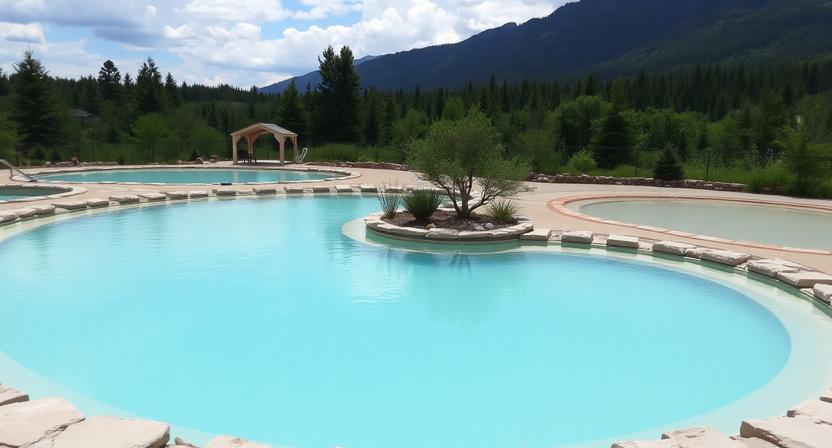
Saltwater pools are swimming pools that use a salt chlorine generator to convert dissolved pool salt into chlorine. Saltwater pools are not chlorine-free pools. They still rely on chlorine for sanitation, but the chlorine is produced by the salt system instead of being added manually as often.
Health Canada states that saltwater pools or spas use a device that sanitizes water by generating chlorine from salt added to the water. This means free chlorine, pH, alkalinity, calcium hardness, and salt levels still need regular testing and control.
The right saltwater pool setup depends on pool type, salt cell size, salt level, pH control, water balance, scale prevention, corrosion risk, equipment care, winterization, and long-term maintenance. The salt cell, control panel, pool pump, filter, and water-testing routine all affect chlorine output and pool-water quality.
Quick Answer
What are saltwater pools?
Saltwater pools are pools with a salt chlorine generator that turns dissolved pool salt into chlorine. The generated free chlorine sanitizes the pool water and helps control bacteria, algae, and organic contamination.
Are saltwater pools chlorine-free?
Saltwater pools are not chlorine-free. Health Canada says saltwater pools use a device that generates chlorine from salt, so chlorine still sanitizes the water.
Are saltwater pools easier to maintain?
Saltwater pools reduce manual chlorine handling, but they still need water testing, pH control, salt level checks, salt cell inspection, filter cleaning, and scale prevention.
Quick Overview
| Decision Factor | Saltwater Pool Detail |
|---|---|
| Best for | Lower manual chlorine handling, steady chlorine generation, softer water feel |
| Not best for | No-maintenance ownership, chlorine-free swimming, ignored water chemistry |
| Main system | Salt chlorine generator and salt cell |
| Main sanitizer | Chlorine generated from dissolved salt |
| Main maintenance need | Testing, pH balance, salt level checks, salt cell cleaning |
| Main risk | Scale, corrosion, low chlorine, high pH, salt cell failure |
| Long-term focus | Salt cell life, water balance, equipment protection, winter care |
What Are Saltwater Pools?
Saltwater pools are swimming pools that use a salt chlorine generator to make chlorine from dissolved sodium chloride. The system produces free chlorine, which acts as the main sanitizer for bacteria, algae, and organic contamination. Health Canada states that chlorine generators use electrical energy to produce chlorine from salt, which then sanitizes the water.
How do saltwater pools work?
Saltwater pools work through electrolysis. The pool pump moves salted water through the salt cell, where electrical current passes across metal plates and converts dissolved sodium chloride into chlorine.
The generated chlorine becomes active sanitizer in the water. CCOHS explains that salt chlorine generation produces chlorine, and the chlorine forms hypochlorous acid, the active ingredient that kills algae, bacteria, and other contaminants in pool water.
What is a salt chlorine generator?
A salt chlorine generator is the pool equipment that converts dissolved salt into chlorine. It includes a salt cell, control panel, power supply, flow-safety features, and output settings.
The control panel sets chlorine output and shows system status, such as low salt, high salt, low flow, or cell warnings. The generator needs correct salt level, pump flow, and runtime to produce enough chlorine for the pool.
What is a salt cell?
A salt cell is the part of the generator where chlorine generation happens. Salted water passes through the cell, and electrical current moves across the cell plates.
Scale, low flow, dirty plates, old cell age, and wrong salt level reduce chlorine output. The salt cell needs inspection because scale buildup blocks the plates and lowers system efficiency.
What salt level is needed?
Salt level depends on the salt chlorine generator model. Many systems need a manufacturer-set range near 2,700–3,400 ppm, with 3,200 ppm listed as the optimal level for Hayward AquaRite systems. Low salt reduces generator efficiency and lowers chlorine production. High salt triggers system warnings or shutdown on some systems.
Pool owners need the exact range from the generator manual. Salt loss mainly happens through splash-out, backwashing, draining, leaks, or dilution. Evaporation removes water, not salt.
What makes saltwater pools different?
Saltwater pools differ from traditional chlorine pools because the salt system makes chlorine on site. Traditional chlorine pools rely more on added chlorine products.
The main sanitizer stays the same: chlorine. The main difference is delivery. Saltwater pools use dissolved salt, a salt cell, a control panel, pump flow, and chlorine-output settings to create sanitizer during circulation. They still need free chlorine testing, pH control, alkalinity balance, calcium hardness control, salt checks, filter care, scale prevention, and corrosion protection.
What Benefits Do Saltwater Pools Offer?
Saltwater pools offer lower manual chlorine handling, steady chlorine generation, softer water feel, lower harsh odour when balanced, and automated sanitizer output. They still need regular sanitizer testing, pH control, salt level checks, salt cell inspection, and water balance.
Why is chlorine handling lower?
Chlorine handling is lower because a salt chlorine generator makes chlorine from dissolved pool salt during circulation. Pool owners add salt when testing shows the level is low, instead of adding chlorine products as often.
Health Canada states that saltwater pools or spas use a device that sanitizes water by generating chlorine from salt added to the water. The system still uses chlorine, but the chlorine is produced by the equipment.
Why does water feel softer?
Saltwater pool water often feels softer because dissolved sodium chloride changes the feel of the water compared with many manually chlorinated pools. Balanced pH, alkalinity, calcium hardness, and sanitizer levels still control comfort more than salt alone.
Poor water balance removes that comfort benefit. High pH, high calcium hardness, or low sanitizer causes irritation, scale, cloudy water, and equipment strain.
Why is chlorine dosing steadier?
Chlorine dosing is steadier because the salt chlorine generator produces chlorine during pump runtime. The control panel sets output, and the salt cell produces sanitizer while water flows through the system.
Steady production helps avoid large swings caused by missed manual dosing. Output still depends on salt level, water flow, pump runtime, cell condition, water temperature, and bather load.
Why does odour feel lower?
Saltwater pool odour feels lower when water is balanced because steady sanitizer production helps reduce combined chlorine buildup. Strong “chlorine smell” often comes from chloramines, not clean chlorine.
The CDC states that chloramines form when chlorine binds to swimmer waste, and chloramines irritate the skin, eyes, nose, and respiratory tract when they enter the air above the water. Good water care, filtration, and ventilation reduce this issue.
Why does automation matter?
Automation matters because a saltwater chlorinator controls chlorine output through the system setting instead of manual chlorine dosing alone. Many systems also show alerts for low salt, high salt, low flow, and cell issues.
Automation does not replace testing. Saltwater pools still need checks for free chlorine, pH, total alkalinity, calcium hardness, cyanuric acid, salt level, filtration, and scale buildup.
How Does Chlorine Generation Work in Saltwater Pools?
Chlorine generation in saltwater pools works through electrolysis. The salt chlorine generator sends pool water with dissolved sodium chloride through the salt cell. Electrical current passes across the cell plates and converts chloride into chlorine. The produced free chlorine sanitizes the water.
| Chlorine-Generation Factor | Why It Matters |
|---|---|
| Salt level | The generator needs enough dissolved salt to produce chlorine |
| Salt cell | Electrolysis happens inside the cell |
| Water flow | The generator needs proper flow through the cell |
| Pump runtime | Longer circulation usually supports more chlorine generation |
| Output setting | Controls how much chlorine the system produces |
| Water temperature | Some systems reduce or stop output in cold water |
| Cell scale | Scale blocks cell plates and reduces chlorine production |
How does salt become chlorine?
Salt becomes chlorine when dissolved sodium chloride passes through the salt cell and reacts with electrical current. This process is called electrolysis.
The system produces free chlorine, which sanitizes pool water. The chlorine attacks bacteria, algae, and organic contamination. The pool still needs regular free chlorine testing because chlorine output changes with salt level, pump runtime, sunlight, water temperature, and swimmer load.
What happens inside the salt cell?
Electrolysis happens inside the salt cell. Pool water flows between coated metal plates, and electrical current triggers the reaction that produces chlorine.
Clean cell plates support steady chlorine output. Scale buildup blocks the plates and reduces system efficiency. High pH, high calcium hardness, warm water, and long operating hours increase scale risk.
What controls chlorine output?
Chlorine output is controlled by the control panel, output percentage, pump runtime, and water flow through the cell. A higher output setting produces more chlorine during the same circulation period.
The pool pump also controls production time. The generator only produces chlorine when water moves through the cell and the flow switch confirms proper flow.
What affects chlorine production?
Chlorine production is affected by salt level, water flow, pump runtime, output setting, water temperature, salt cell condition, and cyanuric acid level in outdoor pools.
Low flow reduces or stops generation. Short pump runtime limits chlorine production. Cold water reduces output in some systems. Dirty or scaled cell plates lower system performance. Low cyanuric acid in outdoor pools lets sunlight break down chlorine faster.
What happens when salt is low?
Low salt reduces chlorine generation because the generator does not have enough dissolved salt to convert into chlorine. The system may show a low-salt warning, reduce output, or stop production.
Low salt often leads to low free chlorine, cloudy water, algae risk, and higher sanitizer demand. Salt should be added only after testing confirms the level is below the manufacturer’s required range.
What Equipment Is Needed for Saltwater Pools?
Saltwater pools need a salt chlorine generator, salt cell, control panel, flow switch, pool pump, filter, test kit, and bonding system. These parts work together to produce chlorine, move water, remove debris, test water balance, and protect pool equipment.
| Equipment | Function |
|---|---|
| Salt chlorine generator | Produces chlorine from dissolved salt |
| Salt cell | Contains plates where chlorine generation occurs |
| Control panel | Sets output and shows system status |
| Flow switch | Confirms water is moving through the cell |
| Pool pump | Circulates water through equipment |
| Filter | Removes particles from pool water |
| Test kit | Measures sanitizer, pH, alkalinity, hardness, and salt |
| Bonding system | Helps manage electrical safety and metal corrosion risk |
What does the salt cell do?
The salt cell produces chlorine through electrolysis. Salted pool water passes through the cell, and electrical current moves across the cell plates.
Clean salt cell plates support steady chlorine output. Scale, low flow, old cell age, high pH, and high calcium hardness reduce cell performance.
What does the control panel do?
The control panel sets the chlorine output and shows system status. It displays alerts for low salt, high salt, low flow, cell issues, or output problems.
The panel controls how much chlorine the system produces during pump runtime. Output settings need adjustment based on pool use, sunlight, water temperature, and testing results.
What does the flow switch do?
The flow switch confirms that water is moving through the salt cell. The generator needs correct flow before it produces chlorine.
Low flow protects the system by reducing or stopping chlorine generation. Dirty filters, closed valves, blocked baskets, weak pump flow, or air in the system reduce flow through the cell.
What does the pump do?
The pool pump circulates water through the filter, salt cell, heater, returns, and other equipment. The pump moves salted water through the generator so chlorine production takes place.
Pump runtime affects sanitizer output. Longer circulation gives the salt system more time to produce free chlorine.
What does the filter do?
The filter removes particles, debris, and suspended material from pool water. Clean filtration supports clearer water and improves sanitizer performance.
A dirty pool filter reduces water flow. Reduced flow lowers chlorine production and triggers flow warnings on some salt systems. Regular filter care supports stable saltwater pool maintenance.
What Water Testing Is Needed for Saltwater Pools?
Saltwater pools need water testing for free chlorine, pH, total alkalinity, calcium hardness, salt level, cyanuric acid, and temperature. Health Canada states that pool owners need daily water-balance testing for sanitizer levels, pH, total alkalinity, and calcium hardness. Saltwater systems also need salt and stabilizer checks because the salt chlorine generator depends on correct water chemistry.
| Test Item | Why It Matters |
|---|---|
| Free chlorine | Confirms the water has active sanitizer |
| pH | Affects chlorine performance, scale, corrosion, and comfort |
| Total alkalinity | Helps stabilize pH |
| Calcium hardness | Affects scale and surface protection |
| Salt level | Confirms the generator has enough salt to operate |
| Cyanuric acid | Helps protect chlorine from sunlight in outdoor pools |
| Temperature | Affects water balance and generator operation |
What chlorine level matters?
Free chlorine matters because it confirms that the water has active sanitizer. The salt chlorine generator produces chlorine from dissolved salt, but the pool still needs testing to confirm enough sanitizer remains in the water.
Low free chlorine increases bacteria, algae, cloudy water, and organic contamination risk. High swimmer use, sunlight, low stabilizer, short pump runtime, dirty filters, and scaled salt cells reduce available chlorine.
What pH level matters?
pH matters because it affects chlorine performance, scale formation, corrosion risk, and swimmer comfort. High pH reduces chlorine performance and increases scale risk. Low pH increases corrosion risk and surface damage.
Saltwater pools often need steady pH control because the generator, aeration, warm water, and high alkalinity raise pH over time. Regular testing helps protect the salt cell, heater, pump, liner, shell, and metal fittings.
What alkalinity level matters?
Total alkalinity matters because it helps stabilize pH. Low alkalinity causes pH swings. High alkalinity supports pH drift and scale formation.
A stable alkalinity level helps keep chlorine performance, comfort, and equipment protection consistent. Saltwater pools need this balance because pH drift increases scale risk on salt cell plates.
What calcium hardness matters?
Calcium hardness matters because it affects scale, surface protection, and equipment life. High calcium hardness increases scale on salt cells, pool surfaces, heaters, and fittings. Low calcium hardness creates aggressive water that damages some pool surfaces and metal parts.
Salt system maintenance guidance commonly links high calcium hardness, high pH, and cell operating time with scale buildup on salt cells.
What stabilizer level matters?
Cyanuric acid matters in outdoor saltwater pools because it helps protect chlorine from sunlight. Low stabilizer lets sunlight break down chlorine faster, which makes the salt chlorine generator work harder.
Saltwater testing guidance commonly includes salt, free chlorine, cyanuric acid, total alkalinity, total hardness, and pH because these readings affect chlorine output, comfort, scale control, and equipment life.
Why Does pH Matter in Saltwater Pools?
pH matters in saltwater pools because it affects chlorine performance, scale formation, corrosion risk, salt cell efficiency, and swimmer comfort. A balanced pH helps the salt chlorine generator produce useful sanitizer while protecting the salt cell, pool surfaces, heaters, pumps, liners, and metal parts.
Does saltwater raise pH?
Saltwater pools often experience pH drift because the salt cell creates gas movement and turbulence during chlorine generation. This process releases carbon dioxide from the water, which raises pH over time. Saltwater pool maintenance sources also link salt-cell operation with pH rise and the need for regular acid adjustment.
Regular pH control matters because high pH raises acid demand, reduces sanitizer performance, and increases scale risk.
Does high pH reduce chlorine performance?
High pH reduces chlorine performance. The CDC states that the ability of chlorine to kill germs decreases as pH rises, especially above 8.0. The CDC recommends pH 7.0–7.8 for pools, with at least 1 ppm free chlorine in pools without stabilizer and at least 2 ppm free chlorine when cyanuric acid is used.
Saltwater pools still use chlorine as the sanitizer, so pH control remains essential. High pH makes generated chlorine less effective against bacteria, algae, and organic contamination.
Does high pH cause scale?
High pH causes scale risk when calcium and carbonate levels allow minerals to fall out of solution. Scale forms on salt cell plates, pool surfaces, waterlines, heaters, and fittings.
Saltwater maintenance sources identify pH, water temperature, calcium hardness, and carbonate alkalinity as major factors in calcium carbonate scale. They also state that scale often forms in salt chlorine generators and heaters first because these areas run warmer and have high local scale risk.
Does low pH cause corrosion?
Low pH increases corrosion risk. The CDC states that pH below 7.0 increases the chance that pool and hot tub pipes corrode or break down. Low pH also increases eye and skin irritation risk.
Low pH in saltwater pools affects metal parts, ladders, rails, heaters, pumps, lights, anchors, fasteners, and equipment fittings. Proper bonding, balanced alkalinity, and regular testing help protect pool equipment.
How often should pH be checked?
pH should be checked daily as part of regular saltwater pool testing. Health Canada states that pool owners need daily water-balance testing for sanitizer levels, pH, total alkalinity, and calcium hardness.
Daily testing helps control pH drift, sanitizer performance, scale, corrosion, swimmer comfort, and salt cell efficiency. More frequent testing is useful after heavy pool use, rain, heat, top-ups, chemical adjustments, or salt-system warnings.
What Salt Cell Care Is Needed for Saltwater Pools?
Salt cell care for saltwater pools needs regular inspection, correct pH control, balanced calcium hardness, proper water flow, correct salt level, and cleaning only when scale is present or when the manufacturer requires it. The salt cell is the main chlorine-production part, so poor cell care leads to low chlorine, system warnings, scale, and early replacement.
| Salt Cell Issue | What It May Cause |
|---|---|
| Scale buildup | Lower chlorine output |
| Dirty plates | Lower system efficiency |
| Low flow | Reduced or stopped chlorine generation |
| Wrong salt level | System warning or low chlorine |
| High calcium | More scale risk |
| High pH | More scale risk |
| Old cell | Reduced output and replacement need |
Why does the salt cell need inspection?
The salt cell needs inspection because chlorine generation happens on the cell plates. Scale, debris, low flow, wrong salt level, or ageing plates reduce chlorine output and system efficiency.
Hayward states that its AquaRite salt chlorination system has a reminder to inspect and clean the cell every 500 hours. Its salt chlorination guide also says the cell should be physically inspected at each alarm point, and a dirty cell is visually obvious.
What causes scale on salt cells?
Scale forms on salt cells when high pH, high calcium hardness, warm water, and long operating hours allow minerals to build up on the plates. Saltwater systems create a high-pH area inside the cell during electrolysis, which increases local scale risk.
Hayward states that salt chlorinator cells may need frequent cleaning because of high calcium hardness. Other pool chemistry guidance also links high pH, calcium, and alkalinity with scale on salt cell plates.
How does scale affect chlorine output?
Scale lowers chlorine output because it coats the salt cell plates and blocks efficient electrolysis. The generator then produces less chlorine even when the salt level and output setting look correct.
Scale also increases system strain. A scaled salt cell may trigger low-output warnings, service-cell alerts, low chlorine readings, or cloudy water from poor sanitizer production.
When does a salt cell need cleaning?
A salt cell needs cleaning when inspection shows visible scale or when the control panel alerts for cell service. Cleaning should follow the manufacturer’s instructions because harsh cleaning or scraping damages the cell coating.
Hayward advises against using a sharp object to scrape calcium or debris because it can remove the electrode coating and reduce salt cell performance. Its guidance links cleaning reminders to about 500 hours of operation or a dirty-cell alarm.
When does a salt cell need replacement?
A salt cell needs replacement when it no longer produces enough chlorine after correct salt level, flow, pH, calcium hardness, and cleaning are confirmed. Old cells lose output as the plates wear.
Replacement timing depends on cell model, pool volume, output setting, pump runtime, water balance, scale history, and season length. Repeated low-output warnings, correct water balance, clean plates, and low free chlorine often point to an ageing salt cell.
What Maintenance Is Required for Saltwater Pools?
Saltwater pool maintenance requires regular water testing, salt cell inspection, filter care, pump care, surface cleaning, salt level checks, and winterization. A saltwater pool reduces manual chlorine handling, but it still needs active water care and equipment checks.
| Maintenance Area | Saltwater Pool Requirement |
|---|---|
| Water testing | Sanitizer, pH, alkalinity, hardness, salt, and stabilizer |
| Salt cell inspection | Check plates for scale and buildup |
| Filter care | Clean or backwash according to filter type |
| Pump care | Check baskets, flow, runtime, and circulation |
| Surface cleaning | Skim, brush, and vacuum |
| Salt level checks | Add pool-grade salt only when testing confirms need |
| Winterization | Protect plumbing, equipment, cell, cover, and water level |
What daily checks matter?
Daily checks matter for sanitizer, pH, total alkalinity, and calcium hardness. Health Canada states that pool owners need daily water-balance testing for these items to keep swimmers safe.
Daily checks also confirm that the salt chlorine generator is producing enough free chlorine. Clear water still needs proper sanitizer because bacteria, viruses, algae, and organic contamination may remain in untreated water.
What weekly checks matter?
Weekly checks matter for salt level, cyanuric acid, filter pressure, pump baskets, water level, and surface cleaning. Outdoor saltwater pools need stabilizer checks because sunlight breaks down chlorine faster when cyanuric acid is low.
Weekly care also includes skimming, brushing, vacuuming, and checking returns for strong circulation. Poor circulation reduces chlorine distribution and may trigger low-flow warnings.
What monthly checks matter?
Monthly checks matter for salt cell inspection, scale buildup, control-panel alerts, filter condition, heater condition, and bonding or metal condition. Hayward states that TurboCell inspection is recommended about every 3 months of operation or 500 hours, and cleaning frequency depends on pH, calcium hardness, and hours of operation.
A clean salt cell supports steady chlorine output. Scale on the cell plates reduces chlorine generation and may cause low-chlorine readings even when the salt level is correct.
What seasonal checks matter?
Seasonal checks matter before opening, peak use, and closing. Opening checks include salt level, free chlorine, pH, alkalinity, calcium hardness, cyanuric acid, filter condition, pump flow, and generator output.
Peak-season checks focus on higher swimmer load, heat, rain, sunlight, and algae control. Closing checks focus on water balance, cleaning, equipment shutdown, cell inspection, and cover condition.
What winter care is needed?
Winter care protects plumbing, pump, filter, heater, salt cell, generator, cover, and water level from freeze damage. Many salt-system winterization guides advise removing, cleaning, and storing the salt cell indoors where freezing weather occurs.
Winter care also includes draining or protecting lines, turning off the generator, securing the cover, and checking water level. Spring opening then needs water testing, salt level confirmation, cell reinstallation, pump startup, and output checks.
What Problems Happen With Saltwater Pools?
Saltwater pool problems usually come from poor water testing, low salt level, high pH, high calcium hardness, scale buildup, poor circulation, low cyanuric acid, old salt cells, and weak equipment protection. These issues reduce chlorine generation, damage equipment, and affect swimmer comfort.
| Problem | Common Cause |
|---|---|
| Low chlorine | Low salt, short pump runtime, dirty cell, low output setting |
| Cloudy water | Low sanitizer, poor filtration, high pH, high calcium |
| Scale | High pH, high calcium hardness, warm water, cell buildup |
| Corrosion | Poor bonding, poor water balance, exposed metals, low pH |
| Cell warning | Low salt, high salt, scale, flow issue, ageing cell |
| Algae | Low sanitizer, poor circulation, high nutrient load |
Can chlorine drop too low?
Chlorine drops too low when the salt chlorine generator produces less sanitizer than the pool needs. Common causes include low salt level, short pump runtime, low output setting, dirty salt cell plates, low water flow, high sunlight, heavy swimmer use, and low cyanuric acid in outdoor pools.
Low free chlorine increases bacteria, algae, cloudy water, and organic contamination risk. Regular testing confirms whether the generator output matches pool demand.
Can pH rise too high?
pH rises too high when saltwater pool chemistry drifts out of balance. Salt systems often need pH control because chlorine generation, aeration, high alkalinity, and warm water raise pH over time.
High pH reduces chlorine performance, increases scale risk, affects swimmer comfort, and creates more acid demand. Regular pH testing protects the salt cell, heater, pump, pool surface, and metal fittings.
Can scale form?
Scale forms when high pH, high calcium hardness, warm water, and salt cell operation create mineral buildup. Scale often appears on salt cell plates, waterlines, heaters, pool surfaces, and fittings.
Scale blocks the salt cell plates and lowers chlorine output. A scaled cell forces the system to work harder and increases warning messages, low sanitizer readings, and cleaning needs.
Can metal corrode?
Metal corrodes when water balance, bonding, and equipment protection are weak. Low pH, poor alkalinity, exposed metals, salt exposure, and poor bonding increase corrosion risk.
Corrosion affects ladders, rails, screws, lights, heaters, pump parts, anchors, fixtures, and some above-ground pool frames. Correct pH, alkalinity, calcium hardness, bonding, and corrosion-resistant parts reduce risk.
Can the salt cell fail?
A salt cell fails when age, scale, poor flow, wrong salt level, or damaged plates reduce chlorine output. Old cells lose production capacity over time, even when the control panel and water chemistry look normal.
Salt cell failure signs include low free chlorine, repeated cell warnings, low-output alerts, visible scale, poor sanitizer production, and cloudy water. Regular inspection, correct salt level, pH control, and scale prevention help extend salt cell life.
What Affects Saltwater Pool Cost?
Saltwater pool cost depends on the salt chlorine generator, salt cell size, installation scope, pool salt, testing supplies, cell replacement, scale treatment, and corrosion prevention. The system lowers manual chlorine handling, but it adds equipment, electrical setup, salt testing, cell care, and replacement planning.
| Cost Factor | Why It Affects Price |
|---|---|
| Salt chlorine generator | Main system cost |
| Salt cell size | Larger pools need higher-capacity cells |
| Installation | Plumbing and electrical setup affect labour |
| Pool salt | Initial salt addition and later corrections add cost |
| Testing supplies | Reliable test strips or kits are required |
| Cell replacement | Salt cells wear out and need replacement |
| Scale treatment | Cleaning products or service may be needed |
| Corrosion prevention | Bonding, anodes, and water balance affect protection |
Does the generator affect cost?
The salt chlorine generator affects cost because it is the main system that produces chlorine from dissolved salt. The price changes with generator capacity, output controls, alerts, automation links, warranty terms, and installation scope.
The system needs a control panel, salt cell, flow protection, plumbing connections, and electrical setup. Higher-capacity systems cost more, but undersized systems run harder and may shorten salt cell life.
Does cell size affect cost?
Salt cell size affects cost because larger pools need a higher-capacity cell to produce enough chlorine. Pool volume, sunlight, swimmer load, pump runtime, and season length all affect the required output.
Salt-system sizing guidance commonly advises matching the system’s rated capacity to the pool volume and sizing up when heat or heavy use increases chlorine demand. Larger cells cost more upfront, but undersized cells often need higher output settings and longer runtime. (poolsuppliescanada.ca)
Does pool size affect cost?
Pool size affects saltwater pool cost because larger pools need more salt, more chlorine output, longer circulation, and a larger salt chlorine generator. Larger water volume also increases testing, balancing, heating, and chemical adjustment needs.
The salt level must match the generator’s required range. More water means more initial pool salt and more salt correction when water is lost through draining, splash-out, backwashing, leaks, or dilution.
Does replacement affect cost?
Cell replacement affects cost because the salt cell wears out over time. Cell life depends on water balance, output setting, pump runtime, scale control, pool size, and season length.
Hayward states that TurboCell cleaning frequency depends on pH, calcium hardness, and hours of operation, and that inspection is recommended about every 3 months or 500 hours. Regular inspection helps protect chlorine output and delay early replacement.
Does water testing affect cost?
Water testing affects cost because saltwater pools still need reliable testing for free chlorine, pH, total alkalinity, calcium hardness, salt level, and cyanuric acid. Testing supplies include test strips, liquid test kits, salt meters, or professional water tests.
Poor testing raises long-term cost. Unchecked pH, calcium hardness, and salt levels lead to scale, low chlorine, corrosion, cloudy water, algae risk, and salt cell strain. Accurate testing reduces avoidable service calls, chemical waste, equipment damage, and cell replacement risk.
What Pool Types Suit Saltwater Systems?
Saltwater systems suit several pool types when the salt chlorine generator is sized correctly and the pool has proper water balance, bonding, corrosion protection, and equipment compatibility. Saltwater describes the sanitation system, not the pool structure. Health Canada states that saltwater pools use a device that generates chlorine from salt added to the water.
| Pool Type | Saltwater Fit | Main Note |
|---|---|---|
| Fibreglass pool | Strong fit | Smooth non-porous shell is commonly marketed as salt-friendly |
| Vinyl liner pool | Good fit | Metal components need water-balance and corrosion attention |
| Concrete pool | Site-dependent | Surface, metals, and water balance need closer care |
| Above-ground pool | Site-dependent | Frame material and equipment compatibility matter |
| Indoor pool | Site-dependent | Ventilation and corrosion control matter |
| Plunge pool | Good fit where equipment is sized correctly | Smaller volume needs careful dosing and testing |
| Lap pool | Good fit where equipment is sized correctly | Longer pump runtime supports chlorine production |
Do fibreglass pools suit saltwater?
Fibreglass pools suit saltwater systems when the salt chlorine generator matches the pool volume and the water stays balanced. The smooth non-porous shell is commonly marketed as salt-friendly because it has fewer surface pores than many cement-based finishes.
The system still needs free chlorine testing, pH control, salt checks, and salt cell inspection. The CCOHS explains that saltwater pools use a salt chlorine generator to produce chlorine through electrolysis, and the resulting hypochlorous acid kills algae, bacteria, and other contaminants.
Do vinyl liner pools suit saltwater?
Vinyl liner pools suit saltwater systems when the liner, wall system, fittings, ladder anchors, screws, coping, and equipment are compatible with saltwater use. The liner itself is not the main concern. Metal parts need water-balance and corrosion attention.
A vinyl saltwater pool needs correct pH, alkalinity, calcium hardness, salt level, and bonding. Poor water balance increases liner wear, metal corrosion, staining, and equipment strain.
Do concrete pools suit saltwater?
Concrete pools suit saltwater systems only when surface finish, water balance, and corrosion control are managed closely. Concrete, plaster, tile, grout, stone coping, heaters, lights, rails, and metal fittings need steady chemistry.
High pH and high calcium hardness increase scale risk on pool surfaces and salt cell plates. Low pH increases corrosion risk. A concrete saltwater pool needs frequent testing, scale prevention, and surface care.
Do above-ground pools suit saltwater?
Above-ground pools suit saltwater systems when the frame, liner, fittings, pump, filter, and ladder parts are rated for saltwater use. Frame material matters because saltwater exposure increases corrosion risk on unprotected metal.
A compatible above-ground saltwater pool needs proper bonding, salt-level control, pH control, and regular inspection of metal parts. Equipment sizing also matters because the generator must match the pool’s water volume.
Do indoor pools suit saltwater?
Indoor pools suit saltwater systems only when ventilation, humidity control, and corrosion protection are planned carefully. Indoor saltwater pools still generate chlorine, and pool-room air needs control to reduce odour, moisture, and corrosion risk.
An indoor saltwater pool needs ventilation, dehumidification, corrosion-resistant fixtures, proper bonding, daily water testing, and regular salt cell care. Poor air movement and poor water balance increase corrosion risk around rails, grilles, doors, fasteners, and equipment.
What Saltwater Systems Are Available?
Saltwater systems are available in different sizes, chlorine output ratings, control types, and automation levels. The right salt chlorine generator depends on pool volume, daily chlorine demand, pump runtime, water temperature, salt level, plumbing layout, electrical setup, and salt cell warranty.
What system size is needed?
System size needs to match the pool’s water volume and chlorine demand. Larger pools need higher-capacity salt chlorine generators and larger salt cells.
A slightly oversized salt cell often runs at a lower output setting and reduces strain on the cell. Undersized systems run longer, work harder, and may fail to maintain free chlorine during heat, heavy use, or strong sunlight.
What output rating matters?
Chlorine output rating matters because it shows how much chlorine the system produces over time. Pool volume alone does not show full demand. Sun exposure, water temperature, bather load, pump runtime, and pool cleanliness also affect how much chlorine the pool needs.
Hayward states that actual chlorination demand varies with bather load, rainfall, temperature, and pool cleanliness. This makes output rating and real pool conditions important when sizing a salt chlorine generator.
What controls are useful?
Useful controls include an output setting, low-salt alert, high-salt alert, flow alert, temperature limit notice, cell warning, and service-cell reminder. These controls help owners see when the system is not producing chlorine correctly.
A good control panel shows system status clearly. It should confirm output level, salt condition, water-flow status, and cell condition. Some systems reduce or stop chlorine generation when water temperature is too low.
What automation is available?
Saltwater pool automation connects the salt chlorine generator with the pool pump, heater, lights, cover system, and water-care controls where compatible. Automation helps align chlorine production with pump runtime and pool use.
Pentair states that a salt chlorine generator’s power supply should connect with the pool circulation pump electrical source so the system receives power only when the pump is on. This prevents chlorine gas buildup when water is not flowing through the unit.
What warranty terms matter?
Warranty terms matter because the salt cell is a wear part. Compare the generator warranty, cell warranty, labour coverage, installation exclusions, scale damage exclusions, water-balance requirements, and transfer terms.
A complete saltwater system quote should list the pool volume rating, chlorine output rating, salt cell model, replacement cost, control-panel features, automation compatibility, salt alerts, flow alerts, temperature limits, electrical scope, bonding scope, and cell warranty.
How Do Saltwater Pools Compare?
Saltwater pools compare by sanitation method. Saltwater describes how the pool makes sanitizer, while fibreglass, inground, and indoor describe pool structure, placement, or location. Health Canada states that saltwater pools use a device that generates chlorine from salt added to the water.
| Comparison | Saltwater Pool Difference |
|---|---|
| Saltwater vs chlorine pool | Saltwater pools generate chlorine from salt; traditional chlorine pools use added chlorine products |
| Saltwater vs mineral pool | Saltwater describes chlorine generation; mineral systems use other mineral-based support products |
| Saltwater vs fibreglass pool | Saltwater describes sanitation; fibreglass describes pool structure |
| Saltwater vs inground pool | Saltwater describes water treatment; inground describes pool placement |
| Saltwater vs indoor pool | Saltwater describes sanitation; indoor describes enclosure and location |
How do saltwater pools compare with chlorine pools?
Saltwater pools generate chlorine from dissolved salt through a salt chlorine generator. Traditional chlorine pools use added chlorine products, such as liquid chlorine, tablets, or pucks.
Both systems still depend on free chlorine to sanitize pool water. The main difference is chlorine delivery. Saltwater pools make chlorine on site, while traditional chlorine pools rely more on manual chlorine additions.
How do saltwater pools compare with mineral pools?
Saltwater pools use chlorine generation as the main sanitation method. Mineral pools use mineral-based products as support systems, but they still need an approved sanitizer to control microorganisms.
Health Canada states that all pool and spa sanitizers and devices used to control microorganisms must be registered or scheduled under the Pest Control Products Act.
How do saltwater pools compare with fibreglass pools?
Saltwater pools describe the sanitation system. Fibreglass pools describe the pool structure.
A fibreglass saltwater pool combines a fibreglass shell with a salt chlorine generator. It still needs free chlorine testing, pH control, salt level checks, salt cell inspection, and equipment care.
How do saltwater pools compare with inground pools?
Saltwater pools describe water treatment. Inground pools describe pool placement.
An inground saltwater pool uses a salt chlorine generator to make chlorine from dissolved salt. The pool structure may be fibreglass, vinyl liner, concrete, or another compatible system.
How do saltwater pools compare with indoor pools?
Saltwater pools describe sanitation. Indoor pools describe an enclosed pool location.
An indoor saltwater pool needs both water-care control and room-air control. The system still generates chlorine, while the pool room needs ventilation, dehumidification, humidity control, corrosion-resistant fixtures, and regular water testing.
Are Saltwater Pools Safe?
Saltwater pools are safe when free chlorine, pH, alkalinity, calcium hardness, salt level, filtration, and equipment are tested and maintained. Saltwater pools still use chlorine for sanitation, so safety depends on water balance, not salt alone.
Is chlorine still needed?
Chlorine is still needed in saltwater pools. Health Canada states that chlorine generators use electrical energy to produce chlorine from salt, and that chlorine sanitizes the water.
The salt chlorine generator makes the sanitizer, but the water still needs free chlorine testing. Low sanitizer increases bacteria, algae, and organic contamination risk.
Is clear water always safe?
Clear water is not always safe. Health Canada states that even clear pool water may contain microorganisms, and proper sanitizer levels are needed to reduce health risks.
Clear water shows appearance, not full water safety. A saltwater pool still needs testing for sanitizer, pH, alkalinity, and calcium hardness.
Does saltwater need testing?
Saltwater needs testing because the system depends on correct water chemistry and proper chlorine output. Health Canada says pool owners need regular testing for sanitizer levels, pH, total alkalinity, and calcium hardness.
Saltwater systems also need salt level, cyanuric acid, water temperature, and salt cell checks. Wrong salt level, high pH, high calcium, low stabilizer, or poor flow reduces chlorine production.
Does saltwater need shock treatment?
Saltwater pools need shock treatment when testing shows high combined chlorine, low sanitizer, algae, cloudy water, heavy swimmer load, or contamination. The CDC states that chloramine control may require raising free chlorine to 10 times the combined chlorine level, then letting free chlorine return to the operating range before swimming.
Shock treatment does not replace routine testing. It corrects specific water-quality problems after test results show a need.
Does saltwater need chemical storage?
Saltwater pools need chemical storage for pH control, alkalinity adjustment, calcium hardness control, stabilizer, shock treatment, salt corrections, and cleaning products. The CDC states that pool chemicals help protect swimmers from germs but may cause injury when handled or stored incorrectly.
Safe storage needs original containers, dry space, separation from incompatible products, and restricted access. Saltwater pools reduce manual chlorine handling, but they do not remove chemical storage or water-care duties.
What Permits and Safety Rules Apply to Saltwater Pools?
Saltwater pool permits and safety rules depend on the pool structure, pool location, fencing, electrical work, local enclosure rules, and inspections. Saltwater is a sanitation system, so the salt system alone usually does not set the permit path. The pool type, depth, placement, enclosure, and electrical setup drive compliance.
Do saltwater pools need permits?
Saltwater pools need permits when local rules require approval for the pool structure, enclosure, electrical work, plumbing, or building work. The sanitation type does not remove the permit requirement.
Toronto requires applicants to obtain a Zoning Certificate before applying for a Pool Fence Enclosure Permit. The City also states that a pool cannot be constructed and filled with water without a fence installed under Toronto Municipal Code Chapter 447 – Fences.
Do saltwater pools need fencing?
Saltwater pools need fencing when local pool enclosure rules apply. The fence requirement applies because the pool holds water, not because the pool uses saltwater sanitation.
Toronto states that applicants need a Zoning Applicable Law Certificate before applying for a Pool Fence Enclosure Permit for outdoor pools or hot tubs. The permit process checks the pool enclosure before construction and filling.
Do salt systems affect permits?
Salt systems affect permits when the installation includes electrical work, plumbing changes, equipment pads, automation, bonding, or mechanical changes. The salt chlorine generator itself is part of the water-treatment equipment, so it needs correct electrical and equipment setup.
Health Canada states that chlorine generator devices use electrical energy to produce chlorine from salt and must be registered by Health Canada. This confirms that a saltwater system is still a chlorine-generating sanitizer device, not a chlorine-free pool method.
Do electrical rules matter?
Electrical rules matter because salt chlorine generators, pumps, heaters, automation panels, lights, and nearby electrical equipment need safe installation. Electrical Safety Authority guidance states that electrical equipment located within 3 m of the inside walls of a pool needs GFCI protection unless it is suitably separated.
A saltwater pool also needs correct bonding to support electrical safety and reduce corrosion risk around metal parts, equipment, rails, lights, and fittings.
Do inspections matter?
Inspections matter because they confirm the pool enclosure, gates, electrical work, equipment setup, and final safety requirements before use. A saltwater pool still needs the same enclosure and safety checks as other pool sanitation types.
A complete saltwater pool compliance plan checks the Zoning Certificate, Pool Fence Enclosure Permit, fence height, self-closing and self-latching gates, setbacks, electrical inspection, bonding, equipment location, and final inspection before filling and regular use.
Who Are Saltwater Pools Best For?
Saltwater pools are best for homeowners who want lower manual chlorine handling, steady sanitizer production, softer water feel, and automation-friendly water care. They are not best for chlorine-free swimming, no-testing ownership, or no-maintenance pool care.
| Homeowner Need | Fit |
|---|---|
| Lower manual chlorine handling | Strong fit |
| Steady sanitizer production | Strong fit |
| Softer water feel | Strong fit |
| Automation-friendly water care | Strong fit |
| No chlorine | Weak fit |
| No testing | Weak fit |
| No equipment maintenance | Weak fit |
Are they best for lower chlorine handling?
Saltwater pools are best for lower manual chlorine handling because the salt chlorine generator makes chlorine from dissolved salt during circulation. Owners still need sanitizer testing, but they add chlorine products less often than many manually chlorinated pools.
Are they best for softer water feel?
Saltwater pools are best for a softer water feel when pH, alkalinity, calcium hardness, and sanitizer levels stay balanced. Dissolved salt changes the feel of the water, but poor chemistry still causes eye irritation, scale, corrosion, and discomfort.
Are they best for automated sanitation?
Saltwater pools are best for automated sanitation because the control panel sets chlorine output and monitors system status. Many systems show low-salt, high-salt, flow, and cell warnings.
Automation does not replace testing. Owners still need checks for free chlorine, pH, salt level, cyanuric acid, calcium hardness, alkalinity, and salt cell condition.
Are they best for low maintenance?
Saltwater pools are not best for no-maintenance ownership. They reduce manual chlorine handling, but they still need water testing, pH control, salt checks, filter cleaning, pump care, scale prevention, and salt cell inspection.
A saltwater pool also needs winterization in freezing climates. The generator, plumbing, pump, filter, heater, cover, and salt cell need seasonal protection.
Are they best for chlorine-free swimming?
Saltwater pools are not best for chlorine-free swimming. Health Canada states that saltwater pools use a device that generates chlorine from salt, so chlorine still sanitizes the water.
The main difference is chlorine production. Saltwater pools make chlorine on site instead of relying only on added chlorine products.
What Mistakes Increase Saltwater Pool Cost?
Saltwater pool mistakes increase cost when homeowners treat saltwater pools as maintenance-free and ignore chlorine levels, pH, alkalinity, calcium hardness, salt levels, cell scale, corrosion risk, filter care, and winterization. A salt chlorine generator reduces manual chlorine handling, but it does not remove water testing or equipment maintenance.
Is assuming chlorine-free a mistake?
Assuming chlorine-free is a major saltwater pool mistake. Saltwater pools still use chlorine as the sanitizer. The salt chlorine generator makes chlorine from dissolved salt.
Health Canada states that saltwater pools use a device that sanitizes water by generating chlorine from salt added to the water. It also states that pool owners need daily testing for sanitizer levels, pH, total alkalinity, and calcium hardness.
Is skipping water testing a mistake?
Skipping water testing is a costly mistake because the system may produce too little or too much sanitizer without visible warning. Clear water does not confirm safe water, balanced pH, or correct salt level.
Daily testing helps detect low free chlorine, high pH, unstable alkalinity, high calcium hardness, low salt, low stabilizer, and early scale risk. Poor testing leads to algae, cloudy water, sanitizer loss, corrosion, equipment strain, and service calls.
Is ignoring pH a mistake?
Ignoring pH is a costly mistake because pH affects chlorine performance, scale risk, corrosion risk, swimmer comfort, and salt cell efficiency. High pH reduces chlorine performance and increases scale risk. Low pH increases corrosion risk.
Saltwater systems often need pH control because chlorine generation and aeration create pH drift. Unchecked pH raises acid demand and damages the salt cell, heater, pump, pool surface, liner, and metal fittings.
Is ignoring scale a mistake?
Ignoring scale is a costly mistake because scale blocks salt cell plates and lowers chlorine output. Scale also forms on pool surfaces, waterlines, heaters, fittings, and equipment.
High pH and high calcium hardness increase scale risk. Hayward states that TurboCell cleaning frequency depends on pH, calcium hardness, and hours of operation, and it recommends salt cell inspection about every 3 months or 500 hours.
Is ignoring cell replacement a mistake?
Ignoring cell replacement is a costly mistake because the salt cell wears out over time. An ageing cell produces less chlorine even when salt level, pump flow, and output settings look correct.
Replacement cost depends on the salt cell model, pool volume, runtime, scale history, water balance, and warranty terms. Repeated low-chlorine readings, clean plates, correct salt level, and ongoing cell warnings usually point to cell age or reduced output.
How Do You Compare Saltwater Pool Quotes?
Saltwater pool quotes need comparison across pool volume, generator rating, salt cell model, control panel, installation scope, water testing kit, startup salt, corrosion protection, winterization, and warranty terms. A complete quote shows the full salt system setup, not only the salt chlorine generator price.
| Quote Item | What to Check |
|---|---|
| Pool volume | Confirms salt system size |
| Generator rating | Confirms chlorine output capacity |
| Salt cell model | Confirms replacement cost and warranty |
| Control panel | Confirms output settings and system alerts |
| Installation scope | Plumbing, electrical, bonding, and automation |
| Water testing kit | Confirms salt, chlorine, pH, alkalinity, hardness, and stabilizer testing |
| Startup salt | Confirms initial salt amount and balancing |
| Corrosion protection | Confirms bonding and metal protection planning |
| Winterization | Confirms cell removal or protection where required |
| Warranty | Generator, cell, labour, and exclusions |
What generator details matter?
Generator details matter because the salt chlorine generator must match the pool’s water volume and chlorine demand. Compare the rated pool volume, chlorine output capacity, control settings, pump-runtime needs, alerts, automation links, and temperature limits.
A quote should state whether the generator is sized with extra capacity. An undersized generator runs longer at higher output, which increases cell wear and low-chlorine risk during heat, heavy use, rain, or strong sunlight.
What cell details matter?
Salt cell details matter because the salt cell is the main wear part in a saltwater system. Compare the cell model, rated capacity, expected service life, replacement cost, cleaning process, scale warranty exclusions, and cell warranty.
Hayward states that TurboCell inspection is recommended about every 3 months of operation or 500 hours, and cleaning frequency depends on pH, calcium hardness, and hours of operation. This makes cell access, water balance, and replacement cost important quote items.
What pool details matter?
Pool details matter because pool size, surface type, water volume, sun exposure, swimmer load, and cover use affect chlorine demand. Compare the pool type, volume, surface, pump runtime, stabilizer needs, filter type, heater, cover, and winter closing process.
A complete quote should include startup salt, water balancing, and a testing plan for free chlorine, pH, total alkalinity, calcium hardness, salt level, and cyanuric acid. Poor testing raises scale, corrosion, low-chlorine, cloudy-water, and cell-failure risk.
What electrical details matter?
Electrical details matter because salt chlorine generators, pumps, heaters, lights, automation, and bonding need safe installation. Compare electrical permits, GFCI protection, bonding, equipment location, automation wiring, and inspection responsibility.
Electrical Safety Authority guidance states that receptacles are not permitted closer than 1.5 m to a pool, and GFCI devices are not permitted closer than 3 m unless guarded as specified.
What warranty details matter?
Warranty details matter because saltwater pool systems include electronics, a wear-out salt cell, plumbing, electrical work, and installation labour. Compare warranty length, cell coverage, generator coverage, labour coverage, exclusions, transfer terms, proof-of-maintenance rules, and scale or water-balance exclusions.
A strong quote lists the generator model, salt cell model, rated pool volume, chlorine output rating, control-panel alerts, electrical scope, bonding scope, startup salt, testing kit, corrosion protection, winterization instructions, and replacement-cell cost.
How Do Saltwater Pools Affect Comfort?
Saltwater pools affect comfort through salt level, pH, free chlorine, chloramines, and full water balance. A balanced saltwater pool often feels softer, smells less harsh, and feels more comfortable on skin and eyes than poorly balanced pool water.
Does saltwater feel softer?
Saltwater often feels softer because dissolved sodium chloride changes the feel of the pool water. This comfort benefit depends on correct pH, alkalinity, calcium hardness, and free chlorine.
Poor water balance removes the softer feel. High pH, low sanitizer, high calcium, or scale buildup makes the water feel harsh and reduces swimmer comfort.
Does pH affect comfort?
pH affects comfort because water that is too acidic or too alkaline irritates skin and eyes. The CDC states that pool pH outside 7.0–7.8 reduces chlorine performance, causes skin and eye irritation, and damages pool equipment.
Saltwater pools need regular pH control because salt chlorine generation often causes pH drift. Balanced pH supports sanitizer performance, swimmer comfort, and salt cell efficiency.
Does chlorine level affect comfort?
Chlorine level affects comfort because too little sanitizer allows bacteria, algae, and organic contamination to increase. Too much chlorine or poor chemical handling irritates swimmers and damages surfaces.
Health Canada states that pool owners need daily testing for sanitizer levels, pH, total alkalinity, and calcium hardness. This applies to saltwater pools because they still use chlorine for sanitation.
Does water balance affect skin and eyes?
Water balance affects skin and eyes because pH, free chlorine, total alkalinity, calcium hardness, and chloramines all shape swimmer comfort. The CDC states that chlorine combines with sweat, dirt, and urine to form chloramines, which irritate eyes and lungs when they move into the air.
Balanced saltwater pool water keeps sanitizer active, limits chloramine formation, reduces scale, and lowers corrosion risk. Regular testing protects swimmer comfort and the salt chlorine generator.
How Do Saltwater Pools Affect Equipment?
Saltwater pools affect equipment through salt exposure, scale formation, bonding, and pH balance. A well-balanced saltwater pool protects the salt cell, pump, heater, filter, ladders, lights, rails, screws, fittings, and metal parts. Poor balance increases scale, corrosion, low chlorine, and equipment wear.
Does salt affect metal parts?
Salt affects metal parts when water balance, bonding, and material selection are weak. Exposed metals, ladder anchors, rail cups, screws, heaters, lights, pump parts, and some above-ground frames need corrosion-resistant materials and regular inspection.
Salt alone is not the only risk. Low pH, poor alkalinity, poor bonding, trapped moisture, and exposed metals increase corrosion. Proper water balance, compatible equipment, bonding, and rinsing of splash zones reduce damage risk.
Does scale affect salt cells?
Scale affects salt cells by coating the cell plates and reducing chlorine generation. A scaled cell produces less free chlorine, triggers warnings, and works harder during pump runtime.
Hayward states that TurboCell cleaning frequency depends on pH, calcium hardness, and hours of operation. It recommends inspecting the cell about every 3 months of operation or 500 hours, then cleaning only when needed.
Does bonding reduce corrosion risk?
Bonding helps manage electrical safety and reduces stray-current risk around conductive parts. Electrical Safety Authority guidance states that the goal of the Ontario Electrical Safety Code is to bond conductive parts in and around pool water so they stay at the same electrical potential. This condition is called equipotentiality and reduces shock risk.
Bonding is not a substitute for water balance. A saltwater pool still needs correct pH, alkalinity, calcium hardness, salt level, and corrosion-resistant fixtures to protect equipment.
Does poor pH damage equipment?
Poor pH damages saltwater pool equipment because high pH increases scale and low pH increases corrosion. High pH and high calcium hardness build scale on salt cell plates, heaters, pool surfaces, and fittings. Low pH attacks metals, heaters, pump parts, ladders, rails, and fasteners.
Correct pH control protects the salt chlorine generator, salt cell, heater, pump, filter, liner, shell, and metal fixtures. Regular testing keeps the salt system producing chlorine and reduces repair risk.
How Do Saltwater Pools Affect Energy Use?
Saltwater pools affect energy use through pump runtime, chlorine production, automation, pool size, and cover use. The salt chlorine generator needs moving water to produce chlorine, so circulation time directly affects sanitizer output and electricity use.
Does pump runtime affect chlorine production?
Pump runtime affects chlorine production because the salt chlorine generator produces chlorine only when water flows through the salt cell. Longer runtime gives the generator more time to produce free chlorine.
Long runtime also increases electricity use. A right-sized pump, clean filter, correct output setting, and good water balance help the system produce chlorine without wasted runtime.
Does automation affect runtime?
Automation affects runtime by matching the pool pump, salt chlorine generator, heater, lights, and cover schedule to real pool use. Good automation runs the system long enough for sanitation and filtration without unnecessary operation.
Automation also helps control output settings, low-salt alerts, flow alerts, and temperature limits. It does not replace testing because free chlorine, pH, salt level, alkalinity, and calcium hardness still need regular checks.
Does pool size affect system output?
Pool size affects system output because larger water volume needs more chlorine generation. A larger pool usually needs a higher-capacity salt cell, longer pump runtime, or higher output setting.
Small pools need careful settings because lower water volume changes faster after heat, rain, swimmer use, and chemical adjustment. The generator rating should match pool volume, sunlight, season length, cover use, and swimmer load.
Does cover use affect sanitizer demand?
Cover use affects sanitizer demand by reducing debris, evaporation, sunlight exposure, and heat loss. Less debris and lower sunlight exposure reduce chlorine loss and support steadier sanitizer levels.
The U.S. Department of Energy states that pool covers reduce evaporation and are the most effective way to reduce pool heating costs, with possible savings of 50% to 70%.
Does pump choice affect energy use?
Pump choice affects energy use because saltwater pools need regular circulation for filtration and chlorine generation. A variable-speed pump adjusts speed for filtration, heating, cleaning, and circulation instead of running at one high speed.
ENERGY STAR states that certified in-ground pool pumps use 20% less energy than standard pool pumps, while certified above-ground pool pumps use 11% less energy than standard models.
How Do Saltwater Pools Affect Winter Care?
Saltwater pools affect winter care through salt cell protection, generator shutdown, water balance, salt level checks, plumbing protection, cover care, and spring startup. Freezing climates need extra care because water left in the salt cell, plumbing, pump, filter, or heater expands and damages equipment.
Should the salt cell be removed?
The salt cell should be removed in freezing climates when the pool is closed for winter, unless the manufacturer gives different instructions. Removal protects the cell plates, unions, sensors, and housing from freeze damage.
Salt-system winter guides commonly advise removing, cleaning, drying, and storing the salt cell indoors during winter. Some systems use a temporary “dummy cell” or bypass section to keep the plumbing line sealed after the cell is removed.
What happens to the generator?
The salt chlorine generator is turned off for winter after the pool is balanced, cleaned, circulated, and closed. The system should not keep trying to produce chlorine when the pool is closed, water flow is stopped, or water temperature falls below the equipment’s operating range.
Winter care includes draining water from the cell area, protecting the control panel from weather where needed, capping open plumbing, and following the manufacturer’s shutdown steps. Some systems reduce or stop chlorine production in cold water, so winter sanitation usually depends on closing chemistry and spring testing rather than active chlorine generation.
What happens to salt level?
Salt level should be tested before winter closing and again during spring opening. Salt usually does not leave through evaporation, but it drops when water is drained, diluted, splashed out, backwashed, leaked, or replaced.
Salt should not be added by guesswork. Add pool-grade salt only when testing confirms the level is below the salt chlorine generator range. Too little salt lowers chlorine output. Too much salt may trigger high-salt warnings or equipment shutdown.
What happens during spring opening?
Spring opening reconnects the salt cell, restarts the pump, checks flow, tests water, and confirms chlorine output. The opening process checks free chlorine, pH, total alkalinity, calcium hardness, salt level, and cyanuric acid before regular swimming.
A clean salt cell should be reinstalled after inspection. The generator should be turned on only after water circulation is stable and the salt level matches the system range. Health Canada states that pool owners need daily water-balance testing for sanitizer levels, pH, total alkalinity, and calcium hardness, so spring opening should restart that testing routine.
FAQs About Saltwater Pools
Are saltwater pools chlorine-free?
Saltwater pools are not chlorine-free. Saltwater pools use a salt chlorine generator to produce chlorine from dissolved salt, and that chlorine sanitizes the water. Health Canada states that saltwater pools and spas use a device that generates chlorine from salt added to the water.
Are saltwater pools better than chlorine pools?
Saltwater pools are better for lower manual chlorine handling, steadier chlorine production, and softer water feel. Chlorine pools are better for lower equipment cost and simpler setup. Both systems still use chlorine as the main sanitizer.
Are saltwater pools easier to maintain?
Saltwater pools reduce manual chlorine handling, but they are not maintenance-free. They still need free chlorine testing, pH control, salt level checks, salt cell inspection, filter care, and scale prevention. Health Canada says pool owners need daily water-balance testing for sanitizer levels, pH, total alkalinity, and calcium hardness.
Do saltwater pools need chemicals?
Saltwater pools need chemicals for pH control, alkalinity adjustment, calcium hardness control, cyanuric acid, shock treatment, salt correction, and scale prevention. The salt chlorine generator makes chlorine, but water balance still needs testing and adjustment.
Do saltwater pools need shock?
Saltwater pools need shock when testing shows low sanitizer, high combined chlorine, algae, cloudy water, heavy swimmer load, or contamination. Shock treatment corrects water-quality problems. It does not replace routine free chlorine, pH, and salt level testing.
What does a salt chlorine generator do?
A salt chlorine generator converts dissolved sodium chloride into chlorine through electrolysis. The generated free chlorine sanitizes the pool water and helps control bacteria, algae, and organic contamination.
What does a salt cell do?
A salt cell contains the plates where electrolysis happens. Pool water flows through the cell, electrical current passes across the plates, and the system produces chlorine from dissolved salt.
How often should a salt cell be cleaned?
A salt cell needs cleaning only when inspection shows scale or when the manufacturer’s instructions require cleaning. Hayward recommends inspecting a TurboCell about every 3 months of operation or 500 hours and cleaning only when necessary. Cleaning frequency depends on pH, calcium hardness, and operating hours.
Why does pH rise in saltwater pools?
pH rises in saltwater pools because chlorine generation and water movement inside the salt cell create pH drift. High pH reduces chlorine performance, increases acid demand, and raises scale risk.
Why does scale form in saltwater pools?
Scale forms in saltwater pools when high pH, high calcium hardness, warm water, and salt-cell operation allow minerals to build on cell plates and pool surfaces. Scale lowers chlorine output and shortens salt-cell efficiency.
Can saltwater pools corrode metal?
Saltwater pools corrode metal when water balance, bonding, and material protection are poor. Low pH, exposed metals, trapped moisture, weak bonding, and incompatible fittings increase corrosion risk.
Can fibreglass pools use saltwater?
Fibreglass pools can use saltwater systems when the generator is sized correctly and the water stays balanced. The smooth fibreglass shell is often treated as salt-friendly, but the pool still needs pH control, salt checks, and salt-cell care.
Can vinyl liner pools use saltwater?
Vinyl liner pools can use saltwater systems when the liner, wall panels, fittings, rails, anchors, and equipment are compatible. Metal parts need extra attention because salt exposure and poor water balance increase corrosion risk.
Can concrete pools use saltwater?
Concrete pools can use saltwater systems, but they need closer surface and water-balance care. High pH and high calcium hardness increase scale risk on plaster, tile, grout, stone, and salt cell plates.
Are saltwater pools good for Canadian winters?
Saltwater pools are good for Canadian winters when they are winterized correctly. Winter care protects the salt cell, generator, plumbing, pump, filter, heater, cover, and water level. Many systems need the salt cell removed, cleaned, dried, and stored indoors during freezing weather.