A pool is worth it in Toronto when the main goal is outdoor living, family use, exercise, privacy, and long-term enjoyment of the property. A swimming pool delivers the strongest value as a lifestyle upgrade, not as a short-term resale strategy. Canadian real-estate guidance states that a pool often adds limited resale value relative to its installation cost, and RE/MAX notes that a large pool spend does not translate into a matching resale gain.
A pool is less worth it in Toronto when the main goal is fast ROI. Installation cost, maintenance, heating, insurance, and permit compliance reduce the financial return. Recent Toronto and GTA pool pricing guidance places many vinyl liner pools around C$55,000 to C$100,000, fibreglass pools around C$60,000 to C$120,000, and concrete pools around C$100,000 to C$250,000+. Recent pool ownership guidance also places annual maintenance around C$800 to C$1,500, while Canadian insurance guidance states that a pool usually raises liability exposure and home insurance cost.
The right Toronto pool decision depends on budget, yard size, pool type, ownership timeline, and expected use frequency. A pool is worth it when the property supports the build, the household expects regular use, and the owner accepts the full cost of ownership. A pool is not worth it when the project stretches the budget or relies on resale value to justify the spend. Toronto also requires permit and enclosure compliance, including a Zoning Applicable Law Certificate before a Pool Fence Enclosure Permit, so compliance cost belongs in the full decision from the start.
Is a Pool Worth It in Toronto?
A pool is worth it in Toronto when the homeowner values outdoor living, family use, exercise, privacy, and long-term enjoyment more than short-term resale return. A pool is less likely to be worth it when the main goal is fast financial ROI. Toronto pool ownership includes installation cost, maintenance, heating, insurance, repairs, zoning review, and pool fence enclosure compliance. The City of Toronto requires a Zoning Applicable Law Certificate before applying for a Pool Fence Enclosure Permit, and a pool cannot be constructed and filled without a compliant fence under Municipal Code Chapter 447 – Fences.
Is a Pool Worth It for Lifestyle Value?
A pool is worth it for lifestyle value when the household uses it often during the Toronto swim season. It adds private recreation, summer entertaining, family time, low-impact exercise, and a stronger connection between the home and backyard. Lifestyle value is strongest when the pool fits the lot, leaves usable yard space, and forms part of a complete outdoor living design with decking, seating, landscaping, lighting, and safe access. Canadian real-estate guidance treats pools as buyer-dependent features, which means personal use often carries more value than resale return.
Is a Pool Worth It for Resale Value?
A pool is not always worth it for resale value because the resale premium rarely matches the full installation and ownership cost. Royal LePage reported that a pool produced an average home-value increase of 6%, below kitchen renovations, bathroom renovations, finished basements, and outdoor entertaining space or landscaping. RE/MAX Canada also states that a swimming pool may not add much future home value and gives an example where about $100,000 spent on a pool returned about $7,000 at resale.
Is a Pool Worth It for Long-Term Ownership?
A pool is worth it for long-term ownership when the household plans to stay long enough to use the pool across many seasons. A longer ownership timeline spreads the cost across more years of use and makes lifestyle value more practical. A short ownership timeline makes the decision weaker because installation cost, permit work, fencing, maintenance, and resale uncertainty remain concentrated in fewer years. Long-term ownership works best when the budget covers installation, annual maintenance, heating, insurance, repairs, and future equipment replacement without relying on full resale recovery.
What Is the Short Answer on Pool Value in Toronto?
The short answer on pool value in Toronto is that a pool is usually worth it for lifestyle, not guaranteed ROI. It makes the most sense for a long-term family home, a larger detached property, a usable backyard, and a homeowner who wants regular summer use. It makes less sense for a small lot, short ownership period, tight budget, or resale-only plan. The strongest decision compares personal use value, full project cost, annual ownership cost, Toronto permit rules, and likely buyer demand before construction starts.
Why Do Toronto Homeowners Install a Pool?
Toronto homeowners install a pool to improve outdoor living, family recreation, exercise, privacy, and summer entertaining. The strongest reason is usually daily use, not resale return. Canadian renovation research found that more than half of Canadians renovated for personal enjoyment, not perceived ROI, which fits the way many homeowners judge pool value. Royal LePage also ranked outdoor entertaining space and landscaping at an average 10% value increase, higher than pools alone, which shows that the full backyard experience matters.
Does a Pool Improve Outdoor Living?
A pool improves outdoor living by turning the backyard into a defined area for swimming, relaxing, dining, and spending time outside. The value is stronger when the pool works with decking, landscaping, lighting, privacy screening, seating areas, and safe movement around the yard. A pool that sits inside a full outdoor living design provides more use than a pool placed without surrounding function. Canadian resale data also supports the importance of the broader yard, with outdoor entertaining space and landscaping rated above pools for average value impact.
Does a Pool Improve Family Recreation?
A pool improves family recreation by creating a private space for regular summer use at home. It supports swimming, supervised play, weekend use, and time outdoors without travel to public pools or recreation centres. The benefit is strongest for households that use the pool often during the Toronto swim season. The pool also works better when the yard still has space for seating, shade, storage, and safe access around the water.
Does a Pool Improve Exercise and Wellness?
A pool improves exercise and wellness by supporting low-impact movement, swimming, water walking, stretching, and recovery-focused activity. Water exercise is easier on joints than many land-based activities, which makes a pool useful for adults who want fitness with lower impact. A lap-friendly design, swim jet, or longer pool shape increases exercise value. A small plunge pool gives more relaxation value than fitness value unless it includes resistance equipment or a swim-current system.
Does a Pool Improve Privacy and Home Use?
A pool improves privacy and home use by moving recreation, relaxation, and entertaining into the homeowner’s own backyard. Private use matters in dense parts of Toronto, where outdoor space is limited and public recreation spaces are shared. A pool also increases time spent at home when the backyard has shade, fencing, planting, lighting, and comfortable seating. Toronto requires a compliant pool enclosure under Municipal Code Chapter 447 – Fences, which makes safety and privacy planning part of the pool decision.
Does a Pool Improve Summer Entertaining?
A pool improves summer entertaining when the backyard has enough space for swimming, seating, food service, shade, lighting, and safe circulation. The pool becomes more useful when it connects to a patio, deck, outdoor dining area, or landscaped seating zone. This matters in Toronto because pool season is concentrated in warmer months, so the pool needs to support high-value seasonal use. The best entertaining value comes from the complete backyard layout, not the water feature alone.
Why Is a Pool Not Always Worth It?
A pool is not always worth it in Toronto because installation cost, maintenance, heating, insurance, repairs, permits, and fence compliance reduce the financial return. A pool adds strong lifestyle value when the household uses it often, but resale value does not always recover the full project cost. Current Ontario pricing places vinyl liner pools from about $50,000 CAD, fibreglass pools from about $50,000–$80,000 CAD, and concrete pools above $130,000 CAD, before site-specific upgrades and full backyard work.
Does Pool Installation Cost Reduce the Return?
Pool installation cost reduces the return because the resale premium rarely equals the full build cost. A Toronto pool budget often includes excavation, soil removal, pool shell, plumbing, electrical work, heater, decking, fencing, permits, and landscaping. Difficult access, clay soil, grading, retaining walls, and premium finishes raise the cost further. Higher installation cost lowers ROI unless comparable homes with pools sell for a clear premium in the same neighbourhood.
Does Pool Maintenance Reduce the Return?
Pool maintenance reduces the return because ownership costs continue every year after installation. GTA maintenance pricing places pool opening around $300–$600 CAD, pool closing around $300–$500 CAD, weekly maintenance around $80–$150 CAD per week, and annual DIY chemicals around $600+ CAD. Another GTA estimate places full annual maintenance, including chemicals, weekly service, opening, closing, and minor repairs, around $3,000–$7,000 CAD for a standard pool.
Does Pool Heating and Energy Use Reduce the Return?
Pool heating and energy use reduce the return because warmer water needs added fuel or electricity across the swim season. Heating cost changes with pool size, cover use, heater type, weather, water temperature, and season length. A larger pool needs more energy to heat, filter, and circulate water. Heating also raises the value of a pool cover because heat loss increases operating cost. A pool used rarely after installation creates weaker value when heating and energy bills remain high.
Does Insurance Increase After Pool Installation?
Insurance increases after pool installation in many cases because a pool adds property value, water-damage exposure, and liability risk. Canadian insurance guidance states that installing a pool typically increases home insurance premiums, with estimates around $30–$75 CAD extra per month depending on pool size, insurer, coverage, and risk controls. Another Canadian insurance source gives a similar estimate of about $25–$75 CAD more per month.
Do Permits and Fence Rules Add More Cost?
Permits and fence rules add more cost because Toronto pool projects need zoning and enclosure compliance before construction and filling. Toronto requires a Zoning Applicable Law Certificate before applying for a Pool Fence Enclosure Permit. The pool must not be built and filled until a compliant fence meets Municipal Code Chapter 447 – Fences. These rules add costs for site plans, permit fees, fence construction, gate hardware, inspections, and possible correction work.
Does a Pool Increase Home Value in Toronto?
A pool increases home value in Toronto only when the property, lot, neighbourhood, buyer demand, and pool condition support a resale premium. A pool gives stronger value to a larger detached home with a private yard, safe enclosure, quality landscaping, and regular buyer demand for outdoor living. A pool gives weaker value when the lot is small, the pool needs repair, or the buyer segment prefers low-maintenance outdoor space. Canadian real-estate sources treat pool ROI as conditional, with stronger results in affluent or high-demand pool markets.
Does a Pool Increase Resale Value?
A pool increases resale value when buyers in the area want a pool and similar homes with pools sell for higher prices. Zoocasa reports that homes with pools sell for around 7% more in some cases, mainly in affluent areas or markets where pools are in high demand. That premium does not apply to every Toronto property. Pool condition, lot size, outdoor design, maintenance records, and local comparable sales decide whether the pool supports a higher sale price.
Does a Pool Increase Buyer Appeal More Than Sale Price?
A pool often increases buyer appeal more than sale price because it improves the home’s lifestyle image, photography, and backyard presentation. Buyers who want summer recreation, privacy, family use, and outdoor entertaining may respond strongly to a well-designed pool. Appraisers and cautious buyers look at the pool differently. They review comparable sales, maintenance cost, insurance, safety, repairs, and yard space before assigning extra value. RE/MAX Canada notes that not all buyers want a pool, which limits broad market appeal.
Why Is Pool ROI Lower Than Many Renovations?
Pool ROI is lower than many renovations because the installation cost, annual upkeep, insurance, utilities, and repair costs reduce the net financial return. A pool also appeals to a narrower buyer group than kitchens, bathrooms, flooring, or finished living space. RE/MAX Canada gives an example where a homeowner spends around $100,000 on a pool and gets around $7,000 back at resale. That gap shows why a pool usually performs better as a lifestyle upgrade than a resale-only investment.
Why Is Pool Value Conditional Rather Than Guaranteed?
Pool value is conditional rather than guaranteed because buyers judge the same pool differently. One buyer sees private recreation, outdoor living, and a premium backyard. Another buyer sees maintenance, liability, higher insurance, repair risk, and less usable yard. Toronto also has shorter pool-use seasons than warmer markets, so ownership cost matters more. A pool supports value best when it fits the home price tier, lot size, neighbourhood demand, pool condition, and planned ownership timeline.
When Is a Pool Worth It in Toronto?
A pool is worth it in Toronto when the property supports regular use, strong outdoor living, and long-term ownership. The best fit is usually a long-term family home, a larger lot, a higher-end detached home, and a backyard that supports full design integration. A pool is weaker as a resale-only project because Canadian resale data places pool value below many interior renovations. Royal LePage reported that a pool adds an average value increase of only 6%, compared with 20% for a kitchen renovation and 16% for a bathroom renovation.
Is a Pool Worth It for a Long-Term Family Home?
A pool is worth it for a long-term family home when the household expects frequent use over many summer seasons. A longer ownership timeline spreads the cost across more years of family recreation, exercise, privacy, and outdoor use. The value becomes stronger when the pool supports daily routines rather than occasional use. A short ownership timeline weakens the case because the homeowner pays for installation, permits, fencing, maintenance, and repairs before gaining enough use value.
Is a Pool Worth It on a Larger Lot?
A pool is worth it on a larger lot when the yard still has room for lawn, seating, dining, planting, walkways, storage, and safe access after the pool is installed. Large lots protect outdoor flexibility. Small lots create weaker value when the pool removes too much usable space. A pool works best when it adds function without making the backyard feel limited.
Is a Pool Worth It in a Higher-End Detached Home?
A pool is worth it in a higher-end detached home when buyers in that market expect premium outdoor features. A pool fits better with larger yards, privacy, finished landscaping, outdoor entertaining areas, and higher carrying-cost tolerance. Canadian real-estate commentary treats pools as buyer-dependent features, and RE/MAX Canada notes that not all buyers want a pool because maintenance concerns affect demand.
Is a Pool Worth It When Outdoor Living Matters Most?
A pool is worth it when outdoor living matters most because it changes how the household uses the property in summer. It supports swimming, lounging, entertaining, and private recreation at home. The pool has stronger value when it connects to decking, patio space, lighting, shade, privacy screens, and seating areas. The full outdoor plan creates more use value than the pool alone.
Is a Pool Worth It When the Backyard Supports Full Design Integration?
A pool is worth it when the backyard supports full design integration because buyers and homeowners judge the complete space. Strong integration includes pool placement, coping, decking, landscaping, drainage, lighting, privacy, fencing, and safe circulation. Royal LePage data ranks outdoor entertaining space and landscaping at an average 10% value increase, which is higher than the average pool-only value increase. This shows that a pool performs better when it forms part of a finished backyard design.
When Is a Pool Less Likely to Be Worth It?
A pool is less likely to be worth it in Toronto when the homeowner has a short ownership period, a small lot, low tolerance for maintenance, a tight budget, or a resale-only goal. The financial case weakens when installation cost, annual maintenance, heating, insurance, repairs, permits, and fencing exceed the likely resale premium. Canadian resale research places pool ROI below higher-return renovations, with Royal LePage reporting an average 6% value increase for pools.
Is a Pool Less Likely to Be Worth It for a Short Ownership Period?
A pool is less likely to be worth it for a short ownership period because the homeowner has fewer seasons to recover lifestyle value. A pool needs time to justify its cost through regular use, family recreation, exercise, and summer entertaining. A short timeline concentrates installation, permits, fencing, landscaping, and startup costs into a brief period. Resale value rarely returns the full project cost, so short-term owners face weaker financial value.
Is a Pool Less Likely to Be Worth It on a Small Lot?
A pool is less likely to be worth it on a small lot because it removes flexible backyard space. Toronto buyers often value lawn area, seating, storage, garden space, pet space, children’s play space, and outdoor dining. A pool that dominates the yard reduces daily function and narrows buyer appeal. The value improves only when the design keeps enough usable space around the pool for safe movement, privacy, seating, and landscaping.
Is a Pool Less Likely to Be Worth It When Maintenance Tolerance Is Low?
A pool is less likely to be worth it when maintenance tolerance is low because ownership requires regular water care, cleaning, equipment checks, opening, closing, and seasonal repairs. Pool maintenance includes chemicals, filtration, skimming, vacuuming, water testing, heater care, pump care, and winter preparation. Homeowners who prefer low-maintenance outdoor space often get better value from patios, landscaping, shade structures, or simple lawn areas.
Is a Pool Less Likely to Be Worth It When the Budget Is Tight?
A pool is less likely to be worth it when the budget is tight because the full cost extends beyond the pool shell. A complete Toronto pool budget includes excavation, soil removal, plumbing, electrical work, heating, decking, fencing, permits, landscaping, insurance, and a 10%–20% contingency. A tight budget raises the risk of cutting essentials such as proper base preparation, drainage, compliant fencing, electrical safety, and equipment quality.
Is a Pool Less Likely to Be Worth It When Resale Is the Only Goal?
A pool is less likely to be worth it when resale is the only goal because buyer demand is conditional. Some Toronto buyers value private recreation and outdoor living. Other buyers see maintenance, liability, higher insurance, repair risk, and reduced yard flexibility. A resale-only pool decision needs local comparable sales showing a clear pool premium. Without that evidence, the pool works better as a lifestyle upgrade than a guaranteed resale investment.
What Costs Decide if a Pool Is Worth It?
Pool costs decide if a pool is worth it by showing the gap between use value, ownership cost, and likely resale return. The main costs are installation, maintenance, heating, repairs, equipment replacement, permits, fencing, and compliance. Ontario pricing data places many inground pool projects around $50,000–$180,000+ CAD, with vinyl liner pools starting near $50,000 CAD, fibreglass pools around $50,000–$80,000 CAD, and concrete pools above $130,000 CAD.
How Much Does Pool Installation Cost in Toronto?
Pool installation cost in Toronto often starts near $55,000–$90,000 CAD for a vinyl liner pool, with many standard projects around $65,000–$75,000 CAD. Broader Ontario cost data places fibreglass pools around $65,000–$120,000 CAD and concrete pools around $100,000–$250,000 CAD. The final cost rises with yard access, soil disposal, grading, retaining walls, decking, fencing, heating, automation, and landscaping.
How Much Does Pool Maintenance Cost Per Year?
Pool maintenance cost per year often ranges from about $1,560–$2,700 CAD before major repairs, water delivery, or complex water-quality issues. Routine costs include seasonal cleaning, opening and closing, chemicals, pump electricity, filter care, and basic service. Inground pools cost more to maintain than above-ground pools because hidden plumbing, larger equipment, hard finishes, and salt systems add repair and service complexity.
How Much Does Pool Heating Cost Per Year?
Pool heating cost per year depends on heater type, pool size, temperature target, cover use, and swim-season length. A 2026 Canadian heating estimate places heat pump operation around $600–$900 CAD per season for daily swimmers, while gas heating is about $1,500–$2,400 CAD per season. A pool cover reduces heat loss and lowers energy use, which improves long-term ownership value.
How Much Do Repairs and Replacements Cost?
Repairs and replacements reduce pool value when equipment or finishes need major work. Vinyl liner replacement often costs about $4,000–$7,000 CAD every 7–12 years in Ontario pricing data. Concrete pool resurfacing and finish work can create larger long-term costs, especially when cracks, staining, tile repairs, or plaster wear appear. Pumps, filters, heaters, salt systems, covers, cleaners, and automation controls also need future replacement planning.
How Much Do Permits, Fencing, and Compliance Add?
Permits, fencing, and compliance add cost before the pool is used. Toronto requires a Zoning Applicable Law Certificate before applying for a Pool Fence Enclosure Permit, and the pool must not be built and filled without a fence that meets Municipal Code Chapter 447 – Fences. Fence cost depends on linear footage, height, materials, gate hardware, grading, and inspection corrections. Electrical safety also affects the budget because pool equipment needs compliant wiring, bonding, and protection.
Does Pool Type Change Whether a Pool Is Worth It?
Pool type changes whether a pool is worth it because each option has a different mix of upfront cost, maintenance, lifespan, customization, repair risk, and resale appeal. Fibreglass pools suit homeowners who want lower maintenance. Vinyl pools suit lower upfront budgets. Concrete pools suit full custom design. Above-ground pools suit lower-budget projects. Indoor pools suit year-round use, but they need the highest mechanical planning. Canadian cost data places inground pool installation around $175–$300 CAD per square foot, while Ontario vinyl liner replacements often cost $4,000–$7,000 CAD every 7–10 years.
Is a Fibreglass Pool Worth It for Lower Maintenance?
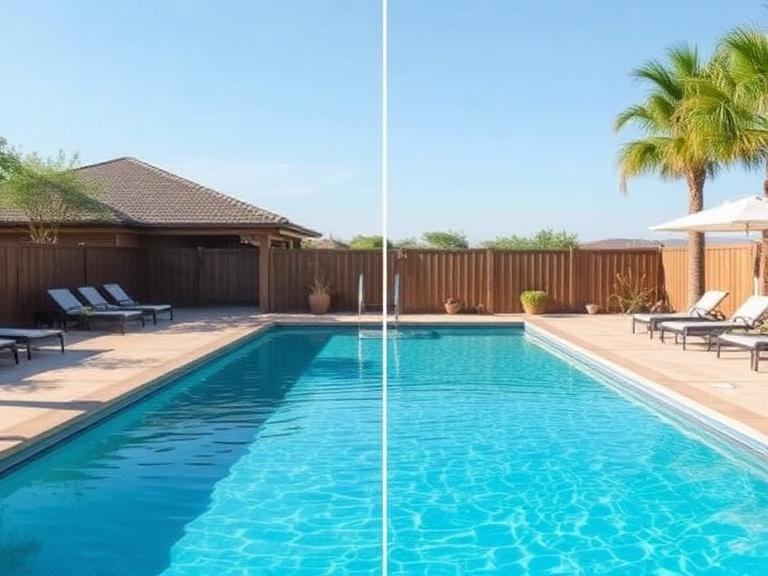
A fibreglass pool is worth it for lower maintenance when the homeowner wants a smooth shell, faster installation, and fewer major surface repairs than concrete. The smooth surface helps reduce algae attachment and routine surface care. Fibreglass also avoids planned liner replacement, which improves long-term value compared with vinyl. The trade-off is design flexibility. Fibreglass shells come from moulds, so the homeowner chooses from set shapes, sizes, and depths rather than a fully custom layout. Fibreglass works best for a Toronto backyard where the selected shell fits the lot, access route, and outdoor design.
Is a Vinyl Pool Worth It for Lower Upfront Cost?
A vinyl pool is worth it for lower upfront cost when the homeowner wants an inground pool at a lower entry price than fibreglass or concrete. Vinyl liner pools suit budget-focused projects because the wall system and liner cost less upfront. The long-term cost needs planning because liners wear, fade, tear, or leak over time. Ontario pricing data places vinyl liner replacement around $4,000–$7,000 CAD every 7–10 years. Vinyl works best when upfront affordability matters and the owner accepts future liner replacement as part of the ownership plan.
Is a Concrete Pool Worth It for Full Customization?
A concrete pool is worth it for full customization when the homeowner wants a custom shape, custom depth, beach entry, tanning ledge, integrated spa, vanishing edge, or premium finish. Concrete pools fit higher-end detached homes where the property supports a larger budget and a full backyard design. The trade-off is long-term surface care. Concrete needs more maintenance than fibreglass because the surface is more porous, and resurfacing becomes a future cost. Published pool-type guidance lists concrete resurfacing around $8,000–$15,000 every 7–15 years, depending on water chemistry and maintenance.
Is an Above-Ground Pool Worth It for Lower Budget Projects?
An above-ground pool is worth it for lower budget projects when the homeowner wants seasonal swimming without the cost and disruption of an inground build. Above-ground pools need less excavation, less structural work, and shorter installation time. They also suit homeowners who want a more removable option. The trade-off is weaker resale value and lower design integration. An above-ground pool usually adds less value than a well-designed inground pool because buyers often treat it as a temporary feature, not a permanent part of the property.
Is an Indoor Pool Worth It for Year-Round Use?
An indoor pool is worth it for year-round use only when the home, budget, and mechanical systems support the added cost. Indoor pools need water heating, ventilation, dehumidification, vapour control, drainage, waterproof finishes, and higher ongoing energy use. Toronto indoor pool guidance notes that indoor pools cost more than outdoor pools because they need ventilation, dehumidification, insulation, and heating or cooling systems. Indoor pools fit specialized luxury properties, not most standard backyard budgets. They make sense when year-round use matters more than resale ROI.
Does Yard Type Change Whether a Pool Is Worth It?
Yard type changes whether a pool is worth it because the yard controls installation cost, usable space, excavation difficulty, access, grading, landscaping, and long-term function. A pool makes more sense when the yard has enough space, safe access, stable grading, and room for a complete outdoor living design. A pool makes less sense when the yard is too small, steep, hard to access, or costly to prepare. Ontario pricing data places many inground pool projects around $50,000–$180,000+ CAD, with terrain and location listed as major cost factors.
Is a Pool Worth It on a Small Backyard?
A pool is worth it on a small backyard only when the design keeps enough usable space for seating, walkways, equipment, fencing, planting, and safe circulation. A compact plunge pool, narrow pool, or small fibreglass shell often fits better than a full-size pool. The decision becomes weaker when the pool removes most of the yard and leaves no room for dining, pets, storage, or children’s play space. Canadian pool pricing often uses $175–$300 CAD per square foot, so smaller pools reduce build size, but the yard still needs permits, fencing, electrical work, and landscaping.
Is a Pool Worth It on a Sloped Yard?
A pool is worth it on a sloped yard when the budget covers grading, retaining walls, drainage, engineered base preparation, and safe access. A sloped yard raises cost because crews need more soil movement, stronger structural support, and better water control. The decision becomes weaker when slope corrections take money away from essential pool quality or long-term maintenance. Canadian cost guidance lists site preparation around $5,000–$25,000+ CAD, with access, soil, and retaining walls named as major drivers.
Is a Pool Worth It When Access Is Tight?
A pool is worth it when access is tight only when the added labour, equipment, and staging costs still fit the project budget. Tight access affects excavation, soil removal, shell delivery, gravel delivery, concrete work, and equipment placement. Narrow side yards, fences, mature trees, overhead wires, garages, and laneways may require smaller machines, hand work, or crane use. Toronto-area installation guidance states that limited property access can increase installation cost because extra equipment or labour may be needed.
Is a Pool Worth It When Landscaping Is Part of the Plan?
A pool is worth it when landscaping is part of the plan because the full backyard design creates more value than the pool alone. Strong landscaping includes decking, coping, privacy screening, lighting, planting, drainage, seating areas, and safe walkways. A pool placed without surrounding design often feels unfinished and creates extra work later. Toronto pool cost guidance places landscaping around $5,000–$25,000+ CAD or more, depending on project scope, materials, and backyard layout.
Is a Pool Worth It When the Yard Already Needs Major Work?
A pool is worth it when the yard already needs major work if the project combines excavation, grading, drainage, patio work, fencing, and landscaping into one planned build. Combining the work may reduce repeated disruption and create a more complete outdoor space. The decision becomes weaker when yard repairs reveal major issues such as poor drainage, unstable soil, retaining-wall needs, utility conflicts, or severe access limits. Toronto also requires a Zoning Applicable Law Certificate before a Pool Fence Enclosure Permit, and the pool cannot be constructed and filled without a compliant fence under Municipal Code Chapter 447 – Fences.
What Toronto Rules Affect Whether a Pool Is Worth It?
Toronto rules affect whether a pool is worth it because approvals, site plans, fencing, setbacks, inspections, and timing add cost before the pool is used. Toronto requires a Zoning Applicable Law Certificate before applying for a Pool Fence Enclosure Permit. A pool cannot be constructed and filled with water unless a fence is installed under Toronto Municipal Code Chapter 447 – Fences. These rules affect the budget, design, yard layout, and build schedule.
Do You Need a Zoning Applicable Law Certificate?
You need a Zoning Applicable Law Certificate before applying for a Pool Fence Enclosure Permit in Toronto. The certificate confirms that the proposed pool location complies with applicable zoning rules before the enclosure permit stage. This step matters because pool location, setbacks, accessory structures, lot layout, and proposed fence details affect approval. Missing or incomplete information delays review, permit issuance, and construction timing.
Do You Need a Pool Fence Enclosure Permit?
You need a Pool Fence Enclosure Permit before building and filling a pool in Toronto. The City states that applicants must first receive zoning certificate approval, then apply for the enclosure permit through Municipal Licensing and Standards. A pool must not be constructed and filled without a compliant fence under Municipal Code Chapter 447 – Fences. This requirement applies to private-property pools and affects both installation planning and final inspection timing.
What Pool Fence Rules Apply?
Toronto pool fence rules require a compliant enclosure that restricts access to the pool area before water remains in the pool. Municipal Code Chapter 447 states that no person shall fill a swimming pool with water, or allow water to remain in it, until an officer confirms that the permanent swimming pool enclosure fully complies with the bylaw. Fence materials must be suitable for fence construction and must not conduct electricity. Gates, latch placement, enclosure height, and access points need review before installation.
What Site Plan and Setback Rules Apply?
Site plan and setback rules require a detailed drawing that shows the lot, buildings, proposed pool, pool enclosure, access doors, windows, and distances from property lines. Toronto’s pool fence application FAQ states that the site plan needs lot lines, lot dimensions, lot area, existing and proposed buildings, proposed pool dimensions and location, proposed pool setbacks from property lines, and proposed enclosure setbacks from the pool. The site plan should reference a legal survey when available. Missing details delay zoning review and permit approval.
How Do Toronto Rules Affect the Build Timeline?
Toronto rules affect the build timeline by adding approval steps before construction and inspection steps before filling the pool. The sequence starts with a Zoning Applicable Law Certificate, then the Pool Fence Enclosure Permit, then fence installation and final inspection. The City warns that missing site-plan information delays processing, review, and permit issuance. A pool also cannot hold water until the permanent enclosure passes inspection. Early permit planning helps avoid stalled excavation, delayed water fill, rescheduled contractors, and extra carrying costs.
What Ownership Costs Matter After Installation?
Pool ownership costs after installation include maintenance, time, chemicals, water treatment, seasonal opening, seasonal closing, electricity, heating, and long-term equipment replacement. These costs decide whether a Toronto pool feels worth it after the build is complete. GTA pricing data places pool opening around $300–$600 CAD, pool closing around $300–$500 CAD, weekly maintenance service around $80–$150 CAD per week, and annual DIY chemicals around $600–$1,200 CAD.
How Much Maintenance Does a Pool Need?
A pool needs weekly maintenance during the swim season. Regular care includes skimming, vacuuming, brushing, water testing, chemical balancing, filter checks, pump checks, and debris removal. Professional weekly service in the GTA often costs $80–$150 CAD per week, while full-service plans include more routine water care and inspection work. Maintenance needs rise when the pool has trees nearby, heavy use, older equipment, saltwater systems, heating, or attached water features.
How Much Time Does Pool Ownership Take?
Pool ownership takes regular weekly time for testing, cleaning, and equipment checks. A homeowner-managed pool needs repeated attention during the season because water quality changes with weather, use level, sunlight, leaves, and temperature. Professional service reduces owner time, but the homeowner still tracks water level, equipment noise, heater performance, cover condition, and visible water clarity. Time cost matters because a pool that is rarely maintained becomes more expensive through algae growth, cloudy water, filter strain, and equipment wear.
How Much Do Chemicals and Water Treatment Cost?
Chemicals and water treatment cost about $600–$1,200 CAD per year for many DIY pool owners in the GTA. Core water-care costs include chlorine, salt, shock, pH adjusters, alkalinity products, stabilizer, algaecide, test strips, and filter cleaner. Water treatment costs rise with heavy use, warm weather, poor circulation, high debris, and unbalanced water. Some Ontario estimates place annual chemical cost lower for simpler fibreglass pools, but GTA service data gives a broader practical range for local budgeting.
How Much Does Seasonal Opening and Closing Cost?
Seasonal opening and closing cost about $600–$1,100+ CAD combined for many GTA pools, depending on pool size, cover type, equipment complexity, and service scope. GTA pricing data places spring opening around $300–$600 CAD and fall closing around $300–$500 CAD. A listed GTA service price list also shows pool opening at $630 + HST and pool closing at $530 + HST, with extra charges for large surface area, waterfalls, or additional visits.
How Much Do Long-Term Equipment Costs Matter?
Long-term equipment costs matter because pumps, filters, heaters, salt cells, cleaners, covers, valves, lights, and automation controls wear out. A pool with older equipment may need a larger annual reserve for repairs and replacement. Ontario maintenance guidance places annual pool maintenance around $1,000–$3,000 CAD, with higher costs when heating is included. GTA pricing also lists filter cleaning around $80–$150 CAD, which shows how smaller equipment-related service items add to the ownership budget. Long-term value improves when the owner budgets for equipment before failure, not only after breakdowns.
Is a Pool Worth It More for Use Value Than ROI?
A pool is worth it more for use value than ROI when the household uses it often for summer recreation, exercise, privacy, and outdoor entertaining. Financial return is less certain because resale value depends on buyer demand, lot size, pool condition, and comparable sales. Royal LePage reported an average 6% home-value increase for pools, below kitchens, bathrooms, finished basements, and outdoor entertaining space. RE/MAX Canada also notes that a pool may not add much future home value for many sellers.
Does a Pool Give Better Lifestyle Value Than Financial Return?
A pool gives better lifestyle value than financial return when the homeowner values daily use more than resale gain. A pool supports family time, private swimming, relaxation, low-impact exercise, and outdoor social use during the Toronto swim season. Financial return stays limited when installation, maintenance, heating, insurance, and repairs reduce the net resale gain. RE/MAX Canada gives an example where about $100,000 spent on a pool returns about $7,000 at resale, which shows the difference between use value and resale recovery.
Does Enjoyment Value Matter More Than Appraisal Value?
Enjoyment value matters more than appraisal value when the homeowner plans to stay long enough to use the pool across many seasons. Appraisal value depends on comparable local sales, not personal enjoyment. Enjoyment value depends on how often the household uses the pool and how much it improves home life. The National Association of REALTORS outdoor-remodelling research reported a Joy Score of 10 for an inground pool addition, showing high owner satisfaction even when financial ROI is lower.
Does a Pool Create Daily Use Value in Summer?
A pool creates daily use value in summer when it becomes part of regular home routines. Daily use value includes swimming, cooling off, exercise, children’s recreation, quiet outdoor time, and small gatherings without leaving home. The value is stronger when the pool connects to decking, shade, seating, lighting, and safe walkways. A pool used only a few times each season has weaker value because ownership costs continue even when use stays low.
Does a Pool Change How the Backyard Functions?
A pool changes how the backyard functions by turning the space into a recreation-focused outdoor area. The best result keeps a balance between water area, patio space, lawn, planting, privacy, storage, and circulation. A pool adds value to daily life when it improves how the household uses the yard. A pool weakens yard function when it removes too much flexible space or creates maintenance work that the homeowner does not want.
How Do You Decide if a Pool Is Worth It for Your Toronto Property?
A pool is worth it for a Toronto property when the household uses it often, the budget covers the full project, the property supports the right pool type, and the ownership timeline is long enough to justify the cost. The decision also needs local resale context. Royal LePage reported that a pool increased home value by an average of only 6%, while RE/MAX Canada notes that not all buyers want a pool and that resale return may stay far below build cost.
Does the Household Use a Pool Enough to Justify the Cost?
The household uses a pool enough to justify the cost when swimming, exercise, family recreation, and outdoor entertaining become regular summer routines. A pool used several times each week creates stronger use value than a pool used only a few times each season. Household use needs to match the annual cost of maintenance, heating, chemicals, opening, closing, and repairs. A pool gives weaker value when the household prefers travel, public recreation spaces, or low-maintenance outdoor living.
Does the Budget Cover Installation and Ownership Costs?
The budget needs to cover installation and ownership costs before a pool project starts. The full budget includes excavation, soil removal, pool structure, plumbing, electrical work, decking, fencing, permits, landscaping, heating, insurance, maintenance, and a 10%–20% contingency. Toronto also requires a Zoning Applicable Law Certificate before a Pool Fence Enclosure Permit, and a pool cannot be constructed and filled without a compliant fence under Municipal Code Chapter 447 – Fences.
Does the Property Fit the Right Pool Type?
The property fits the right pool type when the pool size, structure, and maintenance level match the yard and budget. Fibreglass pools suit lower-maintenance goals and standard shell sizes. Vinyl pools suit lower upfront budgets with planned liner replacement. Concrete pools suit custom shapes and higher-end backyard designs. Above-ground pools suit lower-budget or removable options. Indoor pools suit specialized homes with strong ventilation, dehumidification, and operating budgets.
Does the Ownership Timeline Support the Investment?
The ownership timeline supports the investment when the homeowner plans to use the pool for many seasons before selling. A longer timeline spreads the cost across more years of use and gives the household more lifestyle value. A short timeline weakens the case because the homeowner pays for installation, permits, fencing, landscaping, maintenance, and startup costs without many years of use. Resale alone rarely supports the full project cost. RE/MAX Canada gives an example where about $100,000 spent on a pool returned about $7,000 at resale.
Does the Planned Pool Match the Home and Neighbourhood?
The planned pool matches the home and neighbourhood when the design fits the property’s price tier, lot size, buyer segment, and outdoor style. A larger detached home in a higher-end area supports a pool better than a small-lot home where buyers prioritize usable yard space. Royal LePage data shows outdoor entertaining space and landscaping at an average 10% value increase, compared with 6% for pools, which means the complete backyard design matters more than the pool alone.
Frequently Asked Questions About Whether a Pool Is Worth It in Toronto
Is a Pool Worth It in Toronto?
A pool is worth it in Toronto when the household uses it often and plans to stay long enough to gain lifestyle value. It makes more sense for larger detached homes, family properties, and backyards with space for decking, seating, landscaping, and safe access. It makes less sense when the main goal is short-term resale profit.
Does a Pool Increase Home Value in Toronto?
A pool increases home value in Toronto only when buyer demand supports it. A well-maintained inground pool helps more on a larger lot in a higher-end neighbourhood. RE/MAX Canada states that a pool may not add much future home value and gives an example of spending about $100,000 and receiving about $7,000 in resale return.
How Much Does a Pool Cost to Own in Toronto?
A pool costs money to own every year through maintenance, chemicals, opening, closing, heating, insurance, and repairs. GTA maintenance pricing places pool opening around $300–$600 CAD, pool closing around $300–$500 CAD, weekly maintenance around $80–$150 CAD per week, and annual DIY chemicals around $600–$1,200 CAD.
What Pool Type Gives the Best Value?
Fibreglass pools often give strong long-term value because they offer lower surface maintenance than concrete and avoid liner replacement costs linked to vinyl. Vinyl pools fit lower upfront budgets. Concrete pools fit custom luxury designs. Above-ground pools fit lower-budget projects but usually add less resale value than well-designed inground pools.
What Pool Type Gives the Best Value?
Fibreglass pools often give strong long-term value because they offer lower surface maintenance than concrete and avoid liner replacement costs linked to vinyl. Vinyl pools fit lower upfront budgets. Concrete pools fit custom luxury designs. Above-ground pools fit lower-budget projects but usually add less resale value than well-designed inground pools.
Is a Pool Worth It for a Small Backyard?
A pool is worth it for a small backyard only when the design keeps enough usable space for seating, walking, planting, equipment, fencing, and daily outdoor use. A plunge pool or compact pool often fits better than a full-size pool. A pool becomes less practical when it removes most of the yard.
Is a Pool Worth It if You Plan to Sell Soon?
A pool is less likely to be worth it if you plan to sell soon because installation, permits, fencing, landscaping, and startup costs occur before many seasons of use. Resale value rarely returns the full build cost. Short ownership favours lower-cost outdoor upgrades unless local comparable sales show a clear pool premium.
Do Toronto Pool Rules Make Installation Harder?
Toronto pool rules make installation more detailed because the project needs zoning and enclosure compliance before construction and filling. Toronto requires a Zoning Applicable Law Certificate before a Pool Fence Enclosure Permit, and the City says a pool cannot be constructed and filled without a fence installed under Municipal Code Chapter 447 – Fences.
Is a Pool Better for Lifestyle Than ROI?
A pool is better for lifestyle than ROI in most Toronto cases. It adds value through summer recreation, family use, exercise, privacy, and outdoor entertaining. Financial ROI stays conditional because buyers differ on maintenance, safety, insurance, utility cost, and yard-space loss.
How Do You Plan a Pool Project That Feels Worth It?
A pool project feels worth it when the pool type, budget, permit plan, quote scope, and ownership costs match the property and household use. The plan needs to include the full cost, not only the pool shell. Ontario pricing data places many inground pool projects around $50,000–$180,000+ CAD, with cost changes tied to pool type, site conditions, grading, access, permits, fencing, and electrical safety.
How Do You Match Pool Type to Budget?
Pool type matches budget when the homeowner compares upfront cost with long-term maintenance. Above-ground pools suit lower-budget and removable projects. Vinyl liner pools suit lower-cost inground pool plans, but future liner replacement needs planning. Fibreglass pools suit lower-maintenance goals and standard shell sizes. Concrete pools suit custom shapes and higher-end outdoor designs. The budget also needs to include excavation, soil removal, decking, fencing, heating, permits, landscaping, and a 10%–20% contingency.
How Do You Control Upgrade Costs?
Upgrade costs stay controlled when the project separates required work from optional features. Required work includes excavation, base preparation, plumbing, electrical work, pool equipment, fencing, permits, and safe access. Optional upgrades include larger patios, premium coping, automation, water features, fire features, spas, tanning ledges, and advanced lighting. A smaller pool, simpler shape, standard equipment package, and phased landscaping reduce the first-build cost without cutting safety, drainage, or code compliance.
How Do You Plan Permits and Fencing Early?
Permits and fencing need planning before construction because Toronto requires a Zoning Applicable Law Certificate before applying for a Pool Fence Enclosure Permit. The City also states that a pool cannot be constructed and filled with water without a fence installed under Municipal Code Chapter 447 – Fences. Early planning reduces delays, redesigns, inspection issues, and extra contractor visits.
How Do You Compare Quotes by Full Project Scope?
Quotes compare by full project scope when each quote prices the same pool type, dimensions, depth, excavation, soil removal, equipment, electrical work, heater, decking, fencing, permit work, landscaping, and warranty terms. A low pool quote is not cheaper when it excludes mandatory work. FCAC advises comparing the total loan cost, not only the payment amount, and the same logic applies to pool quotes: compare the total installed cost, not only the base price.
How Do You Plan Long-Term Ownership Costs Before You Build?
Long-term ownership costs need planning before the pool is built because annual care affects whether the pool feels worth it. GTA pricing data places full annual maintenance, including chemicals, weekly service, opening, closing, and minor repairs, around $3,000–$7,000 CAD for a standard pool. Separate GTA service pricing lists pool opening at $630 + HST and pool closing at $530 + HST. A good plan budgets for chemicals, heating, pump electricity, winterization, covers, equipment replacement, and repair reserves before the first contract is signed.