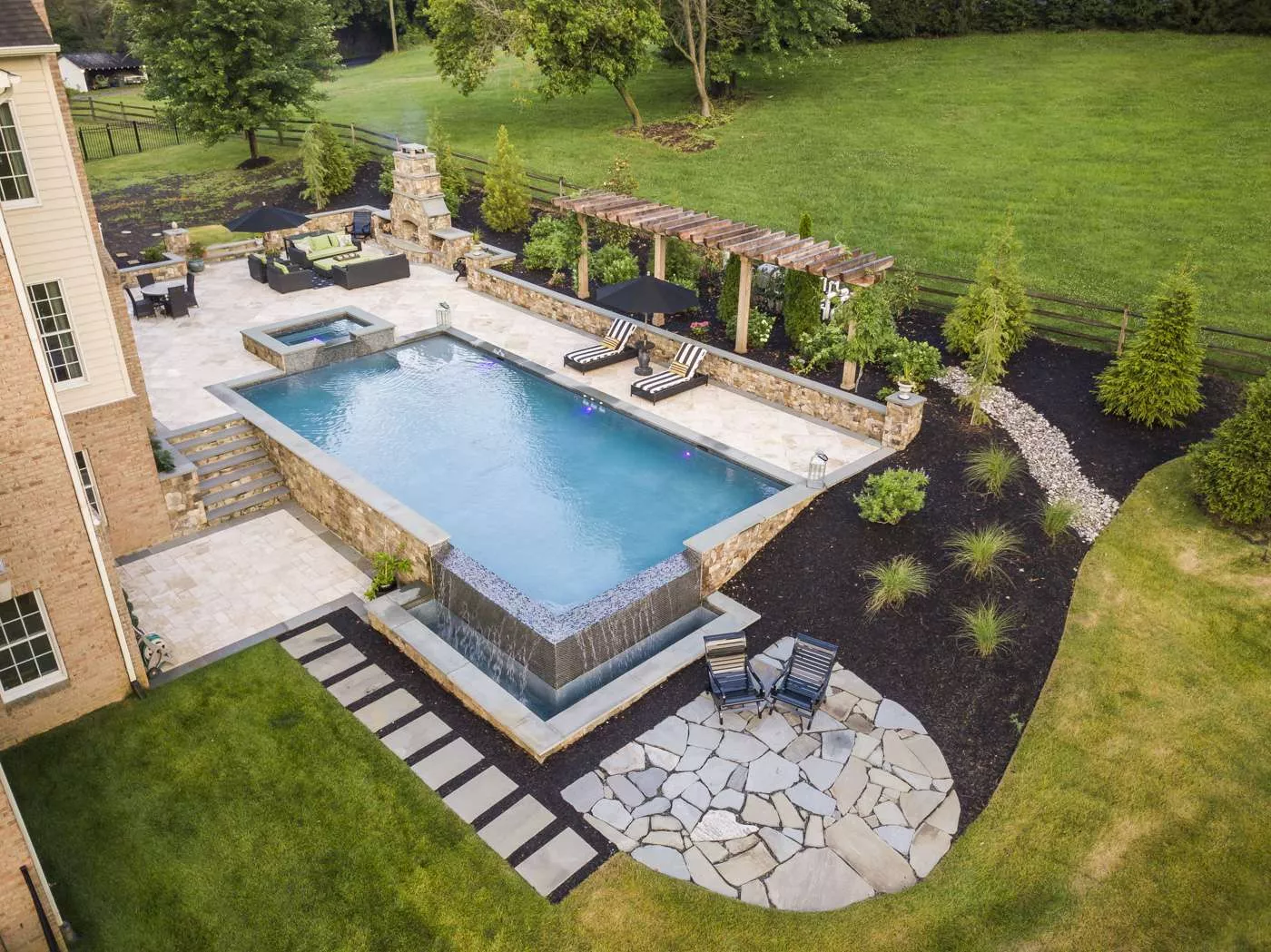
Backyard pool installation in Toronto is the process of planning, designing, and building a residential swimming pool within a backyard through site review, pool design, excavation, construction, plumbing, electrical work, coping, decking, landscaping, fencing, and startup. The full scope covers the structural, mechanical, and finishing work needed to create a safe, durable, and functional pool that fits the property and supports long-term outdoor use.
The right backyard pool depends on yard size, pool type, budget, design goals, site access, grading, feature selection, and Toronto permit and bylaw requirements. Project scope also depends on soil conditions, drainage, equipment systems, privacy, and the layout of the surrounding backyard space.
A complete Toronto backyard pool installation plan addresses cost, design, construction process, regulatory compliance, and long-term maintenance requirements from the start. Strong planning improves site fit, controls total project cost, and supports long-term pool performance.
What Is Backyard Pool Installation in Toronto?
Backyard pool installation in Toronto is the full residential process of planning, placing, excavating, building, equipping, enclosing, and inspecting an outdoor pool inside a private yard. Toronto defines a swimming pool as an outdoor structure on private property with water depth above 600 millimetres. The City requires a Zoning Applicable Law Certificate before a Pool Fence Enclosure Permit application, and the listed 2026 zoning certificate fee is $214.79.
What Is a Backyard Pool Project?
A backyard pool project is a site-specific residential construction project, not a stand-alone shell install. The project joins the pool, the yard layout, access route, equipment area, enclosure design, and the relationship between the pool and the house. Leading Toronto competitors describe the work as a custom backyard design-and-build job tied to landscaping, outdoor living, and family use instead of a simple product installation.
What Does Backyard Pool Installation Include?
Backyard pool installation includes site planning, pool design, excavation, structural construction, pump and heater placement, fence and gate work, and final inspection. Toronto requires a detailed site plan that shows pool and property dimensions, distances to the house and lot lines, nearby doors and windows, equipment location, fence height and material, and hard versus soft landscaping. Leading local builders also present patios, decks, lighting, planting, water features, and other yard work as part of the same project scope.
What Makes a Backyard Pool Different From a Standard Pool Project?
A backyard pool differs from a standard pool project because the pool must fit a real residential lot and meet Toronto enclosure and access rules. Chapter 447 requires every owner to maintain a swimming pool enclosure that fully encloses the pool area and limits openings to compliant gates. The bylaw sets a minimum enclosure height of 1.2 metres on single residential property, places the enclosure at least 1.2 metres from the water’s edge, and requires self-closing, self-latching gates. That local site integration makes a backyard pool project a property-planning job as well as a pool-construction job.
Why Do Toronto Homeowners Build Backyard Pools?
Toronto homeowners build backyard pools to turn underused yards into private recreation and entertaining space. Leading local competitors repeatedly position the pool as the centre of a broader backyard environment that includes landscaping, patios, spas, outdoor kitchens, lighting, and water features. That pattern shows a local market focus on outdoor living, privacy, family use, and a resort-style yard at home instead of a basic stand-alone pool.
Why Choose a Backyard Pool in Toronto?
A backyard pool in Toronto adds private outdoor use, organized recreation, stronger yard design, and more usable entertaining space. Current Toronto pool builder pages present the pool as the main element in a broader backyard plan that often includes patios, seating zones, outdoor kitchens, pergolas, and landscape design rather than a stand-alone water feature.
Does a Backyard Pool Improve Outdoor Living?
Yes. A backyard pool improves outdoor living by turning the yard into a dedicated space for swimming, lounging, dining, and daily use at home. Leading Toronto and GTA pool builders consistently pair pools with decks, pergolas, cabanas, landscape design, and other outdoor features, which shows that the pool functions as the centre of the outdoor area rather than an isolated install.
Does a Backyard Pool Improve Family Recreation?
Yes. A backyard pool improves family recreation by creating a private space for swimming, play, exercise, and shared time at home. Current builder pages frame family use as a core project goal, with examples that include compact pools, attached spas, slides, shallow lounging features, and layouts designed around regular household use.
Does a Backyard Pool Improve Backyard Design?
Yes. A backyard pool improves backyard design by giving the yard a clear focal point and a fixed layout around which paving, planting, lighting, and structures are organized. Toronto competitors repeatedly present pool projects as design-build work where the pool shape, surrounding materials, and connected landscape features are planned together to create one unified backyard composition.
Does a Backyard Pool Improve Entertaining Space?
Yes. A backyard pool improves entertaining space by expanding the yard into a social area for outdoor meals, seating, evening use, and poolside gatherings. Local project and design pages feature outdoor kitchens, bars, fire features, lounge zones, speakers, and lighting beside the pool, which shows a strong Toronto pattern of treating the pool as an entertainment anchor.
Does a Backyard Pool Affect Property Appeal?
Yes. A backyard pool affects property appeal because it adds visual impact and a defined outdoor lifestyle feature that some buyers actively value. CREA states that pools often enhance curb appeal and resale value in the right market segment, especially in higher-priced homes, while Royal LePage notes that value gains are not universal and that buyer interest depends on maintenance, safety, and intended use.
Which Pool Type Fits a Backyard Pool Project?
Fibreglass pools, vinyl pools, and concrete pools are the main inground choices on current Toronto builder pages. Local competitor content treats plunge pools as a strong fit for compact urban yards and lap pools as a fit for exercise-led layouts. Manufacturer and builder guidance shows a clear pattern: fibreglass fits faster installation, vinyl fits flexible shapes, and concrete fits the highest level of custom design.
Is a Fibreglass Pool Best for Faster Installation?
Yes. A fibreglass pool is best for faster installation because the shell arrives pre-manufactured and installs faster than a site-built concrete pool. Latham states that fibreglass pools install in as little as two to three days, while comparable concrete pools take about three months. Local Toronto guides repeat the same pattern and describe fibreglass as quicker to install and easier to maintain than other inground types.
Is a Vinyl Pool Best for Flexible Design?
Yes. A vinyl pool is best for flexible design because it supports a wide range of shapes and sizes. Latham states that its vinyl packaged pools offer unlimited customization in size and shape and match the design flexibility of concrete pools. Local Toronto guides present vinyl pools as a strong choice for yards that need a custom footprint or lower upfront cost, though liner replacement remains a long-term maintenance item.
Is a Concrete Pool Best for Full Customization?
Yes. A concrete pool is best for full customization because it is built on site and supports the widest range of shapes, depths, and integrated features. Current builder comparisons place concrete at the top for custom design while also noting higher labour input and heavier long-term maintenance than fibreglass or vinyl.
Is a Plunge Pool Best for a Small Backyard?
Yes. A plunge pool is best for a small backyard because it uses less space while still creating a true inground pool zone. Recent Toronto builder content specifically promotes plunge pools for tight yards and notes that small fibreglass plunge pool projects are a strong match for limited outdoor footprints.
Is a Lap Pool Best for Fitness Use?
Yes. A lap pool is best for fitness use because the layout prioritizes straight-line swimming and repeated laps. Master Spas describes the lap pool as a longer, narrower format where greater length improves workout quality, which makes it the clearest fit for swim training and regular exercise.
Which Pool Type Fits the Yard and Budget Best?
The best pool type fits the site layout, access conditions, design goal, and total project budget. Fibreglass pools fit homeowners who want faster installation and lower upkeep. Vinyl pools fit custom shapes and lower entry cost. Concrete pools fit premium projects that need full design freedom. Plunge pools fit compact yards. Lap pools fit exercise-first layouts. Local Toronto cost guides and builder comparisons repeat that pool material, site work, equipment, and added features drive the final budget more than the shell choice alone.
How Much Does Backyard Pool Installation Cost in Toronto?
Backyard pool installation in Toronto usually sits in the mid-five figures for a standard project and rises sharply once premium finishes, hardscaping, and custom features enter the scope. Current Toronto and GTA pool cost pages place standard inground projects around $30,000 to $80,000, while broader Ontario pricing guides place the average closer to $45,000 and note that full custom projects rise much higher. Toronto permit planning adds a required Zoning Applicable Law Certificate step for a Pool Fence Enclosure Permit, and the listed Pool Fence Enclosure permit fee is $214.79.

What Is the Average Backyard Pool Cost in Toronto?
The average backyard pool cost in Toronto depends on whether the quote covers only the pool shell or the full backyard build. Local pool pages place basic inground installation around $25,000 to $50,000, while other GTA builder guides place a standard project around $30,000 to $80,000. Luxury-focused Toronto pool pages place larger custom builds far above that range once excavation difficulty, premium materials, landscaping, and water features enter the job.
What Changes the Final Backyard Pool Price?
The final backyard pool price changes with site access, excavation conditions, pool type, pool size, depth, equipment, permits, and the amount of finishing work around the pool. Current Toronto builder pages repeatedly identify materials, custom features, labour, and landscaping as the main budget drivers. Tight urban access, complex excavation, and a full backyard design-build scope push the total far above a base pool quote.
How Much Do Pool Type, Size, and Depth Affect Cost?
Pool type, size, and depth affect cost directly because larger and deeper pools require more excavation, more materials, and more labour. One Toronto pool cost page uses a rule-of-thumb figure of about $50 per square foot of pool surface area, while recent Ontario pricing guides place finished installation at roughly $200 to $250 per square foot for vinyl, $250 to $300 for fibreglass, and $350 to $450 for concrete. Current Ontario pricing guides also show a 14 x 28 vinyl pool around $85,000 and a same-size fibreglass pool around $90,000 to $100,000, with concrete pools reaching $130,000+.
How Much Do Decking, Landscaping, and Fencing Add?
Decking, landscaping, and fencing add a substantial second layer to the budget. A current Toronto pool cost page places landscaping and additional features at $5,000 to $25,000 or more and lists decking and privacy fencing among the common add-ons. Toronto also requires a compliant pool enclosure, so fencing is not an optional extra in a backyard pool project.
How Much Do Heating, Lighting, and Water Features Add?
Heating, lighting, and water features add both upfront cost and ongoing operating cost. Canadian heater pricing guides place pool-heater installation around $2,000 to $5,000, with heat pumps around $2,500 to $6,000. Monthly heating cost ranges usually land around $200 to $400 for natural gas, $50 to $200 for heat pumps, and $100 to $600 for electric resistance heaters. A current Toronto waterfall guide places many pool waterfall additions around $4,000 to $20,000, with high-end integrated features reaching $15,000 to $25,000+.
What Ongoing Ownership Costs Should You Expect?
Ongoing pool ownership costs include chemicals, electricity, filtration, cleaning, opening, closing, repairs, heating, and insurance. A recent Ontario cost guide places long-term yearly maintenance around $1,200 to $1,800, while a Toronto maintenance page places weekly service around $100 to $150 per visit and seasonal opening or closing around $250 to $500. TD Insurance states that pool ownership changes liability and property-damage exposure and requires the insurer to update the policy, while Ratehub places the insurance increase around $30 to $75 per month.
How Do You Design a Backyard Pool?
A backyard pool design starts with the site, then moves through layout, dimensions, materials, finishes, and connected backyard features. Current Toronto pool builders describe the process as a design-and-build workflow that begins with consultation and ends with a coordinated plan for the pool, surrounding hardscape, and outdoor living areas. City of Toronto requirements make the site review stage especially important because the permit drawings must show dimensions, setbacks, equipment, enclosure details, and landscape information.
What Happens During Consultation and Site Review?
Consultation and site review establish the physical limits of the project. The first review checks the lot shape, available yard area, access routes, privacy conditions, and the relationship between the pool and the house. Toronto also requires a detailed site plan that shows lot lines, lot dimensions, existing and proposed buildings, doors, windows near the pool area, pool dimensions, setbacks from property lines, enclosure setbacks, equipment location, hard versus soft landscaping, fence height and material, and gate details.
What Happens During Pool Layout Planning?
Pool layout planning decides where the pool sits in the yard and how the surrounding space works. Toronto builders regularly assess sun exposure, wind exposure, privacy, and access from the house before fixing the layout. Builder design pages also show a strong pattern of using 3D visualization or digital previews to test the basic layout, view the pool from different angles, and refine the fit before construction begins.
What Happens During Size and Shape Selection?
Size and shape selection match the pool to the lot and the intended use. Narrow urban lots often suit linear layouts, irregular lots often suit corner or freeform layouts, and larger yards support central placement with more deck and landscape area around the water. Local builder guidance also states that the best pool shape is the one that fits the design vision and the available yard space, which makes size and shape a site-led decision rather than a stock choice.
What Happens During Material and Finish Selection?
Material and finish selection decide how the pool performs, looks, and ages. Toronto builders present this stage as a choice between core pool materials such as fibreglass, vinyl, and concrete, followed by finish decisions such as tile, coping, plaster, marbelite, quartz, or premium aggregate. Finish pages also emphasize durability, slip resistance, visual cohesion with the landscape, and suitability for local climate conditions, including freeze-thaw exposure in Canadian installations.
What Happens During Backyard Feature Planning?
Backyard feature planning connects the pool to the rest of the yard. Toronto-area design pages consistently group the pool with lighting, water features, cabanas, pergolas, outdoor kitchens, lounge areas, privacy landscaping, and hardscape transitions. Current builder content shows that this stage is not decorative only; it organizes circulation, safety, evening use, shade, and the overall function of the backyard as one outdoor living space.
What Backyard Features Can a Pool Project Include?
A backyard pool project in Toronto often includes decking, landscaping, patios, lounges, outdoor kitchens, privacy screening, lighting, fire features, water features, pool covers, and automation systems. Current Toronto pool builder pages present the pool as one part of a larger outdoor-living layout rather than a stand-alone installation.
What Decking Works Best Around a Backyard Pool?
Pool decking works best when it matches the pool style, handles water exposure, and creates a clean transition from the waterline to the yard. Current Toronto design pages highlight cantilevered concrete, natural stone, and textured pavers as common choices because they support a finished custom look around the pool. The City of Toronto states that a permit application is required for a new deck or porch, so deck work often sits inside the broader project approval process.
What Landscaping Works Best Around a Backyard Pool?
Pool landscaping works best when it supports a unified layout between the pool, hardscape, planting, and the rest of the yard. Toronto-area design content repeatedly emphasizes integrated landscape design, where plantings, retaining walls, and surrounding surfaces are planned together with the pool instead of being added later. That approach creates stronger visual cohesion and a more organized backyard layout.
What Patios, Lounges, and Outdoor Kitchens Can You Add?
A backyard pool project often adds patios, lounge areas, and outdoor kitchens to turn the yard into a full entertaining space. Current Toronto builder pages regularly pair pools with seating areas, dining zones, spas, pergolas, and outdoor cooking spaces, which shows a strong local pattern toward multi-use backyard design rather than pool-only construction.
What Privacy and Screening Features Can You Add?
A pool project can add privacy fencing, screens, and planted buffers to create separation from neighbouring properties. Privacy features also connect with safety requirements because the City of Toronto requires a swimming pool enclosure that completely surrounds the pool area, with no openings except for a gate. Local builder pages treat fencing as both a privacy element and a required safety feature in Toronto pool projects.
What Lighting, Fire Features, and Water Features Can You Add?
A backyard pool can add LED lighting, underwater lights, fire bowls, fireplaces, waterfalls, jets, and fountains. Current Toronto pool pages identify custom lighting, water features, and fire features as common design upgrades that improve evening use, create a focal point, and extend the social use of the backyard beyond daytime swimming.
What Covers and Automation Systems Can You Add?
A pool project can add automatic pool covers and smart automation systems for cleaning, heating, and lighting control. Current Toronto builder pages highlight smartphone-based control systems and list automatic pool covers among the most common premium upgrades in northern-climate pool design. Recent trend content from a major Toronto builder also lists smart automation and automatic covers among the strongest current design preferences.
How Does Backyard Pool Installation Work?
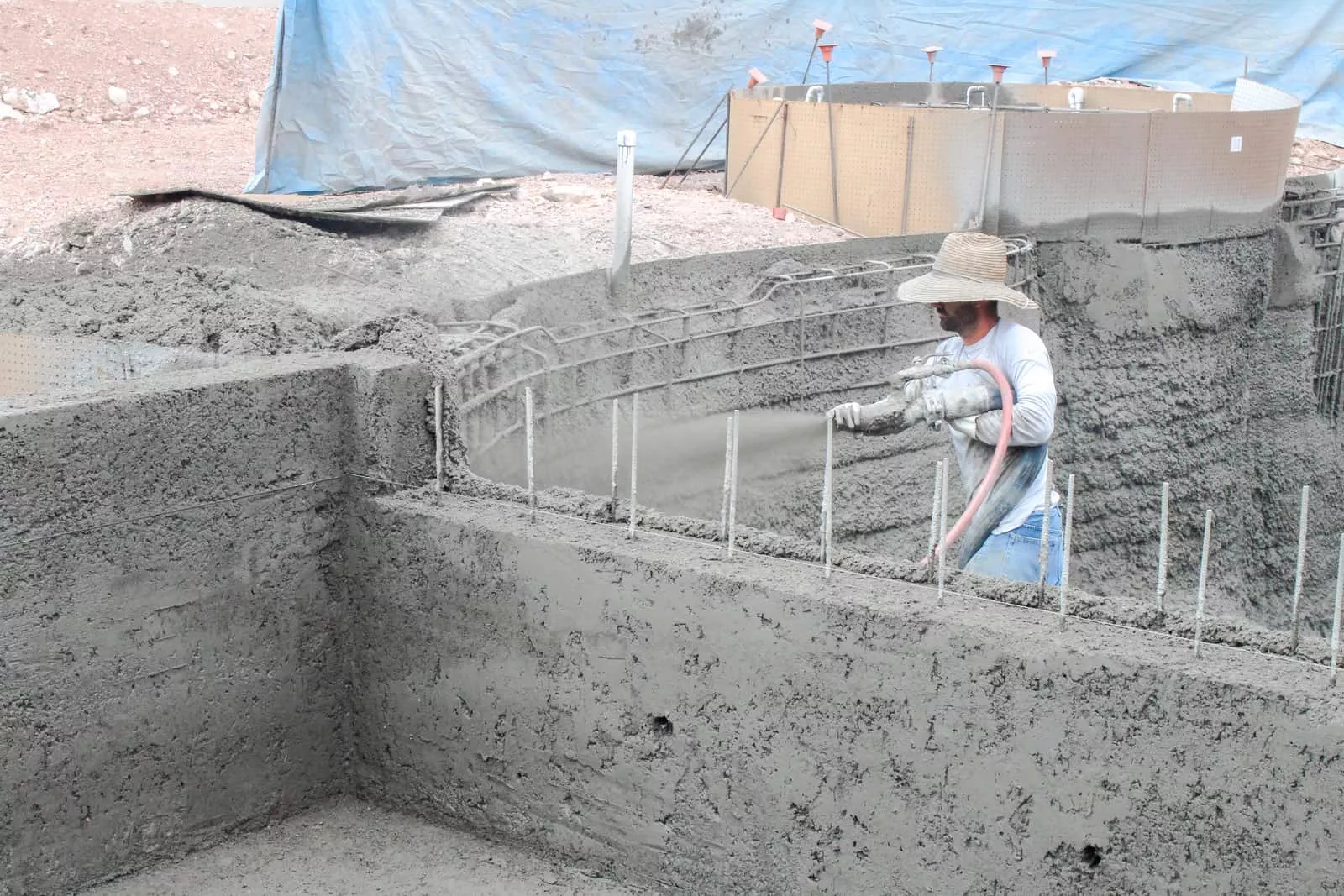
Backyard pool installation in Toronto moves through a fixed sequence: site review, design, selections, permits, site preparation, layout, excavation, structure installation, plumbing and electrical work, coping, decking, landscaping, inspection, water fill, and startup. Current Toronto pool builder process pages show the same general order, even when the pool material changes.
What Happens During Site Review and Planning?
Site review and planning define the usable yard area, access path, pool position, equipment location, and the relationship between the pool, the house, and the lot lines. The City of Toronto requires a detailed site plan that shows property lines, pool and property dimensions, distances to the house and lot lines, nearby doors and windows, pool equipment, fence details, and hard versus soft landscaping.
What Happens During Design and Scope Approval?
Design and scope approval fix the project before construction starts. This stage confirms the pool type, size, shape, position, finish selections, and added features such as steps, waterfalls, tanning ledges, decking, and landscape work. Toronto builder process pages separate this stage into design alignment and selections before the permit stage begins.
What Happens During Permit Preparation?
Permit preparation organizes the documents required for the Toronto approval process. The City of Toronto requires a Zoning Applicable Law Certificate before the Pool Fence Enclosure Permit application, and the zoning submission must include scaled, dimensioned drawings and the required site-plan information. Local builder pages also describe this as a two-step Toronto permit process managed before excavation starts.
What Happens During Excavation and Ground Preparation?
Excavation and ground preparation turn the approved plan into a build-ready site. Builders mark the pool outline, excavate to the required dimensions, and prepare a stable base. In fibreglass pool projects, that base usually includes compacted gravel to create a level support surface before the shell arrives.
What Happens During Pool Structure Installation?
Pool structure installation depends on the pool type. Fibreglass pools use a delivered shell that is set, levelled, and checked before backfilling. Builder process pages for custom concrete projects show a different sequence that moves through forming, rebar, and concrete after excavation.
What Happens During Plumbing and Electrical Setup?
Plumbing and electrical setup connect the pool to its operating systems. This stage installs circulation lines and equipment such as the pump, filter, and heater, and Ontario electrical work follows an ESA permit and inspection process. Builder installation pages place plumbing and equipment work immediately after structure placement and before finishing stages.
What Happens During Coping, Decking, and Landscaping?
Coping, decking, and landscaping finish the pool perimeter and connect the pool to the rest of the yard. Toronto builder process pages list tile, coping, decking, landscaping, and fencing as later construction stages, and local installation pages describe paver coping, decking, and landscaping as the work that completes the backyard.
What Happens During Inspection and Startup?
Inspection and startup close the project and prepare the pool for use. The City of Toronto states that the pool cannot be filled with water until the City has inspected the permanent pool enclosure and confirmed bylaw compliance. Builder process pages then move to water fill, and startup includes water chemistry balancing and equipment testing on the fresh fill.
Do You Need Permits for Backyard Pool Installation in Toronto?
Yes. Backyard pool installation in Toronto requires approvals before construction and use. The City of Toronto requires an approved Zoning Certificate first and a Pool Fence Enclosure Permit after that for a qualifying outdoor pool or similar structure.
When Is a Pool Permit Required?
A pool permit is required when the outdoor structure on private property is 600 millimetres deep or more at any point. The City applies the rule to outdoor swimming pools, hot tubs, whirlpools, and similar structures used for swimming. A hot tub, whirlpool, or spa with a permanently attached lockable cover is exempt from the Pool Fence Enclosure Permit requirement.
What Pool Fence and Enclosure Rules Apply?
A pool enclosure must fully surround the pool area with no opening except a compliant gate. On a single residential property, the minimum enclosure height is 1.2 metres. The enclosure must sit at least 1.2 metres from the water’s edge, at least 1 metre from climbable objects, use a non-climbable exterior surface, and keep any gate self-closing, self-latching, and locked except when the area is in use.
What Zoning and Site Plan Rules Apply?
Toronto requires a Zoning Applicable Law Certificate before the Pool Fence Enclosure Permit application. The required site plan must show the legal survey reference, lot lines, lot dimensions, pool dimensions, pool location, setbacks from property lines, enclosure setbacks from the water’s edge, nearby doors and windows, equipment location, fence location, fence height, fence material, gate details, and the percentage of hard versus soft landscaping. Missing information delays review and issuance.
What Drainage and Grading Rules Apply?
Drainage and grading matter when the pool project changes the yard surface or slope. Toronto’s pool application material requires the site plan to show the percentage of hard versus soft landscaping. Toronto’s broader lot grading guidance states that the existing drainage pattern must be maintained, side yards must drain to positive outlets at surface slopes of at least 1.5%, and drainage swales must have longitudinal slopes of at least 1.5%.
How Do Permits Affect the Build Timeline?
Permits add review time before excavation and filling. Toronto’s FAQ states that, after the zoning certificate application is accepted and fees are paid, the expected review time is 10 business days. The pool permit review then takes about five business days if the submission is complete. The same FAQ states that missing information extends both reviews, and the City requires a pre-construction inspection after permit issuance and a final enclosure inspection before the pool holds water for use.
How Long Does Backyard Pool Installation Take in Toronto?
Backyard pool installation in Toronto often runs across several stages rather than one uninterrupted construction window. Current Toronto builder timelines place core pool construction at roughly 6 to 12 weeks or about 2 to 3 months, while the City of Toronto adds separate review periods for the zoning certificate and pool fence enclosure permit before excavation begins.
How Long Does Design and Planning Take?
Design and planning usually take days to a few weeks, depending on site complexity, layout changes, and decision speed. Toronto builder guidance shows that the process starts with a site assessment that reviews available space, slope, drainage, and equipment access before the builder finalizes design, features, and scope.
How Long Does Permit Approval Take?
Permit approval in Toronto usually takes about 10 business days for the zoning certificate review after the application is accepted and fees are paid, followed by about 5 business days for the pool fence enclosure permit review if the submission is complete. Missing information extends both review periods.
How Long Does Pool Construction Take?
Pool construction usually takes about 6 to 12 weeks for a typical inground project in Toronto, and some local builder pages describe the full build stage as about 2 to 3 months. Fibreglass pools often move faster than site-built alternatives, with one Toronto builder stating that some fibreglass pool projects finish in about 2 to 6 weeks, and another stating that some fibreglass installations finish in as little as 2 to 3 weeks.
How Long Do Decking and Landscaping Take?
Decking and landscaping usually add extra time after the pool shell and equipment work are complete. Toronto builder timelines state that custom features and landscaping extend the main installation schedule, and recent Toronto construction content shows that integrated backyard work often includes patios, lighting, privacy features, and planting around the pool rather than a pool-only finish.
What Delays a Backyard Pool Project?
Backyard pool projects slow down when permits are incomplete, weather interrupts excavation, the site has tight access, drainage or grading problems appear, or the design includes custom features. Toronto builder guidance repeatedly points to weather conditions, site preparation, design complexity, and unexpected construction challenges as the main causes of schedule movement.
How Do You Choose Pool Size and Location?
Pool size and location depend on lot shape, usable yard depth, access, grading, drainage, equipment space, and Toronto enclosure rules. The City of Toronto requires the site plan to show the proposed pool dimensions and location, setbacks from property lines to the water’s edge, enclosure setbacks from the pool, dimensions from buildings, access doors to the proposed pool, and the location of nearby doors and windows.
What Pool Size Fits a Toronto Backyard?
The pool size that fits a Toronto backyard is the size that leaves enough room for the enclosure, circulation space, and the rest of the yard. Current top-ranking Toronto builder pages treat compact plunge pools, cocktail pools, and other small-format designs as a strong match for urban lots with limited outdoor space.
Where Should a Pool Go in the Backyard?
The pool should go where the yard provides the best combination of usable space, access, and safe enclosure layout. Toronto’s permit material requires the plan to show pool position, equipment location, enclosure position, and the relationship between the pool area and nearby building openings, so placement is a site-planning decision rather than a standard template.
How Do Slope, Access, and Ground Conditions Affect Installation?
Slope, access, and ground conditions affect installation cost, construction method, and layout flexibility. Current Toronto builder guidance states that builders check excavation access, yard entry, overhead and underground obstacles, existing slope, soil stability, grading, surface drainage, and groundwater conditions before finalizing the plan. Sloped lots often need grade correction, retaining work, or extra drainage measures.
How Close Can a Pool Be to a House or Fence?
The allowable distance between the pool and the house or fence depends on the lot and the zoning review. Toronto’s application requirements call for proposed setbacks from property lines to the water’s edge, dimensions from buildings, and enclosure setbacks from the pool. The enclosure itself must sit at least 1.2 metres from the water’s edge and at least 1 metre from climbable conditions, with a minimum enclosure height of 1.2 metres on single residential property.
What Pool Options Fit a Small Backyard?
Plunge pools, cocktail pools, spools, and compact rectangular pools fit a small backyard best. Current Toronto and GTA competitor pages repeatedly recommend these smaller formats because they preserve more space for patios, seating, and circulation while still delivering a true inground pool.
What Maintenance Does a Backyard Pool Need?
A backyard pool needs regular water testing, sanitizer control, surface cleaning, filter care, equipment checks, and seasonal opening and closing. Current Toronto pool-maintenance pages describe a steady routine built around weekly cleaning, chemistry control, equipment inspection, and seasonal service.
How Do You Maintain Water Quality?
Water quality stays stable through testing, balancing, and cleaning. CDC guidance sets pool pH at 7.0 to 7.8 and free chlorine at at least 1 ppm in pools, or at least 2 ppm when cyanuric acid is in use. Current Toronto maintenance guidance adds weekly testing for pH, chlorine, and total alkalinity, plus skimming, brushing, vacuuming, and water-level checks.
How Do You Maintain Pool Equipment?
Pool equipment maintenance focuses on the pump, filter, and heater. Toronto maintenance pages state that owners need to inspect the system for visible issues, empty baskets, and clean or backwash the filter as needed. Gib-San also outlines a cartridge-filter cleaning process that includes shutting off the pump, removing the cartridge, rinsing it, cleaning seals, and inspecting the cartridge before restart.
What Seasonal Opening and Closing Work Is Required?
Seasonal opening and closing prepare the pool for summer use and winter protection. Toronto-area service pages treat both as standard seasonal work, and current Toronto maintenance pricing places opening-and-closing packages around $250 to $500. Recent Toronto builder guidance places professional opening and closing higher on larger custom projects, at roughly $500 to $900.
What Repairs Are Common in Backyard Pools?
Common backyard pool repairs involve pumps, filters, heaters, circulation equipment, and visible leak or wear issues. Toronto repair and maintenance pages repeatedly identify equipment repair, equipment replacement, leak-related troubleshooting, and filter or heater issues as recurring service needs. Toronto renovation guidance also points to outdated filters, pumps, and heaters as common replacement items in older pools.
What Maintenance Schedule Fits a Backyard Pool?
A working maintenance schedule for a backyard pool uses weekly checks during the swim season, as-needed filter service, and one opening plus one closing each year. Current Toronto guidance lists weekly tasks such as skimming, brushing, vacuuming, testing chemistry, topping up water, and inspecting equipment. Toronto service pricing also shows a market pattern of weekly visits at about $100 to $150 and monthly maintenance packages around $100 to $300 per month.
How Do You Choose a Toronto Backyard Pool Installer?
Choose a Toronto backyard pool installer based on six checks: regular backyard pool work, a clear design-build process, proper handling of permits and site conditions, visible past projects and reviews, written warranty terms, and real Toronto and GTA experience. In Toronto, pool work is not only a construction decision. It is also a permit and site-planning decision because a Zoning Applicable Law Certificate is required before a Pool Fence Enclosure Permit application.
Does the Installer Build Backyard Pools Regularly?
Yes. A strong installer shows that backyard pools are a core service, not occasional work. Regular experience matters because pool projects involve yard layout, excavation, access, equipment placement, fencing, and startup in one connected scope. A contractor that handles this work often is more likely to manage the full sequence without gaps. This is an inference from the nature of the permit and construction process in Toronto.
Does the Installer Explain the Design and Build Process Clearly?
Yes. A reliable installer explains the process from site review to final handover in a clear order. A good process explanation should cover consultation, layout planning, permit steps, excavation, installation, finishing work, and startup. Clear process communication reduces quote confusion and makes scope changes easier to track. Homeowner review guidance also recommends comparing project details, work history, timelines, and quote clarity before hiring.
Does the Installer Handle Permits and Site Conditions?
Yes. A qualified Toronto backyard pool installer should handle or clearly coordinate the local permit path and the site conditions that affect it. In Toronto, applicants must obtain a Zoning Applicable Law Certificate before applying for a Pool Fence Enclosure Permit, and the permit path depends on accurate site information. Site conditions such as yard layout, access, and drawing completeness affect whether the submission moves smoothly.
Does the Installer Show Past Backyard Pool Projects and Reviews?
Yes. A strong installer should show past backyard pool projects and third-party reviews. Past projects show build quality, finish standard, and project type. Review platforms add outside proof from previous clients. HomeStars states that homeowners should compare profiles, work history, and reviews, and that registered companies go through verification checks.
Does the Installer Offer Warranty and Workmanship Coverage?
Yes. A serious installer should provide written warranty and workmanship coverage. The important check is not the headline promise alone. The key check is the written scope, duration, exclusions, and service process after completion. Neutral hiring guidance for Toronto pool contractors specifically recommends asking whether the company offers warranties or guarantees on its work and installed equipment.
Does the Installer Have Toronto and GTA Experience?
Yes. Toronto and GTA experience matters because local projects depend on municipal approval steps, site constraints, and review timing. Toronto states that complete building applications in the large and complex streams are reviewed within 20 and 30 business days respectively, while incomplete applications have no review time frame. Local experience helps the installer prepare cleaner submissions, plan around inspections, and reduce avoidable delays.
Frequently Asked Questions About Backyard Pool Installation in Toronto
How Much Does a Backyard Pool Cost in Toronto?
A backyard pool in Toronto often starts around $25,000 to $50,000 for a simpler inground installation, while higher-spec projects rise well beyond that once decking, landscaping, premium finishes, and custom features enter the scope. Newer Toronto-area cost comparisons place vinyl pools around $55,000 to $90,000, fibreglass pools around $80,000 to $120,000, and concrete pools at $150,000+ on many custom builds.
What Pool Type Is Best for a Backyard Pool?
The best pool type depends on the yard, budget, and design goal. Fibreglass pools fit faster installation, vinyl pools fit flexible shapes at a lower entry cost, and concrete pools fit full customization. Plunge pools fit smaller Toronto backyards particularly well.
How Long Does Backyard Pool Installation Take?
Backyard pool installation usually takes several stages rather than one short build window. Current Toronto builder pages place installation at roughly 4 to 12 weeks for many projects, while fibreglass pools often move faster than site-built options. Permit review time sits outside the core construction window and must be added to the total schedule.
Do You Need a Permit for a Backyard Pool in Toronto?
Yes. Toronto requires an approved Zoning Applicable Law Certificate first and then a Pool Fence Enclosure Permit for an outdoor pool or similar structure that holds water 600 millimetres deep or more. The pool area also needs a compliant enclosure before the pool is filled for use.
What Features Can a Backyard Pool Include?
A backyard pool project often includes decking, landscaping, patios, lounges, outdoor kitchens, privacy screening, lighting, fire features, water features, covers, and automation systems. Toronto builder pages consistently present the pool as the centre of a larger outdoor-living design rather than a stand-alone installation.
What Pool Size Fits a Small Backyard?
A small Toronto backyard often fits a plunge pool, cocktail pool, spool, or another compact rectangular layout better than a large full-length pool. Current Toronto builder content targets these smaller formats for urban lots because they leave more space for circulation, seating, and fencing compliance.
What Is Included in Backyard Pool Installation?
Backyard pool installation usually includes site review, design, drawings, permit preparation, excavation, ground preparation, pool structure installation, plumbing, electrical, equipment setup, coping, surrounding finishes, and startup. Toronto builder process pages show this same sequence, with finishing work such as decking and landscaping often handled inside the same project scope.
How Do You Choose the Right Backyard Pool Builder?
Choose a Toronto backyard pool builder who builds pools regularly, explains the process clearly, handles permits and site conditions, shows past projects, provides real reviews, and sets out written warranty terms. Local quote-comparison and builder pages repeat those checks, and established GTA firms publish process pages, portfolios, service areas, and warranty details to support them.
Does a Backyard Pool Increase Property Value?
A backyard pool affects property value and property appeal, but the gain is not uniform. CREA notes that pools often enhance appeal and value in the right market segment, especially in higher-priced homes, while other Canadian real-estate guidance states that many owners recover only a small share of the full installation cost at resale. A pool functions more reliably as a lifestyle feature than as a guaranteed profit feature.
What Maintenance Does a Backyard Pool Need?
A backyard pool needs regular water testing, sanitizer control, surface cleaning, filter care, equipment checks, and seasonal opening and closing. CDC guidance sets home-pool pH at 7.0 to 7.8 and free chlorine at at least 1 ppm, or at least 2 ppm when cyanuric acid is in use. Toronto service pages add weekly cleaning, inspections, and seasonal service as the normal maintenance pattern.
How Do You Get a Quote for Backyard Pool Installation in Toronto?
A quote for backyard pool installation in Toronto starts with a site visit, moves into a design and cost estimate, and ends with a plan for permits and the build timeline. Leading Toronto pool builders follow that same sequence in their quote and consultation pages.
How Do You Book a Site Visit?
A site visit starts with contact through the builder’s quote or consultation form, followed by a review of the yard, access, and project goals. Leading Toronto builder pages list site visits and design consultations as an early quote stage, and local consultation guidance asks for the budget, desired features, and any reference images or sketches before the review.
How Do You Get a Design and Cost Estimate?
A design and cost estimate follows the site review. Builders assess the site conditions and project viability, then prepare a written estimate that covers major cost items such as excavation, structural work, systems, waterproofing, finishes, and other scope items. Toronto quote-comparison guidance specifically points homeowners toward detailed written quotes rather than broad verbal price ranges.
How Do You Plan the Permit and Build Timeline?
The permit and build timeline starts with the Zoning Applicable Law Certificate and then moves to the Pool Fence Enclosure Permit. The City of Toronto states an expected review time of 10 business days for the zoning review after application acceptance and fee payment, followed by about 5 business days for the pool permit review when the submission is complete. Missing information delays both stages, so the quote stage needs a complete site plan and a clear scope before excavation scheduling begins.