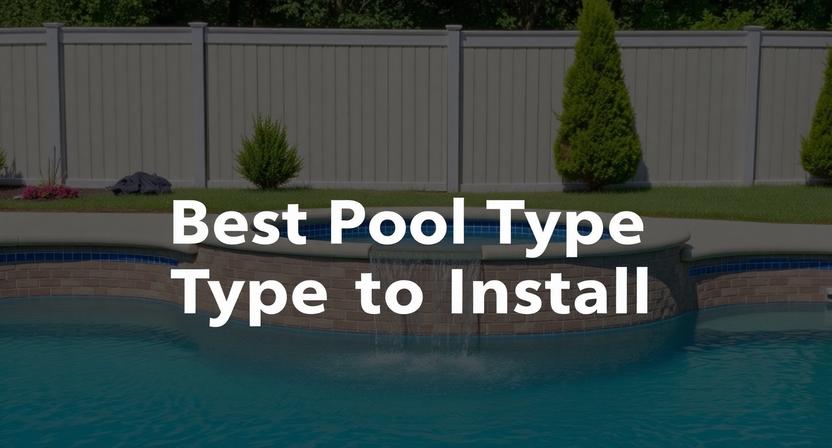
Best pool type to install means the pool structure, size, and system that match the budget, yard size, site access, maintenance plan, design goal, swimming use, and long-term value. Above-ground pools suit lower budgets and faster setup. Fibreglass pools suit lower-maintenance inground pool ownership and faster installation. Vinyl liner pools suit flexible shapes and lower inground entry cost. Concrete pools suit custom design, custom depth, and premium finishes. Plunge pools suit small yards and compact outdoor living. Lap pools suit fitness, narrow yards, and straight-line swimming.
Pool type selection also affects permits, fencing, water care, repair work, seasonal closing, and lifetime cost. Health Canada states that pool water needs regular testing for sanitizer, pH, total alkalinity, and calcium hardness. Toronto requires a Zoning Certificate before a Pool Fence Enclosure Permit, and a pool must not be built and filled without a compliant fence. These rules make the best pool choice a full property decision, not only a price decision.
Quick Answer
What is the best pool type to install?
The best pool type to install is the pool type that matches the homeowner’s budget, yard size, site access, maintenance capacity, design goals, and long-term use. Fibreglass pools fit lower-maintenance inground pool ownership. Vinyl liner pools fit lower upfront inground cost. Concrete pools fit full custom design. Above-ground pools fit the lowest starting budget.
What pool type costs the least?
Above-ground pools usually cost the least to install. Cost guides place above-ground pools far below inground pools, while inground pool cost changes by material, size, excavation, access, equipment, decking, and features. Recent Ontario cost data places steel-vinyl pools below fibreglass pools and concrete pools in typical installed cost ranges.
What inground pool type is best?
The best inground pool type depends on the main goal. Fibreglass pools suit lower maintenance and faster installation. Vinyl liner pools suit lower starting cost and flexible shapes. Concrete pools suit custom shape, custom depth, steps, finishes, and premium design. Material comparison sources separate these pool types by cost, installation speed, maintenance, lifespan, and customization.
Quick Overview
| Homeowner Goal | Best Pool Type | Reason |
|---|---|---|
| Lowest upfront cost | Above-ground pool | Lower structure and installation cost |
| Lowest inground entry cost | Vinyl liner pool | Lower initial inground material cost |
| Lower maintenance | Fibreglass pool | Smooth shell surface and fewer major renewal needs |
| Full custom design | Concrete pool | Site-built shape, depth, steps, and finish |
| Small backyard use | Plunge pool | Compact size and lower water volume |
| Fitness use | Lap pool | Long narrow shape for swimming |
| Luxury view property | Infinity pool | Vanishing edge and view alignment |
| Year-round indoor use | Indoor swimming pool | Enclosed environment with dehumidification |
What pool types are available?
Pool types include above-ground pools, inground pools, fibreglass pools, vinyl liner pools, concrete pools, plunge pools, lap pools, indoor pools, and saltwater pool systems. These options differ by structure, cost, installation time, yard fit, maintenance, and long-term use.
What are above-ground pools?
Above-ground pools are raised pool structures installed on a prepared level base. They suit lower budgets, faster setup, seasonal use, and yards that do not need full excavation. Main parts include the pool frame, liner, pump, filter, ladder, and optional decking.
What are inground pools?
Inground pools are permanent pools built into the ground with excavation, structure, plumbing, equipment, coping, decking, and fencing. They suit long-term backyard use, stronger design integration, and higher property planning needs. Main inground options include fibreglass pools, vinyl liner pools, and concrete pools.
What are fibreglass pools?
Fibreglass pools are one-piece moulded shells placed into an excavated area. They suit lower-maintenance inground use, faster installation, smooth surface feel, and built-in steps, benches, and ledges. Their main limit is the pre-set shell size and shape.
What are vinyl liner pools?
Vinyl liner pools use wall panels, a floor base, and a fitted vinyl liner. They suit lower inground entry cost, flexible shapes, smooth surface feel, and liner pattern choices. Their main long-term cost is liner replacement.
What are concrete pools?
Concrete pools are site-built pools formed with concrete, then finished with plaster, tile, pebble, aggregate, or other surfaces. They suit custom shapes, custom depths, tanning ledges, integrated spas, premium finishes, and complex yards. Their main long-term needs include surface care and resurfacing.
What are plunge pools?
Plunge pools are compact pools designed for cooling, soaking, relaxation, and small-yard use. They use less space than standard pools and fit patios, courtyards, urban lots, and outdoor living areas. Common features include seating, jets, heating, and covers.
What are lap pools?
Lap pools are long, narrow pools designed for straight-line swimming and fitness. They suit narrow yards, private workouts, low-impact exercise, and regular swimming routines. Main design factors include pool length, pool width, depth, heating, and lane space.
What are indoor pools?
Indoor pools are enclosed pools built inside a home, pool room, or separate structure. They suit year-round swimming, privacy, fitness, and weather protection. Indoor pools need planned dehumidification, ventilation, humidity control, vapour barriers, and pool room HVAC.
What are saltwater pools?
Saltwater pools are not a structural pool type. Saltwater pools use a salt chlorine generator for sanitation. Health Canada states that saltwater pools use a device that sanitizes water by generating chlorine from salt added to the water.
Saltwater pool systems still produce chlorine and still need regular water testing. Health Canada says pool water needs testing for sanitizer levels, pH, total alkalinity, and calcium hardness.
Which pool type is best?
The best pool type depends on the homeowner’s budget, yard size, swimming use, maintenance plan, design needs, and long-term cost. Above-ground pools fit the lowest starting budget. Fibreglass pools fit lower-maintenance inground use. Vinyl liner pools fit lower-cost inground customization. Concrete pools fit full custom design. Plunge pools fit small yards. Lap pools fit fitness use.
Which pool is best for budget?
Above-ground pools are best for budget because they need less excavation, less structural work, and lower installation cost than inground pools. Current cost guides place above-ground pools far below inground pools, while inground cost changes by material, size, features, and site work.
Which pool is best for maintenance?
Fibreglass pools are best for lower-maintenance inground ownership because the smooth shell surface needs less surface care than many vinyl liner and concrete pool surfaces. Material comparison sources also separate fibreglass pools, vinyl liner pools, and concrete pools by maintenance level, repair needs, liner replacement, and resurfacing.
Which pool is best for small yards?
Plunge pools are best for small yards because their compact size supports cooling, soaking, relaxation, and outdoor living in limited space. Lap pools fit narrow yards when the main purpose is fitness swimming rather than family play.
Which pool is best for custom design?
Concrete pools are best for custom design because they are site-built. This structure supports custom shapes, depths, steps, benches, tanning ledges, spas, and premium finishes. The main trade-off is higher cost, longer installation, and resurfacing work over time.
Which pool is best for long-term value?
Fibreglass pools often give strong long-term value for homeowners who want lower maintenance, faster inground installation, and fewer major surface renewal needs. Vinyl liner pools give value through lower starting cost. Concrete pools give value through custom design. Above-ground pools give value through the lowest initial spend.
| Pool Type | Best Use | Main Limit |
|---|---|---|
| Above-ground pool | Lowest starting cost | Shorter lifespan and less design integration |
| Fibreglass pool | Lower-maintenance inground use | Pre-set shell sizes and shapes |
| Vinyl liner pool | Lower-cost inground customization | Liner replacement |
| Concrete pool | Full custom design | Higher cost and resurfacing |
| Plunge pool | Small yards and relaxation | Limited swimming space |
| Lap pool | Fitness and narrow-yard swimming | Less suitable for play |
| Indoor pool | Year-round private use | HVAC and dehumidification cost |
| Infinity pool | View lots and premium design | Engineering and hydraulic complexity |
Indoor pools need planned HVAC, ventilation, and dehumidification because the pool sits inside a building. Infinity pools need a vanishing edge, catch basin, and recirculation system, which adds hydraulic and engineering complexity.
Which pool costs less?
Above-ground pools cost less than inground pools because they need less excavation, less structural work, and less site finishing. Current 2026 cost sources list above-ground pools at about $1,010–$5,967 for many installed projects, while another pool cost guide lists $4,000–$12,000 installed without decking. Inground pools often range much higher because they include excavation, structure, plumbing, equipment, decking, labour, and features.
Which pool has the lowest upfront cost?
Above-ground pools have the lowest upfront cost. A basic above-ground pool uses a raised frame, liner, pump, filter, and level base instead of a full inground structure. Decking, fencing, electrical work, and land preparation change the final price.
Which inground pool costs less?
Vinyl liner pools usually cost less than other inground pool types. Ontario 2026 cost data lists vinyl liner pools from about $40,000–$50,000, fibreglass pools from about $50,000–$65,000, and concrete pools from about $100,000–$130,000+. Steel-vinyl systems sit at the lower end because the structure and liner usually cost less than fibreglass shells and site-built concrete.
Which pool costs more over time?
Concrete pools often cost more over time because custom work, premium finishes, surface care, and resurfacing add long-term costs. Vinyl liner pools start lower, but liner replacement affects lifetime cost. Fibreglass pools cost more upfront than vinyl in many projects, but lower surface maintenance supports long-term value. Ontario cost data lists vinyl liner replacement at about $4,000–$7,000 installed every 7–12 years.
Which hidden costs affect price?
Hidden pool costs include excavation, rock removal, soil haulage, grading, retaining walls, drainage, utility locates, electrical upgrades, fencing, gates, permits, decking, coping, heaters, covers, automation, landscaping, water delivery, seasonal opening, seasonal closing, and equipment replacement. Ontario 2026 cost sources name site excavation, soil conditions, features, decking, landscaping, permits, inspections, seasonal maintenance, and operating costs as price factors.
Which cost matters most?
Total installed cost and lifetime cost matter more than the pool shell price. The lowest starting price does not include every cost tied to site work, access, decking, fencing, equipment, water care, repairs, winterization, and replacement work. A useful pool budget separates initial installation cost, mandatory compliance cost, annual maintenance cost, and future repair cost.
| Pool Type | Cost Position | Cost Notes |
|---|---|---|
| Above-ground pool | Lowest | Lower structure cost; decking changes final price |
| Vinyl liner pool | Lower inground | Liner replacement affects lifetime cost |
| Fibreglass pool | Mid to high inground | Lower maintenance supports long-term value |
| Concrete pool | Highest inground | Custom work, finishes, and resurfacing increase cost |
| Plunge pool | Variable | Small size reduces volume, but features affect cost |
| Indoor pool | High | Building envelope, HVAC, and dehumidification increase cost |
| Infinity pool | High | Edge system, catch basin, engineering, and slope affect cost |
Which pool needs less maintenance?
Fibreglass pools need less maintenance than most vinyl liner pools and concrete pools because the smooth shell surface resists algae growth and needs less surface brushing. Concrete pools need more surface care because plaster, aggregate, or other porous finishes need brushing, acid washing, and resurfacing over time. Material comparison sources state that vinyl liner pools need liner replacement, while concrete pools need periodic acid washing and resurfacing.
Which pool is easiest to clean?
Fibreglass pools are the easiest inground pools to clean. The smooth gelcoat surface reduces surface grip for dirt and algae. Regular cleaning still includes skimming, brushing, vacuuming, filter care, and water testing.
Which pool needs liner replacement?
Vinyl liner pools need liner replacement. The vinyl liner forms the visible pool surface and wears over time from sunlight, water balance issues, sharp objects, wrinkles, leaks, and age. Replacement cost affects lifetime ownership cost.
Which pool needs resurfacing?
Concrete pools need resurfacing. The surface finish wears from water chemistry, brushing, age, staining, and roughness. Resurfacing restores the interior finish and protects the pool structure.
Which pool needs more water care?
Saltwater pools, chlorine pools, fibreglass pools, vinyl liner pools, concrete pools, and above-ground pools all need regular water care. Saltwater pools are not chemical-free. Health Canada states that saltwater pool systems generate chlorine from salt, and pool water needs daily testing for sanitizer levels, pH, total alkalinity, and calcium hardness.
Which pool needs winter care?
Outdoor pools need winter care in Canadian climates. Above-ground pools, fibreglass pools, vinyl liner pools, concrete pools, plunge pools, and lap pools need seasonal closing, water lowering where required, plumbing protection, equipment care, and a winter cover. Freeze-thaw movement, snow load, groundwater, and hydrostatic pressure affect winter risk.
| Pool Type | Maintenance Level | Main Maintenance Issue |
|---|---|---|
| Fibreglass pool | Lower | Gelcoat care and water balance |
| Vinyl liner pool | Medium | Liner care and liner replacement |
| Concrete pool | Higher | Surface brushing, acid washing, resurfacing |
| Above-ground pool | Medium | Liner, frame, filter, and seasonal care |
| Saltwater pool | Medium | Salt cell cleaning and water testing |
| Indoor pool | Higher | Dehumidification, air quality, and water care |
Pool maintenance depends on the pool surface, water volume, sanitizer system, equipment, cover use, tree debris, and winter exposure. Fibreglass pools reduce surface maintenance. Vinyl liner pools need liner protection. Concrete pools need more surface work. Indoor pools add air control and humidity management.
Which pool lasts longer?
Concrete pools and fibreglass pools rank highest for long-term structure life, while vinyl liner pools depend on liner replacement. Concrete pools last for decades with resurfacing. Fibreglass pools provide long shell life with gelcoat care. Vinyl liner pools have a durable wall system, but the liner needs replacement over time. Material comparison sources state that vinyl liner pools need liner replacement about every 8–10 years, while concrete pools need periodic acid washing and resurfacing.
Which pool structure lasts longest?
Concrete pool structures usually last longest because the shell is built with reinforced concrete, gunite, or shotcrete. Fibreglass pool shells also provide long service life when the shell, backfill, drainage, and water balance are managed correctly. Vinyl liner pool wall systems last longer than the liner itself.
Which pool surface lasts longest?
Fibreglass gelcoat surfaces usually need less major surface work than vinyl liners and concrete finishes. Vinyl liners need planned replacement. Concrete finishes need resurfacing when plaster, aggregate, tile, or pebble surfaces become worn, rough, stained, or damaged. Concrete resurfacing cycles commonly fall around 10–15 years, depending on finish type, water balance, and use.
Which pool needs replacement work?
Vinyl liner pools need the clearest replacement work because the vinyl liner wears over time. Concrete pools need resurfacing and surface repairs. Fibreglass pools need shell and gelcoat care, but major replacement work is less frequent. Above-ground pools need frame, liner, filter, and corrosion checks.
Which pool has lower repair risk?
Fibreglass pools usually have lower repair risk because the smooth shell surface reduces surface wear and cleaning demand. Vinyl liner pools have liner puncture, wrinkle, fading, and replacement risk. Concrete pools have surface crack, roughness, staining, acid washing, and resurfacing risk.
Which pool gives better long-term value?
Fibreglass pools give better long-term value for homeowners who want lower maintenance and fewer major surface renewal needs. Vinyl liner pools give value through lower upfront inground cost, but liner replacement affects lifetime cost. Concrete pools give value through custom design and strong structure, but resurfacing and surface care increase long-term cost.
| Pool Type | Long-Term Ownership Issue |
|---|---|
| Fibreglass pool | Shell and gelcoat care |
| Vinyl liner pool | Liner replacement cycle |
| Concrete pool | Resurfacing and surface repairs |
| Above-ground pool | Frame, liner, and corrosion risk |
| Plunge pool | Depends on material and equipment |
| Indoor pool | Building envelope and HVAC control |
Which pool installs faster?
Above-ground pools install faster than inground pools because they use a simpler structure and less excavation. Fibreglass pools install fastest among common inground pool types because the shell arrives pre-moulded. Vinyl liner pools take longer than fibreglass because the wall system, floor base, and liner need on-site fitting. Concrete pools take longest because forming, reinforcing, concrete work, curing, and finishing happen on site. Material comparison sources list fibreglass pools as faster to install than vinyl liner pools and concrete pools, and list concrete pools as the longest installation process.
Which pool has the fastest setup?
Above-ground pools have the fastest setup. They need a level base, frame assembly, liner placement, equipment connection, and water filling. Decking, fencing, electrical work, and site grading extend the timeline.
Which inground pool installs fastest?
Fibreglass pools install fastest among inground pools. The pre-moulded shell reduces on-site construction steps. Excavation, base preparation, shell placement, plumbing, backfill, equipment setup, coping, and decking still affect the final timeline. Some comparison sources list fibreglass pool installation in weeks, while concrete pool projects take months because of on-site construction and finishing.
Which pool takes longest?
Concrete pools take longest among common inground pool types. The build process includes excavation, steel reinforcement, plumbing, concrete placement, curing, tile or plaster, coping, decking, equipment setup, and final inspection. Indoor and infinity pools also take longer because they add building systems, edge structures, catch basins, hydraulic planning, and engineering.
Which site factors delay installation?
Site factors that delay pool installation include tight access, rock excavation, poor soil, slope, groundwater, drainage issues, retaining walls, tree removal, utility conflicts, electrical upgrades, heavy-equipment access, material delivery limits, weather, and incomplete site drawings. These issues affect excavation, haulage, backfill, plumbing, grading, decking, and inspection timing.
Which permits affect the timeline?
Pool permits, zoning checks, fence permits, utility locates, and inspections affect the pool installation timeline. Toronto requires a Zoning Certificate before a Pool Fence Enclosure Permit. Toronto also states that a pool must not be constructed and filled with water without a compliant fence. The City says a complete pool fence enclosure permit application takes about 5 business days to review, and missing information extends the timeline.
| Pool Type | Timeline Position | Main Reason |
|---|---|---|
| Above-ground pool | Fastest | Less excavation and simpler structure |
| Fibreglass pool | Faster inground | Pre-moulded shell |
| Vinyl liner pool | Medium | Wall system and liner fitting |
| Concrete pool | Slowest | Forming, concrete work, curing, and finishing |
| Indoor pool | Long | Building and mechanical work |
| Infinity pool | Long | Edge structure, basin, hydraulics, and engineering |
Pool installation speed depends on pool type, site access, excavation, weather, permits, fence approval, equipment delivery, and inspection timing. Fibreglass pools reduce inground construction time. Concrete pools, indoor pools, and infinity pools need longer planning and construction phases.
Which pool fits each yard?
Pool yard fit depends on available space, access width, slope, soil, drainage, privacy, views, and indoor structure. Plunge pools suit small yards. Lap pools suit narrow yards. Semi-inground pools suit sloped yards. Concrete pools suit large or complex yards. Indoor swimming pools suit enclosed spaces with proper air control.
What pool fits small yards?
Plunge pools fit small yards because they use compact length, lower water volume, and less open patio space than standard pools. Small fibreglass pools and small vinyl liner pools also fit compact lots when access, setbacks, and fencing leave enough clear space.
What pool fits narrow yards?
Lap pools fit narrow yards because their long, straight shape supports swimming in a slim layout. Rectangular fibreglass pools and vinyl liner pools also fit narrow yards when the design keeps enough space for fencing, coping, drainage, and equipment access.
What pool fits sloped yards?
Semi-inground pools fit sloped yards because the structure works with partial burial, raised edges, decks, and grade changes. Concrete pools and engineered inground pools also fit sloped lots when retaining walls, drainage, and structural support are planned together.
What pool fits large yards?
Concrete pools, large fibreglass pools, and vinyl liner pools fit large yards because the site has more space for pool size, decking, landscaping, outdoor kitchens, seating, and equipment placement. Large yards also support family layouts, deep ends, tanning ledges, and wider pool decks.
What pool fits tight access?
Vinyl liner pools and concrete pools often fit tight access because many parts are built or assembled on site. Fibreglass pools need enough delivery clearance for a one-piece shell, truck access, crane access, and safe placement.
| Yard Condition | Better Pool Fit |
|---|---|
| Small yard | Plunge pool, small fibreglass pool, small vinyl pool |
| Narrow yard | Lap pool, rectangular fibreglass pool, vinyl liner pool |
| Sloped yard | Semi-inground pool, concrete pool, engineered inground pool |
| Large yard | Concrete pool, large fibreglass pool, vinyl liner pool |
| Tight access | Vinyl liner pool or concrete pool, based on site access |
| View lot | Infinity pool |
| Indoor space | Indoor swimming pool |
Which pool fits each use?
Pool use decides the best pool type after budget, yard fit, and maintenance. Family swimming needs safe entry points and usable shallow space. Fitness swimming needs length and a straight lane. Relaxation needs seating, warmth, and compact water volume. Year-round swimming needs an enclosed space with air and humidity control.
What pool fits family use?
Fibreglass pools, vinyl liner pools, and standard inground pools fit family use because they offer usable swim space, steps, shallow areas, and seating options. Fibreglass pools often include built-in benches and ledges. Vinyl liner pools support flexible shapes for family layouts.
What pool fits fitness?
Lap pools fit fitness because their long, narrow shape supports straight-line swimming. A practical residential lap pool needs enough length for repeat strokes, clear lane space, and a depth that supports safe movement.
What pool fits relaxation?
Plunge pools fit relaxation because they use compact water volume, built-in seating, jets, heating, and covers. Plunge pools suit cooling, soaking, hydrotherapy-style use, and small outdoor living spaces.
What pool fits entertaining?
Concrete pools and infinity pools fit entertaining because they support custom shapes, larger decks, feature walls, integrated spas, lighting, ledges, and view-facing layouts. Infinity pools suit properties with a clear view line and engineered edge system.
What pool fits year-round use?
Indoor swimming pools fit year-round use because the pool sits inside an enclosed structure. Indoor pools need dehumidification, ventilation, humidity control, vapour barriers, and pool room HVAC to protect the building.
| Use Case | Best Pool Type |
|---|---|
| Family swimming | Fibreglass, vinyl liner, or inground pool |
| Lower-cost recreation | Above-ground pool |
| Fitness swimming | Lap pool |
| Cooling and soaking | Plunge pool |
| Premium entertaining | Concrete pool or infinity pool |
| Year-round swimming | Indoor swimming pool |
| Low-maintenance inground use | Fibreglass pool |
Which pool fits Canadian weather?
Canadian weather suits pool types with proper winterization, freeze protection, drainage, and seasonal closing. Fibreglass pools, vinyl liner pools, concrete pools, plunge pools, and lap pools all work in cold climates when the installation manages freeze-thaw movement, groundwater, plumbing lines, snow load, and hydrostatic pressure.
Which pool needs winter closing?
Outdoor pools need winter closing in most Canadian regions. The closing process protects the pool shell, liner, plumbing lines, pump, filter, heater, salt chlorine generator, equipment pad, and water level before freezing weather starts.
A proper seasonal closing usually includes water balancing, debris removal, equipment shutdown, line clearing, plug installation, cover fitting, and freeze protection.
Which pool needs freeze protection?
Fibreglass pools, vinyl liner pools, concrete pools, above-ground pools, plunge pools, and lap pools need freeze protection. Freezing water expands and places pressure on pipes, returns, skimmers, fittings, liners, and pool surfaces.
Plumbing lines need the strongest protection because trapped water creates cracking risk. Equipment pads need protection because pumps, filters, heaters, valves, and chlorinators hold water inside internal parts.
Which pool needs a winter cover?
Outdoor pools need a winter cover or safety cover to reduce debris, control sunlight, support cleaner spring opening, and improve off-season safety. Safety covers also help manage snow load when the cover, anchors, decking, and installation follow product limits.
Above-ground pools need covers matched to wall height, frame strength, and winter wind exposure. Inground pools need covers matched to shape, edge type, deck anchors, and drainage.
Which pool handles freeze-thaw better?
Fibreglass pools and properly engineered concrete pools handle freeze-thaw movement well when drainage, backfill, water level, and groundwater control are correct. Vinyl liner pools also perform in cold climates when the wall system, liner, coping, and winter water level are managed.
Freeze-thaw damage usually comes from poor drainage, unstable soil, trapped water, wrong closing steps, high groundwater, or weak cover setup. Hydrostatic pressure becomes a risk when groundwater pushes against an inground pool structure.
Which equipment needs protection?
Pool equipment needs freeze protection before winter. Key parts include the pump, filter, heater, salt cell, chlorinator, automation system, valves, skimmers, returns, main drain lines, plumbing lines, and equipment pad.
Seasonal opening also matters. Spring opening checks the cover, water level, plumbing, equipment seals, filter pressure, sanitizer level, pH, alkalinity, calcium hardness, and visible damage after winter.
What permits and safety rules apply?
Pool permits and safety rules depend on the municipality, pool size, pool location, fencing, setbacks, utilities, and site work. Toronto pool projects need a Zoning Applicable Law Certificate before a Pool Fence Enclosure Permit application. Toronto also states that a pool must not be constructed and filled with water without a fence that complies with Toronto Municipal Code Chapter 447 – Fences.
Are pool permits needed?
Pool permits are needed when the local municipality requires approval for the pool enclosure, zoning compliance, setbacks, or related structures. Toronto uses a two-step process for outdoor pools and hot tubs: first, apply for a Zoning Certificate; second, apply for a Pool Fence Enclosure Permit after zoning approval.
Are pool fences needed?
Pool fences are needed for residential pool safety. Toronto requires a swimming pool enclosure that completely surrounds the pool area, with no openings except a gate. The City states that property owners need an approved Zoning Certificate and a Pool Fence Enclosure Permit before installing a swimming pool enclosure.
Are setbacks checked?
Setbacks are checked through zoning review before the pool fence permit stage. The Zoning Applicable Law Certificate confirms whether the proposed pool location follows zoning rules, including lot placement and required distances from property lines or other regulated areas. Toronto requires this certificate before the Pool Fence Enclosure Permit application.
Are inspections needed?
Inspections are needed to confirm the pool enclosure follows the approved permit and safety rules. A compliant fence must be installed before the pool is constructed and filled with water in Toronto. Missing information, incomplete drawings, or non-compliant fencing delays approval and inspection.
Are utility locates needed?
Utility locates are needed before pool excavation, fence post digging, deck work, trenching, and other ground disturbance. Ontario One Call states that homeowners must submit a public utility locate request at least 5 business days before digging. The service notifies buried infrastructure owners, and locators mark public utility lines before work starts.
Private utility locates also matter. Ontario One Call notes that homeowners remain responsible for privately owned underground infrastructure, such as a gas line from the house to a pool heater, lighting lines, shed electrical lines, septic systems, or private telecom lines.
What pool type gives better value?
Better pool value depends on the value factor being measured. Above-ground pools give the lowest initial spend. Vinyl liner pools give lower inground starting cost. Fibreglass pools give lower long-term maintenance value. Concrete pools give maximum design value. Plunge pools give small-space value. Lap pools give fitness value. Infinity pools give premium property fit.
Is cheapest always best?
Cheapest is not always best because the lowest starting price does not include lifetime cost, repair risk, yard fit, safety compliance, winter care, or resale effect. Above-ground pools reduce initial spend, but they usually offer less design integration and lower long-term property fit than well-planned inground pools. Current pool planning sources separate upfront cost from ongoing maintenance, equipment, utilities, and safety costs.
Is low maintenance better value?
Low maintenance is better value when the homeowner wants lower routine work, fewer surface issues, and lower long-term service demand. Fibreglass pools often fit this goal because the smooth shell surface reduces cleaning demand and major surface renewal needs compared with many vinyl liner and concrete pool surfaces.
Is long lifespan better value?
Long lifespan is better value when the structure, surface, equipment, and repair plan match the owner’s budget. Concrete pools offer long structural life with resurfacing. Fibreglass pools offer long shell life with gelcoat care. Vinyl liner pools offer lower entry cost, but the liner replacement cycle affects lifetime value.
Is custom design better value?
Custom design is better value when the property needs a specific shape, depth, slope response, view line, spa, ledge, or premium finish. Concrete pools give the most design control because they are site-built. Custom value drops when the design exceeds the yard, neighbourhood, budget, or likely buyer demand.
Is resale value part of value?
Resale value is part of value, but it is not the only value. Canadian real estate sources note that a pool’s resale effect depends on local buyer demand, pool condition, yard design, safety, insurance, and maintenance expectations. One Canadian real estate source states that well-maintained inground pools add more resale appeal than above-ground pools, while another notes that a pool is often more of a lifestyle upgrade than a guaranteed resale gain.
| Value Factor | Best Pool Type |
|---|---|
| Lowest initial spend | Above-ground pool |
| Lower inground starting cost | Vinyl liner pool |
| Lower long-term maintenance | Fibreglass pool |
| Maximum design value | Concrete pool |
| Small-space value | Plunge pool |
| Fitness value | Lap pool |
| Premium property fit | Infinity pool |
What mistakes increase costs?
Pool selection mistakes increase costs when the quote leaves out site work, access limits, safety rules, maintenance, and future repairs. A low starting price becomes expensive when excavation, decking, fencing, equipment, permits, and winter care are added later.
Pool selection mistakes usually come from comparing only the starting price and ignoring excavation, access, decking, fencing, equipment, water care, maintenance, repairs, permits, and winter care.
Is choosing only by price a mistake?
Choosing only by price is a mistake because the lowest quote may exclude required work. Pool installation cost needs the pool structure, excavation, base preparation, plumbing, electrical work, equipment, decking, fencing, permits, water care, and cleanup listed clearly.
Is ignoring yard access a mistake?
Ignoring yard access is a mistake because tight access changes labour, equipment use, delivery, and excavation cost. Fibreglass pools need enough access for a one-piece shell. Concrete pools and vinyl liner pools offer more site-built flexibility, but tight access still adds labour and staging costs.
Is ignoring maintenance a mistake?
Ignoring maintenance is a mistake because each pool type has different lifetime costs. Vinyl liner pools need liner replacement. Concrete pools need surface care and resurfacing. Saltwater pools need salt cell cleaning and regular water testing. Indoor pools need dehumidification and air control.
Is ignoring permits a mistake?
Ignoring permits is a mistake because missing approvals delay the project and create compliance risk. Pool permits, fence permits, setback checks, utility locates, and inspections must be reviewed before excavation or installation starts.
Is comparing quotes poorly a mistake?
Comparing quotes poorly is a mistake because pool quotes use different scopes. A useful quote comparison checks the same pool size, pool type, excavation scope, equipment list, decking, fencing, permits, water care, warranty, and exclusions.
Cost-increasing mistakes include:
- Choosing only by starting price instead of total installed cost.
- Ignoring yard access for machinery, shell delivery, excavation, and haulage.
- Leaving decking and coping out of the first budget.
- Forgetting fencing, gates, setbacks, and permits.
- Skipping utility locates before digging.
- Comparing different equipment packages without checking pump, filter, heater, sanitizer, lights, and automation.
- Ignoring water care for sanitizer, pH, alkalinity, calcium hardness, and salt cell needs.
- Missing winter care costs for closing, cover, plumbing lines, equipment pad, and seasonal opening.
- Ignoring future repair work such as liner replacement, resurfacing, gelcoat care, or equipment replacement.
- Accepting unclear exclusions for landscaping, electrical upgrades, retaining walls, drainage, rock removal, and repairs.
How do you compare pool quotes?
A pool quote comparison works best when each quote lists the same pool type, pool size, structure, site work, equipment, permits, warranty, and exclusions. Total installed cost matters more than the base pool price.
What costs must be listed?
Pool costs must list the pool structure, excavation, equipment, decking, fencing, permits, electrical work, water care, labour, and cleanup. A quote with missing cost lines creates budget risk.
What site work must be included?
Site work must include soil conditions, rock removal, grading, access, haulage, drainage, disposal, retaining walls, and equipment staging. Tight access, slope, and poor soil often raise labour and machinery costs.
What equipment must be specified?
Pool equipment must specify the pump, filter, heater, sanitizer, lights, automation, valves, covers, and control systems. Each item needs a brand, model, capacity, warranty term, and installation scope.
What permits must be included?
Pool permits must include the pool enclosure, fence permit, zoning review, setbacks, gates, inspections, and utility locates. Toronto projects need a Zoning Applicable Law Certificate before a Pool Fence Enclosure Permit.
What warranty terms matter?
Pool warranty terms must cover the structure, shell, liner, surface, equipment, labour, plumbing, leaks, finish defects, and exclusions. A strong quote separates manufacturer warranty, installer warranty, and service responsibility.
| Quote Item | What to Check |
|---|---|
| Pool type | Above-ground, fibreglass, vinyl, concrete, plunge, lap, indoor, or infinity |
| Pool size | Length, width, depth, water volume, and shape |
| Structure | Shell, liner, wall system, concrete, or frame |
| Excavation | Soil, rock, grading, haulage, disposal, and access |
| Equipment | Pump, filter, heater, sanitizer, lights, and automation |
| Decking and coping | Edge finish, patio, stairs, and drainage |
| Fencing and permits | Pool enclosure, gates, setbacks, and inspection |
| Water care | Sanitizer, pH, alkalinity, calcium hardness, and opening or closing |
| Warranty | Structure, surface, liner, shell, equipment, and labour |
| Exclusions | Landscaping, electrical upgrades, retaining walls, covers, and repairs |
How does pool type affect resale?
Pool type affects resale through buyer demand, usable yard space, maintenance cost, safety compliance, and visual fit. Inground pools usually give stronger resale appeal than above-ground pools because they integrate better with the yard, patio, landscaping, and property layout. Canadian real estate guidance states that a pool’s resale effect varies by market and buyer preference, and that a pool often helps curb appeal when the climate, yard, and condition support buyer demand.
Does pool condition matter?
Pool condition matters because buyers judge the pool as either a usable feature or a repair cost. A clean pool surface, working pump, clear water, safe decking, solid coping, and documented service history support buyer trust.
Poor condition lowers value because buyers price in repairs, cleaning, resurfacing, liner replacement, equipment replacement, or removal.
Does yard design matter?
Yard design matters because the pool must fit the outdoor space. A strong layout keeps enough room for fencing, gates, decking, drainage, seating, privacy, and safe walking areas.
A pool that overwhelms the yard reduces usable space. A pool that supports outdoor living adds stronger resale appeal.
Does maintenance history matter?
Maintenance history matters because buyers need proof that the pool has received regular care. Useful records include water testing, filter cleaning, equipment service, liner replacement, resurfacing, opening, closing, and repair invoices.
Clear records reduce buyer concern about hidden damage, water balance issues, leaks, and future repair costs.
Does permit compliance matter?
Permit compliance matters because non-compliant pools create legal, safety, insurance, and resale risk. Toronto requires a Zoning Applicable Law Certificate before a Pool Fence Enclosure Permit application. Toronto also states that a pool must not be constructed and filled with water without a fence that complies with Toronto Municipal Code Chapter 447 – Fences.
Pool resale value is strongest when the pool type matches the property, the condition is clean, the yard layout is practical, maintenance records are available, and permits, fencing, setbacks, and inspections are complete.
How does pool type affect insurance?
Pool type affects insurance through property coverage, liability exposure, fencing rules, injury risk, and safety controls. Inground pools, above-ground pools, indoor pools, plunge pools, and infinity pools need policy review because coverage rules differ by insurer, pool structure, deck layout, enclosure, and safety equipment. Home insurance generally separates personal property coverage and personal liability coverage, so pool owners need both areas reviewed before installation.
Does pool fencing matter?
Pool fencing matters because it reduces access risk and supports permit, safety, and insurance compliance. A compliant pool fence, self-closing gate, self-latching gate, and controlled entry reduce the chance of unsupervised access. Toronto requires a compliant pool enclosure before a pool is constructed and filled with water.
Does liability coverage matter?
Liability coverage matters because a backyard pool increases injury risk on the property. Personal liability insurance protects the homeowner when a guest makes a claim after an injury around the pool. Canadian insurance guidance states that homeowners have liability exposure for pool-related injuries, including incidents involving unsupervised access.
Does pool type affect risk?
Pool type affects risk through depth, access, deck height, entry points, surfaces, covers, lighting, and year-round exposure. Above-ground pools add ladder, deck, and wall-access risks. Inground pools add patio, coping, depth, and slip risks. Indoor pools add humidity, air quality, and building envelope risks. Infinity pools add edge, basin, slope, and hydraulic complexity.
Does safety equipment matter?
Safety equipment matters because it reduces injury risk and supports responsible pool ownership. Important items include a pool fence, locked gate, safety cover, rescue hook, life ring, non-slip deck surface, clear lighting, pool alarm, and visible pool rules. Insurance guidance lists fencing, lockable gates, alarms, rescue equipment, lighting, covers, clear pool areas, and regular inspections as pool safety measures.
Pool insurance value improves when the pool type matches the property, the fence meets local rules, liability coverage fits the risk, and safety equipment stays in place. Coverage still depends on the exact policy wording, exclusions, endorsements, and insurer approval.
How does pool type affect energy use?
Pool type affects energy use through water volume, heater demand, pump run time, cover use, wind exposure, sun exposure, and indoor air control. Large outdoor pools usually need more heating and circulation than plunge pools. Indoor pools add energy demand for dehumidification, ventilation, air temperature, and building envelope protection. Research on indoor swimming pools states that major energy demand comes from controlling indoor temperature, relative humidity, and pool water temperature.
Does pool size affect heating?
Pool size affects heating because larger water volume needs more energy to raise and hold water temperature. Wide surface area also increases evaporation, which is the main source of pool heat loss. The U.S. Department of Energy states that evaporation removes large amounts of heat from pool water and that evaporation rate rises with higher water temperature, stronger wind, lower humidity, and higher pool exposure.
Does pump type affect power use?
Pump type affects power use because single-speed pumps run faster than needed for many filtration tasks. ENERGY STAR states that filtration only needs about half the flow rate required for running a pool cleaner, while reducing pump speed by half lets a pump use about one-eighth as much energy. Natural Resources Canada states that an ENERGY STAR certified in-ground pool pump uses up to 65% less energy, on average, than a standard model.
Does a pool cover reduce heat loss?
A pool cover reduces heat loss by cutting evaporation from outdoor and indoor pools. The U.S. Department of Energy states that covering a pool when not in use is the most effective way to reduce pool heating costs, with possible savings of 50%–70%. Pool covers also reduce indoor pool evaporation, which lowers ventilation demand and replacement-air heating or cooling load.
Does indoor pool air control affect cost?
Indoor pool air control affects cost because the room needs dehumidification, ventilation, air heating, water heating, and condensation control. Indoor pool air contains moisture from evaporation. That moisture increases HVAC load and affects walls, windows, ceilings, and finishes. Research in Energy and Buildings states that indoor swimming pools need significant energy for dehumidifying moist indoor air, adjusting supply air temperature, and heating pool water.
Pool energy use is lowest when the pool size fits the actual use, the pump is efficient, the heater is sized correctly, the cover is used consistently, and indoor pools include proper humidity control.
How does pool type affect water care?
Pool type affects water care through surface texture, water volume, sanitizer system, bather load, sun exposure, cover use, and circulation. Fibreglass pools usually need less surface brushing. Concrete pools need more brushing because rougher surfaces hold dirt and algae more easily. Saltwater pools still need chlorine control, pH control, and water testing because a salt chlorine generator produces chlorine from salt.
Does pool surface affect algae?
Pool surface affects algae because rougher surfaces give algae, dirt, and scale more places to attach. Concrete pools need more brushing and surface care. Fibreglass pools have a smooth gelcoat surface, which supports easier cleaning. Vinyl liner pools have a smooth liner, but folds, seams, corners, and worn areas need careful cleaning.
Does pool volume affect chemical use?
Pool volume affects chemical use because larger pools need more sanitizer, pH adjuster, alkalinity control, calcium hardness control, and shock treatment. Plunge pools use less water than standard pools, but smaller water volume changes faster after heavy use, rain, heat, or chemical dosing. Large inground pools need more total chemical volume and longer circulation time.
Does sanitizer type affect maintenance?
Sanitizer type affects maintenance because each system needs different checks. Chlorine pools need chlorine testing and pH control. Saltwater pools need salt level checks, salt cell cleaning, chlorine testing, and pH control. Health Canada states that saltwater pools use a generator that creates chlorine from salt, so they are not chlorine-free systems. CDC guidance states that pool owners need routine chlorine and pH testing to protect swimmers from water-related illness.
Does testing frequency affect safety?
Testing frequency affects safety because sanitizer and pH levels change with swimmers, sunlight, heat, rain, debris, and equipment run time. CDC states that pool owners need to test chlorine concentration and pH at least twice per day, and more often when more people use the pool. CDC recommends pH 7.0–7.8 and at least 1 ppm chlorine in pools.
Water care works best when the owner tests sanitizer, pH, total alkalinity, and calcium hardness, keeps the filter clean, brushes surfaces, removes debris, and adjusts chemicals before water becomes cloudy, green, corrosive, or scale-forming.
How does pool type affect design?
Pool type affects design through shape control, finish choice, depth range, built-in features, access points, yard fit, and layout limits. Concrete pools give the most design freedom. Fibreglass pools offer pre-moulded shapes with built-in features. Vinyl liner pools offer flexible shapes with liner pattern choices. Plunge pools, lap pools, indoor pools, and infinity pools serve more specific design goals.
Which pool has the most shapes?
Concrete pools have the most shapes because each pool is built on site. The design supports curves, rectangles, freeform layouts, custom depths, beach entries, tanning ledges, integrated spas, and complex yard conditions.
Vinyl liner pools also support flexible shapes because the wall system and liner are fitted to the design. Fibreglass pools have less shape flexibility because the shell comes from pre-set moulds.
Which pool has the most finishes?
Concrete pools have the most finishes because the surface accepts plaster, tile, pebble, aggregate, quartz, and other interior finish systems. This gives more control over colour, texture, water appearance, steps, ledges, and edge details.
Vinyl liner pools offer liner colours and printed patterns. Fibreglass pools offer gelcoat colours and shell finishes, but choices stay within the manufacturer’s shell range.
Which pool has the most built-in features?
Concrete pools have the most built-in feature options because the structure is custom formed. Common features include benches, steps, tanning ledges, spas, vanishing edges, waterfalls, deep ends, shallow zones, and custom lighting areas.
Fibreglass pools often include built-in steps, benches, ledges, and seating, but the feature layout follows the shell design. Vinyl liner pools support many built-in features, but liner fitting and wall structure affect the final detail.
Which pool has the most layout limits?
Fibreglass pools have the most layout limits among common inground pool types because the shell size, shape, depth, steps, and benches come pre-moulded. Delivery access also matters because the one-piece shell needs space for transport, crane placement, and installation.
Lap pools need long straight space. Plunge pools limit swimming space. Indoor pools need a suitable room, vapour control, drainage, ventilation, and dehumidification. Infinity pools need the right view line, slope, catch basin, edge system, and hydraulic design.
FAQs About Choosing the Best Type of Pool
What is the best pool type to install?
The best pool type to install is the pool type that matches the budget, yard size, maintenance plan, design goal, and long-term use. Fibreglass pools fit lower-maintenance inground ownership. Vinyl liner pools fit lower inground starting cost. Concrete pools fit custom design. Above-ground pools fit the lowest starting budget.
What is the cheapest pool type to install?
Above-ground pools are the cheapest pool type to install. Current 2026 cost guides place above-ground pools far below inground pools, while inground pool cost rises with excavation, structure, decking, equipment, and permits.
What is the best inground pool type?
The best inground pool type depends on the main goal. Fibreglass pools fit lower maintenance. Vinyl liner pools fit lower starting cost. Concrete pools fit full custom design and premium finishes.
What is the easiest pool to maintain?
Fibreglass pools are the easiest inground pools to maintain. Their smooth gelcoat surface reduces brushing needs and surface algae grip. Every pool still needs water testing, filter care, and seasonal service.
What pool type lasts longest?
Concrete pools and fibreglass pools have the strongest long-term structure potential. Concrete pools need resurfacing over time. Fibreglass pools need shell and gelcoat care. Vinyl liner pools need liner replacement cycles.
What pool type is best for Canadian winters?
Fibreglass pools, vinyl liner pools, and concrete pools suit Canadian winters when installation includes proper drainage, winterization, plumbing protection, groundwater control, and a winter cover. Freeze-thaw movement, snow load, and hydrostatic pressure affect every outdoor inground pool.
What pool type is best for small yards?
Plunge pools are best for small yards. Their compact size fits patios, courtyards, urban lots, and tight outdoor living spaces. Small fibreglass pools and small vinyl liner pools also fit compact yards.
What pool type is best for fitness?
Lap pools are best for fitness. Their long, narrow shape supports straight-line swimming, private workouts, and low-impact exercise. Narrow yards often fit a lap pool better than a standard family pool.
What pool type is best for families?
Fibreglass pools, vinyl liner pools, and standard inground pools fit families best. These pools support shallow areas, steps, benches, open swim space, and family recreation.
What pool type has the lowest lifetime cost?
Fibreglass pools often have the lowest lifetime cost among inground options because they reduce surface maintenance and major renewal needs. Vinyl liner pools start lower, but liner replacement affects lifetime cost. Concrete pools cost more over time because custom finishes and resurfacing add cost.
What pool type adds the most value?
Inground pools add the strongest value when the pool is well maintained, safely fenced, permitted, and matched to the property. Fibreglass pools support long-term practical value. Concrete pools support design value. Plunge pools support small-space value.
What pool type installs fastest?
Above-ground pools install fastest overall. Fibreglass pools install fastest among common inground pool types because the shell arrives pre-moulded. Concrete pools take longer because forming, concrete work, curing, and finishing happen on site.
What pool type needs the least repairs?
Fibreglass pools need the least surface-related repairs among common inground pool types. Their one-piece shell and smooth surface reduce liner tears, surface roughness, and resurfacing needs.
What pool type needs the most maintenance?
Concrete pools need the most maintenance among common outdoor inground pool types because the surface needs brushing, stain control, acid washing, and resurfacing. Indoor pools add separate maintenance for dehumidification, ventilation, air quality, and building protection.
What pool type is best for Toronto homes?
The best pool type for Toronto homes depends on lot size, access, zoning, fence requirements, and long-term maintenance. Plunge pools fit small Toronto yards. Fibreglass pools fit lower-maintenance inground ownership. Vinyl liner pools fit lower inground entry cost. Concrete pools fit custom urban lots and premium designs. Toronto requires a Zoning Applicable Law Certificate before a Pool Fence Enclosure Permit, and a pool must not be constructed and filled without a compliant fence.