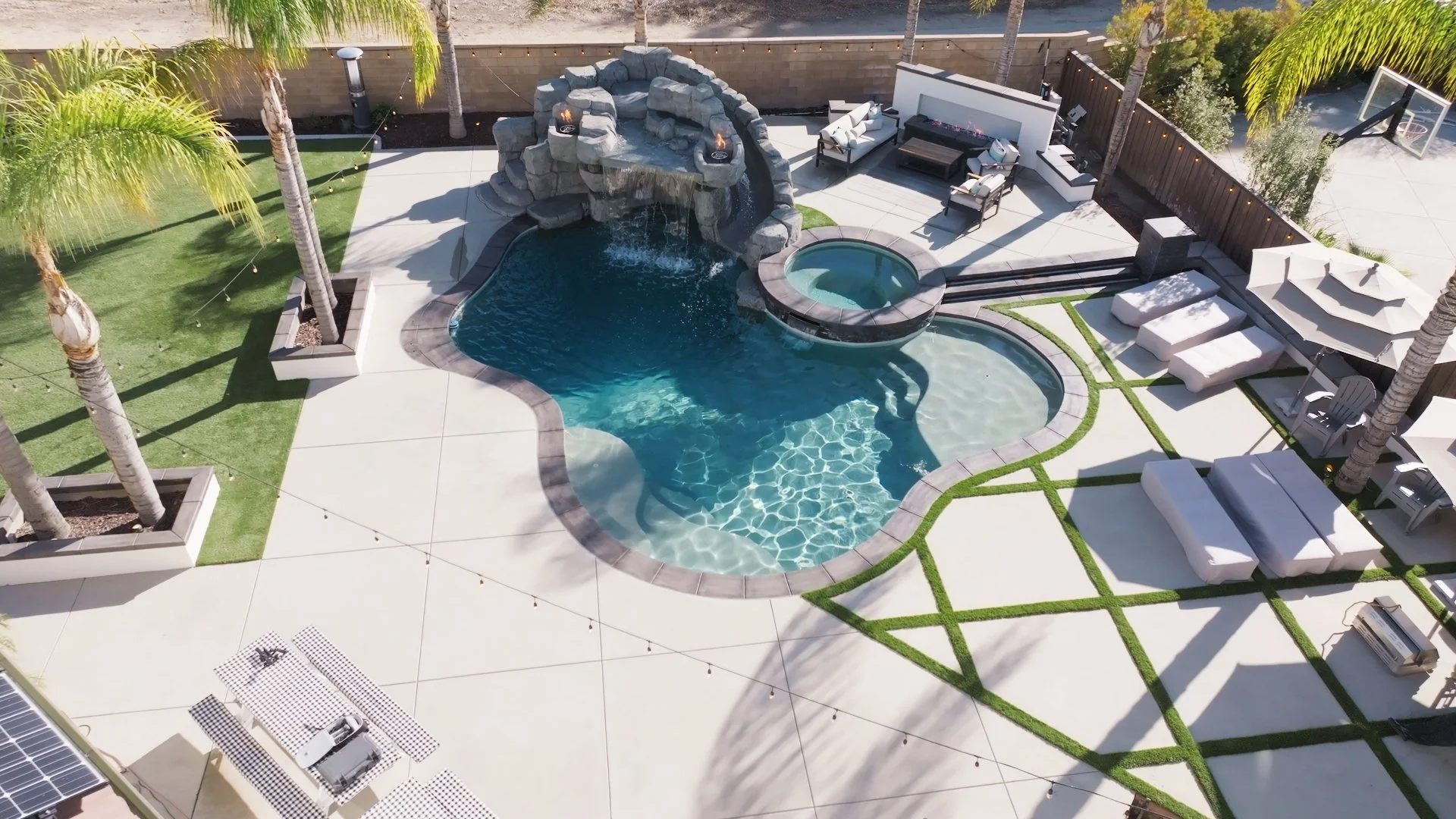
Custom pool installation in Toronto is the process of planning, designing, and building a swimming pool system around the property layout, yard conditions, design goals, budget, and required features. The work includes site review, 3D design, engineering, excavation, pool construction, plumbing, electrical work, coping, decking, landscaping, fencing, and startup. This approach creates a pool design that fits the property instead of forcing the property to fit a standard pool model.
The full project scope depends on pool type, pool size, site access, grade changes, soil conditions, feature selection, and Toronto permit and bylaw requirements. A custom pool project may use concrete, vinyl, or fibreglass, with each option carrying different costs, construction timelines, finish options, and maintenance demands.
A complete Toronto custom pool installation plan addresses cost, design, construction process, regulatory compliance, and long-term backyard performance from the start. Strong planning improves site fit, feature integration, and long-term pool value.
What Is Custom Pool Installation in Toronto?
Custom pool installation in Toronto is the design and construction of a swimming pool planned around the property, the homeowner’s goals, and the full backyard layout rather than a fixed stock package. The scope usually includes consultation, site review, 3D design, engineering, permits, pool construction, equipment selection, coping, decking, lighting, and surrounding landscape integration.
What Is a Custom Pool?
A custom pool is a pool designed for a specific lot, use pattern, and visual style. Toronto custom-pool pages define it as a personalized pool built around the homeowner’s lifestyle, outdoor space, and design preferences rather than a one-size-fits-all layout.
What Makes a Custom Pool Different From a Standard Pool?
A custom pool differs from a standard pool because the shape, size, depth, materials, features, and surrounding hardscape are planned around the site instead of being limited to a preset model. Toronto design pages tie custom work to 3D visualization, lighting, landscaping integration, material selection, and detailed revisions before excavation starts.
What Parts Form a Custom Pool Project?
A custom pool project includes site analysis, concept design, 3D modelling, engineering, permit handling, the chosen pool system such as concrete, vinyl, or fibreglass, plus filtration equipment, heating, lighting, coping, decking, and the wider landscape design around the pool. Toronto pool-design pages present the pool and the surrounding backyard as one connected project rather than separate jobs.
Why Do Toronto Homeowners Choose a Custom Pool?
Toronto homeowners choose a custom pool for a closer fit with lot dimensions, lifestyle, architecture, and luxury backyard design. Local pages repeatedly position custom pools as the stronger choice for maximizing outdoor space, handling compact or irregular yards, integrating premium features, and reducing design mistakes through detailed planning before construction.
Why Choose a Custom Pool in Toronto?
A custom pool is chosen in Toronto for full design control, stronger alignment with the house and lot, better handling of difficult yard conditions, and easier integration of premium features and landscape design. Current Toronto custom-pool pages position the custom route as the best fit when the project needs a property-specific layout rather than a preset pool package.
Is a Custom Pool Best for Full Design Control?
Yes. A custom pool is best for full design control because the shape, size, depth, materials, finishes, and surrounding hardscape are planned around the property and the owner’s goals. Toronto custom-pool builders describe the process through consultation, custom design, visualizations, revisions, and full design-build coordination before construction starts.
Is a Custom Pool Best for Luxury Backyard Design?
Yes. A custom pool is best for luxury backyard design because it allows the pool, coping, decking, lighting, and surrounding outdoor-living areas to read as one finished environment. Toronto custom-pool pages present custom work as the premium route for high-end backyard design, and local feature pages connect custom pools with waterfalls, lighting, slides, fire features, and other upscale upgrades.
Is a Custom Pool Best for Irregular or Sloped Yards?
Yes. A custom pool is best for many irregular or sloped yards because the layout is built around the lot rather than forced into a fixed shell size or preset footprint. Toronto builders state that custom designs maximize outdoor space on unique terrain, and Toronto infinity-pool pages show custom engineering around slope, view, grading, and drainage as a core part of the design process.
Is a Custom Pool Best for Premium Features?
Yes. A custom pool is best for premium features because the project scope supports integrated spas, waterfalls, lighting, custom steps, infinity edges, and other feature-rich details from the first design stage. Toronto pool-feature pages and 2026 trend pages position those upgrades as core parts of modern custom-pool planning, especially in higher-end backyard projects.
Is a Custom Pool Best for Long-Term Property Value and Use?
A custom pool is strongest for long-term property use and premium property positioning when the design fits the home, the yard, and the target buyer profile. Toronto custom-pool builders present custom pools as seamless extensions of the home and landscape, and CREA notes that pools are a desirable amenity in higher-priced homes, with stronger value signals in premium property segments.
Which Pool Type Fits a Custom Pool Project?
A custom pool project in Toronto usually fits one of three main paths. Concrete fits the highest level of customization and premium feature integration. Vinyl fits flexible layouts at a lower entry cost. Fibreglass fits faster installation and lower long-term maintenance where the site has enough access for shell delivery. Current Toronto and Ontario comparison pages place vinyl around CAD 40,000 to 70,000, fibreglass around CAD 55,000 to 100,000, and concrete around CAD 80,000 to 120,000+, while newer Ontario guidance places vinyl and fibreglass starting near CAD 50,000 and concrete above CAD 130,000 in many current projects.
Is Concrete Best for Full Customization?
Yes. Concrete is the best pool type for full customization. Current Toronto pages state that concrete pools offer the highest level of design flexibility, with freedom across shape, size, depth, and integrated features such as waterfalls, spas, and other custom details. That makes concrete the strongest fit when the project needs a fully bespoke pool rather than a catalogue-based model.
Is Vinyl Best for Flexible Layouts?
Yes. Vinyl is the strongest fit for flexible layouts at the lower end of the custom-pool budget. Current Toronto pages describe vinyl liner pools as an affordable and customizable option, with flexible patterns, colours, and layout freedom. Local and Ontario comparison pages also place vinyl below fibreglass and concrete on upfront cost, which makes it the practical custom-layout option when the project needs design flexibility without moving into full concrete-pool pricing.
Is Fibreglass Best for Faster Installation?
Yes. Fibreglass is the best pool type for faster installation. Current Toronto and Ontario pages describe fibreglass pools as quick-install systems because they use a pre-formed shell rather than a fully built-on-site structure. Local Toronto guidance states that many fibreglass pool projects install in 2 to 4 weeks after permits are approved, and comparison pages position fibreglass as faster than both vinyl and concrete.
Which Pool Type Fits the Budget Best?
Vinyl fits the lowest custom inground budget. Fibreglass fits the middle budget band. Concrete fits the highest budget tier. Current Ontario and Toronto pricing pages place vinyl at the lowest entry point, fibreglass above vinyl, and concrete at the premium end. That cost ladder is one of the clearest selection signals in a custom pool project.
Which Pool Type Fits the Yard Conditions Best?
Concrete fits the most difficult yard conditions because it supports the widest structural and geometric freedom. Vinyl fits yards that need a custom layout with more budget control. Fibreglass fits sites with cleaner access, simpler geometry, and enough delivery room for a pre-formed shell. Current Toronto comparison pages state that local projects are affected by clay soil, high water table areas, and restricted access through narrow driveways, while current fibreglass guidance states that shell transport limits width and length and makes site access a more important constraint than it is for site-built pool types.
How Much Does Custom Pool Installation Cost in Toronto?
Custom pool installation in Toronto spans a wide budget range because the project price depends on the chosen pool type, the level of site engineering, the amount of feature integration, and the size of the surrounding poolscape. Current Ontario and Toronto/GTA pricing places steel-vinyl projects around CAD 60,000 to 100,000, fibreglass around CAD 80,000 to 120,000, and concrete around CAD 100,000 to 250,000+. Premium smart or luxury custom pools rise far higher when the project includes complex automation, structural detailing, and full outdoor-living design.
What Is the Average Custom Pool Cost in Toronto?
A single average is not useful for a custom pool because the category covers multiple pool systems and many design tiers. A realistic Toronto planning range starts near CAD 60,000 for a simpler custom steel-vinyl build, moves into about CAD 80,000 to 120,000 for many fibreglass builds, and rises to about CAD 100,000 to 250,000+ for concrete projects. Luxury smart pool projects in Toronto are published as CAD 200,000 to 800,000, which shows how quickly a true custom scope can move above standard inground pricing.
What Changes the Final Custom Pool Price?
The final custom pool price changes with pool type, yard access, clay or shale excavation, high water table risk, drainage, retaining, grading, permits, mechanical systems, and the total amount of decking and landscaping built around the pool. Current Ontario guides stress that two pools with a similar visual concept can differ by CAD 40,000 or more once access limits, engineered excavation, drainage correction, and integrated backyard work are priced into the installed scope. Recent Toronto commentary also notes that newer zoning and compliance pressures are adding thousands of dollars to some backyard pool projects before construction starts.
How Much Do Pool Type, Size, and Depth Affect Cost?
Pool type is the largest cost driver in most custom projects. Current 2026 Ontario pricing places steel-vinyl near CAD 60,000 to 100,000, fibreglass near CAD 90,000 to 120,000+, and concrete near CAD 100,000 to 250,000+. Size and depth then raise cost through more excavation, more structural material, more finish area, larger mechanical loads, and higher heating demand. Ontario pool-cost guides list size and depth as core pricing factors across all inground pool types.
How Much Do Spas, Water Features, and Automation Add?
Current Toronto and Ontario pricing places integrated spas around CAD 8,000 to 30,000+, water features around CAD 5,000 to 20,000+, and smart pool automation around CAD 2,500 to 7,000+. Toronto waterfall guidance places more elaborate waterfall features around CAD 15,000 to 25,000+, which shows the higher end of the water-feature range. Premium concrete feature packages rise higher when the design includes structural detailing, premium finishes, or complex control integration.
How Much Do Decking, Landscaping, and Outdoor Living Features Add?
Decking, landscaping, and outdoor living features often create the second major budget layer after the pool itself. Current Ontario 2026 pricing places interlock patios around CAD 17 to 35 per sq. ft., deck construction around CAD 25 to 100 per sq. ft., and retaining walls around CAD 25 to 65 per sq. ft. Outdoor-living features add another cost band, with custom pergolas around CAD 5,000 to 30,000, wood pergolas around CAD 6,000 to 16,000, aluminum pergolas around CAD 10,000 to 22,000, and cabanas around CAD 8,000 to 75,000+ in Ontario.
What Ongoing Ownership Costs Should You Expect?
Ongoing ownership costs usually include opening and closing, seasonal service, heating, electricity, chemicals, and a long-term reserve for liners, equipment, covers, lighting, or future resurfacing. A current 2026 Ontario guide suggests planning about CAD 400 to 800 per year for opening and closing, about CAD 100 to 200 per month for seasonal service, about CAD 300 to 800+ per season for heating sensitivity, and a long-term reserve of about 1% to 3% of build cost annually. Toronto maintenance guidance separately places routine pool care around CAD 100 to 300 per month for an average-sized pool.
How Does Custom Pool Design Work?
Custom pool design in Toronto starts with a site review and moves through 3D design, layout planning, feature planning, material selection, and engineering before construction starts. Current Toronto and GTA design-build pages describe the process as a property-specific planning stage that aligns the pool, the backyard layout, the budget, and the permit path before excavation begins.
What Happens During Consultation and Site Review?
The consultation defines the homeowner’s goals, budget range, preferred pool type, and the main uses of the pool. The site review checks placement options, yard access, drainage, and other site constraints that affect the final design. Toronto pool-design pages describe this stage as an at-home visit where the builder reviews ideas, site conditions, and feature priorities before the design work starts.
What Happens During 3D Pool Design?
3D pool design turns the site information into a realistic digital preview of the finished project. Toronto and Ontario pool-design pages state that the renderings show the pool shape, placement, surrounding landscape, and the broader backyard setting so the owner can review the concept before construction decisions are locked in. Current GTA design pages also describe 3D planning as the step that gives the owner more control and reduces costly changes later.
What Happens During Layout and Feature Planning?
Layout and feature planning sets the pool footprint, orientation, circulation space, and the location of premium features such as a spa, waterfall, lighting, hot tub, or other backyard upgrades. Toronto custom-pool pages describe this stage as the point where the pool is shaped around the property and the owner’s lifestyle rather than around a preset package. Local pages also tie the pool layout directly to the wider backyard plan, including deck and landscape coordination.
What Happens During Material and Finish Selection?
Material and finish selection sets the visual and performance layer of the project. Toronto pool-design pages describe this stage as the choice of tile, coping, deck materials, pool-surface finishes, and other visible elements that shape comfort, colour, and durability. Current Toronto tile and 3D-design pages state that designers use visualization tools to compare materials and show how the finished pool will look before construction begins.
What Happens During Engineering and Technical Planning?
Engineering and technical planning turns the approved concept into a buildable package. Toronto and GTA pages state that this stage covers structural engineering, construction drawings, permit-related documentation, and technical coordination so the design aligns with municipal requirements and site conditions. Local sources also describe this stage as the point where the builder prepares drawings, manages required approvals, and confirms that the pool is compliant, stable, and ready for construction.
What Design Features Can a Custom Pool Use?
A custom pool uses the widest feature range in the Toronto market because the design starts from the property layout, the preferred pool type, and the target outdoor-living plan rather than from a fixed stock model. Current Toronto and GTA custom-pool pages show the same feature pattern across premium projects: custom shapes, custom sizes, tailored depth profiles, integrated steps, benches, tanning ledges, spas, Baja shelves, plunge areas, infinity edges, waterfalls, fire features, LED lighting, automatic covers, and full automation systems.
What Shapes Can a Custom Pool Use?
A custom pool uses rectangular, freeform, geometric, courtyard, lap-pool, and other property-specific shapes. Current Toronto custom-pool pages position concrete and other site-built pool systems as the strongest route for irregular lot lines, architectural layouts, and pools that need to match the home and landscape precisely.
What Sizes and Depths Can You Choose?
A custom pool uses project-specific sizes and depths based on the lot, the intended use, and the selected pool type. Toronto custom-pool pages state that builders plan the size, shape, and depth around the property and the homeowner’s goals, while local plunge-pool pages show that compact custom layouts also fit smaller backyards and wellness-led designs.
What Steps, Benches, and Tanning Ledges Can You Add?
A custom pool adds integrated steps, built-in benches, and custom tanning ledges. Current Toronto and GTA pages present tanning ledges as a premium comfort feature designed for shallow lounging and visual appeal, and they treat entry geometry and built-in seating as part of the main design stage rather than as afterthoughts.
What Spas, Baja Shelves, and Plunge Areas Can You Add?
A custom pool adds integrated spas, Baja shelves, and dedicated plunge areas. Current Toronto custom-pool pages list hot tubs and spas among the main premium upgrades, while current Canadian feature pages define a Baja ledge as a broad shallow shelf that usually sits around 6 to 12 inches deep. Toronto-area plunge-pool pages also position compact plunge zones as a strong fit for smaller backyards and wellness-led custom designs.
What Infinity Edges, Waterfalls, and Fire Features Can You Add?
A custom pool adds infinity edges, waterfalls, deck jets, sheer descents, and fire features such as fire bowls and combined fire-and-water features. Current Toronto and GTA pool-feature pages present those upgrades as standard options in higher-end custom projects, and Toronto infinity-pool pages state that vanishing-edge pools rely on advanced hydraulic engineering and a hidden catch-basin system built into the design.
What Lighting, Covers, and Automation Can You Add?
A custom pool adds LED lighting, automatic covers, safety covers, and full automation systems for controls and scheduling. Current Toronto and GTA pages show colour-changing LED lighting, automatic safety covers, and fully automated pool systems as common premium upgrades, while current Canadian cover pages state that automatic covers are custom-built to match the pool shape and operate with push-button control.
What Backyard Features Can a Custom Pool Include?
A custom pool in Toronto can include coordinated decking, landscaping, patios, outdoor kitchens, lounge areas, privacy features, lighting, and full hardscaping around the water. Current Toronto and GTA design-build pages treat the pool and the surrounding backyard as one outdoor-living project rather than separate pieces.
What Decking Works Best Around a Custom Pool?
The best decking depends on the pool height and the way the yard connects to the house. Current GTA pool-deck pages state that flush or ground-level pools work best with stone or pavers, while elevated pool conditions work better with composite or PVC decking. Local outdoor-living pages also position a custom deck as an extension of the home and a key part of the final poolscape.
What Landscaping Works Best Around a Custom Pool?
The strongest landscaping around a custom pool uses layered planting, clean walkways, low-maintenance greenery, and lighting that supports both function and appearance. Current Toronto pool-landscaping pages highlight greenery, plant selection, poolside patio design, and privacy landscaping as the core landscape elements around a residential pool. GTA landscape-design pages also frame the pool area as a full outdoor environment, not only a water feature.
What Patios, Outdoor Kitchens, and Lounge Areas Can You Add?
A custom pool can include interlock patios, natural-stone seating areas, outdoor kitchens, pergolas, and dedicated lounge zones for dining and entertaining. Current Toronto and GTA portfolio and service pages show pools paired with outdoor kitchens, full patio builds, and broader outdoor-living features as part of one coordinated backyard plan.
What Privacy and Screening Features Can You Add?
Common privacy and screening features include fencing, hedges, trees, privacy landscaping, and architectural privacy screens. Current Toronto pool-landscaping pages identify privacy landscaping as a core poolside design element, and Toronto pool imagery shows corten steel privacy screens used to block neighbours and hide pool equipment. Recent Toronto-area landscape commentary also highlights privacy design as a key issue in denser neighbourhoods.
How Do Hardscaping and Pool Design Work Together?
Hardscaping and pool design work best when they are planned together from the start. Current GTA landscape pages state that decks, pergolas, stonework, circulation routes, grading, planting, and lighting should be designed as one outdoor system in relation to the pool, not added later as separate upgrades. That approach improves layout flow, durability, and the finished visual balance of the backyard.
How Does Custom Pool Installation Work?
Custom pool installation in Toronto follows a staged process: site review, design approval, permit preparation, excavation, pool structure installation, plumbing, electrical setup, coping, decking, finishing, inspection, and startup. Toronto design-build pages present the work as one connected project that moves from concept and 3D planning to permits, construction, finishes, and handover.
What Happens During Site Review and Planning?
The site review checks the lot, access path, drainage conditions, grading, and the space available for the pool, equipment, and surrounding backyard features. Toronto custom-pool pages describe this stage as the first planning step because the builder needs the real site conditions before the layout, budget, and scope are set properly.
What Happens During Design Approval and Scope Definition?
Design approval turns the idea into an agreed project scope. Toronto pool-design pages describe this stage through 2D or 3D drawings, feature selection, material comparison, and layout revisions until the owner approves the final shape, size, depth, and surrounding poolscape plan. The approved scope then fixes the main budget items, finish level, and construction sequence.
What Happens During Permit Preparation?
Permit preparation organizes the drawings and site information needed for approvals. Toronto’s current pool-enclosure process requires an approved Zoning Applicable Law Certificate before the Pool Fence Enclosure Permit, and the City requires a detailed site plan showing property lines, pool dimensions, distances to the house and lot lines, pool equipment, and proposed fence details. Custom projects that add structures or major building work may move through the broader building permit process as well.
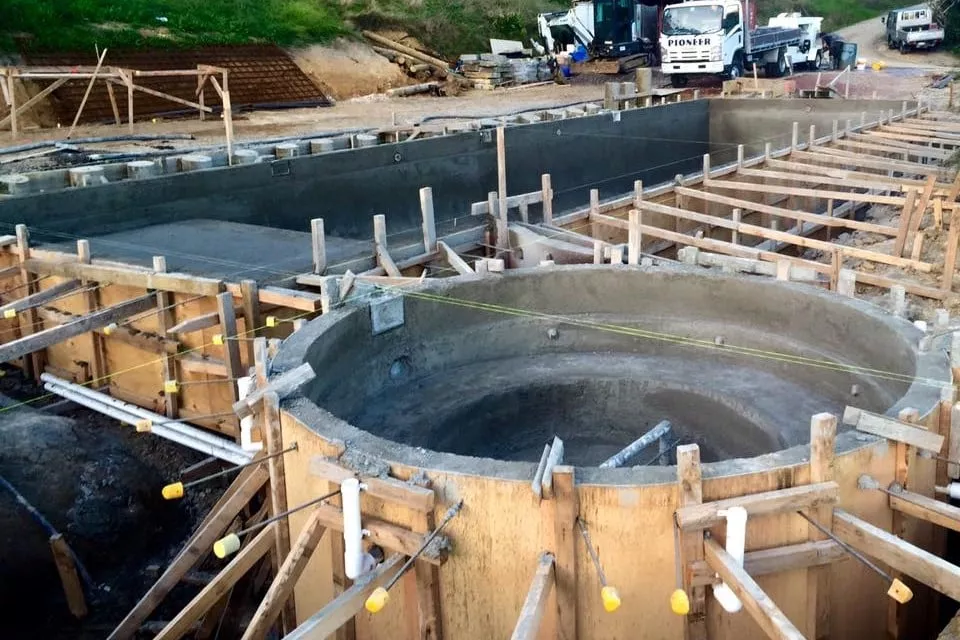
What Happens During Excavation and Ground Preparation?
Excavation opens the pool area and removes soil to the approved dimensions. Ground preparation then levels the dig, addresses drainage, and prepares the base for the chosen pool structure. Toronto pool-cost and construction pages place excavation and site work at the front of the physical build because the shell, equipment, and finish work all depend on a stable prepared site.
What Happens During Pool Structure Installation?
Pool structure installation depends on the selected pool type. A concrete pool moves into rebar and gunite or shotcrete work. A vinyl pool moves into wall-panel and liner-system construction. A fibreglass pool moves into shell placement. Toronto custom-pool pages present the structure stage as the point where the approved design becomes the permanent pool form on site.
What Happens During Plumbing and Electrical Setup?
Plumbing connects the skimmers, returns, drains, and equipment lines. Electrical setup connects the pump, filter, heater, lights, controls, and bonding components. Toronto pool-cost and planning pages group these systems inside the equipment and systems stage because circulation, heating, and controls must be in place before the pool moves to final finishing and startup.
What Happens During Coping, Decking, and Finishing?
Coping finishes the pool edge. Decking builds the walking surface and ties the pool into the backyard layout. Finishing adds the visible materials that complete the poolscape, such as surface finishes, tile, lighting, and landscape integration. Toronto pool-estimate and design pages treat coping, decking, and landscaping as core finish stages, not minor add-ons.
What Happens During Inspection and Startup?
Inspection confirms that permit-related work reaches the required stage and that the project is ready to close properly. Toronto states that permit holders must schedule required building inspections, and property owners must request a final inspection to close the permit. Startup then covers pool fill, equipment checks, system balancing, and the final handover or training session for the owner.
Do You Need Permits for Custom Pool Installation in Toronto?
Yes. A residential outdoor custom pool in Toronto needs an approved Zoning Applicable Law Certificate before the Pool Fence Enclosure Permit application. Toronto also states that a pool cannot be constructed and filled with water unless the required pool enclosure is installed under Chapter 447 – Fences.
When Is a Pool Permit Required?
A Pool Fence Enclosure Permit is required for an outdoor swimming pool and the City’s pool-enclosure process applies before the pool is filled. For a broader custom pool project, separate building permits may also apply to related structures such as decks, cabanas, and sheds, because Toronto’s pool-fence FAQ states those items are outside the scope of the pool-fence permit and need separate approvals where applicable.
What Pool Fence and Enclosure Rules Apply?
Toronto requires a complete pool enclosure around the pool area. The detailed submission must show the proposed fence location, height, and material, plus the gate location, height, and whether it is self-closing or latching. Toronto’s FAQ also states that if a building wall forms part of the enclosure, there can be no access to the enclosed pool area through that wall.
What Zoning and Site Plan Rules Apply?
Toronto requires a detailed site plan for the Zoning Applicable Law Certificate. The plan must show property lines, pool dimensions, distances to the house and lot lines, the location of doors and windows adjacent to the pool area, the location of pool equipment, the proposed fence, and the percentage of hard versus soft landscaping. Those zoning drawings form the basis of the later fence-permit review.
What Drainage and Grading Rules Apply?
Toronto requires the existing drainage pattern to be maintained where possible and requires side yards and drainage swales to drain at surface slopes of at least 1.5%. The site must be graded so water does not accumulate near the building and does not adversely affect adjacent properties. Toronto’s current Property Standards text also states that swimming pool drainage must not be discharged onto City-owned land, walkways, stairs, entrance ways, any road allowance, or directly or indirectly into the sewage system.
How Do Permits Affect the Build Timeline?
Permits affect the project at the front end. Toronto states that, after the zoning certificate application is accepted and fees are paid, the expected review time is 10 business days. After the zoning certificate is issued, a complete Pool Fence Enclosure Permit application takes about 5 business days to review. Toronto also states that missing information delays both approvals, which is why detailed drawings and fence details matter early in a custom pool project.
How Long Does Custom Pool Installation Take in Toronto?
Custom pool installation in Toronto usually takes several weeks to a few months from design to startup. The timeline depends on the chosen pool type, the amount of site work, the complexity of the backyard scope, and the speed of the permit path. Current Toronto and GTA builder pages place the full process anywhere from 2–3 months for many standard projects to 16–22 weeks from breaking ground to completion for larger integrated pool-and-landscape builds.
How Long Does Design and Planning Take?
Design and planning usually take about 1–2 weeks for a straightforward custom concept and about 2–6 weeks when the project includes more revisions, 3D design, detailed feature planning, and broader backyard coordination. Toronto and GTA design-build pages describe this stage as the point where the builder reviews the site, prepares the concept, and finalizes the approved scope before construction is scheduled.
How Long Does Permit Approval Take?
For a standard outdoor residential pool in Toronto, the core municipal path usually takes about 15 business days after complete submissions and fee payment: about 10 business days for the Zoning Applicable Law Certificate and about 5 business days for a complete Pool Fence Enclosure Permit application after zoning approval. Missing information extends both reviews.
How Long Does Construction Take?
Construction time depends mainly on the pool type. Current GTA installer pages place fibreglass installs around 2–3 weeks, vinyl around 4–6 weeks, and concrete around 10–14 weeks. Toronto pool pages also state that many overall pool-construction timelines land around 2–3 months once permits, weather, and site conditions are factored in.
How Long Do Decking and Landscaping Take?
Decking and landscaping often add several days to several weeks after the pool structure is in place. One Ontario pool-construction source places the landscaping portion at about 2 days to 2 weeks depending on scope, while a Toronto luxury design-build firm states that larger integrated pool and landscape projects often run 16–22 weeks from breaking ground to completion because the outdoor-living scope is much broader than the pool alone.
What Delays a Custom Pool Project?
The main delays are design revisions, incomplete permit submissions, weather, difficult yard access, unexpected utilities, drainage corrections, retaining work, and added decking or landscaping scope. Toronto’s official pool-permit FAQ states that missing information delays review, and GTA design/build sources note that site complications and wider backyard work lengthen the schedule beyond the pool build itself.
What Maintenance Does a Custom Pool Need?
A custom pool needs regular water testing, routine cleaning, scheduled equipment inspection, finish-specific surface care, and full seasonal opening and closing. Toronto service pages describe the recurring maintenance pattern as surface skimming, vacuuming, brushing, basket cleaning, water balancing, and equipment checks, while Health Canada requires daily testing for sanitizer, pH, total alkalinity, and calcium hardness.
How Do You Maintain Water Quality?
Water quality stays stable through frequent testing and prompt chemical adjustment. Health Canada states that pool water needs daily testing for sanitizer, pH, total alkalinity, and calcium hardness. Toronto-area maintenance guidance adds the weekly operating routine of skimming, brushing, vacuuming, and chlorine adjustment. Toronto pool-supply guidance places pH at 7.2 to 7.6, total alkalinity at 120 to 150 ppm, and calcium hardness at about 200 to 250 ppm for concrete pools and 175 to 225 ppm for vinyl pools.
How Do You Maintain Pool Equipment?
Pool equipment maintenance covers the pump, filter, heater, skimmer baskets, pump baskets, and, where installed, the salt cell and other treatment components. Toronto maintenance pages list weekly equipment inspection, basket cleaning, and backwashing or filter cleaning as standard work. Toronto service pages also show that local pool contractors treat equipment repair as an ongoing need from opening through closing.
How Do You Maintain Interior Finishes and Features?
Interior finish maintenance depends on the surface type. Vinyl liners need soft-bristle cleaning and early repair of leaks, tears, wrinkles, and fading. Concrete and tiled pools need inspection for cracks, stains, loose tile, and surface wear. Toronto restoration pages describe the common finish failures as liners peeling, tiles loosening, concrete cracking, and systems losing efficiency over time.
What Seasonal Opening and Closing Work Is Required?
Seasonal opening includes cover removal, equipment reassembly, system startup, and opening chemistry treatment. Seasonal closing includes winterizing the plumbing, protecting equipment from freezing, lowering and preparing the pool for winter, and securing the winter cover. Toronto service pages place pool closing between late September and mid-October once temperatures stay below 15°C, and Ontario winterizing guidance states that the closing process protects the plumbing, equipment, and structural components from freeze damage.
What Repairs Are Common in Custom Pools?
Common custom-pool repairs include leak detection, liner repair or replacement, crack repair, tile repair, and repairs to the pump, filter, heater, and other pool systems. Toronto repair pages list vinyl-liner leaks, main-drain leaks, concrete-shell cracks, structural settling, and worn or failing equipment among the main repair categories seen in local pools.
How Do You Choose a Toronto Custom Pool Installer?
Choose a Toronto custom pool installer who shows regular custom pool design-build work, offers clear 3D planning, handles permits and real site conditions, shows completed projects and public reviews, states warranty and workmanship coverage clearly, and has direct Toronto and GTA experience. Current local pool-builder pages repeat those same trust signals across the strongest custom-pool companies.
Does the Installer Design and Build Custom Pools Regularly?
Yes. A strong installer shows repeated custom pool work, not occasional pool work. Current Toronto pages describe dedicated custom swimming pool design and installation services, wide experience across fibreglass, concrete, vinyl, and feature-rich custom builds, and long operating histories in the local market.
Does the Installer Offer 3D Design and Planning?
Yes. A strong installer offers 3D design because it helps define the full pool, landscape, lighting, and surrounding backyard layout before construction starts. Toronto custom-pool pages describe 3D renderings as part of the design and approval process, and one Toronto source explains that modern 3D pool design shows the entire backyard with materials, lighting, and site context before the build begins.
Does the Installer Handle Permits and Site Conditions?
Yes. A strong installer handles permits, approvals, drainage planning, placement issues, and other important site conditions early. Current Toronto builder pages state that they handle the permit application process or the paperwork, and they place drainage planning and site considerations inside the early consultation stage.
Does the Installer Show Past Custom Pool Projects and Reviews?
Yes. A strong installer shows real project galleries, visible recent work, and public review signals. Current Toronto pages show recent pool projects, galleries, showcase sections, and public review metrics such as 4.7/5 Google, 9.9/10 HomeStars, awards, and testimonials.
Does the Installer Offer Warranty and Workmanship Coverage?
Yes. A strong installer states warranty and workmanship coverage clearly. Current Toronto pages show that some builders publish a 10-year labour warranty, while others emphasize post-construction support and long-term service. Written coverage is a stronger trust signal than a vague promise because it defines the scope of responsibility after the build.
Does the Installer Have Toronto and GTA Experience?
Yes. Toronto and GTA experience matters because local projects deal with tight access, urban lot limits, drainage planning, permit coordination, and varied yard conditions. Current local pages describe direct Toronto and GTA service coverage, more than 10 years of Toronto-area pool work on one page, and service across the GTA plus decades of experience on another.
Frequently Asked Questions About Custom Pool Installation in Toronto
How Much Does a Custom Pool Cost in Toronto?
A custom pool in Toronto usually starts around CAD 60,000, and larger luxury projects with integrated landscaping, outdoor kitchens, and premium features often exceed CAD 200,000. Current Ontario pricing by pool type places steel-vinyl around CAD 60,000 to 100,000, fibreglass around CAD 90,000 to 120,000+, and concrete around CAD 100,000 to 250,000+.
What Pool Type Is Best for a Custom Pool?
The best pool type depends on the goal. Concrete is best for full customization and premium finishes, vinyl is the most affordable custom inground option with flexible shapes and patterns, and fibreglass is strongest for quicker installation and lower routine maintenance.
How Long Does Custom Pool Installation Take?
A custom pool in Toronto usually takes several weeks to a few months from design to startup. One current Toronto source says the full pool-construction process often takes about 2 to 3 months, while another Toronto builder says the design and planning phase alone usually takes 7 to 14 days, with construction starting after permit approval.
Do You Need a Permit for a Custom Pool in Toronto?
Yes. For outdoor residential pools in Toronto, applicants must obtain a Zoning Certificate before applying for a Pool Fence Enclosure Permit, and the pool cannot be constructed and filled with water without a compliant fence installed under Chapter 447 – Fences. The City’s FAQ states the expected review time is 10 business days for the zoning certificate after acceptance and fee payment, followed by about 5 business days for a complete pool-permit application.
What Features Can a Custom Pool Include?
A custom pool can include hot tubs, swim spas, waterfalls, pool lighting, automatic covers, tanning ledges, Baja shelves, and broader backyard features such as decks, interlocking, and landscaping. Toronto builder pages present those upgrades as standard options within the custom design-build process.
Is 3D Pool Design Worth It?
Yes. 3D pool design is worth it because it shows how the pool fits the property before construction starts, including lighting, waterfalls, tanning ledges, and the surrounding landscape. Toronto guidance says these visual mockups help refine choices and eliminate guesswork, while local builders use them to show the finished pool and backyard layout before approval.
What Is Included in Custom Pool Installation?
Custom pool installation usually includes site review, design, 2D/3D drawings, engineering where required, permit preparation, excavation, site work, pool structure installation, equipment installation, interior finishes, coping, decking, and final startup. Toronto builder pages also show that many custom projects extend into hardscaping, pool landscaping, pergolas, cabanas, and other outdoor-living work.
How Do You Choose the Right Custom Pool Builder?
Choose a builder with regular custom pool design-build experience, clear 3D planning, permit-handling experience, visible past projects, public reviews, and written warranty terms. One current Toronto builder highlights free at-home consultations, over 6,000 completed projects, recent project galleries, and a 10-year labour warranty, which are the kind of proof points worth checking when comparing companies.
Does a Custom Pool Increase Property Value?
A custom pool can improve property appeal and may support property value, but the effect depends on the home, neighbourhood, and price segment. A Toronto builder markets pools as adding resale appeal in competitive Toronto neighbourhoods, while CREA notes that in higher-priced homes, especially around CAD 1.5 million and above, pools are often a desirable amenity that can enhance appeal and value.
What Maintenance Does a Custom Pool Need?
A custom pool needs regular skimming, brushing, vacuuming, basket cleaning, water testing, chlorine adjustment, pump/filter/heater checks, and routine visual safety checks. Toronto maintenance guidance frames these as weekly tasks, and Toronto custom-pool guidance also notes that owners need to skim debris, check pH, and add chemicals as needed for long-term performance.
How Do You Get a Quote for Custom Pool Installation in Toronto?
Getting a quote for custom pool installation in Toronto usually starts with a site visit, then moves to design review, a written cost estimate, and a draft permit and build timeline. Current Toronto builder pages present the quote stage as a planning step that checks the property first, then turns the site conditions, pool type, feature list, and backyard scope into a realistic project budget and schedule.
How Do You Book a Site Visit?
You book a site visit by contacting a Toronto custom pool installer and requesting an at-home consultation or free estimate. Current Toronto custom-pool pages state that builders offer free in-home estimates or free quotes, and they use that visit to review yard access, drainage, lot layout, and the best position for the pool, equipment, and surrounding features before the formal estimate is prepared.
How Do You Get a Design and Cost Estimate?
You get a design and cost estimate after the installer turns the site information into a proposed pool layout and written scope of work. Toronto estimate guidance states that a clear pool estimate should define budget, schedule, and scope, while Toronto custom-pool pages show that the estimate often follows the early design stage and may include 3D design, material choices, and premium feature options. A stronger estimate separates the main cost layers, such as the pool structure, site work, equipment, permits, coping, decking, and landscaping, so the full installed price is clear.
How Do You Plan the Permit and Build Timeline?
You plan the permit and build timeline by separating approvals from physical construction. In Toronto, the outdoor-pool approval path usually starts with the Zoning Applicable Law Certificate and then moves to the Pool Fence Enclosure Permit. The City states that, after acceptance and fee payment, the expected review time is 10 business days for the zoning certificate and about 5 business days for a complete pool-fence application. Toronto builder pages and estimate guides also show that the construction window should be planned separately from the approval window, because design changes, missing permit information, and site conditions change the start date and the full build schedule.