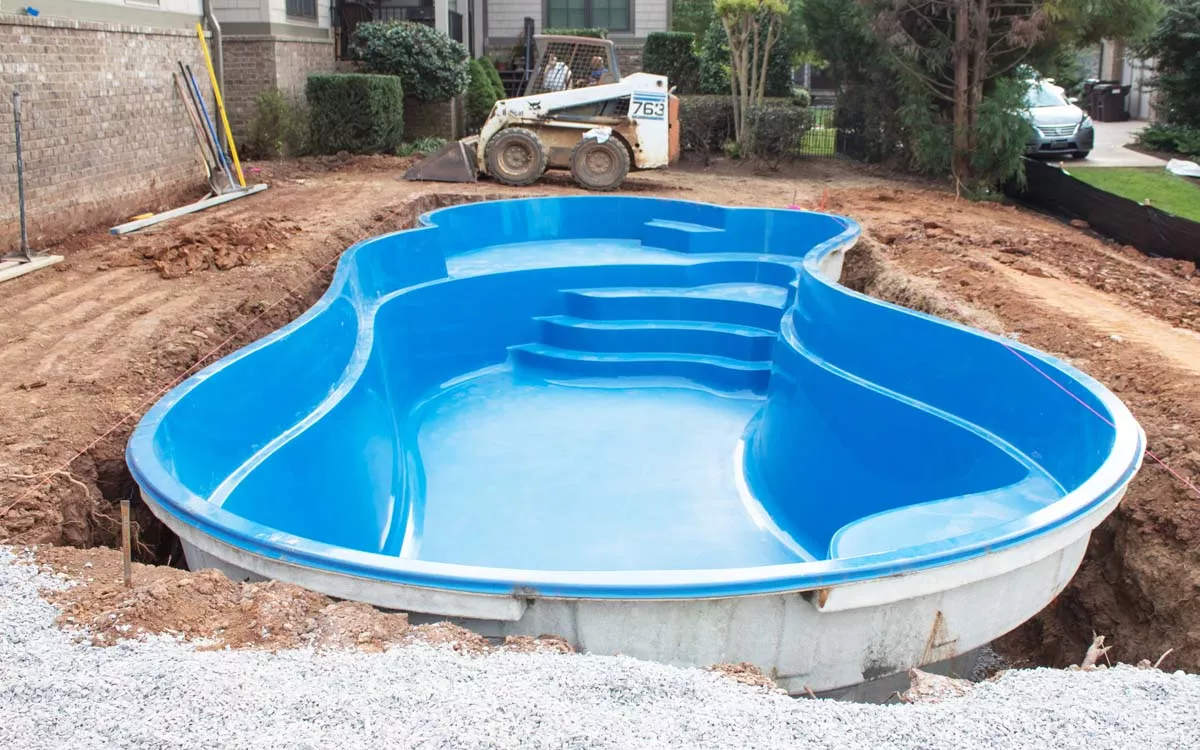
Fibreglass pool installation in Toronto is the process of planning and installing a pre-manufactured fibreglass pool shell through site review, layout planning, excavation, base preparation, shell placement, plumbing, electrical work, equipment setup, coping, decking, fencing, and startup. The full scope covers the structural, mechanical, and finishing work required to deliver a safe, durable, and functional swimming pool that fits the property and the intended use.
The right fibreglass pool depends on shell size, yard layout, site access, grading, feature selection, budget, and Toronto permit and bylaw requirements. A fibreglass pool is often selected for faster installation, low maintenance, a smooth non-abrasive surface, and a strong fit for many Toronto backyards.
A complete Toronto fibreglass pool installation plan addresses cost, design, installation process, permit compliance, and long-term pool performance from the start. Strong planning improves site fit, controls project cost, and supports efficient long-term pool ownership.
What Is Fibreglass Pool Installation in Toronto?
Fibreglass pool installation in Toronto is the process of placing a pre-manufactured fibreglass pool shell into an excavated base, connecting the circulation equipment, and finishing the surrounding coping, decking, and landscaping. Toronto and Canadian competitor pages consistently position fibreglass pools as a faster-build, lower-maintenance option than concrete pools and many vinyl liner pools.
What Is a Fibreglass Pool?
A fibreglass pool is a factory-built one-piece pool shell made from composite materials and finished with a smooth gel coat surface. Canadian manufacturer pages describe the shell as a layered composite structure that uses fibreglass reinforcement and resin to create strength, water resistance, and a finished swimming surface.
What Makes a Fibreglass Pool Different From Other Pool Types?
A fibreglass pool differs from other pool types because it arrives as a ready-made shell, installs faster, and uses a smooth non-porous surface that resists algae and reduces chemical demand. Canadian comparison pages place most fibreglass pool installs at about 2 to 3 weeks, while Toronto pool pages repeatedly describe fibreglass pools as quick to install and easier to maintain than concrete pools.
What Parts Form a Fibreglass Pool System?
A fibreglass pool system includes the fibreglass shell, the base material under the shell, the plumbing lines, the pump, the filter, the heater if included, the skimmer, the returns, the drainage support, and the surrounding coping and decking. Toronto installation pages also show that site access and shell placement matter because dense Toronto lots often require side-yard access, laneway access, or a crane lift to set the shell into place.
Why Do Toronto Homeowners Choose Fibreglass Pools?
Toronto homeowners choose fibreglass pools for four main reasons: faster installation, lower maintenance, energy efficiency, and better fit with local freeze-thaw conditions. Toronto pool pages describe fibreglass pools as durable and well suited to Canadian winters, while Canadian manufacturer pages attribute the lower upkeep to the non-porous gel coat surface and the lower operating demand to the shell’s smoother hydraulic performance and insulating properties.
Why Is a Fibreglass Pool a Good Fit for Toronto?
A fibreglass pool is a good fit for Toronto because it combines faster installation, lower maintenance, strong freeze-thaw performance, and a smooth surface that works well in active family backyards. Toronto and GTA builder pages consistently position fibreglass pools as a practical match for local climate conditions and busy household use.
Is a Fibreglass Pool Best for Faster Installation?
A fibreglass pool is the best fit for faster installation. Toronto and GTA sources describe the fibreglass shell as a pre-formed unit that arrives ready for placement, which shortens the build period from months to weeks. One Toronto page states that installation often happens within a week, while other local pages describe the timeline as a few weeks.
Is a Fibreglass Pool Best for Lower Maintenance?
A fibreglass pool is the best fit for lower maintenance. Canadian and Toronto-area sources state that the smooth, non-porous gel-coat surface resists algae growth, reduces staining and dirt buildup, lowers chemical demand, and removes the need for resurfacing that is common with concrete pools. Local GTA pages also position fibreglass pools as a low-work option for homeowners who want simpler upkeep.
Is a Fibreglass Pool Best for Cold Canadian Weather?
A fibreglass pool is the best fit for cold Canadian weather. Toronto and GTA sources state that fibreglass shells flex with freeze-thaw ground movement and hold up well in Ontario’s winter conditions. Toronto Pool states that fibreglass swimming pools are designed to endure and often outperform other pool types in cold climates, while GTA installer pages describe them as built for Canadian winters.
Is a Fibreglass Pool Best for Smooth Surface Comfort?
A fibreglass pool is the best fit for smooth surface comfort. Toronto pool pages describe the fibreglass finish as smooth and silky underfoot, and Canadian maintenance pages attribute that comfort to the durable gel coat finish that stays smooth over time without resurfacing. That surface also reduces the rough feel associated with more abrasive pool interiors.
Is a Fibreglass Pool Best for Busy Family Backyards?
A fibreglass pool is the best fit for busy family backyards. Toronto and GTA pages link fibreglass pools to low cleaning demands, simple chemical care, quicker installation, and family-friendly built-in features such as benches, tanning ledges, and LED lighting. Local builder pages also describe fibreglass pools as a strong choice for homeowners who want more pool use with less maintenance work.
How Much Does Fibreglass Pool Installation Cost in Toronto?
Fibreglass pool installation in Toronto usually starts around C$50,000 and often lands in the C$70,000 to C$120,000 range once the project includes excavation, equipment, basic finishing, and site work. Recent Toronto and Ontario sources do not use one identical number. One Toronto guide places installed fibreglass pool cost at C$50,000 to C$120,000, while recent Ontario pricing pages place many fibreglass pools at C$70,000 to C$120,000 or C$90,000 to C$120,000+ depending on size, access, and features.

What Is the Average Fibreglass Pool Cost in Toronto?
The average fibreglass pool cost in Toronto sits in the mid-five-figure to low-six-figure range. A Toronto fibreglass pool guide states C$50,000 to C$120,000 including installation. A recent Ontario pricing guide places fibreglass pools at C$90,000 to C$120,000+, and a Toronto-area pool comparison page places fibreglass pools broadly around C$50,000 to C$80,000 before larger upgrades push the total higher. These ranges show the same pattern: compact and simpler builds sit lower, while larger and more integrated backyard projects sit higher.
What Changes the Final Fibreglass Pool Price?
The final fibreglass pool price changes based on shell size, pool depth, site access, soil conditions, grading, drainage, equipment selection, and the amount of surrounding decking and landscaping. Ontario and Toronto builder pages repeatedly identify accessibility, site conditions, and custom features as the main cost drivers. Larger projects that include landscaping, decking, and extra upgrades move far beyond the base shell-and-install range.
How Much Do Shell Size and Site Access Affect Cost?
Shell size changes the budget in a direct way. One Ontario fibreglass pool pricing page places a 12′ x 24′ shell at C$90,000 to C$95,000, a 14′ x 28′ shell at C$100,000 to C$105,000, and a 16′ x 40′ shell at C$110,000 to C$120,000+. Site access also changes the cost because fibreglass pools arrive as a one-piece shell. Toronto builder pages state that shell delivery often requires crane access or a detailed access plan, and other Toronto cost pages list crane fees, fence removal, and manual dirt removal as common access-related extras on tight lots.
How Much Do Heating, Lighting, Covers, and Water Features Add?
Heating, lighting, covers, and water features add a separate upgrade budget. A recent Ontario fibreglass pool pricing page places pool heating systems at C$4,000 to C$10,000, custom LED lighting at C$3,000 to C$5,000+, water features at C$3,000 to C$10,000, and an automatic pool cover at C$20,000 to C$30,000+. A broader Ontario feature-cost table places pool heaters at C$4,000 to C$8,000, LED pool lighting at C$2,000 to C$6,000, manual safety covers at C$3,000 to C$6,000, automatic safety covers at C$15,000 to C$30,000+, and water features at C$5,000 to C$20,000+.
How Much Do Decking, Landscaping, and Fencing Add?
Decking, landscaping, and fencing often add another C$10,000+ to the total project. One pool-cost guide places a combined pool deck and fence at C$10,000 to C$23,000. A Toronto pool page places landscaping at C$5,000 to C$25,000 or more depending on scope. A Toronto pool-deck service page estimates pool decking at C$24 to C$36 per sq. ft., and recent Ontario fence pricing pages place installed residential fencing at roughly C$40 to C$95 per linear foot.
What Ongoing Ownership Costs Should You Expect?
Ongoing ownership costs include chemicals, heating, electricity, opening and closing, seasonal service, and periodic equipment replacement. A recent Toronto fibreglass pool ownership guide places chemicals at about C$300 to C$500 annually, electric heat-pump operation at C$500 to C$1,200 annually, gas heating at C$1,500 to C$3,000 annually, and pump electricity at C$300 to C$600 annually or C$150 to C$300 with a variable-speed pump. That same source places pump replacement at C$400 to C$1,200 every 8 to 12 years, salt-cell replacement at C$300 to C$800 every 3 to 5 years, and standard cover replacement at C$200 to C$500. A recent Ontario pool-pricing guide adds opening and closing at C$400 to C$800 per year and seasonal service at C$100 to C$200 per month.
What Shapes and Sizes Can a Fibreglass Pool Use?
Fibreglass pools use standard shell shapes and preset size ranges. Toronto and Canadian dealer catalogues show five main format groups: rectangular shells, free-form shells, Roman or geometric shells, plunge pools, and feature-led shells with a spa or splash deck built into the mould. Those catalogues also show a broad size range, from compact Toronto-friendly plunge shells at about 9’6″ x 6’11” up to larger family shells at about 40′ x 16′.
What Standard Fibreglass Pool Shapes Can You Choose?
Standard fibreglass pool shapes include rectangular, free-form, and Roman/geometric layouts. Canadian manufacturer pages group their ranges into rectangular and free-form categories, while Toronto dealer catalogues add Roman-style and other geometric variants. That shape structure reflects how most fibreglass pool shells are selected in practice: fixed moulds with different footprints rather than fully custom on-site shaping.
What Fibreglass Pool Sizes Fit a Toronto Backyard?
A Toronto backyard fits fibreglass pool shells from compact models to full family pools. Local Toronto dealer pages show compact shells such as the Precision at 23’4″ x 10’10” and 26’7″ x 10’10”, mid-size family models such as the Tuscany 29 at 28’5″ x 13’6″, and larger family shells such as the Ultimate 30, 35, and 40 at 30′ to 40′ long and about 15’5″ to 15’6″ wide. That spread covers most urban, suburban, and larger-lot projects in the Toronto market.
What Depth Options Can You Choose?
Fibreglass pool depth options range from flat-bottom compact pools to sloping deep-end pools. Local and Canadian catalogues show shallow flat-bottom formats such as the Fiji Plunge at about 4’5″ deep and the Palladium Plunge at 5’0″ flat depth. Family shells such as the Ultimate move from about 4’3″ shallow to 6’0″ to 7’0″ deep, while deeper sport-oriented shells such as the Icon 40 run from about 4’5″ shallow to 8’0″ deep.
What Small Fibreglass Pools Fit Tight Spaces?
Small fibreglass pools for tight spaces include plunge pools, narrow athletic shells, and compact rectangular shells. Toronto and Canadian pages show the Fiji Plunge at about 9’6″ x 6’11”, the Palladium Plunge 16 at 16′ x 8′, the Palladium Plunge 20 at 20′ x 8′, and the Esprit at 19′ for narrow yards. Toronto dealer FAQ content also confirms that local installers offer shells as small as 9’6″ x 6’11” for constrained backyards.
What Lap, Plunge, and Spa Designs Can a Fibreglass Shell Use?
A fibreglass shell supports lap-style, plunge, and spa-integrated designs. Toronto dealer pages describe models such as the Moroccan and Elegance as having a wide or unobstructed swimming corridor, which fits lap-style use. Canadian catalogues position the Palladium Plunge and Fiji Plunge for compact relaxation-focused layouts, and show integrated spa models such as the Ultimate, Allure, and Icon, with built-in spa, splash deck, and seating features formed into the shell.
What Design Features Can a Fibreglass Pool Use?
A fibreglass pool uses integrated shell features and add-on backyard features. Toronto and Canadian builder pages show the main groups as tanning ledges, steps, benches, built-in spas, spillover details, water features, lighting, covers, automation, and the surrounding coping, decking, and landscaping.
What Tanning Ledges, Steps, and Benches Can You Add?
A fibreglass pool uses moulded tanning ledges, entry steps, and swim-out benches that are formed into the shell design. Canadian shell pages show integrated splash decks or tanning ledges, generous entry and exit steps, and deep-end benches as standard design features on many models. The Ultimate, Eclipse, and Limitless product pages all show that these features are built into the shell rather than added later as separate structural work.
What Spas and Spillover Features Can You Add?
A fibreglass pool uses built-in spas and spillover spa layouts on selected shell models. The Canadian Allure, Ultimate, and Icon pages each show an integrated spa paired with the main pool body, and the Allure page specifically lists a spa with spillover as a key feature. That structure gives the project a combined pool-and-spa layout without moving into a fully custom concrete build.
What Water Features Can You Add?
A fibreglass pool uses add-on waterfalls, fountains, bubblers, and other moving-water features around the shell. Toronto pool-feature pages position waterfalls and decorative water details as common upgrades for visual impact and ambient sound. Toronto Pool’s recent waterfall guide treats the feature as a normal budgeting decision during pool construction, while Solda Pools lists water features among its main custom pool upgrades in Toronto.
What Lighting, Covers, and Automation Can You Add?
A fibreglass pool uses underwater lighting, automatic covers, and control systems linked to the pool equipment. Leisure Pools Canada lists underwater lighting and automatic pool covers as standard accessory paths on multiple shell pages. Toronto and Ontario cover pages present automatic pool covers as upgrades for safety, heat retention, cleanliness, and reduced chemical use.
What Coping, Decking, and Landscaping Work Best Around a Fibreglass Pool?
Coping, decking, and landscaping work best when they create a safe edge, durable walking surface, proper drainage, and a finished backyard layout that matches the shell shape. Toronto and GTA contractor pages emphasize pool coping, pool patios, proper grading, drainage, and material selection for site conditions. Local pool-and-deck builders position the strongest result as a full outdoor-living layout rather than a stand-alone pool edge.
How Does Fibreglass Pool Installation Work?
Fibreglass pool installation works as a staged build. Toronto and GTA installers describe the sequence as consultation, site review, shell selection, layout planning, excavation, base preparation, shell delivery, placement, plumbing, electrical setup, backfill, equipment installation, and final coping, decking, and startup.
What Happens During Consultation and Site Review?
Consultation and site review define the project scope and the site constraints. GTA installation pages state that the builder reviews the backyard space, project goals, access route, and the conditions that affect placement and construction before work begins. Early planning pages for GTA projects also state that site conditions and access requirements need review before installation starts.
What Happens During Shell Selection and Layout Planning?
Shell selection and layout planning fix the pool model, the position, and the yard layout before excavation starts. Toronto installer pages state that the team works through the size, shape, position, landscape relationship, and added features such as steps, waterfalls, and tanning ledges at this stage.
What Happens During Excavation and Base Preparation?
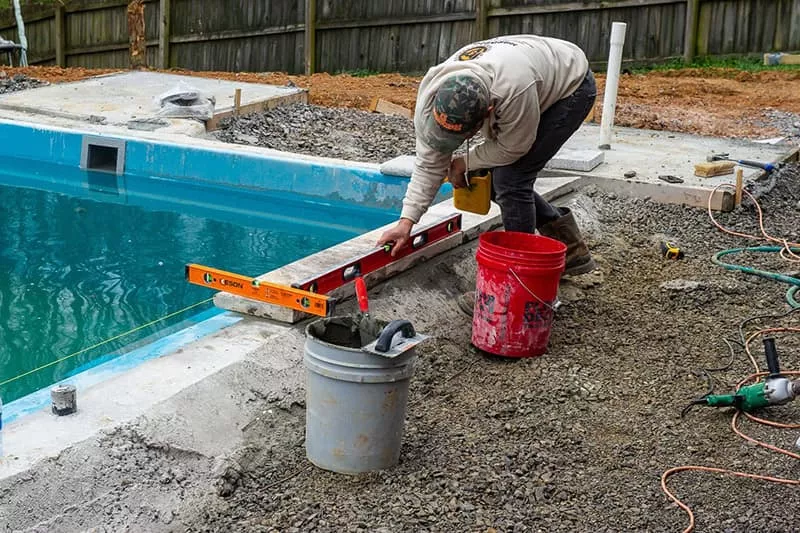
Excavation and base preparation create the exact opening and the support layer for the fibreglass shell. Canadian installation guides describe this stage as laying out the pool footprint, excavating to the required depth and tolerance, and then setting and levelling the floor or base material before the shell arrives. Toronto-area process pages describe the same sequence as site preparation, excavation, levelling, and grading.
What Happens During Shell Delivery and Placement?
Shell delivery and placement put the pre-manufactured fibreglass shell into the excavation. GTA installation pages state that the shell is transported to site and positioned with precision in the prepared hole. Toronto access-planning pages state that dense urban lots may require side-yard access, rear-lane access, or a crane lift depending on the property layout.
What Happens During Plumbing and Electrical Setup?
Plumbing and electrical setup connect the pool equipment and operating systems. Canadian installation guides state that this stage includes the plumbing lines, electrical wiring, and the connections for the core equipment before the build moves into backfill and reinforcement. Toronto builder pages list pumps, filters, heaters, and electrical systems as part of the mechanical installation scope.
What Happens During Backfill and Equipment Installation?
Backfill and equipment installation stabilize the shell and complete the operating system. Toronto and GTA process pages state that backfill material is placed around the shell while the pool is filled so the structure settles into position correctly. GTA builder pages list plumbing and equipment and Toronto process pages list pool shell backfilling and filter installation as core steps in this stage.
What Happens During Coping, Decking, and Startup?
Coping, decking, and startup complete the usable pool area and prepare the pool system for operation. Toronto and GTA builder pages state that the final stage includes coping installation, deck pouring or patio work, landscaping, filling the pool, balancing the water, testing the equipment, cleanup, and owner handover or operation training.
What Permits Do You Need for Fibreglass Pool Installation in Toronto?
Fibreglass pool installation in Toronto follows the same permit path as other outdoor swimming pools. The City of Toronto requires an approved Zoning Certificate before the Pool Fence Enclosure Permit application. The City also states that a pool cannot be constructed and filled with water until the required enclosure is installed in compliance with the fence bylaw.
When Is a Pool Permit Required?
A pool permit is required when the outdoor structure qualifies as a swimming pool under Toronto’s rules. The City defines a swimming pool as anything on private property used for swimming, wading, or bathing that is 60 cm or deeper at any point. That rule applies to a fibreglass pool because it is a permanent outdoor swimming pool. A hot tub, spa, or whirlpool with a permanently attached lockable cover is exempt from the Pool Fence Enclosure Permit requirement.
What Pool Fence and Enclosure Rules Apply?
Toronto pool fence rules require a complete enclosure around the pool area with no opening except a compliant gate. The enclosure must sit at least 1.2 m from the edge of the pool and at least 1 m from easily climbable objects. Minimum enclosure height is 1.2 m on a single residential property and 1.8 m on multiple residential or non-residential properties. The City also states that the enclosure must be four-sided, non-climbable, and free of direct access from the house into the pool area. The pool cannot be filled until the City inspects and confirms a compliant permanent enclosure.
What Zoning and Site Plan Rules Apply?
Zoning and site plan review apply before the permit is issued. The City of Toronto requires a detailed scaled site plan for the Zoning Certificate and the Pool Fence Enclosure Permit. That plan must show lot lines, lot dimensions, existing and proposed buildings, access doors, pool dimensions, pool equipment location, setbacks to lot lines, and any proposed cabanas, decks, or sheds. The City states that missing information delays processing and review.
What Drainage and Grading Rules Apply?
Drainage and grading rules still matter for a fibreglass pool because excavation, backfill, decking, and hardscape work change how water moves across the site. The City of Toronto states that the existing drainage pattern should be maintained. The City also states that side yards should drain at surface slopes of at least 1.5% to positive drainage outlets, and drainage swales should also maintain minimum 1.5% longitudinal slopes. Those rules affect the grading plan around the pool and the surrounding backyard work.
How Do Permits Affect the Build Timeline?
Permits affect the fibreglass pool timeline because shell installation cannot move forward properly until the zoning and enclosure approvals are in place. The City of Toronto states that the expected review time for the Zoning Certificate is about 10 business days after acceptance and fee payment. The City also states that a complete Pool Fence Enclosure Permit application takes about five business days to review. Missing information extends both review periods. The final schedule also depends on the required enclosure inspection before the pool is filled with water.
How Long Does Fibreglass Pool Installation Take in Toronto?
Fibreglass pool installation in Toronto usually takes about 6 to 8 weeks from early planning to final handover on a straightforward project. Local Toronto sources state that most fibreglass pools are installed in about 2 to 3 weeks once excavation begins, while the broader project runs longer when design, permits, inspections, decking, and landscaping are included.
How Long Does Design and Planning Take?
Design and planning usually take about 2 to 6 weeks. A Toronto & GTA pool installer states that the design process typically takes 2 to 6 weeks, with timing shaped by project complexity and the number of revisions.
How Long Does Permit Approval Take?
Permit approval in Toronto usually takes at least 15 business days for a complete submission under the posted review standards. The City of Toronto states that the Zoning Certificate review is expected to take 10 business days after the application is accepted and fees are paid, and the Pool Fence Enclosure Permit review takes about 5 business days if the application is complete. Missing information extends both stages.
How Long Does Excavation and Shell Installation Take?
Excavation and shell installation usually take only a few days on a prepared site. A Toronto source states that most fibreglass inground swimming pools are installed in 2 to 3 weeks once excavation begins, while a GTA source states that the pre-moulded shell is installed within 1 to 2 days once the site is prepared. A broader fibreglass pool timeline puts excavation and base preparation at 1 to 2 days and pool delivery and setting at 1 day.
How Long Do Backfill, Decking, and Finishing Take?
Backfill, decking, and finishing usually take about 1 to 3 weeks, depending on the amount of surrounding work. One GTA source states that the entire process, including decking and landscaping, usually takes 2 to 3 weeks. A broader installation timeline places decking, fencing, and final touches at 1 to 3 weeks, and another source places coping and deck installation at about 2 to 5 days for that specific stage.
What Delays a Fibreglass Pool Project?
Fibreglass pool projects are delayed by incomplete permit submissions, weather, tight site access, larger landscaping scope, and extra design changes. The City of Toronto states that missing information delays the permit review. Local Toronto sources add that permits, inspections, and landscaping extend the full project timeline, while a GTA builder identifies pool size, backyard access for machinery, and the scope of landscaping as the three biggest timeline factors.
Can a Fibreglass Pool Fit a Small or Sloped Yard?
Yes. A fibreglass pool fits many small backyards and many sloped yards in Toronto, but the site conditions control the design, access plan, drainage work, and total construction scope. Recent Toronto pool-builder pages treat space limits, grade change, shell delivery, and hardscape stability as the main site-planning variables on difficult lots.
Can a Fibreglass Pool Fit a Small Backyard?
Yes. A fibreglass pool is often a strong fit for a small backyard because the market includes compact plunge pools, cocktail pools, and narrow shell formats designed for tighter outdoor spaces. Toronto pool pages present fibreglass pools as a practical solution for compact or irregular properties, and recent Toronto content on small-yard pools highlights plunge pools as one of the best formats for limited space.
Can a Fibreglass Pool Work on a Sloped Yard?
Yes. A fibreglass pool works on a sloped yard, but the slope changes the project in specific ways. Toronto builder guidance states that slope affects the final pool elevation, yard drainage, the need for a retaining structure, the shell access route, and the way the finished hardscape must be built to stay safe and stable. The same source states that some sloped sites need only grading adjustments, while others need partial retaining support or a terraced layout.
How Do Retaining Walls and Grading Affect the Project?
Retaining walls and grading affect the project because they control site stability and water movement around the fibreglass pool, the patio, and the surrounding yard. Toronto builder guidance identifies drainage as the make-or-break issue on sloped lots and states that grading and drainage must be planned as part of the pool build, not after it. Broader fibreglass-pool installation guidance adds that when a retaining wall is required, drainage behind the wall is necessary to manage water pressure and protect the structure.
How Does Tight Access Affect Shell Delivery?
Tight access affects shell delivery in a direct way because a fibreglass pool arrives as a single factory-moulded shell. Toronto builder guidance states that if the backyard cannot be reached through a side yard or laneway, the project often needs a crane lift. The same source states that access affects total cost, installation timing, and safety coordination, and that larger shells need larger crane capacity.
What Fibreglass Pool Options Fit Difficult Sites?
Difficult sites usually fit smaller or more access-friendly options first. In Toronto, that often means a plunge pool, cocktail pool, or another compact shell for a tight yard, plus a layout built around terracing, grading, or a retaining strategy on a sloped lot. Toronto builder guidance also notes that a difficult grade can become a design advantage through tiered entertaining zones, raised seating walls, and stronger separation between lounge and swim areas.
Is a Fibreglass Pool Better Than Vinyl or Concrete?
A fibreglass pool is better for lower maintenance and faster installation. A vinyl pool is better for lower upfront cost and more flexible shape options than a factory-moulded shell. A concrete pool is better for full customization, deeper design freedom, and complex layouts. Toronto and Canadian comparison pages repeat the same split across cost, speed, maintenance, and design flexibility.
Is Fibreglass Better Than Vinyl for Lower Maintenance?
Yes. Fibreglass is better than vinyl for lower maintenance. Toronto and Canadian comparison pages state that fibreglass pools have a smooth gel-coat surface with lower ongoing care, while vinyl liner pools carry liner-replacement costs over time. Recent comparison guides also note that vinyl liners commonly need replacement around every 8 to 10 years.
Is Fibreglass Better Than Concrete for Faster Installation?
Yes. Fibreglass is better than concrete for faster installation. A Toronto comparison page lists fibreglass pools at about 1 to 3 weeks and concrete pools at 8 to 12+ weeks. A broader 2026 comparison guide places fibreglass at 2 to 3 weeks and concrete at 3 to 5 months or longer.
Is Vinyl Better Than Fibreglass for Custom Shapes?
Yes. Vinyl is better than fibreglass for custom shapes. Toronto and Canadian sources state that fibreglass pools are limited to pre-moulded shell sizes and shapes, while vinyl liner pools allow more layout flexibility. That makes vinyl the better fit when the property needs a non-standard footprint without moving into concrete pricing.
Is Concrete Better Than Fibreglass for Full Customization?
Yes. Concrete is better than fibreglass for full customization. Toronto and Canadian sources state that concrete pools support fully custom shapes, sizes, depths, and integrated design details, while fibreglass pools stay within fixed factory moulds. That makes concrete the strongest option for luxury layouts, unusual sites, and highly specific backyard designs.
Which Pool Type Fits the Property Best?
The best pool type depends on the property goal. A fibreglass pool fits a property that prioritizes faster installation, smoother surfaces, and lower long-term upkeep. A vinyl pool fits a property that prioritizes lower initial cost and more design flexibility than a pre-made shell. A concrete pool fits a property that needs full customization and accepts the highest cost and longest build time. Toronto cost comparisons place vinyl pools around C$55,000 to C$90,000, fibreglass pools around C$80,000 to C$120,000, and concrete pools starting around C$150,000 and often exceeding C$200,000.
What Maintenance Does a Fibreglass Pool Need?
A fibreglass pool needs routine skimming, vacuuming, water testing, equipment checks, and seasonal opening and closing. Toronto-area and Canadian sources describe fibreglass pools as lower-maintenance than concrete pools because the smooth, non-porous gelcoat surface resists algae attachment and does not need resurfacing like concrete.
How Do You Clean a Fibreglass Pool?
You clean a fibreglass pool with regular debris removal, light brushing, and pool-safe cleaning tools. The smooth gelcoat surface makes cleaning easier because debris and algae do not embed as easily as they do on rougher pool finishes. A maintenance guide for fibreglass pools recommends soft cleaning tools such as a microfibre cloth, sponge, or nylon-bristle pool brush rather than aggressive cleaners or abrasive tools.
How Do You Protect the Gelcoat Surface?
You protect the gelcoat surface by using non-abrasive cleaning tools, pool-safe cleaners, and stable water chemistry. A recent fibreglass pool maintenance guide states that harsh household cleaners and aggressive cleaning agents damage gelcoat over time. Manufacturer guidance also states that proper maintenance and proper water chemistry preserve the finish and help maintain surface condition and colour.
What Water Balance Matters Most?
Sanitizer and pH matter most for daily water balance. Health Canada recommends 1 to 3 ppm free chlorine or bromine for residential pools. A Canadian public-health water-quality guide lists an ideal pool pH of 7.2 to 7.6, total alkalinity of 80 to 120 ppm, and stabilizer of 30 to 50 ppm for outdoor pools. Manufacturer guidance for fibreglass pools also links lower chemical demand to the smooth, non-porous surface.
What Repairs Are Common With Fibreglass Pools?
Common fibreglass pool repairs include minor cracks, gelcoat damage, staining or discolouration, and general equipment repairs. Toronto pool guidance notes that minor cracks are repairable with specialized repair systems, while larger structural issues need professional repair. Broader industry repair sources also identify cracks, bulges, blisters, holes, and delamination as recurring repair categories in damaged fibreglass pools.
What Seasonal Opening and Closing Work Is Required?
Seasonal opening and closing work includes cleaning debris, adjusting the water level, removing and reinstalling fittings as needed, clearing water from plumbing lines, draining or protecting equipment, balancing winter water chemistry, and installing the winter cover. Toronto-area service pages list those same tasks in their closing checklists. A Toronto service page specifically lists debris removal, water-level reduction, line blow-out, equipment drainage, chemistry adjustment, and winter-cover installation as core closing steps.
How Do You Choose a Toronto Fibreglass Pool Installer?
A Toronto fibreglass pool installer should install fibreglass pools regularly, explain shell delivery and placement clearly, handle permits and difficult site conditions, show real projects and verified reviews, offer written warranty coverage, and have strong Toronto and GTA experience. Local installer pages and contractor-selection guidance repeat those same trust signals across consultations, quoting, and contractor screening.
Does the Installer Install Fibreglass Pools Regularly?
A strong installer installs fibreglass pools as a core service, not as an occasional add-on. Local examples show why repetition matters: Leisure Pools of Toronto states that it specializes in fibreglass swimming pool installations, Nebos Pools states 15+ years of experience and 80+ pools built, and Land-Con / Toronto Pool states 25+ years of pool-building experience in Toronto. Regular installation experience improves planning, sequencing, and problem solving on site.
Does the Installer Explain Shell Delivery and Placement Clearly?
A strong installer explains shell delivery, access limits, excavation, and final placement in clear stages before work starts. Toronto Pool’s fibreglass buyer guide lists the milestone sequence as design approval, permits, excavation, shell delivery, plumbing, decking, and final inspection, while Okeanos Pools GTA states that it handles the process from excavation to final placement and notes that many fibreglass pools are installed within two days, subject to weather and site conditions. Clear explanations reduce surprises on tight Toronto lots.
Does the Installer Handle Permits and Site Conditions?
A strong installer handles permits and reviews site conditions early. HomeStars states that a professional pool contractor should be familiar with local regulations and usually manages the permit process, while Nebos Pools states that it handles City of Toronto permits and TRCA approvals. The same Toronto fibreglass buyer guide also identifies permits as a core project milestone, which confirms that permit handling is part of the real build process, not a side issue.
Does the Installer Show Past Fibreglass Pool Projects and Reviews?
A strong installer shows real fibreglass pool projects and verified reviews. HomeStars tells homeowners to compare contractor profiles, work history, and customer feedback before hiring, and Action Home Services highlights review volume as a trust signal on its pool-installation page. Project galleries, completed-job photos, and third-party review profiles give stronger proof than sales copy alone.
Does the Installer Offer Warranty and Workmanship Coverage?
A strong installer offers written warranty and workmanship coverage on the shell, installed equipment, and labour. HomeStars states that most pool companies provide warranties on both workmanship and materials and advises getting the terms in writing. Local installer pages publish those promises directly: Nebos Pools advertises a 25-year structural warranty, Action Home Services states a 15-year manufacturer’s warranty for its new fibreglass pools, and Leisure Pools of Toronto states a lifetime structural warranty on Leisure Pool fibreglass swimming pools.
Does the Installer Have Toronto and GTA Experience?
Toronto and GTA experience matters because local projects are shaped by urban lot access, municipal approvals, and site-specific constraints. Leisure Pools of Toronto states that it serves Toronto, Toronto West, Toronto East, Toronto North, Markham, and the Durham region. Nebos Pools positions itself as a Toronto expert with 15+ years of experience, and Land-Con / Toronto Pool states 25+ years in the Toronto market. Local experience improves judgement on access, timing, permits, and construction logistics.
Frequently Asked Questions About Fibreglass Pool Installation in Toronto
How Much Does a Fibreglass Pool Cost in Toronto?
A fibreglass pool in Toronto usually falls in the C$50,000 to C$120,000 range for installation, with higher totals tied to larger shells, difficult access, upgraded equipment, and full decking and landscaping work. Recent Toronto and Ontario pricing pages place many fibreglass pool projects between C$80,000 and C$120,000, while some Ontario guides show simpler projects starting closer to C$50,000.
How Long Does Fibreglass Pool Installation Take?
Most fibreglass pool projects in Toronto take about 6 to 8 weeks from planning to final handover on a straightforward job. One Toronto buyer guide states that most fibreglass inground swimming pools are installed in 2 to 3 weeks once excavation begins, while permits, inspections, and finishing work extend the full timeline.
Do You Need a Permit for a Fibreglass Pool in Toronto?
Yes. Toronto requires a Zoning Applicable Law Certificate before the Pool Fence Enclosure Permit application. The City of Toronto also states that a pool cannot be constructed and filled with water without a compliant fence installed under Chapter 447 – Fences.
Is a Fibreglass Pool Good for Toronto Weather?
Yes. A fibreglass pool is a strong fit for Toronto weather because the shell is designed to handle freeze-thaw movement better than more rigid pool structures when the installation and winterization are done properly. Toronto pool guidance states that modern fibreglass pools are well suited to Canadian winters and that proper closing, drainage, and grading protect long-term performance.
Can a Fibreglass Pool Fit a Small Backyard?
Yes. A fibreglass pool fits many small Toronto backyards because the market includes plunge pools, cocktail pools, and compact shell formats built for tight outdoor spaces. Toronto pool pages present fibreglass pools as a practical option for limited or irregular yards, especially where the owner wants lower maintenance and faster installation.
Can a Fibreglass Pool Work on a Sloped Yard?
Yes. A fibreglass pool works on many sloped yards in Toronto, but the project needs stronger planning for grading, drainage, retaining walls, and the final shell position. Recent Toronto guidance states that sloped-lot projects need site reshaping and drainage design as part of the pool build rather than as a separate afterthought.
Is a Fibreglass Pool Better Than Vinyl?
A fibreglass pool is better than vinyl for lower maintenance and faster long-term ownership, while a vinyl pool is stronger for more flexible shapes at a lower entry price. Toronto and Canadian comparison pages state that fibreglass pools use a smooth non-porous surface with lower upkeep, while vinyl liner pools offer more layout flexibility but carry liner replacement costs over time.
What Is Included in Fibreglass Pool Installation?
Fibreglass pool installation includes site review, shell selection, layout planning, excavation, base preparation, shell delivery, placement, plumbing, electrical setup, backfill, equipment installation, and final coping, decking, and startup. Toronto and GTA installer pages describe that sequence as the standard process for a complete fibreglass pool project.
What Maintenance Does a Fibreglass Pool Need?
A fibreglass pool needs regular skimming, vacuuming, water balancing, equipment checks, and seasonal opening and closing. Toronto maintenance pages and Canadian guidance tie the lower upkeep to the smooth gelcoat surface, while Health Canada recommends keeping residential pool sanitizer at 1 to 3 ppm and maintaining proper pool chemistry.
How Do You Choose the Right Fibreglass Pool Builder?
The right Toronto fibreglass pool builder installs fibreglass pools regularly, explains shell delivery and site access clearly, handles permits and difficult site conditions, shows real projects and verified reviews, and offers written warranty and workmanship coverage. Toronto installer pages highlight specialization, while Leisure Pools of Toronto states that it specializes in fibreglass swimming pool installations and offers a lifetime structural warranty on its pool structure.
How Do You Get a Quote for Fibreglass Pool Installation in Toronto?
A quote for fibreglass pool installation in Toronto starts with a site visit, moves into shell selection and a written cost estimate, and then turns into a project schedule covering the Zoning Certificate, the Pool Fence Enclosure Permit, and the build sequence. Toronto fibreglass pool consultation pages present that order as the standard path from first inquiry to final planning.
How Do You Book a Site Visit?
You book a site visit by requesting an on-site consultation with a Toronto fibreglass pool installer. Toronto consultation pages state that this visit reviews the yard, access, budget, design goals, and the conditions that affect shell delivery and project cost. GTA installer pages also state that planning, access, and local bylaws shape feasibility before excavation begins.
How Do You Choose the Right Shell and Cost Estimate?
The right shell is chosen after the installer reviews the property, the intended pool use, the available space, and the site-access limits. Toronto buyer guides state that the consultation covers the best fibreglass pool model for the property, while Toronto cost-estimate guidance states that a proper estimate is a line-by-line projection covering design, excavation, site work, the shell or structure, equipment, decking, landscaping, permits, and inspections. That structure turns a general quote into a usable project budget.
How Do You Plan the Permit and Build Timeline?
The permit and build timeline is planned after the scope and the shell selection are fixed. The City of Toronto requires a Zoning Certificate before the Pool Fence Enclosure Permit application. The City states that zoning drawings issued through that review are then used for the pool fence permit review, and missing information delays both stages. The City’s posted review targets place the Zoning Certificate at about 10 business days after acceptance and fee payment and the Pool Fence Enclosure Permit at about 5 business days for a complete application. Toronto fibreglass pool consultation pages then place the physical installation phase at about 2 to 3 weeks once excavation begins, with the full project often extending to 6 to 8 weeks once permits, inspections, and landscaping are included.