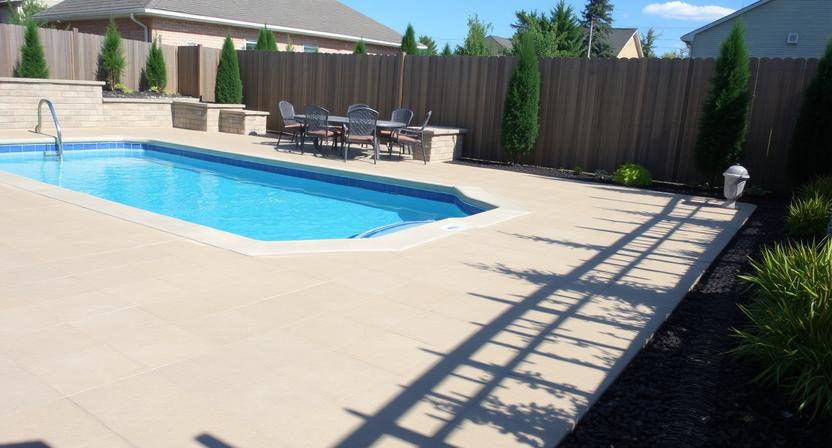
Toronto pool drainage requirements control how a pool project manages surface water, pool discharge water, site grading, yard slopes, drainage direction, and protection of adjacent properties, buildings, sidewalks, and City sewers. The core rule is simple: pool water and storm water must follow an approved discharge path, stay away from foundations, avoid new ponding, and not flow onto neighbouring land.
Toronto grading guidance requires the existing drainage pattern to be maintained where possible. Side yards should drain to positive outlets at surface slopes of at least 1.5%, drainage swales should have longitudinal slopes of at least 1.5%, and front yard grades should slope down to the curb at 2% to 6%. The site must be graded so water does not accumulate near the building or adversely affect adjacent properties.
Toronto pool discharge rules separate chlorine pools, salt water pools, pool-cover water, and filter backwash. Chlorine pool water may enter the storm sewer only after dechlorination, and it should not be discharged on a rainy day. Salt water pool water cannot enter the storm sewer because of high chloride levels. Pool water discharged onto grass or another permeable surface must be fully absorbed on the property and must not flow onto neighbouring properties.
Toronto sewer rules also restrict private water discharge. The City states that private water cannot simply be discharged to the sewer system; a Sewer Discharge Permit or Agreement is required before private water enters the storm, sanitary, or combined sewer system. This matters when a pool project involves planned discharge, construction dewatering, or a drainage system tied to City sewers.
Toronto pool permit review connects drainage with the wider pool approval process. The City requires a Zoning Certificate before a Pool Fence Enclosure Permit, and a pool cannot be constructed and filled without a fence installed under Toronto Municipal Code Chapter 447 – Fences. Drainage details, grading, fence location, equipment placement, and discharge planning need early review because poor slope design, ponding, sewer discharge errors, and water flow onto adjacent land delay approval and create enforcement risk.
What Are Toronto Pool Drainage Requirements?
Toronto pool drainage requirements are rules for moving pool water, rainwater, surface runoff, and yard drainage safely across a pool property. These rules control grading, discharge direction, storm sewer use, sanitary sewer use, ponding, and water flow near buildings, neighbouring lots, walkways, and City infrastructure. The supplied outline places this section before sewer rules, grading rules, site plan rules, permit review, and enforcement, which keeps the page focused on drainage before construction starts.
Toronto states that chlorinated pool water must be dechlorinated before entering the storm sewer, while salt water pool water must be released into the sanitary system through a connection on the property. Pool water may discharge onto grass only when the ground fully absorbs it and it does not flow onto a neighbour’s property.
What Does Toronto Mean by Pool Drainage?
Toronto pool drainage means the planned movement of water from a pool site, including pool draining, filter backwash, cover water, rainwater, surface runoff, and collected yard water. The drainage path must keep water away from foundations, neighbouring properties, public walkways, and restricted sewer connections.
Toronto’s pool draining guidance separates discharge by water type. Chlorine pool water may go to the storm sewer after dechlorination, while salt water pool water must not enter the storm sewer and needs a proper sanitary or on-property disposal path.
Why Do Toronto Pool Drainage Requirements Matter Before Construction?
Toronto pool drainage requirements matter before construction because pool placement, grading, decking, hard landscaping, and equipment locations change how water moves across the lot. A poor layout creates ponding, neighbour runoff, foundation risk, and permit delays.
Toronto lot grading guidance says the existing drainage pattern should be maintained where possible. Side yards should drain to positive outlets at surface slopes of at least 1.5%, drainage swales should slope at least 1.5%, and front yard grades should slope down to the curb at 2% to 6%.
What Is the Short Answer on Toronto Pool Drainage Rules?
The short answer on Toronto pool drainage rules is that pool water and storm water must stay controlled on the property, follow the approved grading plan, avoid new ponding, avoid neighbour runoff, and use the correct discharge route for the water type.
Chlorinated pool water needs dechlorination before storm sewer discharge. Salt water pool water needs discharge to the sanitary system through a property connection or full absorption on the property. Pool fence enclosure applications also need a Zoning Certificate before the Pool Fence Enclosure Permit, which makes drainage and site planning part of the early approval process.
What Problems Do These Rules Prevent?
Toronto pool drainage rules prevent basement water risk, foundation saturation, standing water, erosion, slippery walkways, sewer overload, salt contamination in storm sewers, and water disputes with neighbours.
Toronto states that chlorinated pool water should not be discharged to the storm sewer on a rainy day because it can overwhelm the storm sewer system. Toronto also states that water discharged onto a permeable surface must be fully absorbed on the owner’s property without flowing onto neighbouring properties.
What Pool Water Discharge Rules Apply in Toronto?
Toronto pool water discharge rules control where swimming pool drainage, hot tub water, spa water, filter backwash, and pool-cover water go after leaving the pool site. The rules protect City sewers, Lake Ontario, ravines, neighbouring properties, buildings, walkways, and road allowances. The supplied outline places this section before sewer-permission, grading, and site plan rules.
Where Must Swimming Pool Drainage Not Be Discharged?
Swimming pool drainage must not be discharged onto City-owned land, walkways, stairs, entrance ways, or any road allowance. Toronto’s 2025 property standards bylaw also restricts swimming pool drainage from entering the sewage system directly or indirectly, and from discharging in a way that penetrates or damages a building or structure.
Toronto pool discharge guidance adds water-type rules. Chlorine pool water needs dechlorination before storm sewer discharge. Salt water pool water cannot enter the storm sewer because of high chloride levels. Water discharged onto a permeable surface must be fully absorbed on the property without flowing onto neighbouring properties.
Why Must Pool Drainage Stay Out of the Sewage System?
Pool drainage must stay out of the sewage system unless Toronto’s rules allow a specific discharge route. The City states that private water cannot simply enter the sewer system. A Sewer Discharge Permit or Agreement is required before private water enters the storm sewer, sanitary sewer, or combined sewer system.
Toronto sewer controls protect treatment capacity, sewer function, and receiving waters. The City may set limits on discharge volume and flow rate where sewer conditions require restrictions. Applications for private water discharge need submission at least 8 to 12 weeks before the proposed discharge start date.
Why Must Pool Drainage Not Damage a Building or Structure?
Pool drainage must not damage a building or structure because water movement near foundations creates moisture entry, soil saturation, settlement risk, erosion, and basement water problems. Toronto’s property standards bylaw restricts swimming pool drainage that penetrates or damages a building or structure.
Pool drainage design needs a clear discharge path away from the house, pool equipment, retaining walls, sheds, garages, and neighbouring structures. Poor discharge placement creates standing water, ice risk in colder months, and repeated wetting around building materials.
Why Must Pool Drainage Stay Off City Land and Walkways?
Pool drainage must stay off City land and walkways because uncontrolled water creates public-realm hazards, sidewalk ponding, ice risk, erosion, and blocked access. Toronto’s drainage rule lists City-owned land, walkways, stairs, entrance ways, and road allowances as prohibited discharge areas for swimming pool drainage.
Toronto pool owners need an on-property discharge plan before draining. The safe path depends on the water type: dechlorinated chlorine water, salt water, pool-cover water, or filter backwash. The selected route must match City discharge rules and keep water away from neighbouring land, public paths, and restricted sewer connections.
Can You Drain a Pool Into the Sewer in Toronto?
Pool drainage into the sewer in Toronto depends on the pool water type, sewer type, discharge method, and permit status. Chlorine pool water has a limited storm sewer path after proper dechlorination. Salt water pool water must not enter the storm sewer and needs sanitary discharge through a connection on the property or full on-site absorption. This section follows the supplied outline’s focus on sewer discharge, direct discharge, indirect discharge, private water permits, and Toronto’s separate drainage rules.
Is Swimming Pool Drainage Allowed Directly Into the Sewage System?
Swimming pool drainage is not generally allowed directly into Toronto’s sewage system without an approved route. Toronto states that private water discharge into the City’s storm sewer, sanitary sewer, or combined sewer requires a Sewer Discharge Permit or Agreement before discharge occurs.
Toronto pool draining guidance gives separate routes by pool type. Chlorine pool water may enter the storm sewer only after dechlorination, and not on a rainy day. Salt water pool water must not enter the storm sewer because of high chloride levels; it may go to the sanitary system connection on the owner’s property or to an approved on-property discharge path.
Is Swimming Pool Drainage Allowed Indirectly Into the Sewage System?
Swimming pool drainage is not allowed indirectly into the sewage system unless Toronto’s conditions or approvals permit that discharge. Toronto’s sewer chapter restricts private residential pool and hot tub wastewater from flowing into a storm drainage system except under listed conditions. It also restricts discharge that flows onto adjoining property or over a ravine or valley slope.
Indirect discharge includes water that reaches a sewer through a catch basin, street, driveway, trench, swale, floor drain, or connected yard drain. Toronto permits storm sewer discharge for private residential non-salt pool water only when conditions are met, including no algaecides, chlorine at or below 0.01 mg/L, copper at or below 0.04 mg/L, and compliance with the City’s swimming pool best practices.
When Does a Private Water Discharge Permit or Agreement Matter?
A private water discharge permit or agreement matters when private water enters Toronto’s sewer system. Toronto defines this as water not purchased from the City, including groundwater, surface water, construction dewatering, rainwater mixed with construction material, and stormwater mixed with construction material.
Sewer Discharge Permits usually apply to short-duration discharge activities of about one year or less. Agreements usually apply to long-term discharge, including permanent private drainage systems. Completed applications must be submitted 8 to 12 weeks before the proposed discharge start date, and incomplete applications take longer to process.
Why Does Toronto Separate General Pool Draining From Sewer Discharge Permission?
Toronto separates general pool draining from sewer discharge permission because pool water, construction water, stormwater, and private drainage water create different risks. Pool water may contain chlorine, bromine, salt, copper-based algaecides, nonylphenols, and other chemicals that harm fish, creeks, rivers, ravines, and Lake Ontario.
General pool draining rules explain common residential routes for chlorine pool water, salt water pool water, pool-cover water, and filter backwash. Private water discharge rules control wider sewer use and require formal approval before private water enters a City sewer. This separation helps protect sewer capacity, treatment systems, receiving waters, adjacent properties, and erosion-prone land.
What Grading Rules Affect a Pool Project?
Grading rules affect a Toronto pool project because the pool, deck, equipment pad, patio, fence line, and hard landscaping change how water moves across the lot. A grading plan needs to show existing and proposed grades, surface drainage direction, swales, slopes, and discharge points before construction changes the yard. The supplied outline places grading before slope rules, site plan rules, and permit review, which keeps drainage design tied to early approval.
Toronto lot grading guidance states that the existing drainage pattern should be maintained where possible. Side yards should drain to existing positive outlets at slopes of at least 1.5%, and drainage swales should have longitudinal slopes of at least 1.5%.
Why Does a Pool Site Need a Grading Plan?
A pool site needs a grading plan to show how water drains before and after pool installation. The plan helps reviewers check surface runoff, yard slopes, swales, pool deck drainage, equipment locations, and drainage flow near the house and lot lines.
Toronto pool drainage review needs clear grading information because pool excavation and hard surfaces change the yard’s drainage pattern. A missing grading plan creates risk of ponding, neighbour runoff, foundation wetting, and permit delay.
Why Must the Grading Plan Prevent New Ponding?
The grading plan must prevent new ponding because standing water creates foundation risk, yard saturation, ice hazards, mosquito conditions, and drainage disputes. Pool decks, patios, retaining walls, and equipment pads often block old flow paths.
Toronto grading guidance uses minimum slope rules to move water to positive outlets. Side yards and swales need at least 1.5% slope, while front yards should slope down to the curb at 2% to 6%. These slope values help prevent low spots and trapped water near the pool site.
Why Must Existing Drainage Patterns Be Maintained?
Existing drainage patterns must be maintained because a pool project must not redirect water onto neighbouring properties, buildings, walkways, or City land. A pool layout that changes runoff direction creates approval and enforcement risk.
Toronto’s grading guidance states that the intent of the existing drainage pattern should be maintained. Toronto’s pool draining guidance also states that water discharged onto grass must be fully absorbed on the owner’s property and must not flow onto neighbouring properties.
Why Does Final Grading Need Review and Certification?
Final grading needs review and certification to confirm the built yard matches the approved drainage design. The finished pool area must drain away from structures, avoid new ponding, and keep water on the approved discharge path.
Toronto pool approval also connects grading with the wider pool permit process. The City requires a Zoning Certificate before a Pool Fence Enclosure Permit, and the pool fence application uses approved site drawings showing fence location, height, and materials. Drainage errors in the final yard layout create rework, delayed approval, and neighbour runoff risk.
What Yard Slope Rules Matter Most?
Toronto yard slope rules matter most where a pool project changes surface drainage, side yard flow, swale direction, front yard runoff, and ponding risk. The key slope checks are 1.5% side yard drainage, 1.5% drainage swale slope, and 2% to 6% front yard slope to the curb. These rules support the page context on Toronto pool drainage requirements, grading, water discharge, and site plan review.
What Side Yard Slope Does Toronto Require?
Toronto side yard slope guidance lists a minimum 1.5% surface slope to existing positive drainage outlets. This matters for pool projects because side yards often carry runoff between houses, fences, pool equipment, decks, and narrow access paths.
Side yard drainage needs a clear route away from the pool edge, house foundation, garage wall, and neighbouring lot. Tight side yards need careful grading because small elevation errors create ponding or direct runoff toward adjacent property.
What Drainage Swale Slope Does Toronto Require?
Toronto drainage swale slope guidance lists a minimum 1.5% longitudinal slope for drainage swales. A swale is a shallow graded channel that moves surface water toward a positive outlet without sending water into buildings or neighbouring yards.
Pool drainage swales matter near decks, patios, fences, equipment pads, and retaining edges. Poor swale slope traps water near the pool site and increases saturated soil, erosion, and winter ice risk.
What Front Yard Slope to the Curb Does Toronto Require?
Toronto front yard slope guidance lists an average slope of 2% to 6% down to the top of the roadway curb. This helps direct surface runoff toward the street where the approved drainage pattern allows that route.
Front yard drainage matters when pool work changes rear-yard flow, hard surfaces, walkways, or side-yard outlets. The site plan needs to show how water reaches a safe outlet without new ponding on the subject lot or adjacent properties. Toronto’s building permit guidance requires a lot grading plan designed so construction creates no new ponding on the subject property or adjacent properties.
Why Do These Slope Rules Matter for Pool Drainage?
These slope rules matter for pool drainage because a pool project adds hard surfaces, excavated areas, equipment pads, coping, decking, fences, and landscape changes that alter surface water flow. Correct slopes help move runoff away from foundations, pool structures, patios, walkways, and neighbouring lots.
Toronto pool drainage design needs slope values early in the site plan stage. The main checks are 1.5% side yard drainage, 1.5% swale slope, 2% to 6% front yard curb slope, no new ponding, and no adverse flow onto adjacent properties. These checks reduce permit delays, regrading work, bylaw complaints, and drainage corrections after construction.
What Site Plan Rules Apply to Pool Drainage?
Toronto pool drainage site plan rules require a clear drawing that shows how the pool, equipment, fence, yard grades, hard surfaces, and soft landscaping fit on the lot. The site plan must support drainage review by showing where water moves, where it collects, and how the pool project avoids new ponding or runoff onto adjacent properties. The supplied outline places this section before building drainage, pool placement, discharge, and permit-delay topics.
What Drainage Information Must the Site Plan Show?
The site plan must show drainage information that explains surface flow, grading intent, hard-surface coverage, and water movement around the pool area. Toronto’s Zoning Applicable Law Certificate requirements for a Pool Fence Enclosure include a detailed, fully dimensioned site plan with a legal survey reference, pool and property dimensions, distances to the house and lot lines, pool equipment locations, fence details, and the percentage of hard versus soft landscaping.
Drainage review also connects with Toronto lot grading guidance. The City states that a grading plan must maintain the existing drainage pattern where possible, use positive drainage outlets, and avoid new ponding on the subject property or adjacent properties.
What Existing and Proposed Grades Must the Plan Show?
The plan must show existing and proposed grades where grading review is needed to confirm safe drainage. Grade information should identify surface elevations, swales, hard-surface areas, side yard flow, front yard flow, and drainage routes near the pool, house, deck, and lot lines.
Toronto lot grading guidance requires enough elevation detail to assess drainage performance. The City lists property-line elevations, curb-related slopes, porch, deck, curb, sidewalk, and building-related elevations among grading review items. The guidance also requires the site to be graded so water does not collect near the building or adversely affect adjacent properties.
What Pool and Equipment Locations Must the Plan Show?
The plan must show pool and equipment locations so reviewers confirm drainage, setbacks, access, and property-line distances. Toronto’s pool fence zoning review requires the site plan to show pool dimensions, property dimensions, distances to the house and lot lines, and the location of pool equipment, including the heater, pump, and filter, with distances to lot lines.
Equipment placement affects drainage because pads, pumps, filters, heaters, pipes, and access paths add hard surfaces and change water flow. The site plan also needs the proposed fence location, fence height, fence material, and hard versus soft landscaping percentage, since these items affect drainage paths and permit review.
Why Do Drainage Details Matter in the Permit Review?
Drainage details matter in the permit review because Toronto reviews pool projects before construction and filling. The City requires a Zoning Certificate before a Pool Fence Enclosure Permit, and a pool must not be constructed and filled with water without a fence installed under Toronto Municipal Code Chapter 447 – Fences.
Poor drainage details create review delays when the plan does not prove safe runoff control. Missing grades, unclear swales, wrong equipment locations, excessive hard surfaces, poor side yard slopes, and unshown discharge paths make it harder to confirm that the project avoids ponding, protects foundations, and keeps water away from adjacent properties. Toronto’s grading guidance requires field review and a final Lot Grading Certificate after final grades are complete.
How Must Drainage Be Directed Around Buildings?
Toronto pool drainage must be directed away from buildings, foundations, neighbouring lots, and areas where water creates ponding or damage. Pool projects change yard grades, hard surfaces, deck areas, and surface runoff, so the drainage design needs to protect the house before pool construction starts. This section follows the supplied outline’s focus on building protection, foundation drainage, adjacent properties, and small residential lots.
Why Must Water Drain Away From the Building?
Water must drain away from the building because pool runoff, roof water, and yard drainage near the house increase basement leak risk, foundation wetting, soil movement, and freeze-thaw damage. Toronto lists poor lot grading or drainage as one cause of basement flooding, along with foundation cracks, weeping tile failure, sump pump failure, overflowing eavestroughs, and leaking downspouts.
Toronto lot grading guidance requires drainage to use positive outlets and maintain the existing drainage pattern where possible. Side yards should drain at slopes of at least 1.5%, and swales should also slope at least 1.5%.
Why Must Water Not Accumulate Near the Foundation?
Water must not accumulate near the foundation because standing water raises moisture pressure around basement walls and weakens soil support near the house. A pool project adds hard surfaces such as coping, decking, patios, equipment pads, and walkways, which reduces natural absorption and changes runoff speed.
Toronto grading guidance requires a grading plan that prevents new ponding on the subject property and adjacent properties. This requirement matters most where pool work changes the rear yard, narrows the side yard drainage route, or blocks an existing swale.
Why Must Water Not Adversely Affect Adjacent Properties?
Water must not adversely affect adjacent properties because pool drainage and yard runoff cannot shift a drainage problem onto a neighbour’s lot. The drainage plan needs to keep water on the approved route and avoid new flow over lot lines.
Toronto states that water discharged onto a permeable surface must be fully absorbed on the owner’s property without flowing onto neighbouring properties. Toronto’s grading guidance also requires no new ponding on adjacent properties from construction.
What Drainage Details Matter Most on Small Residential Lots?
Small residential lots need precise drainage details because narrow side yards, close lot lines, garages, decks, fences, and equipment pads leave little room for error. The most important details include existing grades, proposed grades, side yard slopes, swale locations, hard-surface coverage, downspout routes, pool equipment pads, and pool water discharge paths.
Toronto lists key grading targets that matter on tight lots: 1.5% minimum side yard slope, 1.5% minimum swale slope, and 2% to 6% front yard slope down to the curb. Toronto’s drainage bylaw also bars swimming pool drainage from being discharged or channelled onto City-owned land, walkways, stairs, entrance ways, road allowances, the sewage system, or in a way that damages a building or structure.
How Do Drainage Rules Affect Pool Placement?
Drainage rules affect pool placement by controlling where the pool, deck, equipment pad, fence, and hard surfaces sit on the lot. The selected location needs positive drainage, no new ponding, safe discharge paths, and no adverse runoff onto adjacent properties. The supplied outline places this section after building-drainage rules and before pool-draining rules, which keeps the focus on site layout before water discharge.
How Do Slope and Grade Affect Pool Location?
Slope and grade affect pool location by deciding where surface water moves before and after construction. A pool placed across an existing drainage path creates ponding, saturated soil, and runoff conflicts near the pool wall, patio, fence, or house.
Toronto lot grading guidance says the existing drainage pattern should be maintained where possible. Side yards need surface slopes of at least 1.5% to existing positive drainage outlets, drainage swales need at least 1.5% longitudinal slope, and front yards need an average slope of 2% to 6% down to the roadway curb.
How Do Tight Side Yards Affect Drainage Planning?
Tight side yards affect drainage planning because narrow spaces leave less room for swales, grade changes, downspout routes, pool equipment, and access paths. Small elevation errors in a side yard create ponding beside the house or water flow toward a neighbouring lot.
Toronto side yard drainage needs a positive outlet and at least 1.5% surface slope. A pool layout near the side yard needs enough space for the fence, equipment access, and a clear drainage route that does not block or reverse the existing flow path.
How Do Poor Existing Drainage Patterns Affect Pool Design?
Poor existing drainage patterns affect pool design by requiring correction before the pool location is finalized. Low spots, flat yards, blocked swales, reverse slopes, and runoff toward the house increase the risk of ponding after excavation, decking, and landscaping.
Toronto building permit guidance requires a lot grading plan designed to create no new ponding on the subject property or adjacent properties as a result of construction. Pool placement needs to work with this grading rule before the site plan moves into permit review.
How Do Hard Landscaping and Decking Affect Water Flow?
Hard landscaping and decking affect water flow by reducing soil absorption and speeding runoff across the yard. Pool decks, patios, coping, concrete pads, retaining walls, walkways, and equipment slabs redirect water toward swales, drains, side yards, or low spots.
Toronto pool draining guidance states that pool water discharged onto a permeable surface must be fully absorbed on the owner’s property and must not flow onto neighbouring properties. This rule makes pool placement, deck slope, soft landscaping, and discharge paths important early design items, not final-stage details.
What Drainage Rules Apply When You Drain the Pool?
Toronto pool draining rules require a planned discharge path before pool water leaves the site. Chlorine pool water, salt water pool water, filter backwash, and pool-cover water follow different discharge rules. The discharge route must protect neighbouring properties, storm sewers, sanitary sewers, ravines, valley slopes, buildings, and City land. This section follows the supplied outline’s focus on planned discharge, adjacent land, erosion-prone areas, and temporary draining mistakes.
Why Does Pool Draining Need a Planned Discharge Path?
Pool draining needs a planned discharge path because Toronto separates pool water by chemical type and receiving area. Chlorine pool water may enter the storm sewer only after dechlorination, and draining should not happen on a rainy day. Salt water pool water must not enter the storm sewer because of high chloride levels.
Pool water discharged onto grass or another permeable surface must be fully absorbed on the property. Water that leaves the property, reaches a restricted sewer connection, or enters an erosion-prone area creates bylaw risk.
Why Must Pool Water Not Flow Onto an Adjacent Property?
Pool water must not flow onto an adjacent property because Toronto requires on-property absorption when pool water discharges to grass or another permeable surface. The City states that water from chlorine and salt water pools may discharge onto grass only when it is properly absorbed without flowing onto a neighbour’s property.
Adjacent-property runoff creates drainage disputes, soil saturation, fence-line erosion, basement moisture risk, and enforcement complaints. A safe draining plan checks the discharge hose location, flow rate, yard slope, soil absorption, and lot-line direction before pumping starts.
Why Must Pool Water Not Flow Toward a Ravine or Erosion-Prone Area?
Pool water must not flow toward a ravine or erosion-prone area because concentrated discharge weakens valley slopes, damages vegetation, and increases erosion risk. Toronto’s sewer bylaw restricts private residential pool and hot tub wastewater from flowing onto adjoining property or over a ravine or valley slope.
Ravine-side pool draining needs extra care because one temporary discharge can release a large water volume over a short time. The discharge path must avoid valley walls, slope edges, exposed soil, planted ravine buffers, and any route that sends water into an unstable drainage channel.
What Temporary Draining Mistakes Cause Compliance Problems?
Temporary draining mistakes cause compliance problems when a homeowner pumps water without checking the water type, route, weather, slope, and receiving area. Common mistakes include draining chlorinated water before dechlorination, draining to a storm sewer during rain, sending salt water into the storm sewer, placing a hose near a lot line, and draining over a ravine slope.
Toronto pool draining guidance says chlorinated water needs dechlorination before storm sewer discharge and should not be discharged on a rainy day. Toronto private water discharge rules also require a Sewer Discharge Permit or Agreement before private water enters the City’s storm, sanitary, or combined sewer system where that approval applies.
What Drainage Rules Apply to Catch Basins and Collection Systems?
Toronto drainage rules treat private catch basins and drainage collection systems as controlled stormwater features. A pool project needs extra review when a catch basin, trench drain, swale, or private drain collects water near the pool deck, driveway, equipment pad, or house foundation. The supplied outline places this section after pool-draining rules, which keeps the focus on collected stormwater after basic discharge paths are explained.
Toronto Municipal Code Chapter 681 states that where a catch basin or similar drainage collection system drains stormwater from a driveway sloped toward a residential building, the collected stormwater must discharge at grade, away from the building, without accumulating near the building or adversely affecting adjacent properties.
When Does a Private Catch Basin or Drainage Collection System Matter?
A private catch basin or drainage collection system matters when the pool project collects runoff instead of letting water move by surface grading alone. This includes catch basins, trench drains, yard drains, swales, and drain lines near reverse slopes, pool decks, patios, walkways, and equipment pads.
Toronto states that catch basins connect to storm sewers, which drain directly into rivers, streams, and the lake. Non-stormwater entering that system harms the environment, damages sewers, and increases flooding risk.
Why Must Collected Storm Water Be Discharged at Grade Away From the Building?
Collected stormwater must be discharged at grade away from the building because buried or concentrated drainage near a foundation raises basement flooding, soil saturation, and structural moisture risk. The discharge point needs a surface path that moves water away from walls, window wells, basement entrances, and foundation edges.
Toronto’s sewer bylaw requires collected stormwater from a private catch basin or similar system serving a driveway sloped toward a residential building to discharge at grade and away from the building. The same drainage principle applies to pool layouts that create concentrated runoff near the house.
Why Must Collected Water Not Accumulate Near the Building?
Collected water must not accumulate near the building because ponding increases foundation wetting, basement seepage risk, ice formation, and soil movement. Pool projects add hard surfaces such as coping, decking, concrete pads, stone patios, and walkways, which reduce infiltration and speed runoff.
Toronto lot grading guidance requires drainage designs to avoid ponding and erosion on the lot, adjacent properties, and rights-of-way. It also says drainage should be retained on site and filtered into the ground where possible.
Why Must Collected Water Not Adversely Affect Adjacent Properties?
Collected water must not adversely affect adjacent properties because a drainage collection system must not move the site’s water problem onto a neighbouring lot. Concentrated discharge at a fence line, side yard, retaining wall, or shared slope creates erosion, ponding, and complaint risk.
Toronto’s sewer bylaw requires collected stormwater from a private catch basin or similar drainage collection system to avoid adverse effects on adjacent properties. Toronto’s pool drainage guidance also states that pool water discharged onto a permeable surface must be fully absorbed on the owner’s property without flowing onto neighbouring properties.
Do Toronto Pool Drainage Rules Connect With Pool Permits?
Toronto pool drainage rules connect with pool permits because the City reviews the pool location, fence enclosure, site plan, grading, hard surfaces, and equipment locations before construction and filling. Drainage problems affect the Zoning Certificate, the Pool Fence Enclosure Permit, and the site’s final approval path. This section follows the supplied outline’s permit-connection focus.
Why Does Drainage Matter in a Zoning Certificate Review?
Drainage matters in a Zoning Certificate review because Toronto needs a site plan that shows the proposed pool, fence, equipment, lot lines, building distances, and site layout before the pool fence permit stage. Toronto’s pool fence process requires a Zoning Certificate first, then a Pool Fence Enclosure Permit with zoning-approved drawings showing fence location, height, and materials.
Grading information supports that review because pool work changes runoff routes. Toronto’s grading guidance requires the existing drainage pattern to be maintained where possible, side yards to drain at slopes of at least 1.5%, and grading to prevent water from accumulating near buildings or adversely affecting adjacent properties.
Why Do Drainage Problems Delay the Pool Fence Enclosure Permit?
Drainage problems delay the Pool Fence Enclosure Permit when the submitted drawings do not prove safe runoff control around the pool area. Missing grades, unclear swales, unshown hard surfaces, wrong equipment locations, and poor side-yard drainage create review gaps.
Toronto states that a complete Pool Fence Enclosure Permit submission needs a completed application, Zoning Certificate, and zoning-approved site plan or drawings. The City also states that review takes about five business days when the application is complete, and longer when information is missing or more information is requested.
Why Does the City Need a Complete Grading and Site Plan Early?
The City needs a complete grading and site plan early because drainage design affects pool placement, enclosure routing, equipment pads, deck slopes, and discharge paths. Early review helps prevent ponding, foundation wetting, neighbour runoff, and regrading after construction.
Toronto lot grading guidance requires drainage swales with at least 1.5% longitudinal slope, front yard slopes of 2% to 6% down to the curb, erosion and siltation control during construction, and no ponding or erosion on the lot, adjacent properties, or rights-of-way.
How Do Drainage Rules Connect With Overall Pool Approval?
Drainage rules connect with overall pool approval through the full pool project sequence: zoning review, pool fence permit, grading design, discharge planning, construction, inspection, and pool filling. Toronto states that a pool 60 cm / 600 mm deep or more cannot be constructed and filled without a fence installed as required by the Fence Bylaw.
Pool discharge rules add another approval layer. Toronto requires mandatory discharge practices for pools, hot tubs, and spas; chlorine pool water needs dechlorination before storm sewer discharge, salt water pool water cannot enter the storm sewer, and water discharged onto a permeable surface must be fully absorbed on the property without flowing onto neighbouring land. Private water discharge to City sewers requires a Sewer Discharge Permit or Agreement before discharge occurs.
What Mistakes Cause Pool Drainage Problems in Toronto?
Toronto pool drainage problems usually come from missing grading information, poor slope design, drainage directed toward the house, improper sewer discharge, and water flow onto adjacent land. These mistakes delay review, create ponding, raise foundation risk, and trigger bylaw concerns. The supplied outline places this section before enforcement, which makes it a practical error check before construction or pool draining starts.
Does Missing Grading Information Delay Approval?
Missing grading information delays approval because Toronto needs clear site drawings to review pool layout, drainage flow, fence location, and water movement. A Pool Fence Enclosure Permit submission must include a completed form, Zoning Certificate, and zoning-approved site plan or drawings showing the fence location, height, and materials. A complete application takes about five business days to review, while missing information extends the review time.
Grading information needs to show how the pool project protects the lot, house, neighbouring lots, and drainage outlets. Toronto grading guidance requires the existing drainage pattern to be maintained where possible and side yards to drain to positive outlets at slopes of at least 1.5%.
Does Poor Slope Design Create Ponding?
Poor slope design creates ponding when the yard has flat areas, blocked swales, reverse slopes, or hard surfaces that trap water. Pool decks, patios, equipment pads, coping, retaining edges, and walkways change runoff speed and direction.
Toronto slope guidance sets key values for drainage design. Side yards need at least 1.5% surface slope to positive outlets. Drainage swales need at least 1.5% longitudinal slope. Front yard grades should slope down to the curb at 2% to 6%. Toronto also requires grading plans for related building work to prevent new ponding on the subject property and adjacent properties.
Does Directing Water Toward the House Create Compliance Problems?
Directing water toward the house creates compliance problems because pool drainage must not damage the building, saturate soil beside the foundation, or create ponding near basement walls. Toronto’s 2025 property standards bylaw restricts swimming pool drainage that enters the sewage system directly or indirectly, discharges onto City land or walkways, or damages a building or structure.
House-directed drainage also conflicts with Toronto grading guidance. The drainage pattern needs a positive outlet, not a flow path toward the foundation, basement entrance, window wells, garage wall, or side-yard low point.
Does Discharging Pool Water to the Sewer Create By-law Problems?
Discharging pool water to the sewer creates bylaw problems when the water type or discharge route does not match Toronto’s sewer rules. Chlorine pool water may enter the storm sewer only after dechlorination and not on a rainy day. Salt water pool water must not enter the storm sewer because of high chloride levels.
Private water discharge into Toronto’s storm sewer, sanitary sewer, or combined sewer requires a Sewer Discharge Permit or Agreement before discharge occurs. This rule matters where pool drainage, construction water, groundwater, or collected stormwater enters City sewer infrastructure.
Does Water Flowing Onto Adjacent Land Create Enforcement Risk?
Water flowing onto adjacent land creates enforcement risk because Toronto requires pool water discharged onto a permeable surface to stay absorbed on the owner’s property. Water must not flow onto neighbouring properties.
Adjacent-land runoff also conflicts with grading review. Toronto guidance requires the existing drainage pattern to be maintained where possible and grading plans to avoid new ponding on adjacent properties. A pool discharge hose, swale, deck slope, or equipment pad that sends water across a lot line creates a drainage complaint risk and often needs regrading or a revised discharge plan.
What Happens If Pool Drainage Does Not Meet Toronto Rules?
Pool drainage that does not meet Toronto rules delays permit approval, creates correction work, triggers bylaw enforcement, and increases repair cost after construction. Drainage compliance depends on grading, ponding control, sewer discharge rules, property-line runoff, and protection of buildings, City land, and adjacent properties. This section follows the supplied outline’s enforcement focus for Toronto pool drainage requirements.
Can Drainage Errors Delay Permit Approval?
Drainage errors delay permit approval when drawings do not prove safe water movement across the site. Missing grades, unclear swales, wrong discharge paths, poor side yard slopes, and unshown hard surfaces create review problems.
Toronto requires pool permit drawings to support the Zoning Certificate and Pool Fence Enclosure Permit process. Toronto grading guidance says the existing drainage pattern should be maintained where possible, side yards should drain to positive outlets at slopes of at least 1.5%, and swales should have at least 1.5% longitudinal slope.
Can Drainage Errors Trigger Orders to Correct the Work?
Drainage errors can trigger correction requirements when the finished work creates ponding, neighbour runoff, unsafe discharge, or building damage risk. Toronto’s grading guidance requires grading to prevent ponding and erosion on the lot, adjacent properties, and rights-of-way.
Construction-related grading also needs to avoid new ponding. Toronto building guidance requires a lot grading plan designed so construction creates no new ponding on the subject property or adjacent properties.
Can Improper Pool Discharge Trigger By-law Enforcement?
Improper pool discharge can trigger bylaw enforcement when pool water enters a restricted area or sewer route. Toronto’s 2025 bylaw restricts swimming pool drainage from being discharged or channelled onto City-owned land, walkways, stairs, entrance ways, road allowances, the sewage system, or in a way that damages a building or structure.
Toronto pool draining rules also set discharge conditions by water type. Chlorine pool water must be dechlorinated before storm sewer discharge and should not be discharged on a rainy day. Salt water pool water must not enter the storm sewer because of high chloride levels. Water discharged onto grass must be fully absorbed on the owner’s property without flowing onto neighbouring properties.
Why Does Non-Compliant Drainage Usually Cost More to Fix Later?
Non-compliant drainage usually costs more to fix later because correction work happens after the pool, deck, fence, landscaping, and equipment pads are installed. Late fixes often require regrading, cutting hard surfaces, moving drains, changing swales, resetting pavers, adjusting equipment pads, or revising the discharge path.
Early drainage design reduces these costs by checking the approved grading plan, side yard slope, swale slope, front yard slope, sewer restrictions, and on-property absorption before construction. Toronto also requires a Sewer Discharge Permit or Agreement before private water enters the City’s storm, sanitary, or combined sewer system, which makes early sewer-discharge review part of cost control.
FAQs About Toronto Pool Drainage Requirements
What Are the Toronto Pool Drainage Requirements?
Toronto pool drainage requirements require pool water and surface runoff to follow a safe discharge path, avoid new ponding, stay away from buildings, and not flow onto neighbouring properties. Toronto grading guidance says existing drainage patterns should be maintained where possible, side yards should drain to positive outlets at 1.5% minimum slope, and drainage swales should also slope at least 1.5%.
Can You Drain a Pool Into the Sewer in Toronto?
You can drain a chlorine pool into the storm sewer in Toronto only after the water is dechlorinated, and the City says not to do it on a rainy day. Salt water pool water must not enter the storm sewer because salt levels affect waterways and infrastructure. Toronto also requires a Sewer Discharge Permit or Agreement before private water enters the City’s storm, sanitary, or combined sewer system where that rule applies.
Where Can Pool Water Be Discharged in Toronto?
Pool water can be discharged in Toronto only through an allowed route for the water type. Chlorinated pool water may go to the storm sewer after dechlorination or onto a permeable surface on the owner’s property. Water discharged onto grass or another permeable surface must be fully absorbed on the property and must not flow onto neighbouring properties.
What Slope Rules Apply to a Pool Site?
Toronto pool site slope rules use 1.5% minimum side yard slope, 1.5% minimum drainage swale slope, and 2% to 6% front yard slope down to the roadway curb. These slope values help move surface water to positive drainage outlets and reduce ponding around the pool, house, deck, and lot lines.
Why Does a Pool Project Need a Grading Plan?
A pool project needs a grading plan because pool excavation, patios, decks, equipment pads, and hard landscaping change surface water flow. Toronto’s grading guidance requires the existing drainage pattern to be maintained where possible and requires drainage to avoid ponding and adverse effects on adjacent properties.
What Happens if Pool Water Flows Onto a Neighbouring Property?
Pool water flowing onto a neighbouring property creates a drainage compliance problem. Toronto states that pool water discharged onto a permeable surface must be fully absorbed on the owner’s property without flowing onto neighbouring properties. This rule applies to pool draining, cover water, and planned discharge paths.
What Drainage Rules Delay a Toronto Pool Permit?
Drainage rules delay a Toronto pool permit when the plan misses grades, slope direction, drainage swales, lot-line flow, hard-surface coverage, pool equipment locations, or safe discharge routes. Toronto requires complete pool fence enclosure submissions, and grading guidance requires positive drainage, maintained drainage patterns, and no harmful effects on adjacent properties.
What Drawings Do You Need to Show Pool Drainage Properly?
Pool drainage drawings need a scaled site plan, existing grades, proposed grades, pool location, pool equipment locations, fence location, lot lines, swales, hard surfaces, soft landscaping, and discharge direction. Toronto’s pool fence zoning process requires a site plan for the pool fence enclosure review, while grading guidance requires clear drainage details that show how water moves across the lot.
How Do You Start a Drainage Check for a Toronto Pool Project?
A Toronto pool drainage check starts with the existing drainage pattern, then moves to the site grading plan, slope values, ponding risk, discharge paths, and pool permit timing. The check must happen before pool excavation, decking, equipment placement, and fence permit submission. The supplied outline places this section as the final action step for Toronto pool drainage requirements.
How Do You Review the Existing Drainage Pattern First?
You review the existing drainage pattern first by checking how water currently moves across the lot after rain. The review needs the direction of surface flow, low spots, side yard routes, swales, downspout paths, catch basins, hard surfaces, and any water movement toward neighbouring land.
Toronto grading guidance states that the intent of the existing drainage pattern should be maintained where possible. Side yards should drain to positive outlets at slopes of at least 1.5%, and drainage swales should have longitudinal slopes of at least 1.5%.
How Do You Prepare a Site Grading Plan?
You prepare a site grading plan by showing existing grades, proposed grades, swales, slope direction, pool location, pool deck, pool equipment, fence line, hard surfaces, soft landscaping, and discharge routes. The plan needs enough detail to prove that the project avoids ponding near the house and avoids runoff onto adjacent properties.
Toronto pool fence enclosure review requires a Zoning Certificate before a Pool Fence Enclosure Permit. The City states that a pool cannot be constructed and filled with water without a fence installed under Toronto Municipal Code Chapter 447 – Fences.
How Do You Check Slope, Ponding, and Discharge Paths Early?
You check slope, ponding, and discharge paths early by testing the proposed pool layout against Toronto’s grading values and pool discharge rules. The main slope checks are 1.5% side yard drainage, 1.5% swale slope, and 2% to 6% front yard slope down to the roadway curb.
Pool discharge paths need a separate water-type check. Toronto states that chlorine pool water must be dechlorinated before storm sewer discharge and should not be discharged on a rainy day. Water discharged onto a permeable surface must be fully absorbed on the property without flowing onto neighbouring properties.
How Do You Align Drainage Design With the Pool Permit Timeline?
You align drainage design with the pool permit timeline by completing the grading and discharge review before the Zoning Certificate, Pool Fence Enclosure Permit, excavation, decking, and pool filling steps. Drainage design affects the site plan, fence route, equipment pads, hard-surface percentage, and final approval.
Toronto private water discharge rules require a Sewer Discharge Permit or Agreement before private water enters the City’s storm, sanitary, or combined sewer system. Completed applications need submission at least 8 to 12 weeks before the proposed discharge start date.