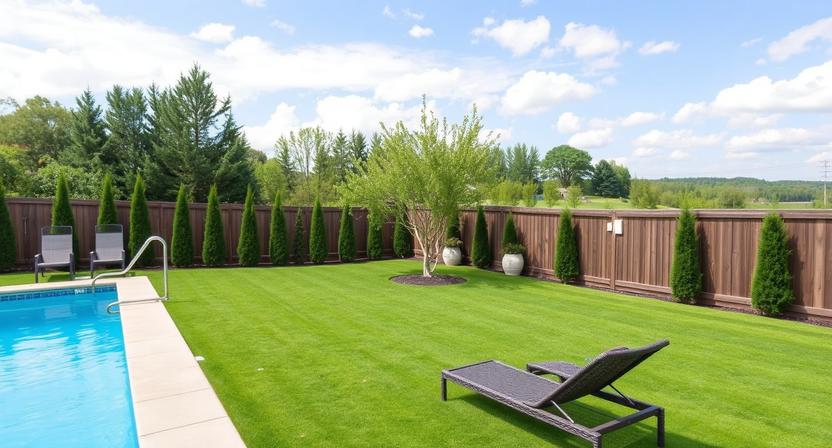
The most cost-effective pool to install is the pool type with the best balance between upfront cost, maintenance cost, repair needs, lifespan, energy use, yard fit, and long-term value. Vinyl liner pools often cost less upfront. Fibreglass pools often provide stronger long-term value because maintenance and major repair needs are lower. Above-ground pools cost least at installation but provide less permanent yard integration. Concrete pools suit custom design but usually cost more to build and maintain.
A cost-effective pool is not always the cheapest pool. The best value comes from the full ownership cost, including installation, permits, fencing, decking, water care, energy use, winterization, liner replacement, resurfacing, equipment repairs, and expected use over time.
Quick Answer
What is the most cost-effective pool to install?
The most cost-effective pool to install is often a fibreglass pool for homeowners who want an inground pool with lower maintenance, faster installation, and fewer major surface renewal costs. Vinyl liner pools are more cost-effective when the starting budget is lower and future liner replacement is planned. Canadian comparison data lists 10-year cost examples of $58,000–$94,000 for vinyl, $63,000–$112,000 for fibreglass, and $99,500–$147,500 for concrete, based on stated assumptions. It also lists lower annual maintenance estimates for fibreglass pools than vinyl and concrete pools.
Is the cheapest pool the most cost-effective?
The cheapest pool is not always the most cost-effective pool. A low starting price may lead to higher costs for liner replacement, repairs, decking, winter care, equipment replacement, or shorter service life. Ontario cost data places vinyl liner pools at a lower installed starting cost than fibreglass and concrete pools, but long-term value changes when maintenance and replacement cycles are included.
Which pool has the best long-term value?
Fibreglass pools often have strong long-term value because they combine lower maintenance with a durable shell and smooth surface. Vinyl liner pools have lower entry cost but need liner replacement. Concrete pools have high design value but higher maintenance and resurfacing costs. Material comparison data lists vinyl liner replacement about once every 10 years, with replacement costs around $4,500–$7,000.
Quick Overview
| Homeowner Goal | Most Cost-Effective Option | Reason |
|---|---|---|
| Lowest first cost | Above-ground pool | Lower structure and setup cost |
| Lowest inground entry cost | Vinyl liner pool | Lower starting installation cost |
| Lower long-term maintenance | Fibreglass pool | Smooth shell and fewer major renewal needs |
| Best custom design value | Concrete pool | Custom shape, depth, and finish |
| Small-yard value | Plunge pool | Smaller footprint and lower water volume |
| Fitness value | Lap pool | Purpose-built swimming shape |
| Year-round use | Indoor pool | Strong use value but high building-system cost |
What does cost-effective mean?
Cost-effective pool installation means the best total value across installation cost, ownership cost, usable lifespan, repair cycle, energy use, and property fit. A pool is cost-effective when the full cost matches the way the homeowner plans to use the pool.
Does cost-effective mean cheapest?
Cost-effective does not mean cheapest. The cheapest pool has the lowest first price. The most cost-effective pool gives stronger value across installation, maintenance, repairs, lifespan, safety, energy use, and yard fit.
Does upfront cost matter?
Upfront cost matters because it sets the starting budget. Above-ground pools often have the lowest first cost. Vinyl liner pools often have the lowest inground pool entry cost. Upfront cost becomes less useful when the quote excludes fencing, decking, electrical work, permits, water care, or winter care.
Does maintenance cost matter?
Maintenance cost matters because water care, cleaning, filters, opening, closing, and service work repeat every season. A pool with a higher starting price may become more cost-effective when it lowers maintenance needs over time.
Does repair cost matter?
Repair cost matters because liners, pumps, filters, heaters, covers, salt cells, surfaces, and decking wear over time. Vinyl liner pools need liner replacement. Concrete pools need resurfacing. Fibreglass pools need gelcoat care and water balance control.
Does lifespan matter?
Lifespan matters because a longer-lasting pool spreads the installation cost across more years of use. Fibreglass pools and concrete pools often offer stronger long-term structure value. Above-ground pools cost less upfront but usually offer weaker permanent yard integration and shorter component life.
Which pool is most cost-effective?
Fibreglass pools are often the most cost-effective inground pool for homeowners who want lower maintenance, durable structure, smooth surface care, and fewer major renewal costs. Vinyl liner pools are cost-effective when the main goal is lower upfront inground cost. Above-ground pools are cost-effective for the lowest entry budget. Concrete pools are cost-effective only when custom design has higher value than lower build and maintenance cost.
Is fibreglass cost-effective?
Fibreglass pools are cost-effective for lower-maintenance inground ownership. The smooth gelcoat surface reduces brushing needs, surface wear, and major renewal work compared with many vinyl liner and concrete pool surfaces. The main limit is higher upfront cost than vinyl liner pools.
Is vinyl liner cost-effective?
Vinyl liner pools are cost-effective when the homeowner needs the lowest inground entry cost. The wall system and fitted vinyl liner lower starting cost compared with many fibreglass and concrete options. The main limit is the liner replacement cycle, which adds future ownership cost.
Is concrete cost-effective?
Concrete pools are cost-effective when the property needs custom shape, custom depth, premium finishes, integrated spas, ledges, or complex site design. The main limit is higher build cost, longer installation, surface care, and future pool resurfacing.
Is above-ground cost-effective?
Above-ground pools are cost-effective for the lowest entry budget and seasonal family use. They need less excavation, less structure, and faster setup than inground pools. The main limit is weaker permanent yard integration and shorter component life.
Is plunge pool cost-effective?
Plunge pools are cost-effective for small yards, lower water volume, cooling, soaking, and compact outdoor living. Their smaller size reduces some operating needs. The main limit is restricted swimming space.
| Pool Type | Cost-Effective Strength | Cost-Effective Limit |
|---|---|---|
| Fibreglass pool | Lower maintenance and durable shell | Higher upfront cost than vinyl |
| Vinyl liner pool | Lower upfront inground cost | Liner replacement cycle |
| Concrete pool | Maximum custom design | Higher build and surface renewal cost |
| Above-ground pool | Lowest entry cost | Less permanent and less integrated |
| Plunge pool | Smaller size and lower water volume | Limited swimming space |
| Lap pool | Strong fitness value | Narrow use case |
| Indoor pool | Year-round use | High HVAC and dehumidification cost |
| Infinity pool | Premium view value | High engineering and maintenance cost |
Which pool costs less upfront?
Above-ground pools cost less upfront because they need less excavation, less structure, and simpler setup than inground pools. Vinyl liner pools usually cost less upfront among inground pool types. Ontario cost guides list vinyl liner pools from around $40,000–$50,000+, fibreglass pools from around $50,000–$65,000+, and concrete pools from around $100,000+, with final cost affected by size, access, soil, grading, features, and location.
Which pool has the lowest starting cost?
Above-ground pools have the lowest starting cost. They use a simpler frame, liner, base, pump, filter, and ladder. They avoid many inground costs, such as full excavation, backfill, coping, major plumbing, and structural shell work.
Which inground pool costs less?
Vinyl liner pools usually cost less upfront than fibreglass pools and concrete pools. The wall system and fitted vinyl liner lower the starting structure cost. The cost-effective limit is future liner replacement.
Which pool costs more to build?
Concrete pools cost more to build than most common inground options because they need custom forming, reinforcing, concrete placement, curing, surface finish, skilled labour, and longer site work. Indoor pools and infinity pools also sit in high-cost categories because they add building systems, edge systems, hydraulics, and engineering.
Which site costs change the price?
Site costs change the price through access, soil, slope, grading, groundwater, rock removal, drainage, retaining walls, crane placement, haulage, and disposal. Tight access and difficult soil raise labour, machinery, and installation time.
Which features raise the budget?
Pool features raise the budget when they add equipment, structure, finish, or energy demand. Common budget-raising features include heaters, lights, automation, waterfalls, tanning ledges, spas, premium coping, large decks, safety covers, salt systems, and upgraded landscaping.
| Pool Type | Upfront Cost Position | Cost Reason |
|---|---|---|
| Above-ground pool | Lowest | Less excavation and simpler structure |
| Vinyl liner pool | Lower inground | Wall system and liner cost less upfront |
| Fibreglass pool | Mid inground | Factory shell and placement cost more |
| Concrete pool | Highest inground | Custom structure, finish, and labour |
| Indoor pool | High | Building envelope and mechanical systems |
| Infinity pool | High | Edge system, basin, hydraulics, and engineering |
Which pool costs less over time?
Fibreglass pools often cost less over time among inground pools because they need lower routine maintenance and fewer major surface renewal costs. Vinyl liner pools cost less upfront, but liner replacement changes the long-term total. Concrete pools have strong custom value, but resurfacing, brushing, and surface care raise ownership cost. Canadian cost data lists seasonal maintenance up to $2,000 for vinyl liner pools, up to $1,800 for fibreglass pools, and up to $2,500 for concrete pools. It also lists vinyl liner replacement as a later ownership cost.
Which pool needs less maintenance?
Fibreglass pools need less maintenance than many vinyl liner pools and concrete pools. The smooth gelcoat surface reduces brushing needs and surface algae grip. Canadian comparison data also places fibreglass seasonal maintenance below vinyl and concrete in its cost examples.
Which pool needs liner replacement?
Vinyl liner pools need liner replacement. Canadian cost data lists vinyl liner replacement every 8–10 years at about $4,500–$6,500. This replacement cycle reduces the long-term cost advantage of a lower starting price.
Which pool needs resurfacing?
Concrete pools need resurfacing and surface care over time. Concrete pool surfaces need brushing, stain control, acid washing, and finish renewal as the surface ages. This raises the long-term cost compared with lower-maintenance surfaces.
Which pool has lower repair risk?
Fibreglass pools often have lower repair risk when installed correctly and maintained with proper water balance. The one-piece shell avoids liner tear risk and reduces major surface renewal needs compared with vinyl liner pools and concrete pools.
Which pool has lower 10-year cost?
Fibreglass pools often have a strong 10-year cost profile when maintenance and major repairs are included. One pool comparison model lists 10-year cost examples of $58,000–$94,000 for vinyl, $63,000–$112,000 for fibreglass, and $99,500–$147,500 for concrete, based on its stated assumptions. The result changes by pool size, region, access, features, maintenance level, repairs, and energy use.
| Pool Type | Long-Term Cost Issue | Cost-Effective Note |
|---|---|---|
| Fibreglass pool | Gelcoat care and water balance | Lower maintenance supports long-term value |
| Vinyl liner pool | Liner replacement | Lower upfront cost changes after replacement |
| Concrete pool | Resurfacing and surface care | Custom value comes with higher upkeep |
| Above-ground pool | Liner, frame, filter, and shorter lifespan | Cheapest upfront, weaker permanent value |
| Saltwater system | Salt cell care and replacement | Sanitizer system, not pool structure |
Which pool needs less maintenance?
Fibreglass pools usually need less maintenance than vinyl liner pools and concrete pools because the smooth gelcoat surface needs less brushing and has fewer major surface renewal needs. Vinyl liner pools need moderate maintenance because the liner needs care and later replacement. Concrete pools need higher maintenance because rougher surfaces need more brushing and resurfacing over time.
Is fibreglass lower maintenance?
Fibreglass is lower maintenance because the smooth gelcoat surface helps reduce dirt and algae attachment. It still needs correct water balance, filter care, seasonal service, and gelcoat protection.
Is vinyl liner moderate maintenance?
Vinyl liner is moderate maintenance because the liner needs water balance control, gentle cleaning, puncture prevention, wrinkle checks, and planned replacement. Poor water chemistry shortens liner life.
Is concrete higher maintenance?
Concrete is higher maintenance because plaster, aggregate, or pebble surfaces are more textured than fibreglass. These surfaces need more brushing, stain control, scale control, and resurfacing as the finish wears.
Is saltwater low maintenance?
Saltwater is not maintenance-free. A saltwater pool uses a salt chlorine generator as the sanitizer system. It still needs salt cell cleaning, chlorine checks, pH control, scale prevention, and regular water testing.
Is water testing always needed?
Water testing is always needed because sanitizer and water balance protect swimmers and pool surfaces. Health Canada says pool and spa water balance needs daily testing for sanitizer levels, pH, total alkalinity, and calcium hardness. This applies across residential pool systems, including chlorine and saltwater pools.
| Maintenance Area | Cost-Effective Detail |
|---|---|
| Water testing | Required for safe water balance |
| Brushing | Lower on smooth surfaces, higher on rougher surfaces |
| Liner care | Required for vinyl liner pools |
| Gelcoat care | Required for fibreglass pools |
| Resurfacing | Required for many concrete pools over time |
| Salt cell care | Required for saltwater chlorine systems |
| Winter care | Required in Canadian climates |
Which pool lasts longer?
Fibreglass pools and concrete pools usually last longer than vinyl liner pools and above-ground pools when installation, drainage, water balance, and seasonal care are handled correctly. Fibreglass pools rely on shell durability and gelcoat care. Concrete pools rely on structural strength and surface renewal. Vinyl liner pools rely on a lasting wall system, but the liner needs replacement during ownership.
Which structure lasts longer?
Concrete pool structures usually last longest because reinforced concrete supports custom shape, depth, and long-term structural use. Fibreglass pool shells also provide strong long-term structure value when the shell, backfill, drainage, and water balance are managed correctly.
Which surface lasts longer?
Fibreglass gelcoat surfaces often last longer with fewer major renewal needs than vinyl liners and many concrete finishes. Vinyl liners need replacement during ownership. Concrete pool finishes need resurfacing when the surface becomes rough, stained, worn, or damaged.
Which pool needs replacement work?
Vinyl liner pools need the clearest replacement work because the liner is a wear item. Above-ground pools may need liner, frame, ladder, filter, cover, and wall repairs sooner than permanent inground structures. Concrete pools need resurfacing rather than full structure replacement in many cases.
Which pool has fewer major repairs?
Fibreglass pools often have fewer major surface repairs because the one-piece shell reduces liner tear risk and resurfacing needs. Correct installation, drainage, groundwater control, and water balance still matter. Poor installation increases repair risk for every pool type.
Which pool gives better lifetime value?
Fibreglass pools often give better lifetime value when the homeowner wants lower maintenance, long shell life, and fewer major renewal costs. Concrete pools give lifetime value when custom design matters most. Vinyl liner pools give value when lower upfront cost matters and liner replacement is planned.
| Pool Type | Lifespan Factor | Long-Term Value Issue |
|---|---|---|
| Fibreglass pool | Shell durability | Protect gelcoat and water balance |
| Vinyl liner pool | Wall structure | Replace liner during ownership |
| Concrete pool | Structural strength | Resurface and repair finish |
| Above-ground pool | Frame and liner life | Replace components sooner |
| Plunge pool | Material-dependent | Smaller size reduces some operating costs |
| Indoor pool | Building-system dependent | Control humidity and air quality |
Which pool saves on energy?
Smaller pools with efficient pumps, correct heater sizing, and regular cover use save the most energy. Plunge pools often reduce heating demand because they hold less water than standard pools. Fibreglass pools and vinyl liner pools also perform well when the pool size fits the intended use, the pump is efficient, and a cover limits heat loss. Indoor pools use more energy because they need water heating, ventilation, and humidity control.
Does pool size affect energy use?
Pool size affects energy use because larger water volume needs more heat, more circulation, and longer equipment run time. A smaller pool reduces water volume, heating load, chemical use, and pump demand when it still fits the main use.
Does heating affect energy use?
Heating affects energy use because pool water loses heat through evaporation, wind exposure, cooler air, and uncovered surface area. Heating cost rises when the pool is large, uncovered, exposed to wind, or kept at a higher temperature for a longer season.
Does a cover reduce heat loss?
A pool cover reduces heat loss by limiting evaporation. The U.S. Department of Energy states that covering a pool when not in use is the most effective way to reduce pool heating costs, with possible savings of 50%–70%.
Does pump type affect cost?
Pump type affects cost because pumps control filtration, circulation, and water movement. Natural Resources Canada states that an ENERGY STAR certified in-ground pool pump uses up to 65% less energy, on average, than a standard model. ENERGY STAR states that variable or two-speed pool pumps use efficient motors and flow control to match filtration, cleaning, and water-feature needs.
Does indoor air control affect cost?
Indoor air control affects cost because indoor pools need dehumidification, ventilation, air heating, water heating, and condensation control. High humidity damages finishes, windows, framing, and the building envelope when the pool room lacks proper air control.
| Energy Factor | Cost-Effective Action |
|---|---|
| Pool size | Choose the smallest pool that fits the intended use |
| Pool cover | Reduce heat loss and evaporation |
| Variable-speed pump | Reduce electricity use where suitable |
| Heating method | Match heater type to season and use |
| Wind exposure | Use design and cover choices to reduce heat loss |
| Indoor pool HVAC | Include dehumidification in lifetime cost |
Which pool fits each yard?
Pool yard fit depends on space, slope, soil, access, drainage, setbacks, fencing, and the intended use. A pool becomes more cost-effective when the structure matches the yard before excavation, delivery, decking, and permit planning begin.
What pool fits small yards?
Plunge pools, small fibreglass pools, and small vinyl liner pools fit small yards. A compact pool reduces water volume, heating demand, decking area, and maintenance time when the main goal is cooling, soaking, or casual swimming.
What pool fits flat yards?
Above-ground pools, vinyl liner pools, and fibreglass pools fit flat yards. A level yard reduces grading, retaining walls, drainage work, soil movement, and access issues. This keeps installation cost closer to the first quote.
What pool fits sloped yards?
Semi-inground pools and engineered inground pools fit sloped yards. Sloped sites need stronger planning for grading, retaining walls, drainage, deck height, groundwater, and structural support. The cost-effective choice limits extra site work.
What pool fits narrow yards?
Lap pools and rectangular pools fit narrow yards. A long, narrow shape supports fitness swimming and uses side-yard or slim backyard space better than a wide family pool.
What pool fits tight access?
Vinyl liner pools and concrete pools fit tight access when site-built parts are easier to move into the yard. Fibreglass pools need enough access for a one-piece shell, delivery truck, crane, and safe placement.
| Yard Condition | Cost-Effective Option |
|---|---|
| Small yard | Plunge pool, small fibreglass pool, or small vinyl pool |
| Flat yard | Above-ground pool, vinyl liner pool, or fibreglass pool |
| Sloped yard | Semi-inground pool or engineered inground pool |
| Narrow yard | Lap pool or rectangular pool |
| Tight access | Vinyl liner pool or concrete pool, depending on access |
| Large yard | Fibreglass, vinyl, or concrete based on use and budget |
Which pool fits each use?
Pool use decides cost-effectiveness because the best-value pool must match the main activity. Fibreglass pools and vinyl liner pools fit family swimming. Lap pools fit fitness. Plunge pools fit cooling and soaking. Indoor pools fit year-round use when higher operating cost is acceptable.
What pool fits family use?
Fibreglass pools and vinyl liner pools fit family use because they support shallow zones, steps, benches, open swim space, and flexible layouts. Fibreglass pools often lower maintenance. Vinyl liner pools often lower the starting inground cost.
What pool fits fitness?
Lap pools fit fitness because their long, narrow shape supports straight-line swimming. A lap pool gives strong value when the homeowner plans regular swimming, private workouts, or low-impact exercise.
What pool fits relaxation?
Plunge pools fit relaxation because they use compact water volume, seating, heating, covers, and optional jets. A plunge pool gives strong value when the main goal is cooling, soaking, or small-yard outdoor use.
What pool fits entertaining?
Concrete pools fit custom entertaining because they support custom shapes, tanning ledges, integrated spas, steps, lighting, water features, premium finishes, and large deck plans. The higher cost only adds value when the property and use justify the design.
What pool fits year-round use?
Indoor pools fit year-round use when high operating cost is acceptable. Indoor pools need heating, ventilation, dehumidification, vapour control, drainage, and building-envelope protection.
| Use Case | Cost-Effective Pool Type |
|---|---|
| Family swimming | Fibreglass pool or vinyl liner pool |
| Lowest-cost recreation | Above-ground pool |
| Fitness swimming | Lap pool |
| Cooling and soaking | Plunge pool |
| Custom entertaining | Concrete pool |
| Year-round use | Indoor pool, where high operating cost is acceptable |
Which pool fits Canadian weather?
Canadian weather suits pools with proper winterization, freeze protection, groundwater control, drainage, and a planned seasonal closing process. Fibreglass pools, vinyl liner pools, concrete pools, plunge pools, and lap pools all work in cold climates when the installation manages freeze-thaw movement, hydrostatic pressure, snow load, and equipment protection.
Which pool needs winter closing?
Outdoor pools need winter closing in most Canadian climates. Seasonal closing protects the pool structure, water lines, pump, filter, heater, sanitizer system, cover, and equipment pad before freezing temperatures arrive.
A proper closing includes water balancing, debris removal, equipment shutdown, plumbing line protection, fitting winter plugs, lowering water where required, and installing a winter or safety cover.
Which pool needs freeze protection?
Fibreglass pools, vinyl liner pools, concrete pools, above-ground pools, plunge pools, and lap pools need freeze protection. Freezing water expands and stresses plumbing lines, skimmers, returns, fittings, liners, frames, and pool surfaces.
Freeze protection matters most for buried plumbing, exposed equipment, and fittings that hold trapped water.
Which pool needs groundwater control?
Inground pools need groundwater control because high groundwater can create hydrostatic pressure around the shell, wall system, or concrete structure. Drainage, backfill, sump systems, hydrostatic relief, and correct water level planning reduce risk.
Poor groundwater control raises the risk of shell movement, liner floating, wall pressure, cracking, and deck movement.
Which pool needs a winter cover?
Outdoor pools need a winter cover or safety cover to reduce debris, sunlight, and off-season access risk. A safety cover also needs correct anchoring and load rating because snow load adds pressure through winter.
Above-ground pools need covers matched to frame strength and wall height. Inground pools need covers matched to pool shape, deck anchors, edge finish, and drainage.
Which pool equipment needs protection?
Pool equipment needs winter protection before freezing weather. Key items include the pump, filter, heater, salt cell, chlorinator, automation system, valves, skimmers, returns, main drain lines, plumbing lines, and equipment pad.
Seasonal opening checks the same system after winter. Spring service reviews the cover, water level, plumbing, equipment seals, filter pressure, sanitizer, pH, alkalinity, calcium hardness, and visible winter damage.
What permits affect cost-effectiveness?
Pool permits affect cost-effectiveness because required approvals, fence rules, setbacks, inspections, and utility locates add cost before installation starts. A pool with a lower starting price loses value when the quote excludes compliance work.
Are pool permits needed?
Pool permits are needed when the municipality requires approval for the pool enclosure, zoning review, setbacks, or related site work. Toronto requires a Zoning Applicable Law Certificate before applying for a Pool Fence Enclosure Permit for an outdoor pool or hot tub.
Are pool fences needed?
Pool fences are needed when local rules require a compliant pool enclosure. Toronto states that a pool enclosure must completely surround the pool area, with no openings except a gate. Toronto also states that a pool cannot be constructed and filled with water without a fence installed under Toronto Municipal Code Chapter 447 – Fences.
Are setbacks checked?
Setbacks are checked during the zoning stage. The Zoning Applicable Law Certificate confirms whether the proposed pool location follows local zoning rules before the Pool Fence Enclosure Permit application. Setback errors reduce cost-effectiveness because revised drawings, delays, and design changes add cost.
Are inspections needed?
Inspections are needed to confirm that the pool fence enclosure follows the approved permit and safety rules. Toronto’s pool fence enclosure permit process includes application intake, plan review, and inspection activities. Recent fee schedules list this pool fence enclosure process as a per-application municipal fee item.
Are utility locates needed?
Utility locates are needed before excavation, fence posts, deck posts, trenching, grading, or equipment-pad work. Ontario One Call says homeowners must submit a locate request at least 5 business days before digging, and buried infrastructure owners mark public utility lines on the property.
Cost-effective pool planning includes zoning review, pool fencing, gate hardware, setback checks, inspections, utility locates, and permit fees in the first budget. These required costs protect the project from redesign, delays, insurance issues, and unsafe installation.
What hidden costs affect value?
Hidden pool costs reduce cost-effectiveness when the first quote excludes required work or likely ownership costs. A pool with a low starting price loses value when excavation, fencing, electrical work, decking, drainage, winter closing, and landscaping repair appear later.
Is decking included?
Decking is not always included in the base pool quote. Decking, coping, stairs, patios, drainage edges, retaining edges, and railings often need separate pricing. Large deck areas raise the finished installed cost.
Is fencing included?
Fencing is often excluded from the first quote. A compliant pool enclosure, gates, latches, setback checks, permits, and inspections add required cost when municipal rules apply.
Is electrical work included?
Electrical work is often priced separately. Pool pumps, heaters, lights, automation, salt systems, bonding, equipment pads, and electrical inspections need proper planning before installation.
Is drainage included?
Drainage is not always included in the base price. Poor drainage, clay soil, groundwater, slope, and hardscaping changes raise cost through grading, drainage pipe, gravel base, sump planning, or retaining walls.
Is landscaping included?
Landscaping is often excluded from pool quotes. Heavy equipment, excavation, soil removal, access routes, material staging, and trenching damage lawns, planting beds, paths, and patios. Landscaping repair needs a separate budget.
Hidden costs to include:
- Excavation
- Soil removal
- Rock removal
- Grading
- Drainage
- Retaining walls
- Crane access
- Electrical work
- Bonding
- Fencing
- Gates
- Permits
- Decking
- Coping
- Covers
- Water delivery
- Startup chemicals
- Winter closing
- Landscaping repair
What pool has the best 10-year value?
Fibreglass pools often have the best 10-year value for inground pool owners because they combine lower surface maintenance, lower repair risk, and long shell life. Vinyl liner pools often cost less at installation, but the liner replacement cycle changes the 10-year total. Concrete pools give strong custom design value, but resurfacing, brushing, and surface repairs raise long-term cost. One comparison source lists fibreglass pool 10-year maintenance at about $4,000, compared with $15,000–$27,000 for concrete pools.
Is fibreglass best over 10 years?
Fibreglass is often best over 10 years when the homeowner wants lower maintenance and fewer major surface repairs. The smooth shell reduces brushing needs, and resurfacing is rarely part of normal 10-year ownership.
Is vinyl best over 10 years?
Vinyl liner is best over 10 years when the lower upfront cost matters most and the owner plans for liner replacement. Current cost sources commonly list liner replacement within about 8–12 years, with replacement cost often around $4,000–$7,500.
Is concrete best over 10 years?
Concrete is best over 10 years when custom design, custom depth, and premium finishes carry more value than lower upkeep. Concrete pools usually cost more to maintain because they need brushing, acid washing, surface repair, and resurfacing over time.
Is above-ground best over 10 years?
Above-ground pools are best over 10 years when lowest first cost matters more than permanent yard value. Their weaker long-term value comes from shorter component life, frame wear, liner wear, cover replacement, and less permanent design integration.
What changes the 10-year result?
10-year value changes with pool size, material, installation quality, soil, drainage, water balance, winterization, cover use, heater use, pump efficiency, repair timing, and owner maintenance. A smaller plunge pool reduces water volume. A lap pool gives strong value when fitness use is frequent. A well-built inground pool gives stronger permanent backyard value than a temporary or poorly integrated pool.
| 10-Year Value Factor | Best Fit |
|---|---|
| Lower first cost | Above-ground pool or vinyl liner pool |
| Lower surface maintenance | Fibreglass pool |
| Lower repair risk | Fibreglass pool, where installed correctly |
| Custom design value | Concrete pool |
| Lower water volume | Plunge pool |
| Fitness value | Lap pool |
| Permanent backyard value | Inground pool |
When is a cheaper pool less cost-effective?
A cheaper pool becomes less cost-effective when it has limited use, short lifespan, high repair needs, poor yard fit, weak safety compliance, or expensive later upgrades. Low upfront cost only creates value when the pool stays useful, safe, affordable to maintain, and matched to the property.
Is a short lifespan a problem?
A short lifespan is a problem when the pool needs early liner, frame, ladder, cover, filter, pump, or wall replacement. Above-ground pools cost less upfront, but shorter component life reduces long-term value when the homeowner wants a permanent backyard feature.
Is limited use a problem?
Limited use is a problem when the pool does not match the household’s main goal. A small plunge pool suits cooling and soaking, but it does not replace a lap pool for fitness or a larger inground pool for family swimming.
Is replacement cost a problem?
Replacement cost is a problem when the first budget ignores future wear items. Vinyl liner pools need liner replacement. Above-ground pools need liner, frame, ladder, cover, filter, and equipment planning. Concrete pools need resurfacing over time.
Is poor yard fit a problem?
Poor yard fit is a problem when the pool creates access issues, drainage problems, weak layout, crowded decking, unsafe walking areas, or extra grading cost. A cost-effective pool fits the yard before excavation, fencing, and landscaping begin.
Is weak resale value a problem?
Weak resale value is a problem when the pool looks temporary, lacks maintenance records, reduces usable yard space, or creates safety and permit concerns. Permit compliance, safe fencing, clean condition, and practical yard design support stronger long-term value.
How do you choose the most cost-effective pool?
The most cost-effective pool is chosen by comparing first cost, 10-year cost, yard fit, use, maintenance level, required permits, and replacement cycles. The right pool gives the best total value for the property, not only the lowest starting price.
What budget should be set?
The budget should separate first cost from 10-year cost. First cost includes the pool, installation, site work, equipment, permits, fencing, and decking. 10-year cost includes maintenance, energy use, water care, opening, closing, repairs, and replacements.
What use should be defined?
The pool use should be defined before comparing pool types. Family swimming, fitness, cooling, entertaining, and year-round use each need different size, shape, depth, equipment, and maintenance planning.
What yard limits should be checked?
Yard limits should include size, access, slope, soil, drainage, setbacks, utilities, groundwater, and equipment placement. A pool loses cost-effectiveness when poor access, steep grade, weak drainage, or permit limits add major site work.
What maintenance level should be chosen?
The maintenance level should match the homeowner’s time and budget. Fibreglass pools suit lower-maintenance inground ownership. Vinyl liner pools need liner care. Concrete pools need surface care. Saltwater systems need salt cell cleaning and water testing.
What lifetime costs should be compared?
Lifetime costs should compare liner replacement, salt cell replacement, pump replacement, heater service, cover replacement, resurfacing, gelcoat care, winter closing, seasonal opening, and energy use. These costs show the real value beyond the installation quote.
| Step | What to Check |
|---|---|
| Set the budget | Separate first cost from 10-year cost |
| Define use | Family, fitness, cooling, entertaining, or year-round use |
| Check the yard | Size, access, slope, soil, drainage, and setbacks |
| Compare materials | Vinyl, fibreglass, concrete, above-ground, or specialty pool |
| Add required costs | Permits, fencing, electrical, decking, and inspections |
| Add maintenance | Chemicals, opening, closing, filters, repairs, and cleaning |
| Add replacements | Liner, salt cell, pump, heater, cover, or resurfacing |
| Compare warranty | Structure, surface, liner, equipment, and labour |
What mistakes reduce value?
Cost-effective pool mistakes reduce value when the project compares only the installation price and ignores full ownership cost. A pool gives weaker value when maintenance, repairs, equipment, permits, fencing, decking, energy use, and winter care are missing from the budget.
Cost-effective pool mistakes usually come from comparing the installation price only and ignoring maintenance, repairs, equipment, permits, fencing, decking, energy use, and winter care.
Is choosing only by price a mistake?
Choosing only by price is a mistake because the lowest quote may exclude required work. A lower installation price loses value when fencing, permits, electrical work, decking, water care, or winterization appear later.
Is ignoring maintenance a mistake?
Ignoring maintenance is a mistake because every pool needs water testing, cleaning, filter care, opening, closing, and service work. Concrete pools need more brushing and surface care. Fibreglass pools need gelcoat and water balance care. Saltwater systems need salt cell cleaning and testing.
Is ignoring liner replacement a mistake?
Ignoring liner replacement is a mistake because vinyl liner pools and many above-ground pools use liners as key water-holding surfaces. Liner wear, punctures, wrinkles, fading, and poor water balance add future replacement cost.
Is ignoring resurfacing a mistake?
Ignoring resurfacing is a mistake because many concrete pools need surface renewal as finishes wear. Resurfacing, stain control, acid washing, crack repair, and surface repairs affect long-term cost.
Is ignoring winter care a mistake?
Ignoring winter care is a mistake in Canadian climates because freeze-thaw conditions affect pool surfaces, liners, frames, equipment, and plumbing. Winterization, seasonal closing, covers, plumbing protection, equipment-pad care, and spring opening protect long-term value.
Value-reducing mistakes include:
- Comparing only the installation price.
- Leaving out maintenance cost.
- Ignoring liner replacement.
- Ignoring concrete resurfacing.
- Excluding fencing, permits, and inspections.
- Missing decking, coping, and drainage.
- Underestimating energy use for heating and pumps.
- Skipping winter care and seasonal closing.
- Choosing a pool that does not fit the yard, use, or budget.
How do you compare pool quotes?
Pool quotes should be compared by full value, not only the lowest installation price. A useful comparison checks the pool type, pool size, structure, site work, equipment, energy items, decking, fencing, maintenance, renewal costs, and warranty.
What price should be compared?
The full installed price should be compared. This price includes the pool structure, site preparation, equipment, decking, fencing, permits, electrical work, water care, labour, inspections, and exclusions. The lowest base price does not show the real project cost.
What costs must be included?
Required costs must include excavation, grading, drainage, equipment, plumbing, electrical work, bonding, sanitizer system, decking, fencing, gates, permits, inspections, startup water care, and winter preparation. These costs decide the true cost-effectiveness of the pool.
What warranty terms matter?
Warranty terms must show coverage for the structure, surface, liner, shell, frame, pump, filter, heater, salt cell, lights, labour, leaks, and installation defects. The quote should separate manufacturer warranty from installer warranty.
What exclusions matter?
Exclusions matter because they show what the homeowner pays for later. Important exclusions include rock removal, soil disposal, retaining walls, drainage fixes, crane access, electrical upgrades, landscaping repair, covers, winter closing, water delivery, permit fees, and service calls.
What questions confirm value?
Value questions should confirm the total cost, repair cycle, maintenance level, energy use, and warranty scope. The quote should answer what is included, what is optional, what is excluded, what needs future replacement, and what affects the final price after site work starts.
| Quote Item | What to Compare |
|---|---|
| Pool type | Above-ground, vinyl, fibreglass, concrete, plunge, lap, indoor, or infinity |
| Pool size | Length, width, depth, volume, and shape |
| Structure | Shell, liner, concrete, frame, or wall system |
| Site work | Excavation, grading, drainage, soil, rock, and disposal |
| Equipment | Pump, filter, heater, sanitizer, lights, and automation |
| Energy items | Cover, pump type, heater type, and insulation where relevant |
| Decking | Coping, patio, stairs, drainage, and retaining work |
| Fencing | Gate, enclosure, permit, and inspection |
| Maintenance | Opening, closing, water care, cleaning, and service needs |
| Renewal costs | Liner, resurfacing, gelcoat repair, salt cell, pump, heater, and cover |
| Warranty | Structure, surface, liner, equipment, and labour |
How does pool type affect resale?
Pool type affects resale through buyer demand, maintenance cost, yard fit, safety compliance, and property finish. Inground pools usually support stronger resale appeal than above-ground pools when the pool is well maintained, safely fenced, and integrated with the yard. Fibreglass pools support practical resale value through lower maintenance. Concrete pools support design value when the property suits a custom pool.
Does pool condition matter?
Pool condition matters because buyers treat poor condition as a future repair cost. Clear water, a clean surface, working equipment, safe stairs, solid decking, and a reliable cover improve buyer confidence. Damaged liners, worn surfaces, leaking equipment, unsafe decking, or missing service records reduce resale value.
Does pool type matter?
Pool type matters because each pool type changes buyer expectations. Above-ground pools offer lower-cost recreation but less permanent value. Vinyl liner pools offer lower inground entry cost but need liner planning. Fibreglass pools offer lower maintenance appeal. Concrete pools offer custom design appeal but higher upkeep.
Does yard design matter?
Yard design matters because the pool needs to support the full outdoor space. Strong resale value needs safe access, usable patio space, drainage, privacy, fencing, seating, landscaping, and clear movement around the pool. A pool that crowds the yard reduces usable space and buyer appeal.
Does permit compliance matter?
Permit compliance matters because buyers, insurers, and municipalities expect legal safety standards. A pool with approved fencing, inspection records, setback compliance, and clear documentation supports resale value. Missing permits, weak fencing, or unclear compliance records create risk during sale review.
How does pool type affect insurance?
Pool type affects insurance through property coverage, liability exposure, access control, safety equipment, and local compliance. Inground pools often affect replacement value as permanent structures. Above-ground pools may be treated differently because they are less permanent. Indoor pools add building risks through humidity, ventilation, drainage, and air control. Canadian home insurance guidance separates coverage into personal property coverage and liability coverage, which both matter when a pool is added.
Does fencing matter?
Fencing matters because it controls pool access and supports safety compliance. A compliant pool fence, locked gate, self-closing gate, and self-latching gate reduce unsupervised access risk. Canadian pool insurance guidance states that municipal rules differ by location and that pool owners need to check local requirements before installing a pool.
Does liability coverage matter?
Liability coverage matters because a pool increases injury risk on the property. Personal liability coverage protects the homeowner when another person makes a claim after an injury linked to the pool area. Canadian insurance guidance states that homeowners may face liability for injuries that occur in or around a backyard pool.
Does pool access matter?
Pool access matters because open ladders, unlocked gates, low barriers, climbable furniture, raised decks, and poor lighting increase risk. Above-ground pools need controlled ladder and deck access. Inground pools need secure fencing, clear deck space, non-slip surfaces, and safe entry points. Indoor pools need locked room access and humidity-safe surfaces.
Does safety equipment matter?
Safety equipment matters because insurers and municipalities focus on risk reduction. Important items include a pool fence, locked gate, safety cover, pool alarm, rescue hook, life ring, non-slip deck surface, clear lighting, and visible pool rules. Insurance guidance lists fencing, lockable gates, alarms, lighting, covers, and regular checks as safety measures for pool owners.
How does pool type affect operating cost?
Pool type affects operating cost through water volume, heater choice, pump runtime, cover use, season length, wind exposure, and maintenance needs. Smaller pools usually cost less to run because they need less heating, less circulation time, fewer chemicals, and smaller covers. Indoor pools usually cost more to operate because they need water heating, ventilation, and dehumidification.
Does water volume matter?
Water volume matters because larger pools need more energy to heat and circulate the water. Larger pools also need more chemicals, longer filtration, bigger covers, and more opening and closing work. Plunge pools and smaller fibreglass pools often reduce operating cost when they still fit the intended use.
Does heater choice matter?
Heater choice matters because gas heaters, electric heaters, heat pumps, and solar heating systems use different energy sources and run patterns. A heater costs more to operate when the pool is large, uncovered, exposed to wind, or kept at a higher temperature for a longer season. Pool water evaporation is a major source of heat loss, especially when wind, exposure, and water temperature increase.
Does pump runtime matter?
Pump runtime matters because the pool pump controls daily filtration and circulation. Longer runtime uses more electricity, especially with older single-speed pumps. Natural Resources Canada states that an ENERGY STAR certified in-ground pool pump uses up to 65% less energy, on average, than a standard model.
Does cover use matter?
Cover use matters because a cover reduces evaporation and heat loss. The U.S. Department of Energy states that covering a pool when not in use is the most effective way to reduce pool heating costs, with possible savings of 50%–70%. Covers also reduce evaporation in indoor pools, which lowers ventilation demand.
Operating cost stays lower when the pool has the right size, an efficient pump, a suitable heater, regular cover use, and a maintenance plan that matches the pool type.
How does pool type affect maintenance time?
Pool type affects maintenance time through surface texture, liner care, water balance, filtration needs, debris load, and seasonal closing. Fibreglass pools usually take less cleaning time because the smooth gelcoat surface needs less brushing. Vinyl liner pools need liner checks and gentle cleaning. Concrete pools need more brushing and surface care.
Does surface texture matter?
Surface texture matters because rougher pool surfaces hold more dirt, algae, and scale. Concrete pools usually need more brushing because plaster, pebble, or aggregate finishes have more texture. Fibreglass pools usually need less brushing because the gelcoat surface is smooth.
Does liner care matter?
Liner care matters because vinyl liner pools and many above-ground pools use the liner as the main water-holding surface. Liner care includes gentle brushing, puncture checks, wrinkle checks, leak checks, and correct water balance. Poor liner care raises repair time and replacement risk.
Does water balance matter?
Water balance matters because poor chemistry creates algae, scale, stains, cloudy water, liner damage, equipment wear, and surface problems. Regular testing for sanitizer, pH, total alkalinity, and calcium hardness reduces cleaning time and repair risk.
Does seasonal closing matter?
Seasonal closing matters in Canadian climates because winter damage increases spring maintenance time. Proper winterization protects plumbing lines, pump, filter, heater, salt cell, cover, and equipment pad. A careful closing makes seasonal opening cleaner, faster, and less expensive.
FAQs About Cost-Effective Pool
What is the most cost-effective pool to install?
The most cost-effective pool to install is usually a fibreglass pool for homeowners who want an inground pool with lower maintenance, faster installation, and fewer major renewal costs. Vinyl liner pools suit lower starting budgets when liner replacement is included in the ownership plan.
Is fibreglass the most cost-effective pool?
Fibreglass pools are the most cost-effective choice for many inground pool projects because they combine a durable shell, smooth gelcoat surface, lower cleaning time, and fewer major surface repairs. Higher upfront cost is the main trade-off compared with vinyl liner pools.
Is vinyl liner the most cost-effective inground pool?
Vinyl liner pools are cost-effective when the homeowner needs the lowest inground pool starting cost. The long-term budget must include liner replacement, liner care, water balance, and possible repair work.
Is an above-ground pool more cost-effective?
Above-ground pools are more cost-effective for the lowest entry budget and seasonal recreation. They cost less to install but offer less permanent yard integration, shorter component life, and weaker long-term property value than many inground pools.
Is concrete ever cost-effective?
Concrete pools are cost-effective when custom design carries the most value. They suit custom shapes, custom depths, premium finishes, integrated spas, ledges, and complex sites. Higher construction cost, surface care, and resurfacing reduce cost-effectiveness for budget-focused projects.
What pool has the lowest lifetime cost?
Fibreglass pools usually have the lowest lifetime cost among common inground pools because they reduce surface maintenance and major renewal needs. Above-ground pools have the lowest first cost, but frame, liner, cover, ladder, and filter replacement affect lifetime value.
What pool is cheapest to maintain?
Fibreglass pools are usually the cheapest inground pools to maintain. The smooth gelcoat surface needs less brushing than many concrete surfaces. Every pool still needs water testing, filter care, seasonal service, and equipment checks.
What pool lasts longest?
Concrete pools and fibreglass pools usually last longest when installation, drainage, water balance, and winter care are managed correctly. Concrete pools need resurfacing over time. Fibreglass pools need gelcoat and water balance care.
What pool is best for Canadian winters?
Fibreglass pools, vinyl liner pools, and concrete pools suit Canadian winters when the project includes proper winterization, drainage, groundwater control, plumbing protection, a winter cover, and seasonal closing. Freeze-thaw movement, snow load, and hydrostatic pressure affect all outdoor pools.
What pool is best for small yards?
Plunge pools are best for small yards because they reduce footprint, water volume, heating demand, and maintenance time. Small fibreglass pools and small vinyl liner pools also suit compact backyards when access, setbacks, and fencing allow the layout.
What pool has the best resale value?
Inground pools usually have the best resale value when they are well maintained, safely fenced, permitted, and integrated with the yard. Fibreglass pools support practical resale value through lower maintenance. Concrete pools support design value for higher-end properties.
What pool costs least over 10 years?
Fibreglass pools usually deliver strong 10-year value when maintenance, repair risk, and major surface work are included. Vinyl liner pools cost less upfront, but liner replacement changes the 10-year total. Concrete pools cost more over 10 years because surface care and resurfacing raise ownership cost.
What hidden costs affect pool value?
Hidden pool costs include excavation, soil removal, rock removal, grading, drainage, retaining walls, crane access, electrical work, bonding, fencing, gates, permits, decking, coping, covers, water delivery, startup chemicals, winter closing, and landscaping repair.
What pool type needs the fewest repairs?
Fibreglass pools usually need the fewest major surface repairs when installed correctly. The one-piece shell reduces liner tear risk and avoids regular resurfacing needs. Water balance, drainage, and correct backfill still protect long-term performance.
What pool type gives the best long-term value?
Fibreglass pools give the best long-term value for many homeowners because they balance upfront cost, maintenance time, repair risk, lifespan, and yard integration. Vinyl liner pools give value through lower entry cost. Concrete pools give value through custom design.