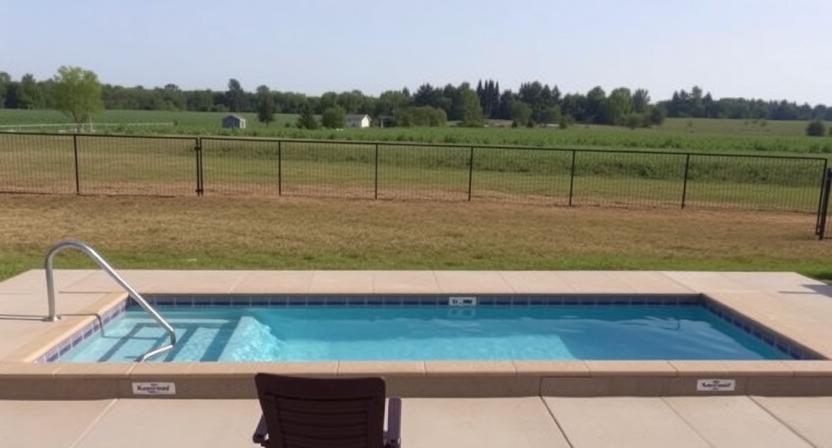
Semi-inground pools are partially buried swimming pools installed partly below grade and partly above grade. This pool type creates a middle option between above-ground pools and inground pools.
Semi-inground pools suit sloped yards, uneven terrain, raised decks, lower excavation needs, easier landscape integration, and a more finished look than standard above-ground pools. The right semi-inground pool depends on yard slope, soil, drainage, wall strength, deck design, retaining needs, access, fencing, permits, and long-term maintenance.
Quick Answer
What are semi-inground pools?
Semi-inground pools are pools installed with part of the pool wall below ground and part of the wall above ground. They create a middle option between above-ground pools and inground pools, with more landscape integration than standard raised pools and less excavation than full inground pools.
Are semi-inground pools good for sloped yards?
Semi-inground pools are good for sloped yards when the pool sits partly into the higher side of the slope and stays exposed on the lower side. This placement reduces full-depth excavation and major retaining-wall work while supporting raised deck access and terraced yard design.
Are semi-inground pools cheaper than inground pools?
Semi-inground pools are usually cheaper than full inground pools because they need less excavation and less site preparation. One Canadian example lists semi-inground pool installation at $15,000–$22,000, compared with $35,000–$50,000 for inground installation. Treat this as one source example, not a fixed national price.
Quick Overview
| Decision Factor | Semi-Inground Pool Detail |
|---|---|
| Best for | Sloped yards, uneven yards, deck integration, and lower excavation |
| Not best for | Fully custom deep pools, lowest-cost setup, or flat luxury inground designs |
| Main structure | Strong wall system designed for partial burial |
| Main placement | Partly below grade and partly above grade |
| Main design value | Raised decks, terraced yards, finished pool walls, and landscape blending |
| Key site concern | Drainage, slope, retaining support, wall pressure, and base stability |
| Long-term focus | Liner care, wall care, drainage, deck safety, winter care, and equipment care |
What Are Semi-Inground Pools?
Semi-inground pools are partially buried pools installed with part of the pool wall below grade and part of the wall exposed above grade. This design creates a middle option between above-ground pools and inground pools. It suits sloped yards, raised decks, terraced layouts, and yards where full excavation is not practical.
How are semi-inground pools built?
Semi-inground pools are built with excavation, base preparation, wall assembly, liner fitting, backfill, drainage, equipment setup, and deck access. The installer sets the pool partly into the ground, supports the buried wall sections, and finishes the exposed wall with a deck, cladding, stone, wood, composite, or landscape edging.
How much is buried?
Semi-inground pool burial depth depends on the pool system, yard slope, wall strength, soil, drainage, and manufacturer limits. Some pools sit one-third below grade. Others sit halfway below grade or deeper where the wall system is designed for that load. Buried sections need stable backfill and drainage to reduce pressure against the pool wall.
What stays above grade?
The exposed pool wall stays above grade on one or more sides. This above-grade wall often connects to a raised deck, steps, patio area, or terraced landscape. The exposed side may show the original pool wall or receive a finished surface for a cleaner backyard look.
What materials are used?
Semi-inground pools use strong wall systems designed for partial burial. Common materials include steel walls, resin walls, hybrid wall systems, insulated wall panels, vinyl liners, bracing, base material, backfill, drainage stone, plumbing, pump, filter, ladder, steps, and deck framing. The right material depends on burial depth, soil pressure, corrosion risk, heating needs, and deck design.
What makes them different?
Semi-inground pools differ from above-ground pools because they sit partly below grade and look more integrated into the yard. They differ from inground pools because they need less full-depth excavation and often keep part of the wall exposed. Their main design value comes from partial burial, deck integration, slope use, lower excavation, and a more finished look than standard raised pools.
What Benefits Do Semi-Inground Pools Offer?
Semi-inground pools offer strong benefits for sloped yards, uneven terrain, raised decks, lower excavation, and integrated backyard design. Current pool guides repeatedly connect semi-inground pools with less digging, lower site disruption, deck flexibility, and a more finished look than standard above-ground pools.
Why do they suit sloped yards?
Semi-inground pools suit sloped yards because the pool sits partly into the higher side of the slope and stays exposed on the lower side. This placement reduces full-depth excavation and supports raised deck access, terraced patios, retaining edges, and finished wall treatments.
Why is excavation lower?
Excavation is lower because semi-inground pools do not need the full-depth digging required for many inground pools. The installer removes enough soil to set the pool at the planned partial-burial depth, then prepares the base, drainage, backfill, and exposed wall finish. Less excavation often means less soil removal, less disruption, and simpler access planning.
Why do they look more finished?
Semi-inground pools look more finished because part of the pool wall blends into the ground, deck, or landscape. The exposed wall works with stone, wood, composite decking, retaining edges, privacy screens, and planting. This creates a cleaner backyard look than a standard above-ground pool while keeping lower excavation than a full inground pool.
Why do decks work well?
Decks work well with semi-inground pools because the raised pool edge often lines up with a partial deck, wraparound deck, or multi-level deck. A deck improves entry, seating, supervision, cleaning access, cover handling, and backyard use. Deck planning needs safe stairs, gates, railings, drainage, and access to the pump, filter, skimmer, and pool wall.
Why do they cost less than inground pools?
Semi-inground pools often cost less than full inground pools because they need less full-depth excavation, less concrete or shell work, and less site preparation. One Canadian example lists semi-inground pool installation at $16,000–$22,000, compared with $35,000–$50,000 for inground installation. Treat this as one source example, not a fixed national price.
What Types of Semi-Inground Pools Are Available?
Semi-inground pool types include steel-wall pools, resin pools, insulated panel pools, on-ground pools, and hybrid pools. The right type depends on burial depth, slope, soil pressure, drainage, corrosion exposure, heating needs, deck design, and long-term maintenance.
What are steel-wall semi-inground pools?
Steel-wall semi-inground pools use a strong metal wall system designed to support standard partial-burial projects. Steel-wall systems suit yards that need firm wall strength, stable backfill, and a durable structure under soil pressure. Rust checks, drainage, liner care, and winter protection remain important.
What are resin semi-inground pools?
Resin semi-inground pools use resin parts or wall components that resist corrosion better than bare metal. Resin is useful in moist yards, splash-heavy areas, and chemical-exposed settings. The full pool specification still matters because some systems combine resin with steel or other structural parts.
What are insulated panel pools?
Insulated panel pools use wall panels that add thermal performance around the pool structure. They suit heated pools, longer-season use, and yards where heat retention matters. Insulated panels work best with good drainage, a fitted liner, stable backfill, and proper winter care.
What are on-ground pools?
On-ground pools are pools installed partly into the yard grade rather than fully below ground. They suit sloped yards, terraced landscapes, raised decks, and sites where the high side of the yard supports partial burial while the low side remains exposed.
What are hybrid semi-inground pools?
Hybrid semi-inground pools use a mix of steel, resin, composite, or insulated components. Hybrid systems balance wall strength, corrosion resistance, appearance, and long-term durability. They suit projects that need stronger structure than a basic above-ground pool and more flexibility than one-material systems.
| Semi-Inground Pool Type | Main Feature | Best Use |
|---|---|---|
| Steel-wall pool | Strong wall structure | Standard partial-burial projects |
| Resin pool | Corrosion-resistant components | Moist or chemical-exposed settings |
| Insulated panel pool | Stronger thermal performance | Heated and longer-season use |
| On-ground pool | Built partly into slope | Sloped yards and terraced landscapes |
| Hybrid pool | Mix of steel, resin, or composite parts | Balanced strength and finish |
What Design Options Are Available for Semi-Inground Pools?
Semi-inground pools offer design options for shape, size, depth, exterior finish, entry style, deck layout, and pool features. The best design depends on yard slope, burial depth, wall system, drainage, deck access, fencing, and long-term maintenance.
What shapes are common?
Semi-inground pool shapes commonly include round, oval, rectangle, and freeform layouts where the pool system allows them. Round pools suit simpler structure and open yards. Oval and rectangular pools suit longer yards, narrow spaces, and deck-based layouts.
What sizes are common?
Semi-inground pool sizes include compact family pools, medium pools, and larger oval pools. Smaller pools suit compact yards and patio zones. Medium pools suit family swimming. Larger oval pools suit wider or longer yards with stronger access and more deck space.
What depths are common?
Semi-inground pool depths depend on wall height, burial depth, pool system, and manufacturer limits. Common designs use standard wall heights and flat bottoms. Deeper profiles need a system designed for extra depth, wall pressure, liner fit, and safe access.
What finishes are common?
Semi-inground pool finishes include exposed pool walls, stone, wood, composite cladding, retaining-wall finishes, and deck-integrated edges. Exterior finish selection affects appearance, drainage, wall access, maintenance, and long-term weather resistance.
What features are common?
Semi-inground pool features include lights, heaters, salt systems, seating, deck lounge areas, privacy screens, ladders, steps, and partial or full deck access. Feature planning affects equipment size, electrical work, deck design, access control, and maintenance.
| Design Option | Semi-Inground Pool Examples |
|---|---|
| Shape | Round, oval, rectangle, freeform where the system allows |
| Size | Compact family pools, medium pools, larger oval pools |
| Depth | Standard wall heights, flat bottoms, deeper profiles where allowed |
| Exterior finish | Stone, wood, composite, retaining wall, or exposed wall finish |
| Entry | Ladder, deck steps, full deck access, partial deck access |
| Features | Lights, heater, salt system, seating, deck lounge area, privacy screen |
What Sizes Work Best for Semi-Inground Pools?
Semi-inground pool sizes work best when the pool fits the yard slope, deck plan, access route, swimmer count, and maintenance budget. Small pools suit cooling and compact yards. Medium pools suit family swimming. Larger pools suit entertaining, wider lots, and stronger access.
What small sizes are common?
Small semi-inground pools suit compact yards, patio zones, and smaller sloped spaces. They work well when the design needs a partial deck, safe entry, fencing clearance, equipment access, and lower water volume.
What medium sizes are common?
Medium semi-inground pools suit standard suburban yards and family swimming. This size group gives more space for children, adults, steps, seating, and light play while keeping excavation, water volume, and deck size easier to manage.
What large sizes are common?
Large semi-inground pools suit entertaining, larger families, and wide yards with strong access. Larger pools need more excavation, stronger base preparation, larger equipment, more water, more deck space, and careful drainage.
What depths are common?
Semi-inground pool depths depend on wall height, burial depth, pool model, liner fit, and manufacturer limits. Most designs use standard wall heights and flat bottoms. Deeper profiles need a compatible wall system, safe entry, correct support, and drainage planning.
What size suits sloped yards?
Sloped yards suit semi-inground pools that follow the grade and limit major excavation. Oval pools work well for narrow or terraced yards. Round pools work well for open flat or gently sloped yards. Compact pools work well on smaller slopes with a partial deck.
| Size Group | Common Use | Better Fit |
|---|---|---|
| Small semi-inground pool | Cooling and compact yards | Small sloped yards and patio zones |
| Medium semi-inground pool | Family swimming | Standard suburban yards |
| Large semi-inground pool | Entertaining and larger families | Wide yards with stronger access |
| Oval semi-inground pool | Longer swimming space | Narrow or terraced yards |
| Round semi-inground pool | Lower structural complexity | Open flat or gently sloped yards |
How Do Decks Work With Semi-Inground Pools?
Decks work with semi-inground pools by creating safe entry, lounge space, pool-edge access, and stronger backyard integration. Semi-inground pool guides often highlight partial decks, wraparound decks, and attached decks because they hide exposed pool walls, improve entry, and create space for lounge furniture.
Is a deck required?
A deck is not always required for a semi-inground pool. Some pools use a ladder, stairs, or a small entry platform. A deck becomes more useful when the exposed wall height makes entry harder or when the yard needs a finished transition between the pool, patio, and slope.
What is a partial deck?
A partial deck covers one side or one section of a semi-inground pool. It gives swimmers a stable entry point, a small lounge area, and easier access for skimming, cleaning, and cover handling. Partial decks usually cost less than full surrounds because they use fewer materials and a smaller frame.
What is a wraparound deck?
A wraparound deck surrounds most or all of a semi-inground pool. It gives the pool a stronger inground-style appearance, hides exposed wall sections, and improves access around the pool edge. A wraparound deck also creates more space for seating, towels, supervision, and poolside movement.
What is a raised deck?
A raised deck aligns with the upper pool edge or the higher side of a sloped yard. It improves access from a patio, house, or terraced yard level. Raised decks need safe stairs, guardrails, gates, slip-resistant boards, and drainage that moves water away from the pool wall and deck frame.
What safety does a deck need?
A semi-inground pool deck needs safe stairs, guardrails, lockable gates, slip-resistant surfaces, and controlled pool access. Health Canada advises backyard pool fencing at least 1.2 metres high, a self-closing and self-latching gate, and no climbable objects near the fence. Deck gates and rails must also follow local rules.
| Deck Type | Main Use | Design Note |
|---|---|---|
| Partial deck | Entry and small lounge area | Lower cost than full surround |
| Wraparound deck | Full pool access | Stronger inground-style appearance |
| Raised deck | Sloped-yard access | Aligns deck with pool edge |
| Multi-level deck | Terraced yards | Connects grade changes |
| Composite deck | Lower maintenance finish | Useful around water exposure |
| Wood deck | Warm natural finish | Needs sealing and upkeep |
Why Do Semi-Inground Pools Suit Sloped Yards?
Semi-inground pools suit sloped yards because they sit partly into the uphill side while the downhill side stays exposed. This layout reduces full excavation, supports raised deck access, and creates a finished pool edge with retaining walls, stone, wood, composite decking, or exposed wall finishes.
How does slope change installation?
Slope changes installation because the pool needs different support on each side. The high side often needs partial burial, backfill, and drainage. The low side often needs a finished exposed wall, deck access, guardrails, or steps. This layout turns uneven grade into part of the pool design.
How does partial burial reduce levelling?
Partial burial reduces levelling because the installer sets the pool into the higher side instead of cutting the full yard down to one flat grade. This reduces soil removal, limits major excavation, and keeps more of the natural slope in place.
When are retaining walls needed?
Retaining walls are needed when soil needs support around the buried or exposed side of the pool. Steeper slopes, loose soil, higher wall exposure, and terraced decks often need retaining support to control soil movement and protect the pool wall.
When is drainage needed?
Drainage is needed whenever water collects near buried pool walls, retaining walls, deck posts, or backfill areas. Drainage stone, pipes, sump points, grading, and surface-water control reduce water pressure against the pool wall and help prevent washout, settlement, and wall movement.
When is engineering needed?
Engineering is needed when slope, soil, groundwater, wall pressure, retaining work, or deck height creates structural risk. A qualified design review helps confirm wall support, backfill, drainage, retaining details, guardrails, and safe access.
| Sloped-Yard Factor | Why It Matters |
|---|---|
| High side burial | Lets the pool sit into the slope |
| Low side exposure | Reduces full excavation |
| Retaining support | Controls soil movement around exposed or buried walls |
| Drainage | Reduces water pressure against pool walls |
| Access steps | Connects deck, patio, and grade changes |
| Backfill | Supports buried wall sections |
| Engineering | Needed where slope, soil, or wall pressure is complex |
What Backyard Space Is Needed for Semi-Inground Pools?
Semi-inground pools need enough backyard space for the pool footprint, partial excavation, machine access, deck footprint, fence zone, retaining support, drainage path, equipment pad, and service access. The best location has stable ground, safe clearance, good drainage, and no conflict with overhead lines, tree roots, utilities, or access routes.
Does the yard need to be level?
The yard does not need to be fully level, but the pool base must be level and stable. Semi-inground pools suit sloped yards because the pool sits partly into the higher grade and remains exposed on the lower side. Base preparation still needs compaction, drainage, and firm support under the full pool footprint.
How much clearance is needed?
Clearance is needed around the pool wall, deck, fence, equipment, and service areas. Installers need room for excavation, wall assembly, backfill, drainage stone, liner fitting, cover handling, and future repairs. Extra clearance also helps protect the pool from soil pressure, deck crowding, and blocked maintenance access.
Where should equipment go?
Pool equipment should sit on a stable equipment pad near the pool, with safe access for service. The pump, filter, heater, sanitizer, valves, and electrical connections need enough space for cleaning, inspection, drainage, and winter care. Equipment placement also needs noise, airflow, and fence access planning.
Where should the deck go?
The deck should connect the house, patio, grade change, and pool edge safely. A partial deck suits one main entry point. A wraparound deck suits full pool access. A raised deck suits sloped yards where the pool edge aligns with the higher grade. Deck placement needs safe stairs, gates, railings, slip-resistant surfaces, and drainage away from the pool wall.
What should be kept away?
Semi-inground pools should be kept away from overhead lines, tree roots, buried utilities, poor drainage paths, unstable slopes, septic areas, retaining-wall conflicts, and tight service zones. Tree roots damage base support and liners. Overhead lines create safety risk. Poor drainage increases wall pressure, backfill movement, and deck settlement.
What Site Preparation Is Needed for Semi-Inground Pools?
Semi-inground pool site preparation needs planned excavation, a level base, compaction, stable backfill, drainage stone, retaining support, root removal, and water management. Semi-inground installation guides stress accurate excavation layout, level base preparation, wall panel placement, bracing, rebar where specified, root removal, compaction, and a smooth sand or approved pool-floor base before liner installation.
What excavation is needed?
Excavation sets the partial burial level for a semi-inground pool. The installer marks the pool layout, removes soil to the planned depth, shapes the wall area, and prepares enough room for wall assembly, bracing, backfill, drainage, and service access. Burial depth depends on the pool system, slope, wall strength, soil, and manufacturer limits.
What base is needed?
The base needs to be flat, level, compacted, and smooth. A level base keeps water pressure even around the pool wall and reduces liner wrinkles, wall stress, and settlement. Installation guidance for semi-inground systems includes compacting the base and using sand or an approved smooth bottom material before the liner goes in.
What backfill is needed?
Backfill supports buried wall sections and helps hold the pool structure in place. The backfill material must suit the wall system, drainage plan, and site conditions. Poor backfill creates wall pressure, settlement, washout, liner movement, and deck movement.
What drainage is needed?
Drainage needs to move water away from buried walls, the pool base, retaining edges, and deck posts. Drainage stone, pipe, sump points, slope control, and a clear outlet reduce water pressure and washout. Good drainage protects the pool wall, liner, base, deck, and retaining structure.
What soil issues matter?
Soil issues include clay, rock, loose fill, tree roots, groundwater, poor drainage, and slope movement. Roots need removal because they affect base stability and liner protection. Soft or unstable soil needs stronger compaction, drainage, or structural review before pool assembly.
| Site-Prep Item | Why It Matters |
|---|---|
| Excavation depth | Sets partial burial level |
| Level base | Keeps water pressure even |
| Compaction | Reduces settlement |
| Backfill | Supports buried walls |
| Drainage stone | Reduces pressure and washout |
| Retaining work | Controls slope and soil movement |
| Root removal | Reduces base movement and liner damage |
| Water management | Protects wall and deck structure |
How Are Semi-Inground Pools Installed?
Semi-inground pools are installed through site review, utility locates, layout marking, excavation, base preparation, wall assembly, bracing, liner fitting, backfill, decking, fencing, equipment setup, water filling, and startup water balance. Each stage affects wall stability, liner fit, drainage, access safety, and long-term pool performance.
What happens during site review?
Site review checks yard slope, soil, drainage, access width, overhead lines, tree roots, fence location, deck layout, and equipment placement. The installer marks the pool footprint, confirms the partial burial depth, and plans the pump, filter, skimmer, return fitting, deck access, and service space.
What happens during excavation?
Excavation removes soil to the planned burial level and creates a stable pool area. Utility locates identify buried lines before digging. The crew prepares the base, levels the floor area, compacts the support layer, and creates space for backfill, drainage, bracing, and deck work.
How is the wall system installed?
The wall system is installed by assembling wall panels or wall sections on the prepared base. Bracing supports the wall during installation and backfill. The wall layout must stay level, round or straight as designed, and strong enough for partial burial, soil pressure, and water pressure.
How is the liner fitted?
The liner is fitted after the base, cove, and wall system are ready. The installer smooths the liner, removes wrinkles, starts a controlled water fill, then places the skimmer and return fitting once the liner sits correctly. Correct liner fitting reduces leaks, folds, strain, and early wear.
What happens before startup?
Before startup, the builder completes pump and filter setup, backfill, drainage checks, decking, fencing, ladder or stair access, and safety gates. The pool is filled, circulation starts, and startup water balance begins with sanitizer, pH, alkalinity, and hardness checks.
What Affects Semi-Inground Pool Cost?
Semi-inground pool cost depends on burial depth, yard slope, pool size, wall system, deck size, drainage, access, fencing, permits, and winter care. The total budget includes the pool kit, excavation, base preparation, backfill, equipment, deck access, safety enclosure, and long-term maintenance.
Does burial depth affect cost?
Burial depth affects semi-inground pool cost because deeper burial needs more excavation, more soil removal, stronger wall support, better drainage, and more careful backfill. A shallow partial-burial project usually costs less than a pool set deeper into a slope.
Does slope affect cost?
Slope affects semi-inground pool cost because sloped yards often need grading, retaining support, drainage, steps, railings, and a raised or multi-level deck. Steeper slopes need more planning to control soil movement and water pressure around the pool wall.
Does deck size affect cost?
Deck size affects semi-inground pool cost because a partial deck costs less than a full wraparound or multi-level deck. Larger decks need more framing, boards, stairs, railings, gates, footings, drainage, and labour.
Does wall material affect cost?
Wall material affects semi-inground pool cost because steel, resin, composite, and insulated panel systems vary in strength, corrosion resistance, thermal performance, and installation needs. Burial depth and soil pressure must match the wall system.
Does drainage affect cost?
Drainage affects semi-inground pool cost because buried wall sections need protection from water pressure and washout. Drainage stone, pipes, sump points, grading, and slope control add cost, but they reduce wall movement, liner stress, and long-term repair risk.
| Cost Factor | Why It Affects Price |
|---|---|
| Burial depth | More burial needs more excavation and wall support |
| Slope | Grading, retaining work, and steps raise cost |
| Pool size | Larger pools need more material, water, and equipment |
| Wall system | Steel, resin, composite, or insulated panels vary in price |
| Decking | Partial, full, or multi-level decks change final budget |
| Drainage | Stone, pipes, sump, or slope work adds cost |
| Access | Tight access increases labour and equipment limits |
| Fencing and permits | Required enclosure rules add compliance cost |
What Maintenance Is Needed for Semi-Inground Pools?
Semi-inground pool maintenance includes water testing, liner care, wall checks, drainage checks, deck care, filter care, winter care, and safe access control. Health Canada advises daily pool-water testing for sanitizer, pH, total alkalinity, and calcium hardness. Health Canada also advises a pool fence at least 1.2 metres high with a self-closing and self-latching gate.
What water testing is needed?
Semi-inground pool water testing needs checks for sanitizer, pH, alkalinity, and hardness. Balanced water protects swimmers, the vinyl liner, wall materials, pump, filter, heater, fittings, and pool cover.
What liner care is needed?
Liner care reduces fading, tears, wrinkles, and leaks. Routine care includes brushing, vacuuming, debris removal, correct water balance, careful chemical dosing, and checks around the skimmer, return fitting, floor seams, and wall-to-floor cove.
What wall care is needed?
Wall care checks movement, corrosion, cracks, dents, loose parts, and soil pressure around buried sections. Steel-wall pools need rust checks. Resin, composite, and insulated systems need checks for cracks, movement, backfill pressure, and drainage issues.
What deck care is needed?
Deck care checks fasteners, boards, stairs, railings, gates, slip control, and drainage. Raised or multi-level decks need safe access, stable supports, and clear movement around the pool edge. Deck drainage should move water away from the wall and support posts.
What winter care is needed?
Winter care protects the liner, wall, plumbing, cover, pump, filter, fittings, and equipment. Closing includes cleaning, water balancing, lowering water where needed, protecting lines, securing the cover, storing removable equipment, and checking drainage around buried wall sections.
| Maintenance Area | Semi-Inground Pool Requirement |
|---|---|
| Water testing | Sanitizer, pH, alkalinity, and hardness checks |
| Liner care | Reduces fading, tears, wrinkles, and leaks |
| Wall care | Checks movement, corrosion, and damage |
| Drainage checks | Reduces pressure around buried wall sections |
| Deck care | Checks fasteners, boards, railings, gates, and slip control |
| Filter care | Keeps circulation and water clarity stable |
| Winter care | Protects liner, wall, plumbing, cover, and equipment |
How Long Do Semi-Inground Pools Last?
Semi-inground pools often last around 7 to 15 years when the pool system is made for partial burial and maintained correctly. Some pool guides place the broader planning range around 10 to 20 years, depending on wall material, liner quality, soil pressure, drainage, winterization, water balance, backfill, deck structure, and equipment maintenance. Vinyl pool liners often need replacement before the wall system reaches the end of its life.
What affects wall life?
Wall life depends on wall material, burial depth, soil pressure, backfill, drainage, corrosion exposure, and winter movement. Steel walls need rust protection and drainage control. Resin, composite, and insulated panel systems reduce some corrosion risk, but still need stable support, correct backfill, and manufacturer-approved burial depth.
What affects liner life?
Liner life depends on liner thickness, water balance, UV exposure, wrinkles, punctures, winter cover strain, and chemical care. Vinyl liner guidance commonly places liner life around 8 to 12 years, with longer life in ideal conditions. Other liner sources and semi-inground guides often cite replacement around 7 to 10 years, especially where climate, use, or care adds stress.
What affects deck life?
Deck life depends on deck material, drainage, fasteners, footings, railings, gates, moisture exposure, and winter movement. Composite decking needs less surface upkeep than wood. Wood decking needs sealing, staining, fastener checks, and board replacement where water exposure causes movement or decay.
What affects drainage life?
Drainage life depends on drainage stone, pipe placement, slope control, sump use, outlet location, and soil movement. Poor drainage increases water pressure against buried wall sections. Good drainage protects the pool wall, liner, backfill, deck posts, and retaining edges.
What care extends lifespan?
Semi-inground pool care extends lifespan through balanced water, liner cleaning, wall checks, drainage inspection, winterization, equipment service, and deck maintenance. Daily checks for sanitizer, pH, alkalinity, and calcium hardness help protect swimmers, liners, equipment, and pool surfaces. Proper closing protects the liner, wall, plumbing, cover, pump, filter, and fittings during Canadian freeze-thaw conditions.
What Problems Happen With Semi-Inground Pools?
Semi-inground pool problems usually come from poor base preparation, weak drainage, soil pressure, poor backfill, slope movement, old liners, wall corrosion, winter damage, and deck movement. Most problems start when the wall, base, liner, drainage, and deck do not support the pool evenly.
Can walls shift?
Semi-inground pool walls shift when soil pressure, poor backfill, weak drainage, or base settlement pushes against buried wall sections. Wall movement risk increases on sloped yards, loose soil, high groundwater, and pools installed deeper than the wall system allows.
Can liners leak?
Semi-inground pool liners leak when age, wrinkles, punctures, poor water balance, sharp base material, or fitting movement damages the vinyl. Common leak areas include the skimmer, return fitting, wall seams, floor seams, cove area, and liner corners.
Can drainage fail?
Drainage fails when water collects behind buried walls, around retaining edges, under the base, or near deck posts. Failed drainage increases wall pressure, base washout, liner stress, corrosion risk, and winter movement.
Can decks move?
Semi-inground pool decks move when footings settle, posts shift, fasteners loosen, boards expand, or drainage weakens the support area. Raised decks and multi-level decks need firm footings, guardrails, gates, slip control, and routine checks.
Can slopes cause pressure?
Slopes cause pressure when soil, water, and backfill load the buried side of the pool wall. Steeper slopes need stronger drainage, retaining support, compacted backfill, and structural review where wall pressure is complex.
What Safety Rules Matter for Semi-Inground Pools?
Semi-inground pool safety rules focus on controlled access, safe decks, gated fencing, protected retaining edges, slip-resistant surfaces, and safe seasonal closing. Toronto requires an approved Zoning Certificate before applying for a Pool Fence Enclosure Permit, and the city states that a pool cannot be constructed and filled with water without a fence installed under Toronto Municipal Code Chapter 447 – Fences.
Do decks need gates?
Decks need gates when a deck gives direct access to a semi-inground pool. A lockable deck gate controls raised-deck entry and helps restrict unsupervised access. Raised decks also need safe stairs, guardrails, slip-resistant decking, and lighting where needed.
Do fences need gates?
Pool fences need gates that close and latch on their own. Health Canada advises a pool fence at least 1.2 metres high, a self-closing and self-latching gate, and no climbable objects near the fence.
Do ladders need control?
Ladders need control because they create direct pool access. A removable, lockable, or gated pool ladder limits entry when the pool is not in use. Ladder access also needs stable footing, secure handholds, and clear visibility from the deck or yard.
Do retaining edges need protection?
Retaining edges need protection when grade changes create drop-offs around the semi-inground pool, deck, or exposed wall. Guardrails, stable retaining walls, non-slip walking surfaces, and clear access routes reduce fall risk around raised or terraced pool layouts.
Do covers improve safety?
Pool covers improve safety only when they are designed and rated for safety use. Standard winter or debris covers reduce leaves, dirt, and seasonal exposure, but they do not replace pool fencing, locked gates, controlled ladders, or supervision.
| Safety Feature | Purpose |
|---|---|
| Pool fence | Restricts unsupervised access |
| Self-closing gate | Reduces open-gate risk |
| Self-latching gate | Keeps access controlled |
| Lockable deck gate | Controls raised-deck entry |
| Guardrails | Protects raised deck edges |
| Slip-resistant decking | Reduces deck fall risk |
| Pool cover | Reduces debris and supports seasonal closure |
What Permits Apply to Semi-Inground Pools?
Semi-inground pool permits may include a pool enclosure permit, zoning certificate, setback review, deck permit, electrical inspection, utility locates, and final inspection. Toronto requires a Zoning Certificate before applying for a Pool Fence Enclosure Permit. If the Zoning Certificate is approved, the applicant submits the pool fence application with the zoning-approved site plan or drawings showing fence location, height, and materials.
Are pool permits needed?
Pool permits are needed when local rules require approval for the pool enclosure, deck, electrical work, grading, or related construction. Toronto states that owners of outdoor swimming pools, hot tubs, whirlpools, and similar structures capable of swimming use must apply for a Pool Fence Enclosure Permit to build and maintain fences and gates around those structures.
Are pool fences needed?
Pool fences are needed for semi-inground pools under Toronto pool enclosure rules when the pool meets the city’s pool definition. Toronto states that a swimming pool enclosure must completely surround the pool area, with no openings except a gate. The city also states that a pool cannot be constructed and filled with water without a fence installed under Toronto Municipal Code Chapter 447 – Fences.
Are setbacks checked?
Setbacks are checked during the zoning certificate stage. The zoning-approved site plan or drawings must show fence location, height, and materials before the Pool Fence Enclosure Permit application moves forward. This review helps confirm pool and enclosure placement before installation.
Are deck permits needed?
Deck permits may be needed when a semi-inground pool deck includes raised platforms, stairs, guards, structural supports, or other work covered by local building rules. Deck planning should include gate swing, guardrail height, stair access, slip-resistant surfaces, drainage, and service access around the pool wall and equipment.
Are inspections needed?
Inspections are needed before the pool is used where local rules require enclosure confirmation. Toronto states that a pool fence enclosure permit is required on private property and that the pool cannot be filled until the required fence is installed and compliant with the city’s fence rules.
Are electrical inspections and utility locates needed?
Electrical inspections are needed for pool pumps, filters, heaters, lights, bonding, grounding, outlets, and automation where electrical work is installed. Utility locates are needed before excavation, grading, deck posts, fence posts, trenching, or equipment-pad work. This protects buried gas, hydro, water, sewer, and communication lines before digging starts.
What Yards Suit Semi-Inground Pools?
Semi-inground pools suit sloped yards, uneven yards, small yards, narrow yards, and terraced yards when the design includes proper grading, drainage, wall support, deck access, and fencing. The best yard has stable soil, controlled water flow, safe access, and enough space for the pool, deck, equipment, and service areas.
Do sloped yards suit them?
Sloped yards strongly suit semi-inground pools because the pool sits partly into the higher side of the yard while the lower side stays exposed. This layout reduces full-depth excavation and supports raised deck access, retaining edges, and terraced landscape design.
Do flat yards suit them?
Flat yards suit semi-inground pools, but above-ground pools or full inground pools may also work. A flat yard gives simpler base preparation, easier deck placement, and more predictable drainage than steep or uneven sites.
Do small yards suit them?
Small yards suit semi-inground pools when the design uses a compact pool, partial deck, and efficient equipment placement. A small layout needs clear space for fencing, access, drainage, maintenance, and safe movement around the pool edge.
Do narrow yards suit them?
Narrow yards suit semi-inground pools when the system allows an oval or rectangular shape. Longer pool shapes create more swimming space without needing the same width as a large round pool.
Do terraced yards suit them?
Terraced yards strongly suit semi-inground pools because multi-level decking connects the pool edge, patio, steps, and grade changes. Terraced layouts need drainage, retaining support, guardrails, gates, and stable deck framing.
| Yard Condition | Semi-Inground Pool Fit |
|---|---|
| Sloped yard | Strong fit |
| Uneven yard | Strong fit with grading and drainage |
| Flat yard | Good fit, but above-ground or inground pools may also work |
| Small yard | Good fit with compact pool and partial deck |
| Narrow yard | Good fit with oval or rectangular systems |
| Terraced yard | Strong fit with multi-level decking |
| High groundwater | Site-dependent; drainage review needed |
How Do Semi-Inground Pools Compare?
Semi-inground pools compare by installation depth, site fit, excavation needs, deck design, and long-term appearance. The main difference is placement: semi-inground pools are partly buried, above-ground pools sit fully above grade, and inground pools sit fully below grade. Current comparison sources describe semi-inground pools as a middle option with stronger yard integration than above-ground pools and less excavation than full inground pools.
How do they compare with above-ground pools?
Semi-inground pools look more integrated than above-ground pools because they sit partly below grade and connect more easily with decks, patios, and landscaping. Above-ground pools cost less and install faster, but they stay fully exposed above the yard surface.
How do they compare with inground pools?
Semi-inground pools need less full-depth excavation than inground pools because only part of the pool is buried. They suit sloped yards, uneven terrain, and raised deck layouts. Inground pools offer stronger permanence, deeper custom design, and fuller landscape integration, but they usually require more excavation and site work.
How do they compare with plunge pools?
Semi-inground describes pool placement. Plunge pool describes compact pool use. A semi-inground pool may be a plunge-style pool when it is small and designed for cooling, soaking, and small-yard use.
How do they compare with vinyl liner pools?
Semi-inground describes installation style. Vinyl liner describes the interior surface system. Many semi-inground pools use a vinyl liner, but a vinyl liner pool may also be above-ground, semi-inground, or inground.
How do they compare with saltwater pools?
Semi-inground describes structure and placement. Saltwater describes the sanitation system. A semi-inground pool may use a salt chlorine generator when the wall system, liner, fittings, pump, filter, and manufacturer guidance support saltwater use.
| Comparison | Semi-Inground Pool Difference |
|---|---|
| Semi-inground vs above-ground | Semi-inground pools are partly buried and look more integrated |
| Semi-inground vs inground | Semi-inground pools need less full-depth excavation |
| Semi-inground vs plunge | Semi-inground describes placement; plunge describes compact use |
| Semi-inground vs vinyl liner | Semi-inground describes installation style; vinyl liner describes surface system |
| Semi-inground vs saltwater | Semi-inground describes structure; saltwater describes sanitation |
Who Are Semi-Inground Pools Best For?
Semi-inground pools are best for homeowners who want a pool for a sloped yard, lower excavation, raised deck access, a finished backyard look, and lower cost than a full inground pool. They are weaker fits for the lowest pool cost, full custom concrete design, or temporary seasonal setup.
Are they best for sloped yards?
Semi-inground pools are a strong fit for sloped yards because they sit partly into the higher grade and stay exposed on the lower side. This placement supports raised decks, terraced patios, retaining edges, and lower full-depth excavation.
Are they best for lower excavation?
Semi-inground pools are a strong fit for lower excavation because they are only partly buried. The project still needs site marking, utility locates, base preparation, drainage, backfill, and access planning, but it avoids full-depth excavation for the entire pool wall.
Are they best for deck integration?
Semi-inground pools are a strong fit for deck integration because the exposed wall can connect to a partial deck, wraparound deck, raised deck, or multi-level deck. Deck access improves entry, seating, supervision, cleaning, and cover handling.
Are they best for lower budgets?
Semi-inground pools are a strong fit for lower budgets than full inground pools because they usually need less excavation and site work. They are not the lowest-cost option because above-ground pools usually cost less and need simpler installation.
Are they best for full custom design?
Semi-inground pools are a weak fit for full custom design compared with concrete inground pools. They work best within the shape, wall, depth, burial, and finish limits of the selected pool system.
| Homeowner Need | Fit |
|---|---|
| Sloped yard | Strong fit |
| Less excavation | Strong fit |
| Raised deck design | Strong fit |
| Finished backyard look | Strong fit |
| Lower cost than inground | Strong fit |
| Lowest pool cost | Weak fit |
| Full custom concrete design | Weak fit |
| Temporary seasonal setup | Weak fit |
What Mistakes Increase Semi-Inground Pool Cost?
Semi-inground pool mistakes usually happen when homeowners compare only pool kit price and ignore slope, excavation, drainage, wall strength, backfill, retaining work, decking, fencing, permits, equipment, liner care, and winter care. These missed items increase project cost, delay installation, and raise long-term repair risk.
Is ignoring slope a mistake?
Ignoring slope is a major mistake because semi-inground pools rely on grade conditions for partial burial and deck access. Steeper yards need stronger planning for excavation depth, exposed wall height, retaining support, backfill, access steps, and deck framing.
Is skipping drainage a mistake?
Skipping drainage is a costly mistake because buried wall sections need protection from water pressure. Poor drainage causes base washout, wall movement, liner stress, corrosion, deck movement, and winter damage. Drainage stone, pipe, slope control, and safe outlets reduce pressure around the pool.
Is choosing the wrong wall a mistake?
Choosing the wrong wall system is a mistake because not every wall is designed for partial burial. The wall must match burial depth, soil pressure, backfill, drainage, frost exposure, and manufacturer limits. A weak wall system increases movement, corrosion, liner damage, and replacement cost.
Is underplanning the deck a mistake?
Underplanning the deck is a mistake because deck size, height, stairs, railings, gates, footings, and drainage shape the final budget. A pool-only quote that excludes deck work often misses a large part of the finished backyard cost.
Is ignoring permits a mistake?
Ignoring permits is a mistake because local rules may require a pool enclosure permit, zoning review, setback checks, deck permit, electrical inspection, utility locates, and final inspection. Missed requirements create delays, redesign, added fees, or unsafe access.
How Do You Compare Semi-Inground Pool Quotes?
Semi-inground pool quotes need the same scope for pool size, burial depth, wall system, base preparation, backfill, drainage, decking, retaining work, equipment, fencing, permits, winter kit, and warranty. A clear comparison separates the full installed cost from a low pool-kit price.
What burial details matter?
Burial details include full, half, one-third, or slope-specific burial depth. The quote needs to state how much of the pool wall sits below grade, how the exposed wall is finished, and how the buried wall is supported against soil pressure.
What wall details matter?
Wall details include the steel, resin, insulated, composite, or hybrid wall system. The quote needs to confirm that the wall system is approved for partial burial, slope conditions, backfill material, drainage, and local freeze-thaw exposure.
What drainage details matter?
Drainage details include drainage stone, pipe, sump, grading, outlet location, and water movement away from buried wall sections. Strong drainage reduces wall pressure, base washout, liner movement, corrosion risk, and deck settlement.
What deck details matter?
Deck details include partial, wraparound, raised, or multi-level deck design. The quote needs to state deck size, material, stairs, railings, gates, footings, slip-resistant surface, drainage, and access to the pump, filter, skimmer, and pool wall.
What warranty details matter?
Warranty details include the wall, liner, frame, equipment, deck work, labour, and exclusions. A clear warranty separates manufacturer coverage from installer labour coverage and states what voids protection, such as poor drainage, incorrect backfill, unapproved burial depth, or missed winter care.
| Quote Item | What to Check |
|---|---|
| Pool size | Length, width, wall height, depth, and water volume |
| Burial depth | Full, half, one-third, or slope-specific burial |
| Wall system | Steel, resin, insulated, composite, or hybrid system |
| Base preparation | Excavation, levelling, compaction, sand, pad, and blocks |
| Backfill | Material type, placement method, and drainage support |
| Drainage | Stone, pipe, sump, grading, and outlet location |
| Decking | Partial, wraparound, raised, or multi-level deck |
| Retaining work | Wall, stone, timber, concrete, or engineered support |
| Equipment | Pump, filter, heater, sanitizer, lights, and cover |
| Fence and permits | Local enclosure, deck, zoning, and inspection rules |
| Winter kit | Cover, plugs, closing chemicals, and equipment storage |
| Warranty | Wall, liner, frame, equipment, deck work, and exclusions |
How Do Semi-Inground Pools Affect Comfort?
Semi-inground pools affect comfort through deck height, wall height, pool shape, heating, entry design, and seating space. Comfortable use depends on safe access, stable water depth, enough swimming space, warm water, and a deck layout that supports entry, supervision, and rest.
Does deck height improve access?
Deck height improves access when the deck aligns with the pool edge. A raised deck reduces climbing, improves entry, and creates a stable place for towels, seating, and supervision. Deck access needs safe stairs, railings, gates, slip-resistant surfaces, and clear movement around the pool.
Does wall height affect use?
Wall height affects use because it changes water depth, entry height, ladder needs, deck alignment, and the exposed wall appearance. Taller walls provide deeper water, but they need stronger access planning and careful safety control around ladders, decks, and gates.
Does shape affect swimming space?
Shape affects swimming space because round pools, oval pools, and rectangular systems support different uses. Round pools suit family play and lower structural complexity. Oval and rectangular pools provide more straight swimming length for narrow yards and terraced layouts.
Does heating affect season length?
Heating affects season length because warmer water supports more use in cooler weather. Pool size, cover use, wind exposure, wall exposure, heater type, and water volume all affect heating demand. A fitted pool cover helps reduce heat loss, debris, and evaporation between uses.
How Do Semi-Inground Pools Affect Energy Use?
Semi-inground pools affect energy use through pool size, wall exposure, cover use, wind exposure, heating system, pump type, and water temperature. Larger pools need more energy to heat and circulate. Exposed walls and windy locations increase heat loss when the pool is uncovered.
Does pool size affect heating?
Pool size affects heating because larger semi-inground pools hold more water. More water needs more energy to reach and hold the target temperature. Larger surface area also increases evaporation, which removes heat from the pool.
Does wall exposure affect heat loss?
Wall exposure affects heat loss because the exposed pool wall loses heat to outdoor air. A partly buried wall section has more ground contact, while an exposed wall section faces wind and air temperature changes. Insulated wall systems, finished wall cladding, sheltered placement, and cover use help reduce temperature loss.
Does a cover reduce heat loss?
A pool cover reduces heat loss by limiting surface evaporation. The U.S. Department of Energy states that covering a pool when not in use is the most effective way to reduce pool heating costs, with possible savings of 50% to 70%.
Does wind exposure affect temperature?
Wind exposure affects temperature because moving air increases evaporation and surface heat loss. A sheltered location, fence placement, windbreaks, privacy screens, and regular pool cover use help reduce overnight heat loss and heating demand.
How Do Semi-Inground Pools Affect Resale?
Semi-inground pools affect resale through pool condition, deck quality, yard integration, permit compliance, buyer demand, and local market fit. Canadian appraisal guidance treats pool value as contributory value, meaning a pool adds resale value only when buyers in that market see it as useful, safe, and well maintained.
Does pool condition matter?
Pool condition matters because buyers assess the liner, wall system, frame, drainage, equipment, cover, water quality, and visible repairs. A clean, level, well-maintained semi-inground pool with stable walls and clear water creates stronger resale appeal than a pool with liner fading, leaks, wall movement, corrosion, poor drainage, or old equipment.
Does deck quality matter?
Deck quality matters because many semi-inground pools rely on a partial deck, wraparound deck, raised deck, or multi-level deck for access and appearance. A safe deck with strong framing, secure stairs, railings, gates, slip-resistant boards, and good drainage improves buyer confidence. A weak deck adds repair cost and safety concern.
Does yard integration matter?
Yard integration matters because semi-inground pools need to look planned within the slope, patio, fence, deck, and landscape. Strong integration includes clean access routes, screened equipment, finished exposed walls, retaining support, privacy, seating space, and drainage paths. Poor integration makes the pool look temporary or difficult to maintain.
Does permit compliance matter?
Permit compliance matters because buyers need proof that the pool enclosure, setbacks, gates, deck work, electrical work, and inspections meet local rules. Toronto requires a Zoning Certificate before a Pool Fence Enclosure Permit, and the city states that a pool cannot be constructed and filled with water without a fence installed under Toronto Municipal Code Chapter 447 – Fences.
How Do Semi-Inground Pools Affect Winter Care?
Semi-inground pools affect winter care through the liner, wall system, buried wall sections, exposed wall sections, deck, plumbing, cover, pump, filter, and drainage. Cold-climate care protects the pool from freeze-thaw movement, ice pressure, snow load, water imbalance, wall corrosion, and deck damage.
Should the pool stay up in winter?
Semi-inground pools often stay up in winter when the wall system is designed for permanent or seasonal outdoor placement. Proper closing includes water cleaning, water balancing, water-level adjustment, line protection, equipment shutdown, cover placement, and drainage checks around buried wall sections.
What happens to the liner?
The liner faces cold temperatures, ice movement, water-level changes, cover strain, and chemical imbalance during winter. Stable water balance, correct closing level, a fitted winter cover, and debris control reduce wrinkles, tears, fading, staining, and seam stress.
What happens to the wall?
The wall faces soil pressure, water pressure, frost movement, corrosion risk, and drainage stress during winter. Buried wall sections need drainage to reduce pressure. Exposed wall sections need checks for dents, rust, loose rails, and movement after freeze-thaw cycles.
What happens to the deck?
The deck faces snow load, ice, moisture, fastener movement, slippery surfaces, and freeze-thaw expansion. Winter checks should cover boards, railings, stairs, gates, footings, drainage, and access control. Composite decking needs cleaning and slip checks. Wood decking needs sealing, fastener checks, and moisture protection.
FAQs About Semi-Inground Pools
Are semi-inground pools worth it?
Semi-inground pools are worth it for sloped yards, raised deck designs, lower excavation needs, and a more finished look than standard above-ground pools. They suit homeowners who want a middle option between above-ground pools and full inground pools.
Are semi-inground pools cheaper than inground pools?
Semi-inground pools are usually cheaper than full inground pools because they need less full-depth excavation and less site preparation. One 2026 cost source lists semi-inground pool installation at $7,000–$20,000, depending on size, material, slope, permits, and access.
Are semi-inground pools better than above-ground pools?
Semi-inground pools are better than above-ground pools for slope use, deck integration, and a more finished backyard appearance. Above-ground pools usually cost less and install faster.
Are semi-inground pools good for sloped yards?
Semi-inground pools are good for sloped yards because they sit partly into the higher grade while the lower side remains exposed. This layout reduces full excavation and supports raised decks, steps, and terraced landscaping.
Do semi-inground pools need retaining walls?
Semi-inground pools need retaining walls when the slope, soil, exposed wall height, or backfill creates pressure around the pool. Retaining support controls soil movement and protects buried wall sections.
Do semi-inground pools need drainage?
Semi-inground pools need drainage around buried wall sections, backfill areas, decks, and retaining edges. Drainage reduces water pressure, washout, wall movement, liner stress, and winter damage.
Do semi-inground pools need decks?
Semi-inground pools need drainage around buried wall sections, backfill areas, decks, and retaining edges. Drainage reduces water pressure, washout, wall movement, liner stress, and winter damage.
Do semi-inground pools need permits?
Semi-inground pools need permits where local rules require pool enclosure approval, zoning review, deck approval, electrical inspection, or final inspection. Toronto requires an approved Zoning Certificate before applying for a Pool Fence Enclosure Permit.
Do semi-inground pools need fencing?
Semi-inground pools need fencing when local pool enclosure rules apply. Health Canada advises a pool fence at least 1.2 metres high, a self-closing and self-latching gate, and no climbable objects near the fence.
Can semi-inground pools be fully buried?
Semi-inground pools should only be fully buried when the manufacturer approves full burial. Many systems are designed for partial burial only. Unapproved burial may damage the wall, increase soil pressure, and void warranty coverage.
Can semi-inground pools use saltwater systems?
Semi-inground pools can use saltwater systems when the wall, liner, fittings, pump, filter, and manufacturer guidance support salt chlorine generation. Saltwater still uses chlorine, produced by a salt chlorine generator.
Are semi-inground pools good for Canadian winters?
Semi-inground pools are good for Canadian winters when the wall system is designed for seasonal outdoor use and the pool is closed correctly. Winter care protects the liner, wall, plumbing, cover, pump, filter, deck, and buried wall drainage.
How long do semi-inground pools last?
Semi-inground pools often last 7–15 years when the system is designed for partial burial and installed within manufacturer limits. Some guides place broader planning expectations around 10–20 years, depending on wall material, drainage, backfill, winter care, and maintenance.
What size semi-inground pool is best?
The best semi-inground pool size depends on yard slope, access, deck space, swimmer count, and budget. Small pools suit compact yards. Medium pools suit family swimming. Oval pools suit narrow or terraced yards. Larger pools suit wider yards with better access.
What maintenance do semi-inground pools need?
Semi-inground pool maintenance includes water testing, liner care, wall checks, drainage checks, deck care, filter care, and winter closing. Regular testing for sanitizer, pH, alkalinity, and hardness helps protect swimmers, liners, equipment, and pool surfaces.