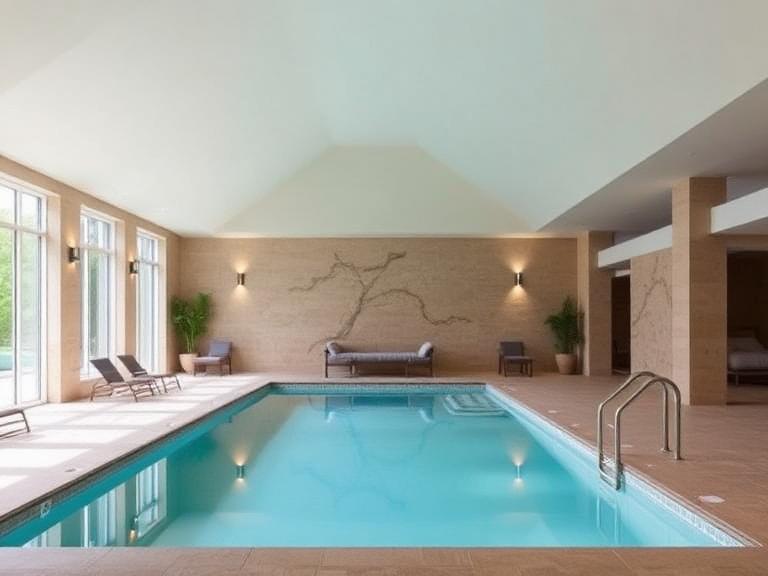
The cost to install an indoor pool depends on pool size, pool type, room construction, structural work, dehumidification, ventilation, HVAC, insulation, vapour control, plumbing, electrical work, interior finishes, and long-term operating cost. Total project cost includes the pool structure, the enclosed pool room, the supporting mechanical systems, the interior finish materials, and the systems required to control heat, air, and moisture.
Most indoor pool cost pages separate pricing into pool construction cost, room construction cost, mechanical system cost, finish cost, and ongoing ownership cost because those categories drive the final budget. Pool dimensions, building design, structural load, air handling, humidity control, energy demand, and the selected finish level directly affect both installation cost and long-term expense.
A complete indoor pool budget must account for both construction cost and long-term operating cost. Strong budget planning covers the pool build, the enclosed room environment, the required dehumidification system, and the long-term cost of evaporation control, maintenance, and daily operation.
What Does It Cost to Install an Indoor Pool?
Indoor pool installation in Canada usually costs CAD 150,000 to CAD 300,000+ for a complete residential project. This price includes the pool shell, indoor enclosure, dehumidification system, HVAC, plumbing, electrical work, permits, inspections, and interior finishes.
Indoor pools cost more than outdoor pools because the project includes both pool construction and controlled indoor building systems. Toronto pool cost guidance states that indoor pools cost more due to ventilation, dehumidification, insulation, and heating or cooling requirements.
What Is the Average Indoor Pool Cost?
The average indoor pool cost in Canada sits near CAD 200,000 for a standard residential project with a finished pool room. Smaller projects with a simple structure cost less. Custom concrete pools with premium tile, spa features, glass walls, and advanced automation cost more.
Ontario pool pricing data shows that inground pool costs alone often range from CAD 55,000 to CAD 250,000, depending on pool type. Vinyl pools often cost CAD 55,000 to CAD 110,000, fibreglass pools cost CAD 65,000 to CAD 120,000, and concrete pools cost CAD 100,000 to CAD 250,000 before full indoor room requirements.
Why Does Indoor Pool Cost Vary So Much?
Indoor pool cost varies because each project depends on pool size, pool type, room construction, site access, soil conditions, humidity control, heating design, finish level, and permit requirements.
A small vinyl liner indoor pool in an existing structure needs less construction work. A large concrete indoor pool inside a new addition needs excavation, structural engineering, waterproofing, drainage, vapour barriers, insulation, mechanical design, and longer labour time.
Dehumidification creates a major cost difference. Residential indoor pool dehumidifier pricing often ranges from CAD 15,000 to CAD 40,000 installed, while Toronto indoor pool guidance places many dehumidification systems near CAD 20,000 to CAD 30,000. Larger or more complex systems cost more when ductwork, heat recovery, and mechanical-room changes are required.
What Does the Total Installed Cost Include?
The total installed cost includes every item needed to build, finish, operate, and protect the indoor pool environment. The pool shell forms only one part of the full budget.
A complete installed budget usually includes:
- Pool shell and installation
- Excavation and structural work
- Waterproofing and drainage
- Pool plumbing and filtration
- Pool heater and circulation equipment
- Electrical wiring and pool lighting
- Indoor enclosure or pool room construction
- HVAC and dehumidification
- Vapour barriers and insulation
- Decking and slip-resistant surfaces
- Wall, ceiling, and floor finishes
- Permits, inspections, and design work
A 15 × 30 ft indoor pool estimate lists pool shell and installation at about CAD 60,000, HVAC and dehumidification at about CAD 25,000, plumbing and filtration at about CAD 8,000, electrical and lighting at about CAD 4,000, enclosure structure at about CAD 50,000, and permits and inspections at about CAD 2,000.
What Budget Fits a Standard Indoor Pool Project?
A standard indoor pool project fits a budget of CAD 180,000 to CAD 250,000 in many Canadian residential builds. This range suits a practical inground pool with a finished pool room, dependable humidity control, standard filtration, pool heating, safe lighting, and durable interior finishes.
A budget below CAD 150,000 usually suits a smaller pool, a simpler enclosure, an existing structure, or fewer custom features. A budget above CAD 250,000 suits larger concrete pools, spa integration, glass walls, high-end tile, automated covers, premium lighting, upgraded mechanical systems, and complex architectural finishes.
Indoor pool budgeting works best when the estimate separates the pool system from the room system. This method shows the real cost of the shell, structure, air quality, moisture control, energy use, safety systems, and finishes.
How Much Does Each Indoor Pool Type Cost?
Indoor pool type changes the total project cost because each design uses a different pool shell, water volume, mechanical system, room size, and installation method. Canadian homeowners generally need CAD 90,000 to CAD 300,000+ for indoor pool construction, depending on whether the project uses a compact plunge pool, a lap pool, an endless pool system, or a full saltwater indoor pool.
A full indoor pool budget includes more than the pool vessel. The final price also covers HVAC, dehumidification, vapour control, pool heating, filtration, electrical work, permits, and interior finishes. Residential indoor pool dehumidification alone sits near CAD 15,000 to CAD 40,000 installed, while larger commercial-style systems reach much higher costs.
How Much Does a Basic Indoor Pool Cost?
A basic indoor pool costs about CAD 120,000 to CAD 200,000 for a smaller residential project with a simple pool shape, standard finishes, basic lighting, and a practical mechanical setup. This range suits a compact vinyl liner pool or fibreglass pool placed inside a modest enclosure.
The lower end fits projects with an existing indoor structure and limited custom work. The higher end fits new enclosure construction, upgraded insulation, better decking, stronger ventilation, and a more complete humidity-control system. Current indoor pool cost data places indoor pool installation in a wide North American range, with dehumidification, vapour barriers, and electrical upgrades forming major budget items.
How Much Does an Indoor Lap Pool Cost?
An indoor lap pool costs about CAD 180,000 to CAD 300,000+ for a residential project. Lap pools cost more than compact pools because they need a long pool room, a longer excavation area, more wall and ceiling surface, more air control, and higher total water volume.
A standard lap pool also needs a practical width for swimming strokes, lane clearance, anti-slip deck space, and stable water temperature. 2026 lap pool pricing data lists indoor lap pools near USD 50,000 before full Canadian indoor enclosure, humidity-control, and finish costs. Full indoor construction raises the final Canadian project budget because the room system becomes part of the pool system.
How Much Does an Indoor Plunge Pool Cost?
An indoor plunge pool costs about CAD 90,000 to CAD 170,000 for a compact residential project. Plunge pools cost less than standard indoor pools because they use a smaller shell, less water, less excavation, and a smaller pool room.
A plunge pool budget still needs proper heating, filtration, ventilation, dehumidification, waterproof finishes, drainage, and safe deck surfaces. Small plunge pool base costs sit near USD 10,000 to USD 35,000 before indoor room construction and Canadian mechanical costs. Indoor installation raises the final price because the enclosure must manage warm water, humidity, condensation, and air movement.
How Much Does an Endless Pool Cost?
An endless pool costs about CAD 60,000 to CAD 140,000+ for many indoor residential installations. The price changes by model, current system, swim spa format, delivery access, electrical work, base preparation, room finishes, and ventilation needs.
Endless pool unit pricing starts near USD 19,000 to USD 70,000+, while installed swim spa packages reach USD 26,000 to USD 75,000+. Canadian swim spa pricing data also places many purchase prices near CAD 7,000 to CAD 40,000+ before full indoor preparation, enclosure finishes, and mechanical upgrades.
How Much Does a Saltwater Indoor Pool Cost?
A saltwater indoor pool costs about CAD 160,000 to CAD 280,000+ for a complete residential project. Saltwater systems add a salt chlorine generator, compatible equipment, corrosion-aware material choices, and closer planning around metal fixtures, ventilation, and indoor air quality.
The pool shell cost remains similar to a standard indoor pool of the same size and material. The saltwater system adds equipment cost, while the indoor setting adds more value to proper dehumidification and air circulation. 2026 lap pool cost data lists saltwater lap pools near USD 50,000 before full indoor construction costs, and residential indoor pool guidance identifies dehumidification and vapour control as core budget items.
What Changes the Cost to Install an Indoor Pool?
Indoor pool installation cost changes with pool size, pool depth, pool type, room design, structural engineering, site access, and local labour rates. Canadian indoor pool projects carry higher costs than outdoor pools because the build includes a controlled indoor pool environment, not only the pool shell.
A complete indoor project needs excavation, waterproofing, HVAC, dehumidification, vapour control, electrical work, plumbing, permits, and interior finishes. Current Canadian and North American cost guidance places dehumidification systems near CAD 15,000 to CAD 40,000 installed, while Toronto indoor pool guidance places many systems near CAD 20,000 to CAD 30,000.
How Do Pool Size and Depth Change Cost?
Pool size and depth change cost by increasing excavation volume, water volume, structural loads, heating demand, and dehumidification demand. A larger indoor pool needs more concrete, liner material, fibreglass structure, plumbing, filtration capacity, lighting, decking, and finished room area.
A deeper pool adds more excavation, stronger wall support, more waterproofing, and higher water weight. Standard recreational depths cost less than deep-end designs because shallow pools need less soil removal and less structural reinforcement. Ontario inground pool data places pool costs near CAD 50,000 to CAD 180,000+, with size, depth, materials, and terrain listed as major price factors.
How Do Pool Type and Layout Change Cost?
Pool type and layout change cost because vinyl, fibreglass, and concrete pools use different materials, installation methods, timelines, and finish systems. A simple rectangular layout costs less than a custom shape because it reduces forming, cutting, waterproofing detail, and room-design complexity.
Vinyl indoor pools need a liner system and periodic liner replacement. Fibreglass indoor pools use a factory-made shell and need access for delivery and placement. Concrete indoor pools cost more because they need forming, steel reinforcement, curing time, waterproofing, plaster, tile, or other custom finishes. Indoor pool cost guidance lists pool specification, depth, and pool type as direct price drivers, with complex designs costing more than standard shapes.
How Do Room Size and Building Design Change Cost?
Room size and building design change cost because the enclosure must control heat, humidity, condensation, ventilation, and building-envelope performance. A larger indoor pool room needs more framing, glazing, insulation, ceiling area, wall finishes, flooring, lighting, ductwork, and mechanical capacity.
Indoor pools need a dedicated dehumidification system to protect the structure from moisture damage. A sample indoor pool structure of 25 ft × 45 ft equals 1,125 sq ft. At USD 100 per sq ft, the structure alone reaches USD 112,500, before the pool and mechanical systems. Toronto indoor pool guidance also lists pool structure near CAD 100 per sq ft, with miscellaneous pool parts near CAD 40,000 to CAD 60,000.
How Do Structural and Engineering Requirements Change Cost?
Structural and engineering requirements change cost when the project needs reinforced foundations, retaining walls, drainage systems, soil correction, steel framing, large openings, or a new building addition. Indoor pool rooms need stronger planning because warm water creates continuous moisture inside a closed space.
Engineering costs rise when the design includes basement pools, large glass walls, long-span roofs, deep excavation, high water tables, or heavy concrete shells. The structure must manage pool weight, soil pressure, water pressure, humidity, and building movement. Indoor pool guidance identifies vapour barriers, electrical upgrades, and dehumidification systems as core budget items, not optional upgrades.
How Do Location and Labour Rates Change Cost?
Location and labour rates change cost through permit fees, trade availability, equipment access, excavation difficulty, material delivery, and regional construction pricing. Large Canadian cities often have higher labour rates, tighter access, stricter inspection schedules, and higher demand for licensed trades.
A Toronto or GTA indoor pool project often costs more than a similar rural project because the work involves excavation crews, concrete trades, electricians, plumbers, HVAC specialists, waterproofing crews, engineers, and finish contractors. Complex access raises labour time when equipment cannot reach the pool area directly. Permit review, inspection timing, and municipal requirements also affect the final project budget.
How Much Does Indoor Pool Room Construction Cost?
Indoor pool room construction costs CAD 175 to CAD 500+ per sq. ft. in Canada. The final budget depends on room size, foundation work, structural design, HVAC, dehumidification, vapour barriers, insulation, glazing, ceiling height, and interior finishes.
Indoor pool rooms cost more than standard home additions because the room must control humidity, condensation, air movement, and building-envelope moisture. Canadian home addition pricing sits near CAD 175 to CAD 400 per sq. ft., while Toronto-area additions reach CAD 360 to CAD 500 per sq. ft. for more complex builds. Indoor pool enclosures sit near the upper range because they need moisture-resistant construction and mechanical systems.
How Much Does New Room Construction Cost?
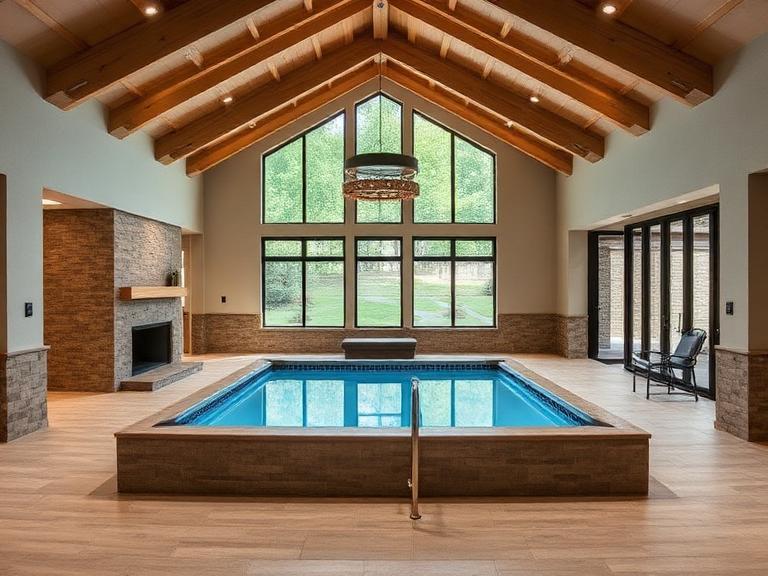
New indoor pool room construction costs CAD 175,000 to CAD 500,000+ for a 1,000 sq. ft. dedicated pool room. The budget includes foundation work, framing, roofing, wall assemblies, ceiling systems, insulation, vapour barriers, electrical work, mechanical-room space, drainage, permits, and moisture-resistant finishes.
Simple room construction sits near CAD 175 to CAD 250 per sq. ft. when the design uses a basic rectangle, limited glazing, standard ceiling height, and direct site access. Complex indoor pool rooms reach CAD 400 to CAD 500+ per sq. ft. when the design includes high ceilings, steel beams, large glass panels, custom rooflines, premium tile, and expanded mechanical systems. Canadian extension cost data places home additions near CAD 175 to CAD 400 per sq. ft. before pool-specific upgrades.
How Much Does a Basement Indoor Pool Conversion Cost?
A basement indoor pool conversion costs CAD 200,000 to CAD 600,000+ when the work includes excavation, underpinning, waterproofing, structural reinforcement, drainage, ventilation, and humidity control. The basement location increases cost because the pool adds water weight, soil pressure, hydrostatic pressure, and moisture risk below grade.
Basement pool conversion budgets rise when the work needs concrete cutting, foundation underpinning, sump systems, floor drains, vapour control, mechanical upgrades, and larger electrical service. Indoor pool cost guidance identifies vapour barriers, dehumidification, and electrical upgrades as required cost items for indoor installations. Vapour barrier installation pricing sits near USD 0.50 to USD 0.75 per sq. ft., before Canadian labour, detailing, and assembly requirements.
How Much Does an Enclosed Pool Addition Cost?
An enclosed pool addition costs CAD 150,000 to CAD 600,000+ for many Canadian residential projects. A compact enclosure sits near the lower range. A full insulated home addition with permanent foundations, custom glazing, finished ceilings, and dedicated mechanical systems sits near the upper range.
Enclosed pool addition pricing follows square-foot construction cost. A 500 sq. ft. Toronto ground-level expansion costs about CAD 180,000 to CAD 240,000 at CAD 360 to CAD 480 per sq. ft. A larger 1,000 sq. ft. indoor pool addition reaches CAD 360,000 to CAD 480,000 before premium pool-room upgrades. Toronto home addition data places house extensions near CAD 400 to CAD 500 per sq. ft. in higher-complexity builds.
How Much Do Insulation and Vapour Barriers Add?
Insulation and vapour barriers add CAD 5,000 to CAD 40,000+ to an indoor pool room. The total depends on wall area, ceiling area, insulation type, R-value target, air sealing, penetrations, window interfaces, and vapour-control detailing.
Spray foam insulation in Canada costs about CAD 4.13 to CAD 5.90 per sq. ft., depending on thickness. Broader 2026 spray foam pricing ranges from CAD 1.00 to CAD 4.50 per sq. ft. for common open-cell and closed-cell applications. Vapour barriers add a smaller material cost, but pool rooms need careful sealing around ceilings, wall joints, glazing, ducts, lights, drains, and service penetrations.
How Much Do Windows, Glazing, and Ceiling Design Add?
Windows, glazing, and ceiling design add CAD 25,000 to CAD 150,000+ to an indoor pool room. The cost depends on glass area, roof span, ceiling height, frame material, thermal performance, skylights, condensation control, and structural support.
Large glazing systems increase the budget because indoor pool rooms need durable frames, insulated glass, warm air movement near glass surfaces, and condensation-resistant detailing. High ceilings increase framing, cladding, insulation, lighting, ductwork, and finish costs. Toronto-area addition pricing reaches CAD 360 to CAD 500 per sq. ft. when structural complexity and finish level increase. Indoor pool rooms sit in this higher range because glazing and ceiling design affect both the structure and the humidity-control system.
How Much Does Dehumidification and HVAC Cost?
Dehumidification and HVAC for an indoor pool cost CAD 25,000 to CAD 90,000+ for residential projects in Canada. The final cost depends on pool surface area, room volume, water temperature, air temperature, ductwork, equipment size, heat recovery, and controls.
Indoor pool HVAC costs more than standard home HVAC because the system controls humidity, condensation, air quality, room heat, and pool-room corrosion risk. Canadian indoor pool pricing places dehumidification systems near CAD 20,000 to CAD 30,000, while specialized residential replacement systems start near CAD 56,000 installed for larger equipment.
Why Does an Indoor Pool Need Dehumidification?
An indoor pool needs dehumidification because pool water releases moisture into the enclosed room. That moisture increases relative humidity, creates condensation, and damages windows, walls, ceilings, ductwork, and metal components.
Dehumidification protects the pool room by removing moisture before it forms water on cold surfaces. Uncontrolled indoor pool humidity causes condensation, corrosion, mould risk, and damage around glass, metal, and exterior walls.
How Much Does a Pool Dehumidifier Cost?
A pool dehumidifier costs CAD 20,000 to CAD 65,000+ for residential indoor pool projects in Canada. Smaller indoor pool systems sit near CAD 20,000 to CAD 30,000. Larger packaged systems with higher airflow and installed pricing start near CAD 56,000.
Pool dehumidifier pricing changes with pool surface area, airflow, moisture load, room volume, heat-recovery design, duct connections, and installation access. Canadian product data lists pool conditioner HRV equipment near CAD 23,066 to CAD 25,032, while installed specialized systems start near CAD 56,000 for residential applications.
How Much Does Ventilation Equipment Cost?
Ventilation equipment for an indoor pool costs CAD 10,000 to CAD 35,000+ when the project includes supply fans, exhaust fans, outdoor-air intake, ductwork, dampers, controls, and corrosion-resistant components. Simple ventilation-based dehumidifier systems cost USD 4,000 to USD 10,000 before Canadian installation and pool-room upgrades.
Ventilation supports indoor air quality by bringing in outdoor air and exhausting humid, chemical-laden air. Natatorium design guidance identifies outdoor air as essential for indoor pool air quality and code compliance. Heat recovery improves ventilation performance by capturing energy from exhaust air.
How Much Does Pool Room HVAC Cost?
Pool room HVAC costs CAD 25,000 to CAD 90,000+ for most residential indoor pool rooms. The system covers air heating, cooling, humidity control, air distribution, ductwork, fresh-air intake, exhaust, controls, and commissioning.
Pool room HVAC requires higher design precision than standard residential HVAC. The system must move warm dry air across glass, exterior walls, and ceiling areas to reduce condensation. Specialized indoor pool HVAC equipment also uses corrosion-resistant components because pool-room air contains moisture and chemical by-products.
How Much Do Heat-Recovery Systems Change Cost?
Heat-recovery systems add 15% to 25% to dehumidification equipment cost in larger pool HVAC projects. A CAD 56,000 base dehumidification package becomes about CAD 64,400 to CAD 70,000 after a 15% to 25% heat-recovery increase, before ductwork changes, controls, and electrical upgrades.
Heat recovery reduces energy waste by moving recovered heat back into the pool room air, pool water, or ventilation process. Canadian product data describes pool conditioner HRV systems that dehumidify the pool room and reject extracted heat back into the air stream, pool water, or outdoor condenser.
What Pool Construction Costs Matter Most?
Pool construction costs that matter most are excavation, pool shell construction, plumbing, electrical work, waterproofing, drainage, coping, tile, and interior finishes. These items create the main price changes inside an indoor pool installation because they define the structure, service connections, moisture protection, and finished surface quality.
Current Canadian cost data places inground pool installation near CAD 175 to CAD 300 per sq. ft., while Ontario 2026 pool projects range from CAD 50,000 to CAD 180,000+ before full indoor-room and mechanical upgrades.
How Much Does Pool Excavation or Interior Build Work Cost?
Pool excavation or interior build work costs CAD 5,000 to CAD 25,000+ for many indoor pool projects. The lower range covers basic digging, grading, and soil removal. The higher range covers restricted access, concrete slab cutting, basement work, rock removal, disposal, shoring, and equipment handling inside the property.
Ontario pool cost data lists excavation and site preparation at CAD 5,000 to CAD 15,000. Broader 2026 pool installation data places site preparation at CAD 5,000 to CAD 25,000+ when access, soil, retaining walls, and terrain increase labour.
How Much Does the Pool Shell or Structure Cost?
The pool shell or structure costs CAD 50,000 to CAD 250,000+ based on pool material, size, depth, reinforcement, and indoor access. Vinyl liner pools sit near the lower range. Fibreglass pools sit in the mid-range. Concrete pools sit near the upper range because they need forming, steel reinforcement, shotcrete or gunite placement, curing, waterproofing, and custom finishing.
Ontario 2026 pool data lists vinyl liner pools from about CAD 50,000, fibreglass pools from about CAD 50,000, ICF pools from about CAD 110,000, and concrete pools from about CAD 130,000. A separate Ontario cost table places vinyl pools at CAD 55,000 to CAD 110,000, fibreglass pools at CAD 65,000 to CAD 120,000, and concrete pools at CAD 100,000 to CAD 250,000.
How Much Do Plumbing and Electrical Work Cost?
Plumbing and electrical work costs CAD 8,000 to CAD 40,000+ for an indoor pool, depending on pump distance, equipment-room layout, heater type, lighting design, automation, breaker capacity, and code requirements. Pool plumbing covers skimmers, drains, returns, circulation lines, filtration, heater connections, and equipment pads. Pool electrical work covers bonding, grounding, lighting, pumps, controls, timers, safety devices, and panel upgrades.
Indoor pool pricing data lists electrical, plumbing, and permits at USD 10,000 to USD 40,000. Fibreglass pool installation cost data lists basic plumbing and electrical connections near USD 4,000 to USD 6,000, before larger indoor-pool service upgrades, lighting, automation, and mechanical-room work.
How Much Do Waterproofing and Drainage Work Cost?
Waterproofing and drainage work costs CAD 10,000 to CAD 60,000+ for indoor pool construction. The final price depends on pool shell type, basement location, groundwater risk, floor drains, sump systems, exterior membranes, interior drainage, and waterproof wall assemblies.
Canadian waterproofing data places interior waterproofing at CAD 69 to CAD 195 per linear ft. and exterior waterproofing at CAD 100 to CAD 290 per linear ft. Sump pump installation ranges from CAD 565 to CAD 3,500. Indoor pools need stronger waterproofing than standard rooms because the structure faces pool water, cleaning water, condensation, and moisture movement through floors and walls.
How Much Do Coping, Tile, and Interior Finishes Cost?
Coping, tile, and interior finishes cost CAD 10,000 to CAD 50,000+ for indoor pool projects. The total depends on coping material, tile coverage, pool perimeter, finish type, slip resistance, edge detail, and labour complexity.
Ontario pool coping data places new pool coping installation at CAD 50 to CAD 250 per linear ft., with labour near CAD 35 to CAD 75 per linear ft. Pool tile data lists waterline tile near USD 25 per linear ft., while full pool tile installation rises sharply when glass tile, mosaic patterns, or full interior coverage apply. Indoor pool pricing data places finishes, including tile, coping, decking, and lighting, at USD 10,000 to USD 50,000+.
What Permit and Compliance Costs Apply?
Permit and compliance costs for an indoor pool range from CAD 1,500 to CAD 25,000+ when the project includes a new room, structural drawings, zoning review, pool enclosure approval, electrical notification, mechanical design, inspections, and site documentation. The final amount depends on municipality, room size, construction value, engineering scope, electrical load, HVAC design, and site constraints.
Indoor pool permits differ from outdoor pool permits because the project includes both a pool system and a building system. The permit package addresses the pool enclosure, building addition, structural work, vapour control, mechanical ventilation, electrical bonding, drainage, and energy-efficiency compliance.
When Is a Permit Required?
A permit is required when an indoor pool project includes a new building addition, structural changes, basement excavation, interior alteration, electrical work, mechanical work, plumbing work, or a regulated pool enclosure. Toronto requires a Zoning Certificate before a Pool Fence Enclosure Permit, and a pool cannot be constructed and filled without an enclosure that meets municipal fence rules.
Building permit review applies when the project creates or changes a pool room inside a detached house, semi-detached house, or townhouse. Toronto lists small residential additions as a building permit service and requires scaled drawings, site plans, floor plans, roof plans, designer information, and energy-efficiency documentation for additions.
How Much Do Permit Fees Cost?
Permit fees cost CAD 215 to CAD 5,000+ for many residential indoor pool projects, before drawings, surveys, engineering, and inspection-related trade costs. Toronto’s 2026 building permit schedule sets a CAD 214.79 minimum fee, plus a fee formula based on service index × floor area.
Toronto residential addition fees use CAD 18.56 per m² for single-family dwellings, semis, townhouses, duplexes, and live-work units. Interior alteration fees use CAD 11.53 per m². A 100 m² indoor pool room addition creates a base municipal building permit fee of about CAD 1,856, before zoning certificate charges, deposits, pool enclosure fees, and additional reviews.
Pool enclosure fees vary by municipality. Mississauga lists a 2026 pool enclosure inspection fee of CAD 402.53 including HST. Smaller Ontario municipalities list lower fixed permit fees, while larger urban projects add zoning review, deposits, and more inspection steps.
How Much Do Drawings, Surveys, or Engineering Add?
Drawings, surveys, and engineering add CAD 5,000 to CAD 30,000+ to an indoor pool permit package. Basic site plans and permit drawings sit near the lower range. Basement pools, concrete shells, large glazing systems, structural steel, long-span roofs, and mechanical-room designs sit near the upper range.
Toronto permit applications require a site plan with property lines, lot area, easements, building locations, setbacks, grading, parking, and landscape details. They also require floor plans, roof plans, standardized drawing sheets, dimensions, designer information, and engineer responsibility forms when sealed engineering drawings form part of the submission.
Survey costs add CAD 1,500 to CAD 6,000 in many Ontario residential projects, depending on property size, urban density, boundary complexity, topographic detail, and site-plan requirements. A current survey matters because pool-room additions need accurate setbacks, grading, easements, lot coverage, and building-height information.
How Much Do Electrical and Mechanical Inspections Add?
Electrical and mechanical inspections add CAD 500 to CAD 5,000+ when the project includes pool bonding, pumps, heaters, lighting, controls, panel work, ventilation, dehumidification, and HVAC equipment. The amount rises when the design requires service upgrades, additional inspection visits, trench review, mechanical commissioning, or separate trade permits.
Ontario electrical pool inspection fees start with the Electrical Safety Authority. The 2026 ESA guide lists CAD 168 for an inground, indoor, or above-ground pool, including up to two inspection visits. A separate minimum notification fee is CAD 92, and after-hours inspection charges start at CAD 489 for the first two hours.
Mechanical compliance costs depend on the HVAC, dehumidification, exhaust, fresh-air intake, ductwork, and heat-recovery design. Indoor pool rooms need mechanical review because the system controls moisture, condensation, indoor air quality, corrosion risk, and building-envelope protection.
What Compliance Costs Are Easy to Miss?
Easy-to-miss compliance costs include zoning certificates, pool enclosure inspections, road damage deposits, tree protection, minor variance applications, survey updates, engineering review, energy-efficiency forms, electrical notifications, extra inspection visits, and re-submission fees.
Toronto zoning review adds cost because the Zoning Certificate fee equals 25% of the total prescribed building permit fee. Additional reviews after an examiner notice or design revision create a re-submission fee equal to 10% of the initial Zoning Certificate fee or the minimum hourly fee, whichever is greater.
Construction deposits and site controls add cost when equipment, excavation, deliveries, or mud tracking affect public property. Toronto requires a Municipal Road Damage Form and a damage deposit to protect curbs, sidewalks, roads, boulevards, public lanes, and municipal services during residential addition work.
How Much Do Indoor Pool Features Add?
Indoor pool features add CAD 10,000 to CAD 150,000+ to the total project cost. The largest price changes come from pool heating, LED lighting, automation, safety covers, integrated spas, hydrotherapy jets, glass tile, and natural stone finishes.
Feature costs rise faster in an indoor pool because each upgrade connects to electrical load, plumbing, HVAC, dehumidification, waterproofing, and humidity-safe material selection. Pool heat pump equipment in Canada starts near CAD 1,999 and rises above CAD 4,999 before installation, while automatic safety covers commonly cost CAD 10,000 to CAD 20,000.
How Much Do Heaters and Heat Pumps Add?
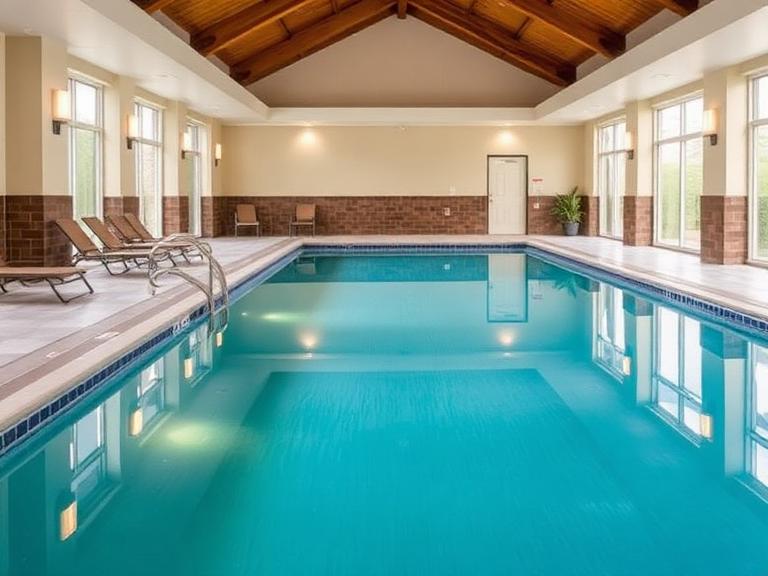
Heaters and heat pumps add CAD 5,000 to CAD 20,000+ to an indoor pool project. The cost includes the unit, electrical or gas connection, plumbing tie-ins, controls, ventilation needs, and mechanical-room coordination.
Pool heat pump equipment in Canada ranges from about CAD 1,999 for a 50,000 BTU model to about CAD 4,999 for a 110,000 BTU model before installation. Pool heater installation data places installed heater costs near USD 1,830 to USD 4,249, with added costs for permits, utility lines, and old-equipment removal.
How Much Do Lighting and Automation Add?
Lighting and automation add CAD 3,000 to CAD 20,000+ to an indoor pool installation. Basic LED lighting and simple timers sit near the lower range. App-based automation with pump, heater, lighting, cover, spa, and water-feature control sits near the upper range.
Inground LED pool light systems in Canada list near CAD 649 to CAD 1,359 per system before broader installation work. Smaller installed LED lights cost about USD 700 to USD 900 each, while fibre-optic lights cost about USD 1,300 to USD 1,700. Pool automation systems commonly cost USD 800 to USD 5,500+ installed, with advanced systems reaching higher totals when valves, panels, sensors, and equipment upgrades are included.
How Much Do Covers and Safety Features Add?
Covers and safety features add CAD 2,000 to CAD 30,000+ to an indoor pool project. The total depends on cover type, pool shape, track system, motorized operation, access controls, railing needs, alarms, and code-related safety details.
Custom safety covers in Canada start near CAD 1,209 before custom sizing and installation. Automatic safety covers cost CAD 10,000 to CAD 20,000, while Ontario cover pricing ranges from about CAD 650 for basic covers to more than CAD 30,000 for premium automatic systems.
How Much Do Spas and Hydrotherapy Features Add?
Spas and hydrotherapy features add CAD 15,000 to CAD 75,000+ to an indoor pool build. The price includes the spa structure, jets, booster pumps, plumbing loops, heater capacity, controls, waterproofing, tile, drainage, and mechanical coordination.
Hot tub or spa additions cost USD 2,000 to USD 25,000 for many pool projects, while in-ground hot tubs cost USD 6,000 to USD 25,000 before extra electrical work, permits, site work, and finish upgrades. Water features add USD 1,000 to USD 10,000+, and extra lighting adds USD 700 to USD 2,000.
How Much Do Premium Tile and Stone Finishes Add?
Premium tile and stone finishes add CAD 15,000 to CAD 100,000+ to an indoor pool project. The cost depends on pool perimeter, tile coverage, material type, pattern complexity, waterproof substrate, coping detail, labour rate, and indoor moisture resistance.
Pool tile installation costs about USD 20 to USD 50 per sq. ft. for tile and labour. Glass tile costs about USD 7 to USD 50 per sq. ft., mosaic tile costs about USD 75 to USD 100 per sq. ft., and stone tile costs about USD 5 to USD 30 per sq. ft. Granite pool tile reaches about USD 27 to USD 62 per sq. ft. installed.
What Hidden Costs Increase an Indoor Pool Budget?
Hidden indoor pool costs add CAD 25,000 to CAD 150,000+ to a project when moisture control, structural work, ductwork, finishing, and delays sit outside the first estimate. These costs affect indoor pool construction more than outdoor pool construction because the pool operates inside a closed building envelope.
Indoor pool budgets need separate allowances for dehumidification, waterproofing, structural reinforcement, ventilation ductwork, finish repairs, permit revisions, and change orders. Canadian renovation cost data shows residential renovation costs rose 0.9% in Q2 2025 after a 0.3% rise in Q1 2025, which increases exposure when projects run longer than planned.
What Moisture-Control Costs Are Easy to Miss?
Moisture-control costs add CAD 20,000 to CAD 90,000+ when an indoor pool needs a stronger dehumidifier, better vapour sealing, drainage upgrades, or humidity-safe materials. Pool rooms need moisture control because warm pool water releases water vapour into the enclosed air.
Dehumidification creates the largest missed cost. Residential indoor pool dehumidifier systems start near CAD 56,000 installed for specialized equipment, while larger shared-pool systems range from CAD 75,000 to CAD 200,000+. Heat recovery adds 15% to 25% to equipment cost.
What Structural Costs Are Easy to Miss?
Structural costs add CAD 10,000 to CAD 100,000+ when the pool room needs deeper footings, reinforced slabs, steel beams, underpinning, soil correction, retaining walls, or foundation waterproofing. Indoor pools add heavy water loads and constant moisture loads to the building structure.
Basement and below-grade pools increase structural allowances because the work needs waterproofing, drainage, sump systems, and protection against hydrostatic pressure. Current Ontario waterproofing data places interior systems near CAD 80 to CAD 150+ per linear ft., exterior waterproofing near CAD 120 to CAD 400+ per linear ft., and sump pump costs from CAD 650.
What Ventilation and Ductwork Costs Are Easy to Miss?
Ventilation and ductwork costs add CAD 10,000 to CAD 60,000+ when the pool room needs new supply ducts, return ducts, exhaust paths, outdoor-air intake, corrosion-resistant grilles, balancing, and ceiling access work. Indoor pool air systems need stronger design than normal residential HVAC because the air carries humidity and pool-treatment by-products.
Ductwork pricing rises when installers need long duct runs, concealed routes, bulkheads, ceiling cuts, or custom transitions. Current ductwork data places basic duct installation near USD 13.95 to USD 23.19 per linear ft., while duct replacement cost data lists USD 10 to USD 25 per linear ft. including removal and installation.
What Finishing Costs Follow Pool Installation?
Finishing costs add CAD 10,000 to CAD 75,000+ after pool installation when the project needs drywall repair, tile transitions, ceiling finishing, paint, trim, flooring, glazing repairs, cleaning, landscaping repair, and debris removal. These items appear after the main pool work because construction affects the surrounding room and access paths.
Post-installation finishes increase when moisture-resistant materials replace standard materials. Indoor pool rooms need water-resistant wall assemblies, non-slip flooring, sealed trim, corrosion-resistant hardware, and finishes that tolerate humidity. Basement waterproofing and related protection costs add more when the project exposes cracks, drainage defects, or older foundation issues.
What Delays Increase Total Project Cost?
Delays increase total project cost through labour remobilization, permit revisions, inspection rebooking, storage fees, material price changes, equipment backorders, design changes, and extended temporary protection. Indoor pool projects face higher delay risk because the work depends on pool trades, HVAC specialists, electricians, plumbers, engineers, and municipal inspections.
Change orders create the most expensive delay pattern. Canadian renovation data reported that 39% of homeowners who completed recent renovations went over budget, while a 2024 CIBC poll found average expected renovation spending reached CAD 19,000, nearly double the CAD 10,000 reported in 2019. Indoor pool projects carry more exposure because one late design change affects structure, mechanical systems, waterproofing, and finishes at the same time.
What Does an Indoor Pool Cost to Run?
Indoor pool running costs range from CAD 8,000 to CAD 30,000+ per year for a residential pool in Canada. The yearly budget includes pool heating, dehumidification, ventilation, air handling, water treatment, cleaning, filter care, and equipment servicing.
Electricity rates create large regional cost differences. A household using 1,000 kWh per month pays about CAD 83 to CAD 375 per month, depending on the province or territory. This range affects every electric system inside an indoor pool room, including pumps, heat pumps, fans, controls, and dehumidification equipment.
How Much Does Pool Heating Cost Each Year?
Pool heating costs CAD 2,500 to CAD 12,000+ per year for many residential indoor pools. The total depends on pool size, water temperature, cover use, heater type, room temperature, and energy rates.
Evaporation creates the main heating load. Technical pool energy guidance states that about 90% of annual pool water heating cost comes from evaporation loss. Each pound of evaporated moisture removes about 1,000 BTU of heat from the pool water.
How Much Does Dehumidification Cost Each Year?
Dehumidification costs CAD 2,000 to CAD 10,000+ per year for a residential indoor pool room. The yearly cost depends on pool surface area, water temperature, air temperature, relative humidity target, equipment efficiency, and daily run time.
Pool dehumidification removes moisture before it condenses on glass, ceilings, walls, and metal components. Indoor pool humidity control protects the room from corrosion, mould risk, and building-envelope damage.
How Much Does Ventilation and Air Handling Cost?
Ventilation and air handling cost CAD 1,500 to CAD 7,500+ per year for many residential indoor pool rooms. The cost covers supply fans, return fans, exhaust air, fresh-air intake, duct losses, air heating, and system controls.
Indoor pool air handling costs more than standard room ventilation because the system moves warm, dry air across glazing, exterior walls, and ceiling areas. This airflow reduces condensation and supports indoor air quality. Heat-recovery ventilation reduces wasted energy by transferring heat from exhaust air back into the system.
How Much Do Chemicals and Water Treatment Cost?
Chemicals and water treatment cost CAD 600 to CAD 1,500+ per year for many residential indoor pools. The budget covers chlorine or saltwater treatment, pH balancers, alkalinity control, shock treatments, test kits, filter media, and specialty treatments.
Canadian pool cost data places annual DIY chemical spending near CAD 600 to CAD 1,200 in the GTA. Broader Canadian ownership data places chemical treatments near CAD 500 to CAD 800 per year for chlorine, pH balancers, and related products.
How Much Does Indoor Pool Maintenance Cost Each Year?
Indoor pool maintenance costs CAD 3,000 to CAD 8,000+ per year with professional service. The total includes weekly cleaning, water testing, chemical balancing, filter cleaning, equipment checks, minor repairs, and seasonal service visits.
Weekly pool maintenance in the GTA costs about CAD 80 to CAD 150 per visit. That pricing creates an annual service range of about CAD 4,160 to CAD 7,800 for year-round weekly service before repairs, replacement parts, and major equipment servicing.
What Maintenance Costs Apply to an Indoor Pool?
Indoor pool maintenance costs range from CAD 5,000 to CAD 18,000+ per year for water care, dehumidifier service, HVAC maintenance, equipment repairs, and surface repairs. The total depends on pool size, water volume, service frequency, equipment age, humidity load, and finish type.
Indoor pools need more maintenance than seasonal outdoor pools because the system operates year-round. Water quality, air quality, humidity control, and mechanical performance affect the pool room, finishes, and equipment life.
How Much Does Water Quality Maintenance Cost?
Water quality maintenance costs CAD 600 to CAD 1,200 per year for DIY chemicals and CAD 4,160 to CAD 7,800 per year for weekly professional service in the GTA. Weekly service pricing sits near CAD 80 to CAD 150 per visit, and DIY annual chemicals sit near CAD 600 to CAD 1,200.
Water quality maintenance includes chlorine or saltwater treatment, pH balancing, alkalinity control, calcium hardness checks, shock treatment, filter cleaning, and water testing. Indoor pools need stable chemistry because poor balance damages heaters, liners, tiles, grout, metal fittings, and pool covers.
How Much Does Dehumidifier Service Cost?
Dehumidifier service costs CAD 1,000 to CAD 3,000+ per year for filter care, coil cleaning, drain checks, control checks, and equipment servicing. Indoor pool cost guidance lists maintenance and equipment servicing near USD 1,000 to USD 3,000 per year for filters, pumps, and dehumidification units.
Dehumidifier maintenance protects the pool room envelope from condensation. Service work covers air filters, coils, fans, condensate drains, humidity sensors, electrical controls, and heat-recovery components. Skipped service increases strain on the HVAC system and raises moisture risk around windows, ceilings, and wall assemblies.
How Much Does HVAC Maintenance Cost?
HVAC maintenance costs CAD 200 to CAD 650 per year for standard residential plans in Ontario, before indoor-pool-specific repairs or extra visits. Basic annual coverage runs CAD 200 to CAD 450, while premium plans run CAD 350 to CAD 650.
HVAC service calls cost CAD 100 to CAD 250 across Canada for diagnosis, inspection, and basic service attendance. Indoor pool rooms add more demand because the system controls temperature, humidity, fresh air, exhaust air, and condensation risk.
How Much Do Repairs and Equipment Replacement Cost?
Repairs and equipment replacement cost CAD 1,000 to CAD 10,000+ per year when pumps, filters, heaters, valves, sensors, covers, or HVAC parts need service. Pool pump replacement costs USD 700 to USD 4,000, depending on pump type, flow rate, horsepower, and installation conditions.
Pool filter replacement costs USD 450 to USD 2,000, with an average near USD 1,125. HVAC repairs range from USD 130 to USD 2,000, depending on the failed part and system type. Indoor pool equipment faces higher wear because it runs year-round and operates in a warm, humid environment.
How Much Do Surface and Tile Repairs Cost?
Surface and tile repairs cost CAD 500 to CAD 20,000+, depending on damage size, tile type, grout condition, waterproofing condition, and finish material. Pool tile installation or replacement costs USD 20 to USD 50 per sq. ft., while full pool tile projects range from USD 3,000 to USD 20,000.
Surface repair costs rise when moisture reaches the substrate, grout fails, coping shifts, or waterproofing breaks behind the finish. Indoor pool finishes need quick repair because cracked grout, loose tile, and damaged plaster increase water loss, chemical demand, and hidden moisture damage.
Is an Indoor Pool More Expensive Than an Outdoor Pool?
An indoor pool is more expensive than an outdoor pool in both upfront construction and yearly operation. The higher cost comes from the pool room, dehumidification, HVAC, ventilation, vapour control, insulation, and year-round mechanical use. Ontario 2026 outdoor inground pool pricing starts near CAD 50,000 for vinyl and fibreglass pools, while concrete pools exceed CAD 130,000 before indoor-room costs.
Indoor pool construction adds the cost of a controlled building environment. Indoor pool guidance identifies ventilation, dehumidification, insulation, and heating or cooling as the main reasons indoor pools cost more than outdoor pools.
Is an Indoor Pool More Expensive to Build?
An indoor pool is more expensive to build because the project includes both the pool structure and the indoor enclosure. The build needs foundations, walls, roofing, glazing, vapour barriers, insulation, drainage, electrical work, plumbing, HVAC, and dehumidification.
Outdoor pool construction focuses mainly on excavation, shell installation, plumbing, equipment, decking, fencing, permits, and landscaping. Ontario 2026 data places vinyl liner pools from about CAD 50,000, fibreglass pools near CAD 50,000 to CAD 80,000, and concrete pools above CAD 130,000. Indoor pool projects add the enclosure and mechanical systems on top of those core pool costs.
Is an Indoor Pool More Expensive to Operate?
An indoor pool is more expensive to operate because the pool runs year-round and needs constant humidity control, air handling, water heating, filtration, and ventilation. Outdoor pools in Canada run mainly during the warm season, which reduces annual heating, cleaning, and chemical demand.
Indoor pool operating costs include monthly heating and electricity, water chemistry, cleaning, and HVAC maintenance. Current indoor pool cost data places monthly heating and electricity near USD 300 to USD 600, water chemistry and cleaning near USD 50 to USD 100 per month, and total annual operation near USD 4,000 to USD 8,000 before major repairs or Canadian regional energy differences.
Is an Outdoor Pool Cheaper Upfront?
An outdoor pool is cheaper upfront because it does not need a full indoor pool room, dedicated dehumidification, pool-room ductwork, vapour barriers, or year-round air control. The lower upfront budget makes outdoor pools the more affordable construction choice for many Canadian homes.
Outdoor inground pool pricing in Ontario starts near CAD 50,000 for vinyl and fibreglass pools. Higher-end concrete pools exceed CAD 130,000. Above-ground pool installation costs sit near CAD 6,000 to CAD 12,000, which creates the lowest entry cost but delivers a different structure, lifespan, and property integration than an inground pool.
Is an Indoor Pool Better for Year-Round Use?
An indoor pool is better for year-round use because the room protects swimming conditions from snow, rain, wind, leaves, insects, and seasonal temperature swings. The enclosed setting supports consistent use through Canadian winter when outdoor pools remain closed or impractical.
Year-round use increases the value of indoor pool access for fitness, rehabilitation, hydrotherapy, and private recreation. The same year-round access also raises yearly cost because heating, dehumidification, filtration, lighting, and air handling operate across all seasons. Indoor pool operating data identifies heating, electricity, water chemistry, cleaning, and HVAC maintenance as recurring annual cost items.
Which Pool Type Fits the Budget Best?
The best budget fit depends on whether the priority is lowest upfront cost, year-round use, or long-term home integration. Above-ground outdoor pools fit the lowest upfront budget at about CAD 6,000 to CAD 12,000. Outdoor vinyl or fibreglass inground pools fit a mid-range budget from about CAD 50,000 to CAD 120,000. Outdoor concrete pools fit custom designs above CAD 130,000. Indoor pools fit premium budgets because the project adds an enclosure, HVAC, dehumidification, and moisture-control systems.
Outdoor pools fit homeowners focused on lower construction cost and seasonal use. Indoor pools fit homeowners focused on year-round swimming, privacy, controlled conditions, and integrated indoor design. The correct budget choice comes from comparing the full build cost, annual operating cost, service needs, and usable swimming months.
How Do You Budget for an Indoor Pool?
Indoor pool budgeting starts with a full project range of CAD 150,000 to CAD 500,000+. The budget must separate the pool cost, room cost, HVAC, dehumidification, permits, engineering, finishes, and contingency. Current Ontario pool pricing places outdoor inground pool shells near CAD 50,000 to CAD 180,000+, while indoor projects add room construction, vapour control, ventilation, and mechanical systems.
Indoor pool budgets need two cost lines: pool system cost and building system cost. The pool system covers the shell, plumbing, filtration, heating, electrical work, tile, coping, and safety equipment. The building system covers the room, structure, insulation, vapour barriers, glazing, HVAC, dehumidification, drainage, permits, and inspections.
What Budget Fits a Basic Indoor Pool?
A basic indoor pool fits a budget of CAD 150,000 to CAD 225,000. This budget suits a compact vinyl liner pool or fibreglass pool inside a simple enclosure with standard finishes, basic lighting, standard filtration, and essential humidity control.
Basic pool budgeting works best when the project keeps the shape rectangular, limits glazing, avoids deep excavation, and uses standard mechanical layouts. Ontario 2026 pool data places vinyl liner pools near CAD 50,000+ and fibreglass pools near CAD 50,000 to CAD 80,000 before indoor-room costs. Canadian home addition pricing adds about CAD 175 to CAD 400 per sq. ft. for the room structure, before pool-specific upgrades.
What Budget Fits a Mid-Range Indoor Pool?
A mid-range indoor pool fits a budget of CAD 225,000 to CAD 350,000. This budget supports a larger fibreglass pool or standard concrete pool, a finished pool room, better lighting, a stronger dehumidification system, improved decking, upgraded tile, and permit-ready mechanical design.
Mid-range indoor pool projects place more money into air control and room quality. Indoor pool pricing data lists dehumidification systems near CAD 20,000 to CAD 30,000, miscellaneous pool parts near CAD 40,000 to CAD 60,000, and full indoor pool projects near CAD 200,000 before higher-end design upgrades.
What Budget Fits a Luxury Indoor Pool?
A luxury indoor pool fits a budget of CAD 350,000 to CAD 750,000+. This budget supports a custom concrete pool, large glazing, high ceilings, premium tile, natural stone, integrated spa features, automation, high-capacity HVAC, heat recovery, structural steel, and architectural ceiling design.
Luxury indoor pool budgeting rises when the room becomes a custom addition rather than a simple enclosure. Toronto-area addition cost data places complex home additions near CAD 400 to CAD 500 per sq. ft. Higher pool budgets also reflect custom concrete work, advanced structural engineering, large glass systems, upgraded finishes, and expanded mechanical capacity.
How Much Contingency Should You Keep?
Indoor pool contingency should equal 10% to 20% of the total project budget. A CAD 250,000 project needs a CAD 25,000 to CAD 50,000 contingency. A CAD 500,000 project needs a CAD 50,000 to CAD 100,000 contingency.
Contingency protects the budget from soil issues, structural changes, waterproofing defects, ductwork changes, permit revisions, equipment upgrades, glazing changes, and finish corrections. Canadian construction contingency guidance places renovation and retrofit contingency at 10% to 20% because existing buildings create more unknowns than new construction.
How Do You Separate Pool Cost From Room Cost?
Pool cost and room cost should be separated into two estimates before the final budget is approved. This split shows the true price of the pool shell and the true price of the indoor pool environment.
Pool cost includes excavation, pool shell, plumbing, filtration, heating, electrical bonding, lighting, coping, tile, interior finish, cover, and water treatment. Ontario data places vinyl pools near CAD 55,000 to CAD 110,000, fibreglass pools near CAD 65,000 to CAD 120,000, and concrete pools near CAD 100,000 to CAD 250,000 before full indoor-room construction.
Room cost includes foundations, framing, roofing, insulation, vapour barriers, glazing, ceiling design, flooring, drainage, HVAC, dehumidification, permits, engineering, and inspections. Canadian addition pricing near CAD 175 to CAD 400 per sq. ft. gives the base room framework, while pool-specific mechanical and moisture-control costs increase the final indoor pool budget.
How Do You Compare Indoor Pool Quotes?
Indoor pool quotes are compared by scope, not headline price. A proper comparison separates pool construction, room construction, HVAC, dehumidification, ventilation, waterproofing, permits, finishes, safety systems, and operating-cost items.
Quote comparison needs a written scope because the contract defines the agreed work, project plan, price structure, and contractor responsibilities. Ontario renovation contracts worth more than CAD 50 require written documentation, and Canadian contractor guidance recommends a written contract with a detailed project plan.
What Does an Indoor Pool Quote Include?
An indoor pool quote includes a full line-item breakdown for the pool shell, excavation, plumbing, electrical work, filtration, heating, dehumidification, HVAC, ventilation, vapour barriers, insulation, decking, tile, coping, permits, inspections, and warranty terms.
Quote documents need exact specifications for pool size, depth, shell material, equipment models, ductwork routes, humidity target, room finishes, electrical load, and excluded work. Indoor pool design requires control of relative humidity, condensation, air temperature, pool water temperature, air distribution, outdoor exhaust air, and chloramine control.
What Costs Are Commonly Missing From Low-Priced Quotes?
Low-priced indoor pool quotes commonly miss dehumidification, ductwork, vapour barriers, structural engineering, electrical service upgrades, mechanical commissioning, permit revisions, tile allowances, drainage, waterproofing, and post-installation finishing.
Missing scope creates budget risk because one excluded system affects several other systems. Missing dehumidification affects HVAC sizing, condensation control, glazing design, and wall assemblies. Missing electrical bonding affects inspection, safety, and equipment approval. Ontario’s 2026 ESA guide lists an inground, indoor, or above-ground pool fee of CAD 168 with up to two inspection visits, while separate trench inspection charges apply when trench work needs a separate visit.
How Do You Compare Quotes by Mechanical Scope?
Quotes are compared by mechanical scope through dehumidifier capacity, HVAC equipment, ductwork, fresh-air intake, exhaust air, heat recovery, air distribution, control sensors, and commissioning. The best comparison uses equipment size, airflow rate, humidity target, energy recovery details, and room-volume calculations.
Mechanical scope matters because indoor pools create continuous moisture loads. Pool design guidance identifies 40% to 60% relative humidity as the optimum comfort zone, while lower humidity increases evaporation, dehumidification load, and water-heating demand.
How Do You Compare Quotes by Finish Level?
Quotes are compared by finish level through tile type, coping material, pool interior finish, decking, ceiling finish, wall system, glazing, lighting, and trim materials. A quote with ceramic waterline tile does not equal a quote with full glass mosaic tile, stone coping, acoustic ceiling panels, and large insulated glazing.
Finish allowances need exact material names, square-foot or linear-foot quantities, installation method, waterproof substrate details, grout type, slip rating, and replacement policy for discontinued products. Clear finish allowances prevent price gaps between a basic indoor pool room and a premium natatorium-style space.
How Do You Check Operating-Cost Items in a Quote?
Operating-cost items are checked through equipment efficiency, heater type, pump type, automation settings, cover specification, dehumidifier performance, ventilation rate, filter type, and maintenance schedule. A complete quote lists the expected energy demand for pool heating, dehumidification, air handling, filtration, and lighting.
Operating-cost review needs written assumptions for water temperature, room temperature, humidity target, cover use, run time, and service frequency. Pool design guidance states that lower relative humidity increases both the dehumidification load and pool water heating requirement, which directly affects annual operating cost.
How Do You Reduce Indoor Pool Cost Without Cutting Essentials?
Indoor pool cost drops fastest when the design reduces pool size, room size, feature count, and energy loss while keeping dehumidification, HVAC, vapour control, waterproofing, electrical safety, and permits intact. Cost cuts must protect the indoor pool environment because moisture failure creates structural damage, condensation, corrosion, and mould risk.
Does a Smaller Pool Lower Cost Fastest?
A smaller pool lowers cost fastest because it reduces pool shell size, excavation, water volume, heating load, dehumidification load, decking, tile, and room area. A compact rectangular pool also reduces structural work and mechanical demand.
Pool surface area drives evaporation. Evaporation drives water heating and dehumidification demand. Technical indoor pool guidance lists pool water surface area, water temperature, room air temperature, relative humidity, and activity level as the main evaporation variables.
Does a Simpler Room Layout Lower Cost?
A simpler room layout lowers cost by reducing foundations, framing, roof spans, glazing, duct routes, ceiling work, and finish detailing. A rectangular room with standard ceiling height costs less than a curved, tall, glass-heavy pool room.
Canadian home additions cost about CAD 175 to CAD 400 per sq. ft., based on work scope and design complexity. A smaller and simpler indoor pool room reduces square footage and removes complex structural details.
Does Fewer Features Lower the Budget?
Fewer features lower the budget when the cuts remove non-essential upgrades such as waterfalls, spa integration, premium mosaics, custom lighting scenes, large stone finishes, and advanced automation. Essential systems must remain in the budget.
Indoor pool essentials include filtration, heating, dehumidification, ventilation, vapour barriers, electrical bonding, waterproofing, and drainage. Feature cuts save money only when they do not weaken air control, water control, safety, or code compliance.
Does Better Pool Cover Planning Reduce Operating Cost?
Better pool cover planning reduces operating cost by cutting evaporation, pool heat loss, and indoor air replacement demand. The U.S. Department of Energy states that covering a pool when not in use is the most effective way to reduce pool heating cost, with 50% to 70% savings possible. Indoor pool covers also reduce evaporation and reduce the need to ventilate indoor air and replace it with outdoor air.
Automatic covers cost more upfront than manual covers, but the cover affects long-term spending on water heating, dehumidification, ventilation, and chemical use. A cover allowance belongs in the first budget, not the upgrade list.
What Cost Cuts Create Moisture Problems Later?
Cost cuts that create moisture problems include removing dehumidification, reducing HVAC capacity, skipping vapour barriers, using standard drywall, undersizing ducts, limiting air movement across glass, and removing waterproof drainage details. These cuts move cost from construction into future repairs.
Indoor pool rooms need controlled humidity. Natatorium design guidance identifies 40% to 60% relative humidity as the optimum zone, while lower humidity increases evaporation and higher humidity increases condensation risk.
Safe cost reduction keeps the technical core intact. Reduce pool size, simplify room geometry, limit premium finishes, and plan a proper pool cover. Do not cut moisture control, air distribution, vapour protection, waterproofing, or electrical safety.
Frequently Asked Questions About the Cost to Install an Indoor Pool
How Much Does It Cost to Install an Indoor Pool?
Indoor pool installation in Canada costs CAD 150,000 to CAD 500,000+ for a complete residential project. The total includes the pool shell, pool room, HVAC, dehumidification, permits, finishes, and site work.
Why Is an Indoor Pool So Expensive?
An indoor pool costs more because the project includes a controlled pool room, not only a pool shell. The room needs dehumidification, ventilation, insulation, vapour barriers, HVAC, waterproofing, and electrical safety systems.
What Does Dehumidification Cost?
Dehumidification costs CAD 20,000 to CAD 65,000+ for many residential indoor pool rooms. The price depends on pool surface area, room volume, water temperature, ductwork, and heat-recovery design.
What Hidden Costs Matter Most?
The most important hidden costs are dehumidification, ductwork, vapour barriers, structural engineering, electrical upgrades, waterproofing, drainage, permit revisions, and finish repairs. Ontario’s 2026 electrical pool inspection fee is CAD 168 for an inground, indoor, or above-ground pool.
How Much Does an Indoor Pool Cost to Run?
An indoor pool costs CAD 8,000 to CAD 30,000+ per year to run. The yearly cost includes pool heating, dehumidification, ventilation, air handling, filtration, chemicals, cleaning, and equipment service.
Is an Indoor Pool More Expensive Than an Outdoor Pool?
An indoor pool is more expensive than an outdoor pool because it needs a pool room, HVAC, dehumidification, ventilation, insulation, and vapour control. Ontario outdoor inground pool pricing starts near CAD 50,000 before indoor construction costs.
What Should an Indoor Pool Quote Include?
An indoor pool quote must include pool shell, excavation, plumbing, electrical work, filtration, heating, dehumidification, HVAC, ventilation, vapour barriers, permits, inspections, warranties, and exclusions. Each quote needs equipment models, finish allowances, ductwork scope, and operating-cost assumptions.
What Budget Fits a Home Indoor Pool?
A home indoor pool fits CAD 150,000 to CAD 225,000 for a basic project, CAD 225,000 to CAD 350,000 for a mid-range project, and CAD 350,000 to CAD 750,000+ for a luxury project. Budget planning must separate pool system cost from room system cost.
How Do You Get an Indoor Pool Cost Estimate?
An indoor pool cost estimate starts with a site visit, then moves into a design brief, pool specification, room specification, and mechanical-cost review. A reliable estimate separates the pool shell, pool room, HVAC, dehumidification, permits, engineering, finishes, and contingency before the final quote.
Ontario law requires written home renovation contracts for work valued above CAD 50, so the final estimate must list the work scope, price, materials, timelines, payment terms, and extra-charge rules in writing.
How Do You Book a Site Visit?
A site visit starts with the property address, available space, preferred pool size, access points, existing structure, basement details, and project budget range. The visit checks room location, ceiling height, excavation access, drainage, electrical service, mechanical space, and permit constraints.
The homeowner needs current site details before the visit, including surveys, floor plans, renovation drawings, utility locations, and photos of the proposed pool area. Toronto residential addition guidance requires site plans, floor plans, roof plans, dimensions, and energy-efficiency documentation for addition permit review.
How Do You Get a Design and Cost Estimate?
A design and cost estimate comes from a written concept with pool dimensions, pool depth, shell type, room size, finish level, heating system, dehumidification system, lighting, cover type, and permit scope. The estimate must separate fixed costs from allowances.
Consumer guidance recommends written estimates with labour, materials, extra charges, taxes, insurance, and the same job specifications for each contractor comparison. This approach keeps indoor pool quotes comparable by scope, not headline price.
How Do You Plan Pool, Room, and Mechanical Costs Together?
Pool, room, and mechanical costs need one combined plan because each system affects the other. Pool surface area, water temperature, room air temperature, relative humidity, and activity level determine the moisture load that shapes dehumidification and HVAC sizing.
The estimate must group costs into three lines: pool system cost, room construction cost, and mechanical system cost. This structure shows whether the budget covers the pool shell, vapour barriers, insulation, ventilation, ductwork, heat recovery, permits, and operating-cost items before construction starts.