Commercial pool installation in Toronto is the process of planning, designing, and building a commercial swimming pool for a condo, hotel, fitness centre, school, therapy facility, or other multi-user property. The work includes site review, pool design, engineering, excavation, structure installation, commercial filtration, plumbing, electrical work, decking, safety equipment, fencing, inspection, and startup. The full scope covers the structural, mechanical, and safety systems required for daily operation in a regulated commercial environment.
The right commercial pool depends on facility type, bather load, pool use, budget, mechanical requirements, operations, and applicable Toronto and Ontario compliance requirements. Project scope also depends on circulation capacity, water treatment systems, accessibility standards, safety controls, and the long-term demands of managing a high-use aquatic facility.
A complete Toronto commercial pool installation plan addresses cost, design, construction process, permit approval, compliance, and ongoing operational performance from the start. Strong planning improves regulatory compliance, reduces project risk, and supports long-term pool performance.
What Is Commercial Pool Installation in Toronto?
Commercial pool installation in Toronto is the design, construction, and commissioning of a public-use pool for a business, institution, or multi-user property. In Ontario, the governing framework is the Public Pools regulation, which applies to public pools and to the buildings, appurtenances, and equipment used in their operation. Toronto Public Health and the City of Toronto both sit inside that operating framework.
What Is a Commercial Pool?
A commercial pool is a public pool used by multiple users rather than one private household. Ontario classifies public pools into Class A and Class B. Class A pools include pools open to the general public or operated as part of educational, instructional, fitness, or athletic institutions. Class B pools include pools in apartment buildings with six or more units, community pools serving six or more single-family residences, and hotel pools for guests.
What Makes a Commercial Pool Different From a Residential Pool?
A commercial pool differs from a residential pool because it operates under public-pool regulation, public-health oversight, and stricter operational duties. After construction or alteration, a public pool cannot open or re-open without written permission from the local medical officer of health or a public health inspector. Owners must designate an operator, keep the pool and its equipment in a safe and sanitary condition, and maintain all components in proper working order. A residential pool in Toronto follows the private pool fence enclosure process instead.
What Parts Form a Commercial Pool System?
A commercial pool system includes the pool vessel, the surrounding deck, the circulation system, the filtration and disinfection equipment, the chemical-feeding controls, the water-supply separation and backflow protection, and the drainage connection. Ontario defines the circulation system as the system that moves water by pumps, draws water for treatment, returns clean water to the pool, and provides continuous treatment that includes filtration and chlorination or bromination. Toronto also requires commercial pool water to discharge into a sanitary connection on the same property.
Which Facilities Use Commercial Pools?
Commercial pools are used by hotels, condos, fitness centres, schools, swim schools, spas, recreation facilities, and similar multi-user properties. Current Toronto commercial-pool builders repeatedly target those same facility types in their service pages, which matches the broader Ontario public-pool framework for hotel, community, and institutional use.
Which Commercial Pool Type Fits the Project?
The right commercial pool type fits the operating model, the user group, the building form, and the season of use. Ontario treats commercial pools as public pools under the public-pool framework, and local Toronto builders design different pool types for hotels, condos, schools, swim schools, spas, and fitness centres.
Is an Indoor Commercial Pool Best for Year-Round Use?
Yes. An indoor commercial pool is best for year-round use because operation does not depend on outdoor weather. Current Toronto commercial-pool guidance states that indoor pools support year-round operation, consistent water temperature, and uninterrupted lessons or workouts for facilities such as swim schools, hotels, and condos.
Is an Outdoor Commercial Pool Best for Seasonal Facilities?
Yes. An outdoor commercial pool is best for seasonal facilities that operate mainly in the warmer months. Ontario’s Recreational Water Protocol identifies seasonal public pools as pools that are open only part of the year and notes that they are typically located outdoors. That model fits seasonal hotels, outdoor recreation properties, and summer-focused amenity spaces.
Is a Lap Pool Best for Fitness and Training?
Yes. A lap pool is best for fitness and training because the layout supports structured lane swimming, lessons, and repeated exercise use. Current Toronto commercial-pool pages state that fitness centres and swim schools need purpose-built pools with designated swim lanes, varied depths, and safe access points for instruction and training. Toronto community-facility material also shows 25-metre lap pools as a standard training format.
Is a Leisure Pool Best for Hotels and Condo Amenities?
Yes. A leisure pool is best for hotels and condo amenities because those properties prioritize relaxation, social use, and resident or guest appeal over lane-based training. Current Toronto commercial-pool pages describe hotel pools as spaces for exercise, relaxation, socializing, and entertainment, while condo pool pages emphasize resort-style amenity value, gathering space, and multi-use design.
Is a Therapy Pool Best for Rehabilitation and Wellness?
Yes. A therapy pool is best for rehabilitation and wellness because the pool supports low-impact exercise and aquatic therapy use. Current Toronto indoor-pool guidance states that aquatherapy-focused pool designs use water buoyancy to reduce impact and support strength-building, which fits rehabilitation, mobility-focused exercise, and wellness programs. Toronto project material also shows hydrotherapy pools paired with lap pools and leisure pools in public aquatic facilities.
Is a Rooftop or Podium Pool Best for Urban Developments?
Yes. A rooftop pool or podium pool is best for urban developments where ground-level land is limited and amenity space sits above grade. Toronto planning material shows real development proposals and built projects with a pool on the roof of the podium, a rooftop deck, pool, and jacuzzi, and indoor amenity pavilions tied to podium or roof-level amenity areas. That makes the format a strong fit for dense condo, hotel, and mixed-use projects.
Why Do Toronto Facilities Install Commercial Pools?
Toronto facilities install commercial pools to improve the user experience, strengthen amenity packages, support aquatic programming, and sharpen the property’s market position. Current Toronto commercial-pool pages target hotels, condos, schools, spas, and fitness centres, while Ontario’s public-pool framework treats those pools as regulated public-use facilities rather than private backyard amenities.
Does a Commercial Pool Improve Guest Experience?
Yes. A commercial pool improves guest experience by adding a high-visibility leisure and wellness feature to the property. A leading Toronto commercial-pool builder describes a well-designed pool as a feature that enhances customer experience, strengthens brand image, and supports customer loyalty, which fits hotels, spas, and hospitality-led properties directly.
Does a Commercial Pool Improve Tenant and Member Retention?
Yes. A commercial pool improves tenant and member retention because shared amenities help attract and hold residents, buyers, and members. STOREYS states that community amenities add value, influence rents, and attract buyers and tenants, while Toronto commercial-pool builders actively market pools to condos and fitness centres. That pattern shows the pool functions as a retention-oriented amenity in both residential and membership-based properties.
Does a Commercial Pool Support Wellness and Recreation Programming?
Yes. A commercial pool supports wellness and recreation programming because it provides space for lane swim, aquatic fitness, therapy, and general swim programming. The City of Toronto runs aquatic fitness and drop-in swimming across its pool network, and Toronto facility pages show dedicated therapeutic pools in operation.
Does a Commercial Pool Improve Amenity Value?
Yes. A commercial pool improves amenity value because it adds a shared feature that raises the depth of the building’s recreational offer. STOREYS states that shared amenities add value, and Toronto planning material for a full-service hotel project lists a pool among the amenities expected in a resort-style hospitality product. That places the pool in the same category as other high-value common amenities used to strengthen the building offer.
Does a Commercial Pool Strengthen Property Positioning?
Yes. A commercial pool strengthens property positioning because it helps the property present itself as a higher-spec destination or amenity-rich development. A leading Toronto commercial-pool builder describes the pool as a marketing tool that captures attention and leaves a lasting impression, while Toronto planning material links pools with the amenity package of a full-service resort-style hotel. That gives the property a clearer competitive identity in hospitality, residential, and recreation-led markets.
How Much Does Commercial Pool Installation Cost in Toronto?
Commercial pool installation in Toronto usually starts in the low six figures and rises with structure, plant, and compliance scope. A current Toronto commercial-pool pricing page places most projects at $120,000 to $320,000, with labour alone at $100,000 to $150,000. That range reflects base construction only. Larger indoor facilities, accessibility upgrades, and stronger filtration systems push the total higher.
What Is the Average Commercial Pool Cost?
The current local benchmark for a commercial pool in Toronto is $120,000 to $320,000. That figure covers a broad range of facilities rather than one standard template. A hotel leisure pool, condo amenity pool, therapy pool, and training pool do not share the same structure, circulation demand, or finish scope.
What Changes the Final Commercial Pool Price?
The final commercial pool price changes with pool size, depth, engineering complexity, indoor versus outdoor construction, accessibility upgrades, advanced filtration, and finish level. Local Toronto builder guidance identifies those items as the main cost drivers. Ontario’s public-pool framework adds separate operating and safety requirements, which increases project scope beyond a typical residential pool.
How Much Do Size, Depth, and Bather Load Affect Cost?
Pool size, depth, and bather load affect cost directly because they change the required structure and the required water-handling capacity. Ontario’s public-pool rules set a maximum bather load by formula using the deep area and shallow area of the pool. The same rules require at least 15 litres of make-up water per bather per operating day. Ontario also requires a Class A pool built after April 30, 1974 to filter, disinfect, and pass through the pool a daily water volume of at least four times total pool capacity, while pre-May 1, 1974 Class A pools and Class B pools need at least three times total capacity each day. Bigger, deeper, higher-use pools therefore need more structure, larger plant, and higher utility input.
How Much Do Mechanical and Filtration Systems Add?
Mechanical and filtration systems form one of the largest cost blocks in a commercial pool. Ontario defines the circulation system as the system that pumps water, draws it for treatment, returns it as clean water, and provides continuous treatment that includes filtration and chlorination or bromination. Ontario also requires the circulation system and chemical feeders to run continuously through the full 24 hours of each day, except during specific stoppages such as maintenance or repairs. Local Toronto builder guidance states that advanced filtration systems increase project cost.
How Much Do Decking, Safety Features, and Finishes Add?
Decking, safety features, and finishes add a second major layer to the budget. A current Toronto commercial-pool builder identifies slip-resistant decking, compliant depth markings, water-quality monitoring systems, and approved filtration equipment as part of commercial-pool compliance. Ontario’s public-pool rules require deck depth markings that identify deep points, shallow points, and slope changes, and they require emergency-use safety equipment such as a 3.65-metre non-conducting reaching pole and a spine board. Ontario also requires an emergency telephone for Class A pools, and a telephone for emergency use within 30 metres for Class B pools. Those requirements add both material cost and installation cost.
What Ongoing Operating Costs Should You Expect?
Commercial pool operating costs include staffing, testing, chemicals, water, heating, electricity, cleaning, records, opening and closing, and repair work. Ontario requires every owner to designate a trained operator. Ontario also requires daily water treatment, continuous circulation and chemical feeding, inspection records, and make-up water at 15 litres per bather per operating day. Toronto market service references for standard pool care start around $100 + HST per weekly visit, $630 + HST for opening, and $530 + HST for closing. Commercial pools sit above those baseline service figures because the regulatory workload and plant size are higher. That last point is an inference from the Ontario operating rules plus Toronto service pricing.
What Design Features Can a Commercial Pool Use?
A commercial pool uses layout, access, safety, finish, wellness, and support-space features that fit the facility type and the Ontario public-pool framework. Current Toronto commercial-pool builders design for hotels, condos, fitness centres, schools, and recreation facilities, while Ontario rules and public-facility checklists shape deck access, entry systems, and support spaces.
What Pool Shapes and Layouts Fit Commercial Sites?
Rectangular lap layouts fit fitness, training, and instructional facilities best because the format supports lanes, supervision, and efficient circulation. Leisure layouts fit hotels, condos, and resort-style properties because they prioritize relaxation and amenity value. Multi-functional complexes fit larger sites because they combine a main pool, spa, children’s area, and feature zones in one plan. Rooftop, podium, and other compact urban layouts fit dense development sites where grade-level land is limited.
What Entry Systems and Accessibility Features Can You Add?
Commercial pools in Ontario use barrier-free entry systems where required. The Ontario Building Code requires a barrier-free path of travel to and throughout the normally occupied portions of an outdoor pool deck, and access into public pools is provided by a barrier-free ramp, pool lift, or other compliant accessible means. A current Ontario public-pool checklist states that a pool lift must be operable without assistance from both the deck and the water and must have a weight capacity of at least 135 kg. Toronto public aquatic-facility material also shows ramp entry and universal change rooms as standard accessibility features in modern pool design.
What Lighting, Water Features, and Branding Features Can You Add?
A commercial pool uses architectural lighting, underwater lighting, water walls, tanning ledges, premium tile or plaster finishes, and other audience-specific features. Current Toronto builder pages present those items as part of custom commercial design for branded hospitality and amenity-led properties. A stronger design identity often comes from the combined effect of the layout, lighting, finish palette, and surrounding deck environment rather than from signage alone.
What Decking and Slip-Resistant Finishes Work Best?
Slip-resistant decking and durable wet-area finishes work best around a commercial pool. A current Ontario public-pool design checklist states that an elevated pool deck needs an unobstructed width of at least 900 mm, drainage openings of 6 mm, and a surface that is capable of being kept clean, disinfected, and free from slipperiness. Local Toronto commercial-pool pages also identify non-slip deck finishes as a core safety feature in public and multi-user facilities.
What Spa, Hydrotherapy, and Wellness Features Can You Add?
A commercial pool project often adds a spa, hydrotherapy zone, or wellness-focused water program area. Current Toronto commercial-pool builders list spas and therapy areas among common add-ons, and Toronto aquatic-facility material shows real public projects that combine lap pools, leisure pools, and hydrotherapy pools in the same complex. That format suits rehabilitation, recovery, senior wellness, and broader aquatic-program use.
What Indoor and Outdoor Support Spaces Should the Design Include?
A commercial pool design includes support spaces that keep the facility safe, accessible, and operable. Core spaces include change rooms, washrooms, showers, deck circulation, and mechanical rooms. Ontario public-pool design checklists include sections for dressing and locker rooms, showers, and toilets, and Toronto aquatic-centre projects list gender-neutral washrooms and change rooms as part of the facility program. Commercial pool service pages also identify change rooms, mechanical rooms, steam rooms, and the pool deck as part of a compliant operating environment.
Why Do Filtration and Mechanical Systems Matter?
Filtration and mechanical systems matter because they keep a commercial pool safe, clear, disinfected, and legally operable. Ontario’s public-pool framework requires the water to be filtered, disinfected, and passed through the pool at set daily volumes, and it requires the circulation system and chemical feeders to run continuously through the full 24 hours of each day except during limited stoppages such as maintenance, repairs, or backwashing.
What Makes Commercial Filtration Different?
Commercial filtration differs from residential filtration because it is tied to public-health turnover, disinfection, and bather-load performance rather than simple private-use clarity. Class A pools built after April 30, 1974 must filter, disinfect, and pass through the pool a daily water volume of at least four times total pool capacity. Pre-May 1, 1974 Class A pools and Class B pools need at least three times total capacity each day, while wave-action pools need at least six times total capacity each day.
What Pumps, Heaters, and Chemical Systems Are Used?
Commercial pools use recirculation pumps, filtration equipment, heaters or heat pumps, and chemical-feeding systems. Major commercial equipment lines group those systems into commercial pool pumps, commercial filtration, commercial chemical controllers, commercial water treatment, and commercial pool heaters, which matches the way public pools are built and operated in practice. Ontario’s public-pool rules also require the water to be treated with chlorine, a chlorine compound, or a bromine compound by means of a chemical feeder.
What Water-Treatment Systems Fit Commercial Pools?
The baseline water-treatment system for a commercial pool is filtration plus chlorine or bromine disinfection. More advanced pools also use secondary treatment systems such as UV or ozone to improve water quality and reduce by-products. Ontario’s 2025 public-pool update requires a public floatation pool to use a properly sized ultraviolet-light secondary treatment system with an automatic shutoff or an audible and visual alarm on failure. Industry water-treatment guidance for public swimming pools describes UV and ozone as common second-stage disinfection systems added to the standard chlorine process.
What Monitoring and Control Systems Are Used?
Commercial pools use automatic sensing devices, chemical controllers, and routine manual testing to keep chemistry inside the required range. Toronto Public Health states that, when an automatic sensing device is present, the ORP value must stay between 600 mV and 900 mV. The same manual sets the operating targets at total alkalinity 80 to 120 ppm, pH 7.2 to 7.8, and free available chlorine at least 0.5 ppm and not more than 10 ppm in a public pool.
How Do Mechanical Systems Affect Operations and Compliance?
Mechanical systems affect operations and compliance because the pool cannot meet Ontario public-pool rules without them working correctly. The rules require continuous circulation and chemical feeding, proper backflow separation from potable water and drainage systems, safe chemical handling, and all components maintained in proper working order. A failed pump, feeder, controller, or filtration train therefore creates both an operational problem and a compliance problem at the same time.
How Does Commercial Pool Installation Work?
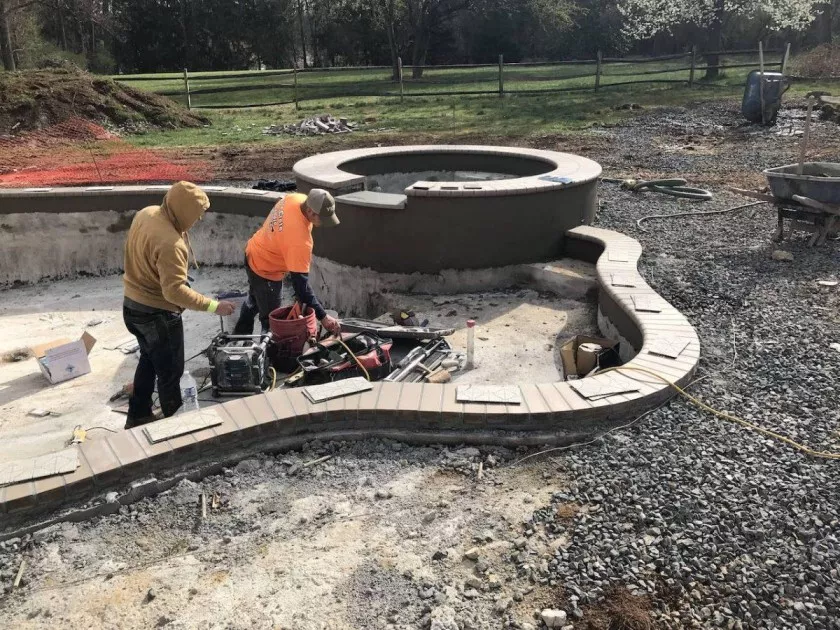
Commercial pool installation in Toronto follows a regulated design-build path: consultation, facility review, design and engineering, budget and scope definition, permit preparation, structural construction, mechanical installation, finishing, and public-health commissioning. That sequence reflects both current Toronto/GTA commercial-pool builder workflows and Ontario’s public-pool framework for construction, alteration, and opening approval.
What Happens During Consultation and Facility Review?
Consultation and facility review define the project brief and the site constraints. The team reviews the facility type, user load, access routes, available plant space, structural conditions, drainage, and the role of the pool inside the wider property. Current Toronto commercial-pool builders describe this stage as the point where planning starts and the project team aligns the concept with local regulations and safety standards.
What Happens During Design and Engineering?
Design and engineering turn the concept into a buildable and compliant system. This stage sets the pool layout, depth profile, circulation system, filtration, disinfection, accessibility route, and the supporting deck and service spaces. Ontario rules apply to the public pool and to the buildings, appurtenances, and equipment used in its operation, so the design stage must coordinate structure, plant, and code compliance together.
What Happens During Budgeting and Scope Planning?
Budgeting and scope planning convert the design intent into a defined construction package. The project team fixes the pool type, mechanical scope, finish level, support spaces, scheduling sequence, and the division between base work and add-ons. Current Toronto commercial-pool builders state that they coordinate engineers, designers, and suppliers, manage detailed scheduling, and keep the project aligned with budget and operational needs.
What Happens During Permit Preparation?
Permit preparation organizes the drawings, forms, and approvals required before construction starts. The City of Toronto states that building-permit applications are reviewed for compliance with the Ontario Building Code, the Zoning By-law, and applicable law. Ontario also requires the owner or agent to notify the local medical officer of health or public health inspector at least 14 days before a public pool is put into use after construction or alteration, and the pool cannot open or re-open without written permission.
What Happens During Excavation and Structural Work?
Excavation and structural work create the physical pool shell and the supporting site conditions. The contractor sets out the footprint, excavates the site, prepares the base, completes the structural shell, and coordinates any required retaining or grade-control work around the pool area. Current Toronto/GTA commercial-pool builders position this stage as core construction after planning and permits are complete.
What Happens During Mechanical, Plumbing, and Electrical Installation?
Mechanical, plumbing, and electrical installation connect the commercial pool to its operating systems. This stage installs the circulation system, pumps, filters, chemical feeders, heaters, controls, and the supporting plumbing and electrical infrastructure. Ontario defines the circulation system as the system that moves water by pumps, draws water for treatment, returns clean water to the pool, and provides continuous treatment that includes filtration and chlorination or bromination.
What Happens During Decking, Safety Installation, and Finishing?
Decking, safety installation, and finishing complete the public-use environment around the pool. This stage adds the pool deck, slip-resistant wet-area finishes, depth markings, required safety equipment, accessibility elements, and the final visible finishes around the water. Ontario requires barrier-free access to and around public pools under the Building Code, and public-pool rules require safety and operational elements that go beyond a residential finish package.
What Happens During Inspection, Commissioning, and Startup?
Inspection, commissioning, and startup verify that the commercial pool is safe, operable, and ready for public use. The operator completes system testing, water treatment setup, and opening checks, then the pool moves through public-health review. Ontario requires written notification at least 14 days before opening after construction or alteration, and the pool cannot open without written permission from the local medical officer of health or public health inspector.
Do You Need Permits for Commercial Pool Installation in Toronto?
Yes. Commercial pool installation in Toronto needs a building permit for the construction work and separate compliance with Ontario public-pool rules before the pool opens. Toronto Building reviews the permit application for compliance with the Ontario Building Code, the Zoning By-law, and other applicable law, and Ontario Regulation 565 applies to public pools and to the buildings, appurtenances, and equipment used in their operation.
When Is a Building Permit Required?
A building permit is required when the project involves new construction, an addition, or a material alteration to a building or structure. A commercial pool project falls into that permit path, and the Ontario public-pool opening notice requires the owner or agent to identify the building permit number for the pool construction or alteration in the written notice sent before the pool goes into use.
What Pool Fence and Enclosure Rules Apply?
An outdoor commercial pool needs a compliant swimming pool enclosure. Toronto Municipal Code Chapter 447 states that every owner of a swimming pool must erect and maintain an enclosure that completely surrounds the pool area, has no opening except a compliant gate, and, on non-residential property, has a minimum height of 1.8 metres. The enclosure must sit at least 1.2 metres from the water’s edge, and the pool cannot be used until a permanent enclosure has been inspected and confirmed as compliant.
What Ontario Public Pool Rules Apply?
Ontario Regulation 565 governs the operation of a public pool after construction and alteration. The owner must designate an operator, and the owner and operator must maintain the public pool and its equipment in a safe and sanitary condition. At least 14 days before the pool is put into use after construction or alteration, the owner or agent must notify the medical officer of health or a public health inspector in writing, and the pool cannot open without written permission.
What Drawings and Engineering Documents Are Required?
A Toronto non-residential permit submission needs a full drawing set and the required forms. The City requires drawings on standardized sheets, drawn to scale, fully dimensioned, signed, and dated. The submission guide lists a site plan, grading plan, architectural plans, roof plan, elevations, sections, and construction details, and it directs applicants to separate mechanical and plumbing permit guides where those systems form part of the project. The same guide requires the Application to Construct or Demolish Form, Schedule 1: Designer Information Form, and, where professional design and field review are required, the Commitment to General Reviews By Architect and Engineer form.
What Health and Safety Reviews Apply?
A commercial pool project moves through both building and public-health review. Toronto Building requires legislated mandatory inspections at critical construction stages, and project drawings and permit records must be available on site for those inspections. Toronto Public Health then reviews the opening notice under the public-pool rules, and operators must post the results of inspections conducted by a public health inspector when requested.
How Do Permits Affect the Build Timeline?
Permits add a formal review stage before construction and before opening. Toronto reviews complete Large & Complex Building Stream applications within 20 business days for large buildings and 30 business days for complex buildings, but incomplete applications have no review time frame. After construction or alteration, the owner or agent must still send the 14-day public-health notice before the pool goes into use, so the opening date sits after permit review, construction, inspections, and Toronto Public Health approval.
What Safety and Compliance Rules Matter Most?
Commercial pool safety and compliance in Toronto rest on five control areas: Ontario Regulation 565 rules for public pools, required emergency equipment, fixed water-quality targets, compliant deck and barrier details, and trained operators and lifeguards. Those rules apply to the pool and to the buildings, appurtenances, and equipment used in its operation.
What Does Ontario Regulation 565 Cover?
Ontario Regulation 565 covers the operation of a public pool from opening through daily use. The regulation applies to public pools and to all buildings, appurtenances, and equipment used in their operation. It covers opening notices and written permission to open after construction or alteration, operator designation, water treatment, maximum bather load, supervision, records, signage, and emergency equipment.
What Safety Equipment Must a Commercial Pool Have?
A commercial pool must have core emergency equipment placed in locations convenient for emergency use. Toronto Public Health’s operator manual states that this includes an electrically insulated or non-conducting reaching pole at least 3.65 metres long, a spine board or other spinal-lift device, and a first aid kit with listed contents. A Class A pool also needs an emergency telephone that is easily accessible and directly connected to an emergency service or the local telephone utility. A Class B pool needs a telephone for emergency use no farther than 30 metres from the pool.
What Water Quality and Monitoring Rules Apply?
Water quality rules require safe, clear, disinfected water and regular testing. Toronto Public Health states that pool water must stay free from visible hazardous matter and clear enough for a black disc 150 millimetres in diameter on a white background at the deepest point to be clearly visible from a point on the deck nine metres away. The same operator guidance sets total alkalinity at 80 to 120 ppm, pH at 7.2 to 7.8, free available chlorine at 0.5 to 10 ppm without cyanuric acid and 1.0 to 10 ppm with cyanuric acid, and total bromine at 2.0 to 4.0 ppm. Where an automatic sensing device is used, the ORP value must stay between 600 mV and 900 mV. Toronto’s daily-record guidance calls for manual checks every 2 hours without an automatic sensing device and every 4 hours with one.
What Deck, Barrier, and Depth-Marking Rules Apply?
Deck and barrier rules focus on visibility, user separation, and safe circulation. Toronto Public Health’s operator manual states that the deck must display water-depth markings in figures at least 100 millimetres high showing deep points, shallow points, and the breaks between gentle and steep bottom slopes, along with the words DEEP AREA and SHALLOW AREA in the correct locations. The manual also states that pools with access ramps adjacent to the wall need a removable barrier separating the ramp or walkway from the deck. In Toronto, Chapter 447 adds the enclosure rule: a non-residential pool enclosure must be at least 1.8 metres high and at least 1.2 metres from the water’s edge.
What Staffing and Operator Requirements Apply?
A commercial pool needs a designated and trained operator, and it may need certified lifeguards and assistant lifeguards depending on the facility and supervision model. Ontario’s current e-Laws page states that every owner must designate an operator, and every operator must be trained in public pool operation and maintenance, filtration systems, water chemistry, and relevant safety and emergency procedures. The regulation states that every lifeguard must be at least 16 years old and hold a current lifeguard certificate. Ontario guidance also states that Regulation 565 sets specific lifeguard requirements and ratios, and the regulation contains minimum-number tables for lifeguards and assistant lifeguards. Some Class B pools qualify for unsupervised operation only under narrow exemption conditions with a posted warning notice and occupancy limits.
How Long Does Commercial Pool Installation Take in Toronto?
Commercial pool installation in Toronto usually spans several months from early planning to opening. Toronto Building reviews complete large-building permit applications within 20 business days and complex-building applications within 30 business days. After construction or alteration, Ontario Regulation 565 requires written notice at least 14 days before the pool goes into use, and the pool cannot open without written permission from the local medical officer of health or public health inspector. Current commercial-pool construction sources place the main field-construction period for many projects at about 8 to 12 weeks, but the full schedule runs longer once design, permits, inspections, and startup are included.
How Long Does Design and Engineering Take?
Design and engineering usually take several weeks. This stage covers concept development, drawings, structural and mechanical coordination, and code review before the permit submission is ready. Current Toronto/GTA pool builders present this phase as part of the full pre-construction process, and general current pool-construction benchmarks place planning and design at roughly 1 to 4 weeks for simpler projects, with more time required for feature-heavy or technically complex work.
How Long Does Permit Approval Take?
Permit approval takes 20 business days for complete large-building applications and 30 business days for complete complex-building applications in Toronto. Incomplete applications have no review time frame. That makes drawing quality and submission completeness a direct schedule factor on a commercial pool project.
How Long Does Structural Construction Take?
Structural construction usually takes multiple weeks and forms the largest site-work block. Current commercial-pool construction sources place full commercial pool construction at about 8 to 12 weeks in many projects, and local builder pages describe excavation and structural construction as the core build stage after planning and permits are complete. More complex shells, larger footprints, and indoor structures extend that stage.
How Long Does Mechanical Installation Take?
Mechanical installation usually takes several weeks on a commercial pool, especially on indoor pools or projects with heavy plant requirements. Current Toronto pool guidance states that indoor pools often take several weeks or longer because of mechanical coordination and inspection requirements. That stage includes the circulation system, filtration, chemical feeding, heating, and electrical setup.
How Long Do Finishing and Commissioning Take?
Finishing and commissioning usually take the final several weeks of the project. Local Toronto builder pages describe the end of the process as final finishes and inspection, while Ontario Regulation 565 adds a mandatory 14-day written notice before the pool is put into use after construction or alteration and requires written permission before opening. That means the pool does not move straight from construction to public use.
What Delays a Commercial Pool Project?
The main delays are incomplete permit submissions, complex engineering, weather exposure on outdoor work, site-access limits, mechanical coordination, and inspection timing. Toronto states that incomplete permit applications have no review time frame. Local current pool pages also state that mechanical coordination, inspection requirements, site conditions, and permit approvals affect the overall construction schedule.
What Maintenance Does a Commercial Pool Need?
A commercial pool needs daily water-quality control, continuous circulation and chemical feeding, regular cleaning, routine inspection of safety equipment, scheduled inspection of key components such as outlet covers, prompt repairs, and signed operating records kept for at least one year. Ontario Regulation 565 and Toronto Public Health treat maintenance as an operating duty, not an optional service item.
How Do You Maintain Water Quality?
Water quality stays compliant through scheduled testing, balancing, and clarity checks. Toronto Public Health daily records require testing one-half hour before opening, then every 2 hours without an automatic sensing device or every 4 hours with one. The daily record tracks total alkalinity at 80 to 120 ppm, pH at 7.2 to 7.8, free available chlorine at 0.5 to 10 ppm without cyanuric acid or 1.0 to 10 ppm with cyanuric acid, total bromine at 2.0 to 4.0 ppm, and water clarity. Ontario also requires pool water to stay free from visible hazardous matter and clear enough for the 150 mm black disc at the deepest point to remain visible from the deck.
How Do You Maintain Filtration and Mechanical Equipment?
Filtration and mechanical equipment stay compliant through continuous operation, inspection, cleaning, and repair. Ontario requires the public pool and its equipment to remain in a safe and sanitary condition, and it requires the circulation system and chemical feeders to run continuously each day except during stoppage for maintenance, draining, repairs, or filter backwashing. Toronto’s operator records also track backwashing, manually added chemicals, emergency breakdowns, and rescue-equipment breakdowns, which places those checks inside the normal maintenance routine. Ontario also requires water outlet covers to be inspected at least once within each period of 30 operating days.
How Do You Maintain Decking, Safety Equipment, and Finishes?
Decking, safety equipment, and visible finishes need regular cleaning, condition checks, and defect correction. Ontario guidance requires the pool deck and walls to stay clean, disinfected, free from slipperiness, and free from hazardous obstructions. Toronto’s daily records include condition checks for the emergency telephone, ground fault interrupter, first aid kit, non-conducting reaching pole, two buoyant throwing aids, and spine board. Loose or missing outlet covers require pool closure until repair or replacement.
What Daily, Weekly, and Seasonal Tasks Apply?
Daily tasks include chemistry testing, clarity checks, safety-equipment checks, bather-count tracking, make-up water recording, and logging breakdowns, cleaning, backwashing, and manual chemical additions. Weekly tasks include cyanuric acid testing where stabilized chlorine is used. Seasonal tasks apply most clearly to outdoor and seasonal facilities and include opening, closing, restart of the filtration system, winterization of lines and equipment, and freeze protection. Toronto-area service pages describe opening and closing work as a routine part of ongoing pool care, and Toronto Public Health requires written notice at least 14 days before reopening after a closure longer than 4 weeks.
What Repairs Are Common in Commercial Pools?
Common commercial pool repairs include leaks, damaged filters, failing equipment, pump problems, heater problems, plumbing faults, and deterioration in visible finishes such as tile, coping, liners, and other surface materials. Current Toronto/GTA repair pages repeatedly list those categories across commercial and public-pool service work.
What Operating Records Must the Facility Keep?
The facility must keep signed daily records, relevant weekly records, and required monthly inspection records. Ontario requires daily records for items such as disinfectant residuals, pH, and other operating data, and Toronto’s operator record forms include hours of operation, chemistry readings, water clarity, bather estimates, make-up water, ORP where applicable, and notes on breakdowns, cleaning, and manual chemical additions. Weekly cyanuric acid records apply to pools that use cyanurate stabilization. Monthly outlet-cover inspections also require a written record. Ontario requires records kept under section 8 to be retained for one year from the date they are made.
When Does Commercial Pool Renovation Make Sense?
Commercial pool renovation makes sense when the existing pool still has a workable structure but shows surface wear, outdated equipment, safety gaps, accessibility limitations, or finish deterioration that affects operation, compliance, or user experience. Current Toronto commercial-pool contractors describe renovation scope as resurfacing, tile replacement, equipment upgrades, lighting improvements, and accessibility updates rather than full new-build work.
When Does a Commercial Pool Need Resurfacing?
A commercial pool needs resurfacing when the surface becomes rough, faded, stained, or cracked, or when those defects start to raise leak risk and maintenance cost. Current resurfacing guidance states that aging pool surfaces often develop stains, roughness, cracks, and eventual leaks, and that neglected surface damage grows into larger repair work.
When Does Equipment Replacement Make Sense?
Equipment replacement makes sense when the existing pumps, filters, heaters, or chemical systems no longer support reliable public-pool operation, energy efficiency, or current compliance needs. Current Toronto commercial-pool renovation pages list equipment upgrades, energy-efficient systems, and pool heater replacement among standard modernization items, and Ontario’s current Public Pools regulation requires operation and maintenance in accordance with the regulation.
When Do Deck and Safety Upgrades Make Sense?
Deck and safety upgrades make sense when the wet area becomes slippery, worn, or operationally weak, or when the facility needs stronger public-safety performance. Current Toronto commercial-pool guidance identifies non-slip deck finishes, compliant depth markings, and related safety elements as core public-pool requirements, which makes upgrade work sensible when the existing deck or safety layout falls behind those standards.
When Does Accessibility Upgrading Make Sense?
Accessibility upgrading makes sense when the facility lacks compliant public-pool access or when the entry system limits use for guests with mobility needs. Ontario’s Building Code requires barrier-free access to and around all public pools and some public spas, and current Toronto commercial-pool design pages list zero-entry slopes, transfer walls, and lift systems as the standard upgrade path.
When Is Full Pool Reconstruction the Better Option?
Full pool reconstruction is the better option when the project no longer involves one isolated fix and instead combines major surface failure, mechanical obsolescence, accessibility gaps, and broader compliance-driven redesign. That conclusion follows from current Toronto renovation scopes, which separate targeted upgrades such as resurfacing and equipment replacement from broader modernization work, and from the fact that public pools must continue to meet Ontario public-pool and accessibility requirements. This last point is an inference from those sources rather than a stated threshold rule.
How Do You Choose a Toronto Commercial Pool Installer?
Choose a Toronto commercial pool installer based on six checks: regular commercial-pool work, proven knowledge of Ontario public-pool compliance, clear handling of engineering and permits, visible past projects and reviews, written warranty and support terms, and established Toronto and GTA experience. Ontario Regulation 565 places strict duties on owners and operators, while the City of Toronto requires formal permit review for large and complex building work. That makes commercial-pool selection a compliance decision as much as a construction decision.
Does the Installer Build Commercial Pools Regularly?
Yes. A strong installer shows that commercial pools are a core service, not occasional work. Regular commercial-pool work usually appears through dedicated service pages, institutional project types, and experience with multi-user facilities such as hotels, condos, fitness centres, and public or private recreation sites. A commercial installer also works inside the Part 3 / large and complex building environment that applies to many public-use projects in Toronto.
Does the Installer Understand Ontario Public Pool Compliance?
Yes. A qualified installer understands Ontario Regulation 565 and the operating duties that follow construction. The regulation requires every owner of a public pool or public spa to designate an operator, and every operator must be trained in public pool operation and maintenance, filtration systems, water chemistry, and relevant safety and emergency procedures. An installer without that compliance knowledge leaves the facility exposed to design and turnover problems before opening.
Does the Installer Handle Engineering and Permit Coordination?
Yes. A reliable commercial pool installer handles engineering, permit coordination, and submission quality in a clear process. Toronto Building reviews permit applications for compliance with the Ontario Building Code, zoning by-laws, and other applicable laws. The City states that complete applications for large buildings are reviewed within 20 business days and complex buildings within 30 business days, while incomplete applications have no review time frame. That makes drawing coordination, document control, and submission accuracy central parts of the installer’s role.
Does the Installer Show Past Commercial Pool Projects and Reviews?
Yes. A strong installer shows past commercial pool projects and real third-party reviews. Project galleries show build type, finish quality, and facility range. Review platforms add outside proof from past clients. A major Canadian review platform for Toronto pool companies highlights quality screening, verified local professionals, and homeowner reviews, which makes third-party review history a useful screening layer beside the installer’s own project pages.
Does the Installer Offer Warranty and Post-Construction Support?
Yes. A serious installer offers written warranty terms and defined post-construction support. Commercial pools move from construction into active operation, inspection, recordkeeping, and maintenance. That transition requires support on startup, system tuning, operating guidance, and defect correction. The clearest proof is a written document that defines scope, duration, exclusions, and the service process after handover. The need for ongoing support aligns with the operator duties and maintenance responsibilities set by Ontario Regulation 565 and Toronto Public Health operator guidance.
Does the Installer Have Toronto and GTA Experience?
Yes. Toronto and GTA experience matters because commercial-pool projects must fit local review streams, inspections, and operating approvals. Toronto uses defined building-permit review streams and mandatory inspections after permit issuance. Ontario also requires written notice at least 14 days before a public pool is put into use after construction or alteration, and the pool cannot open without written permission from the local medical officer of health or public health inspector. Local experience reduces approval risk, coordination errors, and opening delays.
Frequently Asked Questions About Commercial Pool Installation in Toronto
How Much Does a Commercial Pool Cost in Toronto?
A commercial pool in Toronto often costs $120,000 to $320,000 for many current projects. Final cost rises with size, depth, engineering complexity, indoor construction, accessibility work, and advanced filtration and mechanical systems.
What Types of Commercial Pools Can You Build?
Commercial pool types include indoor pools, outdoor pools, lap pools, leisure pools, therapy pools, and rooftop or podium pools. The right type depends on the facility model, user group, building form, and season of use.
Do You Need a Permit for a Commercial Pool in Toronto?
Yes. Commercial pool installation in Toronto needs a building permit for the construction work, and the facility must also satisfy Ontario public-pool rules before opening. After construction or alteration, the owner or agent must notify Toronto Public Health at least 14 days before opening, and the pool cannot open without written permission.
What Compliance Rules Apply to Commercial Pools?
The main compliance rules are Ontario Regulation 565, the Ontario Building Code, and Toronto enclosure and permit rules. Those rules cover water treatment, bather load, operator duties, safety equipment, records, opening approval, and, for outdoor pools, a compliant enclosure around the pool area.
How Long Does Commercial Pool Installation Take?
Commercial pool installation usually takes several months from planning to opening. Toronto Building reviews complete large-building applications within 20 business days and complex-building applications within 30 business days, while the main field-construction stage for many projects often runs about 8 to 12 weeks, followed by inspections, commissioning, and the required 14-day public-health notice before opening.
What Mechanical Systems Does a Commercial Pool Need?
A commercial pool needs high-capacity pumps, filters, chemical-feeding systems, heaters or heat pumps, and monitoring and control systems. Ontario Regulation 565 requires a circulation system that provides continuous treatment through filtration and chlorination or bromination, and local commercial-pool guidance points to automated chemical control as a standard part of the system.
What Is Included in Commercial Pool Installation?
Commercial pool installation usually includes consultation, facility review, design and engineering, budget and scope planning, permit preparation, excavation, structural work, mechanical, plumbing, and electrical installation, decking, safety installation, finishing, inspection, commissioning, and startup. That sequence matches both current commercial-pool build workflows and the Ontario public-pool opening framework.
How Do You Get a Quote for Commercial Pool Installation in Toronto?
A quote for commercial pool installation in Toronto starts with a site visit, moves into a design and budget estimate, and then shifts into permit and build-timeline planning. In Toronto, the permit path matters early because commercial projects fall into the City’s building-permit review system, and opening after construction or alteration also triggers a separate 14-day public-health notice under Ontario public-pool rules.
How Do You Book a Site Visit?
You book a site visit by starting the quote process with a project review of the property and the operating goals. The purpose of the visit is to inspect the site, define the intended commercial pool use, and identify constraints that affect layout, access, and budget before drawings and pricing are prepared. Current Toronto-area commercial-pool quote pages follow that same pattern: property review first, pricing second.
How Do You Get a Design and Budget Estimate?
A design and budget estimate comes after the site review. A usable estimate should break the project into the main cost blocks, such as design and engineering, excavation and site work, structure, equipment and systems, decking and finishes, and permits and inspections. A line-by-line estimate is more useful than a broad price range because it shows where the budget changes when the scope changes.
How Do You Plan the Permit and Build Timeline?
The permit and build timeline starts with the Toronto Building review stream. The City reviews complete applications within 20 business days for large buildings and 30 business days for complex buildings, while incomplete applications have no review time frame. After construction or alteration, Ontario Regulation 565 requires written notice at least 14 days before the commercial pool is put into use, and the pool cannot open without written permission from the local health authority. That means the quote stage should include time for drawings, permit review, construction, inspections, and the final public-health opening step.