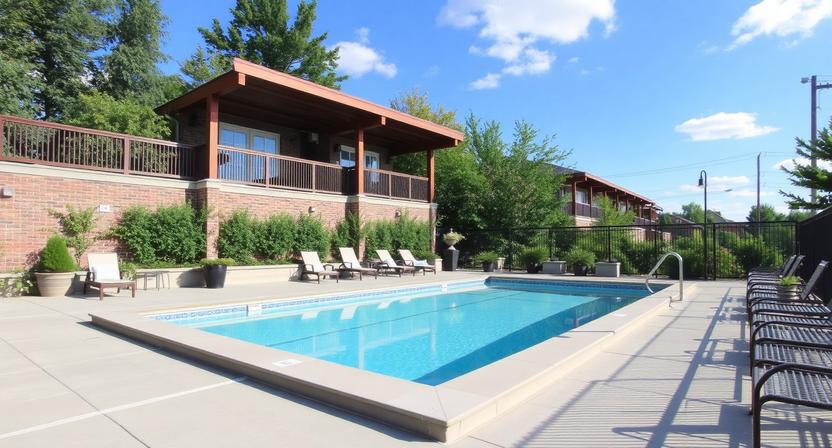
Toronto pool zoning rules control where an outdoor swimming pool goes on a lot, how setbacks are measured, where pool equipment sits, how soft landscaping is counted, and what drawings are needed before the Pool Fence Enclosure Permit stage. The zoning step comes first because City of Toronto requires a Zoning Applicable Law Certificate for a Pool Fence Enclosure Permit application.
Toronto pool zoning review checks the proposed pool against the lot layout before construction. The required site plan must show property lines, pool dimensions, property dimensions, distances to the house and lot lines, nearby doors and windows, pool equipment locations, equipment distances to lot lines, proposed fence location, fence height, fence material, and the percentage of hard landscaping versus soft landscaping. The City states that pool zoning drawings must be scaled, fully dimensioned, signed, dated, and submitted in PDF format.
Toronto pool setbacks must be measured from the water’s edge. The site plan must show proposed pool setbacks from property lines to the water’s edge of the pool, and proposed pool enclosure setbacks from the pool enclosure to the water’s edge of the pool. This separates zoning setback rules from pool fence enclosure rules, which prevents errors during review.
Soft landscaping and lot coverage also affect pool placement. The City requires the site plan to show hard-versus-soft landscaping, and its pool zoning certificate guidance states that soft landscaping may include the water surface area of outdoor swimming pools and other ancillary water-holding structures, such as fountains or artificial ponds.
Zoning approval connects directly to pool fence approval. After the Zoning Certificate is approved, the owner submits the Pool Fence Enclosure Permit application with the approved zoning drawings. Toronto requires a swimming pool enclosure to fully surround the pool area, with no openings except a compliant gate. A complete pool fence permit application takes about five business days to review, but missing information extends the timeline.
What Are Toronto Pool Zoning Rules?
Toronto pool zoning rules control the approved location of an outdoor swimming pool, related pool equipment, setbacks, soft landscaping, and required site plan drawings before the Pool Fence Enclosure Permit stage. These rules matter because Toronto requires a Zoning Applicable Law Certificate before a Pool Fence Enclosure Permit application.
What Is a Zoning Applicable Law Certificate for a Pool?
A Zoning Applicable Law Certificate for a pool is Toronto’s zoning approval for the proposed pool location, site plan, pool equipment, and fence layout before the pool fence permit stage. The City of Toronto states that this certificate is required for a Pool Fence Enclosure Permit application through Municipal Licensing and Standards. Drawings must be on standard sheet sizes, drawn to scale, fully dimensioned, signed, and dated.
Why Do Toronto Pool Zoning Rules Matter Before Construction?
Toronto pool zoning rules matter before construction because a pool layout that fails zoning review delays the full permit path. Toronto requires applicants to obtain a Zoning Certificate before applying for a Pool Fence Enclosure Permit for applications submitted after March 31, 2021. The City also states that a pool cannot be constructed and filled with water without a fence installed under Toronto Municipal Code Chapter 447 – Fences.
What Does Zoning Review Check for a Pool Project?
Zoning review checks pool placement, lot-line distances, house distances, pool equipment locations, fence details, and landscaping percentages. The Toronto pool zoning site plan must show property lines, pool and property dimensions, distances to the house and lot lines, nearby doors and windows, heater, pump, filter, proposed fence location, fence height, fence material, and hard-versus-soft landscaping percentages.
What Is the Short Answer on Toronto Pool Zoning Rules?
Toronto pool zoning rules require zoning approval before pool fence approval, with setbacks measured from the water’s edge. The site plan must show where the pool sits on the lot, where the equipment goes, how the fence surrounds the pool, and how the project affects soft landscaping. Toronto’s sample pool enclosure drawing states that all setbacks must be measured from the water’s edge of the pool.
Do You Need Zoning Approval for a Pool in Toronto?
Yes. Toronto requires zoning approval for a pool before the Pool Fence Enclosure Permit stage. The required approval is the Zoning Applicable Law Certificate for a Pool Fence Enclosure. This review confirms that the proposed pool location, setbacks, equipment placement, fence layout, and site plan meet zoning and applicable law requirements before the enclosure permit proceeds.
When Is a Zoning Applicable Law Certificate Required?
A Zoning Applicable Law Certificate is required before applying for a Pool Fence Enclosure Permit in Toronto. City of Toronto states that all applications submitted after March 31, 2021 must obtain a Zoning Certificate before applying for a Pool Fence Enclosure Permit.
Why Does Toronto Require Zoning Approval Before the Pool Fence Enclosure Permit?
Toronto requires zoning approval first because pool location must comply with zoning before fence enclosure approval. The zoning review checks where the pool sits on the lot, how it relates to property lines, where pool equipment sits, and how the proposed fence enclosure fits the approved site layout. The approved zoning drawings then support the Pool Fence Enclosure Permit review through Municipal Licensing and Standards.
What Drawings Must Be Submitted for Zoning Review?
Zoning review drawings must be scaled, fully dimensioned, signed, and dated. City of Toronto requires pool zoning drawings on standard sheet sizes. A complete pool site plan should show property lines, pool dimensions, property dimensions, distances to the house and lot lines, nearby doors and windows, pool equipment locations, equipment distances to lot lines, fence location, fence height, fence material, and hard-versus-soft landscaping percentages.
What Happens if the Zoning Submission Is Incomplete?
An incomplete zoning submission delays pool approval. Missing measurements, unclear drawings, absent equipment details, missing fence information, unsigned plans, or incomplete site data lead to review questions before the Zoning Applicable Law Certificate is issued. The Pool Fence Enclosure Permit cannot move forward until zoning approval is complete, so errors at this stage delay the full pool permit timeline.
How Are Pool Setbacks Measured in Toronto?
Toronto pool setbacks are measured from the property line to the water’s edge of the pool. They are not measured from the coping, deck, pool fence, excavation line, pool wall, or equipment pad. This measurement rule matters because Toronto zoning review checks the pool’s actual water location before the Pool Fence Enclosure Permit stage.
Why Are Pool Setbacks Measured From the Water’s Edge?
Pool setbacks are measured from the water’s edge because Toronto uses the water line as the reference point for pool placement. The City’s pool fence enclosure FAQ states that proposed pool setbacks are measured from the property lines to the water’s edge of the pool. The same document states that proposed pool enclosure setbacks are measured from the pool enclosure to the water’s edge of the pool.
What Setback Details Must the Site Plan Show?
The site plan must show pool setbacks from property lines to the water’s edge. It must also show lot lines, lot dimensions, lot area, pool dimensions, pool location, existing and proposed buildings, access doors, nearby doors and windows, pool equipment, fence details, lockable gate details, and hard-versus-soft landscaping percentages.
Why Do Measurement Errors Delay Zoning Approval?
Measurement errors delay zoning approval because Toronto uses the site plan to confirm zoning and pool fence permit details before approval. The City states that missing information delays the processing, review, and issuance of the Zoning Certificate and Pool Fence Enclosure Permit. Wrong measurement points, missing lot-line distances, or unclear water’s-edge dimensions create review questions before approval.
What Pool Elements Get Measured on the Plan?
The plan measures the pool water’s edge, pool enclosure, pool equipment, buildings, lot lines, doors, windows, fences, gates, decks, cabanas, and sheds. Toronto requires the plan to show pool equipment, such as a heat pump and filter, with distances from lot lines. Proposed cabanas, decks, and sheds need distances from lot lines, even when they require separate building permits outside the pool fence permit scope.
What Setback Rules Affect Pool Location?
Toronto pool setback rules affect pool location through rear yard, side yard, corner lot, through lot, and Residential Apartment Zone requirements. The required distance depends on the zone category, lot type, building type, and the pool’s water’s-edge position. A zoning-ready site plan must show these measurements before the Zoning Applicable Law Certificate and Pool Fence Enclosure Permit process moves forward.
What Rear Yard Setback Rules Apply?
Rear yard setback rules set the minimum distance from the pool water’s edge to the rear lot line. In the Residential Zone category, the standard rear yard setback for an outdoor swimming pool or similar water-holding ancillary structure is 1.2 metres on a lot with a residential building other than an apartment building. Some corner lots use 3.0 metres, and some through lots use 25.0 metres.
What Side Yard Setback Rules Apply?
Side yard setback rules set the minimum distance from the pool water’s edge to the side lot line. In the Residential Zone category, the side yard setback is the greater of 1.2 metres or the required minimum side yard setback for the residential building. On some corner lots, the side yard setback from the side lot line abutting a street is the required side yard setback for the building plus 1.5 metres.
How Do Corner Lots Change Pool Setbacks?
Corner lots change pool setbacks because one side lot line abuts a street. Toronto applies larger setback rules in specific corner-lot conditions. A 3.0-metre rear yard setback applies where the corner-lot rule is triggered. A larger street-side side yard rule also applies where the side lot line abuts a street. These rules help align pool placement with street-facing lot conditions.
How Do Through Lots Change Pool Setbacks?
Through lots change pool setbacks because the rear lot line may also relate to a street-facing condition. Toronto lists a 25.0-metre rear yard setback for an outdoor swimming pool or similar water-holding ancillary structure on some through lots in the Residential Zone category. This distance must be checked before the pool size, location, and site plan are finalized.
How Do Residential Apartment Zone Rules Change Pool Setbacks?
Residential Apartment Zone rules change pool setbacks by using larger setback distances for pool and water-feature placement. In the Residential Apartment Zone category, an outdoor swimming pool or similar water-holding ancillary structure with a total water surface area greater than 3.0 square metres has a required minimum side yard setback of 4.5 metres, or 7.5 metres from the side lot line abutting a street on a corner lot. The same chapter states that the water surface area of an outdoor swimming pool is not included in lot coverage, but it must not exceed 15% of the lot area.
What Pool Equipment Zoning Rules Apply?
Toronto pool equipment zoning rules require the site plan to show where the heater, pump, filter, and other pool equipment will sit on the lot. The plan must also show distances from that equipment to lot lines. These details help zoning staff review equipment placement before the Pool Fence Enclosure Permit stage.
Where May Pool Equipment Be Placed?
Pool equipment may be placed where it meets Toronto zoning, setback, access, and site plan rules. The City of Toronto requires the pool zoning submission to show equipment locations, including the heater, pump, and filter, with distances to lot lines. This allows staff to check whether the equipment location fits the property before the pool fence permit review.
Ground-mounted heating equipment may have separate side yard limits. Toronto zoning rules allow a ground-mounted heating device in a side yard when it is no closer to the side lot line than the lesser of 0.9 metres or the required minimum side yard setback for the residential building.
What Equipment Distances Must the Site Plan Show?
The site plan must show distances from pool equipment to the lot lines. Required equipment details include the heater, pump, filter, heat pump, chlorinator, and any equipment pad shown as part of the pool system. The plan should label each item and give clear measurements from the equipment to the nearest side lot line and rear lot line.
Equipment distances also need to stay consistent with the approved zoning drawings. Moving the equipment after zoning approval may create a new review issue if the revised location changes setbacks, access, drainage, sound exposure, or servicing space.
Why Does Pool Equipment Location Matter in Zoning Review?
Pool equipment location matters in zoning review because equipment affects setbacks, service access, neighbour-facing impacts, yard layout, and the final pool enclosure plan. Toronto’s zoning certificate process checks the full pool layout, not only the water area. The site plan must show property lines, pool dimensions, house distances, lot line distances, equipment locations, fence details, and hard-versus-soft landscaping percentages.
A complete equipment layout reduces City comments during review. It also helps align the pool, equipment pad, fence, gate, deck, and landscaping before construction.
What Equipment Placement Errors Cause Approval Problems?
Equipment placement errors cause approval problems when the plan omits equipment, shows no lot-line distances, labels equipment unclearly, or places equipment too close to a restricted yard condition. Common errors include missing heater details, missing pump details, missing filter details, no equipment pad size, no side yard measurement, no rear yard measurement, and equipment moved after approval.
Toronto pool zoning review depends on clear drawings. A permit-ready plan should show every pool equipment item, its exact location, its distance to lot lines, and its relationship to the pool enclosure, soft landscaping, hard landscaping, and neighbouring property lines.
What Site Plan Rules Apply to a Toronto Pool?
Toronto pool site plan rules require a scaled, fully dimensioned drawing that shows the lot lines, pool location, pool dimensions, building locations, fence and gate layout, pool equipment, and hard-versus-soft landscaping. The City of Toronto uses this plan during the Zoning Applicable Law Certificate review before the later Pool Fence Enclosure Permit stage.
What Lot Line Measurements Must the Plan Show?
The plan must show pool setbacks from the property lines to the water’s edge of the pool. Toronto’s pool fence enclosure FAQ states that proposed pool setbacks are measured from the property lines to the water’s edge, and proposed pool enclosure setbacks are measured from the enclosure to the water’s edge.
What Building Measurements Must the Plan Show?
The plan must show existing and proposed buildings, building dimensions, and building access points near the pool area. Toronto’s zoning review guidance requires drawings that show property lines, pool and property dimensions, distances to the house and lot lines, and the location and dimensions of doors and windows beside the pool area.
What Fence and Gate Details Must the Plan Show?
The plan must show the fence location, fence height, fence material, and lockable gate details. Toronto requires the Pool Fence Enclosure Permit package to include the approved Zoning Certificate and zoning-approved drawings showing the location, height, and materials of the fence. The FAQ also asks for proposed fence details and lockable gate details, including whether gates are self-closing or latching.
What Pool Equipment Details Must the Plan Show?
The plan must show pool equipment locations and distances from lot lines to the equipment. Required equipment details include the heater, pump, filter, heat pump, chlorinator, and equipment pad where relevant. These details help zoning staff review equipment placement before pool fence permit approval.
What Hard Landscaping and Soft Landscaping Details Must the Plan Show?
The plan must show the percentage of hard landscaping and soft landscaping. Toronto’s pool fence enclosure FAQ states that soft landscaping may include the water surface area of outdoor swimming pools and other water-holding ancillary structures, such as fountains or artificial ponds. It also states that gravel is not considered soft landscaping.
What Soft Landscaping Rules Affect a Pool Project?
Toronto soft landscaping rules affect a pool project because zoning review checks how the proposed pool, deck, patio, walkway, and other hard surfaces change the lot. The City of Toronto requires pool zoning drawings to show the percentage of hard landscaping and soft landscaping before the Pool Fence Enclosure Permit stage.
Does a Swimming Pool Count as Soft Landscaping in Toronto?
A swimming pool may count as soft landscaping in Toronto when the City reviews pool zoning drawings. Toronto’s pool fence enclosure guidance states that soft landscaping may include the water surface area of outdoor swimming pools and other ancillary structures containing water, including fountains and artificial ponds.
When Does Pool Water Surface Area Count Toward Soft Landscaping?
Pool water surface area counts toward soft landscaping when the zoning review treats the open water surface as part of the soft landscaping calculation. This applies to the water surface area itself, not every pool-related surface. A surrounding concrete deck, stone patio, walkway, equipment pad, or paved area remains part of the hard-surface calculation unless another zoning rule says otherwise.
Why Does Soft Landscaping Matter in Pool Zoning?
Soft landscaping matters in pool zoning because Toronto uses it to assess how much of the lot remains open, permeable, or landscape-based after the pool project is added. A pool plan with too much hard landscaping may conflict with zoning review even when the pool setback is correct. Toronto’s zoning certificate process requires drawings that show property lines, pool dimensions, pool equipment, fence details, and landscaping percentages.
What Landscaping Errors Delay Pool Approval?
Landscaping errors delay pool approval when the site plan omits hard landscaping and soft landscaping percentages, counts paved surfaces as soft landscaping, leaves out pool deck areas, or fails to separate the pool water surface from surrounding hard surfaces. Toronto’s pool guidance also states that gravel is not considered soft landscaping, so gravel areas should not be counted as soft landscaping in the pool zoning calculation.
What Lot Coverage Rules Affect a Pool Project?
Toronto lot coverage rules affect a pool project because zoning review checks how much of the lot is covered by ancillary buildings, ancillary structures, and water-holding structures. In both the Residential Zone category and the Residential Apartment Zone category, the water surface area of an outdoor swimming pool or similar water-holding structure is not included in the general lot coverage calculation, but that water surface area must not exceed 15% of the lot area.
Is Pool Water Surface Area Included in Lot Coverage?
Pool water surface area is not included in Toronto lot coverage when the zoning rule treats it as the water surface area of an outdoor swimming pool or similar ancillary structure used to hold water. Toronto’s Residential Apartment Zone text states that the water surface area of an outdoor swimming pool, fountain, or artificial pond is not included in the lot coverage calculation.
What Lot Coverage Rule Applies to Pool Water Surface Area?
The pool water surface area rule limits the water surface to 15% of the lot area. Toronto’s Residential Zone and Residential Apartment Zone provisions both state that the water surface area of an outdoor swimming pool or similar water-holding structure is not included in lot coverage, and that the water surface area must not exceed 15% of the lot area.
What Lot Coverage Rule Applies in the Residential Zone Category?
The Residential Zone category excludes pool water surface area from lot coverage when the 15% water-surface limit is met. Toronto’s Residential Zone provisions state that the water surface area of an outdoor swimming pool or similar structure used to hold water, such as fountains or artificial ponds, is not included in lot coverage and may not exceed 15% of the lot area.
What Lot Coverage Rule Applies in the Residential Apartment Zone Category?
The Residential Apartment Zone category uses the same 15% water-surface limit for pools and similar water-holding structures. Toronto states that the water surface area of an outdoor swimming pool, fountain, or artificial pond is not included in the calculation of lot coverage and must not exceed 15% of the lot area. The same section states that other ancillary buildings and structures are included in lot coverage, and their combined area may not exceed 10% of the lot area.
Why Does Lot Coverage Still Matter for a Pool Project?
Lot coverage still matters for a pool project because the pool usually sits beside structures and surfaces that are treated differently from the water surface. A pool cabana, shed, equipment structure, deck, platform, covered patio, or other ancillary structure may count toward lot coverage even when the pool water surface does not. A zoning-ready site plan should separate pool water surface area, ancillary structures, hard landscaping, and soft landscaping before the Zoning Applicable Law Certificate review.
How Do Residential and Apartment Zones Differ?
Residential and Apartment Zones differ because Toronto applies different pool setback, lot coverage, and water surface rules to each zone category. The Residential Zone category covers standard residential lots with houses and similar residential buildings. The Residential Apartment Zone category applies separate rules for lots with apartment buildings, including larger setback distances and separate coverage limits for ancillary buildings and structures.
What Rules Apply in the Residential Zone Category?
Residential Zone rules apply to outdoor pools on lots with a residential building other than an apartment building. Toronto’s Residential Zone provisions set pool-specific setback rules for rear yards, side yards, corner lots, through lots, and similar water-holding structures such as fountains and artificial ponds. The water surface area of an outdoor swimming pool is not included in lot coverage, but it must not exceed 15% of the lot area.
What Rules Apply in the Residential Apartment Zone Category?
Residential Apartment Zone rules apply to pool projects on lots with an apartment building. Toronto’s Residential Apartment Zone provisions state that the water surface area of an outdoor swimming pool, fountain, or artificial pond is not included in lot coverage, and the water surface area must not exceed 15% of the lot area. Other ancillary buildings and structures are included in lot coverage, and their combined area must not exceed 10% of the lot area.
How Do Setbacks Change Between These Zone Categories?
Setbacks change between these zone categories because standard residential lots use smaller pool setbacks than apartment-building lots. In the Residential Zone category, a standard rear yard pool setback is 1.2 metres, with larger rules for some corner lots and through lots. In the Residential Apartment Zone category, an outdoor pool or similar water-holding structure with a water surface area greater than 3.0 square metres uses larger setback rules, including 4.5 metres in standard side yard cases and 7.5 metres from a side lot line that abuts a street on a corner lot.
How Do Lot Coverage and Soft Landscaping Change Between These Zone Categories?
Lot coverage and soft landscaping change between these zone categories because each zone category separates pool water surface area from other surfaces and structures. Toronto states that soft landscaping may include the water surface area of outdoor swimming pools and other water-holding ancillary structures, such as fountains and artificial ponds. Gravel is not considered soft landscaping.
Lot coverage also needs separate calculation. In the Residential Apartment Zone category, the water surface area of an outdoor pool is excluded from lot coverage and capped at 15% of the lot area, while other ancillary buildings and structures are included and capped at 10% of the lot area.
Why Does the Zone Category Change the Pool Layout?
The zone category changes the pool layout because each category controls a different mix of setbacks, water surface area, lot coverage, soft landscaping, and site plan review. A pool layout that works on a standard residential lot may fail on an apartment-building lot because the required setback, coverage calculation, or landscaping percentage is different.
Toronto zoning review checks these details before pool fence approval. The Zoning Applicable Law Certificate requires scaled, fully dimensioned, signed, and dated drawings, and the site plan must show pool placement, equipment locations, fence details, and hard-versus-soft landscaping percentages before the later Pool Fence Enclosure Permit stage.
What Other Toronto Zoning Issues Affect Pool Approval?
Other Toronto zoning issues affect pool approval when tree protection, ravine controls, TRCA-regulated areas, existing decks, patios, ancillary structures, drainage, or grading change the proposed pool layout. A pool may meet basic setback rules and still need revisions if the site has protected trees, ravine limits, drainage problems, or existing structures that affect pool placement, soft landscaping, lot coverage, or fence enclosure layout.
Do Tree Protection By-laws Affect Pool Placement?
Tree protection by-laws affect pool placement when the proposed pool, excavation, fence, equipment pad, or deck may injure or remove a protected tree. City of Toronto states that a permit is required to injure or remove a bylaw-protected tree, ravine, or natural feature. The City also states that a permit application is required to remove a City-owned tree or a private tree of 30 centimetres diameter or more.
Tree conflicts may change the pool location before zoning approval. A zoning-ready plan should show protected trees, tree protection zones, excavation limits, fence layout, equipment access, and any arborist or Urban Forestry requirement tied to the property.
Do Ravine or TRCA-Regulated Areas Affect Pool Review?
Ravine or TRCA-regulated areas affect pool review when the pool project sits near a protected ravine, valley, slope, watercourse, or natural feature. Toronto requires a permit to injure or remove a protected ravine or natural feature, and some activities may still need confirmation from Urban Forestry even where a permit is not required.
TRCA-regulated properties may need extra review before excavation, grading, drainage, or retaining work. A pool layout near a regulated area should be checked before final design because the approved pool location, equipment area, access route, and drainage route may need changes.
Do Existing Decks, Patios, and Ancillary Structures Affect the Pool Layout?
Existing decks, patios, and ancillary structures affect the pool layout because they change lot coverage, hard landscaping, soft landscaping, access routes, and available setback space. Toronto requires zoning drawings to show property lines, existing or proposed buildings, overall dimensions, setback dimensions, lot area, coverage, and grade details for zoning review.
Decks, sheds, cabanas, patios, and equipment structures can also affect fence enclosure design. A deck may create direct access into the pool area. A shed or retaining wall may become a climbable object near the fence. A patio may increase hard landscaping and reduce zoning flexibility.
Do Drainage and Grading Issues Affect Zoning Review?
Drainage and grading issues affect zoning review when the pool changes surface water flow, yard slopes, hard surfaces, or discharge routes. Toronto lot grading guidance states that existing drainage patterns should be maintained, side yards should drain at surface slopes of at least 1.5%, and drainage swale longitudinal slopes should not be less than 1.5%.
Pool drainage also needs careful planning. Toronto states that a permit or agreement is required to discharge private water into the sewer system. Pool water, backwash, saltwater, stormwater, and deck runoff should not create ponding, erosion, or flow onto neighbouring property.
Why Do Site Constraints Matter Before Final Pool Design?
Site constraints matter before final pool design because they determine whether the pool location is buildable, approvable, and safe. Trees, ravines, regulated areas, decks, patios, sheds, drainage, grading, equipment placement, and fence layout can all change the final pool size and position.
Toronto pool zoning review should happen before excavation, pool purchase, fence installation, or equipment placement. A complete review reduces redesign, permit delays, tree conflicts, drainage corrections, zoning refusals, and fence enclosure problems before construction starts.
How Do Toronto Pool Zoning Rules Connect With Pool Fence Approval?
Toronto pool zoning rules connect with pool fence approval because the Zoning Applicable Law Certificate must be approved before the Pool Fence Enclosure Permit application. Zoning review checks pool placement, setbacks, equipment location, site plan details, and fence layout first. The approved zoning drawings then support the later fence permit review.
Why Must Zoning Approval Come First?
Zoning approval must come first because Toronto requires a Zoning Certificate before applying for a Pool Fence Enclosure Permit. This rule applies to applications submitted after March 31, 2021. The City states that a pool cannot be constructed and filled with water without a fence installed under Toronto Municipal Code Chapter 447 – Fences.
What Zoning Drawings Carry Forward to the Pool Fence Enclosure Permit?
The approved zoning drawings carry forward to the Pool Fence Enclosure Permit because the fence permit stage uses the approved Zoning Certificate and zoning-approved site plan. The fence permit submission must include the approved zoning certificate and drawings that show the fence location, height, and materials.
Why Should Fence Details Be Included Early?
Fence details should be included early because the zoning site plan and fence permit review must align. Toronto’s pool zoning certificate process requires the site plan to show the proposed fence location, fence height, and fence material, along with pool equipment locations, lot line distances, and hard-versus-soft landscaping percentages.
Early fence details reduce redesign because the final enclosure must match the approved pool location, water’s-edge measurements, gate route, equipment layout, and site conditions.
How Do Zoning Errors Delay the Pool Fence Permit?
Zoning errors delay the Pool Fence Enclosure Permit because the fence permit cannot move forward until zoning approval is complete. Common errors include missing lot line measurements, wrong water’s-edge setback measurements, unclear pool dimensions, missing equipment locations, incomplete fence details, and missing hard-versus-soft landscaping figures.
Toronto’s pool fence FAQ states that missing information delays processing, review, and issuance of the Zoning Certificate and Pool Fence Enclosure Permit.
What Mistakes Cause Toronto Pool Zoning Problems?
Toronto pool zoning problems usually come from wrong water’s-edge measurements, missing pool equipment details, incorrect corner lot or through lot assumptions, incomplete soft landscaping and lot coverage calculations, and missing tree, ravine, or site-constraint information. These errors delay the Zoning Applicable Law Certificate, which delays the later Pool Fence Enclosure Permit.
Do Owners Measure Setbacks From the Wrong Point?
Owners often measure setbacks from the wrong point when they use the coping, deck edge, pool wall, excavation line, or fence line instead of the water’s edge. Toronto’s pool fence enclosure FAQ states that proposed pool setbacks must be measured from the property lines to the water’s edge of the pool, and proposed pool enclosure setbacks must be measured from the pool enclosure to the water’s edge of the pool.
Do Owners Miss Pool Equipment on the Plan?
Owners often miss pool equipment on the plan when they show the pool but omit the heater, pump, filter, heat pump, chlorinator, or equipment pad. Toronto requires the Zoning Applicable Law Certificate site plan to show pool equipment locations and distances from that equipment to the lot lines. Missing equipment details create a zoning review gap before the fence permit stage.
Do Owners Misread Corner Lot or Through Lot Rules?
Owners misread corner lot or through lot rules when they apply the standard residential setback without checking the lot condition. Corner lots and through lots may use larger setback rules than a standard interior lot. A plan should confirm the front lot line, side lot line abutting a street, rear lot line, adjacent street-facing lots, and the pool’s water’s-edge distance before submission.
Do Owners Ignore Soft Landscaping and Lot Coverage Rules?
Owners ignore soft landscaping and lot coverage rules when they leave out hard-versus-soft landscaping percentages or count the wrong surfaces. Toronto requires the pool zoning site plan to show hard landscaping and soft landscaping percentages, and City guidance states that soft landscaping may include the water surface area of outdoor swimming pools and similar water-holding structures, such as fountains and artificial ponds.
Do Missing Tree or Site Constraints Delay Review?
Missing tree or site constraints delay review when the plan ignores protected trees, ravine conditions, grade changes, existing decks, patios, sheds, retaining walls, or drainage limits. Toronto pool zoning review needs a complete site picture because the final pool layout must align with setbacks, equipment placement, soft landscaping, fence enclosure, and construction access before approval.
FAQs About Toronto Pool Zoning Rules
What Zoning Rules Apply to a Pool in Toronto?
Toronto pool zoning rules control pool placement, setbacks, pool equipment location, site plan details, soft landscaping, and the link between zoning approval and the later Pool Fence Enclosure Permit. The City of Toronto requires a Zoning Applicable Law Certificate before a Pool Fence Enclosure Permit application.
Do You Need Zoning Approval Before a Pool Fence Permit?
Yes. Toronto requires zoning approval before a pool fence permit. Applications submitted after March 31, 2021 need a Zoning Certificate before the Pool Fence Enclosure Permit application. The City also states that a pool cannot be constructed and filled with water without a fence installed under Toronto Municipal Code Chapter 447 – Fences.
How Are Pool Setbacks Measured in Toronto?
Toronto pool setbacks are measured from the property lines to the water’s edge of the pool. Pool enclosure setbacks are measured from the pool enclosure to the water’s edge. This separates zoning setback measurements from fence placement measurements.
Does Pool Water Surface Area Count Toward Soft Landscaping?
Yes. Pool water surface area may count toward soft landscaping in Toronto. The City’s pool zoning guidance states that soft landscaping may include the water surface area of outdoor swimming pools and other water-holding ancillary structures, such as fountains and artificial ponds.
Does Pool Water Surface Area Count Toward Lot Coverage?
Pool water surface area is generally not included in Toronto lot coverage, but zoning provisions still limit the water surface area. Toronto zoning rules state that the water surface area of an outdoor swimming pool or similar water-holding structure is not included in lot coverage, and the water surface area must not exceed 15% of the lot area.
What Equipment Details Must a Pool Site Plan Show?
A Toronto pool site plan must show pool equipment locations and distances from lot lines. Required equipment details include the heater, pump, filter, and related pool equipment. These details help zoning staff review equipment placement before the Pool Fence Enclosure Permit stage.
Do Corner Lots Follow Different Pool Rules?
Yes. Corner lots may follow different Toronto pool setback rules. Corner-lot conditions affect rear yard and side yard setbacks because one side lot line abuts a street. The site plan should identify the lot type, street-facing side lot line, water’s-edge measurement, and any adjacent street-facing lot condition before zoning review.
What Delays a Toronto Pool Zoning Review?
Toronto pool zoning review delays come from missing measurements, wrong water’s-edge setbacks, unclear lot lines, missing pool equipment details, incomplete fence details, missing hard-versus-soft landscaping percentages, and drawings that are not scaled, dimensioned, signed, or dated. Missing information delays the Zoning Certificate and the later Pool Fence Enclosure Permit.
How Do You Start a Toronto Pool Zoning Review Correctly?
Start a Toronto pool zoning review by confirming the zone category, measuring the pool from the water’s edge, preparing a complete site plan, and matching the zoning timeline with the later Pool Fence Enclosure Permit. Toronto pool zoning rules control setbacks, pool equipment placement, soft landscaping, lot coverage, and pool placement before construction.
How Do You Confirm the Zone Category First?
Confirm the zone category first by checking whether the property sits in the Residential Zone category, Residential Apartment Zone category, or another zoning category with site-specific rules. The zone category affects rear yard setbacks, side yard setbacks, corner lot rules, through lot rules, lot coverage, and soft landscaping.
City of Toronto requires a Zoning Applicable Law Certificate for a Pool Fence Enclosure Permit application. This zoning review confirms whether the proposed pool, fence, and equipment layout meet zoning and applicable law requirements before the fence permit stage.
How Do You Measure the Pool From the Water’s Edge?
Measure the pool from the water’s edge by marking the inside water line and measuring from that line to each applicable lot line. Toronto states that proposed pool setbacks are measured from the property lines to the water’s edge of the pool, while proposed pool enclosure setbacks are measured from the pool enclosure to the water’s edge.
This method separates pool zoning setbacks from pool fence enclosure distances. A plan should not use the coping, deck, excavation line, fence, or equipment pad as the pool setback measurement point.
How Do You Prepare a Complete Site Plan?
Prepare a complete site plan with scaled, fully dimensioned, signed, and dated drawings. Toronto requires pool zoning drawings on standard sheet sizes. The plan should show property lines, pool dimensions, property dimensions, house distances, lot line distances, doors and windows near the pool area, pool equipment locations, fence location, fence height, fence material, and hard-versus-soft landscaping percentages.
Pool equipment should include the heater, pump, filter, and related equipment, with distances to lot lines. Missing equipment, unclear setbacks, incomplete fence details, or missing landscaping percentages delay zoning review.
How Do You Align Zoning Review With the Pool Fence Permit Timeline?
Align zoning review with the pool fence permit timeline by completing the Zoning Applicable Law Certificate before submitting the Pool Fence Enclosure Permit. Toronto states that applicants must obtain a Zoning Certificate before applying for a Pool Fence Enclosure Permit for applications submitted after March 31, 2021.
The approved zoning drawings carry forward into the fence permit stage. The fence permit package needs the approved Zoning Certificate and zoning-approved drawings showing fence location, height, and materials. A complete fence permit application takes about five business days to review, but missing information or City information requests extend the timeline.