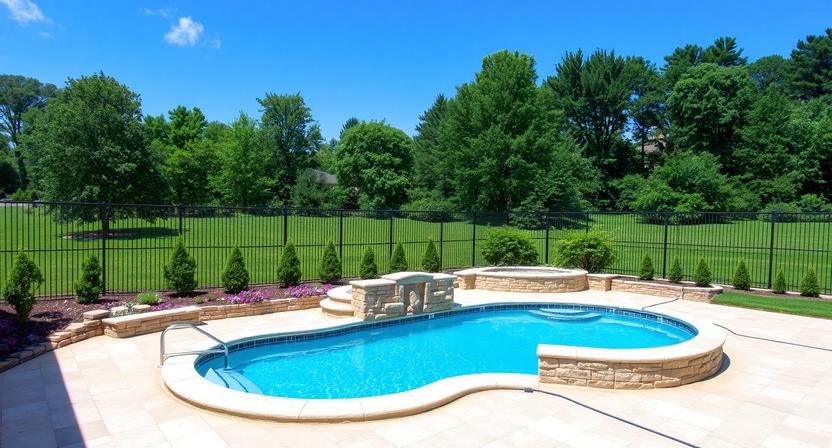
ICF pools are swimming pools built with insulated concrete forms that remain in place after the concrete pour. The forms create a reinforced concrete pool shell with continuous EPS insulation around the pool walls.
ICF pools reduce pool heat loss, improve energy efficiency, and support custom pool design for heated pools, indoor pools, and long-term backyard use. ICF pool selection depends on budget, site conditions, pool size, heating needs, waterproofing, interior finish, structural engineering, drainage, and local pool enclosure rules.
Quick Answer
What are ICF pools?
ICF pools are pools built with hollow insulated concrete form blocks filled with reinforced concrete. The forms remain in place after the concrete pour and add continuous EPS insulation around the pool walls.
Why choose ICF pools?
ICF pools are chosen for energy efficiency, heat retention, reinforced concrete strength, custom design, and long-term use. Modelled ICF pool data reports that insulated wall and slab systems reduce heat loss by 60% or more when installed as specified. Treat this figure as system-specific data, not a universal result.
What is the main limit?
ICF pools need correct structural engineering, waterproofing, concrete placement, pool finish selection, drainage, and skilled installation. Canadian ICF pool engineering guidance identifies soil conditions, structural design, and code compliance as key checks for safe pool construction.
Quick Overview
| Decision Factor | ICF Pool Detail |
|---|---|
| Best For | Heated pools, indoor pools, energy efficiency, custom shapes, and long-term use |
| Not Best For | Lowest upfront cost or simple temporary pool use |
| Main Structure | Reinforced concrete inside insulated concrete forms |
| Main Insulation | EPS foam forms around the pool walls |
| Main Benefit | Reduced heat loss through insulated pool walls |
| Main Design Value | Custom shapes, depths, steps, benches, and pool features |
| Main Risk | Poor waterproofing, weak engineering, poor concrete placement, and poor drainage |
| Long-Term Focus | Water balance, finish care, waterproofing, drainage, equipment care, and heating cost |
What Are ICF Pools?
ICF pools are swimming pools built with insulated concrete forms, steel rebar, and a reinforced concrete core. The hollow forms create the pool wall shape, hold the concrete pour, and remain in place as permanent EPS insulation after the concrete cures.
What does ICF mean?
ICF means insulated concrete form. An ICF is a hollow foam block or panel system used as stay-in-place formwork for reinforced concrete. Pool builders stack the forms, add rebar, place concrete inside the hollow core, then keep the forms in the wall assembly.
How do ICF pools work?
ICF pools work by combining a concrete structure with built-in insulation. The EPS foam forms create the pool wall layout. Rebar strengthens the wall. Concrete fills the form cavity and creates the structural pool shell. Waterproofing and the selected pool finish protect the inside face from pool water.
What materials are used?
ICF pools use EPS foam forms, plastic or metal ties, steel rebar, reinforced concrete, waterproofing membranes, interior pool finishes, coping, plumbing lines, skimmers, returns, drains, lights, pumps, filters, heaters, and sanitizing equipment. The final material list depends on pool size, soil conditions, finish type, heating system, and permit requirements.
What stays in place?
The insulated concrete forms stay in place after the concrete pour. The forms act as permanent formwork and continuous pool wall insulation. The reinforced concrete core carries the structural load, while the EPS insulation reduces heat movement through the pool walls.
What makes ICF pools different?
ICF pools differ from standard concrete pools because the wall system includes built-in EPS insulation around the reinforced concrete shell. Standard concrete pools rely mainly on the concrete structure, waterproofing, and finish system. ICF pools add insulation as part of the pool wall, which supports heat retention, energy efficiency, and heated-pool use. Canadian engineering guidance also treats soil conditions, wall pressure, structural design, and code compliance as key checks for ICF pool projects.
What Benefits Do ICF Pools Offer?
ICF pools offer energy efficiency, heat retention, reinforced concrete strength, custom design, and long-term durability. The main benefit is the combined use of EPS insulation and a reinforced concrete core in one pool wall system. Industry data connects ICF pool construction with lower heat loss, lower heating demand, design flexibility, and long service life when the pool has correct engineering, waterproofing, and drainage.
Why does insulation matter?
Insulation matters because pool water loses heat through the pool walls, pool floor, and surface evaporation. ICF pools use stay-in-place EPS foam forms that reduce heat movement through the pool walls. Modelled ICF pool data reports 60% or more heat-loss reduction when an insulated wall system is installed with an insulated slab. This figure depends on the form system, slab insulation, pool size, cover use, heater type, and installation quality.
Why does concrete strength matter?
Concrete strength matters because an inground pool must resist water pressure, soil pressure, seasonal ground movement, and long-term structural loads. ICF pools use steel rebar and poured concrete inside the forms to create a reinforced pool shell. The concrete core provides structure, while the EPS insulation stays around the wall as a thermal layer.
Why does heat retention matter?
Heat retention matters because heated pools use energy each time heat escapes into the ground, surrounding walls, and outdoor air. ICF pool insulation slows heat movement through the pool walls and helps the water hold a steadier temperature. Better heat retention supports lower heating demand, longer seasonal use, and more stable water comfort for heated outdoor pools and indoor pools.
Why does custom design matter?
Custom design matters because ICF pools are built on site with modular forms, rebar, and poured concrete. This construction method supports custom pool shapes, depths, steps, benches, tanning ledges, raised walls, and spa zones. The formwork also supports rectangle, lap, plunge, and freeform layouts when the design, engineering, waterproofing, and finish system match the pool plan.
Why does long-term use matter?
Long-term use matters because an ICF pool is a permanent pool structure, not a short-term pool option. The reinforced concrete core supports durability, while the insulation reduces heat loss during repeated heating cycles. Long-term performance depends on water balance, pool finish care, waterproofing checks, drainage, equipment maintenance, and winter protection in cold climates.
How Do ICF Pools Save Energy?
ICF pools save energy by reducing heat loss through insulated pool walls and supporting more stable water temperature. The EPS insulation around the reinforced concrete core slows heat movement into the surrounding soil. A pool cover, efficient heater, right-sized pump, and correct indoor humidity control further reduce energy demand.
Modelled ICF pool data reports 60% or more heat-loss reduction when a double layer of EPS insulation is installed with an insulated slab. Treat this as manufacturer-modelled system data, not a universal result for every pool site, size, climate, or heating setup.
Where does pool heat escape?
Pool heat escapes through the water surface, pool walls, pool floor, and surrounding air. The U.S. Department of Energy states that evaporation is the largest source of swimming pool energy loss. One pound of 80°F water removes 1,048 Btu of heat when it evaporates.
How does EPS insulation reduce heat loss?
EPS insulation reduces heat loss by adding a continuous thermal layer around the pool walls. The insulation separates warm pool water from colder concrete, soil, and backfill. ICF pool walls use this insulation as permanent formwork, while the reinforced concrete core provides structure.
How does pool size affect heating?
Pool size affects heating because larger pools contain more water volume and have more surface area. More water needs more energy to raise and hold the target temperature. Larger surfaces also increase exposure to evaporation, wind, and air temperature changes.
How does a pool cover affect energy use?
A pool cover reduces energy use by limiti
What Are ICF Pools?
ICF pools are swimming pools built with insulated concrete forms, steel rebar, and a reinforced concrete core. The hollow forms create the pool wall shape, hold the concrete pour, and remain in place as permanent EPS insulation after the concrete cures.
What does ICF mean?
ICF means insulated concrete form. An ICF is a hollow foam block or panel system used as stay-in-place formwork for reinforced concrete. Pool builders stack the forms, add rebar, place concrete inside the hollow core, then keep the forms in the wall assembly.
How do ICF pools work?
ICF pools work by combining a concrete structure with built-in insulation. The EPS foam forms create the pool wall layout. Rebar strengthens the wall. Concrete fills the form cavity and creates the structural pool shell. Waterproofing and the selected pool finish protect the inside face from pool water.
What materials are used?
ICF pools use EPS foam forms, plastic or metal ties, steel rebar, reinforced concrete, waterproofing membranes, interior pool finishes, coping, plumbing lines, skimmers, returns, drains, lights, pumps, filters, heaters, and sanitizing equipment. The final material list depends on pool size, soil conditions, finish type, heating system, and permit requirements.
What stays in place?
The insulated concrete forms stay in place after the concrete pour. The forms act as permanent formwork and continuous pool wall insulation. The reinforced concrete core carries the structural load, while the EPS insulation reduces heat movement through the pool walls.
What makes ICF pools different?
ICF pools differ from standard concrete pools because the wall system includes built-in EPS insulation around the reinforced concrete shell. Standard concrete pools rely mainly on the concrete structure, waterproofing, and finish system. ICF pools add insulation as part of the pool wall, which supports heat retention, energy efficiency, and heated-pool use. Canadian engineering guidance also treats soil conditions, wall pressure, structural design, and code compliance as key checks for ICF pool projects.
What Benefits Do ICF Pools Offer?
ICF pools offer energy efficiency, heat retention, reinforced concrete strength, custom design, and long-term durability. The main benefit is the combined use of EPS insulation and a reinforced concrete core in one pool wall system. Industry data connects ICF pool construction with lower heat loss, lower heating demand, design flexibility, and long service life when the pool has correct engineering, waterproofing, and drainage.
Why does insulation matter?
Insulation matters because pool water loses heat through the pool walls, pool floor, and surface evaporation. ICF pools use stay-in-place EPS foam forms that reduce heat movement through the pool walls. Modelled ICF pool data reports 60% or more heat-loss reduction when an insulated wall system is installed with an insulated slab. This figure depends on the form system, slab insulation, pool size, cover use, heater type, and installation quality.
Why does concrete strength matter?
Concrete strength matters because an inground pool must resist water pressure, soil pressure, seasonal ground movement, and long-term structural loads. ICF pools use steel rebar and poured concrete inside the forms to create a reinforced pool shell. The concrete core provides structure, while the EPS insulation stays around the wall as a thermal layer.
Why does heat retention matter?
Heat retention matters because heated pools use energy each time heat escapes into the ground, surrounding walls, and outdoor air. ICF pool insulation slows heat movement through the pool walls and helps the water hold a steadier temperature. Better heat retention supports lower heating demand, longer seasonal use, and more stable water comfort for heated outdoor pools and indoor pools.
Why does custom design matter?
Custom design matters because ICF pools are built on site with modular forms, rebar, and poured concrete. This construction method supports custom pool shapes, depths, steps, benches, tanning ledges, raised walls, and spa zones. The formwork also supports rectangle, lap, plunge, and freeform layouts when the design, engineering, waterproofing, and finish system match the pool plan.
Why does long-term use matter?
Long-term use matters because an ICF pool is a permanent pool structure, not a short-term pool option. The reinforced concrete core supports durability, while the insulation reduces heat loss during repeated heating cycles. Long-term performance depends on water balance, pool finish care, waterproofing checks, drainage, equipment maintenance, and winter protection in cold climates.
How Do ICF Pools Save Energy?
ICF pools save energy by reducing heat loss through insulated pool walls and supporting more stable water temperature. The EPS insulation around the reinforced concrete core slows heat movement into the surrounding soil. A pool cover, efficient heater, right-sized pump, and correct indoor humidity control further reduce energy demand.
Modelled ICF pool data reports 60% or more heat-loss reduction when a double layer of EPS insulation is installed with an insulated slab. Treat this as manufacturer-modelled system data, not a universal result for every pool site, size, climate, or heating setup.
Where does pool heat escape?
Pool heat escapes through the water surface, pool walls, pool floor, and surrounding air. The U.S. Department of Energy states that evaporation is the largest source of swimming pool energy loss. One pound of 80°F water removes 1,048 Btu of heat when it evaporates.
How does EPS insulation reduce heat loss?
EPS insulation reduces heat loss by adding a continuous thermal layer around the pool walls. The insulation separates warm pool water from colder concrete, soil, and backfill. ICF pool walls use this insulation as permanent formwork, while the reinforced concrete core provides structure.
How does pool size affect heating?
Pool size affects heating because larger pools contain more water volume and have more surface area. More water needs more energy to raise and hold the target temperature. Larger surfaces also increase exposure to evaporation, wind, and air temperature changes.
How does a pool cover affect energy use?
A pool cover reduces energy use by limiting evaporation and surface heat loss. The U.S. Department of Energy states that covering a pool when not in use is the single most effective way to reduce pool heating costs, with possible savings of 50% to 70%. Pool covers also reduce make-up water by 30% to 50% and chemical use by 35% to 60%.
How does indoor use affect energy cost?
Indoor pool use affects energy cost through evaporation, ventilation, air heating, and dehumidification. Indoor pools need moisture control to protect the pool room, finishes, insulation, and building envelope. A covered indoor pool reduces evaporation and lowers the need to replace humid indoor air with conditioned outdoor air.ng evaporation and surface heat loss. The U.S. Department of Energy states that covering a pool when not in use is the single most effective way to reduce pool heating costs, with possible savings of 50% to 70%. Pool covers also reduce make-up water by 30% to 50% and chemical use by 35% to 60%.
How does indoor use affect energy cost?
Indoor pool use affects energy cost through evaporation, ventilation, air heating, and dehumidification. Indoor pools need moisture control to protect the pool room, finishes, insulation, and building envelope. A covered indoor pool reduces evaporation and lowers the need to replace humid indoor air with conditioned outdoor air.
| Energy Factor | ICF Pool Relevance |
|---|---|
| Wall Insulation | Reduces heat movement through pool walls |
| Floor Insulation | Reduces heat movement into the ground where used |
| Pool Cover | Reduces surface heat loss and evaporation |
| Water Volume | Larger pools need more heating energy |
| Heating System | Heater type affects running cost |
| Indoor Dehumidification | Indoor pools need air moisture control |
| Season Length | Warmer water supports longer seasonal use |
What Design Options Are Available for ICF Pools?
ICF pools support custom shapes, depths, steps, benches, ledges, raised walls, spa zones, and indoor pool layouts. The modular insulated concrete forms create the wall layout, while rebar, concrete, waterproofing, and the selected pool finish complete the structure.
What shapes are possible?
ICF pool shapes include rectangles, lap pools, plunge pools, freeform pools, and custom geometric layouts. Rectangle designs suit simple covers, clean lines, and easier space planning. Freeform designs suit landscape-led layouts, curved patios, and custom backyard plans.
What depths are possible?
ICF pool depths depend on the design, soil conditions, wall height, excavation, and structural engineering. Common options include shallow lounge areas, sport-pool depths, deeper swim zones, and stepped-depth layouts. Each depth change needs correct rebar design, concrete placement, and waterproofing.
What steps are possible?
ICF pools support built-in steps, side-entry steps, corner steps, full-width entry steps, and beach-entry style transitions where the site and design allow them. Step design affects access, safety, pool layout, liner or finish detailing, and water circulation.
What benches are possible?
ICF pools support built-in bench seating for rest, social use, and shallow relaxation. Bench placement often works along side walls, in corners, near spa zones, or beside tanning ledges. Bench design needs clear waterproofing around corners, joints, and finish edges.
What features are possible?
ICF pool features include tanning ledges, spa zones, raised walls, water features, integrated lighting, automatic covers, indoor pool rooms, and heating systems. Each feature needs matching engineering, plumbing, waterproofing, equipment, and finish planning.
| Design Option | ICF Pool Use |
|---|---|
| Rectangle | Clean layout and efficient cover fit |
| Freeform | Custom landscape layout |
| Lap Shape | Fitness swimming |
| Plunge Shape | Small-yard soaking and cooling |
| Integrated Steps | Safe access |
| Bench Seating | Rest and social use |
| Tanning Ledge | Shallow lounging |
| Spa Zone | Warm-water add-on |
| Raised Wall | Slope and feature-wall design |
| Indoor Pool Room | Year-round use with HVAC design |
What Finishes Are Used for ICF Pools?
ICF pools use a waterproofing system, an interior pool finish, coping, decking, sealed penetrations, and movement joints. The finish system protects the reinforced concrete core, supports water tightness, affects surface feel, and changes long-term maintenance needs.
What interior finishes work?
ICF pools work with plaster, tile, vinyl liner, PVC membrane, or another approved pool finish. The right finish depends on the pool shape, waterproofing method, budget, design style, and maintenance plan.
Plaster gives a hard interior surface. Tile adds a durable surface with strong design control. Vinyl liners provide a smooth fitted surface. PVC membranes create a continuous lining system over the pool interior.
What waterproofing is needed?
ICF pools need a pool-rated waterproofing membrane, coating, or approved lining system before final finish work. Waterproofing protects the concrete shell, form system, joints, corners, drains, returns, skimmers, lights, and fittings.
Weak waterproofing increases leak risk. Correct detailing matters most around corners, wall-floor joints, steps, benches, and plumbing penetrations.
What coping works?
ICF pools use stone coping, concrete coping, paver coping, or manufactured coping. Coping covers the pool wall edge, protects the upper wall, and creates the finished border between the pool and deck.
Coping selection affects edge comfort, drainage, slip resistance, appearance, and long-term repair access.
What decking works?
ICF pools work with concrete decking, pavers, stone, or another slip-resistant pool deck surface. Decking needs correct slope, drainage, expansion joints, and safe walking texture.
Poor deck drainage sends water toward the pool wall. Correct grading moves water away from the pool structure and reduces pressure around the shell.
What finish affects maintenance?
Interior finish affects ICF pool maintenance most because it touches pool water every day. Plaster needs careful water balance. Tile needs grout care. Vinyl liners need puncture protection. PVC membranes need seam checks and approved cleaning methods.
Waterproofing, coping, and decking also affect maintenance because leaks, cracks, poor joints, and trapped water raise repair risk.
| Finish Area | What to Specify |
|---|---|
| Waterproofing | Membrane, coating, or approved pool waterproofing system |
| Interior Finish | Plaster, vinyl liner, tile, PVC membrane, or approved pool finish |
| Coping | Stone, concrete, paver, or manufactured coping |
| Decking | Concrete, pavers, stone, or slip-resistant surface |
| Corners and Penetrations | Sealed fittings, returns, drains, skimmers, and lights |
| Expansion Joints | Movement control between pool and deck |
What Affects ICF Pools Cost?
ICF pool cost depends on pool size, pool depth, ICF form system, reinforcement, concrete volume, waterproofing, interior finish, heating system, decking, and engineering. ICF pools often cost more than simple pool structures at the start, yet cost sources frame the long-term value around insulation, durability, and lower heating demand.
Does size affect cost?
Pool size affects ICF pool cost because larger pools need more insulated concrete forms, rebar, concrete, waterproofing, finish material, plumbing, and equipment. Larger water volume also raises heating demand and long-term energy use.
Does insulation affect cost?
Insulation affects ICF pool cost through the selected ICF block type, wall thickness, and slab insulation plan. Modelled ICF pool data reports heat-loss reduction of 60% or more when a double layer of EPS insulation is paired with an insulated slab. Treat this as system-specific data, not a universal result.
Does concrete affect cost?
Concrete affects ICF pool cost through volume, mix design, pump access, placement method, labour, and consolidation. Deeper pools, taller walls, raised walls, and sloped sites need more concrete and more structural control.
Does waterproofing affect cost?
Waterproofing affects ICF pool cost because membranes, coatings, joints, corners, drains, returns, skimmers, lights, and fittings need pool-rated sealing. Better waterproofing raises upfront cost, but it reduces leak risk and repair exposure.
Does heating affect cost?
Heating affects ICF pool cost through heater type, pool size, water volume, target temperature, cover use, and season length. The U.S. Department of Energy states that pool covers reduce heating costs by 50% to 70% when used on heated pools.
| Cost Factor | Why It Affects Price |
|---|---|
| Pool Size | Larger pools need more forms, concrete, steel, finish, and equipment |
| Pool Depth | Deeper pools need more excavation and structure |
| Form System | ICF block type and wall thickness affect materials |
| Reinforcement | Rebar spacing and engineering affect structure |
| Concrete | Volume, pump access, and placement affect cost |
| Waterproofing | Membrane or coating quality affects cost and risk |
| Finish | Tile, plaster, liner, or membrane changes labour and materials |
| Heating | Heater type and energy system affect budget |
| Decking | Coping, patio, stairs, and drainage affect final cost |
| Engineering | Soil, slope, groundwater, and retaining needs affect design |
How Are ICF Pools Built?
ICF pools are built through design, engineering, utility checks, excavation, form assembly, rebar placement, concrete placement, waterproofing, finishing, equipment setup, inspection, and startup. Each stage affects structural strength, water tightness, energy efficiency, and long-term pool performance.
What happens during design?
ICF pool design starts with pool size, shape, depth, access, drainage, finish choice, heating needs, and equipment layout. The design stage includes construction drawings, structural engineering, soil review, wall loads, plumbing routes, electrical planning, and permit details.
What happens during excavation?
Excavation creates the pool area, wall lines, base depth, plumbing routes, and equipment access. Utility locates identify underground gas, hydro, water, sewer, and communication lines before digging. Base preparation then creates a stable, level support area for the ICF blocks, wall structure, and pool floor.
How are forms assembled?
Installers stack the ICF blocks to match the pool drawings, then place steel rebar inside the form cavities. Bracing holds the forms straight during the concrete pour. Plumbing penetrations for skimmers, returns, drains, lights, and fittings need exact placement before concrete enters the forms.
How is concrete poured?
Concrete fills the hollow ICF forms and surrounds the rebar to create the reinforced concrete core. Placement needs controlled pour speed, proper vibration, and full consolidation. Poor concrete placement creates voids, weak sections, and leak risk around corners, wall bases, and penetrations.
What happens before startup?
Waterproofing protects the concrete shell before the final interior pool finish goes in. The builder installs the selected finish, coping, decking, equipment, plumbing, filtration, heating, and sanitizing system. Final checks include inspections, leak review, water filling, equipment testing, chemical balancing, and pool startup.
What Structural Checks Matter for ICF Pools?
ICF pool structural checks include soil type, groundwater, slope, wall pressure, rebar design, concrete placement, penetrations, backfill, and drainage. A Canadian ICF engineering source identifies soil–structure interaction, structural design, and code-compliant design as key checks for ICF pool construction in Canada.
Does soil matter?
Soil matters because it affects excavation, bearing capacity, settlement, drainage, frost movement, and wall pressure. Poorly compacted fill, expansive clay, and frost-affected soil increase movement risk around the ICF pool shell. A geotechnical review helps confirm base preparation, granular fill needs, and drainage design.
Does groundwater matter?
Groundwater matters because it adds hydrostatic pressure against the pool shell. High groundwater also affects slab uplift, waterproofing, drainage, and long-term leak risk. Engineering review needs to account for groundwater, sub-drainage, slab thickness, and reinforcement where site conditions require it.
Does slope matter?
Slope matters because sloped yards add soil pressure, drainage issues, and retaining-wall requirements. ICF pools suit sloped sites when the design includes proper wall support, engineered backfill, surface-water control, and drainage away from the pool structure.
Does wall pressure matter?
Wall pressure matters because ICF pool walls resist soil pressure when the pool is empty, water pressure when the pool is full, groundwater pressure where present, and construction pressure during backfilling. Reinforcement design controls bending, shear, crack risk, and long-term wall performance.
Does engineering matter?
Engineering matters because ICF pools act like reinforced concrete retaining structures. A qualified structural design sets rebar spacing, wall thickness, base connection, slab design, crack control, waterproofing support, and load resistance. Canadian guidance references Ontario Building Code, CSA A23.3, municipal bylaws, soil-specific design, and professional review for non-prescriptive pool structures.
| Structural Factor | Why It Matters |
|---|---|
| Soil Type | Affects excavation, bearing, drainage, and wall pressure |
| Groundwater | Affects waterproofing, drainage, and hydrostatic pressure |
| Slope | May require retaining design and structural review |
| Rebar Design | Controls concrete strength and crack risk |
| Concrete Placement | Affects wall integrity and void risk |
| Penetrations | Require correct sealing around fittings and lines |
| Backfill | Must support walls without damaging waterproofing |
| Drainage | Reduces pressure against the pool shell |
What Maintenance Is Needed for ICF Pools?
ICF pool maintenance includes water testing, surface care, waterproofing checks, equipment care, drainage review, winterization, and cover care. Health Canada says pool and spa water needs daily testing for sanitizer, pH, total alkalinity, and calcium hardness. This applies to ICF pools because balanced water protects swimmers, equipment, waterproofing details, and pool finishes.
What water testing is needed?
ICF pool water testing needs daily checks for sanitizer, pH, total alkalinity, and calcium hardness. Health Canada states that proper water balance helps stop disease-causing microorganisms from multiplying and helps prevent staining on pool surfaces.
What finish care is needed?
ICF pool finish care depends on the selected interior surface. Plaster needs close pH and calcium hardness control. Tile needs grout and scale checks. Vinyl liners need puncture protection and gentle cleaning. PVC membranes need seam checks and approved cleaning methods.
What waterproofing checks matter?
ICF pool waterproofing checks focus on leaks, wall-floor joints, corners, steps, benches, drains, returns, skimmers, lights, and other penetrations. These details matter because ICF pools rely on a pool-rated waterproofing membrane, coating, liner, or approved finish system to protect the pool structure.
What equipment care is needed?
ICF pool equipment care covers the pump, filter, heater, sanitizer, automation, valves, drains, returns, and cover system. Clean filters, steady water flow, proper sanitizer levels, and heater checks help protect water quality and reduce equipment strain.
What winter care is needed?
ICF pool winter care protects plumbing, fittings, waterline areas, equipment, and the selected pool finish during freeze-thaw conditions. Winterization includes water-level adjustment, line protection, equipment shutdown, cover placement, and drainage checks around the pool shell.
| Maintenance Area | ICF Pool Requirement |
|---|---|
| Water Testing | Sanitizer, pH, alkalinity, and calcium hardness |
| Surface Care | Depends on plaster, tile, liner, or membrane |
| Waterproofing Inspection | Checks leaks, joints, and penetrations |
| Equipment Care | Pump, filter, heater, sanitizer, and automation |
| Drainage Checks | Reduces water pressure around the pool |
| Winterization | Protects plumbing, fittings, waterline, and equipment |
| Cover Care | Reduces heat loss, debris, and evaporation |
How Long Do ICF Pools Last?
ICF pools last longest when the reinforced concrete core, EPS insulation, waterproofing, interior finish, drainage, and winterization work as one system. The structure has the longest service life. The pool finish, waterproofing details, and equipment usually set the first major repair cycle. Health Canada links daily water balance testing to safer water and stain prevention, which supports finish and equipment life.
What affects structural life?
Structural life depends on the reinforced concrete core, rebar design, concrete placement, soil support, backfill, drainage, and freeze-thaw control. ICF pool walls use reinforced concrete inside stay-in-place forms, and ICF cost sources connect this wall system with durability against ground movement, pressure, and seasonal changes.
What affects insulation life?
Insulation life depends on the condition of the EPS insulation, waterproofing protection, drainage, backfill quality, and exposure control. Below-grade EPS sources state that EPS insulation provides stable long-term R-value in below-slab and below-grade use when installed and protected correctly.
What affects finish life?
Finish life depends on the selected interior pool finish, water chemistry, cleaning method, UV exposure, winter care, and repair timing. Plaster, tile, vinyl liner, and PVC membrane systems age at different rates. Vinyl liner sources commonly place liner life around 8 to 12 years, with longer life under ideal care.
What affects waterproofing life?
Waterproofing life depends on membrane quality, coating quality, joint detailing, wall-floor transitions, corners, drains, returns, skimmers, lights, and other penetrations. Poor drainage and high groundwater pressure increase stress on waterproofing. Correct waterproofing gives the reinforced concrete shell and ICF forms better protection against leaks.
What care extends lifespan?
ICF pool care extends lifespan through daily water testing, stable pH, correct calcium hardness, proper winterization, drainage checks, cover use, and early leak repair. Health Canada says pool water needs daily testing for sanitizer, pH, total alkalinity, and calcium hardness. This care protects swimmers, pool surfaces, and equipment.
What Problems Happen With ICF Pools?
ICF pool problems usually come from weak engineering, poor waterproofing, poor concrete consolidation, incorrect penetrations, poor drainage, ground movement, freeze-thaw stress, or poor finish selection. Most issues start when the pool shell, waterproofing, soil conditions, and drainage plan are not designed as one system.
Can ICF pools leak?
ICF pools leak when water passes through weak waterproofing, unsealed joints, cracks, or poorly sealed penetrations. Common leak points include returns, drains, skimmers, lights, fittings, corners, steps, benches, and wall-floor transitions. Pool waterproofing sources list vinyl liners, PVC membranes, cementitious coatings, and approved pool finishes as common waterproofing options for ICF pools.
Can waterproofing fail?
Waterproofing fails when the membrane, coating, liner, seams, corners, or penetrations are not installed to the pool system requirements. Below-grade ICF waterproofing guidance says manufacturers’ waterproofing instructions matter, and dimpled membranes add protection and pressure relief behind walls.
Can concrete crack?
Concrete cracks when the pool structure faces soil movement, hydrostatic pressure, poor construction, weak reinforcement, poor concrete placement, or freeze-thaw stress. Pool crack guidance connects cracks with hydrostatic pressure, shifting soil, poor compaction, and poor construction conditions.
Can insulation get damaged?
ICF insulation gets damaged when backfill, sharp debris, drainage work, or later repairs harm the EPS foam or protective layers. Damage risk increases when waterproofing, drainage board, backfill material, and repair access are not planned before the pool wall is covered.
Can poor drainage cause issues?
Poor drainage causes issues because water pressure builds against the pool shell and waterproofing. High groundwater and trapped surface water increase hydrostatic pressure, leak risk, slab uplift risk, and wall stress. Pool construction guidance links groundwater pressure with cracks, shell stress, and long-term structural damage.
What Yards Suit ICF Pools?
ICF pools suit yards that need custom sizing, heat retention, reinforced concrete strength, and long-term use. Strong fits include heated outdoor pools, indoor pools, sloped yards, and cold-climate properties with correct engineering, drainage, waterproofing, and winter planning.
Do small yards suit ICF pools?
Small yards suit ICF pools when the design uses compact sizing, clear access, and efficient equipment placement. Plunge pools, narrow pools, and custom rectangles often fit smaller lots better than large standard pool layouts.
Do sloped yards suit ICF pools?
Sloped yards suit ICF pools when the project includes structural engineering, drainage, and retaining-wall planning. The reinforced concrete core supports strong wall design, while proper drainage reduces soil and water pressure around the pool shell.
Do indoor spaces suit ICF pools?
Indoor spaces suit ICF pools when the room includes proper HVAC, dehumidification, vapour control, and building envelope protection. Indoor pool rooms need moisture control because warm pool water releases humidity into the air.
Do heated pools suit ICF pools?
Heated pools suit ICF pools because EPS insulation helps reduce heat movement through the pool walls. A pool cover, efficient heater, and correct pump setup further reduce heat loss and energy demand.
Do cold climates suit ICF pools?
Cold climates suit ICF pools when the design includes insulation planning, drainage, waterproofing, and proper winterization. Freeze-thaw conditions, groundwater, and snowmelt need careful control around the pool shell, plumbing, fittings, and equipment.
| Site Condition | ICF Pool Fit |
|---|---|
| Heated Outdoor Pool | Strong fit because insulation supports heat retention |
| Indoor Pool | Strong fit with proper HVAC and dehumidification |
| Sloped Yard | Strong fit with engineering and drainage |
| Small Yard | Site-dependent; custom sizing supports fit |
| Tight Access | Site-dependent; forms are modular, but concrete access matters |
| Cold Climate | Strong fit with winterization and insulation planning |
| High Groundwater | Requires drainage and waterproofing review |
What Permits and Safety Rules Apply to ICF Pools?
ICF pools need the same local pool permits, pool fence approvals, zoning checks, setback checks, inspections, and utility locates required for other permanent pools. Toronto requires an approved Zoning Certificate before a Pool Fence Enclosure Permit application, and a pool cannot be constructed and filled with water before the required fence is installed.
Are pool permits needed?
Pool permits are needed when local rules require approval for the pool structure, enclosure, zoning, grading, drainage, or related construction. Toronto requires applicants to obtain a Zoning Certificate before applying for a Pool Fence Enclosure Permit for pool enclosure work.
Are pool fences needed?
Pool fences are needed for swimming pool enclosures. Toronto states that a swimming pool enclosure must completely surround the pool area, with no openings except a gate.
Are setbacks checked?
Setbacks are checked through zoning review. The Zoning Certificate process reviews whether the proposed pool location follows local zoning rules before the Pool Fence Enclosure Permit stage.
Are inspections needed?
Inspections are needed when the municipality requires review of the pool enclosure, fence, gate, drawings, and installed work. Toronto lists pool fence enclosures under application intake, plan review, and inspection activities in its fees schedule.
Are utility locates needed?
Utility locates are needed before excavation. Ontario One Call states that homeowners must request public utility locates at least 5 business days before digging, and locate requests apply to home projects that involve excavation.
How Do ICF Pools Compare?
ICF pools compare by construction method, not only by pool type. ICF describes a pool structure made from insulated concrete forms and reinforced concrete. Fibreglass, vinyl liner, indoor, and saltwater describe different pool shell, surface, location, or sanitation choices. Industry sources connect ICF pools with insulation, concrete strength, design flexibility, and energy performance.
How do ICF pools compare with concrete pools?
ICF pools are concrete pools built with insulated stay-in-place forms around a reinforced concrete core. Standard concrete pools use concrete as the main structure, while ICF pools add continuous EPS insulation as part of the wall system. This makes ICF pools more focused on heat retention, energy efficiency, and insulated wall performance.
How do ICF pools compare with fibreglass pools?
ICF pools are built on site with forms, rebar, concrete, waterproofing, and a selected finish. Fibreglass pools use a factory-made, pre-moulded shell placed into the excavated site. ICF pools suit custom structure, custom depth, and insulated construction. Fibreglass pools suit faster shell placement and fixed manufacturer shapes.
How do ICF pools compare with vinyl liner pools?
ICF pools describe the pool structure. Vinyl liner pools describe the surface system that holds water inside the pool. A vinyl liner pool often uses wall panels with a fitted liner over the interior surface. An ICF pool uses insulated forms and reinforced concrete, then receives a finish such as plaster, tile, PVC membrane, or vinyl liner where the system allows it.
How do ICF pools compare with indoor pools?
ICF pools describe how the pool is built. Indoor pools describe where the pool is placed. An ICF pool works indoors when the pool room includes proper HVAC, dehumidification, vapour control, and building envelope protection. The insulated pool structure supports heat retention, while the indoor room design manages humidity and air quality.
How do ICF pools compare with saltwater pools?
ICF pools describe the pool structure. Saltwater pools describe the sanitation system. An ICF pool uses insulated forms and reinforced concrete. A saltwater pool uses a salt chlorine generator to produce chlorine from dissolved pool salt. The two choices are not opposites; an ICF pool may use a saltwater system when the finish, equipment, and water-care plan suit that setup.
| Comparison | ICF Pool Difference |
|---|---|
| ICF vs Concrete | ICF uses insulated stay-in-place forms around reinforced concrete |
| ICF vs Fibreglass | ICF is built on site; fibreglass uses a pre-moulded shell |
| ICF vs Vinyl Liner | ICF describes structure; vinyl liner describes the pool surface system |
| ICF vs Indoor Pool | ICF describes construction; indoor describes location and year-round enclosure |
| ICF vs Saltwater | ICF describes structure; saltwater describes sanitation system |
Who Are ICF Pools Best For?
ICF pools are best for homeowners who want a heated pool, energy efficiency, reinforced concrete strength, custom design, or an indoor pool with planned HVAC and dehumidification. ICF pools are weaker fits for the lowest upfront budget, simple temporary use, or sites with no practical concrete access.
Are they best for heated pools?
ICF pools are a strong fit for heated pools because EPS insulation helps reduce heat movement through the pool walls. Heat retention matters most when the pool has a heater, longer swim season, or higher target water temperature.
Are they best for energy efficiency?
ICF pools are a strong fit for energy efficiency because the pool wall system includes permanent insulated concrete forms around the reinforced concrete core. A pool cover, efficient heater, variable-speed pump, and good water temperature control improve the full energy plan.
Are they best for indoor pools?
ICF pools are a strong fit for indoor pools when the pool room includes proper HVAC design, dehumidification, vapour control, and building envelope protection. The insulated pool structure supports heat retention, while the mechanical system controls indoor moisture.
Are they best for custom design?
ICF pools are a strong fit for custom design because modular forms, rebar, and poured concrete support custom shapes, depths, steps, benches, raised walls, and spa zones. Custom design still needs correct engineering, waterproofing, and finish detailing.
Are they best for low upfront cost?
ICF pools are not the best fit for the lowest upfront cost. The structure needs ICF forms, rebar, concrete, engineering, waterproofing, finish work, and skilled installation. The long-term value comes from insulation, durability, heat retention, and lower heating demand, not the cheapest starting price.
| Homeowner Need | Fit |
|---|---|
| Heated Pool | Strong Fit |
| Energy Efficiency | Strong Fit |
| Indoor Pool | Strong Fit with HVAC Design |
| Custom Design | Strong Fit |
| Reinforced Structure | Strong Fit |
| Lowest Upfront Cost | Weak Fit |
| Simple Temporary Pool | Weak Fit |
| Tight No-Concrete Access | Site-Dependent Fit |
What Mistakes Increase ICF Pools Cost?
ICF pool mistakes usually happen when homeowners compare only structure cost and ignore waterproofing, engineering, drainage, finish systems, heating, covers, fencing, permits, equipment, and long-term maintenance. These missed items raise the full project cost and increase repair risk.
Is choosing ICF only for price a mistake?
Choosing ICF pools only for price is a mistake because ICF pool construction is not the lowest-cost pool method. The value comes from insulation, reinforced concrete strength, heat retention, and long-term use. A low quote that excludes engineering, waterproofing, drainage, and finish details creates higher cost risk later.
Is ignoring waterproofing a mistake?
Ignoring waterproofing is a major ICF pool cost mistake. ICF pools need a pool-rated membrane, coating, liner, or approved waterproofing system. Weak waterproofing around corners, steps, benches, drains, returns, skimmers, lights, and joints increases leak risk and repair cost.
Is skipping engineering a mistake?
Skipping structural engineering is a major mistake because ICF pool walls must resist water pressure, soil pressure, groundwater pressure, and freeze-thaw stress. Engineering sets rebar spacing, wall thickness, concrete strength, slab design, and support details. Poor structure planning increases crack, movement, and repair risk.
Is ignoring drainage a mistake?
Ignoring drainage is a costly mistake because trapped water creates pressure around the pool shell. Poor drainage affects waterproofing, backfill, groundwater control, and long-term wall performance. A proper drainage plan includes gravel, slope control, weeping tile where needed, and water movement away from the pool.
Is comparing quotes poorly a mistake?
Poor ICF pool quote comparison is a mistake because structure cost is only one part of the project. A full quote needs clear details for ICF forms, rebar, concrete, waterproofing, interior finish, heating, pool cover, equipment, drainage, decking, fencing, permits, inspections, and warranties. Cost accuracy improves when each quote includes the same scope.
How Do You Compare ICF Pools Quotes?
ICF pool quotes need the same scope, materials, engineering details, waterproofing system, finish type, equipment list, energy items, drainage plan, permits, and warranty terms. A clear quote comparison separates low price from missing work.
What form details matter?
ICF form details include block type, wall thickness, EPS insulation, tie system, form compatibility, and slab insulation where specified. The quote needs to state the exact ICF system, wall build-up, pool wall height, and connection details.
What engineering details matter?
Engineering details include rebar design, wall loads, soil type, slope, groundwater, backfill, slab design, and retaining needs. A complete quote identifies who provides drawings, who reviews structural loads, and who signs off code-related design details.
What waterproofing details matter?
Waterproofing details include the membrane, coating, liner, joints, corners, penetrations, drains, returns, skimmers, lights, and warranty terms. ICF pools need clear waterproofing details because leaks often start at joints, fittings, wall-floor transitions, and poorly sealed penetrations.
What finish details matter?
Finish details include plaster, tile, vinyl liner, PVC membrane, or another approved pool finish. The quote needs to state surface material, preparation method, colour or pattern, installation scope, care needs, and finish warranty.
What warranty details matter?
Warranty details need separate coverage for structure, waterproofing, interior finish, equipment, labour, and installation defects. A strong quote states warranty length, exclusions, claim process, maintenance conditions, and which company is responsible for each part.
| Homeowner Need | Fit |
|---|---|
| Heated Pool | Strong Fit |
| Energy Efficiency | Strong Fit |
| Indoor Pool | Strong Fit with HVAC Design |
| Custom Design | Strong Fit |
| Reinforced Structure | Strong Fit |
| Lowest Upfront Cost | Weak Fit |
| Simple Temporary Pool | Weak Fit |
| Tight No-Concrete Access | Site-Dependent Fit |
How Do ICF Pools Affect Comfort?
ICF pools affect comfort through water temperature, pool size, surface finish, and cover use. The insulated wall system helps reduce heat movement through the pool walls, while the finish and layout affect how the pool feels during daily use.
Does insulation keep water warmer?
Insulation keeps ICF pool water warmer by slowing heat loss through the pool walls. EPS insulation around the reinforced concrete core helps the pool hold a steadier temperature, especially when the pool is heated or used in cooler weather.
Does pool size affect comfort?
Pool size affects comfort because water volume, swim space, depth, and surface area change how people use the pool. Larger ICF pools provide more swimming space, while smaller pools heat faster and suit soaking, cooling, and low-volume water care.
Does finish affect surface feel?
Finish affects surface feel because each ICF pool finish has a different texture. Vinyl liners and PVC membranes feel smoother. Plaster feels firm. Tile feels hard and clean but depends on grout quality and edge detailing.
Does cover use affect comfort?
Cover use affects comfort because a pool cover reduces surface heat loss, evaporation, debris, and overnight temperature drop. Covered ICF pools often feel warmer at the next use and need less reheating after cool nights.
How Do ICF Pools Affect Energy Use?
ICF pools affect energy use by reducing heat movement through the pool walls, lowering heating demand, and supporting steadier water temperature. EPS insulation, pool size, ground temperature, cover use, heater type, and pump choice all affect the final energy cost.
Does insulation reduce heating demand?
Insulation reduces heating demand by slowing heat transfer through the pool walls. ICF pools use EPS insulation around the reinforced concrete core, which helps heated water hold temperature for longer. Some modelled ICF pool data reports 60% or more heat-loss reduction when a double layer of EPS insulation is installed with an insulated slab. Treat this as system-specific data, not a universal result.
Does ground temperature matter?
Ground temperature matters because colder soil pulls heat from the pool shell. ICF wall insulation reduces heat movement between warm pool water and cooler soil. Floor insulation adds more benefit where the design includes an insulated base.
Does a cover reduce evaporation?
A pool cover reduces evaporation and surface heat loss. The U.S. Department of Energy states that covering a pool when not in use is the most effective way to reduce pool heating costs, with possible savings of 50% to 70%. Pool covers also reduce the need to ventilate and replace humid indoor air when used on indoor pools.
Does pump choice affect energy cost?
Pump choice affects energy cost because the pump runs filtration, circulation, heating support, and sanitizing flow. A right-sized variable-speed pump uses lower speeds for routine circulation and higher speeds only when needed. Good pump selection works with the heater, filter, automation, and pool size to reduce waste.
How Do ICF Pools Affect Indoor Pool Design?
ICF pools affect indoor pool design by adding an insulated reinforced concrete pool shell inside a room that still needs strict humidity control, dehumidification, vapour control, and room insulation. Indoor pool design must manage moisture, condensation, air quality, heat loss, and building-envelope protection.
Does humidity control matter?
Humidity control matters because indoor pools release moisture into the room air every day. High humidity increases condensation risk on walls, ceilings, windows, frames, and hidden cavities. Canadian building guidance states that indoor swimming pools need careful design of both the interior environment and the building design, especially in cold weather.
Does dehumidification matter?
Dehumidification matters because an indoor pool room needs continuous moisture removal. A dehumidification system helps control relative humidity, room temperature, air movement, and ventilation. Industry design guidance commonly places indoor pool humidity around 50% to 60% RH to balance comfort, evaporation, and condensation risk.
Does vapour control matter?
Vapour control matters because indoor pool air has high moisture pressure. Moisture moves into walls, ceilings, roof assemblies, and window areas when the room lacks a proper vapour barrier or vapour-retarding system. ASHRAE pool-room guidance states that vapour barrier placement is critical because it is not practical to keep every wall cavity surface above dew point at all times.
Does room insulation matter?
Room insulation matters because cold surfaces create condensation when warm humid pool air reaches them. The indoor pool enclosure needs enough R-value, thermal breaks, air sealing, and insulated wall and roof assemblies to reduce surface condensation. ASHRAE Journal guidance states that pool enclosures need enough R-value, a thermal break, and a vapour barrier to help stop condensation and moisture migration.
How Do ICF Pools Affect Resale?
ICF pools affect resale through energy efficiency, pool condition, design quality, permit compliance, and buyer demand. A pool adds the most resale value when it is permanent, well maintained, legally enclosed, efficient to run, and matched to the property’s outdoor space. Canadian appraisal guidance shows pool value varies by home value and market fit, with one example placing contributory value between $3,200 and $61,000 on an $800,000 home.
Does energy efficiency matter?
Energy efficiency matters because buyers look at ownership cost, not only pool appearance. ICF pools use EPS insulation around a reinforced concrete core, which supports heat retention and lower heating demand. A covered, efficient, heated ICF pool presents stronger resale value than a high-cost pool with no insulation, weak cover plan, or inefficient equipment.
Does pool condition matter?
Pool condition matters because buyers and appraisers assess visible wear, leaks, finish quality, equipment age, safety, and maintenance records. A clean ICF pool with balanced water, working equipment, sound waterproofing, and a good interior finish reduces buyer concern. A worn pool with leaks, stained surfaces, damaged coping, or poor drainage lowers resale appeal.
Does design quality matter?
Design quality matters because the pool must fit the yard, home style, outdoor living space, and buyer use. Strong ICF pool design includes clear circulation space, safe access, practical depth, good decking, shaded seating, landscape fit, and efficient cover use. Poor design reduces usable yard space and raises buyer objections.
Does permit compliance matter?
Permit compliance matters because buyers need proof that the pool, enclosure, setbacks, inspections, and safety details meet local rules. Toronto requires an approved Zoning Certificate before a Pool Fence Enclosure Permit, and the city states that a pool cannot be constructed and filled with water without the required fence installed.
FAQs About ICF Pools
What are ICF pools?
ICF pools are pools built with insulated concrete forms filled with reinforced concrete. The forms remain in place after the concrete sets and provide continuous EPS insulation around the pool walls.
Are ICF pools concrete pools?
ICF pools are concrete pools because they use a reinforced concrete core as the main structure. The difference is the stay-in-place insulated formwork around the concrete.
Are ICF pools energy efficient?
ICF pools are energy efficient because EPS insulation reduces heat movement through the pool walls. Some modelled ICF pool data reports 60% or more heat-loss reduction when the insulated wall system is paired with an insulated slab. Treat this as system-specific data, not a universal result.
Do ICF pools cost more?
ICF pools often cost more upfront than simple pool structures because they need ICF forms, rebar, concrete, engineering, waterproofing, and skilled installation. The long-term value comes from insulation, durability, and lower heating demand.
Do ICF pools save heating cost?
ICF pools reduce heating demand by limiting heat loss through insulated walls. A pool cover further lowers heating cost. The U.S. Department of Energy states that pool covers reduce heating costs by 50% to 70% when used on heated pools.
Are ICF pools good for Canadian winters?
ICF pools suit Canadian winters when the project includes drainage, waterproofing, winterization, protected plumbing, and freeze-thaw planning. Cold-climate performance depends on structure, soil, groundwater, and correct seasonal care.
Are ICF pools good for indoor pools?
ICF pools suit indoor pools because the insulated structure helps retain heat. Indoor pool rooms still need HVAC design, dehumidification, vapour control, and building-envelope protection to manage moisture.
Are ICF pools good for saltwater systems?
ICF pools work with saltwater systems when the pool finish, waterproofing, equipment, and water-care plan suit salt chlorine generation. Saltwater pools still use chlorine, produced by a salt chlorine generator.
What finishes work with ICF pools?
ICF pools work with plaster, tile, vinyl liner, PVC membrane, or another approved pool finish. The finish choice affects surface feel, water care, repair access, and maintenance.
Do ICF pools need waterproofing?
ICF pools need waterproofing because the pool shell must hold water and protect joints, corners, penetrations, and finishes. Common systems include pool-rated membranes, coatings, liners, and approved interior finish systems.
Do ICF pools crack?
ICF pools develop cracks when soil movement, poor drainage, weak reinforcement, poor concrete placement, hydrostatic pressure, or freeze-thaw stress affects the pool shell. Proper engineering, rebar design, concrete consolidation, and drainage reduce crack risk.
How long do ICF pools last?
ICF pools last longest when the reinforced concrete core, EPS insulation, waterproofing, finish, drainage, and winter care remain in good condition. Health Canada says pool water needs daily testing for sanitizer, pH, total alkalinity, and calcium hardness, which helps protect swimmers, finishes, and equipment.
Are ICF pools better than concrete pools?
ICF pools are better than standard concrete pools for insulation, heat retention, and energy-focused builds. Standard concrete pools suit projects where insulation is less important or where another concrete construction method fits the site better.
Are ICF pools better than fibreglass pools?
ICF pools are better for custom shape, depth, insulated construction, and reinforced on-site design. Fibreglass pools are better for faster shell placement and fixed pre-moulded designs.
What is the main benefit of ICF pools?
The main benefit of ICF pools is the combined use of reinforced concrete strength and continuous EPS insulation. This structure supports heat retention, energy efficiency, custom design, and long-term use.