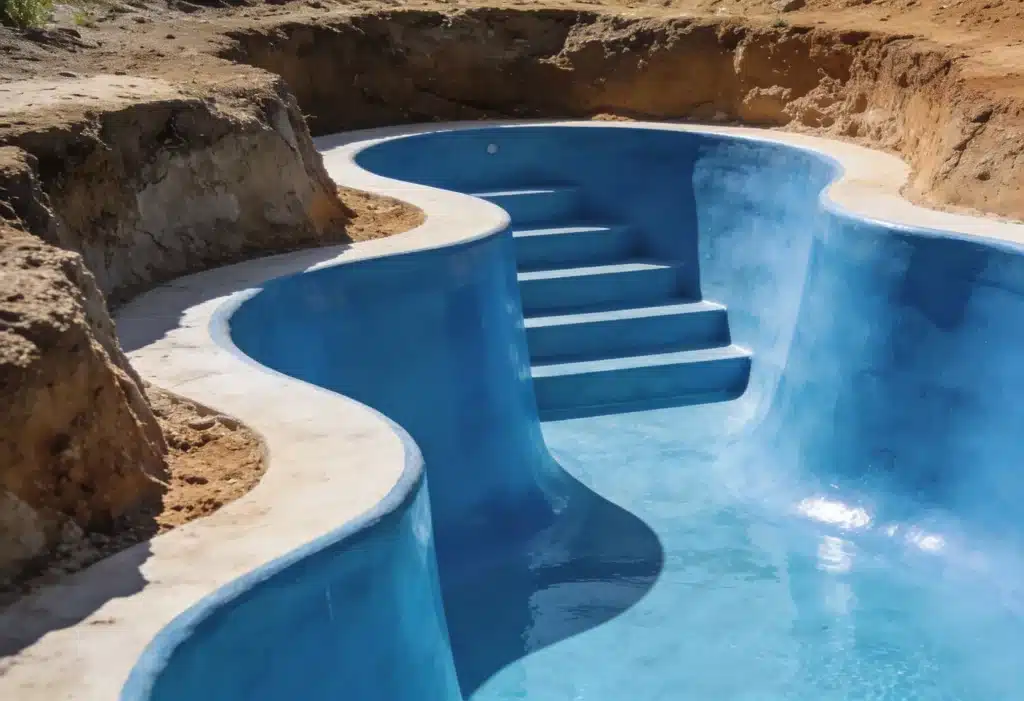
Pool installation in Toronto is the process of planning, designing, and building a swimming pool with site review, design development, excavation, structural construction, plumbing, electrical work, finishing, fencing, and startup. The full scope covers the work needed to deliver a safe, durable, and functional pool that fits the property and meets local construction standards.
The right pool installation depends on budget, yard size, pool type, design goals, maintenance requirements, and Toronto permit and bylaw requirements. Project scope also depends on site access, grading, drainage, soil conditions, equipment systems, and the level of custom features included in the build.
A complete Toronto pool installation plan addresses cost, pool selection, construction process, regulatory compliance, and long-term operating demands from the start. Strong planning improves build efficiency, controls total project cost, and supports long-term pool performance.
What Is Pool Installation in Toronto?
Pool installation in Toronto is the full process of building a residential swimming pool on a property in Toronto. Pool installation includes site review, design planning, excavation, structural work, plumbing, electrical setup, finishing, fencing, inspection and startup. The process connects pool type, yard conditions, budget, permits, zoning rules and construction stages into one project.
What Does Pool Installation Include?
Pool installation includes every stage required to move from an empty yard to a working pool. The work starts with a site review and layout plan. The project then moves into design, excavation, structural construction, plumbing installation, electrical installation, equipment setup, coping, decking, fencing and final startup. Each stage affects the next stage, so accurate planning and sequencing control cost, timing, and compliance.
What Happens During a Site Review?
A site review checks whether the property supports the planned pool installation. The review measures yard size, access width, slope, grade, soil condition and drainage. The review checks the location of utilities, structures, property lines and fence lines. The review also identifies setback limits, grading issues and access problems that affect excavation and equipment delivery. This stage defines the buildable area and reduces design errors.
What Happens During Pool Design?
Pool design sets the pool’s size, shape, depth, orientation, and position on the property. The design stage connects the pool shell or pool structure with steps, ledges, coping, decking, filtration equipment, lighting and other features. The design also aligns the pool with setback rules, yard flow, drainage direction, and safe access around the water. A complete design turns the project into a buildable plan with clear dimensions and construction details.
What Happens During Excavation and Structural Work?
Excavation and structural work create the physical form of the pool. The contractor marks the layout and excavates the ground to the required length, width and depth. The next step prepares the base and installs the pool structure based on the selected pool type. A fibreglass pool uses a manufactured shell. A vinyl liner pool uses wall panels and a liner system. A concrete pool uses steel reinforcement and a formed concrete structure. This stage establishes strength, shape, and long-term stability.
What Happens During Plumbing and Electrical Setup?
Plumbing and electrical setup connect the pool to its operating systems. Plumbing lines move water between the pool and the pump, filter, heater, drains, returns and skimmers. Electrical installation connects pool lights, pumps, heaters, automation systems and safety components. This stage includes bonding, wiring, and equipment placement. Correct installation supports water circulation, filtration, heating, and safe equipment operation.
What Happens During Finishing and Handover?
Finishing and handover complete the pool and prepare it for use. The finishing stage includes coping, decking, surface finishing, fencing, gates and surrounding site work. The installer fills the pool, starts the equipment, tests the system, and checks overall operation. The handover stage covers final inspection, startup settings, and owner guidance for cleaning, filtration, and routine care. This stage turns a construction site into a usable swimming pool installation.
How Much Does Pool Installation Cost in Toronto?
Toronto pool installation cost usually sits inside a wide range because pool type, yard conditions, access, permits, equipment and finishing work change the final project scope. Toronto and Ontario cost guides place many inground pool projects between about C$50,000 and C$180,000+, while broader Canadian guides place vinyl, fibreglass and concrete installations across roughly C$60,000 to C$250,000 depending on material, size and finish level.

What Is the Average Pool Installation Cost in Toronto?
Average pool installation cost in Toronto starts with the pool material and rises with site complexity and upgrades. Toronto and Ontario guides place vinyl liner pools around C$55,000 to C$100,000, fibreglass pools around C$70,000 to C$120,000 and concrete pools around C$100,000 to C$250,000+. That puts many standard inground pool projects in the mid-five-figure to low-six-figure range before major luxury additions.
How Much Does a Fibreglass Pool Cost?
Fibreglass pool installation cost in Toronto usually sits in the upper mid-range of the market. Current Toronto and Canadian guides place most installed fibreglass pools around C$70,000 to C$120,000, with higher totals attached to larger shells, difficult access, premium decking and upgraded equipment. Fibreglass pricing stays above many basic vinyl projects and below many high-end custom concrete builds.
How Much Does a Vinyl Pool Cost?
Vinyl pool installation cost in Toronto usually starts below fiberglass and concrete. Toronto and Ontario guides place many installed vinyl liner pools around C$55,000 to C$100,000, with lower-entry projects at the bottom of that range and larger or more detailed builds landing higher. Vinyl pricing reflects the lower initial shell cost, while long-term ownership includes future liner replacement.
How Much Does a Concrete Pool Cost?
Concrete pool installation cost in Toronto sits at the top of the main residential pool categories. Toronto and Ontario pricing guides place many concrete pools from about C$100,000 to C$250,000+, and Toronto comparisons place heavily customized projects from roughly C$150,000 upward. Concrete pricing rises because the structure, finish options, shape freedom and site-built construction demand more labour and more time.
How Much Does an Above-Ground Pool Cost?
Above-ground pool cost in Toronto stays far below most inground pool projects. Toronto-area seller pricing places many above-ground pool packages around C$3,000 to C$5,000, while Toronto-area labour guides place installation labour around C$1,500 to C$5,000 depending on size and site preparation. That places many basic installed projects around C$4,500 to C$10,000 before major electrical work, decking or landscaping.
How Much Does an Indoor Pool Cost?
Indoor pool installation cost exceeds most outdoor residential projects because the budget includes the pool, the building environment, and moisture-control systems. Current Canadian cost guides place many indoor pools around C$120,000 to C$300,000+, while indoor pool specialists identify added costs for the enclosure structure and dehumidification system. Indoor pool budgets rise fast once the project includes custom structure work, ventilation, and year-round climate control.
What Affects the Final Pool Installation Cost?
Final pool installation cost depends on a short list of major cost drivers. Pool type, size, depth, yard access, excavation difficulty, soil conditions, grading, decking, coping, heating, lighting, automation and water features all raise the total. Toronto adds local compliance costs because the City requires a Zoning Applicable Law Certificate before a Pool Fence Enclosure Permit application, the City lists the Pool Fence Enclosure permit fee at C$214.79, and Ontario ESA lists C$168 for inground, indoor, and above-ground pool electrical inspection.
What Ongoing Pool Ownership Costs Should You Expect?
Ongoing pool ownership costs continue after installation. Ontario maintenance guides place routine annual pool care around C$1,000 to C$3,000 for many homeowners, with common line items such as chemicals at C$250 to C$500, electricity at C$150 to C$350, water at C$75 to C$175 and seasonal opening and closing at C$500 to C$800. Canadian cost guides place seasonal maintenance up to about C$1,800 for fibreglass, C$2,000 for vinyl and C$2,500 for concrete. Vinyl liners usually need replacement every 8 to 10 years at roughly C$4,500 to C$6,500.
Which Pool Type Is Best for a Toronto Property?
The best pool type for a Toronto property depends on installation speed, design flexibility, budget, maintenance, yard size, and season of use. Fibreglass pools suit faster builds and lower routine maintenance. Vinyl liner pools suit flexible layouts and lower entry cost. Concrete pools suit full customization. Above-ground pools suit lower budgets. Indoor pools suit year-round swimming. Plunge pools and lap pools suit compact or fitness-focused layouts.
Is a Fibreglass Pool Best for Faster Installation?
Fibreglass pools are best for faster installation. The fibreglass shell arrives pre-manufactured, so site work and placement move faster than a site-built concrete pool. This pool type reduces on-site construction time and shortens the overall build schedule.
Is a Vinyl Pool Best for Flexible Design?
Vinyl liner pools are best for flexible design. The structure uses modular wall panels and a liner system, so the layout supports more shapes, yard conditions, and space constraints than many standard fibreglass pool designs. This pool type fits properties that need more layout flexibility.
Is a Concrete Pool Best for Full Customization?
Concrete pools are best for full customization. A concrete pool is built on site, so the design supports custom size, shape, depth, entry style, and premium features. This pool type gives the highest level of design freedom.
Is an Above-Ground Pool Best for Lower Budgets?
Above-ground pools are best for lower budgets. They cost less than most in-ground pools, install faster, and require less excavation and structural work. This pool type suits buyers who want a simpler and lower-cost installation.
Is an Indoor Pool Best for Year-Round Use?
Indoor pools are best for year-round use. The pool sits inside an enclosed structure, so swimming does not depend on outdoor weather. This pool type requires humidity control, ventilation, and dehumidification as part of the design.
Are Small, Plunge, and Lap Pools Better for Smaller Yards?
Small pools, plunge pools, and lap pools are better for smaller yards when space efficiency shapes the design. Plunge pools suit compact backyards and focused leisure use. Lap pools suit narrow layouts and exercise-based use. These pool types help maximize limited outdoor space.
Is Above-Ground or In-Ground Pool Installation Better?
Above-ground pool installation is better for lower upfront cost and faster setup. In-ground pool installation is better for durability, property integration, and design flexibility. The better option depends on budget, yard conditions, and long-term use goals.
Is Fibreglass, Vinyl or Concrete Better?
Fibreglass, vinyl and concrete each lead in a different area. Fibreglass is better for installation speed and lower routine maintenance. Vinyl is better for flexible design and lower starting cost. Concrete is better for full customization and premium features. The better pool type depends on the main priority: speed, budget, layout flexibility, or finish level.
Do You Need a Permit for Pool Installation in Toronto?
Toronto pool installation requires permit review before construction of an outdoor residential pool. Since March 31, 2021, the City requires an approved Zoning Applicable Law Certificate before a Pool Fence Enclosure Permit application. Toronto also requires a compliant pool enclosure before the pool is filled with water.
When Is a Pool Permit Required?
A pool permit is required when an outdoor swimming pool, hot tub, pond, whirlpool, or another outdoor structure used for swimming has a depth of more than 600 mm. The City’s process starts with a Zoning Applicable Law Certificate and then moves to the Pool Fence Enclosure Permit. Toronto’s current fee page lists C$214.79 for Pool Fence Enclosures and C$214.79 for the related Zoning Applicable Law Certificate review category used for pool fence enclosure proposals.
What Pool Fence and Enclosure Rules Apply?
A pool fence enclosure must completely enclose the pool area. The enclosure must have no opening except a compliant gate. Toronto describes this as a four-sided pool fence, which includes a barrier between the rear door of the house and the pool if the house opens toward the pool area. On a single residential property, the minimum enclosure height is 1.2 metres. The enclosure must stand at least 1.2 metres from the water’s edge. A gate must be self-closing, self-latching, and lockable, with the latch placed on the inside near the top or on the outside at least 1.5 metres above grade. The enclosure must not include climbable elements between 100 mm and 1.2 metres above grade.
What Setback and Zoning Rules Apply?
Zoning rules apply to pool location, pool setbacks, fence location, and equipment placement. Toronto requires a Zoning Applicable Law Certificate before the fence permit stage because the City reviews the proposal against the applicable Zoning By-law and other applicable laws. The required application drawings must show the pool’s location relative to lot lines and adjacent buildings, the proposed pool setbacks from property lines measured to the water’s edge, the pool enclosure setbacks from the pool, and the location of pool equipment with distances from lot lines. Toronto’s pool permit information links these reviews to the 569-2013 Zoning By-law and its soft landscaping and pool setback requirements.
What Drainage and Grading Rules Apply?
Drainage and grading rules apply to every pool site because the yard must drain properly and protect adjacent properties. Toronto’s property standards require all yards to be graded to prevent recurrent ponding, unstable soil conditions, and erosion, and to direct surface water away from building walls. Toronto’s grading guidance requires side-yard surface slopes of at least 1.5%, drainage swale longitudinal slopes of at least 1.5%, front-yard slope to curb between 2% and 6%, and rear-yard slope not above 10% where grades are altered. Toronto’s 2025 drainage by-law states that swimming pool drainage must not discharge onto City land, walkways, stairs, entrance ways, road allowances, the sewage system, or in a way that damages a building or structure.
What Happens If a Pool Does Not Meet Code?
A non-compliant pool installation triggers enforcement. The City may refuse or revoke the Pool Fence Enclosure Permit if the proposal contravenes the by-law or another applicable law. An officer may issue an order to comply or a notice of violation. The order may take immediate effect where safety is at risk. If the owner does not correct the contravention, the City may enter the land and complete the required work at the owner’s expense. Chapter 447 states that a contravention is an offence with fines of up to C$100,000, plus up to C$10,000 per day for a continuing offence. Toronto’s 311 guidance states that using the pool before the required inspection may lead to a fine.
How Does Permit Approval Affect the Timeline?
Permit approval adds a separate approval stage before excavation and filling. Toronto uses a two-step process: zoning review first, then pool fence permit review. The City states that a complete Pool Fence Enclosure Permit application takes about five business days to review. Missing information or added requests extend that review period. Toronto also requires a pre-construction inspection under the permit, and the pool must stay empty until the City confirms that the permanent enclosure complies with the by-law.
How Does Pool Installation Work Step by Step?
Pool installation works through a fixed sequence of site review, design, planning, permit preparation, excavation, structure installation, equipment setup, finishing, and startup. Each stage prepares the next stage. Accurate sequencing controls cost, site access, construction quality, code compliance, and project timing.
What Happens During Consultation and Site Review?
Consultation and site review define the project scope. The installer reviews the yard size, pool location, access route, slope, grade, soil condition, drainage pattern, and nearby structures. The review identifies physical limits that affect pool size, excavation method, equipment placement, and fence layout. Early site data reduces design errors and pricing gaps.
What Happens During Pool Selection and Design?
Pool selection and design set the technical direction of the project. The owner and installer choose the pool type, shape, depth, entry points, and main features. The design stage also sets the location of the pool shell, steps, coping, decking, equipment, and circulation space around the pool. A complete design converts the idea into a buildable plan.
What Happens During Quoting and Planning?
Quoting and planning convert the design into a defined construction scope. The installer prepares the price, materials list, labour scope, equipment schedule, and expected build sequence. The plan may include allowances for excavation complexity, drainage work, access constraints, and finish upgrades. A detailed quote reduces scope disputes and clarifies what the installation includes.
What Happens During Permit Preparation?
Permit preparation organizes the documents required for approval. The application package usually includes a site plan, pool location, setback dimensions, fence enclosure details, and other property information required by the local authority. Toronto projects must align with zoning, fence enclosure, grading, and other applicable bylaw requirements. Permit preparation protects the project from compliance delays and enforcement issues.
What Happens During Excavation and Groundwork?
Excavation and groundwork create the base for the pool structure. The contractor marks the pool layout and excavates the ground to the required length, width, and depth. Groundwork may include base preparation, drainage correction, grading adjustment, and structural support work. Clean excavation and stable groundwork support accurate installation and long-term performance.
What Happens During Shell or Structure Installation?
Shell or structure installation forms the pool itself. A fibreglass pool uses a pre-manufactured shell placed into the excavated area. A vinyl liner pool uses wall panels and a liner system. A concrete pool uses reinforcement and a formed concrete structure built on site. This stage defines the pool’s final shape, depth, and structural system.
What Happens During Equipment Installation?
Equipment installation connects the pool to its operating systems. The installer fits the pump, filter, heater, skimmer, returns, drains, and control components. The electrical scope includes pool lights, bonding, wiring, and equipment connections. Proper equipment installation supports circulation, filtration, heating, and safe operation.
What Happens During Coping, Decking and Finishing?
Coping, decking, and finishing complete the usable pool area. Coping finishes the pool edge. Decking creates the walking and seating surface around the water. Finishing work may include liner completion, surface treatment, fencing, gates, and surrounding landscape tie-ins. This stage shapes the final appearance and safe access area.
What Happens During Inspection and Startup?
Inspection and startup prepare the pool for use. The project moves through required inspections, system checks, and final site completion. The installer fills the pool, starts the equipment, tests circulation, and confirms basic operation. The final handover covers cleaning, water treatment, equipment use, and routine maintenance steps.
How Long Does Pool Installation Take in Toronto?
Pool installation in Toronto ranges from a few weeks to several months. The timeline depends on pool type, design scope, permit review, site conditions, and finishing work. Toronto adds a permit stage before construction, so the full timeline includes zoning review, pool fence permit review, excavation, installation, and startup.
How Long Does Each Pool Type Take to Install?
Fibreglass pools usually take about 2 to 6 weeks to install. Vinyl liner pools usually take about 4 to 8 weeks to install. Concrete pools usually take about 3 to 6 months. Those ranges reflect the construction method for each pool type. Fibreglass uses a pre-manufactured shell. Vinyl uses wall panels and a liner system. Concrete requires site-built structure work and curing time.
How Long Does Design and Planning Take?
Design and planning take less time than construction, but they still control the project start date. This stage covers site review, pool size, shape, layout, equipment planning, and application drawings for the approval stage. Toronto’s pool permit process requires the application package to be prepared before review begins, so design and planning must be complete before the zoning and permit timeline starts.
How Long Does Permit Approval Take?
Permit approval in Toronto adds a defined review period. The City states that the Zoning Applicable Law Certificate review takes about 10 business days after acceptance and fee payment. The City states that the Pool Fence Enclosure Permit review takes about 5 business days if the application is complete. Missing information extends both stages.
How Long Does Construction Take?
Construction time depends mainly on the pool material. Fibreglass pool construction usually moves fastest because the shell arrives ready for placement. Vinyl liner pool construction takes longer because the wall structure, base, and liner are installed on site. Concrete pool construction takes the longest because the shell is built on site and then cured before startup. River Pools places fibreglass at about 2 to 4 weeks, vinyl at about 4 to 6 weeks, and concrete at about 3 to 6 months on average.
How Long Does Finishing and Landscaping Take?
Finishing and landscaping extend the project beyond the shell installation stage. This stage includes coping, decking, patio work, grading, and site restoration. River Pools states that a full fibreglass pool project, including the patio and landscaping, usually fits inside a 3 to 6 week total schedule. That point shows that the finish stage is part of the overall build timeline, not a separate minor task.
What Delays Pool Installation?
Pool installation delays usually come from incomplete permit applications, weather, inspection scheduling, site access limits, and difficult ground conditions. Toronto states that missing information delays permit review. River Pools states that weather and inspections affect installation length. Concrete projects face the longest delay risk because curing adds time that does not apply to faster-install systems like fibreglass.
How Do You Choose Pool Size and Location?
Pool size and pool location in Toronto are site-specific. The City requires a detailed site plan that shows pool and property dimensions, distances to the house and lot lines, pool equipment location, fence location, and hard-versus-soft landscaping. That review sets the usable pool footprint for the lot.
What Pool Size Fits a Toronto Backyard?
The pool size that fits a Toronto backyard is the size that leaves room for the required enclosure, equipment, drainage, and zoning clearances shown on the site plan. Toronto’s public permit guidance does not publish one universal backyard pool size for every lot. Compact plunge pools are common on tighter urban properties. Toronto plunge-pool suppliers market them for small Toronto backyards, and example plunge pool sizes include 7′ x 7′, 10′ x 6′, and 13′ x 7′.
Where Should a Pool Go on Your Property?
The best pool location is the part of the yard that preserves clear distances to the house and lot lines, supports pool equipment placement, and fits a compliant four-sided pool enclosure. Toronto requires the site plan to show nearby doors, windows, equipment, and fence details. Toronto also requires the pool area to be fully enclosed, with no direct access from the house into the enclosed pool area.
How Do Slope, Access, and Rocky Ground Affect Installation?
Slope, tight access, and rocky ground increase installation complexity. Sloped yards often need extra grading, retaining walls, terracing, and drainage work. Steeper slopes raise project cost. Restricted access slows excavation and material movement. Rocky or clay-heavy soil raises excavation cost because it needs more specialized site work.
How Close Can a Pool Be to a House or Fence?
Toronto requires permit drawings to show distances to the house and lot lines, so house setback is reviewed on the specific property rather than through one single number on the City’s general guidance page. Toronto does publish one fixed enclosure rule: the pool fence must sit at least 1.2 metres from the edge of the pool. The enclosure must fully surround the pool, and a building wall that forms part of the enclosure must not have doors or windows opening into the pool area.
What Pool Options Fit a Small Backyard?
Plunge pools and other compact pool layouts fit small backyards best. Toronto plunge-pool pages describe these pools as designed for smaller backyards, courtyards, and compact spaces. Example compact sizes range from about 7′ x 7′ to 13′ x 7′, which makes them suitable for lots where a full-size in-ground pool takes too much yard area.
What Pool Design Features Can You Add?
Pool design features shape the pool’s layout, finish level, function, and surrounding outdoor space. Modern Toronto pool design often combines a rectangular or freeform pool, upgraded interior finishes, integrated spa features, LED lighting, automatic covers, automation, and a coordinated decking and landscaping plan.
What Modern Pool Designs Are Popular?
Modern pool designs usually centre on rectangular, geometric, freeform, and plunge pool layouts. Rectangular pools support a clean architectural look and strong usable swim space. Freeform pools create a softer, more natural shape. Plunge pools fit smaller yards and compact urban layouts.
What Luxury Pool Finishes Can You Choose?
Luxury pool finishes usually include premium interior surfaces and premium edge and deck materials. Common high-end interior finishes include tile, aggregate/pebble finishes, and upgraded plaster on concrete pools. Common high-end exterior finishes include natural stone, travertine-look coping, granite, limestone, sandstone, and porcelain pavers around the pool.
Can You Add a Spa, Plunge Area or Infinity Edge?
Spa features, plunge areas, and infinity edges are established upgrade options. Concrete pools support the highest level of design freedom for features such as spa spillovers, tanning ledges, and infinity edges. Plunge pools serve compact yards and focused relaxation layouts, while integrated spa zones add a separate hydrotherapy or warm-water area within the broader design.
Can You Add Water and Fire Features?
Water features and fire features are common premium additions. Typical water features include waterfalls, laminar jets, bubblers, and swim current systems. Typical fire features include fire pits, fire bowls, and fire tables placed beside the pool or within the surrounding patio design.
Can You Add Lighting, Covers and Automation?
Lighting, automatic covers, and automation are standard modern upgrade categories. LED pool lighting adds colour control, improved illumination, and lighting flexibility around steps, ledges, and water features. Automatic pool covers improve safety, reduce evaporation, lower heat loss, and reduce debris entry. Pool automation controls pumps, heating, sanitizing, water features, and lighting from a connected control system or mobile app.
What Decking and Landscaping Work Best Around a Pool?
Pool decking and pool landscaping work best when they balance traction, durability, heat comfort, drainage, and design continuity. Common decking materials include concrete, pavers, travertine, natural stone, brick, and wood. Natural stone, concrete pavers, and porcelain slabs are widely used around pools because they offer durability and a coordinated hardscape finish. Landscaping usually combines planting, privacy screening, lighting, retaining features, and outdoor living zones that match the pool design.
Why Do Homeowners in Toronto Install a Pool?
Homeowners in Toronto install a pool to expand outdoor living, support family recreation, create a private place for swimming and exercise, and improve summer entertaining. A pool also affects property appeal, although resale impact depends on the home, the lot, the neighbourhood, and the buyer profile.
Does a Pool Improve Outdoor Living?
A pool improves outdoor living by turning the backyard into a dedicated recreation and leisure space. The National Association of Realtors reports stronger homeowner enjoyment after outdoor upgrades, and its 2024 design-trends coverage identifies pools placed close to the house as a way to strengthen the indoor-outdoor connection.
Does a Pool Improve Family Recreation and Wellness?
A pool improves family recreation and wellness because swimming is a form of physical activity with clear health benefits. The CDC states that water-based exercise supports physical and mental health. Better Health Channel states that swimming improves coordination, balance, flexibility, and stress reduction, and identifies swimming as a low-impact activity.
Does a Pool Affect Property Value?
A pool affects property value, but the effect is mixed. Royal LePage reported in 2022 that a pool increased a home’s value by an average of 6% in its Canadian expert survey. Royal LePage also reported that adding a pool or deck ranked as the least worthwhile renovation for increasing sale price in another survey, with pricing potential capped at 2.5%. RE/MAX states that a pool changes resale value, but the outcome depends on the property and the market.
Does a Pool Improve Lifestyle and Entertaining?
A pool improves lifestyle and entertaining by creating a dedicated space for hosting, relaxation, and warm-weather use. Real-estate listings and design coverage consistently market pools with patios, outdoor kitchens, spas, and deck space as strong entertainment features, which shows how buyers and sellers frame a pool within a broader backyard living setting.
Should You Install a Pool Yourself or Hire a Professional?
DIY pool installation fits some above-ground pool projects. Professional pool installation fits most in-ground pool projects because the work includes excavation, grading, structure installation, plumbing, electrical work, bonding, inspection, and code compliance. Ontario electrical safety guidance adds grounding, bonding, and clearance rules around pool equipment and nearby metal components.
Can You Install an Above-Ground Pool Yourself?
Some homeowners install an above-ground pool themselves. Canadian pool kit sellers state that above-ground pool kits include installation instructions, dig specifications, and product documentation, and Pool Supplies Canada states that homeowners do install their own above-ground pool kits. DIY above-ground installation still requires correct site levelling, base preparation, fence compliance, and safe electrical work.
Why Is In-Ground Pool Installation More Complex?
In-ground pool installation is more complex because the project combines multiple technical trades and structural stages. The work includes excavation, layout control, ground preparation, pool shell or wall installation, plumbing lines, equipment setup, electrical connections, bonding, and final inspections. Ontario ESA guidance states that pool projects must meet clearance rules from overhead powerlines, grounding and bonding rules for nearby metal parts, and electrical safety rules for equipment near the water.
What Risks Come With DIY Pool Installation?
DIY pool installation carries site, safety, and compliance risks. Poor levelling affects structural stability. Poor excavation and groundwork affect alignment and drainage. Incorrect plumbing affects circulation and leak control. Incorrect electrical work creates shock risk. ESA states that pool equipment and metal objects near the pool need proper grounding and bonding, and outlets and lights near pools have distance and GFCI protection rules. ESA also states that underground utilities must be located before digging.
When Does Professional Pool Installation Make More Sense?
Professional pool installation makes more sense for most in-ground pools, complex sites, and any project with difficult access, slopes, rock, permit requirements, or full electrical equipment installation. Professional installation also fits projects with custom design features, concrete construction, integrated heating, or automated systems. ESA directs homeowners to contact a Licensed Electrical Contractor before installing a pool or hot tub, which supports professional handling of the electrical scope.
How Do You Choose a Toronto Pool Installer?
A Toronto pool installer is easier to assess through six checks: pool-type experience, clear process, permit handling, warranty terms, past projects and reviews, and Toronto-area experience. Ontario law requires a written home renovation contract for work worth more than C$50. Toronto requires an approved Zoning Certificate before a Pool Fence Enclosure Permit application. Those two rules make written scope, permit responsibility, and code knowledge central parts of installer selection.
Does the Installer Specialize in Your Pool Type?
The installer should show recent projects in the same pool type that you plan to build. Fibreglass pools, vinyl liner pools, and concrete pools use different construction methods, equipment choices, finish details, and timelines. The strongest proof is a record of similar completed projects, recent local references, and written quotes for comparable work. BBB advises buyers to review previous work, ask for recent local references, and compare written quotes side by side.
Does the Installer Explain the Process Clearly?
A strong installer explains the process in writing. The written estimate and contract need to identify the work scope, materials, price, payment terms, start date, completion date, clean-up responsibility, and any sub-trades. Ontario states that any home renovation contract worth more than C$50 must be in writing, and the estimate should form part of the contract. Ontario also states that the final price cannot exceed the original estimate by more than 10% unless the owner agrees to new work or a new price.
Does the Installer Handle Permits and Code Requirements?
A strong installer handles permits and code requirements in a documented way. Toronto requires a Zoning Certificate before the Pool Fence Enclosure Permit stage. Toronto also requires a detailed site plan that shows lot lines, pool dimensions, setbacks, equipment location, fence details, gate details, and hard-versus-soft landscaping. Ontario states that permit responsibility must be written into the contract, and construction should not begin until the permit is seen. Ontario also states that an ESA licence is required to operate an electrical contracting business.
Does the Installer Offer Warranty and Workmanship Coverage?
A strong installer offers clear warranty and workmanship coverage in writing. Ontario states that the contract must include a clear description of any warranties. BBB advises buyers to compare what the warranty covers, what equipment is included, and which maintenance or repair costs remain the owner’s responsibility. A vague warranty leaves gaps in responsibility after startup and handover.
Does the Installer Show Past Projects and Reviews?
Past projects and reviews are direct evidence of delivery quality. BBB advises buyers to review project photos, inspect previous work where possible, read verified reviews and complaints, and call recent references. BBB states that businesses listed on its platform may show verified customer reviews and complaint history, which gives a more balanced picture than marketing copy alone.
Does the Installer Have Toronto Area Experience?
Toronto-area experience matters because Toronto pool permits are locally specific. The City’s review looks at property lines, pool setbacks, fence setbacks, equipment distances, doors and windows near the pool area, and pool enclosure details. Toronto also requires a pre-construction inspection after permit issuance. An installer with recent Toronto-area projects is more likely to understand those local review points, common lot constraints, and the documentation standard that prevents permit delays. That last point is a practical inference from Toronto’s detailed application and inspection process.
Frequently Asked Questions About Pool Installation in Toronto
How Much Does Pool Installation Cost in Toronto?
Toronto pool installation usually ranges from C$55,000 to C$90,000 for vinyl, C$80,000 to C$120,000 for fibreglass, and C$150,000+ for concrete.
How Long Does It Take to Install a Pool?
Fibreglass pools often take about 2 to 6 weeks, vinyl pools about 4 to 8 weeks, and concrete pools about 3 to 6 months. Toronto permit review adds extra time before construction starts.
Do You Need a Permit for a Pool in Toronto?
Toronto requires a Zoning Applicable Law Certificate before a Pool Fence Enclosure Permit application. A pool must not be built and filled without a compliant enclosure.
What Is the Cheapest Pool Type to Install?
Above-ground pools are the cheapest to install. Among in-ground pools, vinyl liner pools usually have the lowest entry cost.
What Is the Best Pool Type for Toronto Weather?
Fibreglass pools are often the best fit for Toronto weather when the priority is faster installation, lower maintenance, and strong cold-climate performance.
Can You Install a Pool in Winter?
Winter pool installation is possible on some projects, especially during planning and selected fibreglass schedules. Weather, frozen ground, and site conditions usually slow the build.
How Close Can a Pool Be to a Fence?
Toronto requires the pool enclosure to sit at least 1.2 metres from the pool edge and at least 1 metre from climbable objects.
Does a Pool Increase Home Value?
A pool affects home value, but the resale gain is usually limited. Royal LePage reported pool or deck additions as the least worthwhile renovation category, with value potential capped at 2.5% in that survey.
What Is Included in Pool Installation?
Pool installation includes planning, design, permits, excavation, structure installation, plumbing, electrical work, fencing, finishing and startup.
Is Fibreglass or Concrete Better for Toronto Homes?
Fibreglass is better for faster installation and lower maintenance. Concrete is better for full customization and complex luxury designs.
How Do You Get a Quote for Pool Installation in Toronto?
A Toronto pool installation quote starts with a site visit, then moves to a design and cost estimate, and ends with a permit and build timeline. Ontario states that homeowners should get at least 3 written estimates and include the estimate in the written contract. Toronto requires a Zoning Applicable Law Certificate before the Pool Fence Enclosure Permit stage, so the quote process should include both pricing and permit planning.
How Do You Book a Site Visit?
A site visit is booked by giving the installer the property address, yard access details, and the planned pool type. Toronto requires a site plan that shows property lines, pool dimensions, distances to lot lines and buildings, equipment location, and fence details, so the site visit should collect those measurements early.
How Do You Get a Design and Cost Estimate?
A design and cost estimate is prepared after the site visit confirms the usable pool area and the main construction conditions. Ontario states that the written estimate should describe the work, list the products and services, and form part of the contract, and the final price must not exceed the original estimate by more than 10% unless the owner approves new work or a new price.
How Do You Plan the Permit and Build Timeline?
A permit and build timeline is planned by placing design, zoning review, pool fence permit review, and construction in the correct order. Toronto states that the Zoning Applicable Law Certificate review takes about 10 business days after acceptance and payment, and a complete Pool Fence Enclosure Permit application takes about 5 business days to review. Missing information delays both stages, so the quote should show permit time separately from construction time.