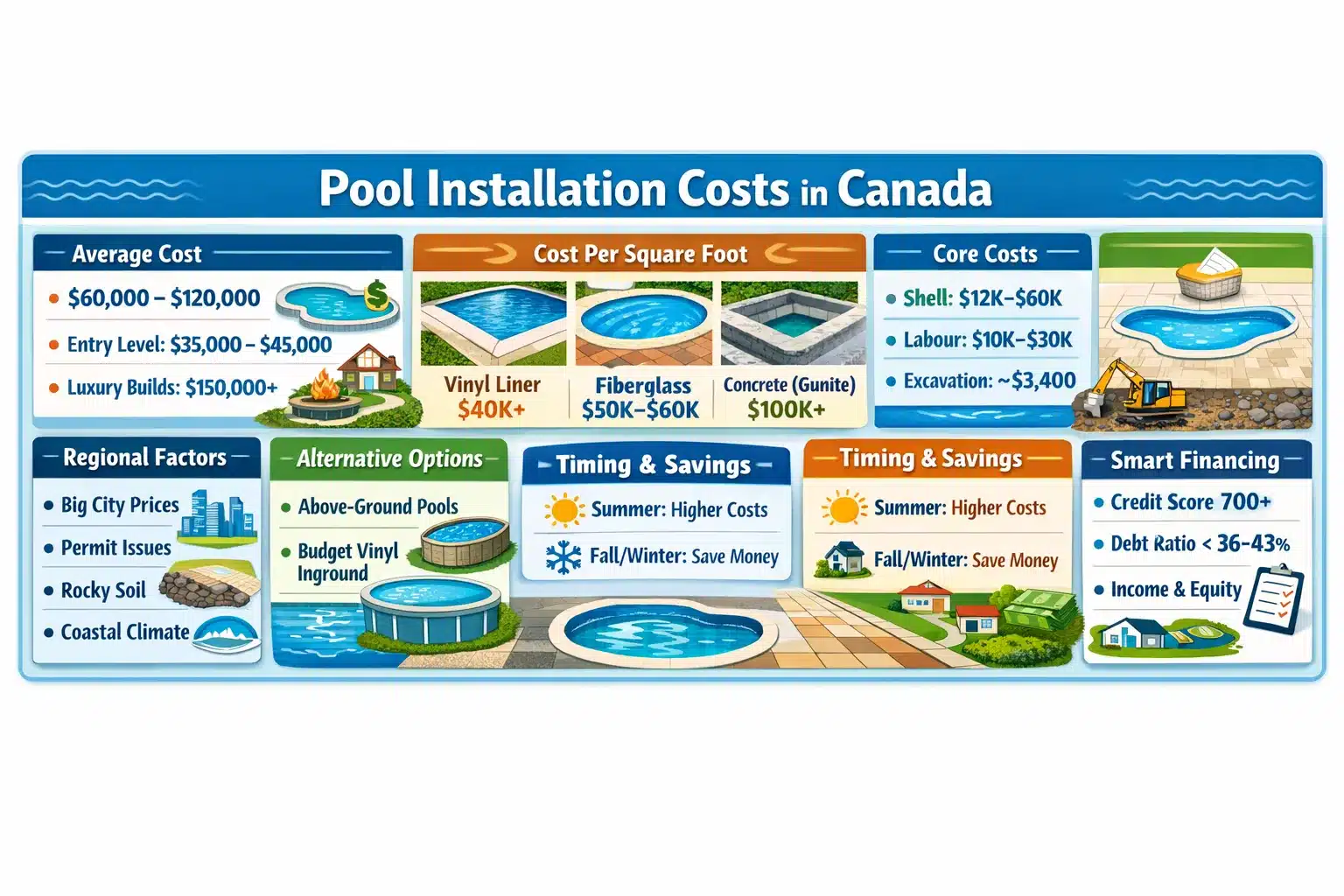
Pool installation in Canada typically ranges from $60,000 to $120,000 for most inground projects. Entry-level installations with minimal upgrades may start between $35,000 and $45,000, while fully customised backyard builds with landscaping, premium decking, hot tubs, and fire features often exceed $150,000.
Cost varies by pool material. Vinyl liner pools generally start around $40,000, making them the most affordable permanent inground option. Fiberglass pools often range from $50,000 to $60,000, while concrete (gunite) pools commonly exceed $100,000, especially with bespoke designs. On a per-square-foot basis, installation averages $175 to $300, with additional surface finishes and decking materials adding separate per-square-foot costs.
Material and labour form the core cost structure. For fiberglass pools, the shell alone may range from $12,000 to $60,000, while installation labour typically adds $10,000 to $30,000, plus excavation costs averaging $3,400. Regional factors significantly influence pricing. Higher living costs in cities such as Toronto, stricter municipal permit requirements, rocky or frost-prone soil conditions, and coastal climates all affect total expenditure.
Above-ground pools represent the lowest upfront installation cost, particularly with partial self-installation. Among permanent inground options, vinyl remains the most budget-friendly. Installation timing also affects pricing. Peak summer demand often increases labour rates and extends timelines, while fall and winter installations may reduce overall costs.
When comparing quotes, transparency is critical. Homeowners should evaluate scope inclusions, materials, warranties, contractor experience, and long-term value rather than focusing solely on price. Financing options function similarly to car or home improvement loans, with lenders assessing income stability, credit score (700+ preferred), debt-to-income ratio (ideally below 36–43%), home equity, and available cash reserves.
How much does pool installation cost in Canada on average?
Pool installation costs in Canada typically range between $60,000 and $120,000, though prices can vary significantly. For smaller pools with a “no frills” installation, costs may start around $35,000 to $45,000. Large pool projects that include landscaping, decking, and additional features like hot tubs or fire pits can exceed $150,000.
Costs are also influenced by the pool material:
- Vinyl pools can start at around $40,000.
- Fiberglass pools are often in the $50,000 to $60,000 range.
- Concrete pools can cost over $100,000, especially with customization.
Key factors that affect the total installation cost include the materials used, pool size, depth, terrain, location, and the level of customization and features desired. It’s important to note that these figures generally do not include utility bill increases or ongoing maintenance expenses, which contribute to the long-term cost of pool ownership.
How does pool installation cost per square foot in Canada compare?
Pool installation cost per square foot in Canada ranges from $175 to $300, with variations based on pool materials and location-specific labor costs.
For components surrounding the pool, such as decking and finishes, costs per square foot can vary:
- Premium interlocking stones typically range from $30 to $35.
- Imported natural stone costs about $40 to $50.
- Flagstone laid on concrete is approximately $55 to $65.
- Natural Canadian dimensional stone can be $75 to $95.
- In Ottawa, concrete finishes for inground pools range from $22 to $28 for a broom finish and $30 to $38 for stamp concrete.
- Interlock paving in Ottawa costs between $25 and $50.
How does pool installation cost split between labour and materials?

The cost of pool installation, particularly for fiberglass pools, is typically split between materials and labor. The fiberglass pool shell, representing a significant material cost, generally ranges from $12,000 to $60,000, with basic shells on the lower end and larger or more intricate designs reaching the higher end, often between $30,000 and $60,000 depending on size and design. Labor costs include the installation process itself, which covers delivery and setup, typically costing between $10,000 and $30,000. Additionally, excavation and groundwork, which are primarily labor, add approximately $3,400 to the project.
How does regional variation affect pool installation cost in Canada?
Regional variation affects pool installation cost in Canada significantly due to several factors. Areas with a higher cost of living, such as Toronto, typically incur greater expenses for labor and materials. Additionally, local regulations, special zoning requirements, geographical permit requirements, and associated permit fees can increase the total expenditure, necessitating checks with applicable municipalities and pool companies. Furthermore, a province’s climate and specific soil conditions play a crucial role. For instance, rocky terrain in Ontario cottage country, frost-prone ground across the Prairies, and the damp coastal environment of British Columbia all influence installation needs and long-term maintenance considerations, leading to wide variations in overall cost.
Which pool type makes pool installation cheapest in Canada?
The pool type that makes pool installation cheapest in Canada is an above-ground pool, especially when homeowners choose to install it themselves with “a little labour” and an inclusive pool package. This option allows for a professionally installed look for less, without the need to deal with portable or inflatable alternatives.
For in-ground options, vinyl pools typically offer the lowest upfront cost for initial installation, ranging from $40,000 to $70,000, making them the most budget-friendly choice among permanent in-ground pools.
How should pool installation quotes be compared before choosing a contractor?

When comparing pool installation quotes before choosing a contractor, it is crucial to expect transparency and ensure every important detail is included in the quote, with any omitted responsibilities clearly outlined. It’s important to fully understand what contributes to the overall cost of your inground swimming pool installation. Therefore, ask a lot of questions to ensure you are comparing “apples to apples” across different proposals. Instead of focusing solely on the price, evaluate the quality of the materials, the warranties offered, and the experience of the contractor.
How should financing be planned for pool installation in Canada?
Financing for pool installation in Canada should be planned strategically, as pool ownership is an accessible option that, with proper planning and expert guidance, can be a realistic and responsible investment similar to a standard car or home improvement loan. Fiberglass pools, for example, offer exceptional value, durability, low maintenance, and energy efficiency, which can save money over time and enhance property value while staying comfortably within budget. To make an informed decision, selecting the right financing option depends on your financial situation and personal preferences. Consider these tips:
- Evaluate Your Budget: Assess your current financial situation to determine how much you can comfortably afford for monthly payments.
- Compare Interest Rates: Shop around and compare rates from various lenders to find the best deal.
- Consider Loan Terms: Balance the monthly payment amount with the total interest paid over the entire loan term.
- Check Eligibility Requirements: Ensure you meet all necessary criteria before applying for a loan.
- Read Reviews: Look for testimonials and reviews of lenders to gauge their reputation and quality of customer service.
What factors are related to financing when pool installation is planned?
Factors related to financing when pool installation is planned involve understanding your complete financial landscape and all aspects of pool ownership costs, not just the monthly payment. Pool financing is an accessible option, similar to standard car or home improvement loans, and requires careful consideration of various financial elements. Lenders typically evaluate several key factors to determine eligibility and loan terms:
- Stable Income: Lenders look for secure employment, often requiring two years of steady employment. Self-employed individuals may need to provide additional income stability documentation.
- Healthy Credit Score: A higher credit score generally leads to better loan terms, with scores of 700+ being considered good or excellent. Improving a score below 650 is advisable before applying.
- Manageable Debt-to-Income (DTI) Ratio: This ratio, calculated by dividing monthly debt payments by gross monthly income, is often required to be under 43%, ideally 36% or less.
- Home Equity: For home equity loans (HELOCs), you typically need at least 15-20% equity in your home remaining after accounting for the pool loan.
- Cash Reserves: It’s wise to have 3-6 months of living expenses saved to cover unexpected costs or changes in financial situations.
- Budget Flexibility: Assess whether a new monthly pool loan payment can comfortably fit into your current budget.
Why is the cheapest pool type related to pool installation decisions?
The cheapest pool type is related to pool installation decisions because cost, both initial purchase price and lifetime expenses, is a primary factor for individuals considering an inground pool. While vinyl liner pools are typically the cheapest inground pool to install, the overall cost can vary significantly based on project scope, pool size, features, and accessories, meaning some vinyl liner pools can even exceed the cost of concrete or fiberglass options.

Alternatively, composite fiberglass pools offer quicker installation and potential cost savings due to their off-site fabrication. Skilled craftsmen produce these structures, guaranteeing design details and allowing for a significantly faster “time to swim”—sometimes as little as four days for full installation. This efficiency reduces non-monetary costs like patience and can lead to lower overall costs due to expert manufacturing and superior material warranties compared to vinyl liner and concrete pools.
How are installation timelines related to pool installation costs?
Installation timelines are directly related to pool installation costs, primarily influenced by the season and the corresponding demand for pool builders and materials. During peak seasons like summer and often spring, the high demand for pool construction means contractors are in high demand, which can lead to longer waiting times, potential price hikes for labor and materials, and less flexible timelines. Conversely, opting for off-peak seasons such as fall or even winter can be more cost-effective. Cooler temperatures and reduced demand for pool builders during these times often result in quicker project timelines, fewer delays, and potentially lower overall installation costs.
How Is Financing Related to Pool Installation Cost in Canada?
Financing affects the true total cost of pool installation, not only the construction price. The pool project represents the principal amount borrowed, while loan attributes include interest rate, repayment term, monthly payment, and total repayment value. When a homeowner finances $80,000 instead of paying cash, the final cost becomes the principal plus accumulated interest. Monthly instalments improve short-term affordability and preserve savings, but increase long-term financial outlay. Additional attributes such as lender fees, appraisal costs, and setup charges may apply. Approval conditions depend on income stability, credit profile, debt-to-income ratio, and available home equity. Financing therefore converts a one-time capital expense into a structured repayment obligation that expands the overall lifetime cost.
Why Do Loan Terms Change the Total Cost of Pool Installation?
Loan duration directly changes total repayment. The longer the term, the more interest accumulates over time. A shorter term results in higher monthly payments but reduces cumulative borrowing cost. A longer term lowers monthly instalments but increases total interest paid.
For example:
- 5-year term → higher monthly payment, lower overall interest
- 15-year term → lower monthly payment, higher overall interest
Term selection influences affordability, cash flow, and long-term financial exposure. Even when the installation quote remains fixed, extending repayment increases the total amount paid for the same pool project due to prolonged interest accrual.
How Do Interest Rates Affect Long-Term Pool Installation Affordability?
Interest rates determine the cost of borrowing. A higher rate increases both monthly payments and total repayment over the loan term. Even a small 1–2% difference significantly alters cumulative interest across 10 to 15 years. Fixed rates provide payment stability and predictable budgeting. Variable rates fluctuate with market conditions, which may increase or decrease future payments.
Rate qualification depends on credit score, loan structure (such as secured home equity loans or personal loans), and broader Canadian economic conditions. Lower rates reduce lifetime financing cost, while higher rates substantially increase the overall amount paid for pool installation over time.
Why Is the Cheapest Pool Type Linked to Pool Installation Decisions in Canada?
The cheapest pool type directly influences installation decisions because upfront capital cost shapes budget feasibility. The pool type represents the core entity, while attributes include initial price, installation complexity, site preparation, and required accessories. In Canada, above-ground pools typically have the lowest installation cost, followed by vinyl liner inground pools. Fiberglass and concrete pools require higher structural investment due to shell manufacturing, excavation precision, and reinforcement requirements. Homeowners often prioritise lower entry cost to reduce financial exposure. However, installation value also connects to resale impact, warranty coverage, and structural lifespan. A lower purchase price reduces immediate spending, but long-term financial efficiency depends on durability, repair frequency, and operational cost over time.
How Do Lifetime Maintenance Costs Relate to Pool Installation Choices?
Maintenance cost is a long-term attribute tied to material selection and system design. Vinyl liner pools require liner replacement approximately every 8–12 years. Concrete pools require resurfacing and higher chemical balancing. Fiberglass pools typically demand lower chemical use and minimal surface maintenance due to non-porous construction. Key lifecycle cost factors include:
- Surface repairs and refinishing
- Chemical consumption and water balance
- Energy use for pumps and heating
- Seasonal opening and closing
Installation decisions therefore extend beyond construction cost. A pool with lower upfront price may generate higher cumulative maintenance expense. Long-term ownership cost reflects the interaction between material type, surface permeability, equipment efficiency, and service intervals. Evaluating total lifecycle expense improves overall investment planning.
Why Do Material Durability and Climate Conditions Affect Pool Installation Value?
Material durability determines structural longevity, while Canadian climate conditions affect performance and maintenance frequency. Frost cycles, soil movement, groundwater pressure, and temperature variation influence installation stability. Concrete structures tolerate custom shapes but may crack under freeze–thaw stress. Vinyl liners risk puncture and shrinkage in extreme cold. Fiberglass shells flex slightly with ground movement, reducing crack risk in frost-prone regions.
Regional conditions such as rocky terrain in Ontario cottage areas or coastal moisture in British Columbia affect excavation and drainage requirements. Durable materials reduce repair frequency and preserve structural integrity. Installation value increases when pool material aligns with soil conditions, seasonal climate, and long-term environmental exposure. Proper material selection strengthens performance and cost stability over time.
How are installation timelines connected to pool installation cost outcomes?
Installation timeline directly affects overall cost exposure. The pool project represents the core entity, while attributes include construction duration, labour scheduling, equipment rental period, material storage time, and weather risk. Longer timelines increase labour hours, extend machinery rentals, and raise site management costs. Delays caused by inspections, permit approvals, or supply shortages add indirect expenses. Faster installations reduce carrying costs and lower disruption to landscaping or property use. Fiberglass pools, for example, typically require shorter build periods than concrete pools, which involve curing time and multiple construction phases. Timeline efficiency therefore influences total financial outcome by controlling labour intensity, project coordination complexity, and exposure to inflation in material pricing.
Why does seasonal demand influence pricing for pool installation?
Seasonal demand shifts pricing due to supply-and-demand dynamics. The installation market represents the entity, while attributes include contractor workload, material availability, and scheduling flexibility. Spring and summer generate peak demand across most Canadian provinces. High demand increases labour rates, reduces negotiation flexibility, and lengthens wait times. Material suppliers may also raise prices during busy periods. In contrast, fall and winter often present lower demand conditions, leading to more competitive quotes and faster scheduling.
Seasonal impact factors include:
- Builder availability
- Material lead times
- Weather-related construction efficiency
- Regional climate patterns
Demand concentration during warmer months typically increases overall installation cost compared to off-peak scheduling.
How does contractor availability relate to pool installation quotes?
Contractor availability influences pricing structure and negotiation power. The contractor market represents the entity, while attributes include crew capacity, booking backlog, specialization level, and geographic coverage. Limited availability increases quote pricing because builders prioritize higher-margin projects. When crews are fully booked, expedited scheduling may carry premium costs. Greater availability creates competitive conditions, resulting in more flexible pricing and clearer scope inclusions.
Availability also affects:
- Project start date
- Timeline reliability
- Warranty confidence
- Quality assurance supervision
Scarcity of experienced contractors in certain regions, especially in high-growth cities, often increases installation quotes. Market capacity therefore directly shapes price competitiveness and overall project value.
How are permits and regulations associated with pool installation expenses in Canada?
Permits and regulatory compliance form a direct cost layer within pool installation. The pool project represents the core entity, while attributes include permit fees, zoning compliance, safety fencing standards, setback requirements, and engineering approvals. Each municipality sets its own fee schedule and documentation criteria. Permit costs vary based on pool type, lot size, and added structures such as decks or retaining walls. Regulatory requirements may also mandate drainage plans, grading adjustments, or electrical inspections. Non-compliance risks penalties, redesign costs, or construction delays. In provinces with strict building codes, documentation and professional drawings increase pre-construction expenses. Permit and regulation factors therefore expand the overall installation budget beyond excavation and materials by introducing mandatory administrative and compliance-related costs.
Why do municipal approval processes impact pool installation budgets?
Municipal approval processes influence budgets through time, documentation, and revision requirements. The approval system represents the entity, while attributes include processing time, submission standards, engineering review, and conditional approvals. Longer approval timelines delay project start dates, which may increase labour pricing due to seasonal shifts. Additional drawing revisions or site plan modifications add professional service costs. Some municipalities require property surveys, environmental assessments, or conservation authority clearance, especially in waterfront or regulated zones.
Budget impact drivers include:
- Application fees
- Professional drafting costs
- Surveyor or engineer reports
- Potential redesign expenses
Complex approval pathways increase indirect project costs by extending timelines and introducing administrative obligations.
How do inspection requirements relate to total pool installation cost?
Inspection requirements add structured compliance expenses to pool installation. The inspection framework represents the entity, while attributes include electrical inspection, barrier inspection, structural verification, and final occupancy approval. Each inspection stage may require scheduling coordination, contractor attendance, and potential corrective work. If deficiencies are identified, revisions generate additional labour and material costs. Electrical bonding and grounding inspections are mandatory for safety compliance, particularly for inground pools. Fence height and gate latch inspections ensure child safety standards are met.
Inspection-related cost elements include:
- Inspection booking fees
- Re-inspection charges
- Corrective modification costs
- Extended project supervision
Inspection compliance ensures safety and legality, yet it contributes measurable additions to the total installation cost.