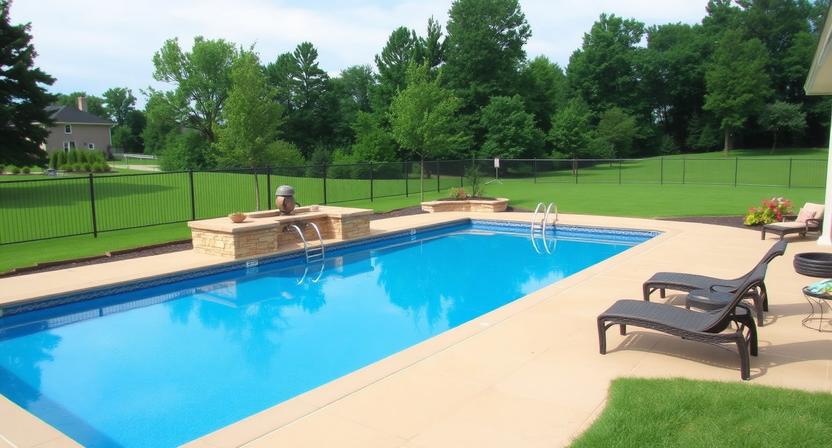
Vinyl liner pools are swimming pools built with a structural wall system and a fitted vinyl liner that forms the waterproof pool surface. The liner covers the pool walls, floor, steps, and corners to create the visible interior finish.
Vinyl liner pools are commonly chosen for lower upfront cost, flexible pool shapes, smooth surface feel, liner colour choices, pattern options, and planned liner replacement. The replaceable liner allows the pool surface to be refreshed during long-term ownership.
The right vinyl liner pool depends on yard size, design goals, liner quality, wall structure, water balance, maintenance habits, and local pool enclosure rules. A suitable design must fit the property layout, excavation access, equipment plan, decking, fencing, and long-term liner care needs.
Quick Answer
What are vinyl liner pools?
Vinyl liner pools are pools built with wall panels, a floor base, coping, steps, and a fitted vinyl membrane. The vinyl liner holds the water and creates the visible pool finish.
The pool structure supports the liner from behind. The liner creates a smooth interior surface across the walls, floor, steps, and corners.
Are vinyl liner pools affordable?
Vinyl liner pools usually have a lower upfront cost than many concrete pool and fibreglass pool projects. The final price changes with pool size, excavation, wall system, liner choice, steps, equipment, decking, fencing, and yard access.
A larger pool, custom layout, thicker liner, premium coping, heater, lighting, automation, poor soil, or tight access raises the total installation cost.
How long do vinyl liners last?
Vinyl liners often last around 10 years with routine care. Some Canadian pool sources give broader ranges, often around 10 to 15 years, based on sunlight, water chemistry, pool use, liner quality, and maintenance.
Liner life depends on water balance, sanitizer control, pH, UV exposure, winter closing, liner thickness, and physical wear. Replacement becomes necessary when the liner shows fading, brittleness, wrinkles, tears, leaks, seam wear, shrinkage, or track separation.
Quick Overview
| Decision Factor | Vinyl Liner Pool Detail |
|---|---|
| Best For | Lower upfront cost, flexible shapes, smooth surface, design variety |
| Not Best For | Homeowners who want no liner replacement |
| Main Structure | Wall panels with a fitted vinyl liner |
| Main Surface | Smooth vinyl membrane |
| Design Range | Strong shape, size, depth, colour, and pattern options |
| Key Limit | Liner wear, punctures, fading, wrinkles, and replacement cycle |
| Long-Term Focus | Water balance, liner protection, stain control, and replacement planning |
What are vinyl liner pools?
Vinyl liner pools are swimming pools built with wall panels, a shaped floor base, coping, steps, and a fitted vinyl liner. The liner forms the waterproof layer and creates the smooth interior pool surface.
Vinyl liner pools are common inground pools because they offer flexible shapes, lower upfront cost, and many liner colour and pattern choices.
How do vinyl liner pools work?
Vinyl liner pools work through a supported structure and a fitted waterproof membrane. The wall panels form the pool shape. The floor base creates the bottom profile. The liner track holds the liner near the pool edge. The vinyl liner fits over the walls, floor, steps, and corners.
Water pressure helps hold the liner against the pool structure. The liner creates the visible pool finish and protects the structure from direct water contact.
What is a vinyl pool liner?
A vinyl pool liner is a flexible waterproof membrane made to fit the exact pool shape and depth profile. The liner covers the pool floor, walls, and fitted areas around steps, benches, and corners.
The vinyl liner creates a smooth surface feel. It also gives the pool its colour, pattern, border style, and water appearance.
What supports the liner?
Wall panels, a prepared floor base, liner track, coping, fittings, and water pressure support the vinyl liner. Common wall systems use steel panels, polymer panels, or other structural systems.
The floor base supports the liner underfoot. The liner track locks the liner at the top edge. Coping finishes the pool edge and helps secure the transition between pool wall and deck.
What makes vinyl different?
Vinyl differs from fibreglass and concrete because the pool surface is replaceable. A fibreglass pool uses a hard pre-moulded shell. A concrete pool uses a site-built hard shell with plaster, tile, pebble, or aggregate finish.
A vinyl liner pool uses a structural wall system with a fitted liner. This gives strong shape flexibility and design choice, but the liner needs protection from tears, fading, wrinkles, and long-term wear.
What does the pool system include?
A vinyl liner pool system includes wall panels, floor base, liner track, vinyl liner, coping, steps, plumbing, fittings, pump, filter, sanitizer system, decking, fencing, and water-care equipment.
The full system controls pool shape, waterproofing, surface feel, circulation, safety, and long-term maintenance. The liner is the visible surface, but the wall system, floor base, coping, and equipment create the full pool structure.
What benefits do vinyl liner pools offer?
Vinyl liner pools offer lower upfront cost, flexible pool shapes, smooth surface feel, wide liner design choice, and future surface renewal through liner replacement. The system uses wall panels and a fitted vinyl membrane, which creates strong design range without the higher construction needs of many site-built pool types.
Why is upfront cost lower?
Vinyl liner pool upfront cost is lower because the wall panel system and fitted vinyl liner reduce on-site structure and finishing work. Vinyl liner pools use wall panels, a prepared floor base, coping, steps, and a fitted vinyl liner instead of a concrete shell with a separate plaster, tile, pebble, or aggregate finish.
Total cost still depends on pool size, excavation, wall system, liner thickness, steps, coping, decking, fencing, equipment, drainage, and site access.
Why is the surface smooth?
Vinyl liner pool surfaces feel smooth because the fitted vinyl membrane covers the pool walls, floor, steps, and corners. The surface feels softer underfoot than rougher mineral finishes.
Smooth vinyl supports swimmer comfort. It also reduces abrasive contact on feet, hands, and knees during regular pool use.
Why is design flexible?
Vinyl liner pool design is flexible because the wall panel system supports many shapes, sizes, and depth profiles. Common options include rectangular pools, freeform pools, kidney-style pools, Roman-end pools, L-shaped pools, shallow-end profiles, sport-pool profiles, and deep-end layouts.
This flexibility helps homeowners match the pool layout to the yard shape, swimming needs, patio plan, and landscape design.
Why are liner choices useful?
Vinyl liner choices are useful because they control the pool’s visible colour, pattern, border style, and water appearance. Light vinyl liners create a brighter water look. Dark vinyl liners create a deeper water colour. Tile borders create a traditional pool edge look. Borderless patterns create a cleaner full-wall finish.
Liner pattern choice also affects how visible seams, dirt, fading, and surface marks appear over time.
Why is liner replacement useful?
Liner replacement is useful because it renews the visible pool surface without rebuilding the full pool structure. A new vinyl pool liner refreshes the colour, pattern, surface feel, and waterproof layer.
Vinyl liner replacement also fixes worn, faded, wrinkled, brittle, torn, or leaking liners. Long-term ownership needs planned replacement costs, but the replaceable surface gives vinyl liner pools a clear refresh option.
What design options are available for vinyl liner pools?
Vinyl liner pools offer flexible shape, depth, step, coping, and built-in feature options. The wall panel system supports many layouts, while the fitted vinyl pool liner creates the smooth waterproof surface.
| Design Option | Vinyl Liner Pool Detail |
|---|---|
| Shape | Rectangle, freeform, kidney, Roman-end, L-shape, custom layout |
| Depth | Shallow end, deep end, sport pool profile, gradual slope |
| Steps | Vinyl-over steps, thermoplastic steps, steel steps, corner steps |
| Coping | Concrete, stone, brick, aluminium, paver, or manufactured coping |
| Features | Benches, tanning ledges, lights, spillover spa, deck jets |
What shapes are available?
Vinyl liner pool shapes include rectangular pools, freeform pools, kidney-shaped pools, Roman-end pools, L-shaped pools, and custom layouts. The wall panels form the shape, and the vinyl liner is made to fit the finished pool profile.
Shape choice depends on yard size, swimming use, patio layout, access, and budget. Simple shapes often cost less than complex custom layouts.
What depths are available?
Vinyl liner pool depths include shallow ends, deep ends, gradual slopes, and sport pool profiles. A shallow end suits sitting, entry, and family use. A deep end suits larger yards and deeper excavation where local rules allow it.
A sport pool profile has shallower ends and a deeper centre. This layout supports games, activity, and more usable standing space.
What steps are available?
Vinyl liner pool steps include vinyl-over steps, thermoplastic steps, steel steps, corner steps, and custom step layouts. Step choice affects access, swimmer comfort, liner fit, and the finished look.
Vinyl-over steps use the same liner surface across the steps. Thermoplastic steps create a separate moulded step area. Corner steps save swim space and suit compact layouts.
What coping options are available?
Vinyl liner pool coping forms the finished edge between the pool wall and surrounding deck. Common coping options include concrete, stone, brick, aluminium, paver, and manufactured coping.
Coping affects the pool edge, deck transition, waterline appearance, and long-term repair needs. The coping system also helps hold the liner track in place.
What built-in features are available?
Vinyl liner pools support built-in features such as benches, tanning ledges, lights, spillover spas, and deck jets. Feature choice depends on the wall system, liner fit, step design, and project budget.
Built-in benches and tanning ledges add resting space. Lights improve evening use. A spillover spa adds warm-water use. Deck jets add moving water and visual detail.
What liner designs are available for vinyl liner pools?
Vinyl liner pools offer liner designs in light, medium, dark, tiled-border, borderless, and patterned styles. Vinyl pool liners change the pool’s water colour, wall finish, edge detail, and overall design style.
| Liner Choice | What It Changes |
|---|---|
| Light Liner | Brighter water appearance |
| Dark Liner | Deeper water colour |
| Tile Border | Traditional pool edge look |
| Borderless Liner | Cleaner full-wall pattern |
| Thicker Liner | Higher material weight and puncture resistance |
| Patterned Liner | Stronger visual design effect |
What liner colours are common?
Vinyl liner colours commonly include light blue, medium blue, dark blue, grey, aqua, and stone-style tones. Light vinyl pool liners create a brighter water appearance. Dark vinyl pool liners create deeper water colour.
What liner patterns are common?
Vinyl liner patterns commonly include tile-look designs, mosaic patterns, ripple effects, stone finishes, and full-wall printed patterns. Common pattern groups include light and tranquil, rich and vibrant, and deep and dramatic styles.
Liner pattern choice affects the pool’s visual depth, water colour, seam visibility, dirt visibility, and long-term appearance.
What border styles are used?
Vinyl pool liners use tiled border patterns or borderless patterns. A tile border creates a traditional pool-edge look near the coping. A borderless liner continues the pattern across the wall for a cleaner full-wall finish.
Border style affects the waterline, wall detail, coping transition, and overall pool design.
What liner thickness matters?
Liner thickness matters because thicker vinyl liners have higher material weight and stronger puncture resistance. Common liner options include 20 mil, 27 mil, and SuperMax 27 mil liner choices.
Liner thickness supports durability, but fit, water balance, installation quality, and winter care still affect liner life.
What liner design affects water colour?
Liner design affects water colour through base colour, pattern depth, sunlight, shade, and pool depth. Light vinyl liners make water look brighter. Dark vinyl liners make water look deeper. Grey and blue designs create different water tones under the same sunlight.
Water clarity, decking colour, landscaping, and pool depth also change the final water appearance.
What sizes are common for vinyl liner pools?
Vinyl liner pools are common in small, medium, large, sport-profile, and deep-end sizes. The right vinyl liner pool size depends on yard space, access, excavation depth, swimming use, decking, fencing, equipment, and long-term maintenance needs.
| Size Group | Common Use | Key Fit |
|---|---|---|
| Small Vinyl Pool | Cooling, sitting, compact use | Small yards and narrow lots |
| Medium Vinyl Pool | Family swimming and play | Standard residential yards |
| Large Vinyl Pool | Entertaining and larger families | Wider yards with stronger access |
| Sport Profile | Games and activity | Families and shallow-water use |
| Deep-End Profile | Diving-style layouts where allowed | Larger yards and deeper excavation |
What small sizes are common?
Small vinyl pools are common for compact yards, narrow lots, patios, and smaller outdoor spaces. These pools suit cooling, sitting, light swimming, and simple family use.
A small vinyl liner pool uses less water, less decking, less heating, and less chemical treatment than larger pools.
What medium sizes are common?
Medium vinyl pools are common for standard residential yards. They suit family swimming, children’s play, casual exercise, and outdoor entertaining.
A medium vinyl liner pool gives more swim space than a compact pool while keeping excavation, heating, and maintenance needs easier to manage than a large pool.
What large sizes are common?
Large vinyl pools are common for wider yards, larger families, and entertainment-focused outdoor spaces. These pools allow more swim lanes, wider play areas, deeper profiles, and larger deck layouts.
A large vinyl liner pool needs more excavation, more water, stronger equipment planning, more decking, and a larger maintenance budget.
What depths are common?
Vinyl liner pool depths include shallow ends, gradual slopes, sport-pool profiles, and deep-end profiles. A shallow end suits seating, entry, and family play. A sport profile suits games and activity. A deep-end profile suits deeper swimming where local safety rules and design standards allow it.
Depth affects excavation, water volume, liner fit, safety needs, and long-term operating cost.
What size suits each yard?
The right vinyl liner pool size matches yard dimensions, access width, grading, setbacks, deck plan, and pool use. Small yards suit compact vinyl pools. Standard yards suit medium vinyl liner pools. Wider yards suit large pools with stronger access and more deck space.
Narrow yards often suit long rectangular layouts. Family yards often suit medium pools or sport profiles. Larger yards suit deep-end layouts when excavation, fencing, drainage, and safety rules support the design.
What wall systems are used in vinyl liner pools?
Vinyl liner pools use wall systems that support the pool shape and hold the fitted vinyl liner in place. Common systems include steel wall panels, polymer wall panels, and concrete wall systems.
The wall panels, bracing, concrete footing, panel joints, liner track, and backfill quality all affect pool strength and long-term performance.
What are steel wall panels?
Steel wall panels are structural pool panels made from coated or treated steel. They form the pool walls, support the liner track, and help create the pool’s final shape.
Steel panels provide strong wall support. Corrosion-resistant coatings help protect the panels from moisture, soil contact, and long-term wear. Proper bracing, panel alignment, and backfill protect the wall system after installation.
What are polymer wall panels?
Polymer wall panels are structural pool panels made from corrosion-resistant polymer material. They form the pool walls and support the fitted vinyl pool liner.
Polymer panels resist rust because they do not use steel as the main wall material. They suit properties where soil moisture, groundwater, or corrosion risk is a concern. Correct bracing, footing, and backfill still matter for wall strength.
What are concrete wall systems?
Concrete wall systems use concrete to form or support the pool walls. These systems create a strong structure behind the vinyl liner and may suit more demanding designs or soil conditions.
Concrete systems still need a fitted vinyl liner, liner track, plumbing, coping, and proper waterproof detailing. The liner remains the visible waterproof surface.
What affects wall strength?
Wall strength depends on wall material, panel thickness, bracing, concrete footing, panel joints, fasteners, soil conditions, and backfill support. Strong wall systems keep the pool shape stable and help the liner fit correctly.
Poor bracing, weak footing, uneven backfill, and poor drainage increase movement risk. Wall movement affects coping, liner fit, steps, fittings, and deck alignment.
What affects wall lifespan?
Wall lifespan depends on material quality, corrosion resistance, installation accuracy, drainage, backfill quality, and water management around the pool. Steel panels need corrosion protection. Polymer panels need correct support and bracing. Concrete systems need proper drainage and structural preparation.
Good backfill quality, stable soil, correct grading, and controlled groundwater help protect the vinyl liner pool wall system over time.
What affects vinyl liner pool cost?
Vinyl liner pool cost depends on pool size, pool shape, wall system, liner thickness, steps, benches, equipment, decking, coping, and future liner replacement. The first installation price does not show the full ownership cost.
| Cost Factor | Why It Affects Price |
|---|---|
| Pool Size | Larger pools need more excavation, liner material, and equipment |
| Pool Shape | Custom layouts increase layout and labour needs |
| Wall System | Steel, polymer, and structural systems vary in cost |
| Liner Thickness | Heavier liners cost more than basic liners |
| Steps and Benches | Added features change structure and liner fitting |
| Equipment | Pump, filter, heater, lights, and automation affect total cost |
| Decking and Coping | Edge finish and hardscape often change final cost |
| Liner Replacement | Future replacement is part of long-term ownership |
Does pool size affect cost?
Pool size affects vinyl liner pool cost because larger pools need more excavation, more liner material, more wall panels, more water, and larger equipment. Larger pools also need more decking, more coping, and longer installation time.
A larger vinyl liner pool increases heating, chemical use, water volume, and future liner replacement cost.
Does pool shape affect cost?
Pool shape affects cost because custom layouts need more planning, more panel work, and more liner fitting detail. Simple rectangular vinyl liner pools usually cost less than complex freeform, kidney, Roman-end, or L-shaped layouts.
Complex shapes also change coping, decking, drainage, and cover fit. These items raise the full project cost.
Does liner choice affect cost?
Liner choice affects cost through liner thickness, colour, pattern, border style, and material grade. A thicker vinyl pool liner costs more than a basic liner because it uses heavier material and offers stronger puncture resistance.
Premium liner patterns, tile borders, borderless designs, and thicker liner options increase the visible finish cost.
Does wall system affect cost?
Wall system affects cost because steel panels, polymer panels, and concrete wall systems use different materials, bracing, footing, and installation methods. Stronger systems often raise the starting price but support better long-term structure.
Soil conditions, groundwater, drainage, and backfill quality also affect wall system cost.
Does replacement timing affect cost?
Liner replacement timing affects long-term cost because every vinyl liner pool needs a new liner during ownership. Replacement cost depends on pool size, liner thickness, pattern choice, step layout, wall condition, fittings, and labour.
Early replacement happens when poor water balance, UV exposure, tears, wrinkles, leaks, or weak winter care damage the liner before its expected service life.
How are vinyl liner pools installed?
Vinyl liner pools are installed through layout, excavation, wall panel installation, bracing, floor base preparation, liner track installation, liner fitting, plumbing, equipment setup, backfill, coping, decking, water filling, and startup.
What happens during site review?
Site review confirms the vinyl liner pool layout before excavation starts. The installer checks yard size, access width, slope, drainage, soil conditions, utility locations, setbacks, fencing needs, and equipment placement.
The review also confirms the pool shape, depth profile, step position, coping style, deck plan, and liner design. This step reduces layout changes after digging starts.
What happens during excavation?
Excavation creates the pool area based on the approved vinyl liner pool layout. The crew digs the shallow end, deep end, slopes, wall lines, and equipment trenches.
Soil type, rock, groundwater, roots, and grade changes affect the excavation process. The floor area is shaped and prepared for the floor base that supports the liner underfoot.
How are wall panels installed?
Wall panels are installed around the excavated pool shape to form the pool walls. The panels are aligned, joined, braced, and secured with a concrete footing or support system.
Steel wall panels, polymer wall panels, and concrete wall systems need accurate alignment. The liner track is fixed near the top edge so the vinyl pool liner fits tightly into place.
How is the liner fitted?
The vinyl liner is fitted after the wall system, floor base, plumbing, and liner track are ready. The liner is spread across the pool, locked into the liner track, and shaped into the walls, floor, steps, and corners.
A vacuum setting process removes air behind the liner and helps the liner sit tight against the pool structure. Water filling starts after the liner is positioned correctly. The installer checks fit, seams, corners, steps, fittings, and wrinkles during the fill.
What happens before startup?
Before startup, the installer completes plumbing, equipment connections, backfill, coping, decking, and water filling. The pool system is checked for circulation, leaks, liner fit, equipment function, and safe access.
Final startup includes water balance, filter operation, sanitizer setup, equipment testing, and handover. The vinyl liner pool is ready for regular use after the water is balanced, the equipment works, and local safety requirements are complete.
How long does vinyl liner pools installation take?
Vinyl liner pool installation usually takes several weeks from site preparation to startup. The exact timeline depends on permit approval, weather, soil conditions, yard access, liner fit, decking, fencing, electrical work, and equipment setup.
A simple vinyl liner pool with clear access, stable soil, approved permits, standard shape, and limited hardscaping finishes faster than a custom pool with deep excavation, complex decking, poor drainage, or delayed inspections.
What makes installation faster?
Vinyl liner pool installation moves faster when the project has approved permits, clear utility locates, easy yard access, dry weather, stable soil, and a standard layout.
Simple pool shapes, accurate wall-panel alignment, a clean floor base, correct liner track placement, and a properly measured vinyl pool liner reduce delays. Ready electrical work, equipment delivery, and fencing plans also help keep the project sequence clear.
What causes delays?
Vinyl liner pool delays come from bad weather, permit delays, wet soil, rock, clay, groundwater, tight access, grading issues, and late material delivery.
Delays also come from poor liner fit, unfinished decking, incomplete fencing, delayed electrical work, and equipment setup issues. Rain can slow excavation, damage the floor base, and delay liner fitting.
What work follows liner fitting?
Work after liner fitting includes vacuum setting, water filling, liner checks, plumbing checks, equipment setup, backfill, coping, decking, fencing, water balancing, and startup.
The installer checks the vinyl liner for wrinkles, seam position, corner fit, step fit, and proper lock-in at the liner track. Water filling helps set the liner against the walls and floor.
What inspections are needed?
Vinyl liner pool inspections depend on local rules and project scope. Common checks include pool enclosure, fence height, gate latches, setbacks, electrical bonding, equipment placement, and approved site layout.
Electrical work may need a separate inspection. Municipal inspection may be needed before the pool is filled, opened, or used, depending on the local pool enclosure rules.
What affects the final timeline?
The final vinyl liner pool timeline depends on the full backyard scope, not only the liner installation. Key timeline factors include weather, permit approval, soil conditions, yard access, liner fit, decking, fencing, electrical work, and equipment setup.
Custom shapes, deep ends, tight access, retaining walls, drainage work, large decks, electrical upgrades, inspection delays, and equipment changes extend the timeline.
What liner care is needed for vinyl liner pools?
Vinyl liner pool care needs balanced water, controlled sanitizer, correct pH, gentle brushing, regular vacuuming, careful pool tool use, and proper winter closing. Vinyl pool liners last longer when the liner surface stays clean, flexible, protected, and correctly fitted.
| Liner Care Area | Why It Matters |
|---|---|
| Water Balance | Protects liner surface and swimmer comfort |
| Sanitizer Control | Reduces unsafe water and algae growth |
| pH Control | Limits liner damage and comfort issues |
| Brushing | Removes dirt and buildup |
| Vacuuming | Removes grit that wears the liner |
| Toy and Tool Care | Reduces puncture risk |
| Winter Closing | Protects liner, walls, and fittings |
What water testing is needed?
Vinyl liner pool water testing needs checks for sanitizer levels, pH, total alkalinity, and calcium hardness. Health Canada says pool and spa owners need daily water-balance testing for these items, especially during high-use periods. Proper water balance helps reduce microorganisms and protects pool water safety.
What causes liner fading?
Vinyl liner fading comes from UV exposure, age, high sanitizer levels, poor pH balance, and harsh chemical contact. Sunlight affects exposed liner areas above the waterline faster than submerged areas.
Balanced water, steady sanitizer levels, and correct chemical handling reduce fading. Pool chemicals must follow product label directions and avoid direct contact with the vinyl liner.
What causes liner wrinkles?
Vinyl liner wrinkles come from poor liner fit, water behind the liner, groundwater pressure, low water level, poor water balance, and ground movement. Wrinkles also appear when an older vinyl pool liner loses flexibility.
Wrinkles create small pockets where dirt and algae collect. Early inspection helps prevent larger fit problems, seam stress, and surface wear.
What causes liner tears?
Vinyl liner tears come from sharp objects, worn liner material, rough toys, careless vacuum heads, pets, ladders, tools, and winter ice damage. Tears also happen faster when the liner becomes brittle from age or poor water chemistry.
Gentle cleaning tools, proper ladder pads, careful toy use, and prompt patching reduce tear risk.
What protects the liner?
Vinyl liner protection comes from balanced water, soft brushing, regular vacuuming, correct water level, safe pool toys, careful tool use, and proper winter closing. A well-fitted liner also needs stable wall panels, a smooth floor base, correct liner track placement, and good drainage.
Strong liner care protects the vinyl pool liner, pool wall system, fittings, steps, coping, and long-term replacement schedule.
When does a liner need replacement in vinyl liner pools?
Vinyl pool liners need replacement when age, fading, brittleness, wrinkles, tears, leaks, seam wear, fitting leaks, liner shrinkage, or track separation affects the pool surface. Many vinyl liners last about 5–9 years to 10–20 years, depending on liner quality, water balance, sunlight, pool use, winter care, and maintenance.
| Replacement Sign | What It May Mean |
|---|---|
| Fading | UV exposure, chemical wear, or liner age |
| Wrinkles | Poor fit, water balance issues, or ground movement |
| Tears | Sharp objects, wear, or old liner material |
| Leaks | Hole, seam issue, fitting issue, or wall-area damage |
| Stiff Liner | Age, chemical exposure, or material breakdown |
| Pulling from Track | Fit issue, age, or liner shrinkage |
What signs show liner age?
Liner age shows through fading, stiffness, brittleness, dull colour, weak pattern detail, and reduced flexibility. Older vinyl pool liners lose softness as UV exposure, sanitizer, pH imbalance, and seasonal wear affect the material.
A stiff liner is harder to reset, patch, or stretch back into position. Replacement becomes more practical when age affects both appearance and fit.
What signs show liner damage?
Liner damage shows through tears, punctures, seam wear, brittle areas, scuffs, cracks, and worn corners. Damage often appears near steps, ladders, fittings, corners, and high-use areas.
Small damage may need patching. Large tears, repeated leaks, brittle material, and failing seams usually point to liner replacement.
What signs show water loss?
Water loss shows through a dropping water level, wet soil near the pool, air in the pump, lower skimmer level, or repeated refill needs. Leaks may come from a hole, seam issue, fitting leak, liner tear, or wall-area damage.
A leak test helps separate normal evaporation from liner damage. Fast water loss needs inspection before it affects the wall panels, floor base, and surrounding soil.
What signs show poor fit?
Poor liner fit shows through wrinkles, loose corners, pulling from the liner track, bulging, stretching, or visible gaps around fittings. Poor fit may come from liner shrinkage, ground movement, water behind the liner, weak installation, or old liner material.
Track separation needs prompt attention because the liner may pull farther out during use or seasonal movement.
What happens during replacement?
Vinyl liner replacement removes the old liner, checks the wall panels, floor base, fittings, liner track, steps, and coping, then installs a new fitted vinyl liner. The installer also checks for rust, rough spots, sharp edges, leaks, and floor damage before the new liner goes in.
The new liner is fitted into the liner track, set with vacuum support, and filled with water in stages. Final work includes fitting cuts, seal checks, water balancing, equipment checks, and handover.
What problems can happen in vinyl liner pools installation?
Vinyl liner pool problems usually come from poor water balance, sharp objects, rough use, sunlight exposure, poor installation, ground movement, old liner material, and weak winter care.
Common problems include:
- Vinyl liner tears from sharp objects, tools, ladders, toys, pets, or brittle liner material.
- Vinyl liner wrinkles from poor fit, water behind the liner, groundwater pressure, or ground movement.
- Vinyl liner fading from UV exposure, high sanitizer levels, poor pH control, or liner age.
- Vinyl liner leaks from holes, seam wear, fitting leaks, or wall-area damage.
- Track separation when the liner pulls loose from the liner track.
- Floor base problems when rough spots, settling, or poor preparation affect the liner surface.
- Wall movement when weak backfill, poor drainage, or unstable soil affects the wall panels.
Can vinyl liners tear?
Vinyl liners tear when sharp objects, rough toys, careless cleaning tools, ladder edges, pets, or brittle liner material damage the surface. Tears appear more often near steps, corners, ladders, fittings, and high-use areas.
Small tears may need patching. Large tears, repeated damage, or brittle liner material often means liner replacement is the better repair path.
Can vinyl liners wrinkle?
Vinyl liners wrinkle when the liner does not sit tightly against the walls and floor. Common causes include poor installation, poor liner fit, low water level, water behind the liner, groundwater pressure, ground movement, and chemical imbalance.
Wrinkles collect dirt and algae. They also increase wear because feet, vacuums, and brushes rub against raised areas.
Can vinyl liners fade?
Vinyl liners fade from sunlight exposure, high sanitizer levels, poor pH balance, chemical contact, and age. Fading often appears along the waterline first because that area gets more UV exposure and chemical contact.
Balanced water, correct sanitizer levels, and cover use help protect liner colour and pattern detail.
Can vinyl liners leak?
Vinyl liners leak when holes, seam wear, fitting leaks, punctures, or wall-area damage allow water to escape. Water loss may show as a lower water level, wet ground, air in the pump, or repeated refill needs.
Leak checks should start before water loss affects the floor base, wall panels, backfill, decking, or nearby soil.
Can vinyl liners pull loose?
Vinyl liners can pull loose from the liner track when the liner shrinks, loses flexibility, fits poorly, or moves under seasonal stress. Track separation can also come from old liner material, low water level, wall movement, or poor installation.
Loose liner sections need prompt repair. Delay increases the risk of wrinkles, tears, water behind the liner, and full liner replacement.
What yards suit vinyl liner pools?
Vinyl liner pools suit many yard types because the wall panel system supports flexible shapes, sizes, and depth profiles. Yard fit depends on excavation limits, access width, panel delivery, grading, retaining walls, groundwater, drainage, deck layout, fencing, and local setback rules.
Do small yards suit vinyl pools?
Small yards suit vinyl liner pools when the design uses a compact shape, careful step placement, and efficient deck layout. A small vinyl pool works for cooling, sitting, family use, and light swimming.
Compact yards still need room for excavation access, wall panel delivery, plumbing trenches, coping, equipment, fencing, and safe walking space.
Do narrow yards suit vinyl pools?
Narrow yards suit vinyl liner pools because wall panels support long rectangular layouts, narrow custom shapes, and space-efficient designs. A narrow design protects swim length while limiting pool width.
Access width still matters. Crews need enough space for excavation equipment, wall panels, liner delivery, backfill material, and deck construction.
Do sloped yards suit vinyl pools?
Sloped yards suit vinyl liner pools when grading, retaining walls, drainage, and structural support are planned before installation. Slope changes excavation depth, wall support, backfill needs, and deck elevation.
Poor grading increases water flow toward the pool. Good drainage reduces groundwater pressure, wall movement, liner wrinkles, and deck settlement.
Do custom layouts suit vinyl pools?
Custom layouts suit vinyl liner pools because the wall panel system allows many shapes beyond standard rectangles. Common custom options include freeform pools, kidney pools, Roman-end pools, L-shaped pools, sport profiles, and deep-end layouts.
Custom layouts need accurate measurement because the vinyl liner must fit the exact wall shape, floor profile, steps, corners, and fittings.
Do tight-access yards suit vinyl pools?
Tight-access yards suit vinyl liner pools more often than one-piece shell pools because panels and liner materials arrive in smaller parts. This helps properties with narrow gates, limited side-yard access, fences, trees, garages, or tight urban lots.
Tight access still raises labour needs. Excavation equipment, soil removal, wall panel handling, backfill, plumbing, decking, and fencing all need safe working space.
What permits and safety rules apply for vinyl liner pools?
Vinyl liner pool permits and safety rules depend on the municipality, zoning rules, pool enclosure bylaw, setbacks, inspections, and utility locates. Canadian pool enclosure rules vary by municipality, so homeowners need local approval before excavation, wall-panel installation, liner fitting, fencing, and water filling.
Toronto requires an approved Zoning Certificate and a Pool Fence Enclosure Permit before installing a pool enclosure. The City of Toronto states that a pool cannot be constructed and filled with water without a fence installed under the Fence Bylaw. Toronto also requires a pool enclosure that completely surrounds the pool area, with no openings except a compliant gate.
Are pool permits needed?
Pool permits are needed when the local municipality requires approval for the pool enclosure, excavation, site layout, or related construction. A vinyl liner pool project often needs zoning review because the pool location affects setbacks, fencing, equipment placement, decking, and property boundaries.
Toronto uses a two-step process for outdoor pools and hot tubs. Step 1 is the Zoning Certificate. Step 2 is the Pool Fence Enclosure Permit after zoning approval. A complete application includes the approved zoning certificate and site plan drawings showing fence location, height, and materials.
Are pool fences needed?
Pool fences are needed for private swimming pools in many Canadian municipalities. A compliant pool enclosure restricts access, supports safety, and forms part of the approval process.
Toronto requires a swimming pool enclosure around properties with a swimming pool. The enclosure must fully surround the pool area, and the only openings allowed are compliant gates.
Are setbacks checked?
Setbacks are checked during zoning review because the vinyl liner pool, fence, equipment, deck, and related structures need approved distances from property lines, easements, buildings, and regulated areas.
Setback review matters before excavation. A pool placed too close to a lot line, easement, or structure creates redesign costs, permit delays, or compliance issues.
Are inspections needed?
Inspections are needed when the municipality requires confirmation that the pool enclosure, gates, latches, setbacks, and approved plans match local rules. Inspection timing depends on the city and permit process.
Toronto links pool construction and water filling to a compliant fence under the Fence Bylaw. This makes enclosure compliance a key step before regular pool use.
Are utility locates needed?
Utility locates are needed before excavation, fence-post digging, trenching, drainage work, deck footings, or equipment-pad work. Ontario One Call says homeowners must submit a locate request at least 5 business days before digging. Ontario One Call then notifies buried infrastructure owners so locators mark underground lines and cables.
Utility locates reduce the risk of damaging gas lines, electrical cables, water lines, telecom lines, sewer lines, and other buried services. This step matters for vinyl liner pool excavation, wall panel installation, plumbing, decking, fencing, landscaping, and drainage work.
How do vinyl liner pools compare?
Vinyl liner pools compare by structure, surface type, design range, maintenance needs, and long-term care. Vinyl describes the pool material and surface system. Terms such as plunge pool, lap pool, and saltwater pool describe pool size, use, shape, or sanitation system.
| Comparison | Vinyl Liner Pool Difference |
|---|---|
| Vinyl vs Fibreglass | Vinyl uses a replaceable liner; fibreglass uses a hard pre-moulded shell |
| Vinyl vs Concrete | Vinyl has a smooth liner; concrete has a site-built hard surface |
| Vinyl vs Plunge | Vinyl describes material; plunge describes size and use |
| Vinyl vs Lap | Vinyl describes material; lap describes long narrow fitness use |
| Vinyl vs Saltwater | Vinyl describes structure; saltwater describes sanitation system |
How do vinyl pools compare with fibreglass?
Vinyl liner pools use wall panels and a replaceable vinyl liner. Fibreglass pools use a hard pre-moulded fibreglass shell with a smooth gelcoat surface.
Vinyl liner pools offer lower upfront cost and flexible layouts. Fibreglass pools offer faster shell placement, lower surface maintenance, and no liner replacement.
How do vinyl pools compare with concrete?
Vinyl liner pools have a smooth vinyl membrane as the pool surface. Concrete pools have a site-built hard surface finished with plaster, tile, pebble, or aggregate.
Vinyl liner pools usually cost less upfront and feel smoother. Concrete pools offer more custom depth, premium finishes, beach entries, and fully custom shapes.
How do vinyl pools compare with plunge pools?
Vinyl describes the pool structure and surface system. Plunge pool describes a compact pool size and use.
A vinyl plunge pool uses a wall system and fitted liner in a smaller layout. It suits cooling, sitting, relaxation, and compact yards.
How do vinyl pools compare with lap pools?
Vinyl describes the pool material. Lap pool describes a long, narrow pool for exercise and straight-line swimming.
A vinyl lap pool uses wall panels and a fitted liner in a narrow layout. It suits fitness use, long yards, and homeowners who want a smooth liner surface.
How do vinyl pools compare with saltwater pools?
Vinyl describes the pool structure. Saltwater describes the sanitation system.
A vinyl liner pool can use a saltwater system when the liner, equipment, fittings, and manufacturer guidance support salt chlorine generation. A saltwater pool still needs pH, sanitizer, alkalinity, and calcium hardness testing.
Who are vinyl liner pools best for?
Vinyl liner pools are best for homeowners who want lower upfront cost, flexible pool shape, a smooth vinyl surface, strong pattern choice, and a future visual refresh through liner replacement. They are not the best fit for homeowners who want no surface replacement or a fully rigid pool surface.
| Homeowner Need | Fit |
|---|---|
| Lower Upfront Cost | Strong Fit |
| Flexible Shape | Strong Fit |
| Smooth Surface | Strong Fit |
| Pattern Choice | Strong Fit |
| No Surface Replacement | Weak Fit |
| Fully Rigid Surface | Weak Fit |
| Long-Term Visual Refresh | Strong Fit |
Are they best for lower upfront cost?
Vinyl liner pools are a strong fit for lower upfront cost because the wall panel system and fitted vinyl liner usually cost less to install than many fibreglass pool and concrete pool projects.
Are they best for flexible design?
Vinyl liner pools are a strong fit for flexible design because the wall panels support many sizes, shapes, and depth profiles. Common options include rectangular pools, freeform pools, kidney pools, Roman-end pools, L-shaped pools, sport profiles, and deep-end layouts.
Are they best for smooth surfaces?
Vinyl liner pools are a strong fit for smooth surfaces because the vinyl membrane creates a soft, smooth interior finish. This surface feels less abrasive than many plaster, pebble, or aggregate finishes.
Are they best for custom shapes?
Vinyl liner pools are a strong fit for custom shapes. The wall panel system allows custom layouts, while the fitted vinyl pool liner follows the selected pool shape, wall profile, corners, steps, and depth.
Are they best for low maintenance?
Vinyl liner pools are a moderate fit for low maintenance. The smooth vinyl liner is easy to clean, but it needs protection from tears, wrinkles, fading, leaks, and poor water balance.
Fibreglass pools usually fit lower-maintenance ownership better because they do not need liner replacement.
What mistakes increase cost in vinyl liner pools installation?
Vinyl liner pool mistakes usually happen when homeowners compare only the first installation price and ignore liner quality, wall structure, water balance, replacement cost, decking, fencing, drainage, permits, and equipment.
Common cost mistakes include:
- Choosing a vinyl pool liner only by price.
- Ignoring liner thickness, material quality, and warranty terms.
- Skipping water balance and shortening liner life.
- Forgetting future liner replacement in the long-term budget.
- Comparing quotes without checking excavation, wall panels, coping, decking, fencing, permits, equipment, and drainage.
- Leaving out site access, soil conditions, groundwater, and utility locates.
- Choosing custom shapes without checking liner fit, step detail, and cover cost.
Is choosing only by liner price a mistake?
Choosing only by liner price is a mistake because the vinyl liner is only one part of the full pool system. The final cost also includes wall panels, floor base, coping, steps, liner track, plumbing, equipment, decking, fencing, permits, and installation labour.
A cheaper liner may also have lower material weight, weaker puncture resistance, shorter warranty terms, or fewer pattern options.
Is ignoring liner thickness a mistake?
Ignoring liner thickness is a mistake because liner thickness affects material weight, puncture resistance, and durability. Common liner choices include 20 mil, 27 mil, and heavier reinforced options.
A thicker liner costs more upfront, but poor installation, sharp objects, poor water balance, and winter damage still reduce liner life.
Is skipping water balance a mistake?
Skipping water balance is a mistake because poor pH, sanitizer, alkalinity, and calcium hardness damage the vinyl pool liner and reduce swimmer comfort. Unbalanced water causes fading, wrinkles, brittleness, staining, scale, and equipment wear.
Good water balance helps protect the liner surface, wall system, fittings, heater, pump, filter, and long-term replacement schedule.
Is ignoring replacement cost a mistake?
Ignoring replacement cost is a mistake because every vinyl liner pool needs liner replacement during ownership. Replacement timing depends on liner quality, sunlight, water chemistry, pool use, winter care, and maintenance habits.
A long-term budget should include the new liner, labour, water refill, fitting checks, possible floor repair, fitting repair, and wall inspection.
Is comparing quotes poorly a mistake?
Comparing quotes poorly is a mistake because many vinyl liner pool quotes do not include the same scope. A low quote may exclude excavation, soil removal, drainage, coping, decking, fencing, utility locates, electrical work, equipment upgrades, or permit costs.
A complete quote should separate pool structure, liner type, wall system, steps, coping, equipment, installation labour, warranty, and exclusions.
How do you compare vinyl liner pool quotes?
Vinyl liner pool quotes compare best when each quote lists the same pool size, pool shape, liner type, wall system, steps, coping, excavation, plumbing, equipment, replacement terms, fencing, and permits. A clear quote separates the first installation price from long-term liner replacement costs.
| Quote Item | What to Check |
|---|---|
| Pool Size | Length, width, depth, and profile |
| Pool Shape | Standard shape or custom layout |
| Liner Type | Pattern, colour, thickness, and warranty |
| Wall System | Steel, polymer, bracing, and corrosion protection |
| Steps | Vinyl-over, thermoplastic, corner, or custom steps |
| Coping | Material, edge finish, and installation scope |
| Excavation | Soil, rock, haulage, grading, and disposal |
| Plumbing | Returns, skimmer, drains, fittings, and lines |
| Equipment | Pump, filter, heater, lights, automation, and sanitizer |
| Replacement Terms | Liner replacement cost, labour, and exclusions |
| Fence and Permits | Local pool enclosure compliance |
What liner details matter?
Liner details matter because the vinyl pool liner controls the pool’s visible surface, water appearance, and replacement cycle. The quote needs the liner pattern, colour, border style, thickness, warranty, seam details, and replacement terms.
A clear quote also states whether the liner is 20 mil, 27 mil, or another specified liner grade.
What wall details matter?
Wall details matter because the wall system supports the pool shape and fitted liner. The quote needs to state whether the pool uses steel wall panels, polymer wall panels, or another structural system.
Important wall details include bracing, concrete footing, corrosion protection, panel joints, liner track, backfill method, and drainage support.
What installation details matter?
Installation details matter because site work often changes the final vinyl liner pool cost. The quote needs clear details for layout, excavation, grading, soil removal, floor base, wall panel installation, liner fitting, plumbing, backfill, coping, decking, fencing, and startup.
The quote should also state who handles utility locates, permit documents, electrical work, inspection booking, and site cleanup.
What warranty details matter?
Warranty details matter because vinyl liner pools have separate warranty areas. A complete quote separates warranty coverage for the vinyl liner, wall panels, equipment, plumbing, labour, and installation workmanship.
The warranty section needs clear terms for seam coverage, liner defects, fading exclusions, puncture exclusions, wall system coverage, equipment coverage, and claim steps.
What exclusions matter?
Exclusions matter because missing items raise the final project cost. Common exclusions include utility locates, permits, fencing, electrical upgrades, gas lines, soil haulage, rock excavation, drainage correction, retaining walls, decking, coping upgrades, landscaping repair, and water delivery.
A complete vinyl liner pool quote lists every exclusion in writing. This helps compare quotes by full project cost, not only by the first installation price.
How do vinyl liner pools affect comfort?
Vinyl liner pools affect comfort through the smooth vinyl liner, water depth, step design, liner colour, pool shape, and usable swim space. A well-designed vinyl liner pool supports easier access, softer surface contact, and practical family use.
Does the liner feel smooth?
Vinyl pool liners feel smooth because the fitted vinyl membrane covers the pool floor, walls, steps, and corners. This surface feels softer underfoot than rougher plaster, pebble, or aggregate finishes.
A smooth vinyl liner also improves comfort around shallow areas, steps, benches, and play zones.
Does liner colour affect water appearance?
Liner colour affects water appearance by changing how light reflects through the water. Light vinyl liners create a brighter water look. Dark vinyl liners create a deeper water colour. Grey and blue patterns create different tones in the same yard.
Sunlight, shade, pool depth, water clarity, decking, and landscaping also affect the final water appearance.
Does depth affect comfort?
Pool depth affects comfort because shallow areas support sitting, standing, play, and easier entry. Deeper areas support stronger swimming use where yard size, excavation, and safety rules allow it.
A sport profile gives more standing space and suits games, family use, and activity. A deep-end profile suits larger yards and users who want deeper swimming space.
Does stair design affect access?
Stair design affects access because steps control how swimmers enter, exit, sit, and move around the pool. Vinyl-over steps, thermoplastic steps, corner steps, and custom steps each change comfort and usable swim space.
Wide steps improve entry and resting space. Corner steps save more open water area. Step position should match the pool shape, user needs, deck layout, and safety plan.
How do vinyl liner pools affect energy use?
Vinyl liner pools affect energy use through pool size, water volume, heating demand, pump type, cover use, and sun exposure. The vinyl liner itself is not the main energy driver. The biggest energy factors are how much water the pool holds, how long the pump runs, and how much heat the water loses.
Does pool size affect heating?
Pool size affects heating because larger vinyl liner pools hold more water. More water needs more energy to heat and more time to reach the target temperature.
A small vinyl liner pool heats faster than a large pool because it holds less water. Deep-end profiles, attached spas, and larger surface areas increase heating demand, circulation time, and chemical use.
Does a cover reduce heat loss?
A pool cover reduces heat loss by limiting evaporation from the water surface. The U.S. Department of Energy states that covering a pool when it is not in use is the most effective way to reduce pool heating costs, with possible savings of 50%–70%.
A fitted solar cover, safety cover, or automatic cover also reduces overnight cooling, water loss, debris, and chemical loss. Proper cover fit matters because gaps reduce heat control.
Does pump type affect energy use?
Pump type affects energy use more than the vinyl pool liner. Natural Resources Canada states that ENERGY STAR certified in-ground pool pumps use up to 65% less energy than standard pool pumps.
A variable-speed pump reduces energy use because it runs at lower speeds for routine filtration. Correct pump sizing, clean filters, proper run time, and efficient plumbing also reduce wasted electricity.
Does liner colour affect heat gain?
Liner colour affects heat gain slightly because darker vinyl liners absorb more sunlight than lighter liners. Darker liner colours also create a deeper water appearance.
Pool size, cover use, wind exposure, heater type, pump efficiency, and sunlight exposure affect energy use more than liner colour. Liner colour should match water appearance, design goals, stain visibility, and maintenance needs.
How do vinyl liner pools affect resale?
Vinyl liner pools affect resale through liner condition, replacement history, yard design, permit compliance, and local buyer demand. A clean, tight, well-kept vinyl pool liner supports buyer confidence. A faded, wrinkled, leaking, or loose liner signals future cost.
Canadian real estate guidance treats pool value as conditional. A pool may add value in some markets, but the result depends on location, climate, pool condition, buyer demand, and property type. A Canadian real estate source notes that pool value may range from 0% to more than 10%, with around 7% used as a common estimate in some cases.
Does liner condition matter?
Liner condition matters because buyers see the vinyl liner as both the visible pool finish and a future replacement cost. A clean liner with tight fit, strong colour, smooth corners, and no leaks supports resale appeal.
Poor liner condition reduces buyer confidence. Common concerns include fading, wrinkles, tears, brittleness, seam wear, fitting leaks, and track separation. CREA notes that rust or damage under a liner may be hard to detect without a pool expert, so buyers may request a pool inspection before purchase.
Does replacement history matter?
Liner replacement history matters because records show the age, quality, and care of the vinyl pool liner. Recent replacement with clear paperwork reduces buyer concern about near-term costs.
Useful records include the liner brand, pattern, thickness, installation date, warranty, water-care records, repair invoices, and winter closing records. A pool inspection source notes that a pool inspection often reviews the pool surface, equipment condition, water chemistry, pool age, steps, deck style, and related items.
Does yard design matter?
Yard design matters because buyers judge the full outdoor space, not only the vinyl liner pool. A good yard layout includes safe access, usable deck space, proper fencing, clear equipment placement, privacy, drainage, and room for seating.
A pool that takes too much space from a small yard may reduce buyer interest. A pool that fits the lot, patio, deck, landscaping, and house layout supports stronger resale appeal.
Does permit compliance matter?
Permit compliance matters because pool rules affect resale, safety, insurance, and buyer confidence. Vinyl liner pools need proper pool enclosure, setbacks, utility locates, electrical work, and inspection records where the municipality requires them.
Missing permits, unsafe fencing, poor gate hardware, or unclear approvals can create delays during sale. A compliant vinyl liner pool with clear records reduces buyer risk during inspection, insurance review, and closing.
How do vinyl liner pools affect water care?
Vinyl liner pools affect water care through water balance, sanitizer demand, sunlight exposure, algae control, and calcium hardness. The vinyl pool liner needs stable chemistry because poor water balance affects colour, flexibility, surface feel, and liner life.
Does water balance protect liners?
Water balance protects vinyl pool liners by reducing fading, brittleness, wrinkles, staining, and surface wear. Balanced sanitizer, pH, total alkalinity, and calcium hardness also protect swimmers, fittings, plumbing, heaters, pumps, and filters.
Poor pH balance damages liner material over time. High sanitizer levels fade liner colour. Low sanitizer levels allow algae growth and unsafe water.
Does sunlight affect chlorine?
Sunlight reduces chlorine strength in outdoor vinyl liner pools. Strong UV exposure lowers sanitizer levels faster, especially during hot weather, heavy use, and uncovered pool periods.
A fitted pool cover helps reduce sunlight exposure, evaporation, heat loss, debris, and chemical loss. Regular testing keeps sanitizer levels matched to sun exposure, water temperature, and pool use.
Does algae affect liner care?
Algae affects liner care by creating slippery surfaces, stains, odours, cloudy water, and extra cleaning demand. Algae also settles into wrinkles, seams, corners, steps, and low-circulation areas.
Balanced sanitizer, steady filtration, brushing, and vacuuming help protect the vinyl liner surface. Gentle cleaning tools matter because sharp or abrasive tools damage the liner.
Does calcium hardness affect surfaces?
Calcium hardness affects vinyl liner pools because unbalanced calcium levels contribute to scale, cloudy water, corrosion risk, and equipment wear. High calcium hardness creates scale on surfaces, fittings, heaters, and waterline areas.
Low calcium hardness creates more corrosive water. Balanced calcium levels help protect the vinyl pool liner, pool fittings, heater, pump, filter, and overall water clarity.
FAQs About Vinyl Liner Pools
Are vinyl liner pools worth it?
Vinyl liner pools are worth it for homeowners who want lower upfront cost, flexible pool shapes, a smooth vinyl surface, and many liner pattern choices. Long-term value depends on water balance, liner care, wall structure, and planned liner replacement.
Are vinyl liner pools cheaper than fibreglass pools?
Vinyl liner pools are usually cheaper than fibreglass pools at installation. Fibreglass pools use a hard pre-moulded shell, while vinyl liner pools use wall panels and a fitted vinyl liner.
Are vinyl liner pools cheaper than concrete pools?
Vinyl liner pools are usually cheaper than concrete pools at installation. Concrete pools need more on-site structure, labour, curing, and finishing work.
Are vinyl liner pools hard to maintain?
Vinyl liner pools are not hard to maintain, but the vinyl liner needs steady care. Maintenance includes water testing, pH control, sanitizer control, gentle brushing, vacuuming, stain prevention, and winter closing.
How long do vinyl pool liners last?
Vinyl pool liners often last around 10 years with routine care. Some liners last longer when water balance, sunlight exposure, liner thickness, winter care, and maintenance stay controlled.
How often do vinyl liners need replacement?
Vinyl liners need replacement when fading, brittleness, wrinkles, tears, leaks, seam wear, liner shrinkage, or track separation affects the pool. Many homeowners plan liner replacement around the 10-year mark.
Do vinyl pool liners tear easily?
Vinyl pool liners tear when sharp objects, rough toys, pets, ladders, tools, or brittle material damage the surface. Gentle tools, proper ladder pads, safe pool toys, and balanced water reduce tear risk.
Do vinyl pool liners fade?
Vinyl pool liners fade from UV exposure, age, harsh sanitizer levels, poor pH balance, and direct chemical contact. Fading often appears first near the waterline.
Do vinyl liner pools leak?
Vinyl liner pools leak when holes, seam wear, fitting leaks, punctures, or wall-area damage let water escape. A dropping water level, wet soil, or repeated refill needs may signal a leak.
Can vinyl liner pools have custom shapes?
Vinyl liner pools support custom shapes because wall panels form the pool layout. Common options include rectangular pools, freeform pools, kidney pools, Roman-end pools, and L-shaped pools.
Can vinyl liner pools have tanning ledges?
Vinyl liner pools support tanning ledges when the structure and liner are designed for that feature. The ledge shape, depth, liner fit, and edge detail need accurate planning.
Can vinyl liner pools have deep ends?
Vinyl liner pools support deep ends when the yard, excavation, safety rules, and liner design allow it. Deep-end profiles need more excavation, more water, and stronger safety planning.
Can vinyl liner pools use saltwater systems?
Vinyl liner pools use saltwater systems when the liner, fittings, equipment, and manufacturer guidance support salt chlorine generation. Saltwater pools still need pH, sanitizer, alkalinity, and calcium hardness testing.
Are vinyl liner pools good for Canadian winters?
Vinyl liner pools are good for Canadian winters when winter closing is done correctly. Winter care includes water-level control, line protection, equipment draining, cover fitting, and liner protection against ice movement.
What is the best liner thickness?
The best liner thickness depends on budget, pool use, fit, and durability needs. Common vinyl liner thicknesses include 20 mil and 27 mil. Thicker liners have higher material weight and stronger puncture resistance, but correct installation, water balance, and winter care still decide liner life.