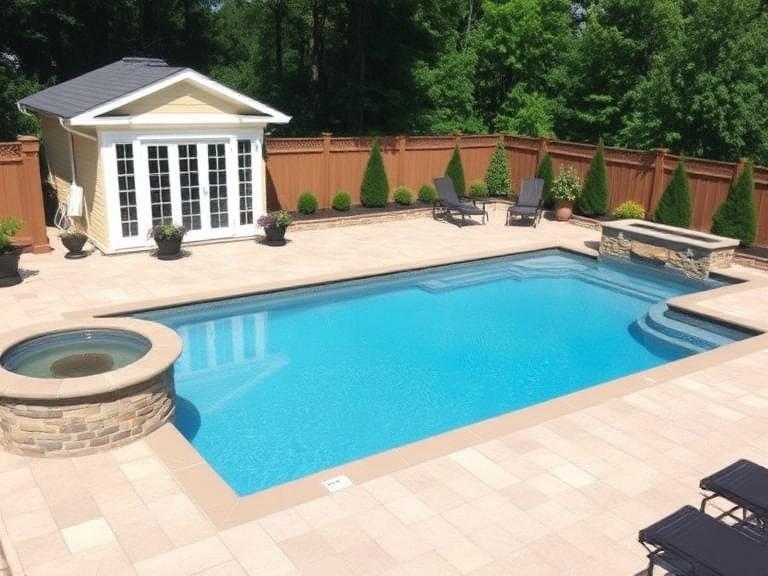
Pool installation cost in Toronto depends on pool type, yard size, excavation difficulty, site access, design features, equipment, decking, fencing, and local permit requirements. Recent Toronto and GTA pricing pages place many vinyl liner pools around C$55,000 to C$100,000, fibreglass pools around C$60,000 to C$120,000, and concrete pools around C$100,000 to C$250,000+, while above-ground pools stay far below most inground pool projects.
The full pool budget depends on the installed structure and the work around it. Excavation, grading, soil conditions, drainage, retaining work, heating, automation, water features, coping, decking, and landscaping all raise total project cost. Properties with limited yard access or complex backyard design usually require more labour, more coordination, and higher construction spend.
A complete Toronto pool installation cost plan must include permit and compliance costs from the start. The City of Toronto requires a Zoning Applicable Law Certificate before a Pool Fence Enclosure Permit application, and a pool cannot be constructed and filled with water without the required fence installed to code. That permit sequence belongs in the full project budget, not as a late-stage extra.
What Is Pool Installation Cost in Toronto?
Pool installation cost in Toronto is the total installed price of the pool, the site work, the mechanical systems, the permit-related work, and the surrounding backyard construction. Recent Toronto and Ontario pricing pages place most professionally installed inground pool projects in a broad range from about C$50,000 to C$180,000+, with Toronto-area comparisons clustering many standard projects in the mid-five-figure to low-six-figure range.
What Does Pool Installation Cost Include?
Pool installation cost includes the full installed scope, not only the pool shell. Ontario and Toronto builder pages describe that scope as design, permit acquisition, excavation, plumbing, electrical and equipment setup, drainage, grading, coping, decking, lighting, water balancing, and the surrounding poolscape or landscaping.
What Is the Average Pool Installation Cost in Toronto?
The average pool installation cost in Toronto depends on the pool type and the installed scope. Recent Ontario and Toronto sources place vinyl liner pools around C$55,000 to C$100,000, fibreglass pools around C$60,000 to C$120,000, and concrete pools around C$100,000 to C$250,000+, while one Toronto contractor markets pool installation from C$60,000.
Why Does Pool Installation Cost Vary So Much?
Pool installation cost varies because two pools with a similar appearance often use different site engineering, different materials, and different finish scopes. Current Ontario pricing guides identify pool type, size, depth, terrain, location, site access, clay or shale excavation, high water tables, drainage, grading, mechanical-system sizing, and the amount of surrounding decking and landscaping as the main cost drivers.
What Budget Range Fits a Standard Toronto Pool Project?
A standard Toronto pool project usually fits a planning range of about C$60,000 to C$110,000 for a professionally installed entry-to-mid-tier inground pool with basic surrounding work. Recent GTA comparison pages place that range around C$55,000 to C$100,000 for steel-vinyl pools and C$60,000 to C$110,000 for fibreglass pools, while another Toronto contractor lists pool installation from C$60,000 and a recent Toronto regulation article states that the minimum backyard pool installation cost now sits around C$75,000 once added compliance and hidden costs are counted.
How Much Does Each Pool Type Cost in Toronto?
Pool type changes the budget in a major way because each option uses a different structure, installation method, finish scope, and service requirement. Recent Toronto and Ontario pricing pages place above-ground pools at the low end, semi-inground pools above that, vinyl liner pools and fibreglass pools in the main mid-market range, and concrete and indoor pools at the top end.
How Much Does a Fibreglass Pool Cost?
A fibreglass pool in Toronto usually falls around C$75,000 to C$120,000 for a standard installed project, with broader Ontario guides showing lower-entry projects from about C$50,000 and turnkey Toronto-area builds rising to C$160,000+ when the job includes major decking, landscaping, and full backyard construction.
How Much Does a Vinyl Liner Pool Cost?
A vinyl liner pool in Toronto usually costs about C$55,000 to C$90,000, with Ontario sources showing a wider practical range that starts around C$50,000 and often reaches C$100,000 once the project includes larger sizes, site work, and finish upgrades.
How Much Does a Concrete Pool Cost?
A concrete pool in Toronto usually starts around C$130,000 to C$150,000 and often moves into the C$200,000 to C$250,000+ range on custom projects. Local and Ontario comparison pages place concrete pools at the top of the market because they combine the longest build time with the highest level of customization and structural work.
How Much Does an Above-Ground Pool Cost?
An above-ground pool in the Toronto/GTA market usually costs about C$4,000 to C$15,000 for a decent full setup, while installation labour alone often runs about C$2,500 to C$5,500+ in Toronto/GTA. National pricing pages also place many Canadian above-ground pool kits in the C$1,500 to C$7,000+ range before local installation, electrical work, and optional decking are added.
How Much Does an Indoor Pool Cost?
An indoor pool in Toronto usually starts above C$100,000 and rises much higher once the project includes the enclosure or indoor room work, HVAC, and dehumidification. A Toronto pool guide places concrete indoor pools at about C$100,000 to C$250,000, while a newer Toronto source states that dehumidification systems alone often add about C$20,000 to C$30,000. General 2026 indoor-pool pricing also shows very wide ranges because indoor projects vary by structure, room changes, and mechanical complexity.
How Much Does a Semi-Inground Pool Cost?
A semi-inground pool is less standardized in Toronto, so pricing varies more than the main inground types. Current Canadian retail pages show semi-inground pool kits starting around C$7,000 to C$15,000, while 2026 installation-cost sources place many finished projects around C$7,000 to C$20,000 and some pool-company guides place typical installed projects closer to C$20,500 to C$40,000 once excavation and site work are included. A practical planning range for a real installed project is therefore much higher than the kit price alone.
Which Pool Type Is Cheapest to Install?
The cheapest pool type to install in Toronto is an above-ground pool. The cheapest inground pool type is usually a vinyl liner pool. Fibreglass pools cost more than vinyl liner pools but less than most concrete pools. Concrete pools sit at the top of the price range because they require the most labour, the longest build time, and the highest level of site-built customization.
Is an Above-Ground Pool the Cheapest Option?
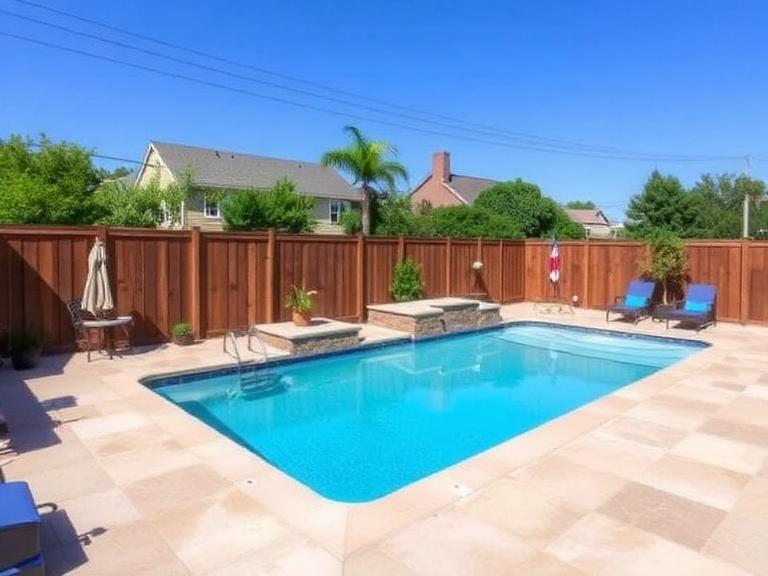
Yes. An above-ground pool is the cheapest option to install. Toronto and Canadian pricing pages place full above-ground pool setups in a much lower range than inground pools. One Toronto source puts many above-ground pools at about C$1,000 to C$6,000, while a Canada-focused installation guide places Toronto/GTA labour at about C$2,500 to C$5,500+. Even with setup, equipment, and optional decking, the total remains far below the cost of an inground pool.
Is a Vinyl Pool the Cheapest Inground Option?
Yes. A vinyl liner pool is the cheapest inground pool option in most Toronto and Ontario comparisons. Recent local and provincial pricing pages place vinyl liner pools at about C$50,000 to C$100,000, below most fibreglass pools and well below concrete pools.
Is a Fibreglass Pool Cheaper Than Concrete?
Yes. A fibreglass pool is cheaper than a concrete pool in most standard Toronto projects. Recent comparisons place fibreglass pools around C$80,000 to C$120,000 in Toronto and C$50,000 to C$80,000 or C$90,000 to C$120,000+ in broader Ontario pricing, while concrete pools start around C$100,000 to C$150,000 and often move past C$200,000.
Is Concrete the Most Expensive Pool Type?
Yes. Concrete is the most expensive pool type in the main residential comparison group. Current Toronto and Ontario pricing pages place concrete pools above vinyl liner pools and fibreglass pools on installed cost, and national comparison pages show the same ranking because concrete pools add more labour, more customization work, and higher long-term maintenance.
Which Pool Type Fits the Budget Best?
The best pool type for the budget depends on the budget goal. An above-ground pool fits the lowest budget. A vinyl liner pool fits the lowest inground budget. A fibreglass pool fits a mid-range budget that values faster installation and lower long-term upkeep. A concrete pool fits the highest budget and the strongest demand for full customization. That ranking is consistent across current Toronto and Ontario comparison pages.
What Changes Pool Installation Cost in Toronto?
Pool installation cost in Toronto changes with the pool structure, pool size, depth, site access, excavation conditions, soil behaviour, grading, mechanical systems, and the amount of surrounding decking, coping, and landscaping. Recent Ontario pricing guides place installed inground pool projects at roughly C$50,000 to C$180,000+, with Greater Toronto Area pricing running about 15% higher than smaller towns in one 2026 guide because of labour demand and permit conditions. Builder cost-breakdown pages also separate the budget into the pool build, equipment, poolscape, safety features, and permit-related costs.
How Do Pool Size and Depth Change Price?
Pool size and depth raise price through higher excavation volume, more material use, more water capacity, and larger equipment demand. A 2026 Ontario guide states that size affects excavation volume, material use, water capacity, and equipment requirements, while depth profiles, tanning ledges, and wide entries add structural and hydraulic scope. Another 2026 Ontario guide lists size and depth among the main factors behind its C$50,000 to C$180,000+ installed range.
How Do Yard Access and Excavation Change Price?
Yard access and excavation change price because the crew needs room to move machinery, remove soil, deliver materials, and build safely. Tight urban access raises labour time and logistics costs. A recent Ontario design-build guide states that the real installed cost is often driven by engineered excavation, drainage, and site engineering rather than the shell alone. Another recent industry cost guide places site preparation at C$5,000 to C$25,000+ and ties that range to access, soil, and retaining work.
How Do Soil, Rock, and Grading Change Price?
Soil, rock, and grading change price because they determine how difficult the site is to excavate, stabilize, and drain. A 2026 Ontario guide states that real pool cost in this market is driven by clay and shale excavation, high water tables, drainage for freeze-thaw movement, and retaining and grading. The same source states that two pools that look similar online can differ by C$40,000 or more once those installed conditions are resolved. City of Toronto rules also require the Zoning Certificate before the Pool Fence Enclosure Permit, which means site planning and layout accuracy affect approval timing and downstream construction cost.
How Do Pool Shape and Design Complexity Change Price?
Pool shape and design complexity change price because straight layouts build more efficiently than multi-radius or architectural layouts. A 2026 Ontario guide states that shape controls construction complexity, with straight-line geometry typically building more efficiently than more complex forms. Toronto builder cost pages also state that more intricate pool designs raise the final price. Custom features add another layer of cost because they expand structure, finishing, plumbing, and scheduling scope.
How Do Equipment and Mechanical Systems Change Price?
Equipment and mechanical systems change price through the pump, filter, heater, skimmers, lighting, covers, and control systems required to run the pool. Toronto cost pages state that those systems cost from a few thousand dollars upward, depending on quality and features. A 2026 Ontario design-build guide states that properly sized mechanical systems are one of the reasons similar-looking pools end up with very different installed budgets.
How Do Decking, Coping, and Landscaping Change Price?
Decking, coping, and landscaping often move a project from a basic install into a full backyard build. Toronto cost pages state that pool decking and surrounding landscaping start from a few thousand dollars and rise with material choice and added features. A 2026 Ontario guide also states that larger projects that include landscaping, decking, or extra features push the total investment higher. City of Toronto permit rules add one more mandatory cost layer because the pool cannot be constructed and filled with water without the required compliant enclosure in place.
What Permit and Compliance Costs Apply in Toronto?
Permit and compliance costs in Toronto usually include the Zoning Applicable Law Certificate, the Pool Fence Enclosure Permit, the required pool fence and gate work, any ESA electrical notification and inspection fees, and any third-party drawings, survey, or engineering work needed to support the application and the build. The City of Toronto requires the Zoning Certificate first and the Pool Fence Enclosure Permit after that.
What Is a Zoning Applicable Law Certificate Cost?
The Zoning Applicable Law Certificate fee for a pool fence enclosure application is C$214.79 effective January 1, 2026. The City’s pool-specific zoning page lists the Zoning Applicable Law Certificate Fee (All Other Proposals) at C$214.79. Toronto’s broader Zoning Applicable Law Certificate fee page also lists C$214.79 for accessory residential buildings and structures, which aligns with the pool-fence application path.
What Is a Pool Fence Enclosure Permit Cost?
The Pool Fence Enclosure Permit fee is C$214.79 per application in the City’s 2026 user-fee schedule. Toronto’s 2026 fee appendix lists “Pool fence enclosures – Application intake, plan review, and inspection activities” at C$214.79.
What Fence and Enclosure Work Adds to the Budget?
The required pool fence and enclosure work often adds more to the budget than the permit fees themselves. The City of Toronto requires a compliant enclosure before the pool is constructed and filled with water. The required site plan must show the proposed fence, gate type, gate hardware, and enclosure details. In market pricing, Toronto fence installation typically costs about C$40 to C$150 per linear foot installed, with the final number driven by material, height, site conditions, and gate hardware.
What Electrical Inspection and Safety Costs Apply?
Electrical inspection and safety costs apply when the project includes new pool wiring, a hard-wired heater, pump, lighting, or other electrical work. The ESA requires a Notification of Work and inspection for electrical installations. In the ESA’s April 1, 2026 residential fee guide, the fee for “Pool – Inground, Indoor, Above Ground; hard-wired Hot Tub; Spa; Splashpad” is C$168 for contractors and C$181 for non-contractors, and it includes two visits plus a pool shed if inspected at the same time. The same guide lists bonding only for pool equipment at C$86 minimum / C$93, and a pool house or separate pool-shed inspection starts at C$57 for contractors or C$64 minimum for non-contractors for 1–10.
What Drawings, Surveys, or Engineering Costs Apply?
Drawings, surveys, and engineering are usually third-party professional costs rather than fixed City fees. The City of Toronto requires a detailed scaled site plan, signed and dated drawings, and a reference to a legal survey showing property lines, pool dimensions, setbacks, equipment locations, fence details, and hard-versus-soft landscaping. In market pricing, a residential land survey in Ontario often costs about C$1,600 to C$3,500, while typical structural drawings for permit in Ontario often run about C$1,500 to C$4,000+. Design-only fees also vary. One Ontario landscape-design source places professional design work at about C$1,500 to C$5,000+.
How Much Do Pool Features Add to the Price?
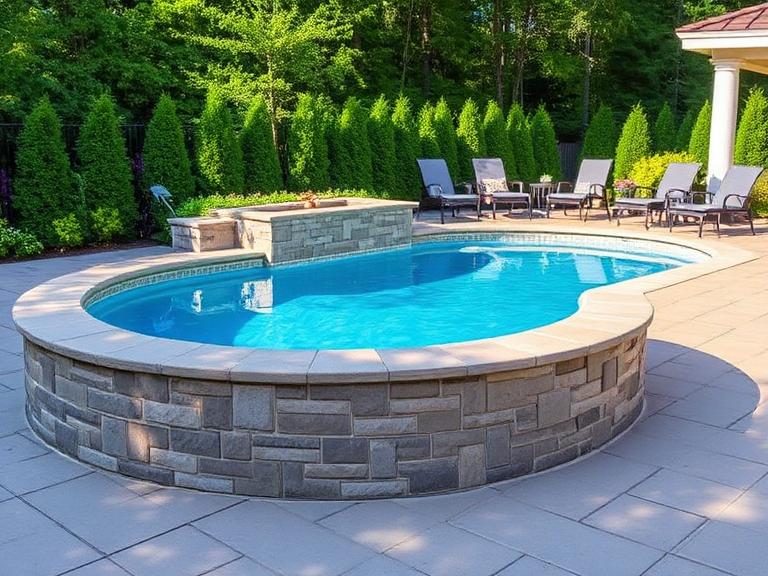
Pool features often add anywhere from a few thousand dollars to more than C$50,000 on top of the base pool installation cost. Recent Ontario pricing guides place major upgrade categories in these bands: pool heating systems at about C$4,000 to C$12,000, LED pool lighting at about C$2,000 to C$6,000, smart pool automation at about C$2,500 to C$7,000+, manual safety covers at about C$3,000 to C$6,000, automatic safety covers at about C$15,000 to C$30,000+, water features at about C$3,000 to C$20,000+, and integrated spas or hot tubs from about C$15,000 into the C$40,000+ range.
How Much Do Heaters and Heat Pumps Add?
Heaters and heat pumps usually add about C$4,000 to C$12,000 to the project budget when equipment and installation are included. Recent Ontario pool-pricing guides place a standard pool heating system at C$4,000 to C$10,000 for many fibreglass pools, C$5,000 to C$12,000 for many concrete pools, and C$4,000 to C$8,000 in a broader 2026 upgrade table. Retail heat pump pricing in Canada also shows many units around C$1,999 to C$3,999+ before installation, which helps explain why installed heating budgets land higher than equipment-only prices.
How Much Do Pool Lights and Automation Add?
Pool lights and automation usually add about C$4,500 to C$13,000+ when both systems are included. Recent 2026 Ontario pricing places LED pool lighting at about C$2,000 to C$6,000 or C$3,000 to C$5,000+, depending on the project type, and places smart pool automation at about C$2,500 to C$7,000+. The final number rises with fixture count, wiring, transformers, programming, controls, and equipment integration.
How Much Do Covers and Safety Features Add?
Covers and safety features range from modest seasonal protection to major mechanical upgrades. A recent Ontario cover-pricing guide places a winter pool cover at about C$650 to C$1,000, a safety cover at about C$3,000 to C$5,000, and an automatic cover at about C$15,000 to C$30,000. A separate 2026 pool-upgrade table places manual safety covers at about C$3,000 to C$6,000 and automatic safety covers at about C$15,000 to C$30,000+. A recent Ontario pool-cost guide also notes that a basic pool cover starts around C$2,500, while an automatic retractable model reaches C$25,000+.
How Much Do Spas, Waterfalls, and Fire Features Add?
Spas, waterfalls, and fire features are some of the largest feature upgrades in a Toronto pool project. Recent Ontario pricing guides place an integrated hot tub at about C$15,000 to C$40,000 on many concrete pool projects and at about C$45,000 to C$50,000+ on some fibreglass pool builds. Recent pricing also places water features such as deck jets, waterfalls, and bubblers at about C$3,000 to C$20,000+, while a Toronto pool builder states that simple water features start around C$2,000 and complex installations rise to C$50,000. Toronto waterfall guidance also places small decorative or prefab waterfalls around US$2,000 to US$5,000 and basic sheer-descent waterfalls around US$1,000 to US$4,000. Poolside fire features add another several thousand dollars, with one Toronto outdoor-fire feature page placing gas fireplaces at about C$3,500 to C$15,000+.
How Do Site Conditions Change the Total Pool Cost?
Site conditions change the total pool cost because they affect excavation difficulty, drainage work, access logistics, grading scope, equipment delivery, and the amount of structural support the yard needs. Recent Ontario pool cost guides identify terrain, site access, clay or shale excavation, high water tables, drainage, and retaining and grading as major cost drivers. One 2026 guide states that similar-looking pools can differ by C$40,000 or more once those installed site conditions are resolved.
Does a Small Backyard Reduce Pool Cost?
A small backyard does not automatically reduce pool cost. A smaller yard lowers cost when the project uses a smaller pool, less excavation, and less surrounding decking and landscaping. A smaller yard raises cost when the lot has tight machinery access, requires manual soil removal, or needs crane placement for a fibreglass shell. Ontario and Toronto sources tie cost to installed scope and access conditions, not lot size alone.
Does a Sloped Yard Increase Pool Cost?
Yes. A sloped yard increases pool cost because the project needs extra grading, stronger drainage planning, and, in many cases, a retaining wall or other structural support. A recent Toronto sloped-yard pool guide states that sloped-lot projects should not be priced like flat-yard installs because the builder is reshaping how the property works, not only creating room for the pool. Recent cost guides also list retaining walls and site preparation inside the C$5,000 to C$25,000+ site-work range.
Does Tight Access Increase Labour Cost?
Yes. Tight access increases labour cost because crews spend more time on excavation logistics, soil removal, equipment coordination, and material delivery. A recent Toronto fibreglass pool source states that tight access often changes the shell-delivery plan to side-yard access, laneway access, or a crane lift. Okeanos Pools GTA also states that crane logistics are coordinated around pool size and site access, and that placement timing depends on access and equipment coordination.
Does Poor Drainage Increase Site Work Cost?
Yes. Poor drainage increases site work cost because the builder must control how water moves around the pool, the surrounding hardscape, and the rest of the yard. Toronto pool guidance states that drainage is a core design issue on sloped lots and that grading and drainage must be treated as part of the pool build. Ontario pricing guides also identify high water tables and drainage for freeze-thaw movement as direct cost drivers.
Does Rocky Ground Increase Excavation Cost?
Yes. Rocky ground increases excavation cost because excavation takes longer and often needs heavier equipment or more specialized removal methods. A recent excavation cost source states that rocky soil changes cost significantly because it requires specialized equipment and more excavation time than dirt or sand. Ontario pool pricing guides also identify shale excavation and difficult ground conditions as major reasons final installed prices rise.
What Ongoing Pool Ownership Costs Should You Expect?
Ongoing pool ownership costs in Toronto usually include heating, chemicals, opening and closing, routine service, and a long-term reserve for repairs and equipment replacement. A current Ontario planning guide puts opening and closing at C$400 to C$800 per year, seasonal service at C$100 to C$200 per month, and heating at C$300 to C$800+ per season as the main operating-cost range for many projects. The same source recommends a long-term reserve of 1% to 3% of build cost annually for liners, resurfacing, equipment, covers, and lighting.
How Much Does Pool Heating Cost Per Season?
Pool heating is usually the largest operating cost. A current Ontario guide puts heating sensitivity at C$300 to C$800+ per season for general planning. A recent Toronto fibreglass-pool ownership guide gives more specific operating ranges: electric heat pumps at about C$500 to C$1,200 annually and gas heaters at about C$1,500 to C$3,000 annually. That gap shows why heater type changes the ownership budget in a major way.
How Much Do Chemicals and Water Treatment Cost?
Chemicals and water treatment usually cost about C$300 to C$500 per year for many residential pools. A recent Toronto ownership guide gives that exact annual range for chemical supplies. Canadian pool-safety guidance also states that normal pool pH sits at 7.2 to 7.6 and chlorine commonly ranges from 1 to 3 ppm, which explains the continuing need for chlorine, pH balancers, stabilizers, and algae-control products.
How Much Do Opening and Closing Services Cost?
Professional opening and closing services usually cost about C$400 to C$800 per year in total. A current Ontario guide gives that exact combined annual range. A recent Toronto fibreglass-pool guide breaks the work into C$200 to C$500 for winterization and C$200 to C$400 for spring opening, which aligns with the broader Ontario planning range.
How Much Do Repairs and Equipment Replacement Cost?
Repairs and equipment replacement create the larger periodic ownership costs. A recent Toronto fibreglass-pool guide places minor repairs at C$200 to C$1,500, major gelcoat repairs up to C$5,000, pump replacement at C$400 to C$1,200, salt-cell replacement at C$300 to C$800 every 3 to 5 years, cover replacement at C$200 to C$500, and tile or coping replacement at C$1,000 to C$3,000. A current Ontario guide also recommends a standing long-term reserve of 1% to 3% of build cost annually for these wear components.
How Much Does Long-Term Maintenance Cost by Pool Type?
Fibreglass pools have the lowest long-term maintenance cost in current Toronto comparisons, at about C$600 to C$1,200 annually. Vinyl liner pools sit in the middle at about C$800 to C$1,500 annually, with the added periodic cost of liner replacement every 8 to 12 years at C$5,000 to C$8,000. Concrete pools have the highest long-term maintenance cost at about C$1,200 to C$2,500 annually, plus acid washing every 3 to 5 years at C$500 to C$800 and resurfacing every 7 to 15 years at C$8,000 to C$15,000. Current comparison pages also state that concrete pools use 25% to 50% more chemicals than fibreglass pools because of the porous surface.
Is One Pool Type Cheaper Over Time?
Yes. Fibreglass pools are usually cheaper to maintain over time than vinyl liner pools and concrete pools. Recent Toronto comparison data places annual maintenance for fibreglass pools at about C$600 to C$1,200, compared with C$800 to C$1,500 for vinyl pools and C$1,200 to C$2,500 for concrete pools. The same Toronto comparison states that fibreglass pools deliver the lowest total cost of ownership through lower maintenance and fewer major periodic repairs.
Is Fibreglass Cheaper to Maintain Than Vinyl?
Yes. Fibreglass is cheaper to maintain than vinyl in most long-term comparisons. A current Toronto comparison places annual maintenance for fibreglass pools at C$600 to C$1,200 and for vinyl pools at C$800 to C$1,500. A separate 2026 comparison guide shows the same pattern, with fibreglass at $800 to $1,200 annually and vinyl at $1,200 to $1,800 annually.
Is Vinyl Cheaper Upfront but More Expensive Later?
Yes. Vinyl liner pools are cheaper upfront, but they become more expensive later because of liner replacement and moderate ongoing maintenance. Recent Toronto pricing places vinyl pools at about C$55,000 to C$90,000 upfront, below fibreglass pools at about C$75,000 to C$120,000. The same Toronto source states that recurring liner replacement and moderate maintenance raise long-term ownership costs, even though vinyl starts lower.
Is Concrete More Expensive to Maintain?
Yes. Concrete pools are the most expensive to maintain. A current Toronto comparison places annual maintenance for concrete pools at C$1,200 to C$2,500, the highest among the main pool types. That source also states that the porous concrete surface promotes algae growth, raises chemical demand, and creates periodic acid washing and resurfacing costs.
How Much Does Vinyl Liner Replacement Cost?
Vinyl liner replacement usually costs about C$5,000 to C$8,000 in current Toronto comparisons and is commonly needed every 8 to 12 years. A separate 2026 ownership guide places liner replacement at about $6,000 in year 8, which supports the same long-term cost pattern.
How Much Does Concrete Resurfacing Cost?
Concrete resurfacing usually costs about C$8,000 to C$15,000 for standard plaster renewal in current Toronto comparisons. Premium aggregate finishes run higher, at about C$12,000 to C$25,000, and are replaced less often. The same Toronto source states that concrete pools often need resurfacing every 7 to 15 years, with acid washing every 3 to 5 years at about C$500 to C$800.
How Do You Budget for Pool Installation in Toronto?
A working budget for pool installation in Toronto starts with the core construction cost, then separates the upgrade cost, then adds a site-surprise contingency. Recent Ontario pricing places most inground pool projects in a broad range of about C$50,000 to C$180,000+, with Toronto & GTA projects commonly starting around C$50,000 to C$120,000 before larger feature and landscape scopes push the total higher. Detailed Toronto estimate guidance defines a proper budget as a line-by-line plan covering design, site work, shell or structure, equipment, decking, coping, landscaping, permits, and initial operating costs.
What Budget Fits a Basic Pool Project?
A basic Toronto pool project usually fits the lower end of the installed market. Recent Ontario and Toronto/GTA sources place entry-level vinyl liner and simpler fibreglass builds around C$50,000 to C$80,000, while one Ontario steel-vinyl pricing guide places that pool type at C$60,000 to C$100,000 depending on size, design complexity, site conditions, and added features. This budget tier fits a simpler pool shape, standard equipment, and limited surrounding poolscape work.
What Budget Fits a Mid-Range Pool Project?
A mid-range Toronto pool project usually lands around C$80,000 to C$150,000. That range aligns with larger fibreglass pools, stronger vinyl liner builds, more site work, upgraded mechanicals, and a more complete decking and landscaping package. Current Toronto comparison data places many fibreglass pools around C$75,000 to C$120,000, while recent Ontario pricing pages place many full-service inground pool projects in the broader C$50,000 to C$120,000+ band before heavier upgrade scope is added.
What Budget Fits a Luxury Pool Project?
A luxury Toronto pool project usually starts around C$150,000 and regularly moves beyond C$250,000, with premium builds exceeding C$300,000. Recent Toronto comparison data places concrete pool installations at about C$150,000 to C$250,000 for many mid-sized quality builds and states that luxury installations with extensive custom features often exceed C$300,000. This tier usually includes a custom pool structure, high-end finishes, advanced mechanical systems, and a larger backyard transformation rather than a stand-alone pool.
How Much Contingency Should You Keep for Site Surprises?
A contingency budget belongs in every Toronto pool budget because hidden costs often appear in access, soil, utilities, and late-stage site conditions. Recent Toronto estimate guidance identifies driveway or walkway repair, extra soil export, electrical or gas upgrades, safety covers, fencing, and permit drawings as common hidden costs. Another Toronto construction guide identifies unstable soil, hidden utilities, and design changes as common causes of budget overruns and explicitly recommends setting aside a contingency budget for unforeseen expenses. Those sources support keeping a distinct contingency line in the budget even when the contractor quote looks complete.
How Do You Separate Core Cost From Upgrade Cost?
The cleanest budget structure splits the project into two blocks. Core cost covers the items required to build and operate the pool: design, engineering, excavation, structure or shell, plumbing, electrical, equipment, permits, and required site work. Upgrade cost covers the items that improve appearance, comfort, or outdoor-living value: waterfalls, lighting, automation, stone coping, decking upgrades, landscaping, and other custom features. Toronto estimate guidance uses that same structure in its cost-breakdown model, and recent Ontario pricing guides note that landscaping, decking, and additional features are the main reasons totals climb far beyond the base installed price.
How Do You Compare Pool Installation Quotes?
You compare pool installation quotes by matching the full scope, not by comparing the bottom-line number alone. A stronger Toronto pool quote breaks the project into the pool construction price, equipment and accessories, landscaping and pool decking, pool safety features, and permitting and inspection fees. Toronto contractor guidance also states that a detailed estimate gives control over budget, schedule, and scope, which is why a short low-price quote is not a reliable comparison point.
What Should a Pool Quote Include?
A proper pool quote should include the full installed scope. Toronto and GTA guidance shows that the core structure usually includes the pool build, equipment, decking or landscaping scope, safety features, and permit or inspection fees. Toronto Pool also states that homeowners should ask for detailed quotes that break down materials, labour, pump, plumbing, waterproofing, and extras such as lighting and landscape work.
What Costs Are Often Missing From Cheap Quotes?
Cheap pool quotes often leave out the costs that appear later as change orders. A recent Toronto turnkey-builder guide lists common exclusions such as dirt removal, crane fees, fence repairs, and site restoration. The same source notes that low-ball pricing from separate trades can look cheaper at first but becomes less competitive once those omitted items are added back into the real project cost.
How Do You Compare Pool Quotes by Scope?
You compare pool quotes by checking whether both quotes include the same work categories and the same responsibility split. A fair comparison uses matching lines for construction, equipment, decking, landscaping, safety features, and permit-related work. Toronto guidance on cost estimates also states that the purpose of a detailed estimate is to prevent surprises in scope and schedule, which means any quote that combines some items and excludes others is not directly comparable to a full-scope quote.
How Do You Compare Quotes by Pool Type?
You compare quotes by pool type only after checking that the design and site conditions are similar. Recent Ontario pricing shows that vinyl liner pools generally start around C$50,000, fibreglass pools around C$50,000 to C$80,000, and concrete pools above C$130,000, but those ranges still move upward with access, soil, grading, and feature scope. A quote for a fibreglass pool and a quote for a concrete pool are therefore not true alternatives unless the homeowner is comparing different project types on purpose.
How Do You Check Permit and Compliance Costs in a Quote?
You check permit and compliance costs by confirming that the quote includes the required Zoning Certificate, the Pool Fence Enclosure Permit, and the work needed to meet Toronto’s fence rules. The City of Toronto states that applicants must obtain a Zoning Certificate before applying for a Pool Fence Enclosure Permit, and that a pool cannot be constructed and filled with water without a compliant fence in place. Toronto’s 2026 fee schedule lists the Pool Fence Enclosure Permit at C$214.79 per application, and the City’s pool-fence zoning page confirms that a Zoning Applicable Law Certificate is required for that permit path.
How Do You Reduce Pool Installation Cost Without Cutting Essentials?
You reduce pool installation cost by simplifying the project before construction starts. The strongest cost controls are a smaller pool footprint, a simpler pool shape, fewer premium features, and early planning that locks the scope before permit and site-work changes appear. Ontario pricing guides state that size, shape, depth, mechanical systems, and surrounding poolscape work are the main cost drivers in a real installed project.
Does Pool Size Reduction Lower Cost Fastest?
Yes. Pool size reduction lowers cost fastest because size affects excavation volume, material use, water capacity, and equipment requirements. Ontario pricing guidance states that pool size directly changes those four cost categories, which makes footprint reduction one of the fastest ways to move the budget down.
Does Simpler Shape Lower Construction Cost?
Yes. A simpler pool shape lowers construction cost. Ontario pricing guidance states that shape controls construction complexity and that straight-line geometry builds more efficiently than multi-radius or architectural layouts. That makes a simple rectangle or another clean geometry the lower-cost design path.
Does Fewer Features Lower the Budget?
Yes. Fewer features lower the budget because every added feature expands the installed scope. Current Ontario pricing states that projects with extra landscaping, decking, and additional features push the total investment higher. Recent Toronto & GTA pricing also lists water features, LED lighting, and stone coping as common add-ons that raise the starting project price.
Does Off-Season Planning Reduce Total Cost?
Yes. Off-season planning reduces total cost pressure and improves schedule control. A recent Toronto-area timing guide states that late fall often brings better deals, quicker contractor availability, and off-season discounts on materials and labour, while summer brings peak demand and higher material and labour prices. That makes early spring and late fall stronger planning windows than peak season.
What Cost Cuts Create Problems Later?
The cost cuts that create problems later are the cuts to drainage, grading, permit planning, enclosure compliance, mechanical sizing, and proper seasonal protection. Ontario pricing guidance states that real pool cost is driven by engineered excavation, drainage for freeze-thaw movement, retaining and grading, and properly sized mechanical systems. Toronto compliance guidance states that permits, zoning limits, drainage checks, and enclosure requirements shape the design and help avoid costly revisions. Toronto winter-maintenance guidance adds that poor winterization leads to cracks, leaks, and expensive pump or filter replacement.
Frequently Asked Questions About Pool Installation Cost in Toronto
How Much Does Pool Installation Cost in Toronto?
Pool installation cost in Toronto usually starts around C$50,000 for a simpler installed inground pool and often rises past C$120,000 once the project includes larger dimensions, harder site conditions, upgraded equipment, decking, and landscaping. A recent Canada pricing guide places many installed inground pools at C$60,000 to C$120,000, while a Toronto small-pool source places compact plunge pools around C$50,000 to C$60,000.
What Is the Cheapest Pool Type to Install?
The cheapest pool type to install is an above-ground pool. The cheapest inground pool type is usually a vinyl liner pool, followed by a fibreglass pool, with a concrete pool at the top of the price range in most Toronto and Ontario comparisons.
What Pool Type Gives the Best Value?
The best long-term value usually comes from a fibreglass pool when the goal is lower maintenance, faster installation, and lower long-term repair exposure. A vinyl liner pool often wins on lower upfront price, while a concrete pool wins on full customization rather than value efficiency. Recent Toronto and Ontario comparisons place fibreglass pools in the middle of the upfront cost range with lower long-term upkeep than vinyl and concrete.
Do Permits Add Much to Pool Cost?
Permits add a modest direct fee but a meaningful compliance cost once the required fence enclosure, drawings, and inspections are counted. The City of Toronto requires a Zoning Applicable Law Certificate before the Pool Fence Enclosure Permit application, and the City’s current fee pages list C$214.79 for the pool fence enclosure permit and C$214.79 for the zoning certificate path used for pool fence enclosures.
What Hidden Pool Installation Costs Matter Most?
The hidden pool installation costs that matter most are dirt removal, difficult yard access, crane fees, fence and enclosure work, extra drainage, and added hardscaping or site restoration. Recent Toronto and Ontario sources also identify terrain, high water tables, and larger landscaping scopes as major reasons the final price climbs above the first quote.
How Much Does Pool Maintenance Cost Per Year?
Annual pool maintenance cost depends on the pool type, the heating system, and the service level. A current Ontario planning range puts opening and closing at about C$400 to C$800 per year and seasonal service at about C$100 to C$200 per month. Long-term Toronto comparisons place annual maintenance around C$600 to C$1,200 for fibreglass pools, C$800 to C$1,500 for vinyl liner pools, and C$1,200 to C$2,500 for concrete pools.
Is Fibreglass or Vinyl Cheaper?
Vinyl is usually cheaper upfront. Fibreglass is usually cheaper over time. Current Toronto and Ontario comparisons place vinyl liner pools below fibreglass pools on initial installed cost, but fibreglass pools avoid liner replacement and usually carry lower yearly maintenance.
Does a Sloped Yard Increase Pool Cost?
Yes. A sloped yard usually increases pool cost because it adds grading, drainage planning, and, in many projects, some form of retaining work. Recent Toronto and Ontario sources identify terrain, drainage, and site engineering as major cost drivers in the final installed price.
How Much Does a Small Backyard Pool Cost?
A small backyard pool in Toronto often lands around C$50,000 to C$60,000 for a compact plunge pool project, with the final number changing according to materials, excavation conditions, heating, decking, and design extras. Smaller size helps control cost, but tight access and added backyard work still push the total upward.
What Should a Pool Quote Include?
A proper pool quote should include the full installed scope: design, excavation, the pool structure or shell, plumbing, electrical, equipment, decking, landscaping, required fence work, permit fees, and inspection-related items. Toronto guidance also shows that cheaper quotes often leave out crane access, dirt removal, and site restoration, which makes a short quote look cheaper than the real project cost.
How Do You Get a Pool Cost Estimate in Toronto?
A pool cost estimate in Toronto starts with a site visit, then moves into a written design and cost estimate, then turns into one combined plan for permits, compliance, and construction cost. Toronto pool-estimate guidance defines the estimate as a line-by-line projection that covers labour, materials, equipment, permits, and site work rather than a single rough price. Recent Ontario pricing guidance also places most installed inground pool projects in a broad range of about C$50,000 to C$180,000+, which is why a proper estimate needs site-specific detail before the budget is fixed.
How Do You Book a Site Visit?
You book a site visit by contacting a Toronto pool builder for an on-site consultation or free estimate. Toronto builder pages describe the visit as the stage where the contractor reviews the yard size, access, site conditions, zoning limits, and the homeowner’s goals before pricing the work. Local installer pages also promote the first step as a consultation or free estimate, which shows that the estimate process begins with property review, not with a fixed online price.
How Do You Get a Design and Cost Estimate?
You get a design and cost estimate after the contractor reviews the property and defines the project scope. Toronto estimate guidance states that a strong estimate breaks the job into design and engineering, excavation and site work, shell or structure, equipment and systems, decking, coping, landscaping, permits and inspections, and initial and ongoing costs. That format lets the homeowner compare quotes by real scope instead of comparing bottom-line numbers that hide missing work.
How Do You Plan Permit and Build Costs Together?
You plan permit and build costs together by treating zoning, fence-enclosure approval, and construction scope as one budget. The City of Toronto requires a Zoning Applicable Law Certificate before the Pool Fence Enclosure Permit application, and the City’s current fee pages list C$214.79 for the Zoning Certificate path used for pool fence enclosures and C$214.79 for the Pool Fence Enclosure Permit. Toronto estimate guidance also lists permits and inspections as a normal part of the project budget, which means the permit cost, enclosure work, drawings, and build cost should be priced together from the start.